

INTRODUCTION
Football has long been recognized as a widely loved sport, played not only at the professional level but also as a recreational activity enjoyed by various groups. Football in Indonesia, or sepak bola in Indonesian, is deeply embedded in the daily lives of Indonesians (Fuller, 2015) . As a recreational sport, football offers more than just competition or achievement; it is a means of maintaining fitness, building social relationships, and creating happiness through dynamic play. Unlike competitive football, which is oriented towards achievement, recreational football
Correspondence author: Andhika Djalu Sembada, Sekolah Tinggi Pariwisata Ambarukmo, Indonesia. Email: andhikadjalu@stipram.ac.id
DOI: http://dx.doi.org/10.5614/jskk.2025.10.2.6 e-ISSN: 2654-8860 . p-ISSN: 2477-1791
emphasizes participation, togetherness, and enjoyment, making it accessible to anyone, regardless of age, gender, or skill level. Recreational football also plays a multidimensional role in community life, serving not only as a recreational activity but also as a means of self-development and strengthening social bonds (Pangestu et al., 2024) . Research shows that football can be played in a non-competitive context. Recreational (non-competitive) football encourages social interaction and has the potential to increase long-term engagement in physical activity, even for those without prior experience in the sport. (Castillo-Bellot et al., 2019) . In various communities, recreational soccer is often played in friendly matches, amateur leagues, or simply as a group practice session on an outdoor field. The flexibility of the rules—such as not always 11 vs. 11 players or the use of non-standard pitches makes it accessible to a wider audience. In addition to physical benefits such as increased endurance, agility, and coordination, recreational soccer also has positive impacts on mental health, such as reducing stress and strengthening social bonds between players. Over the past 10 years, researchers have studied the effects of recreational soccer training as a health-promoting activity for participants of all ages. This has important implications for public health, as more than 400 million people play soccer annually. (Bangsbo et al., 2015) .
The embodiment of recreational soccer is community-based soccer, or more familiarly, fun soccer . The development of community-based recreational soccer has become part of a lifestyle. A recent systematic review demonstrated the benefits of recreational soccer practice on non-communicable diseases related to cardiovascular and bone health, body composition, type 2 diabetes, and prostate cancer. (Sarmento et al., 2020) . This activity not only contributes to individual health but also strengthens the values of togetherness and mutual cooperation. Therefore, soccer, as a recreational sport, deserves to be seen as a medium that unites people from various backgrounds in a spirit of sportsmanship and joy. It is called a community sport, or a sport characterized by its local context, affordability, accessibility, and less competitive nature. (Anderson-Butcher et al., 2024) .
Similarly, community-based football in Yogyakarta has become an interesting social phenomenon due to its role in building solidarity, health, and developing local talent . Football also plays a role in shaping children's personalities and social interactions, enabling them to understand cultural differences while strengthening their identity through team roles (Sudharma & Nurodin, 2025) . Football has long been a part of Yogyakarta's community life, not only as a sport but also as a cultural expression. Football is not only a popular sport at the professional level, but is also growing rapidly at the community level in various regions, especially in Yogyakarta. Even in other countries, fun football is also an interesting activity. The Fun Football program is used to organize grassroots football in Wales, and aims to provide informal football activities. (Baker et al., 2019) . Yogyakarta is known for its strong sporting tradition, with soccer being a means of social interaction and youth development. Community-based soccer activities in Yogyakarta are not solely initiated by local groups. Findings from an experimental study indicate that a 16-week SSG recreational soccer intervention effectively improved body composition and physical fitness in overweight and sedentary young adults, offering a fun alternative to conventional exercise approaches. (Xu et al., 2024) . Many communities from outside Yogyakarta also actively participate in developing community-based football, thus contributing to the development of sports tourism . Despite the increasing commercialization of professional football, community-based football activities can actually maintain distinctive local values. However, there is little research that has examined the dynamics of community football in this region in depth.
This research begins with the question of what philosophical values underlie community football activities in Yogyakarta, and how these values are reproduced in everyday practice. While several previous studies on community football in Yogyakarta have utilized social sciences, no research has yet utilized philosophy to examine community-based football. the aim of this research is to identifying philosophical values in community football in Yogyakarta, analyzing the relationship between community football and the socio-cultural context of Yogyakarta, exploring the meaning of community football for its members.
METHODS
Research Design
This research uses a qualitative approach with the Philosophical Ethnography method . The ethnographic approach, along with case studies and phenomenology, is a variety of qualitative research approaches that are characterized by naturalism with a subjective perspective for research in the natural realm (Yusanto, 2019) . Researchers conducted participatory observations in several soccer communities and soccer fields in Yogyakarta (Jack 'D FC, Big Reds Jogja, Senen Kemringet FC, QQ FC, Poenakawan Community Indonesia, Sonoraya field, and YIS field), then the phenomenological interview process: researchers conducted in-depth interviews with respondents to understand their subjective experiences, then conducted hermeneutic analysis: interpretation of texts from relevant documents.
This research uses a qualitative-philosophical approach, emphasizing the understanding of meaning, values, and subjective experiences in community football practices in Yogyakarta. This approach was chosen because it can reveal philosophical dimensions that are not only evident in behavior, but also in symbols, narratives, and reflections that emerge from community activities. With this research design, it is hoped that philosophical values in Yogyakarta community football can be identified, both related to social practices (mutual cooperation, togetherness, resistance to commercialization) and existential dimensions (local identity, character education, collective happiness). This research also aims to emphasize that community football is a cultural space rich in meaning and relevant to be examined from a philosophical perspective.
Population and Sample
Researchers selected respondents using convenience and purposive sampling to ensure ease of access and relevance to the research criteria. The following is a list of the respondents selected by the researchers:
Table 1. List of Respondent Names
| No. | Name | Age | Gender | Respondent Status |
|---|---|---|---|---|
| 1. | Haswin Fatkurohman | 34 years old | Man | Community administrators |
| 2. | Budi Handoko | 52 years old | Man | Community administrators |
| 3. | Hisbullah's code | 33 years old | Man | Community administrators |
| 4. | Muh. Agung Rifai P. | 41 years old | Man | Community members |
| 5. | Yudhi Prasetyo | 34 years old | Man | Community members |
| 6. | Augustine Wahyu Adi | 39 years old | Man | Community members |
| 7. | Sincere Islam | 32 years old | Man | Community members |
| 8. | Hosni Mubarak | 39 years old | Man | Community members |
| 9. | Wafiantho | 35 years | Man | Community members |
| 10. | Anandya Pranandita | 33 years old | Man | Community members |
| Nugraha |
| 11. | Bagas Woro | 35 years | Man | Community members |
|---|---|---|---|---|
| 12. | Rangga Dwi Tantra | 39 years old | Man | Community members |
| 13. | Irsa Fresa Romadhoni | 36 years old | Man | Community Members |
| 14. | Muhammad Fikran | 18 years | Man | Community members |
| 15. | Danang Anggoro Putro | 32 years old | Man | Community members |
| 16. | I Wayan Suyasa | 53 years old | Man | Community members |
| Widana | ||||
| 17. | Muh. Abdulrohman | 25 years | Man | Community members |
| 18. | Muh. Riziq | 21 years | Man | Community members |
| 19. | Amirudin Hidayat | 27 years old | Man | Community members |
| 20. | Muh. Fathul Ilmi | 19 years old | Man | Community members |
| 21. | Grandpa Bardi | 63 years old | Man | Field manager |
| 22. | Anggoro | 40 years | Man | Field manager |
| 23. | Andhika Mulia | 36 years old | Man | Field manager |
| Pratama |
The distribution of respondent categories is as follows: 1 teenager, 21 adults, 1 elderly person, 3 community administrators, 3 field managers, 17 community members. The percentage of respondents' ages and statuses is as follows:
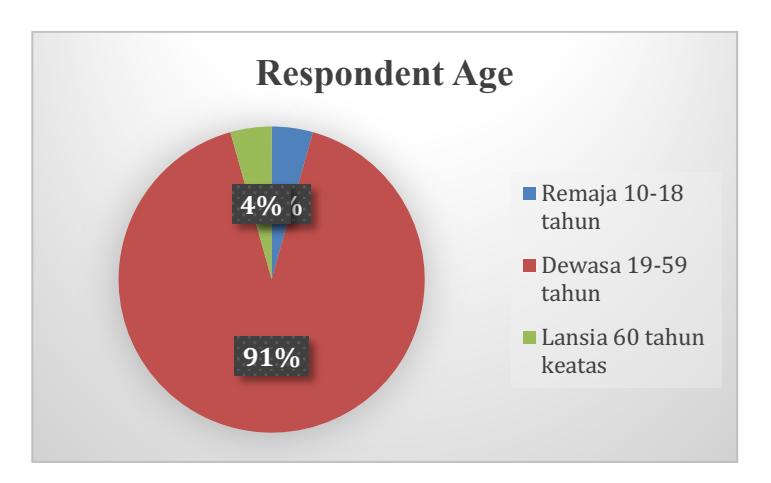
Figure 1. Respondent Age
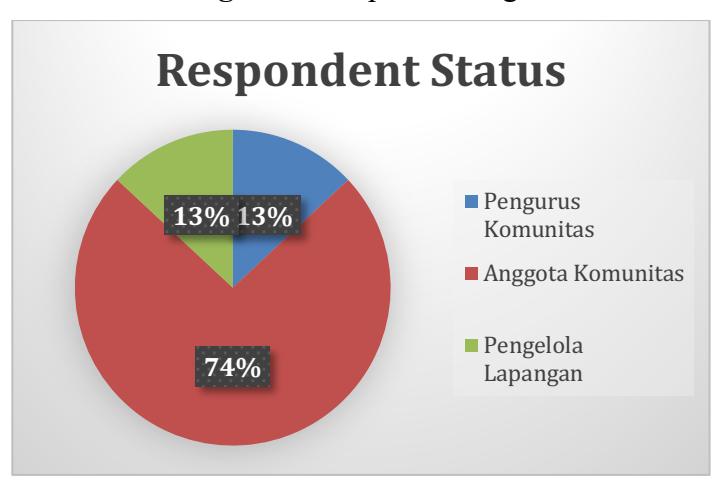
Figure 2. Respondent Status
Instruments and Data Collection Prosedure
The instrument used in this study was interviews. Interviews were conducted with respondents using a recorder and interview notes. The interview material was independently prepared by the researcher, taking into account interview points such as aspects of mutual cooperation (gotong royong), aspects of harmonious relationship (guub rukun), aspects of happiness, aspects of togetherness, and aspects of the existence of the football community in Yogyakarta. The research was conducted for approximately 5 weeks. The flow was as follows, establishing the focus of the research on identifying community-based football activities in Yogyakarta from a philosophical perspective, emphasizing social, cultural, and existential values. Reviewing literature, previous research, and documents relevant to community football, sports philosophy, and local culture as the conceptual basis of the research. Determining the research location in several football communities and fields in Yogyakarta: Jack' D FC, Big Reds Jogja, Senen Kemringet FC, QQ FC, Poenakawan Community Indonesia, Sonoraya field, and YIS field. The research subjects included players, team administrators, and field managers. The researcher was directly involved in several community activities to observe the dynamics of interaction, practices of mutual cooperation, togetherness, and the meaning of recreation that was present. Conducting in-depth interviews with respondents to explore their subjective experiences regarding the meaning of community football, both in terms of local identity, happiness, and character education.
Collect supporting documents to complement observation and interview data. Interpret data (field notes, interview transcripts, and documents) using a hermeneutic approach, namely reading meaning in depth through a cyclical process ( hermeneutic circle ) between the part and the whole. Check the consistency of the findings by comparing the results of observations, interviews, and document analysis to ensure the validity of the philosophical meaning found. Link the results of the analysis with philosophical concepts of togetherness, identity, and existence to emphasize the philosophical meaning of community football in Yogyakarta. Compile a final research report containing the main findings, philosophical
discussion, and conclusions regarding the value and meaning of community football as a social and cultural space.
Data Analysis
Data analysis in this study was conducted in stages, integrating ethnographic, phenomenological, and hermeneutic approaches to uncover the philosophical dimensions of community football activities in Yogyakarta. The steps were as follows: data reduction, categorization, hermeneutic analysis, philosophical synthesis, and drawing conclusions.
RESULTS
This research draws on the philosophy of happiness, the Javanese philosophy of togetherness, and the values of togetherness that exist within society. The philosophy of happiness emphasizes that sports, including football, are not only physical activities but also a means to bring joy, inner satisfaction, and balance to life. Epicurean philosophy, which emphasizes simplicity, moderation, and the pursuit of natural pleasures, offers valuable insights into addressing the stress and complexity of modern life, including in the context of sports (Prahasan, 2024) . This approach advocates for a balanced life, mental calm, and meaningful relationships.
In the context of the football community, happiness is not measured solely by victory or achievement, but rather by shared experiences, forged social relationships, and the feeling of having a space to express oneself. Sport has proven to be a valuable avenue for building strong personal relationships, shared goals, and collaboration, effectively fostering social cohesion, from sport stakeholders to the broader community. (Hudelist et al., 2025) . This makes community football a meaningful recreational activity, where individuals can escape from their routines and find collective joy.
Meanwhile, the Javanese philosophy of "guyub" emphasizes the importance of togetherness, harmony, and mutual cooperation as core values in social life. The philosophy of "Mangan Ora Mangan Sing Penting Kumpul" (eating or not, as long as we gather) is a cultural value that can strengthen social solidarity and address issues of social segregation (Nando et al., 2024) . This philosophy not only strengthens togetherness within a community but also emphasizes the importance of equality and cooperation in addressing social injustice.
In the practice of community football, this value is evident in the way community members support each other, share responsibilities, and maintain solidarity regardless of social or economic background. This sense of community makes football more than just a game, but also a space for social negotiation that strengthens local cultural ties. A conceptual framework exists that allows for an understanding of the sport's unique qualities and argues that current narratives surrounding it overlook its true power in building community (Räikkönen & Hedman, 2025) . Sport is identified as a unique social space where communities come together, a shared place where individuals create and strengthen friendly interactions and community ties. Thus, this study seeks to assert that happiness, community, and togetherness are not only philosophical underpinnings but also existential foundations that give profound meaning to the practice of community football in Yogyakarta.
Philosophical Values in Community Football
Mutual Cooperation: Training activities and tournaments are organized collectively without a strict hierarchical structure. In the context of community football, the principle of mutual cooperation is reflected in the way training activities and tournaments are organized collaboratively. There is no rigid hierarchical structure like in professional teams, but rather active participation from all community members. Each individual is involved according to their abilities some take care of equipment, others provide meals, and some even simply show up to support. "There's a regular duty schedule, so everything is done together, helping each other," said Haswin F., administrator of the Poenakawan Community Indonesia football community in Yogyakarta ( Haswin F., interview, July 7, 2025 ). This mutual cooperation demonstrates the philosophical values of togetherness and equality, where everyone has an important contribution regardless of social status.
Happiness: Sports activities that bring happiness. The main philosophy of community football is not just about winning, but about the happiness created through the activity itself. Playing football provides a space for community members to relieve stress, pursue hobbies, and find collective joy. "My goal in joining a football community is to stay healthy, but also to find a fun atmosphere," said Yudhi P., a member of the Senen Kemringet FC football community in Yogyakarta ( Yudhi P., interview, July 10, 2025 ). The happiness born from this activity is not only individual, but also contagious throughout the community. Thus, community football plays a role as a recreational facility that can improve the quality of life and mental health of the community.
Togetherness: Football serves as a means of strengthening social bonds, going beyond mere competition. Community football is not just about the game, but also about strengthening social bonds. The value of togetherness is present when football becomes a place to meet, interact, and build brotherhood that goes beyond the boundaries of competition. In fact, in many cases, matches or training sessions function more as social spaces that strengthen solidarity among community members. "Football is more about togetherness , meeting lots of friends. I wonder why there are still people who play football for fun but don't have fun ," said Muh. Agung Rifai P., a member of the QQ FC football community ( Muh. Agung Rifai P., interview, July 11, 2025 ). This philosophy emphasizes that community football is a reflection of a culture of togetherness, where competition is only a means, while the main goal is to maintain harmony and unity within the community.
Community Football as a Negotiation Space
Tradition vs. Modernity: Yogyakarta's football community adopts a modern league system but maintains family values. Community football in Yogyakarta demonstrates an interesting dynamic between traditional values and modern developments. On the one hand, the community adopts a more structured competition system, such as a league model or tiered tournaments that resemble a professional format. This demonstrates an openness to modernity in match management and administration. However, on the other hand, traditional values such as kinship, harmony, and togetherness are maintained. Matches are not only a means to determine a winner, but also a space for friendship, a place to share stories, and even a means to maintain local identity. Thus, community football becomes an arena for negotiation where elements of modernity can be accepted without losing the traditional roots inherent in local culture. "Our field has been used several times for tournaments with the Trofeo concept, and we as the management usually make an agreement with the participating teams to uphold sportsmanship to maintain brotherhood ," said Mbah Bardi, manager of the Sonoraya field in Yogyakarta ( Mbah Bardi, interview, July 13, 2025 ).
Resistance to Commercialization: Not yet a significant need for major sponsors (maintaining a conducive environment). One of the hallmarks of community football is its resistance to the strong flow of commercialization at the professional level. To date, many football communities in Yogyakarta have not been overly dependent on major sponsors or external investment. Funding is usually provided independently by members, or with modest support from the surrounding community. "Whatever it is, we usually chip in. Members and non -members are equal," said Sandi H., administrator of the Big Reds Jogja football community in Yogyakarta ( Sandi H., interview, July 10, 2025 ). This resistance is not simply a matter of limited access, but also a philosophical choice to maintain the conducive environment and independence of the community. By not being overly tied to sponsor interests, community football can remain focused on the values of recreation, togetherness, and the inner satisfaction of its members, without being caught up in the pressures of image or commercial targets.
Existential Meaning for Members
Local Identity: Football is a symbol of village/regional pride. For community members, football is not only seen as a sporting activity but also as a symbol of local identity. Each community member who joins usually carries the name of a particular village, hamlet, or region, making the match a representation of a community's collective pride. Community football thus serves as a medium to affirm the existence and dignity of one's hometown, while strengthening a sense of belonging among its members. "It feels good to join with friends in the community, and it's usually even more enjoyable if there are friends who come from the same area," said Iklasul IS, a member of the Big Reds Jogja football community in Yogyakarta ( Iklasul IS, interview, July 8, 2025 ). This local identity is not just a label, but also a source of motivation, solidarity, and pride that affirms the individual's existence as part of a larger community.
Character Education Medium: Values such as discipline, teamwork, and sportsmanship are taught through football. Community football also has existential significance because it serves as a practical and collective space for character education. Through training and matches, members learn discipline in time management, cooperation in achieving common goals, and sportsmanship in the face of victory and defeat. These values don't stop on the field, but are internalized in the members' daily lives. "I usually encourage my friends to get used to arriving on time," said AW Adi, a member of the Jack'D FC football community (A. W. Adi, interview, July 18, 2025 ). Thus, community football functions as a "school of life" that shapes the attitudes, behaviors, and mindsets of both young and adult generations, making it an important medium for personal development and social cohesion.
DISCUSSION
The spirit of mutual cooperation (gotong royong) in community football in Yogyakarta is evident in the way the community organizes every activity. From routine training and inter-village tournaments to field maintenance, everything is done collectively without having to wait for instructions from any specific party. Each individual has a role: some take care of food, others help prepare equipment, and some even simply come to offer moral support. This pattern of togetherness reflects Javanese culture, which emphasizes the value of "guyub rukun" ( living in harmony), where cooperation is considered more important than personal interests. With this spirit of mutual cooperation, community football becomes not only a recreational sport but also a social space that strengthens bonds between residents.
Furthermore, the practice of mutual cooperation (gotong royong) in community football demonstrates how sport can serve as a medium for preserving local cultural identity. Despite the increasing modernization and professionalization of football, communities in Yogyakarta continue to emphasize that success is not solely measured by victory, but also by the extent of community involvement in the process. This makes each match not just a competition, but also a celebration of togetherness. "When celebrating Indonesian Independence Day, local residents usually hold friendly matches by inviting several other teams from outside," said Anggoro, manager of the Sonoraya field in Yogyakarta (Anggoro, interview, July
15, 2025) . Gotong royong ultimately serves as a philosophical foundation that ensures community football remains inclusive, grounded, and relevant to the social life of the Yogyakarta community.
Happiness is one of the core values present in community football in Yogyakarta. For players, the primary goal of playing isn't simply to win, but rather to experience joy through physical activity, social interaction, and a break from everyday routines. Village football fields often serve as open recreational spaces, where people of all ages can gather, joke, and enjoy the game together. In this context, happiness stems from collective experiences: laughing together at funny moments on the pitch, encouraging one another even when they lose, and celebrating simple victories with camaraderie. "Winning or losing isn't important, what matters is that we can laugh," said Rangga DT, a member of the Big Reds Jogja community in Yogyakarta (Rangga DT, interview, July 13, 2025) . This emphasizes that the essence of community football is more about the pursuit of fun and togetherness than rigid competition.
Furthermore, happiness in community football also has a deeper philosophical dimension. According to Javanese cultural views, happiness is not only individual but also achieved when one is able to unite in social harmony. Community football reflects this value, as players' happiness often increases when they can share their joy with others, whether fellow players, spectators, or the surrounding community. The atmosphere of the match becomes a kind of social "celebration," where everyone feels involved without barriers of status or interest. Thus, community football in Yogyakarta not only provides physical entertainment but also builds collective happiness that strengthens a sense of brotherhood and social solidarity.
The value of togetherness, or guyub , is the spirit that animates community football in Yogyakarta. In every activity, whether routine training or inter-village matches, the atmosphere created is not only about competition on the field, but also about social gatherings that strengthen bonds between individuals. People come not merely to watch the game, but also to interact, share stories, and build solidarity. "Some residents even actively participate, such as selling food and drinks around the field," said Andhika MP, a YIS football field administrator in Yogyakarta
(Andhika MP, interview, July 11, 2025). Thus, community football functions as a social space where guyub is truly present: everyone feels a sense of belonging, everyone feels connected. This philosophy aligns with the Javanese view that togetherness is the foundation of harmony in life, where interpersonal relationships take precedence over personal interests.
Moreover, the camaraderie of community football balances competition and recreation. While every team naturally wants to win, the spirit of togetherness prevails over rivalry. In fact, post-match moments, such as photo sessions or simply sitting around chatting, are often more anticipated and remembered than the score itself. This demonstrates that the camaraderie born of community football transcends competition, making the sport a means of strengthening social bonds and fostering harmony within the community. Through camaraderie , community football in Yogyakarta is not just a sport, but also a celebration of humanitarian values and local culture.
Community football can be understood as a space for negotiation between tradition and modernity. In Yogyakarta, many football communities have begun to adopt modern competition formats, such as leagues with points systems or scheduled tournaments, while still maintaining the values of family and togetherness that characterize the community. This demonstrates that modernity does not necessarily erase local cultural roots but rather negotiates to remain in line with tradition. Matches are not only a showcase of technical skills but also a means of fostering camaraderie and celebrating local identity. Thus, community football serves as a bridge connecting two worlds: the order of the modern system with the flexibility of traditional values.
Furthermore, community football has become a negotiating ground against the increasingly dominant commercialization of professional football. Many community teams in Yogyakarta choose to remain independent, relying on member self-help or support from their local community, rather than relying on major sponsors. "If the pooled funds aren't enough, I usually have to cover everything, but it doesn't matter as long as everyone is happy," said Budi H., an administrator of the Jack' D FC football community ( Budi H., interview, July 17, 2025). This stance reflects a philosophical resistance to the dominance of economic interests, while maintaining the essence of community football—recreation, togetherness, and simplicity. In this way, the community successfully negotiates its position: open to innovation and modernization, yet maintaining its autonomy from commercial pressures that could potentially diminish the value of togetherness.
The existential meaning for members of a football community lies primarily in how they find identity and pride through this collective activity. For many teams in Yogyakarta, football is not just a form of recreation but also a symbol of local identity, representing their village or region of origin. By wearing a team uniform, each player feels they are bringing honor to their hometown on the field. This local identity affirms the individual's existence as part of a larger group, so that team success is perceived as a shared success. In this context, community football serves as a medium for strengthening a sense of belonging, solidarity, and pride in one's cultural roots and social environment.
Beyond identity, community football also provides existential meaning through its inherent character-building function. Values such as discipline, cooperation, sportsmanship, and perseverance are not only taught verbally but also practiced directly in training routines and matches. This process creates an existential experience that shapes members' perspectives on life off the field. Defeat, for example, is understood as a lesson in humility, while victory symbolizes collective hard work. "Everyone on the field wants to win, but brotherhood is more important than victory," said Husni M., a member of the Jack 'D FC football community ( Husni M., interview, July 14, 2025). Thus, community football serves as a holistic space for self-development, where members discover the meaning of their existence not only as players but also as individuals connected to social and moral values.
CONCLUSION
Community-based football activities in Yogyakarta cannot be understood solely as a sport, but also as a philosophical practice reflecting Javanese cultural values. This study recommends a sports policy approach based on local wisdom to support community sustainability. The identification of community-based football activities in Yogyakarta demonstrates that this sport serves not only as a recreational arena but also as a space for the actualization of philosophical values deeply rooted in the community's social life. The values of mutual cooperation, happiness, and togetherness are the foundations that distinguish community football from professional forms. Training activities, tournaments, and even field facility management reflect a collective spirit without rigid hierarchies, while emphasizing that togetherness and joy are more important than simply pursuing victory. This demonstrates that community football reflects local culture, where sport serves as a means of strengthening social bonds, maintaining harmony, and providing an inclusive recreational space for all groups.
Furthermore, community football also serves as a space for negotiation and provides existential meaning for its members. On the one hand, the community is able to adopt modern systems such as league formats, while maintaining family values and resistance to excessive commercialization. On the other hand, community football serves as a symbol of local identity and a medium for character education, where the values of discipline, cooperation, and sportsmanship are practiced in daily life. Thus, community football in Yogyakarta is not merely a recreational sporting activity, but also a cultural and philosophical practice that strengthens a sense of belonging, social solidarity, and meaning in life for its members. Suggestions for further research include comparative studies with football communities in other regions.
ACKNOWLEDGEMENT
This research has been presented at the National Conference of Football and Science (NCFS 2025). Therefore, the author expresses his deepest gratitude to all football communities in Yogyakarta who have been an important part of this research, namely Jack' D FC, Big Reds Jogja, Senen Kemringet FC, QQ FC, Poenakawan Community Indonesia, as well as the managers of the Sonoraya field and the YIS field. The active participation, openness, and patience given by the players, team administrators, and field managers have allowed the author to conduct participatory observations, phenomenological interviews, and collect relevant documents.
The author also expresses gratitude to the respondents who took the time to share their subjective experiences, allowing this study to explore the philosophical meaning of community football in depth. Hopefully, the results of this study will
make a tangible contribution to the development of recreational football studies, particularly the philosophy of sport, in the context of community football in Yogyakarta.
REFERENCES
- Anderson-Butcher, D., Bates, S., Wade-Mdivanian, R., & Mack, S. (2024). Community sport as a context for positive youth development. In Positive Youth Development through Sport (3rd Editio, pp. 269–287). Routledge. https://doi.org/10.4324/9781003395867-25
- Baker, M. K., Graham, J. A., Smith, A., & Smith, Z. T. (2019). Sport-Specific Free Play Youth Football/Soccer Program Recommendations Around the World. International Sport Coaching Journal , 6 (2), 234–243. https://doi.org/10.1123/iscj.2019-0044
- Bangsbo, J., Hansen, P. R., Dvorak, J., & Krustrup, P. (2015). Recreational football for disease prevention and treatment in untrained men: a narrative review examining cardiovascular health, lipid profile, body composition, muscle strength and functional capacity. British Journal of Sports Medicine , 49 (9), 568 LP–576. https://doi.org/10.1136/bjsports-2015-094781
- Castillo-Bellot, I., Mora-Gonzalez, J., Fradua, L., Ortega, F.B., & Gracia-Marco, L. (2019). Effects of Recreational Soccer on Health Outcomes: A Narrative Review. Journal of Science in Sport and Exercise , 1 (2), 142–150. https://doi.org/10.1007/s42978-019-0012-9
- Fuller, A. (2015). Approaching football in Indonesia. Soccer & Society , 16 (1), 140–148. https://doi.org/10.1080/14660970.2014.954387
- Hudelist, D., Papageorgiou, E., & Moustakas, L. (2025). Social Cohesion Through Sport: Practical Implementation by the fair play Initiative for Diversity and Anti-Discrimination. In Sport for Social Cohesion: Theoretical and Practical Perspectives (1st ed., pp. 142–152). Routledge. https://doi.org/10.4324/9781003383291-13
- Nando, F., Arifudin, A., & Alrizis, M. (2024). Analyzing the Philosophy of Mangan Ora Mangan Sing Penting Kumpul in Promoting Social Solidarity and Addressing Social Inequality. Jurnal Sosiologi Reflectektif , 18. https://doi.org/10.14421/szfryh83
- Pangestu, MY, Syarah, NS, Ramdan, R., & Wahyudin, E. (2024). KKM STKIP Bina Mutiara Sukabumi Conducts Observations on Community Enthusiasm for Soccer. COMSERVA: Journal of Research and Community Service , 4 (5), 1300–1304. https://api.semanticscholar.org/CorpusID:273032934
- Prahasan, M. (2024). Applying Epicurean Philosophy to Managing Modern Pursuits of Happiness and Life Satisfaction – An Analytical Perspective. In
- International Journal of Scientific Research and Management (IJSRM) (Vol. 12, Issue 08, pp. 1916–1923). https://doi.org/10.18535/ijsrm/v12i08.sh01
- Räikkönen, T., & Hedman, J. (2025). Unlocking the power of sport: an exploration of the nexus between shared place, community competence, and sense of community. International Journal of Sport Policy and Politics , 17 (1), 81– 99. https://doi.org/10.1080/19406940.2024.2396836
- Sarmento, H., Manuel Clemente, F., Marques, A., Milanovic, Z., David Harper, L., & Figueiredo, A. (2020). Recreational football is medicine against noncommunicable diseases: A systematic review. Scandinavian Journal of Medicine & Science in Sports , 30 (4), 618–637. https://doi.org/https://doi.org/10.1111/sms.13611
- Sudharma, M., & Nurodin, D. (2025). FOOTBALL AS A MEANS OF FORMING CHILDREN'S PERSONALITY AND SOCIAL INTERACTION. ACHIEVEMENT JOURNAL . https://api.semanticscholar.org/CorpusID:281035688
- Xu, Q., Qi, K., Liu, G., Li, T., & Clemente, F. M. (2024). Effects of a 16-week recreational small-sided games soccer intervention on body composition and physical fitness in sedentary young adults: A randomized controlled study. Heliyon , 10 (3). https://doi.org/10.1016/j.heliyon.2024.e25242
- Yusanto, Y. (2019). Various Qualitative Research Approaches . 1 (1), 1–13.