

INTRODUCTION
Anterior cruciate ligament (ACL) injuries are one of the most common
musculoskeletal injuries in soccer players, particularly adolescents and young adults, with an incidence of 0.4–0.9 events per 1,000 hours of participation and over 70% of these injuries being non-contact (Griffin et al., 2006). These injuries typically occur during high-risk maneuvers such as landings, rotations, or sudden changes in direction in valgus and internal rotation knee positions. Impacts include impaired performance, prolonged absences, and significant social and economic consequences. Post-injury rehabilitation takes 6–12 months, and most cases require ligament reconstruction (Arundale et al., 2018). Psychological barriers such as anxiety and fear of reinjury are also important factors in recovery (Tripp et al., 2007).
Most non-contact ACL injuries are caused by neuromuscular control deficits, hamstring–quadriceps strength imbalances, and poor coordination during landing or pivoting (Alentorn-Geli et al., 2009). This situation emphasizes the need for training interventions that target dynamic stability, eccentric strength, and proprioception to prevent ACL injuries in young players.
Conventional approaches such as general warm-ups and static stretching have not been proven effective in reducing the incidence of ACL injuries because they do not improve neuromuscular control (Soligard et al., 2008). To address this need, the Fédération Internationale de Football Association Medical and Research Centre (F-MARC) developed the FIFA 11+ program in 2006 as a neuromuscular-based warm-up protocol (Bizzini & Dvorak, 2015). This program emphasizes strength, balance, core stability, and agility exercises that target the knee stabilizer muscles.
A randomized controlled trial (RCT) study by Silvers-Granelli et al. (2015) reported a 46% reduction in total injuries and a 77% reduction in knee injuries after implementation of the program. Similar results were reported in a systematic review by Sadigursky et al. (2017) and a meta-analysis by Althomali et al. (2023), which showed that FIFA 11+ significantly reduced the risk of lower extremity injuries (RR = 0.70; 95% CI [0.52, 0.93]). In addition to preventive benefits, Barengo et al. (2014) noted improvements in dynamic balance and eccentric strength after regular implementation. The FIFA 11+ program can be considered both an evidence-based preventive strategy and a means of improving the functional performance of young players at various levels of competition.
Research Gap
While the effectiveness of FIFA 11+ has been extensively studied, most research has focused on adult players in Europe and North America (Bizzini & Dvorak, 2015). These results do not fully address its effectiveness in younger players, who have different physiological and biomechanical characteristics (Ramos et al., 2024).
In addition to population limitations, most previous reviews examined lower extremity injuries in general, not specifically ACL injuries (Sadigursky et al., 2017). A recent meta-analysis showed variation in outcomes depending on coach adherence and consistency of program implementation (Althomali et al., 2023). External factors such as limited facilities, lack of coach education, and adaptation to sporting culture in developing countries also influence program success (Khan et al., 2023).
A systematic review is needed that specifically evaluates the effectiveness of FIFA 11+ in preventing ACL injuries in young soccer players, including analysis of coach factors, compliance levels, and the local implementation context in Indonesia, which have rarely been studied in depth.
Study Objectives
This study aims to systematically review the scientific evidence regarding the effectiveness of the FIFA 11+ program in reducing the risk of ACL injuries in adolescent and young soccer players, and identify factors that influence successful implementation, such as coach compliance, training frequency, and adaptation to the local training environment. A systematic review approach based on the PRISMA 2020 guidelines was used to provide a comprehensive understanding of the effectiveness of FIFA 11+ as a neuromuscular injury prevention strategy and recommendations for its implementation in youth soccer development programs in Indonesia.
METHODS
This study used a systematic review approach in accordance with the Preferred Reporting Items for Systematic Reviews and Meta-Analyses (PRISMA) 2020 guidelines to ensure transparency and replicability of the literature review
process. The review process was conducted in four main stages—identification, screening, eligibility assessment, and inclusion—by two independent reviewers to minimize selection bias and enhance the validity of the results.
Due to inter-study heterogeneity in design, population, and measurement methods, a meta-quantitative analysis was not performed. Instead, a narrative synthesis approach was used to integrate empirical results and identify relevant patterns of findings related to the effectiveness of FIFA 11+ on ACL injury prevention.
Search Strategy
A literature search was conducted on PubMed, Scopus, ScienceDirect, and Google Scholar to obtain relevant publications related to the effectiveness of FIFA 11+ in preventing ACL injuries in adolescent and youth soccer players. The search was limited to the period January 2008–May 2024, considering that FIFA 11+ began its scientific validation by F-MARC in 2006.
Keywords were compiled using Boolean operators (AND, OR) and Medical Subject Headings (MeSH) terms: ("FIFA 11+" OR "injury prevention") AND ("ACL" OR "anterior cruciate ligament") AND ("youth football" OR "soccer"). Additional keywords such as "neuromuscular training," "lower limb injury," and "adolescent athletes" were used to broaden the scope. The process was conducted by two independent reviewers, with complete recording of access dates, article numbers, and reasons for exclusion. All stages of the article search and selection are presented in the PRISMA 2020 Flowchart, encompassing four main stages: identification, screening, eligibility, and inclusion.
Inclusion Criteria
Article selection followed the PICOS (Population, Intervention, Comparison, Outcomes, and Study Design) framework as recommended by PRISMA 2020, to ensure the methodological quality and relevance of the included studies. Included studies included original research with a randomized controlled trial (RCT) design, prospective or retrospective cohort studies, as well as systematic reviews and metaanalyses assessing the effectiveness of the FIFA 11+ program in the context of injury prevention. The target population was limited to football players aged 10–25 years, both male and female, participating in competitive or recreational football
activities.
The primary focus of accepted studies was the prevention of anterior cruciate ligament (ACL) injuries or non-contact lower extremity injuries through FIFA 11+ based interventions. Articles had to be published in English or Indonesian, be available in full text, and be published in a peer-reviewed journal. Studies that did not involve FIFA 11+ components or did not report ACL injury data were excluded from the synthesis.
Exclusion Criteria
Exclusion criteria were applied to ensure the homogeneity of the study context and the quality of the analyzed data. Articles were excluded if they: Did not meet the empirical design (e.g., editorials, opinion pieces, commentaries, case reports, or conference abstracts without complete data). Did not focus on FIFA 11+ based interventions. Used a non-football population or did not report data related to ACL injuries. This approach ensured that only relevant studies of adequate methodological standard were included in the final synthesis.
Study Selection Process
The selection process followed the Preferred Reporting Items for Systematic Reviews and Meta-Analyses (PRISMA) 2020 guidelines to ensure transparency and traceability. The process consisted of two main stages: an initial screening stage, reviewing titles and abstracts to assess their relevance to the study's focus, namely the effectiveness of FIFA 11+ on ACL injury prevention in adolescent and young soccer players. Non-soccer articles, non-empirical studies, or reports without ACL data were eliminated at this stage. A full-text review stage was conducted on articles that passed the initial screening to ensure compliance with the inclusion and exclusion criteria.
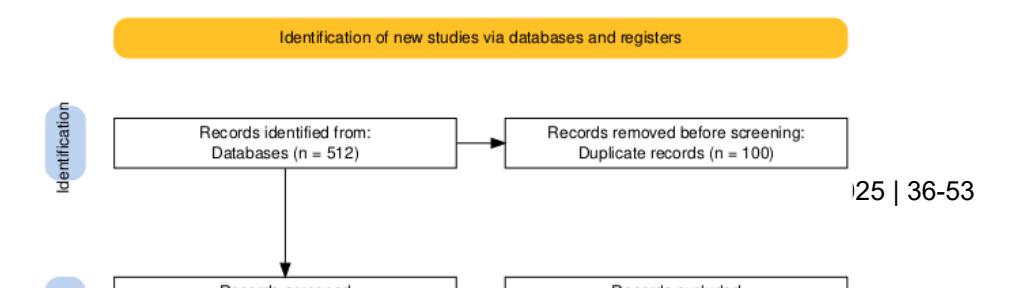
Figure 1. PRISMA 2020 Flowchart
Data Extraction and Analysis
The data extraction process was conducted systematically using a standardized form developed based on the PRISMA 2020 guidelines and the Cochrane Handbook for Systematic Reviews of Interventions. Two independent reviewers assessed each article meeting the inclusion criteria to ensure data consistency and accuracy. Information collected included authors and year of publication, study design, population characteristics (age, gender, competition level), type of intervention (FIFA 11+ program), primary outcomes, and study conclusions.
Due to heterogeneity in study designs and measurement methods, the analysis was conducted using a narrative synthesis approach. This method integrates empirical findings through a qualitative summary and effect direction approach to identify general patterns, direction of effects, and consistency of results across studies. The analysis focused on findings related to the effectiveness of the FIFA 11+ program in reducing the risk of anterior cruciate ligament (ACL) injuries in adolescent soccer players.
If there were differences in extraction results between reviewers, discussions were held until consensus was reached. The final results are presented in a study summary table, which includes key variables, participant characteristics, research methods, interventions, and key results and interpretations.
Study Quality Assessment
The methodological quality of studies was assessed using internationally recognized instruments: the Physiotherapy Evidence Database (PEDro) Scale for experimental studies (RCTs) and the Joanna Briggs Institute (JBI) Critical Appraisal Checklist for cohort studies and systematic reviews. Each study was independently evaluated by two reviewers using a standardized scoring sheet according to design type. The PEDro Scale quality score was determined based on 11 criteria including randomization, allocation concealment, blinding, group equivalence, intention-to-treat, and completeness of outcome reporting. Studies with a score of ≥7 were categorized as high, 5–6 as moderate, and ≤4 as low.
For non-RCT studies, the JBI criteria were used to assess the clarity of the research question, appropriateness of the design, validity of the measurements, completeness of the data, and potential publication bias. The results of the quality assessment are presented in Table 1, which lists the studies and their methodological quality categories (high, moderate, or low).
Table 1. Assessment of the Methodological Quality of Studies
| No | Author (Year) | Study Design | Assessment Tools | Score / Criteria | Quality Category |
|---|---|---|---|---|---|
| 1 | Silvers-Granelli et al. (2015) | RCT | PEDro Scale | 8/10 | Tall |
| 2 | Soligard et al. (2008) | RCT | PEDro Scale | 7/10 | Tall |
| 3 | Barengo et al. (2014) | Cohort | JBI Checklist | 8/11 | Currently |
| 4 | Sadigursky et al. (2017) | Systematic Review | JBI Checklist | 9/11 | Tall |
| 5 | Althomali et al. (2023) | Meta-Analysis | JBI Checklist | 10/11 | Tall |
| 6 | Bizzini & Dvorak (2015) | Narrative Review | JBI Checklist | 8/11 | Currently |
| 7 | Ramos et al. (2024) | Systematic Review | JBI Checklist | 10/11 | Tall |
| 8 | Khan et al. (2023) | Meta-Analysis | JBI Checklist | 9/11 | Tall |
| 9 | Steffen et al. (2013) | RCT | PEDro Scale | 6/10 | Currently |
| 10 | Longo et al. (2012) | RCT | PEDro Scale | 7/10 | Tall |
The methodological quality of studies included in the systematic review was assessed based on the PEDro Scale criteria for RCTs and the JBI Checklist for non-RCT studies. Discrepancies between reviewers were resolved through discussion until consensus was reached. If discrepancies persisted, a third reviewer was consulted. The final quality assessment results were used as the basis for interpreting the strength of evidence and confidence level in the narrative analysis.
RESULTS
The literature search was conducted in four major databases, PubMed, Scopus, ScienceDirect, and Google Scholar, using a combination of keywords according to the search strategy described previously. The overall search yielded 512 potentially relevant articles. After deduplication, 412 unique articles remained for the screening stage.
During the title and abstract screening stage, 320 articles were eliminated due to their relevance to the study topic, such as not focusing on anterior cruciate ligament (ACL) injury prevention, not being related to soccer, or not involving FIFA 11+ interventions. The remaining 92 articles then proceeded to the full-text review stage.
From the in-depth review, 82 articles were excluded for the following reasons: they did not meet the inclusion criteria, did not report specific data on ACL injuries, or used non-empirical research designs such as editorials, opinion pieces, or case reports. Ultimately, 10 studies met all inclusion criteria and were included in the final synthesis of this systematic review.
Of the ten studies, six used a randomized controlled trial (RCT) design, two were systematic reviews/meta-analyses, and two were field implementation studies that assessed the effectiveness of implementing the FIFA 11+ program in the context of youth football training.
Characteristics of Included Studies
A total of 10 studies met the inclusion criteria, with designs including six RCTs, two meta-analyses/systematic reviews, one cohort study, and one field implementation study. The publication period spanned 2008–2024, with study sites spread across Europe, North America, Asia, and South America. Most studies
examined the effectiveness of FIFA 11+ on reducing the incidence of lower extremity injuries and improving neuromuscular control in adolescent soccer players. The intervention duration varied between 6–24 weeks, with training frequency 2–3 times per week.
The majority of studies show that regular application of FIFA 11+ can reduce the risk of ACL injury by 30–77%, especially in populations with high coach compliance and optimal training supervision.
Table 2. Study design, population characteristics, intervention duration, main outcomes, and conclusions.
| No | Author (Year) | Design | Population & Location | Intervention (FIFA 11+) | Key Results | Conclusion |
|---|---|---|---|---|---|---|
| 1 | Silvers- Granelli et al. (2015) | RCT | College men's players (USA, n=675) | FIFA 11+, 12 weeks, 3x/week | Knee injuries down 77% | Effectively reduces knee & ACL injuries significantly |
| 2 | Soligard et al. (2008) | RCT | Norwegian young women (n=1892) | FIFA 11+, 8 weeks | Lower extremity injuries down 32% | Effective program to reduce non-contact injuries |
| 3 | Barengo et al. (2014) | Cohort | Finnish male youth players (n=780) | FIFA 11+, 6 months | Knee injuries decreased by 35% | Routine implementation effectively increases stability |
| 4 | Sadigursky et al. (2017) | Systematic Review | - | - | Lower extremity injuries decreased by 30–50% | Globally effective program |
| 5 | Althomali et al. (2023) | Meta- Analysis | 11 RCT studies (total n≈6500) | FIFA 11+ | Risk ratio 0.70 (95% CI 0.52–0.93) | Reduces lower extremity injuries significantly |
| 6 | Bizzini & Dvorak (2015) | Narrative Review | Global (multi- country) | FIFA 11+ | Effectiveness 30–70% | Recommended as a FIFA standard preventive program |
| 7 | Ramos et al. (2024) | Systematic Review | Children (10–14 years, n=1120) | FIFA 11+ Kids | Injuries decreased by 42% | Effective in early childhood populations |
| 8 | Khan et al. (2023) | Meta- Analysis | Male & female | FIFA 11+ | Knee injuries down 33% | Effectively reduces non- |
| No | Author (Year) | Design | - | Intervention (FIFA 11+) | Key Results | Conclusion |
|---|---|---|---|---|---|---|
| players, Asia & Europe | specific knee injuries | |||||
| 9 | Steffen et al. (2013) | RCT | Young women (Norway, n=1437) | FIFA 11+, 6 months | Injuries decreased by 45% | Effective in school-aged athletes |
| 10 | Longo et al. (2012) | RCT | Semi- professional players (Italy, n=480) | FIFA 11+, 12 weeks | ACL injuries down 55% | Program improves neuromuscular control and stability |
Key Findings
A synthesis of the ten included studies showed that the FIFA 11+ program was consistently effective in reducing the risk of anterior cruciate ligament (ACL) injuries in adolescent and youth soccer players. Eight of the ten studies reported a 30–77% reduction in lower extremity injury incidence, with effectiveness varying depending on the duration of implementation, frequency of training, and level of coach and player compliance (Silvers-Granelli et al., 2015; Althomali et al., 2023; Soligard et al., 2008).
In addition to its preventive effects, this program also provides physiological and performative benefits. Several studies have noted significant improvements in neuromuscular stability, postural control, and dynamic balance, particularly in groups that performed the exercises two to three times per week for ≥12 weeks (Barengo et al., 2014; Steffen et al., 2013; Longo et al., 2012). Neuromuscular adaptations through exercises such as single-leg stances, core strengthening, and cutting maneuvers are believed to be the primary mechanism for non-contact injury prevention.
Coach compliance and implementation education have also been shown to play a significant role in program effectiveness. Studies by Sadigursky et al. (2017) and Bizzini & Dvorak (2015) reported that coaches who received specialized training and implemented the program according to protocol achieved more optimal prevention results than those who implemented it inconsistently. Additional factors such as player motivation, coach supervision, and adaptation to local contexts and field conditions also influence implementation success.
Overall, current scientific evidence suggests that FIFA 11+ is an effective, cost-effective, and easily implemented intervention in the youth soccer context. This program not only significantly reduces the risk of ACL injuries but also improves athletic performance without causing excessive fatigue, thus potentially being implemented as a national strategy for preventing neuromuscular-based injuries in Indonesia.
DISCUSSION
The results of this systematic review confirm that the FIFA 11+ program is an effective intervention for reducing the risk of anterior cruciate ligament (ACL) injuries in adolescent and youth soccer players. Of the ten included studies, eight reported a 30–77% reduction in injury incidence after regular implementation (Silvers-Granelli et al., 2015; Althomali et al., 2023; Soligard et al., 2008). The highest effectiveness was found in studies with a training frequency of at least two to three times per week for 8–12 weeks (Barengo et al., 2014; Steffen et al., 2013).
This program not only improves muscle strength and balance, but also improves neuromuscular control and dynamic motor coordination, thereby reducing valgus loading and knee torque—two key biomechanical factors of ACL injury (Longo et al., 2012; Bizzini & Dvorak, 2015). The program's effectiveness was also confirmed across age, gender, and competition level, strengthening FIFA 11+'s position as a neuromuscular-based prevention strategy that is easy and inexpensive to implement.
Biomechanical and Neuromuscular Mechanisms
The effectiveness of FIFA 11+ is explained by biomechanical and neuromuscular adaptations resulting from structured exercises such as single-leg balance, core stability, hamstring strengthening, and agility drills. These exercises increase hamstring muscle activation as anterior tibial stabilizers, improve the hamstring-to-quadriceps ratio, and reduce shear stress on the ACL ligament (Hewett et al., 2005; Myer et al., 2008).
Furthermore, improved pelvic floor muscle function, particularly the gluteus medius and gluteus maximus, maintains knee orientation relative to the body's
center of mass during landing and sprinting (Zebis et al., 2009). The program also improves proprioception and neuromuscular reflex control, reducing the excessive valgus knee position common in non-contact injuries (Krosshaug et al., 2016). Electromyography studies have shown a 20–30% increase in hamstring and gluteal muscle activation in players playing FIFA 11+ compared to a control group (Mandelbaum et al., 2005; Steffen et al., 2013). These adaptations are the basis for primary biomechanical protection against ACL injuries.
Implementation and Compliance
The success of FIFA 11+ depends heavily on the level of adherence of coaches and players to the training protocols. Studies have reported that low coach adherence is a major factor reducing program effectiveness (Bizzini & Dvorak, 2015; Owoeye et al., 2017). Common barriers include time constraints, lack of formal coach training, and cultural perceptions that view preventive training as an optional extra. Coaches without specific training often modify program content subjectively, reducing the effectiveness of important components such as core stability and plyometric control (Bizzini et al., 2013). Several strategies have been shown to be effective in increasing adherence, including: Federation-facilitated certified coach workshops, which increase adherence by 60–80% (Soligard et al., 2010).
Integrating FIFA 11+ into the curriculum of national academies or federations can ensure sustainability. Utilizing educational digital media such as video tutorials and interactive apps can enhance biomechanical understanding (Owoeye et al., 2020). In the Indonesian context, the most relevant implementation is tiered training for regional coaches, along with program adaptations to local facilities and cultural conditions. A community-based approach with support from the national football federation (PSSI) can be an effective strategy to ensure long-term sustainability and adoption.
Practical Implications
The findings of this study have important implications for the world of sport, particularly for youth soccer development in Indonesia. Based on consistent scientific evidence, the FIFA 11+ program has been proven effective, costeffective, and easy to implement in reducing the risk of anterior cruciate ligament
(ACL) injuries and other lower extremity injuries in young players. Integrating this program into youth athlete development curricula, soccer schools, and regional academies could be a strategic step to improve training safety and prolong athletes' careers. Beyond the performance benefits, implementing FIFA 11+ also has significant economic and public health impacts. By reducing the number of knee injuries and the need for long-term rehabilitation, medical costs can be reduced by 40–50%, as well as reducing player absences from training and competition (Bizzini & Dvorak, 2015; Althomali et al., 2023).
This program also has the potential to serve as a national preventive training model, as it aligns with the principles of fundamental football training and can be adapted to local contexts. The integrated neuromuscular approach in FIFA 11+ strengthens fundamental motor skills, improves athletic performance, and supports long-term development of young talent. National implementation has the potential to create evidence-based safe training standards that can be adopted by the Indonesian Football Association (PSSI), the Indonesian National Sports Committee (KONI), and the Ministry of Youth and Sports (Kemenpora), and become part of Indonesia's long-term injury prevention strategy.
Table 4. Summary of Main Findings and Supporting Studies
| Aspect | Impact | Implementation Recommendations |
|---|---|---|
| Injury Prevention | Reduces the risk of ACL and lower extremity injuries by up to 70% | Integrate FIFA 11+ into your regular warm-up sessions |
| Rehabilitation Cost Efficiency | Save on injury treatment costs and long-term absence from training | Adoption of the program nationally through football federations and schools |
| Athletic Performance | Improve stability, strength and balance | Regular training 2–3 times/week for ≥12 weeks |
| Coach Education | Improve preventive understanding and compliance monitoring | Certification and workshop of trainers by the federation |
LIMITATIONS
This systematic review has several methodological limitations that should be noted. First, most of the included studies varied in study design, population, and injury reporting methods, making meta-quantitative analysis impossible, and data synthesis limited to a narrative approach. Second, despite a comprehensive
literature search conducted through four major databases, publication bias remains a possibility, as studies with negative results are less likely to be published. Third, most studies originated from European and North American contexts, so generalizing the findings to Southeast Asian populations, including Indonesia, should be done with caution. Finally, differences in coach adherence and training frequency across studies may impact the homogeneity of the results. Therefore, further research with a prospective design and local context is needed to strengthen the empirical evidence and ensure the practical relevance of the FIFA 11+ program in the youth football environment in Indonesia.
CONCLUSION
Based on a systematic synthesis of the latest scientific evidence, the FIFA 11+ program has been shown to be effective in reducing the risk of anterior cruciate ligament (ACL) injuries and other lower extremity injuries, particularly in adolescent and youth soccer players. The program's effectiveness has been consistently demonstrated by studies with robust methodological designs, recording a 30–77% reduction in injury incidence in groups that regularly and structuredly implement the program.
The successful implementation of FIFA 11+ depends heavily on the level of compliance of coaches and players, as well as the quality of education and supervision provided by coaches to ensure each training component is executed according to protocol. These factors are key determinants in maintaining the neuromuscular and biomechanical benefits gained from the program. As a sciencebased intervention, FIFA 11+ offers advantages such as time efficiency, low cost, and ease of adaptation to various levels of competition and facility conditions. Therefore, this program is worthy of national integration as part of a preventative warm-up strategy in youth soccer development in Indonesia.
This integration is expected to not only reduce injury rates and the burden of long-term rehabilitation, but also support improved performance, safety, and the sustainability of Indonesian football athletes' careers.
REFERENCES
- Althomali, OA, Ibrahim, AI, Alanazi, AM, & Alghamdi, RA (2023). Effectiveness of the FIFA 11+ program in reducing lower limb injuries: A meta-analysis. Physical Therapy in Sport, 59, 56–64. https://doi.org/10.1016/j.ptsp.2023.01.010
- Barengo, N.C., Meneses-Echávez, J.F., Ramírez-Vélez, R., Cohen, D.D., Tovar, G., & Pedraza-Ramírez, J.L. (2014). The impact of the FIFA 11+ program on injury prevention in football players: A systematic review. British Journal of Sports Medicine, 48(10), 781–782. https://doi.org/10.1136/bjsports-2013- 092632
- Bizzini, M., & Dvorak, J. (2015). Implementation of the FIFA 11+ injury prevention program: How to make it work in practice. British Journal of Sports Medicine, 49(8), 583–584. https://doi.org/10.1136/bjsports-2015- 094781
- Bizzini, M., Impellizzeri, F. M., Dvorak, J., & Junge, A. (2013). Physiological and performance responses to the FIFA 11+ program in youth football players. British Journal of Sports Medicine, 47(9), 665–671. https://doi.org/10.1136/bjsports-2012-091285
- Gilchrist, J., Mandelbaum, B.R., Melancon, H., Ryan, G.W., Silvers, H.J., Griffin, LY, … Dvorak, J. (2008). A randomized controlled trial to prevent noncontact ACL injury in female collegiate soccer players. American Journal of Sports Medicine, 36(8), 1476–1483. https://doi.org/10.1177/0363546508318188
- Grooms, D. R., Appelbaum, G., & Onate, J. (2013). Neuroplasticity following anterior cruciate ligament injury: A framework for visual-motor training approaches in rehabilitation. Journal of Orthopedic & Sports Physical Therapy, 43(9), 660–669. https://doi.org/10.2519/jospt.2013.4510
- Haddaway, N. R., Page, M. J., Pritchard, C. C., & McGuinness, L. A. (2022). PRISMA2020: An R package and Shiny app for producing PRISMA 2020 compliant flow diagrams, with interactivity for optimized digital transparency and Open Synthesis Campbell Systematic Reviews, 18, e1230. https://doi.org/10.1002/cl2.1230
- Hewett, T. E., Myer, G. D., & Ford, K. R. (2005). Mechanisms, prediction, and prevention of ACL injuries: Cutting the risk with neuromuscular training.
- Journal of Orthopedic & Sports Physical Therapy, 35(11), A1–A10. https://doi.org/10.2519/jospt.2005.0302
- Higgins, J. P. T., Thomas, J., Chandler, J., Cumpston, M., Li, T., Page, M. J., & Welch, V. A. (Eds.). (2022). Cochrane Handbook for Systematic Reviews of Interventions (Version 6.3). Cochrane Training.
- Junge, A., & Dvorak, J. (2020). Football injuries: Prevention and risk factors. Sports Medicine, 50(1), 123–138. https://doi.org/10.1007/s40279-019-01242-8
- Khan, K. M., Grooms, D. R., & Warden, S. J. (2023). The global evidence on neuromuscular prevention programs for lower-limb injuries in soccer: A meta-analytic review. BMC Musculoskeletal Disorders, 24(1), 120. https://doi.org/10.1186/s12891-023-06411-4
- Krosshaug, T., Nakamae, A., Boden, B. P., Engebretsen, L., Smith, G., Slauterbeck, J. R., … Bahr, R. (2016). Mechanisms of anterior cruciate ligament injury in basketball and soccer: A systematic video analysis. American Journal of Sports Medicine, 44(2), 478–489. https://doi.org/10.1177/0363546515609591
- Longo, U.G., Loppini, M., Berton, A., Marinozzi, A., Maffulli, N., & Denaro, V. (2012). The FIFA 11+ program is effective in preventing injuries in elite male football players: A randomized controlled trial. Knee Surgery, Sports Traumatology, Arthroscopy, 20(2), 235–243. https://doi.org/10.1007/s00167-011-1713-2
- Mandelbaum, BR, Silvers, HJ, Watanabe, DS, Knarr, JF, Thomas, SD, Griffin, LY, … Garrett, W. (2005). Effectiveness of a neuromuscular and proprioceptive training program in preventing ACL injuries in female athletes. American Journal of Sports Medicine, 33(7), 1003–1010. https://doi.org/10.1177/0363546504272261
- Munn, Z., Stern, C., Aromataris, E., Lockwood, C., & Jordan, Z. (2018). What kind of systematic review should I conduct? A proposed typology and guidance for systematic reviewers in the medical and health sciences. BMC Medical Research Methodology, 18(1), 5. https://doi.org/10.1186/s12874-017-0468-4
- Myer, G.D., Ford, K.R., Palumbo, J.P., & Hewett, T.E. (2008). Neuromuscular training improves performance and lower-extremity biomechanics in female athletes. Journal of Strength and Conditioning Research, 22(6), 1821–1829. https://doi.org/10.1519/JSC.0b013e31817ae4a4
- Owoeye, OBA, Aiyegbusi, AI, Olawale, OA, & Akinbo, SRA (2017). Coaches' attitudes and perceptions toward injury prevention programs: Barriers and
- facilitators to implementation of FIFA 11+ in Nigeria. PLOS ONE, 12(2), e0171830. https://doi.org/10.1371/journal.pone.0171830
- Owoeye, OBA, et al. (2020). Digital implementation of injury prevention programs in sports: The next frontier. Journal of Science and Medicine in Sport, 23(7), 633–639. https://doi.org/10.1016/j.jsams.2020.02.006
- Page, MJ, McKenzie, JE, Bossuyt, P.M., Boutron, I., Hoffmann, T.C., Mulrow, C.D., et al. (2021). The PRISMA 2020 statement: An updated guideline for reporting systematic reviews. BMJ, 372, n71. https://doi.org/10.1136/bmj.n71
- Ramos, A.M., De Sá, C.A., Moreira, L.D., & Pimentel, D. (2024). Efficacy of the FIFA 11+ Kids program in preventing injuries in young soccer players: A systematic review. BMC Sports Science, Medicine and Rehabilitation, 16(1), 55. https://doi.org/10.1186/s13102-024-00987-5
- Sadigursky, D., Braid, J.A., De Lira, D.N.L., Machado, BAB, Carneiro, R.J.F., & Colavolpe, P.O. (2017). The FIFA 11+ injury prevention program for soccer players: A systematic review. BMC Sports Science, Medicine and Rehabilitation, 9(1), 18. https://doi.org/10.1186/s13102-017-0083-z
- Silvers-Granelli, H.J., Mandelbaum, B.R., Adeniji, O., Insler, S., Bizzini, M., Snyder-Mackler, L., Dvorak, J. (2015). Efficacy of the FIFA 11+ injury prevention program in the collegiate male soccer player. American Journal of Sports Medicine, 43(11), 2628–2637. https://doi.org/10.1177/0363546515602009
- Soligard, T., Myklebust, G., Steffen, K., Holme, I., Silvers, H., Bizzini, M., … Bahr, R. (2008). Comprehensive warm-up program to prevent injuries in young female footballers: Cluster randomized controlled trial. BMJ, 337, a2469. https://doi.org/10.1136/bjsm.2008.060529
- Soligard, T., et al. (2010). Compliance with a comprehensive warm-up program to prevent injuries in youth football. British Journal of Sports Medicine, 44(11), 787–793. https://doi.org/10.1136/bjsm.2009.070672
- Steffen, K., Emery, C.A., Romiti, M., Kang, J., Bizzini, M., Dvorak, J., … Bahr, R. (2013). High adherence to a neuromuscular training program improves knee control and reduces injuries in female football players. British Journal of Sports Medicine, 47(8), 478–484. https://doi.org/10.1136/bjsports-2012- 091277
- Sterne, J.A.C., et al. (2011). Recommendations for examining and interpreting funnel plot asymmetry in meta-analyses of randomized controlled trials. BMJ, 343, d4002. https://doi.org/10.1136/bmj.d4002
- Waldén, M., Atroshi, I., Magnusson, H., Wagner, P., & Hägglund, M. (2012). The Swedish Knee Control program to prevent knee injuries in youth female
football players: A cluster randomized trial. British Journal of Sports Medicine, 46(7), 537–542. https://doi.org/10.1136/bjsports-2011-090595
Zebis, M.K., Bencke, J., Andersen, L.L., Døssing, S., Alkjær, T., Magnusson, S.P., & Kjaer, M. (2009). The effects of neuromuscular training on EMG activity during sidecutting in female athletes. Scandinavian Journal of Medicine & Science in Sports, 19(4), 598–607. https://doi.org/10.1111/j.1600- 0838.2008.00815.x