

M E S I N
Jurnal Teknik Mesin Vol. XIX, No. 2, Oktober 2004 No. ISSN: 0852-6095
Diterbitkan oleh : Departemen Teknik Mesin, FTI
Institut Teknologi Bandung
Surat ijin : STT No. 964/DIT-JEN/PPG/STT/1982.
DAFTAR ISI
| Analisis Resiko Reaktor Kimia Berdasarkan Standar Inspeksi Berbasis | |
|---|---|
| Resiko (Risk Based Inspection: RBI) API 581 | |
| T. A. Fauzi Soelaiman, Ahmad Taufik dan Tito Arya Soma | 37 |
| Kaji Eksperimental dan Numerik Kinerja Cyclo Dust Filter | |
| Prihadi Setyo Darmanto dan Joko Sarsetyanto | 49 |
| Kaji Komputasional Pengaruh Beban dan Keausan Terhadap Kekakuan | |
| Bantalan Rol | |
| Carolus Bintoro, Komang Bagiasna, Djoko Suharto dan Zainal Abidin | 56 |
| Kaji Eksperimen Optimasi Koefisien Daya SKEA Jenis Poros Datar dengan | |
| Sudu Gabungan Silinder Berputar dan Rotor Savonius | |
| Maria F.Soetanto, Aryadi Suwono, Prihadi S. Darmanto dan Ari D.Pasek | 63 |
| A Plausible Energy Yield from Palm Oil Mill Effluent | |
| Ing. Ondřej Cundr | 70 |
M E S I N
Jurnal Teknik Mesin
Vol. XIX, No. 2, Oktober 2004
Ing. Ondřej Cundr
Czech Technical University in Prague e-mail: Ondrej.Cundr@fs.cvut.cz
Ringkasan
Penerapan gasbio yang dibangkitkan dari limbah penggilingan kelapa sawit untuk membangkitkan listrik telah terbukti merupakan alternatif yang ramah lingkungan untuk menggantikan nafta atau bahan bakar fosil. Rangkaian proses dari tandan buah segar sawit sampai menjadi minyak sawit dalam pabrik minyak sawit serta jumlah limbah yang terbentuk dalam proses tersebut dibahas secara singkat pada awal tulisan ini. Setelah itu, berbagai perlakuan terhadap limbah penggilingan minyak sawit (palm oil mill effluent, POME) akan dibahas. Proses penguraian molekul secara anaerobik dalam kondisi dipanaskan merupakan cara terbaik dalam menangani POME. Akhirnya, diskusi dilanjutkan pada masalah pengurangan emisi selama proses penguraian molekul secara anaerobik dalam tangki tertutup. Tujuan tulisan ini adalah untuk menekankan adanya potensi energi yang sangat besar dalam POME yang dapat digunakan untuk meningkatkan tingkat kelistrikan dan sekaligus menekan pencemaran udara di Sumatra.
1. INTRODUCTION
Palm oil is produced from oil palm, primarily Elaeis guineensis, which originated from West Africa but has adapted extremely well to other tropical lowland regions. The largest producer of palm oil is Malaysia, accounting for approximately 49% of global production. Indonesia ranks second, accounting for another 36%. The cultivation of palm oil tree has expanded significantly over recent years and as the demand for vegetable oils increases, the oil palm is likely to become an increasingly important crop.
The Indonesian palm oil tree plantations cover over 4 million ha with a total production of about 8 million tones crude palm oil (CPO) and kernel oil per annum. There are more than 400 palm oil mills in Indonesia, mostly located in Sumatra. Planted area in Sumatra is shown in Table 1. In spite of this attainment, attention should be paid in regard to the wastes resulting from oil processing facilities.
2. THE PROCESS IN PALM OIL MILL
Typical process in a palm oil mill can be briefly described as follows. The fresh fruit bunches, after being harvested from the plantations, are transported to the mill. Each fresh fruit bunch (FFB) consist of hundreds of fruitlets each containing a nut surrounded by a bright orange pericarp which contains the palm
oil. The FFB are unloaded on a ramp and put into containers of 3.5 tons each. Sterilisation of FFB is done batchwise in an autoclave of 42 tons of FFB capacity (12 containers) with steam at temperature 140°C for 1-1.5 hour in order to avoid fatty acids production by natural enzymes in the mesocarp. The steam condensate coming out from the sterilizer is one of three sources of liquid effluent. The quantity of this effluent varies from one mill to another, with a minimum of just over 0.12 ton for each ton of FFB.
The containers with the sterilised bunches are emptied into a rotary drum thresher where the fruits are separated from the bunch stalk. This processing step generates the empty fruit bunches (EFB) at 230-250 kg per ton of FFB. The separated fruits are carried into digesters and mechanically treated into mash. No residue occurs in this step.
The oily mash is fed into a continuous screw press system. The extracted oil phase is collected and discharged to the purification section.
The remained press cake is transported to a separation system consisting of air classifiers and cyclones for drying and separation of nuts and fibres. Kernels recovered from nuts in crackers are usually transported to kernel oil mill where a screw press extracts kernel oil. Fibres and shells are solid residues obtained during the oil extraction, with the amount of 145 and 60 kg
per ton of FFB, respectively. To improve oil clarification, hot water is added to the raw oil and the mixture is passed through a vibrating screen to separate large size solids. The oil, after sieving, still contains small size solids and water. The conventional procedure to separate oil from water and suspended
solids is the settling tank method, where the system is heated by steam. The oil that floating on the top is collected by a funnel then sent to a crude oil tank. The settling tank underflow is collected in the sludge tank and subsequently treated to recover the oil.
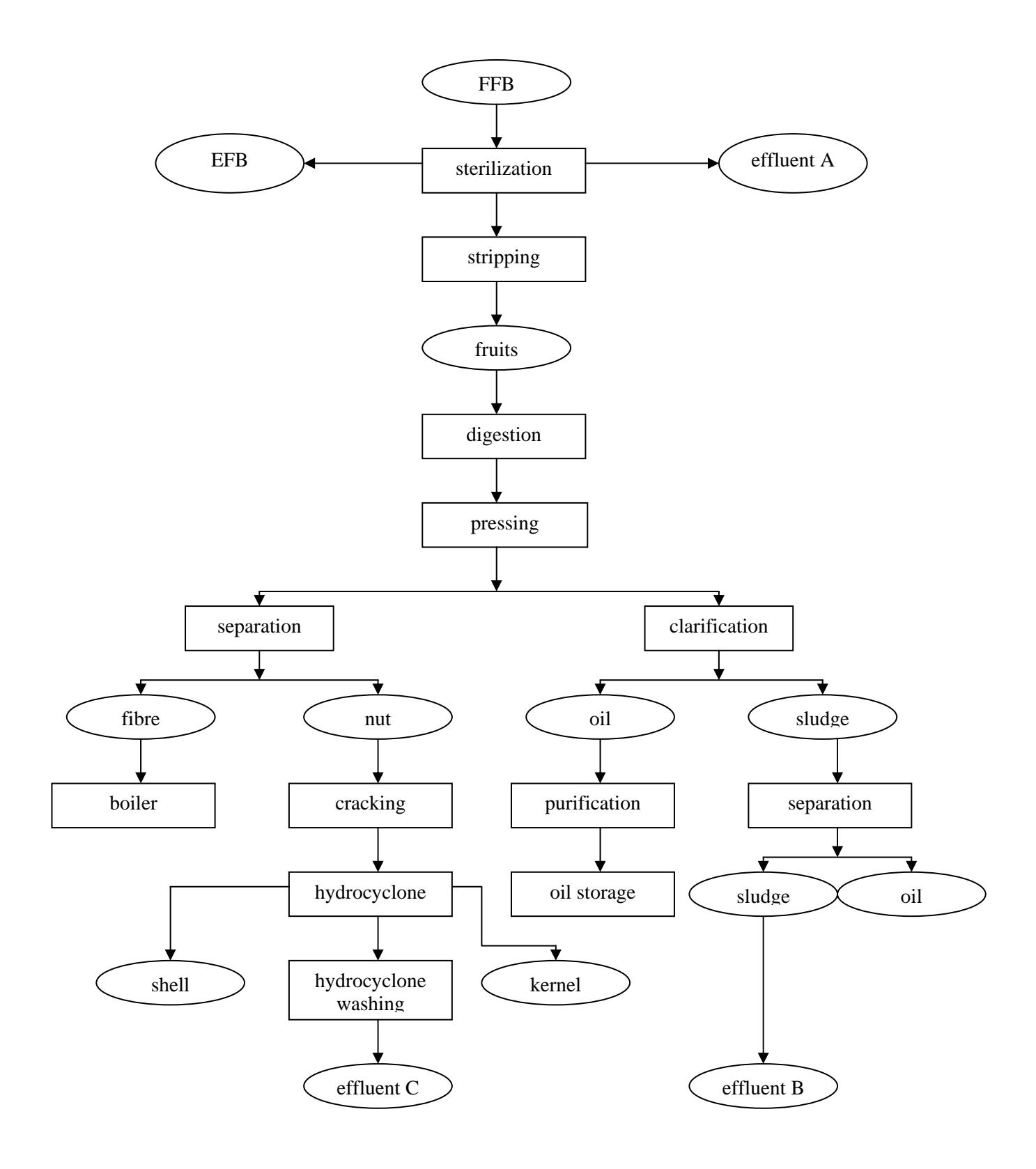
Figure 1. Process scheme of a palm oil mill
In order to protect the equipment in the subsequent process steps against clogging, the bottom sludge is pre-cleaned by means of microstainer/hydrocyclone of desander. The desanders are cleaned by discharging the accumulated solids to the drain, followed by the injection of fresh water. . The amount of wastewater from this process reaches approximately 0.5 tons per tonne of FFB processed. Total amount of effluent produced by a single palm oil mill in Indonesia is around 50 tons per hour. See Table 2.
Owing to the chemical and physical properties of the effluent (POME), it cannot be run directly to environment. Current method used to solve this problem is anaerobic digestion of POME in open lagoon systems for approximately 120 days in order to reduce biological oxygen demand (BOD) and chemical oxygen demand (COD). Physical properties of POME are shown in Table 3.
3. ANAEROBIC DIGESTION OF POME
The increasingly stringent water quality regulations being introduced in many countries have forced factories to investigate a wide range of approaches for the treatment of palm oil mill effluent (POME) and related wastewaters. These include: simple skimming devices [1, 2]; land disposal [3]; use as animal fodder [4, 5]; ultrafiltration [6, 7]; chemical coagulation and flotation [8, 9, 10, 11]; and various aerobic [12] and anaerobic microbiological processes [14 - 25]. Anaerobic biological systems offer greater potential for the treatment of POME as they do not have such high energy demand of aeration as required by aerobic biological systems [13, 14].
The use of conventional anaerobic tank digesters under mesophilic range of temperatures (30-40°C) to treat POME is characterized by long residence times, often it is more than 20 days to achieved chemical oxygen demand (COD) reduction at least 70%. Much better results are reported when two-stage anaerobic digester is used. The first stage is used for acid formation and the second stage is used for methane fermentation.
Experiments with conventional anaerobic tank digesters under thermophilic range of temperatures (50-60°C) result in higher than 90% of COD reduction with hydraulic retention time (HRT) above 10 days. Higher biogas yield in thermophilic digestion system compared to mesophilic can be achieved in much shorter time and the concentration of methane in biogas is higher as well.
The sulphate reducing bacteria are responsible for the production of H2S in biogas. Their importance in breakdown of organic polymers in anaerobic digestion is not fully understood but they have been shown to be present in anaerobic processing POME. For digesters treating POME at mesophilic temperatures about 105 bacteria can be detected in a ml of anaerobic liquid. In digesters working at thermophilic temperatures only
101 - 102 bacteria were detectable. That represents a reduction of approximately 1000 times in number of these bacteria in the digester. This finding has important implications in the utilization of biogas for generating electricity by the gas engine system or microturbine system where low concentration of the highly corrosive H2S in biogas is desirable.
Bearing in mind that the temperature of POME at discharge is between 45 and 60°C, current anaerobic treatment practice using the mesophilic systems requires a lagoon and cooling tower for cooling the wastes. The need of cooling may be eliminated by opting for the thermophilic process. In addition to this, the relatively low heating requirement under tropical conditions makes thermophilic digestion an attractive alternative.
The application of modern high rate anaerobic digester technologies such as up-flow or down-flow filters, fluidized beds, up-flow anaerobic sludge blanket (UASB) systems or up-flow floe digesters for the disposal of POME is rare. Some bench-scale experiments have reported COD removal efficiency over 90% in very short hydraulic retention time and high loading rates, but these systems required perfect control system in order to achieve stable conditions in reactor. For more details see Table 4.
4. EMISSION REDUCTION
In present time, methane from open digesting lagoon system releases a large amount of methane (CH4), one of the greenhouse gases, into the atmosphere as the byproducts of anaerobic digestion of POME in open lagoon system. Since methane is a green house gas, which is 21 times stronger than CO2, the large emission reduction can be achieved with close anaerobic digestion of POME. The emission reduction can be calculated as:
4 4 4 CH e = CPOp⋅ p ⋅ ⋅ b c ⋅CH density⋅GWP(CH )
CPOp =CPOy ⋅FFBr where:
CH4e = reduction of emission equal to tons of CO2 m per annu
O production [ton] CPOp = CP
/ ton of FFB] CPOy = CPO yield [ton of CPO
FFBr = FFB received by mill [ton / year]
production p = POME yield in CPO
m of POME / ton of CPO] 3 [
b = biogas yield from POME \([m^3 \text{ of } biogas/m^3 \text{ of } POME]\)
c = methane fraction in biogas \([m^3 \text{ of } CH_4/m^3 \text{ of biogas}]\)
GWP (CH<sub>4</sub>) = 21, (a green house gas 21 times stronger than \(CO_2\))
In the calculation, there is not included emission reduction from fossil fuels, which are replaced by methane in order to generate electricity and steam for process in palm oil mill. Emission from transportation of FFB is not included as well, since the transportation of FFB is from a distance longer than 100km is physically impossible so that the emission from transportation could be negligible.
5. CONCLUSION
Although many researchers had shown the potential of biogas yield from POME, in present time just few tank anaerobic digesters have been working. As one of significant reasons of the present situation it is recognize the low price of electricity that is sold to a wheel net in Malaysia and Indonesia. As another important fact weak support for ecological projects in these countries can be mentioned.
Palm oil mill effluent gains scientific attention because of its potential to be successfully used in a closed tank anaerobic digester to generate electricity and steam for palm oil mill process. Especially challenging is the ability of a close tank anaerobic digester to reduce the time of treatment POME from 120 days in open anaerobic lagoons to approximately 10 days.
According to the reports of Palm Oil Research Institute Malaysia, 1 m<sup>3</sup> biogas has the potential to generate approximately 1.8kWh, which is about 25% power generation efficiency of its heat value.
In general average palm oil mill could generate over 1MW of electricity from POME.
Generated electricity could be used for covering energy demands in Sumatra and could increase electrification ratio in the society.
It could significantly reduce air pollution especially in Sumatra where the concentration of palm oil mills is high. For average palm oil mill in Indonesia with production 70 000 tons of CPO per year, the emission reduction could be over 40 000 tons of CO<sub>2</sub> per year.
Table 1. Land planted [ha] to oil palm in Sumatra by province and in Indonesia
| Year | |||||
|---|---|---|---|---|---|
| 1997 | 2000 | 2001 | 2002 | ||
| Place | [ha] | [ha] | [ha] | [ha] | |
| Aceh | 176 500 | 2188.25 | 22132.5 | 222389 | |
| North Sumatra | 584 700 | 650530 | 652880 | 654511 | |
| West Sumatra | 130 200 | 188015 | 191515 | 193765 | |
| Riau | 522 500 | 769804 | 788844 | 803951 | |
| Jambi | 195 400 | 286910 | 301307 | 320047 | |
| South Sumatra | 247 100 | 341869 | 360510 | 370160 | |
| Bengkulu | 60 400 | 73944 | 74944 | 78799 | |
| Lampung | 61 100 | 103120 | 107120 | 108120 | |
| Total Sumatra | 1977900 | 2414192 | 2477120 | 2751742 | |
| Total Indonesia | 2 515 800 | 3769609 | 3974337 | 4116646 | |
able 2. Amount of wastewater from typical palm oil mill in Indonesia T
| Process | Quantity [ton] per ton of oil | Quantity [ton] per ton of FFB | ||
|---|---|---|---|---|
| Sterilizer condensate | 0.9 | 0.12 | ||
| Clarification sludge | 1.5 | 0.5 | ||
| Hydrocyclone washing | 0.1 | 0.05 | ||
| Total | 2.5 | 0.67 | ||
able 3. Properties of POME [14] T
| Parameter | Range | Average | Effluent standard *) | |
|---|---|---|---|---|
| pH | 3.3 – 4.6 | 4.1 | 6 - 9 | |
| BOD | 8 200 – 35 400 [mg/l] | 21 300 [mg/l] | 250 [mg/l] | |
| COD | 15 100 – 65 000 [mg/l] | 35 000 [mg/l] | 500 [mg/l] | |
| Total solid | 16 600 – 94 100 [mg/l] | 46 200 [mg/l] | - | |
| Total suspended solid | 1 300 – 50 700 [mg/l] | 21 200 [mg/l] | 300 [mg/l] | |
*) Indon nal Standa /1991) esian Natio rd (No. 03/MENKLH/11
able 4. Results of some bench-scale experiments with anaerobic treatment of POME T
| Type of digester | Temperature | HRT | COD red. | BOD red. | Methane | Biogas yield |
|---|---|---|---|---|---|---|
| [°C] | [days] | [%] | [%] | [%] | [l per g COD red.] | |
| 32 | 14 | 50.5 | 50.6 | 53 | 0.19 | |
| 32 | 21 | 58.6 | 57.2 | 56 | 0.25 | |
| 32 | 25 | 73.3 | 90.8 | 58 | 0.67 | |
| 32 | 30 | 74.3 | 94.9 | 58 | 0.50 | |
| Tank digester | 32 | 35 | 82.1 | 97.4 | 59 | 0.63 |
| single stage | 32 | 50 | 85.1 | 97.7 | 62 | 0.58 |
| (batch feeding) | 32 | 75 | 88.2 | 98.2 | 60 | 0.57 |
| 32 | 100 | 90 | 98.6 | 64 | 0.56 | |
| 55 | 5 | 70.6 | 72.9 | 59 | 0.21 | |
| 55 | 15 | 93 | 93.8 | 65 | 0.22 | |
| 55 | 25 | 95.2 | 95.3 | 67 | 0.30 | |
| 55 | 35 | 95.6 | 95.7 | 68 | 0.37 | |
| Tank digester | 32 | 1+10 | 63.9 | 75.3 | 60 | 0.44 |
| two stage | 32 | 1+20 | 67.3 | 90.8 | 61 | 0.75 |
| (batch feeding) | 32 | 1+30 | 74.1 | 91.3 | 57 | 0.98 |
| USAB two stage | 35 | 0.9 | >90 | - | 73 | 0.45 |
| USAB digester | 35 | 3.5 | 92.3 | - | 92.3 | 0.36 |
| with anaerobic | ||||||
| filter | ||||||
| Up flow anaerobic | 35 | 6 | 91 | - | 62 | 0.69 |
| digester | 35 | 10 | 93 | - | 61 | 0.78 |
| 35 | 15 | 94 | - | 63 | 0.79 |
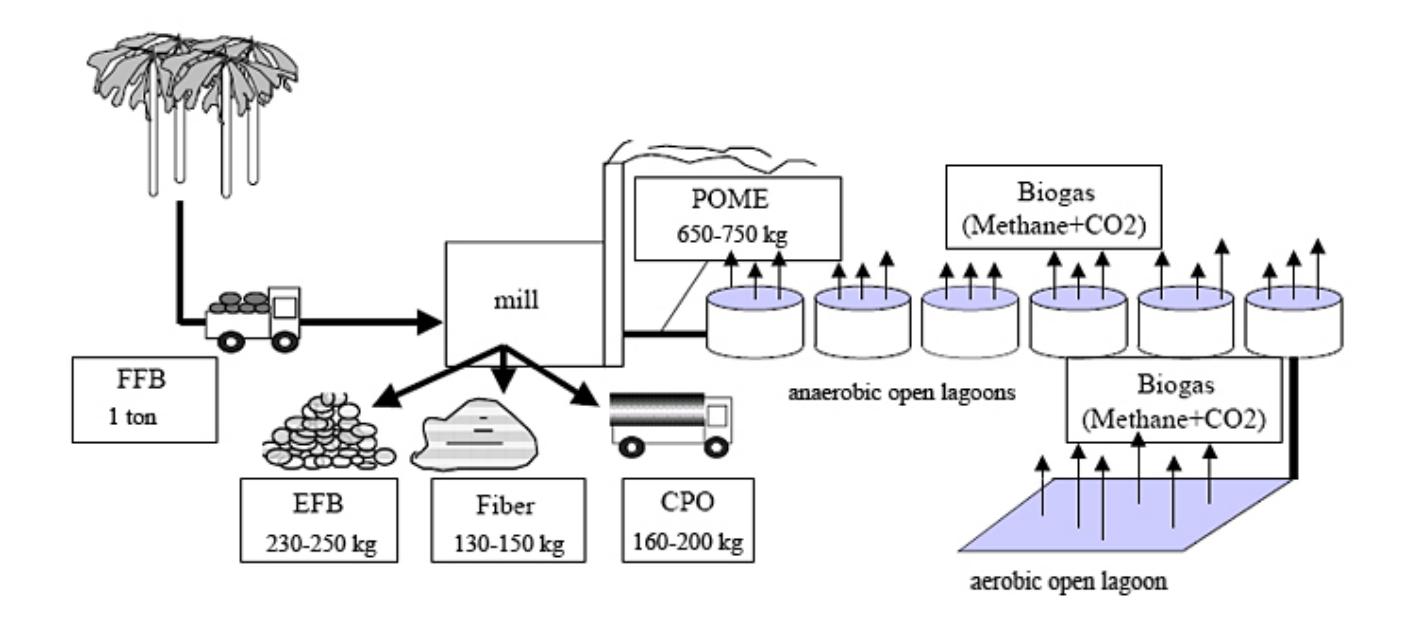
Figure 2. Palm oil mill residue
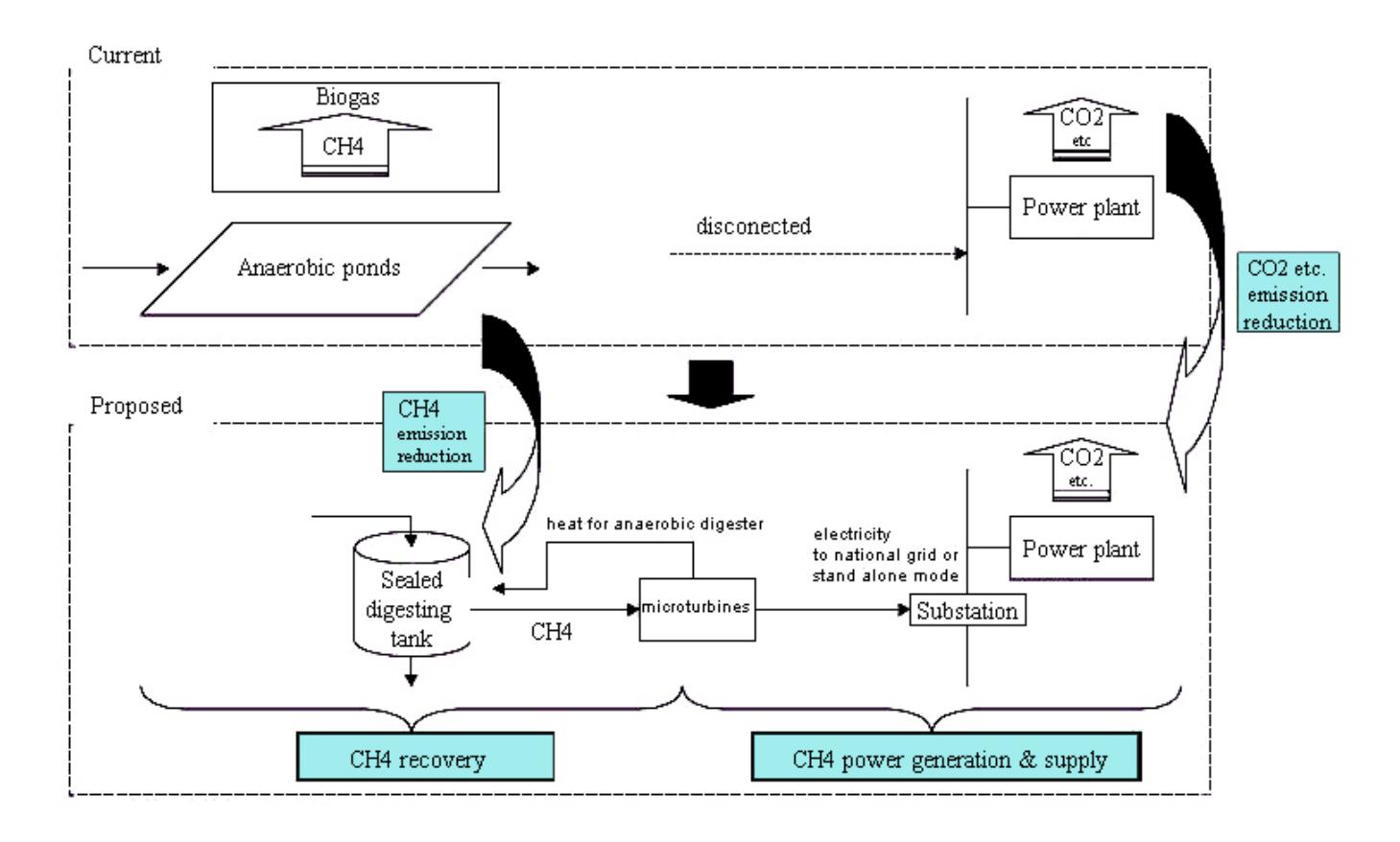
Figure 3. Proposed schema
6. REFERENCES
- 1. W. Roge a 1981). "Preliminary trials with canters for palm oil nd A. Velayuthan, ( Westfalia-3-phase de separation." In: Push-parajah, E. and Rajadurai, M. (Eds.), Palm Oil Prod. Technol. Eighties, Rep. Proc. Int. Conf., Inc. Sot. Plant. Kuala Lumpur, Malaysia. 327-334.
- 2. W.J. Ng, A.C.C. Goh and J.H. Tay, (1988). "Palm oil mill effluent treatment - liquid-solid separation with dissolved air flotation." Biol. Wastes 25, 257- 268.
- 3. A. N. Ma and A.S.H. Ong (1986). "Palm oil processing – new development in effluent treatment." Water Sci. Technol. 18, 35-40
- 4. J. Sutanto, (1983). "Solvent extraction process to achieve zero-effluent and to produce quality animal feed from mill sludge." Planter 59, 17-35
- 5. M. Turisin, M. Nor and M. S. Suwandi (1981). "Membrane process in by-product recovery." Sains Malays. 10, 161-174
- 6. M.A. Badri, (1984)."Identification of heavy metal toxicity levels in solid wastes by chemical specification." Conserv. Recycl. 7, 257-269.
- 7. C.C. Ho and C.Y. Chan, (1986). "The application of lead dioxidecoated titanium anode in the electroflotation of palm oil mill effluent." Water Res. 20, 1523- 1527.
- 8. K.K. Chin, W.J. Ng, A.N. Ma and K.K. Wong, (1987). "Treatabihty studies of palm oil refinery wastewaters." Water Sci. Technol. 19, 23-29.
- 9. M.I.A. Karim, and L.L. Hie, (1987). "The use of coagulating and polymeric flocculating agents in the treatment of palm oil mill effluent (POME)." Biol. Wastes 22, 209-218.
- 10. K.Abdul, 1. Mohamed and A.Q.A. Kamil, (1989). "Biological treatment of palm oil mill effluent using Trichodermu uiridr." Biol. Wastes 27, 143-152.
- 11.J.O. Edewor. (1986). "A comparison of treatment methods for palm oil mill effluent (POME) wastes." J. Chem. Technol. Biotechnol. 36, 212-218.
- 12. W.J. Ng, K.K. Chin and K.K. Wong, (1987). "Energy yields from anaerobic digestion of palm oil mill effluent." Biol. Wastes 19, 257-266.
- 13. M.S. Suwandi (1981). "Retention characteristic of polyamide and polysulfone membranes in relation to palm oil mill efflunet." Sains Malays. 10, 147-160
- 14. T. Setiadi, H. and A. Djajadiningrat (1996). "Palm oil mill effluent treatment by anaerobic baffled reactors: recycle effects and biokinetic parameters." Wat. Sci Tech. 11, 59-66
- 15. R. Borja, Ch. J. Banks (1994). "Treatment of palm oil mill effluent by Upflow anaerobic fitration." J. Chem. Biotechnology, 11, 103-109
- 16.J. O. Edewor (1996). "A comparison of treatment methods for palm oil mill effluent (POME) wastes." J. Chem. Biotechnology, 36, 212-218
- 17. A. Ibrahim, B. G. Yeoh, S. C. Cheah, A. N. Ma, S. Ahmad, T. Y. Chew, R. Raj, M. J. A. Wahid (1984). "Thermophilic anaerobic digestion of palm oil mill effluent." Wat. Sci Tech. 17, 155-166
- 18. S. Mustapha, B. Ashhuby, M. Rashid, I. Azni (2003). "Star-up strategy of a thermophilic upflow anaerobic filter for treating palm oil mill effluent." Trans IchemE 81 part B
- 19. W. J. Ng, K. K. Chin& K. K. Wong (1987). "Energy Yields from Anaerobic Digestion of Palm Oil Mill Effluent." Biological Wastes 19 ,257-266
- 20. R. Borja, Charles J. Banks, B. Khalfaoui, A. Martin (1996). "Performance evaluation of an anaerobic hybrid digester treating palm oil mill effluent." J. Environ. Sci. Healt A31, 1379-1393
- 21. R. Borja, Ch. J. Banks, E. Sinchez (I 996). "Anaerobic treatment of palm oil mill effluent in a two-stage up-flow anaerobic sludge blanket (UASB) system." Journal of Biotechnology 45, I25- 135
- 22. K. K. Chin, K. K. Wong (1983). "Thermophilic anaerobic digestion of palm oil mill effluent." Water Res. 17. 993-995
- 23. R. G. Cail, J. P. Barford (1985). "Thermophilic semi-continuous anaerobic digestion of palm oil mill effluent." Agricultural wastes 13, 295-304
- 24. C. C. Ho, Y. K. Tan (1985). "Anaerobic treatment of palm oil mill effluent by tank digesters." J. Chem. Tech. Biotechnology 35B, 155-164
- 25. T. O. Peyton, I. W. Cooper (1979). "Mesophilic and thermophilic anaerobic tank treatment of palm oil mill wastewaters." Proceedings of the industrial waste conference 34th.
- 26. K.O. LIM (1998). "Oil Palm plantations – A plausible renewable source of energy." International Energy Journal 20