

1 INTRODUCTION
National Nuclear Energy Agency (BATAN) Bandung-Indonesia is endeavoring to upgrade the safety and the power of Bandung TRIGA Mark II reactor. The upgrading is accomplished such that the safety and the reliability of the new facility must be better than the old one. Furthermore Bandung TRIGA Mark II reactor for which the safety and the power have been up-graded is then called Bandung TRIGA-2000 Reactor. The Centre is currently able to conduct activities in producing radioisotopes and radiopharmaceutical for various uses, in providing neutron activation analysis and other applications of research reactors and in manufacturing alloys. In addition, the Center carried out various modifications in the reactor and gained some experience in reactor calculations.
The increasing activities of the nuclear research, higher demand of radioisotopes production and the undergone ageing process in the reactor components were the reasons of the enhancements of safety aspect and reactor power of Bandung TRIGA Mark II reactor. The successfulness of reactor power upgrading from 250 kW to 1000 kW in 1971 and from 1000 kW to 2000 kW in 2000 showed the ability of reactor staffs and technicians to develop nuclear program, especially on reactor technology. The main concern of the reactor upgrading was nuclear safety, radiation safety and non-radiation safety. A detail calculation on a reactor criticality of reactor core and of spent fuel element storage facility was performed to improve the nuclear safety aspect. To ensure a safe reactor operation in maximum power level of 2000 kW, neutronic and thermo hydraulic calculation were also done. Beside of the activities, the reactor upgrading also involved the removal of fuel elements from and to the reactor core, disassembling of the old reactor core, installation of a new reactor core and other components in the reactor tank. All the activities should have been performed in the very high radiation environment. Therefore, a lot of work procedures have been produced as references for the workers during the reactor upgrading.
In spite of technical-and non-technical difficulties faced during the reactor upgrading that began in 1996, the upgrading work was successfully completed in May 2000. The reactor underwent first criticality on Saturday at May 13, 2000 and the first maximum power level was achieved on Wednesday afternoon at June 14, 2000 various modifications in the reactor and gained some experience in reactor calculations. The main objectives of the Bandung upgrade project were:
- 1. To increase the reactor power to 2000 kW;
- 2. To upgrade the safety systems of the reactor; and
- 3. To provide additional in-core irradiation facilities capable to produce higher amount of radioisotopes and increase the potential use of the beam-tubes.
The upgrade project considered a redesign of the reactor internal structures to allow adequate cooling of the new reactor core at the 2000 kW power rate. This redesign considered a new reactor core subassembly which fits within the existing reflector assembly in reactor upgrading, for increasing the reactor safety and reactor power from 1000 kW to 2000 kW, many changing have been done, especially for the TRIGA reactor core. The dimension of grid reactor core was changed from annular to hexagonal. Related to this change, the distance between the fuel elements become similar and the heat transfer in each fuel element is also similar.
2 REACTOR DESCRIPTIONS
2.1 Reactor Core
The reactor upgrade is based on a new design of core structure to allow the cooling of the core at 2000 kW power rating. This means a new lattice of core in order to provide natural convection appropriate to power distribution. The new design provides also a new core sub assembly which fits within the existing reflector assembly. The sub assembly contains: hexagonal top and bottom grid plates, new supporting device, fuel rod adapter's outer region shims, and associated tie rods and featuring. The new supporting device is capable to accept a central thimble and up to twelve additional fuel followed control rods locations, in C and D rings and outer shims.
The initial upgrade core is composed of several types of TRIGA fuel namely, 8.5 wt%, 12 wt% and 20-20, except few 20-20 fuel elements the majority of fuel elements have a certain burn up ranging up to 40%. Neutronic calculation/nuclear design have been performed by using DIF3 code.
2.2 Reactor Tank
A new tank was placed inside the old one that was considered in advanced status of external corrosion. This tank was extended 1.5 m above the old one to provide adequate shielding. A new aluminum alloy tank for the reactor was installed inside of the old tank. The space between this equipment was filled with grout in order to ensure rigidity of the new tank and verticality of new core and some structural continuity. The external surface of tank was protected with epoxy type resin. Internal of the tank was welded on site like beam holes reflector sub assemblies. Justification of this modification concern the replacement of the previous aluminum tank extensively corroded. In order to increase the water inventory shielding the upper section of the tank was extended outside of concrete shielding with 1 m [1].
2.3 Core Thermo hydraulics
Cooling of 2000 kW TRIGA Mark II core is provided by natural connective flow of dematerialized water in the reactor pool. Thermal analysis of heat transfer of core using the computer codes STAT and TAC2D was analyzed by our engineering. The results indicate that for maximum coolant inlet temperature of 32.2°C, the maximum allowed heat flux peak is 127.6 W/cm² corresponding to a power level of 2680 kW for 100 elements in core. The maximum power level for modified design is 2000 kW; the resulting maximum heat flux will be 32.20 W/cm² which is well below the value at which clad integrity may be affected. The maximum temperature in one instrumented fuel rod measured during the commissioning test was 570° C for 2000 kW. The primary circuit consists on one 6" pipe loop from T6-6061, 2 circulation centrifugal pumps, for 950 gpm. One plate-frame type heat exchanger with 2400 kW capacity. Inlet and outlet pipe pass over the pool edge without shielding.
Figure 1 Fuel elements on the reactor core
2.4 Cooling System
The whole system for cooling the water tank was replace with new primary and secondary systems including valves, pumps, heat exchanger, the new of plate type and cooling towers. At 2000 kW reactor power, flows primary cooling with flow speed of 950 gpm. By using heat exchanger of flat type, the heat was transferred to secondary flow with speed of 1187.5 gpm. This secondary heat is then transferred to external air through two units cooling towers. Primary and secondary cooling systems are able to work well [2].
2.4.1 Primary Cooling System
The new primary cooling system was designed, built and commissioned for a thermal capacity of 2400 kW. The primary cooling system consists of the reactor pool, primary pumps, heat exchanger, control and isolation valves and the associated piping. This system is also equipped by appropriate measurement devices, such as thermometer, pressure gauge, flow rate meters, and electrical conductivity measurement device. The inlet and outlet temperatures from the reactor
tank are similar compared to the inlet and outlet temperature of heat exchanger at the primary cooling system. The permissible maximum temperature for the primary coolant is 49°C. This value is also a maximum temperature requirement for resin used in the water purification system (demineralizer). If the coolant temperature is greater than 49°C, the resin would not work effectively and the reactor shuts down. The general design of the cooling system appears to be in good condition. Two pumps are installed in parallel with one on standby, only one pump is used at a time, but both can be operated if necessary [3].
2.4.2 Secondary Cooling System
The new secondary cooling system was designed, builds and commissioned for a thermal capacity of 2400 kW. The circuit is located outside of reactor building addicted to the reactor hall.
The circuit is build from carbon steel tube and include two pumps, two cooling tower and secondary circuit is supplied from softener the water quality is controlled once a week when the reactor is in operation by chemistry department. Commissioning of the secondary cooling circuit demonstrate the ability of system to remove 2000 kW generated by reactor. Like the primary system, two pumps are installed in parallel with one on standby. Both can be operated simultaneously with minor control modification if necessary.
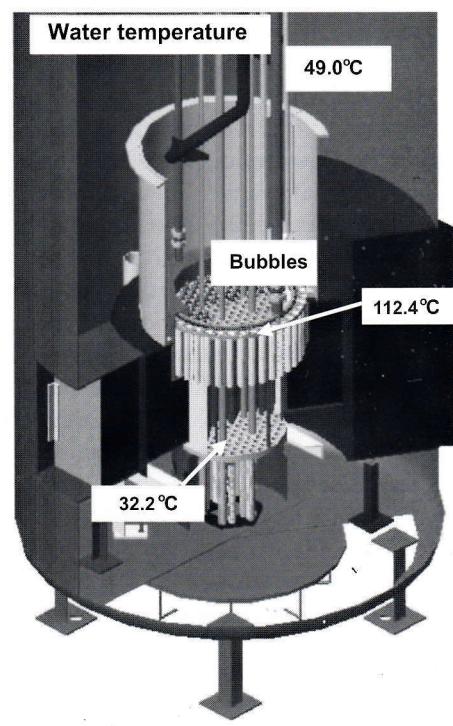
Figure 2 System, component and structure reactor in side of the reactor core
2.4.3 Heat Exchanger
In 2000, the heat exchanger was replaced with a more efficient plate-shell type. The heat exchanger was claimed to be capable of providing 2000 kW cooling according to the Safety Analysis Report prepared by General Atomics for the 2000 kW reactor upgrade project. However, it is apparent that the heat exchanger is not operating at its full efficiency and cannot provide the full 2000 kW cooling due to internal scaling and the consistently hot and humid local environmental conditions. This may be contributing to the elevated operating temperatures (greater than the design conditions and limits), leading to many undesirable effects.
In March 2005, after 5 years of operations, the BATAN engineers dismantled the heat exchanger (144 plates) for internal inspection and cleaning. They discovered 4 mm thick layers of scaling (deposits) on the secondary cooling water side. The primary side was clean, better controlled water chemistry. Despite this cleaning effort, the reactor operating temperatures could not be maintained within the design limit, indicating insufficient cooling by the design [4].
3 REACTOR COMMISSIONING
In May 2000 the TRIGA 2000 Reactor in Bandung completed a commissioning program and received an operating license at 2000 kW. The BAPETEN issued two provisional licenses for six months each during which testing was done up to 1800 kW for the purpose of generating data for the revised SAR. After reviewing the application, BAPETEN issued BATAN a 15-year license on 4 December 2001, effective 4 December 2001 through 3 December 2016, to operate at 2000 kW [5].
During the commissioning tests, bubbling at the reactor core was observed and considered acceptable by GA experts but power peaking was considered high and a so-called "dummy" graphite element was inserted into the B-3 position, replacing 12 wt % fuel element. The sub cooled boiling observed during the commissioning tests confirmed the predictions of the thermal-hydraulics calculations performed by GA and presented in the safety analysis report.
In 2004 the operating staff of the Bandung TRIGA 2000 Reactor observed an increase in the amount and size of the bubbles emanating from the core, so in January 2005 BAPETEN after an inspection and discussions with the operating organization decided to limit the reactor power to 1250 kW.
In January 2005, IAEA team mission organize a fact-finding mission to have a better understanding of the safety implications of the reactor bubbling and to propose an action plan to address and solve the issue. For the time being BAPETEN recommends the Bandung TRIGA 2000 reactor should be operated only at maximum power level 1250 kW, until the problem of the bubby flow phenomena in reactor core can be solved. Recently, we are making an attempt in some research either through neutronik, thermo hydraulics and others to solve the bubby flow phenomena at the reactor core [6].
In March 2007, IAEA team mission came Indonesia to review the SAR was combined with the follow-up on the recommendation from previous mission on investigation of core bubbling phenomena and discussion on the management of water surveillance programme.
4 OPERATING LIMIT CONDITIONS
he maximum design temperature specified in the SAR is 32.2°C at the heat exchanger outlet and when it reaches 35°C the reactor operators must be alerted for corrective actions, e.g. reduces reactor power. However, the reactor has been normally operated at 36°C, which violates the design conditions and acceptable safe limit specified. When it was powered up to 2000 kW, the inlet temperature recorded a slightly lower 34°C but it was still over the design limit indicating insufficient cooling or inadequate heat-exchanger capacity.
The fuel core operates at approximately 550°C with its cladding cooled to 134°C. The boiling point of the primary water at the core level is 112.4°C. At this point, the vapor bubbles due to sub-cooled boiling may detach from the fuel surface forming steam bubbles. This is consistent with General Atomics' past operating experience with the TRIGA and this phenomenon was well described and predicted by the reactor vendor before the modification was made to the Bandung reactor in 2000. However, significant boiling (40% vapor bubbles/space around the core) may cause the reactor power to "chug"; causing erratic or oscillating reactor power due to a self-protecting phenomenon, which involves the gross coalescing of steam bubbles to form a small in-core void large enough to temporarily shut the reactor down due to the large negative void coefficient. This is an inherent safety feature of the TRIGA design. "Chugging', however, does not threaten the reactor safety or damage the system. It was normal that the reactor water boiling was observed when it was first commissioned at 2000 kW in 2000 and acknowledged by General Atomics. However, after some months of operations the BATAN engineers reported that chugging was occasionally observed at above 1700 kW.
5 CONFORMANCE TO DESIGN LIMITS
To operate the reactor within the specified safe design limits, the primary inlet temperature must be reduced by 4°C from 36°C to 32°C. To achieve this, the following are recommended by Mr. S. Kim, ANSTO Australia.
- (1) The heat exchanger can be easily upgraded by adding more cooling plates. There are currently 144 plates installed with room for expansion. By adding a further 56 plates to make a total of 200 plates, its cooling capacity, according to rough heat transfer will be increased calculations, approximately 35%, where by primary cooling water temperature can be reduced by about 2°C. BATAN should verify the heat transfer calculations, obtain cost from the heat exchanger supplier, and allocate an appropriate budget for the heat exchanger procurement in the near future.
- (2) Each of the primary and secondary cooling systems is equipped with two pumps with one on standby. By operating both pumps (primary and secondary) simultaneously, the overall primary water temperature may be reduced by 2°C, as illustrated by the results of rough heat transfer calculations prepared during discussions. The BATAN engineers should confirm this figure by more accurate heat transfer calculations.
- (3) To reduce or eliminate bubbling, primary cooling around the core must be improved by means of introducing cooler inlet temperature and more efficient heat transfer, i.e. force convection instead of relying upon natural convective only. The current water flow along the core is 0,2 m/s as induced by natural convection. This could easily be increased to 2 m/s, or bay 10 times, by means of redirecting the coolant outlet flow too directly underneath the core grid. This 'semi-forced convection' is considered the most cost effective, feasible, and simple solution. It could significantly improve cooling around the core by means of significantly increasing the heat transfer coefficient and flow rate, thereby reducing or eliminating bubbling by keeping the fuel skin temperature below the boiling point [6].
6 CONCLUSIONS
For the time being BAPETEN recommends the Bandung TRIGA 2000 reactor should be operated only at maximum power level 1250 kW, until the problem of the bubbling flow phenomena in reactor core can be solved. Recently, we are making an attempt in some research either through neutronik, thermo hydraulics and others to solve the bubbling flow phenomena at the reactor core. The TRIGA 2000 Bandung research reactor has been experiencing coolant overheating primary water bubbling in vicinity of the core since its power was upgraded from 1000 kW to 2000 kW in 2000. This problem was brought up and briefly discussed whit previous IAEA mission to Indonesia in March 2007.
The main objective of this consultation was to assist Bandung reactor staff to develop practical methods to investigate the primary coolant bubbling phenomenon and propose appropriate solution.
Combined between with the heat exchanger upgrade and force convection instead of relying upon natural convective only, the overall reduction of the primary water supply temperature by 4°C would seem to be possible. This operational and heat exchanger modification could possibly bring the operating temperature down to the acceptable limit, hence conforming to the SAR and design conditions.