

Abstrak
Meningkatnya volume pembangunan infrastruktur di Indonesia pada periode 2014 dan direncanakan hingga tahun 2025 didorong dengan skema KPBU, dimana pengusahaan jalan tol dilakukan badan usaha dengan timbal balik suatu masa konsesi. Dalam skema KPBU, berbagai variabel perlu diperhatikan, diantaranya biaya proyek, kompleksitas proyek, dukungan publik yang kuat, hingga indikator kinerja pada setiap fase pengusahaan jalan tol. Fase konstruksi pada skema KPBU di Indonesia, menjadi tanggung jawab badan usaha yang diatur dalam PP No.43 Tahun 2013. Penentuan project delivery pada proyek konstruksi jalan tol menjadi strategi badan usaha mengendalikan kinerja proyek kosntruksi jalan tol yang dikelolanya. Dengan kompleksitas variabel dalam KPBU, diperlukan pola variabel dengan project delivery agar ditemukan strategi yang efektif dalam mencapai kinerja konstruksi yang baik. Tujuan dari penelitian ini adalah mengidentifikasi pola capaian kinerja konstruksi pada variasi project delivery di skema KPBU jalan tol. Pendekatan analisis yang dilakukan adalah QCA (Qualitative Comparative Analysis), dengan 14 studi kasus BUJT di 4 jaringan jalan tol di Indonesia. Dari hasil penelitian, diidentifikasi bahwa variasi project delivery tidak berpengaruh secara kuat terhadap capaian kinerja proyek konstruksi jalan tol. Kinerja konstruksi jalan tol lebih kuat dipengaruhi oleh variabel-variabel pengusahaan KPBU jalan tol lainnya, yaitu skema pengusahaan, maturitas manajemen proyek, biaya konstruksi, panjang jalan, skema finansial kontraktor, hubungan korporasi BUJT-korporasi, dan skema pengadaan tanah.
Kata-kata Kunci: Project delivery, kinerja, proyek konstruksi, jalan tol, qualitative comparative analysis
*Correspondence Author
1. Introduction
Toll roads are one of the infrastructures that drive economic growth. The Indonesian Government, from 2014 until 2019, prioritized toll road infrastructure development. The realization of toll road development in Indonesia in the 2014-2018 period increased significantly compared to the previous years and is planned to continue until 2025 according to BPJT data in Figure 1. The significant increase in toll road development in Indonesia cannot be separated from the role of business investment through the PPP (Public-Private Partnership) scheme regulated in Law no. 38 of 2004. In managing toll roads, the government through the Toll Road Regulatory Agency/BPJT encourages investment in the toll road sector so that the development of the toll road network can be realized more quickly. However, in the implementation of the PPP that has been done, there are 68 toll roads recorded that are managed by 50 Toll Road Business Entities/BUJT with diverse company backgrounds (BPJT, 2019). Besides PT. Jasa Marga as the oldest toll road operator in Indonesia, various SOE companies from the construction sector, regionallyowned enterprises, to non-construction companies become the largest shareholders as shown by the toll road management business profile data in the construction phase in 2018 in Figure 2.
In the PPP scheme, various variables need to be considered. Federal Highway Administration (FHWA)
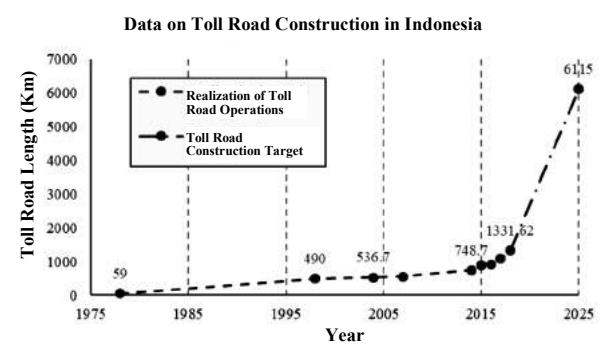
Figure 1. Data on toll roads operating in Indonesia (BPJT, 2007 and 2018)
Investor profile of the Toll Road Business Entity in the construction phase of 2018
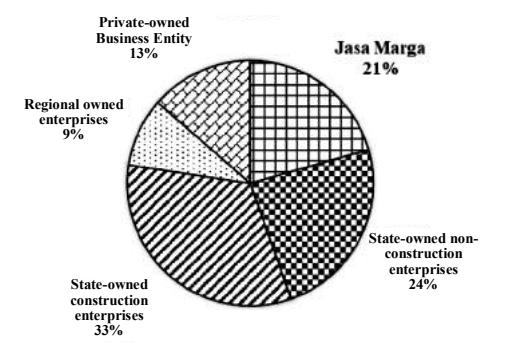
Figure 2. Profile of toll road business in the construction phase in 2018 (BPJT, 2018)
(2010) identified characteristic factors of toll road projects that are important to note in the PPP scheme, namely the construction cost, project complexity, strong public support, and source of income. The construction phase needs special attention because it is the biggest threat in the PPP scheme, because it can raise the risk of additional investment costs in the form of unexpected construction costs (Price water house Coopers Advisory S.p.A., 2014). Meanwhile, the World Bank (2000) identified the importance of performance indicators in each phase, from the funding performance indicator to the operating performance indicator, in the toll road PPP scheme concession. In practice, the performance of toll road construction projects with the PPP scheme has several problems, including project delays, construction accidents, and the construction quality achievement that has not been achieved properly ((Tirto, 2018) (Kontan, 2016) (Detik Finance, 2019)). The construction phase in the PPP scheme is the full responsibility of the business entity regulated in the Government Regulation No. 43 of 2013 concerning toll roads. The determination of project delivery in toll road construction projects has become one of the strategies by business entities to control the performance of toll road construction projects that they manage. Koppinen & Lahdenperä (2004) identified that project delivery affects the construction performance. Of course, with the complexity of variables in the PPP, a variable pattern with project delivery is necessary in order to find the most effective strategy in achieving good construction performance for the construction progress now and in the future. In this research, a case study was carried out on 14 toll road PPP scheme projects that aimed at obtaining a pattern of toll road concession variables in relation to project delivery on construction performance.
2. Literature Review
2.1 Concession and toll road project delivery
PPP (Public private Partnership) scheme is one of toll road concession schemes. The PPP scheme encourages infrastructure development with high costs and limited budget of a country by using the toll road management and funding scheme by involving private parties (PricewaterhouseCoopers Advisory S.p.A., 2014). The toll road PPP scheme is generally carried out by a business entity. Business entities are in the prime position in the toll road concession contract network involving the government, investors, planners, contractors, operators and road users, as shown in Figure 3.
Toll road PPP scheme concessions in Indonesia are regulated in Law no. 38 of 2004 concerning roads and Government Regulation No. 30 of 2017 concerning toll roads. The PPP scheme is divided into several subschemes that are determined based on an analysis of economic feasibility, financial feasibility, and the purpose of developing an area, as shown in Figure 4. Generally, there are 3 PPP sub-schemes, namely BOT, S-BOT, and SOE assignments involving business
entities that are determined based on economic and financial feasibility.
In the practice in Indonesia, Toll Road Business Entities (Badan Usaha Jalan Tol/BUJT) are dominated by a subsidiary or having a corporate relationship with construction contractor companies, which have no experience in the toll road business. It is interesting to further investigate the effect of the corporate relationship between BUJT and the implementing contractor, bearing in mind that the construction project is carried out by the implementing contractor who has a position as a parent entity, to see the effect of coordination of the corporate relationship on construction performance.
Meanwhile, the project delivery of toll road projects in Indonesia isn't specially regulated, based on Government Regulation no. 43 of 2013, the construction phase is entirely the decision of the BUJT business company with consideration of quality, efficiency and benefits, as well as the function of the toll road. Koppinen & Lahdenperä (2004) in their research found that project delivery of toll
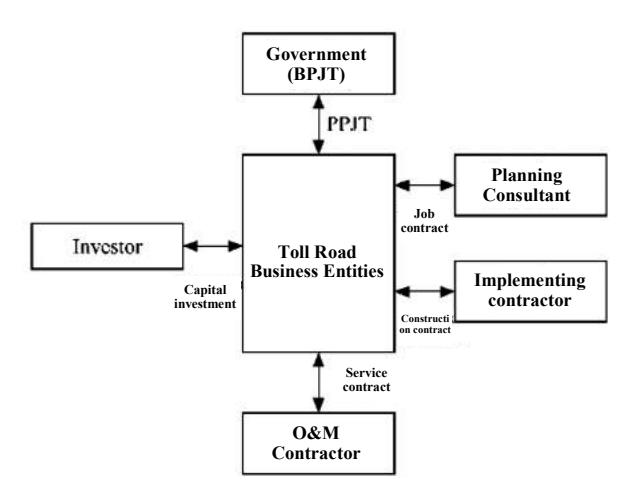
Figure 3. PPP scheme business entity contract network (Engel, Fischer, & Galetovic, 2010)
road projects is very closely related to the performance of construction projects, where the variation of advanced (collaborative) project delivery provides better construction project performance, so that this study, in addition to reviewing the project delivery system at the toll road project level, also reviewed the toll road PPP scheme concession in relation to construction project performance.
2.2 Construction project performance
As a finding from (World Bank, 2000) that performance indicators are an important factor in the PPP scheme, the performance in the construction phase is also important in a toll road construction project. Construction project performance measurements are needed to reflect the needs and expectations of all stakeholders, but the performance of stakeholders also needs to be measured during the project phase to ensure there are no conflicts, disputes, and blaming syndromes during the project completion stage (A.S. Pillai, 2002). Takim & Akintoye (2002) identified indicators that are important to note in a construction project from the results of the study of literature from some previous researches, among them are customer satisfaction, quality, productivity, profitability, financial, cost, time, occupational health and safety (OHS), environment.
To measure the performance of a construction project, measurement instrument that can performance indicators of a construction project is needed. Nassar (2009) developed an integrated system of performance measurement in construction projects consisting of indicators of cost, time, payment, profitability, OHS, quality, project team satisfaction, and customer satisfaction. The construction project performance measurement system is measured quantitatively. The quantitative measurement of the performance of a construction project is measured in a performance index with certain calculations. Schedule
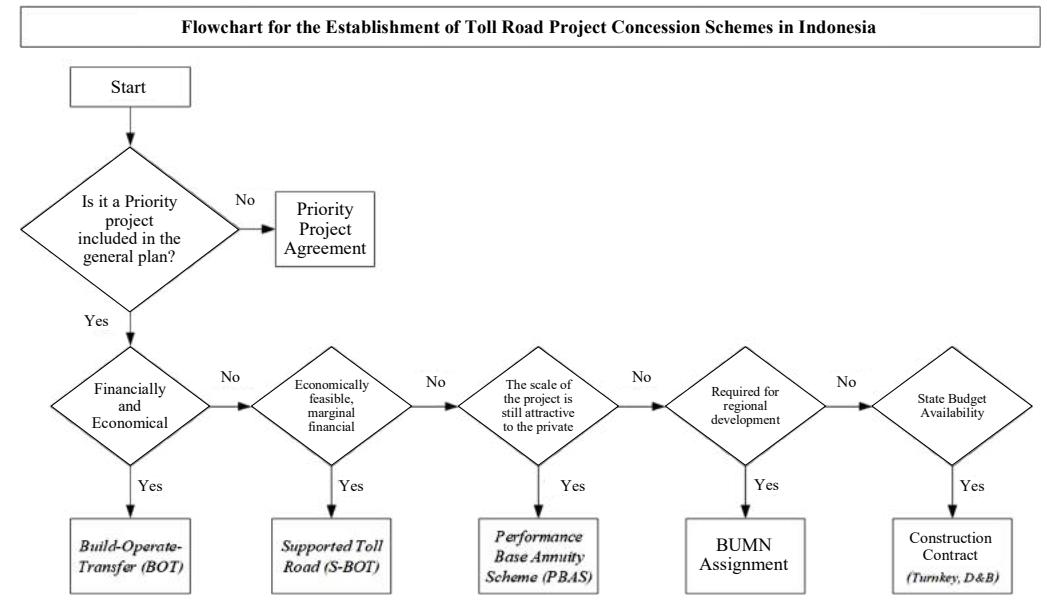
Figure 4. Flowchart for the establishment of toll road project concession schemes in Indonesia (BPJT, 2016)
3HUIRUPDQFH ,QGH[ 63, LV XVHG WR PHDVXUH SURMHFW FRVWHIILFLHQF\ XVLQJWKHHDUQYDOXHFRQFHSW3D\PHQW 3HUIRUPDQFH ,QGH[ %3, LV XVHG WR PHDVXUH WKH HIILFLHQF\RIELOOLQJWRWKHRZQHUZKLFKZLOOGHWHUPLQH WKHFDVK IORZRZQHGE\WKHFRQWUDFWRUWRZRUNRQWKH SURMHFW DVVXPLQJ WKH FRQWUDFW V SD\PHQW PHWKRG LV OXPS VXP7KH2+6SHUIRUPDQFHLQGH[ 6), LVXVHG WR PHDVXUH WKH RFFXSDWLRQDO KHDOWK DQG VDIHW\ SHUIRUPDQFH ZLWK WKH WLPH ORVV DSSURDFK RQ WKH SURMHFW7KH7HDP 6DWLVIDFWLRQ ,QGH[ 76, LV XVHGWR PHDVXUH WKH VDWLVIDFWLRQ RI WKH SURMHFW WHDP GHWHUPLQHG E\ DQ DVVHVVPHQW IURP SURMHFW WHDP PHPEHUVLQYROYHGLQWKHDUHDVRIFRQFHUQ0HDQZKLOH WKH&OLHQW6DWLVIDFWLRQ ,QGH[ &6, LVXVHGWRPHDVXUH WKH VDWLVIDFWLRQ RI WKH FOLHQW GHWHUPLQHG E\ DQ DVVHVVPHQW E\ WKH FOLHQW RQ WKH FRQWUDFWRU WHDP IRU DFKLHYHPHQWV LQ WKH DUHDV RI FRQFHUQ )URP WKH SHUIRUPDQFH LQGH[ WKHUH DUH SHUIRUPDQFH UDWLQJ FDWHJRULHV $ % & ' DQG ) ZKHUH WKH UDWLQJ LQGLFDWRU IRU HDFK FDWHJRU\ LV $ IRU DZHVRPH SHUIRUPDQFH% IRU H[FHHGLQJWKHWDUJHW& IRU LQ WKH WDUJHW ' IRU EHORZ WDUJHW DQG ) IRU SRRU SHUIRUPDQFH
,QWKLVVWXG\WKHSHUIRUPDQFHRIWROOURDGFRQVWUXFWLRQ SURMHFWV ZDV PHDVXUHG E\ DGRSWLQJ WKH 1DVVDU DVVHVVPHQW V\VWHP )URP WKH SUHOLPLQDU\ UHVHDUFK WKHUH ZHUH VHYHUDO SHUIRUPDQFH LQGLFDWRUV WKDWFRXOGQRWEHPHDVXUHGGXHWROLPLWHGGDWDDFFHVV VR WKH SHUIRUPDQFH LQGLFDWRUV DGRSWHG LQ WKLV VWXG\ ZHUH WKH SHUIRUPDQFH RI VFKHGXOH SD\PHQW 2+6 TXDOLW\ FOLHQW VDWLVIDFWLRQ DQG SURMHFW WHDP VDWLVIDFWLRQ 0HDQZKLOH LQ WKLV VWXG\ WKHUH ZDV DQ (QYLURQPHQWDO 3HUIRUPDQFH ,QGH[ (3, ZKLFK ZDV DVVHVVHG EDVHG RQ %8-7 V HQYLURQPHQWDO LPSDFW PLWLJDWLRQLQGLFDWRUV
3URMHFWPDQDJHPHQWPDWXULW\
3URMHFW PDQDJHPHQW PDWXULW\ LV DQ LQGLFDWRU RI WKH H[WHQWWRZKLFKDVSHFLILFSURFHVVLVH[SOLFLWO\GHILQHG PDQDJHG PHDVXUHG FRQWUROOHG DQG LWV HIIHFWLYHQHVV ZKHUH WKH SURMHFW PDQDJHPHQW PDWXULW\ VKRZV WKH SRWHQWLDOJURZWKRIFDSDELOLWLHVLQGLFDWHVWKHZHDOWKRI WKH RUJDQL]DWLRQ SURFHVV SURMHFW PDQDJHPHQW DQG VKRZVWKHFRQVLVWHQF\RIWKHLPSOHPHQWDWLRQRISURMHFW PDQDJHPHQW LQ SURMHFWV RZQHG E\ DQ RUJDQL]DWLRQ 3DXON HW DO 0HDQZKLOH RQ LWV UHODWLRQVKLS ZLWK FRQVWUXFWLRQ SHUIRUPDQFH 30 6ROXWLRQ LGHQWLILHGWKDWWKH PRUH PDWXUH DQ RUJDQL]DWLRQ LQ LWV SURMHFWPDQDJHPHQWWKHPRUHOLNHO\LWLVWRDFKLHYHLWV SURMHFW REMHFWLYHV VXFFHVVIXOO\ 7KLV VKRZV WKH UHODWLRQVKLS RI SURMHFW PDQDJHPHQW PDWXULW\ ZKLFK DOVRLOOXVWUDWHVWKHPDWXULW\RID%8-7LQPDQDJLQJLWV WROO URDG FRQVWUXFWLRQ SURMHFWV WR WKH DFKLHYHG SHUIRUPDQFHRIFRQVWUXFWLRQSURMHFWV
7KHUH DUH PDQ\ PRGHOV IRU PHDVXULQJ SURMHFW PDQDJHPHQW PDWXULW\ 7KLV VWXG\ XVHG WKH FRPELQHG DGRSWLRQ RI WKH 6ROXWLRQ 0DWXULW\ PRGHO DQG ,06, 3URMHFW 0DQDJHPHQW $VVHVVPHQW 0RGHO +ROPHV :DOVK ZKHUHWKH306ROXWLRQPRGHOKDVEHHQ ZLGHO\ XVHGLQ JHQHUDO DQGWKH ,06, PRGHOLQFOXGHV LQGLFDWRUVWKDWFDQEHJHQHUDOO\XQGHUVWRRGE\SURMHFW PDQDJHPHQWSUDFWLWLRQHUV0DWXULW\PHDVXUHPHQWZDV
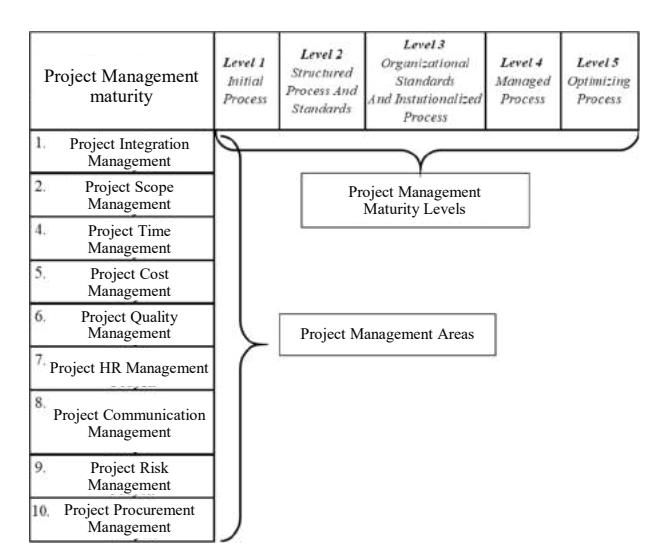
)LJXUH3URMHFWPDQDJHPHQWPDWXULW\PRGHO *UDQW 3HQQ\SDFNHU
GRQH E\ UHYLHZLQJ PDQDJHPHQW DUHDV ZLWK PDWXULW\ OHYHOV WR JHW WKH WRWDO YDOXH RI SURMHFW PDQDJHPHQWPDWXULW\DVVKRZQLQ)LJXUH
&KDUDFWHULVWLFVRIWROOURDGSURMHFWV
)HGHUDO +LJKZD\ $GPLQLVWUDWLRQ )+:$ LGHQWLILHGFKDUDFWHULVWLFVRIWROOURDGSURMHFWVWKDWDUH LPSRUWDQWWRQRWHUHODWHGLGHQWLILHGFKDUDFWHULVWLFVRI WROOURDGSURMHFWVWKDWQHHGWREHFRQVLGHUHGLQUHODWLRQ WR WKH RSHUDWLRQ RI WROO URDG LQIUDVWUXFWXUH ZLWK 333 VFKHPHQDPHO\WKHSURMHFWYDOXHSURMHFWFRPSOH[LW\ VWURQJ SXEOLF VXSSRUW VRXUFHV RI LQFRPH DQG WKH HQYLURQPHQWDO SHUPLW SURFHVV 0HDQZKLOH 0DKDPLG VWDWHG VHYHUDO IDFWRUV WKDW DIIHFW WKH FRVW GHYLDWLRQ LQ WKH FRQVWUXFWLRQ RI VHTXHQWLDO URDGV LQ WHUPVRIWKHOHYHORILQIOXHQFHQDPHO\WKHSURMHFWVL]H URDGOHQJWKDQGZLGWK WKH VXLWDELOLW\RIWKH VRLODQG URFNVRIWKHSURMHFWWKHSURMHFWVRLOFRQGLWLRQDQGWKH VRLO DQG URFN FRQVWUXFWDELOLW\ FRQGLWLRQ DW WKH SURMHFW VLWH
2QHVWURQJSXEOLFVXSSRUWLQGLFDWRULQWKH333VFKHPH LV WKH ODQG DFTXLVLWLRQ SURFHVV ZKLFK LQFOXGHV KDQGOLQJODQGDFTXLVLWLRQIXQGLQJ/LQGVD\ 7KH WROO URDG ODQG DFTXLVLWLRQ VFKHPH LQ ,QGRQHVLD LV UHJXODWHG LQ /DZ QR RI ZKHUH WKH ODQG DFTXLVLWLRQ ILQDQFLQJ VFKHPH LV UHJXODWHG LQ )LQDQFH 0LQLVWHU 5HJXODWLRQ 1R30. ,Q )LQDQFH 0LQLVWHU5HJXODWLRQ1R30.7KHUHDUH ODQG DFTXLVLWLRQ VFKHPHV QDPHO\ WKH GLUHFW FRPSHQVDWLRQ VFKHPH E\ WKH JRYHUQPHQW DQG WKH EDLORXW VFKHPH E\ %8-7 ,Q WKH GLUHFW FRPSHQVDWLRQ VFKHPHWKHUH DUH FRQVWUDLQWV RQWKHOLPLWDWLRQV RIWKH JRYHUQPHQWEXGJHWZKLOHLQWKHEDLORXWVFKHPHWKHUH LV D SUREOHP ZKHUH%8-7PXVW EHDUWKH GLIIHUHQFHLQ ORDQ LQWHUHVW DJDLQVW WKH FRVW RI IXQG IURP WKH JRYHUQPHQW UHLPEXUVHPHQW UDQJLQJ IURP - 1REHO /DUDVDWL
,Q WKH FRQVWUXFWLRQ SKDVH LQ DGGLWLRQ WR ODQG DFTXLVLWLRQ IXQGLQJ DQRWKHU WKLQJ WR FRQVLGHU LV FRQWUDFWRU IXQGLQJ $OIHQ HW DO FRQGXFWHG D VWXG\ RQ LQQRYDWLRQ LQ SURMHFW IXQGLQJ DV RQH RI WKH
characteristics of a toll road project specifically in Indonesia, namely the Contractor's Pre-Financing (CFP) scheme. Contractor's Pre-Financing (CFP) is a project financing scheme that begins with an agreement between a business entity and a bank to guarantee a money loan so that with the agreement, the contractor can make a loan directly to the bank. The main difference between the Contractor's Pre-Financing funding scheme and the contractor funding scheme that is generally used or often called the investment credit is that the business entity is not directly involved in debt during the construction phase.
3. Research Methodology
From the results of the literature study, various types of variables that need to be considered in the construction phase of the toll road PPP scheme were identified, including the toll road PPP scheme concession variables (concession scheme, project delivery, BUJT-contractor corporate relations, land acquisition scheme), BUJT Project Management Maturity, and characteristics of toll road construction projects (project value, road length, contractor financial scheme). Of the many variables that need to be considered in relation to construction performance, an analysis to identify patterns was needed. Another obstacle in this research was the limited access to data that could be provided by BUJT, considering the many investment interests of the company that are confidential. With the obstacles of data limitations and the number of variables reviewed, a Qualitative Comparative Analysis was used to obtain the patterns of achievement of toll road construction project performance.
3.1 Qualitative comparative analysis
Qualitative comparative analysis (QCA) was first put forward by sociologist Charles Ragin in 1987. Qualitative comparative analysis is an analysis technique that combines quantitative and qualitative methods, shown in Figure 6, which originally focused on a small sample but its development has made it possible on a broader context (Ragin, 2014). QCA enables the identification of meaningful patterns even when very detailed and comprehensive case information is not available, or is often commercially sensitive and difficult to obtain (Gross & Garvin, 2011), where the advantages of this method are the basis used in this study, considering the PPP scheme concession's data is a piece of limited data information that is quite difficult to dig deeper. The QCA method has 3 types of sub-methods namely crisp set QCA (csQCA), fuzzy set QCA
(fsQCA), and multi variable QCA (mvQCA). While the mvQCA sub-method, in its analysis, allows multi-value conditions which can accommodate different categories in 1 variable represented by natural numbers (0,1,2,3,etc.). In this study, the QCA sub-method used was the mvQCA sub-method, where this sub-method was the most suitable approach to the characteristics of the data in this study, which consisted of many variables with multiple variable variations.
3.1.1 Identification of outcome variables
From the results of the literature review, the construction project performance aspects identified for review of its achievements in this study consisted of 7 performance aspects, namely schedule, payment, OHS, quality, project team, client satisfaction, environment, and aspects of total performance which is an average of the seven the performance aspects reviewed.
3.1.2 Identification of condition variables
From the results of the literature review and several approaches in determining condition variables, 8 condition variables that affect the achievement of the PPP toll road construction project performance were identified. The condition variables identified are project delivery, concession scheme, toll road length, toll road construction costs, BUJT-contractor corporate relation, contractor financial scheme, land acquisition scheme, and project management maturity (9 management areas and total maturity).
3.1.3 Case study framework
OCA generally does not have a rigid limit on the amount of data, but it is recommended that the amount of data used in QCA analysis is in the intermediate range, which is from 5-50 data (Ragin, 2003). In this study, 14 BUJT case studies were identified that have met the recommended amount of data in the QCA analysis and have covered all toll road networks in BUJT toll road concessions in Indonesia (Trans Jawa, Trans Sumatra, Jabodetabek, and Non-Trans Jawa).
3.1.4 QCA table preparation
From the condition variables and the outcome variables, a QCA analysis model was prepared. The QCA model analyzes outcome variables and condition variables in the form of a numerical model. In this study, the numerical model of condition variables and outcome variables were prepared and shown in Table 1
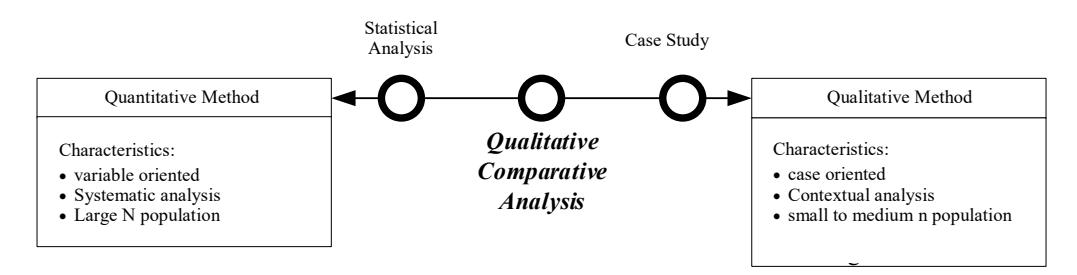
Figure 6. Qualitative comparative analysis (QCA) method spectrum
dan Figure 7. Meanwhile, the QCA model in the form of a numeric configuration table, which in this study is presented in Table 2, is the result of a survey of 14 BUJT case studies on 14 toll road sections under the PPP scheme. In numerical modeling of construction project performance outcome variables, the modeling is based on existing rating category indicators (Nassar, 2009), where the rating categories A, B, and C that have "awesome performance" to "in the target" indicators are modeled as good performance outcome variables. While the D, and F rating categories that have "below target" and "poor performance" indicators are modeled as poor performance outcome variables.
4. Analysis Results and Interpretations
The analysis was done using the help of the Tosmana V1.6 software. Following are the results of QCA analysis on 7 performance aspects and total performance of construction projects.
4.1 Schedule performance index (SPI) results
The result of QCA analysis on the schedule performance is shown in Table 3. Schedule performance will be achieved either with the strongest pattern in a combination of BOT scheme condition with a construction cost of Rp 3.5 – 7 trillion, or a combination of 0 - 50km long toll road condition and BUJT project management maturity at level 4, or a combination of the construction cost of Rp3.5 – 7 trillion and the investment credit contractor's financial scheme, or a combination of the construction cost of Rp0 - 3.5 trillion and the BUJT project management
Table 1. Numerical models of condition variables and outcome variables
| Condition/ Outcome | Variable Name | Category | Value |
|---|---|---|---|
| Project delivery | PD | Design-Bid-Build | 0 |
| scheme | PD | Design&Build | 1 |
| BOT | 0 | ||
| Concession scheme | USAHA | S-BOT | 1 |
| CONOMIC | SOE Assignment | 2 | |
| 0-25 km | 0 | ||
| Toll road length | LENGTH | 25-50 km | 1 |
| >50 km | 2 | ||
| 0 - 3.5 trillion | 0 | ||
| Construction costs | COST | 3.5 - 7 trillion | 1 |
| > 7 trillion | 2 | ||
| BUJT-Contractor | No corporate relation | 0 | |
| corporation relation | CORP | There is a corporate relation | 1 |
| Investment credit | 0 | ||
| Financial scheme | FINANCIAL | Contractor pre- financing | 1 |
| Land acquisition | LAND | Direct repayment by the government | 0 |
| scneme | BUJT bailouts | 1 | |
| Project | MDM and INT | Level 1 Maturity | 1 |
| management | MPM and INT, SCOPE, TIME, | Level 2 Maturity | 2 |
| (general) and 9 Project | COST, QLTY, | Level 3 Maturity | 3 |
| management | SDM, COM, RISK, PROC | Level 4 Maturity | 4 |
| areas | NISK, FROC | Level 5 Maturity | 5 |
| Construction | SPI, BPI, SFI, | С | 0 |
| Project Performance | QPI, TSI, CSI, EPI, TOTAL | Good performance (A,B,C criteria) | 1 |
maturity at level 4. The analysis showed that there was no difference in the D-B-B or D&B project delivery. The variables that affected the schedule performance index (SPI) were the concession scheme, toll road length, construction costs, contractor's financial scheme, and BUJT project management's level of maturity.
4.2 Payment performance (BPI) results
The result of QCA analysis on the payment performance is shown in Table 2. As for in general (for all project deliveries), payment performance will be achieved either under the condition of the SOE assignment and BOT concession scheme, or BUJT project management maturity at level 3, or the condition of the construction cost of Rp0 - 3.5 trillion and BUJT bailout land acquisition scheme. In the Design-Bid-Build project delivery, the payment performance (BPI) will be achieved well on the BUJT bailout land acquisition scheme. This is consistent with the results of the literature study, where the advantages of the BUJT bailout land acquisition scheme aim to accelerate the progress of the project so that it can be carried out properly. Meanwhile, in the Design&Build project delivery, the payment performance (BPI) will be well achieved in the investment credit contractor's financial scheme. This is consistent with the results of the literature study in which the investment credit financial scheme does not burden the contractor in terms of funding so that it can focus more on the project progress and the project progress payment can be properly implemented.
4.3 OHS performance (SFI) results
The result of QCA analysis on the OHS performance is shown in Table 4. Generally, in the Design-Bid-Build and Design&Build project delivery, OHS performance (SFI) will be achieved well under the condition of the BOT concession scheme and the construction cost of Rp 0 - 3.5 trillion, or on the condition of the construction cost of Rp 3.5 – 7 trillion, or the condition of the construction cost of Rp 0 -3.5 trillion and financial investment credit scheme, or the condition of construction cost higher than Rp7 trillion with project management maturity at level 3. Specifically, in the Design-Bid-Build project delivery, OHS performance (SFI) will be achieved well under the condition of the construction cost higher than Rp 7 trillion. The large number of performance patterns related to construction cost is consistent with the findings of previous studies that one of the main factors determining the application of OHS in Indonesia is the cost factor (Ong. Suryadharma, & Andi, 2018).
4.4 Quality performance index (QPI) results
The result of QCA analysis on the quality performance is shown in Table 6. K quality performance index (QPI) will be achieved well under the condition of the SOE assignment and BOT concession scheme, or the toll road length of 0 - 50 km, or the BUJT project management maturity at level 4. The findings of investment scheme factors determine the quality
performance related to previous research, which found a strong relationship between construction quality and investment costs in the PPP scheme (Price water house Coopers Advisory S.p.A., 2014).
4.5 Team satisfaction index (TSI) results
The result of QCA analysis on the team project performance is shown in Table 7. Generally, in the Design-Bid-Build and Design&Build project delivery, the project team satisfaction index (TSI) will be achieved well in the strongest pattern with the condition of the construction cost of Rp3.5 - 7 trillion, or the condition of the toll road length of 0 - 50 km with BUJT project management maturity at level 3. In the Design-Bid-Build project delivery, the project team satisfaction index (TSI)
will be well achieved in the condition of toll road length > 50 km. While in the Design&Build project delivery, the project team satisfaction index (TSI) will be achieved well under the condition of the construction cost of Rp 0 - 3.5 trillion with the BUJT bailout land acquisition scheme or a combination condition of the construction cost of Rp 0 - 3.5 trillion and the existence of a corporate relationship between BUJT and contractor. The pattern of construction performance variables related to construction costs that have high strength (coverage) is related to previous research where there are findings that the provision of incentives in construction projects can improve the performance of the project team, in this case, contractor productivity (Sarli & Adianto, 2017).
Table 2. QCA configuration table
| ID | PD | WORK | LENGTH | COST | CORP | FINANCIAL | LAND | МРМ | SPI | ВРІ | SFI | QPI | TSI | CSI | EPI | TOTAL |
|---|---|---|---|---|---|---|---|---|---|---|---|---|---|---|---|---|
| BUJT 1 | 1 | 0 | 0 | 0 | 0 | 0 | 0 | 4 | 1 | 1 | 1 | 1 | 0 | 0 | 1 | 1 |
| BUJT 2 | 0 | 0 | 1 | 0 | 1 | 1 | 1 | 3 | 0 | 1 | 0 | 1 | 0 | 0 | 1 | 0 |
| BUJT 3 | 1 | 2 | 0 | 0 | 1 | 0 | 1 | 4 | 1 | 1 | 1 | 1 | 1 | 1 | 1 | 1 |
| BUJT 4 | 1 | 1 | 2 | 1 | 1 | 1 | 1 | 4 | 0 | 0 | 1 | 1 | 1 | 1 | 1 | 1 |
| BUJT 5 | 1 | 2 | 2 | 2 | 1 | 0 | 1 | 4 | 0 | 1 | 0 | 1 | 0 | 1 | 0 | 0 |
| BUJT 6 | 1 | 1 | 0 | 0 | 1 | 0 | 1 | 3 | 0 | 1 | 1 | 0 | 1 | 1 | 0 | 1 |
| BUJT 7 | 0 | 0 | 2 | 1 | 1 | 0 | 1 | 3 | 1 | 1 | 1 | 1 | 1 | 1 | 0 | 1 |
| BUJT 8 | 0 | 0 | 1 | 0 | 1 | 1 | 1 | 3 | 0 | 1 | 1 | 1 | 1 | 1 | 1 | 1 |
| BUJT 9 | 0 | 0 | 1 | 2 | 1 | 0 | 1 | 3 | 0 | 1 | 1 | 1 | 0 | 0 | 1 | 1 |
| BUJT 10 | 0 | 1 | 1 | 0 | 1 | 0 | 0 | 4 | 1 | 0 | 1 | 1 | 0 | 0 | 1 | 0 |
| BUJT 11 | 0 | 0 | 2 | 2 | 1 | 1 | 1 | 3 | 0 | 1 | 1 | 1 | 1 | 1 | 1 | 1 |
| BUJT 12 | 0 | 0 | 1 | 1 | 1 | 0 | 1 | 4 | 1 | 1 | 1 | 1 | 1 | 1 | 1 | 1 |
| BUJT 13 | 0 | 0 | 1 | 2 | 1 | 0 | 1 | 3 | 0 | 1 | 1 | 1 | 1 | 1 | 1 | 1 |
| BUJT 14 | 1 | 0 | 1 | 1 | 1 | 0 | 1 | 3 | 1 | 1 | 1 | 1 | 1 | 1 | 1 | 1 |
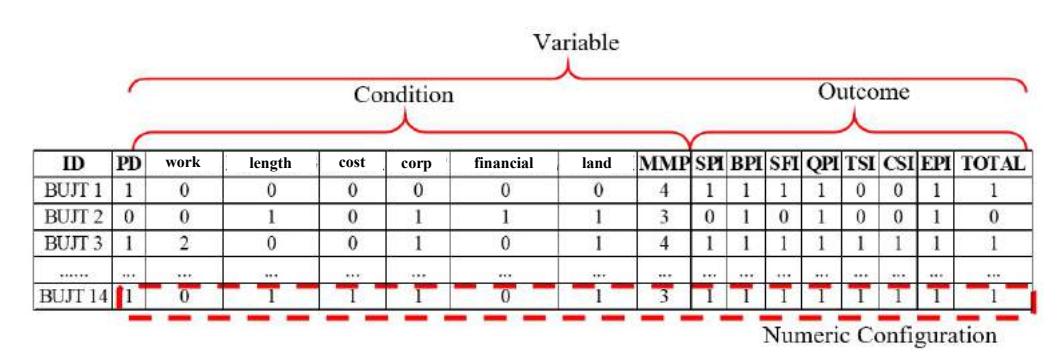
Figure 7. QCA configuration table model
Table 3. Schedule performance index (SPI) QCA analysis results
| Parameter | Analysis Results | ||||
|---|---|---|---|---|---|
| QCA Expression | LENGTH{0,1}* MPM{4} + | WORK {0} * COST {1} + | COST{1}* FINANCIAL{0} + | COST{0}* MPM{4} + | COST{1}* MPM{3} + |
| Interpretation | Length of 0-50km and maturity at level 4 | BOT concession scheme and cost of Rp. 3.5-7 T | Cost of Rp.3.5-7 T; and financial contractor's investment credit scheme | Cost of Rp.0-3.5 T; and maturity at level 4 | Cost of Rp.3.5-7 T; and maturity at level 3 |
| Case Study | (BUJT1+ BUJT3 + BUJT10 + BUJT12) | (BUJT 7+BUJT 12+BUJT 14) | (BUJT7 + BUJT12 + BUJT14) | (BUJT1 + BUJT3 + BUJT10) | (BUJT7 + BUJT 14) |
| Coverage | 4/14= 28.57% | 3/14= 21.43% | 3/14= 21.43% | 3/14= 21.43% | 2/14= 14.29% |
Table 4. OHS Performance (SFI) QCA analysis results
| Parameter | Analysis Results | ||||
|---|---|---|---|---|---|
| QCA Expression | PD{0} * COST{2} | COST{1} + | COST{0} *FINANCIAL{0} + | COST{2} * MPM{3} + | WORK{0} * COST{2} + |
| Interpretation | D-B-B Project delivery and cost > Rp. 7 T | cost of Rp.3.5-7 T | Cost of Rp.0-3.5 T and financial contractor's investment credit scheme | Cost > Rp.7 T and maturity at level 3 | BOT concession scheme and cost of Rp.0-3.5T |
| Case Study | (BUJT 9,BUJT 13+BUJT 11) | (BUJT 4+BUJT 7+ BUJT 12+BUJT 14) | (BUJT 1+ BUJT 3+ BUJT 6+ BUJT 10) | (BUJT 9, BUJT 13+ BUJT 11) | (BUJT 9, BUJT 13+BUJT 11) |
| Coverage | 3/14= 21.43% | 4/14= 28.57% | 4/14= 28.57% | 3/14= 21.43% | 3/14= 21.43% |
Table 5. Quality performance index (QPI) QCA analysis results
| Parameter | Analysis Results | ||
|---|---|---|---|
| QCA Expression | WORK {0,2} + | LENGTH{1,2} + | MPM{4} |
| Interpretation | BOT concession scheme and SOE Assignment | Toll road length of >25km | MPM at level 4 |
| Case Study | (BUJT 1+BUJT 2,BUJT 8 + BUJT 3+ BUJT 5+BUJT7+ BUJT 9,BUJT 13+BUJT11+ BUJT 12+BUJT 14) | (BUJT 2,BUJT 8+BUJT 4+BUJT 5+BUJT 7+BUJT 9, BUJT 13+BUJT 10+BUJT 11+BUJT 12+BUJT 14) | (BUJT 1+BUJT 3+BUJT 4+BUJT 5+BUJT 10+BUJT 12) |
| Coverage | 11/14= 92.86% | 11/14= 92.86% | 6/14= 42.86% |
Table 6. Payment performance index (BPI) QCA analysis results
| Parameter | Α | nalysis Results | |||||
|---|---|---|---|---|---|---|---|
| QCA Expression | PD{1} * FINANCIAL{0} + | PD{0} * LAND {1}+ | FINANCIAL{0}* LAND{1} + | MPM {3} + | LENGTH {0} + | COST {0} * LAND {1} + | WORK {0,2} |
| Interpretation | Project delivery D&B and financial contractor's investment credit scheme | Project delivery D-B-B and bailout land acquisition scheme | Financial contractor's investment credit scheme and bailou land acquisition scheme | Maturity at it level 3 | Toll road length of 0 - 25 km | Construction cost of Rp0-3.5 T and bailout land acquisition scheme | BOT concession scheme and BUMN Assignment |
| Case Study | (BUJT 1+BUJT 3+BUJT 5+BUJT 6+BUJT 14) | (BUJT 2,BUJT 8+BUJT 7+BUJT 9,BUJT 13+BUJT 11+BUJT 12) | (BUJT 3+BUJT 5+BUJT 6+BUJT 7+BUJT 9,BUJT 13+BUJT 12+ BUJT 14) | (BUJT 2,BUJT 8+ BUJT 6+ BUJT 7+BUJT 9, BUJT 13 + BUJT 11 + BUJT 14) | (BUJT 1+BUJT 3+BUJT 6) | (BUJT 2,BUJT 8+BUJT 3+BUJT 6) | (BUJT 1+BUJT 2,BUJT 8+BUJT 3+BUJT 5+BUJT 7+BUJT 9,BUJT 13+BUJT 11+BUJT 12+BUJT 14) |
| Coverage | 5/14= 35.71% | 7/14= 50% | 8/14= 57.14% | 8/14= 57.14% | 3/14= 21.43% | 4/14= 28.57% | 11/14= 78.57% |
Table 7. Team satisfaction index (TSI) QCA analysis results
| Parameter | Analysis Res | ults | |||||
|---|---|---|---|---|---|---|---|
| QCA Expression | COST{1} + | LENGTH{0,2} * MPM{3} + | WORK {0,1} * LENGTH {2} + | LENGTH{2} * PD{0}+ | COST{0}* LAND{1}* PD{1} + | PD{1}COST{0}* CORP{1} + | LENGTH{0}* CORP{1} |
| Interpretation | Cost of Rp.3.5-7 T | Length of 0-50 km; and maturity at level 3 | BOT and S-BOT concession scheme and length >50km | Length of >50 km; and D-B-B Project delivery | Cost of RP.0-3.5T; and BUJT bailout land acquisition scheme; and D&B project delivery | Cost Rp. 0-3.5T; and BUJT- Contractor corporate relationship | Length of 0-25 km and BUJT- Contractor corporate relationship |
| Case Study | (BUJT 4+BUJT 7+BUJT 12+BUJT 14) | (BUJT 6+BUJT 7+BUJT 11) | (BUJT 3+BUJT 6) | BUJT 7+BUJT 11) | (BUJT 3+BUJT 6) | (BUJT 3+BUJT 6) | (BUJT 3+ BUJT 6) |
| Coverage | 4/14= 28.57% | 3/14= 21.43% | 2/14= 14.29% | 2/14= 14.29% | 2/14= 14.29% | 2/14= 14.29% | 2/14= 14.29% |
4.6 Client satisfaction index (CSI) results
The result of QCA analysis on the client satisfaction is shown in Table 8. Generally, in the Design-Bid-Build and Design&Build project delivery, client satisfaction index (CSI) will be achieved well under the condition of the toll road length > 50km, or the condition of the construction cost of Rp 3.5 - 7 trillion, or the condition of the BUJT bailout land acquisition scheme with project management maturity at level 4. Specifically, in the Design&Build project delivery, the client satisfaction index (CSI) can be achieved well on the BUJT bailout land acquisition scheme, or on a condition where there is a corporate relationship between BUJT and the contractor. The existence of a Design&Build project delivery variable pattern shows
7DEOH&OLHQWVDWLVIDFWLRQLQGH[&6, 4&$DQDO\VLVUHVXOWV
| 3DUDPHWHU | $QDO\VLV5HVXOWV | ||||
|---|---|---|---|---|---|
| 4&$([SUHVVLRQ | /(1*7+^` | &267^` | /$1'^` 030^` | &253^` 3'^` | /$1'^` 3'^` |
| ,QWHUSUHWDWLRQ | 7ROOURDGOHQJWKRI !NP | &RVW5S-7 | %8-7EDLORXWODQG DFTXLVLWLRQVFKHPH DQGPDWXULW\DWOHYHO | %8-7-&RQWUDFWRU FRUSRUDWHUHODWLRQVKLS DQG' %SURMHFWGHOLYHU\ | %8-7EDLORXWODQG DFTXLVLWLRQVFKHPHDQG ' %SURMHFWGHOLYHU\ |
| &DVH6WXG\ | %8-7%8-7 %8-7%8-7 | %8-7%8-7 %8-7%8-7 | %8-7%8-7 %8-7%8-7 | %8-7%8-7%8-7 %8-7%8-7 | %8-7%8-7%8-7 %8-7%8-7 |
| &RYHUDJH |
7DEOH(QYLURQPHQWDOSHUIRUPDQFHLQGH[(3, 4&$DQDO\VLVUHVXOWV
| 3DUDPHWHU | $QDO\VLV5HVXOWV | ||||
|---|---|---|---|---|---|
| 4&$ ([SUHVVLRQ | /(1*7+^` | &267^` 030^` | :25.^` &267^` | 3'^` &267^` | 3'^` &267^` |
| ,QWHUSUHWDWLRQ | 7ROOURDGOHQJWKRI- NP | &RQVWUXFWLRQFRVWRI 5S-7DQGPDWXULW\ DWOHYHO | %27FRQFHVVLRQVFKHPH DQGFRQVWUXFWLRQFRVWRI 5S-7 | &RQVWUXFWLRQFRVWRI5S- 7DQG'-%-%SURMHFWGHOLYHU\ | '-%-%3URMHFWGHOLYHU\ DQG&RQVWUXFWLRQFRVW RI-7 |
| &DVH6WXG\ | %8-7%8-7%8-7 %8-7%8-7 %8-7%8-7 | %8-7%8-7 %8-7%8-7 %8-7 | %8-7%8-7%8-7 %8-7%8-7 %8-7 | %8-7%8-7%8-7 %8-7%8-7 %8-7 | %8-7%8-7 |
| &RYHUDJH |
7DEOH7RWDOSURMHFWSHUIRUPDQFH4&$DQDO\VLVUHVXOWV
| 3DUDPHWHU | $QDO\VLV5HVXOWV | ||||
|---|---|---|---|---|---|
| 4&$([SUHVVLRQ | &267^` | :25.^` ),1$1&,$/^` | &267^` 030^` | 3'^` &267^` | 3'^` &267^` |
| ,QWHUSUHWDWLRQ | &RVWRI-7 | &RVWRI5S-7DQG ILQDQFLDOFRQWUDFWRU V LQYHVWPHQWFUHGLWVFKHPH | &RVWRI5S!7DQG PDWXULW\DWOHYHO | ' %3URMHFWGHOLYHU\ DQGFRVWRI5S!7 | ' %3URMHFWGHOLYHU\ DQGFRVWRI5S-7 |
| &DVH6WXG\ | %8-7%8-7 %8-7%8-7 | %8-7%8-7%8-7 %8-7%8-7 %8-7 | %8-7%8-7 %8-7 | %8-7%8-7 %8-7 | %8-7%8-7 %8-7 |
| &RYHUDJH |
D ILQGLQJ OLQHDU ZLWK WKH SUHYLRXV VWXG\ ZKHUH WKH 'HVLJQ %XLOG SURMHFW GHOLYHU\ KDV PRUH DGYDQWDJHV LQ FOLHQW VDWLVIDFWLRQ FRPSDUHG WR GHVLJQ-ELG-EXLOG RQ WKH URDGFRQVWUXFWLRQLQUHGXFLQJWKHGXUDWLRQRIWKHSURMHFW FDSLWDO FRVWV DQG HVWDEOLVKLQJ D EHWWHU UHODWLRQVKLS EHWZHHQWKH SDUWLHVLQYROYHG .RSSLQHQ /DKGHQSHUl
(QYLURQPHQWDOSHUIRUPDQFHLQGH[(3, UHVXOWV
7KH UHVXOW RI 4&$ DQDO\VLV RQ WKH HQYLURQPHQWDO SHUIRUPDQFH LV VKRZQ LQ 7DEOH *HQHUDOO\ LQ WKH 'HVLJQ-%LG-%XLOG DQG 'HVLJQ %XLOG SURMHFW GHOLYHU\ WKH HQYLURQPHQWDO SHUIRUPDQFH LQGH[ (3, ZLOO EH DFKLHYHGZHOOXQGHUWKHFRQGLWLRQRIWKHWROOURDGOHQJWK RI - NP RU FRQGLWLRQ RI WKH FRQVWUXFWLRQ FRVW RI 5S - WULOOLRQ ZLWK D FRPELQDWLRQ RI %8-7 SURMHFW PDQDJHPHQWPDWXULW\DWOHYHORUWKHFRQGLWLRQRI%27 FRQFHVVLRQ VFKHPH ZLWK D FRPELQDWLRQ RI WKH FRQVWUXFWLRQ FRVWV RI 5S - WULOOLRQ DQG ! 5S WULOOLRQ ,Q WKH 'HVLJQ-%LG-%XLOG SURMHFW GHOLYHU\ WKH HQYLURQPHQWDOSHUIRUPDQFHLQGH[(3, ZLOOEHDFKLHYHG ZHOOXQGHUWKHFRQGLWLRQRIWKHFRQVWUXFWLRQFRVWRI5S - WULOOLRQ DQG ! 5S WULOOLRQ :KLOH LQ WKH 'HVLJQ %XLOG SURMHFW GHOLYHU\ WKH HQYLURQPHQWDO SHUIRUPDQFHLQGH[(3, ZLOOEHDFKLHYHGZHOOXQGHUWKH FRQGLWLRQ RIWKH FRQVWUXFWLRQ FRVW RI5S - WULOOLRQ
7KH SDWWHUQ RI FRQVWUXFWLRQ FRVWV DV D YDULDEOH WKDW LQIOXHQFHV HQYLURQPHQWDO SHUIRUPDQFH LV LQ OLQH ZLWK SUHYLRXV UHVHDUFK ILQGLQJV ZKHUH RQH RI WKH PDLQ REVWDFOHVLQHQYLURQPHQWDOPDQDJHPHQWLVWKHKLJKFRVW &KDQGUD &KULVWLDQ
7RWDOSURMHFWSHUIRUPDQFHUHVXOWV
7KH UHVXOW RI 4&$ DQDO\VLV RQ WKH WRWDO SURMHFW LV VKRZQLQ7DEOH*HQHUDOO\LQWKH'HVLJQ-%LG-%XLOG DQG 'HVLJQ %XLOG SURMHFW GHOLYHU\ WKH WRWDO SURMHFW SHUIRUPDQFHZLOOEHDFKLHYHGHLWKHUXQGHUWKHFRQGLWLRQ RI WKH FRQVWUXFWLRQ FRVW RI 5S - WULOOLRQ RU WKH FRQGLWLRQ RI WKH %27 FRQFHVVLRQ VFKHPH ZLWK WKH FRQGLWLRQRILQYHVWPHQWFUHGLW ILQDQFLDO VFKHPHRUWKH FRQGLWLRQRIWKHFRQVWUXFWLRQ FRVWRI5SWULOOLRQZLWK %8-7 SURMHFW PDQDJHPHQW PDWXULW\ DW OHYHO ,Q WKH 'HVLJQ-%LG-%XLOG SURMHFW GHOLYHU\ WKH WRWDO SURMHFW SHUIRUPDQFHZLOOEHDFKLHYHGZHOOXQGHUWKHFRQGLWLRQ RI FRQVWUXFWLRQ FRVW ! 5S WULOOLRQ :KLOH LQ WKH 'HVLJQ %XLOG SURMHFW GHOLYHU\ WKH WRWDO SURMHFW SHUIRUPDQFH ZLOO EH DFKLHYHG ZHOOLQWKH FRQGLWLRQ RI WKH FRQVWUXFWLRQ FRVW RI 5S - WULOOLRQ )URP WKH SDWWHUQ RI WKH VWURQJHVW YDULDEOHV WKH %27 6FKHPH VWURQJO\ LQIOXHQFHV SURMHFW SHUIRUPDQFH LQ DFFRUGDQFH ZLWK WKH VWXG\ RI OLWHUDWXUH ZKHUHLQ HFRQRPLF IHDVLELOLW\%27SURYLGHVDGHTXDWHLQYHVWPHQWFHUWDLQW\ to BUJT (BPJT, 2016). The investment credit contractor's financial scheme strongly influences project performance in accordance with the literature study in which the investment credit scheme provides concessions to the contractor, where the contractor is not financially charged, whereas, in the contractor prefinancing scheme, the contractor is also burdened with financial burdens during the toll road construction (Alfen, Ogunlana, Kalidindi, & Wang, 2009).
5. Discussion
Table 11 shows the summary of the strongest performance patterns in each performance aspect determined by the highest coverage value. From those achievement patterns, it appears that variations in project delivery do not have a strong influence on the construction project performance achievement in the aspects reviewed and the total project performance. In the aspects reviewed, the quality performance index (QPI) and payment performance index (BPI) have the strongest variable patterns in this study. The strongest variable patterns show that the BOT concession
scheme and the SOE assignment concession scheme have a strong and relatively consistent role in the interaction of various variables to achieve quality and payment performance on the toll road PPP scheme project.
In Table 12, characteristic patterns of construction project performance achievements in each variation of project delivery are shown. From those characteristic patterns, Design&Build project delivery has an influence on more performance aspects, which is on 5 performance aspects with 7 characteristic patterns, more than the design-bid-build project delivery which has characteristic patterns on 5 performance aspects with 5 characteristic patterns. This shows the same indication as the study by Koppinen & Lahdenperä (2004) which shows that Design&Build project delivery gives a better influence on the construction project performance achievement compared to the conventional project delivery (design-bid-build).
From BUJT and the contractor's corporate relationship on the construction project performance achievement
Table 11. Performance achievement patterns of construction projects (strongest) in toll road PPP variables variations
| Performance | Achievement Patterns | Coverage |
|---|---|---|
| Schedule (SPI) | Toll road length of 0-50km and project management maturity at level 4 | 28.57% |
| Payment (BPI) | BOT concession scheme; or SOE Assignment scheme | 78.57% |
| OHS (SFI) | Construction cost of Rp.3.5-7 trillion; \(\mathbf{or}\) construction cost of Rp.0-3.5 trillion and financial contractor's investment credit scheme | 28.57% |
| Quality (QPI) | BOT concession scheme; or SOE assignment scheme; or toll road length of >25km | 92.86% |
| Project Team (TSI) | Construction cost of Rp.3.5-7 trillion | 28.57% |
| Client Satisfaction (CSI) | design&build project delivery and BUJT-contractor corporate relationship; or design&build project delivery and BUJT bailout land acquisition scheme | 35.71 % |
| Environment (EPI) | Toll road length of 25-50km; or BOT concession scheme and construction cost of Rp.0-3.5 trillion; or design-bid-build project delivery and construction cost of Rp0-3.5 trillion, >Rp.7 trillion | 42.86% |
| Total Project Performance | BOT concession scheme and financial contractor's investment credit scheme | 42.86% |
Table 12. Characteristic performance achievement patterns of project delivery variations
| Performance | Design-Bid-Build | Design&Build |
|---|---|---|
| Schedule (SPI) | - | - |
| Payment (BPI) | D-B-B Project delivery and BUJT bailout land acquisition scheme | D&B Project delivery and financial contractor's investment credit scheme |
| OHS (SFI) | D-B-B Project delivery and construction cost of >Rp.7 Trillion | - |
| Quality (QPI) | - | |
| Dustreet Teams (TOI) | D.D.D.D. Control of the control of a Colum | D&B Project delivery and BUJT bailout land acquisition scheme |
| Project Team (TSI) | D-B-B Project delivery and road length of >50km | D&B Project delivery and BUJT-contractor corporate relationship |
| Client Catiofaction (CCI) | D&B Project delivery and BUJT bailout land acquisition scheme | |
| Client Satisfaction (CSI) | - | D&B Project delivery and BUJT-contractor corporate relationship |
| Environment (EPI) | D-B-B Project delivery and construction cost of Rp.0-3.5 Trillion or >Rp.7 Trillion | D&B Project delivery and construction cost of Rp.3.5-7 Trillion |
| Total Project Performance | D-B-B Project delivery and construction cost of >Rp.7 Trillion | D&B Project delivery and construction cost of Rp.0-3.5 Trillion |
patterns in all aspects reviewed, it was identified that the existence of a corporate relationship between BUJT and the contractor provides better construction project performance outcomes compared to the absence of a construction performance relationship. Meanwhile, in the land acquisition scheme, the performance pattern of overall good performance aspects is the BUJT bailout scheme. Although the results of the literature study of the BUJT bailout scheme provide additional financial burden to BUJT, one of the initial objectives of the BUJT bailout scheme is to accelerate land acquisition which has a better impact on project performance, so that the interest expense of the bailout fund can be considered as an additional investment since the planning stage by BUJT.
From the performance achievements in all aspects, it can also be observed that the contractor's financial scheme with a good overall performance pattern is the investment credit scheme. In accordance with the results of the literature study, the investment credit scheme reduces the financial burden to the contractor, so that after reviewing performance aspects (schedule, payment, OHS, total project performance), it provides good performance achievement patterns.
6. Conclusions
- From the results of the analysis of variations in project delivery with a combination of variable conditions for toll road PPP and the level of maturity of the BUJT project management, it is identified that project delivery variations do not have a strong effect on the performance of toll road construction projects as indicated by the weak influence of the achievement characteristic patterns in each variation of project delivery.
- Construction project performance is more influenced by toll road PPP concession variables (concession scheme, project management maturity, construction cost, road length, contractor financial scheme, BUJTcontractor corporate relationship, and land acquisition scheme).
7. Acknowledgement
This study was strongly supported by the Toll Road Regulatory Agency and the Ministry of Public Works and Public Housing, which had allowed us to conduct surveys in the construction phase of several toll roads and interviews with the BUJT. Another party who was also very helpful was the Consultant of PT. Marga Graha Penta for giving us access to toll roads secondary data and BUJT related to this study.
8. References
- A.S. Pillai, A. K. (2002). Performance measurement of R&D projects in a multiproject, concurrent engineering environment. International Journalof Project, 20, 165-177.
- Alfen, H. W., Ogunlana, S., Kalidindi, S., & Wang, S. (2009).Public-Private Partnership
- infrastructure development: Case studies from Asia and Europe. Weimar: Bauhaus-Universität Weimar.
- BPJT. (2007). Sejarah Jalan Tol. Dipetik Februari 25, 2019, dari http://bpjt.pu.go.id/konten/jalan-tol/ sejarah
- BPJT. (2016). Peluang Investasi Jalan Tol di Indonesia. Jakarta: BPJT.
- BPJT. (2018). Monitoring Progres Konstruksi Jalan Tol Indonesia. Jakarta: BPJT.
- BPJT. (2018). Rencana Pembangunan Jalan Tol Trans Sumatera. Padang: BPJT.
- Chandra, H. & Christian, D., 2002. Analisa Sistem Manajemen Lingkungan (ISO 14000) dan Kemungkinan Implementasinya oleh Para Kontraktor Kelas A di Surabaya. Dimensi Teknik Sipil, 4(2), pp. 77-84.
- Chrissis, M. B., Konrad, M., & Shrum, S. (2003). CMII: Guidelines for process integration and product improvement. Addison Wesley.
- DetikFinance. (2019). Belum Sebulan, Ruas-ruas Tol Ini Rusak. Dipetik Maret 1, 2019, dari https:// finance.detik.com/infrastruktur/d-4392361/ belum-sebulan-ruas-ruas-tol-ini-rusak
- Federal Highway Administration. (2010). Public-Private Partnership Concessions for Highway Projects: A Primer. Washington: Federal Highway Administration-U.S. Department of Transportation.
- Grant, K. P. & Pennypacker, J. S., 2006. Project Management Maturity: An Assessment Project Management Capabilities Among and Between Selected Industries. IEEE Transactions on Engineering Management, 53(1), pp. 59-68.
- Gross, M., & Garvin, M. (2011). Structuring PPP tollroad contracts to achieve public. The Engineering Project Organization Journal pricing objectives, 1, 143-156.
- S.J. & Walsh, R.T.(2005).Conducting Holmes, Effective Project Management Maturity Assessment Interviews. IMSI Tech.
- Haesebrouck, T. (2016). The Added Value of Multi-Value Qualitative Comparative Analysis. Forum Sozialforschung Qualitative Forum: Qualitative Social Research, 17(1).
- Kontan. (2016). Ini tiga isu sensitif di proyek jalan tol. Dipetik Februari 20, 2019, dari https:// nasional.kontan.co.id/news/ini-tiga-isu-sensitifdi-proyek-jalan-tol
- Koppinen, T., & Lahdenperä, P. (2004). Road sector experiences on project delivery methods. Finland: VTT Tiedotteita - Research Notes 2260.
- /LQGVD\ 0 &RPSXOVRU\ $FTXLVLWLRQ RI /DQG DQG &RPSHQVDWLRQ LQ ,QIUDVWUXFWXUH 3URMHFWV333,QVLJKWV -
- 0DUWLQXV 3 $EHGQHJR 6 2 µ*RRG SUR- MHFW JRYHUQDQFHIRUSURSHUULVNDOORFDWLRQLQSXEOLF-SULYDWHSDUWQHUVKLSVLQ,QGRQHVLD¶,QWHUQDWLRQDO -RXUQDORI3URMHFW0DQDJHPHQW-
- 0LO\DUGL 5 >7(6,6@ $QDOLVLV 3HQJDUXK 3URMHFW 'HOLYHU\ 7HUKDGDS .LQHUMD 3UR\HN .RQVWUXNVL 3DGD 3HQJXVDKDDQ -DODQ 7RO ROHK %DGDQ 8VDKD %DQGXQJ ,QVWLWXW 7HNQRORJL %DQGXQJ
- 1DVVDU 1 . $Q LQWHJUDWHG IUDPHZRUN IRU HYDOXDWLRQ RI SHUIRUPDQFH RI FRQVWUXFWLRQ SURMHFWV 2UODQGR 3URMHFW 0DQDJHPHQW ,QVWLWXWH
- 1REHO$ /DUDVDWL1 ,QRYDVL3HPELD\DDQ 7DQDK XQWXN 3UR\HN -DODQ 7RO \DQJ 7HUPDVXN 'DODP 3UR\HN 6WUDWHJLV 1DVLRQDO GHQJDQ 0HPSHUJXQDNDQ 0HNDQLVPH 'DQD 7DODQJDQ -XUQDO+3-, -
- 2QJ 6XU\DGKDUPD 6 $QGL $ )DNWRU- )DNWRU 3HQJKDPEDW .RQWUDNWRU 8QWXN 0HODNVDQDNDQ . 3DGD 3UR\HN .RQVWUXNVL -XUQDO'LPHQVL3UDWDPD7HNQLN6LSLO SS -
- 3ULFH ZDWHU KRXVH &RRSHUV $GYLVRU\ 6S$ (YDOXDWLRQDQGIXWXUHRIURDGWROOFRQFHVVLRQV $6(&$36ROXWLRQV
- 6DUOL $ $GLDQWR < .DMLDQ 3HPEHULDQ ,QVHQWLIGDODP3UR\HN.RQVWUXNVLGDUL3HUVHSVL 3HQJJXQD-DVDGDQ3HQ\HVLD-DVD-XUQDOLOPLDK 7HNQLN6LSLO SS-
- 7DNLP 5 $NLQWR\H $ 3HUIRUPDQFH LQGLFDWRUV IRU VXFFHVVIXO FRQVWUXFWLRQ SURMHFW *UHHQZRRG8QLYHUVLW\RI1RUWKXPEULD
- 7HPSR 3HPEDQJXQDQ -DODQ 7RO 7DN 6HVXDL 7DUJHW ,QL 3HQMHODVDQ 38 'LSHWLN )HEUXDUL GDUL KWWSVELVQLVWHPSRFR UHDGSHPEDQJXQDQ-MDODQ-WRO--WDN -VHVXDL-WDUJHW-LQL-SHQMHODVDQ-SX
- 7LUWR 'DIWDU.HFHODNDDQ3UR\HN,QIUDVWUXNWXU SDGD $ZDO 'LSHWLN )HEUXDUL GDUL KWWSVWLUWRLGGDIWDU-NHFHODNDDQ-SUR\HN-LQIUDVWUXNWXU-SDGD-DZDO--F(0
- 9HUZHLM 6 $ 6KRUW ,QWURGXFWLRQ 7R 4XDOLWDWLYH &RPSDUDWLYH $QDO\VLV 5RWWHUGDP (UDVPXV8QLYHUVLW\5RWWHUGDP
- :RUOG %DQN 3ULYDWL]DWLRQ DQG 5HJXODWLRQ RI 7UDQVSRUW :DVKLQJWRQ:RUOG%DQN,QVWLWXWH
- <LPDP $ + 3URMHFW0DQDJHPHQW0DWXULW\ ,Q 7KH &RQVWUXFWLRQ ,QGXVWU\ RI 'HYHORSLQJ &RXQWULHV 7KH &DVH RI (WKLRSLDQ &RQWUDFWRUV &ROOHJH 3DUN )DFXOW\ RI WKH *UDGXDWH6FKRRORIWKH8QLYHUVLW\RI0DU\ODQG