

D 7UDIILF9ROXPH$QDO\VLV
$QQXDO WUDIILF YROXPH GDWD ZDV XVHG WR REWDLQ WKH &(6$/ &XPXODWLYH (TXLYDOHQW 6LQJOH $[OH /RDG YDOXH
E 6WUXFWXUDO&RQGLWLRQ$QDO\VLV
6WUXFWXUDO FRQGLWLRQ DQDO\VLV ZDV FRQGXFWHG WR REWDLQ WKH RYHUOD\ WKLFNQHVV XVLQJ 0'3 PHWKRG DQG $XVWURDGV PHWKRG LQ DFFRUGDQFH ZLWK WKH GDWD REWDLQHG
F 2YHUOD\7KLFNQHVV$QDO\VLV
2YHUOD\ WKLFNQHVV DQDO\VLV ZDV FRQGXFWHG EDVHG RQ 0'3PHWKRGDQG$XVWURDGVPHWKRGZLWKGHVLJQ
6XJJHVWLRQVDQGFQFOXVLRQV-GUDZLQJVWDJH
$IWHUWKHUHVXOWVRIWKHWZRPHWKRGVKDYHEHHQREWDLQHG ZKLFK LV UHJDUGLQJ WKH RYHUOD\ WKLFNQHVV FRQFOXVLRQV ZHUH GUDZQ DFFRUGLQJ WR WKH UHVXOWV REWDLQHG 7KH FRQFOXVLRQV REWDLQHG DUH XVHG DV PDWHULDO LQ SURYLGLQJ VXJJHVWLRQV FRQWDLQLQJ UHFRPPHQGDWLRQV DQG DGGLWLRQV WKDWFDQEHPDGHWRWKHUHVXOWVRIWKHDQDO\VLVRUDVXVHIXO LQIRUPDWLRQ IRU LPSURYHPHQW LQ IXUWKHU UHVHDUFK LQ WKH IXWXUH
'DWD3UHVHQWDWLRQ
'DWD XVHG LQ WKLV VWXG\ DUH WUDIILF GDWD 9') YHKLFOH GDPDJDH IDFWRU GDWD 'HIOHFWLRQ 'DWD DQG H[LVWLQJ SDYHPHQWVWUXFWXUH
7UDIILFGDWD
7KH WUDIILF GDWD XVHG LV WKH /+5 GDWD ZKLFK LV D VHFRQGDU\GDWDREWDLQHGIURP&HQWUDO6XODZHVL1DWLRQDO 5RDG,PSOHPHQWDWLRQ$JHQFLHV%3-1 7KHWUDIILFGDWD LVLQ7DEOH͘
9')GDWD
7KH9')'DWDXVHGLV7KH9')GDWDXVHGLVVHFRQGDU\ GDWD REWDLQHG IURP WKH 3DYHPHQW 'HVLJQ 0DQXDO 6XSSOHPHQW7KH9')GDWDLVSUHVHQWHGLQ7DEOH
'HIOHFWLRQGDWD
7KH GHIOHFWLRQ GDWD XVHG LV WKH VXUYH\ GDWD XVLQJ WKH )DOOLQJ :HLJKW 'HIOHFWRPHWHU ZKLFK ZDV FRQGXFWHG RQ WKH7DQDK5XQWXK– 7DZDHOL1DWLRQDO5RDGVHFWLRQ7KH
7DEOH7UDIILFYROXPHGDWD&HQWUDO6XODZHVL%3-1
| 9HKLFOH7\SH | ||
|---|---|---|
| $$'7 | ||
| *URXS | ||
| *URXS | ||
| *URXS | ||
| *URXSD | ||
| *URXSE | ||
| *URXSD | ||
| *URXSE | ||
| *URXSD | ||
| *URXSE | ||
| *URXSF | ||
7DEOH9')0'3VXSSOHPHQW
| 9HKLFOH*URXS | 9') | 9') |
|---|---|---|
| *URXSE | ||
| *URXSD | ||
| *URXSE | ||
| *URXSD | ||
| *URXSF |
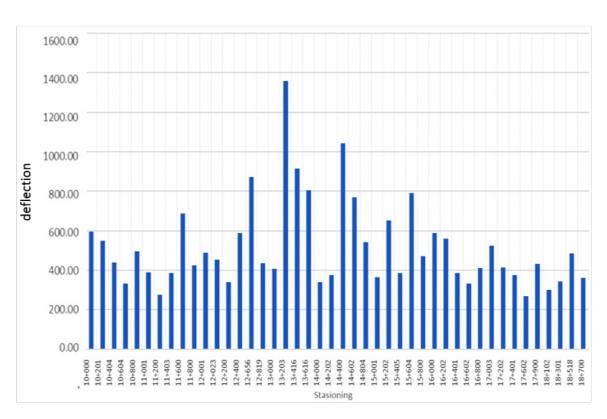
)LJXUH'HIOHFWLRQGDWD
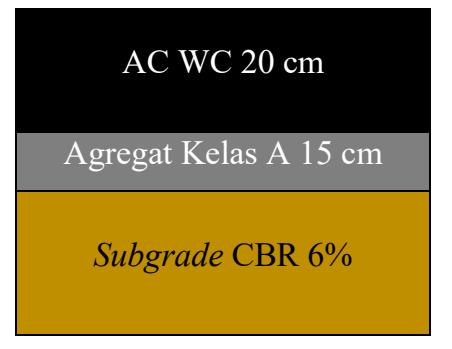
)LJXUH([LVWLQJSDYHPHQWVWUXFWXUH
GHIOHFWLRQGDWDREWDLQHGLVDOVRVHFRQGDU\GDWDIURPWKH &HQWUDO6XODZHVL%3-17KHGDWDFDQEHVHHQLQ)LJXUH
([LVWLQJSDYHPHQWVWUXFWXUH
7KHH[LVWLQJSDYHPHQWVWUXFWXUHGDWDZDVREWDLQHGIURP &HQWUDO 6XODZHVL 1DWLRQDO 5RDG ,PSOHPHQWDWLRQ $JHQFLHV%3-1 7KHH[LVWLQJSDYHPHQWVWUXFWXUHGDWD LVSUHVHQWHGLQ)LJXUH
'DWD$QDO\VLV
7KHUHDUHGDWDDQDO\]HVFRQGXFWHGQDPHO\WKHGHVLJQ WUDIILFORDGFDOFXODWLRQDQDO\VLVGHIOHFWLRQDQDO\VLVDQG RYHUOD\ WKLFNQHVV DQDO\VLV 'DWD DQDO\VLV ZDV GRQH XVLQJWKH$XVWURDGVPHWKRGDQG0'3PHWKRG
7DEOH$QDO\VLVRI(6$WUDIILFORDGZLWK0'3PHWKRG
| 9HKLFOH *URXS | $'7 | '' | '/ | 5 | 9') | (6$ |
|---|---|---|---|---|---|---|
| *URXS | - | - | ||||
| *URXS | - | - | ||||
| *URXS | - | - | ||||
| *URXSD | - | - | ||||
| *URXSE | ||||||
| *URXSD | ||||||
| *URXSE | ||||||
| *URXSD | ||||||
| *URXSE | - | - | ||||
| *URXSF | ||||||
| 7RWDO |
Tabel 4. Analysis of ESA5 traffic load with 2017 MDP method
| Vehicle Group | ADT 2019 | DD | DL | R | VDF5 | ESA5 |
|---|---|---|---|---|---|---|
| Group 2 | 3692 | 0,5 | 0,8 | 12,432 | ||
| Group 3 | 264 | 0,5 | 0,8 | 12,432 | ||
| Group 4 | 942 | 0,5 | 0,8 | 12,432 | ||
| Group 5a | 10 | 0,5 | 0,8 | 12,432 | ||
| Group 5b | 10 | 0,5 | 0,8 | 12,432 | 1,3 | 23596,11 |
| Group 6a | 50 | 0,5 | 0,8 | 12,432 | 0,4 | 36509,14 |
| Group 6b | 493 | 0,5 | 0,8 | 12,432 | 1,2 | 1074738 |
| Group 7a | 58 | 0,5 | 0,8 | 12,432 | 35,6 | 3738557 |
| Group 7b | 1 | 0,5 | 0,8 | 12,432 | ||
| Group 7c | 35 | 0,5 | 0,8 | 12,432 | 32,8 | 2083718 |
| Total | 6.957.118 |
4.1 Design traffic load calculation with MDP 2017
In the 2017 MDP method, the calculation parameters used are as follows.
- a. ADT (average daily traffic)
- b. VDF (vehicle damage factor)
- c. DD (directional distribution)
- d. DL (lane distribution)
- e. i (traffic growth)
- f. R (traffic growth multiplier)
The design traffic load in 2017 MDP is called CESA (Cummulative Equivalent Standard Axle), where later the CESA4 value will be obtained which is used for damage due to permanent deformation, and CESA5 will be used for damage due to fatigue. The calculation of ESA4 and ESA5 can be seen in Table 3 and Table 4.
4.2 Design traffic load calculation with austroads 2017 method
The parameters used in calculating the design traffic load with Austroads method are as follows.
- a. AADT (Annual Average Daily Traffic)
- b. DF (direction factor) or direction distribution factor
- c. %HV (average percentage of heavy vehicle)
- d. LDF (lane distribution factor)
- e. CGF (cumulative growth factor)
Traffic load in Austroads is usually called DESA (Design Equivalent Standard Axle) where from the results of this DESA, 2 parameters based on damage type will be obtained. The DESA value will be multiplied by the SAR/ESA multipliers, which are DSAR5 (Design number of Standard Axle Repetition for Fatigue of Asphalt) and DSAR7 (Design number of Standard Axle Repetition for Rutting and Permanent Deformation).
4.3 Comparison of traffic load calculation with the 2017 MDP method and austroads method
In the calculation of traffic load both with 2017 MDP method and Austroads method, the 2019 traffic
Table 5. Analysis of traffic load calculation with austroads method
| Vehicle Group | AADT | LDF | DF | CGF | DESA |
|---|---|---|---|---|---|
| Group 5b | 10 | 0.8 | 0.5 | 12.432 | 18150.853 |
| Group 6a | 50 | 8.0 | 0.5 | 12.432 | 91272.861 |
| Group 6b | 493 | 8.0 | 0.5 | 12.432 | 895614.949 |
| Group 7a | 58 | 8.0 | 0.5 | 12.432 | 105015.650 |
| Group 7b | 1 | 8.0 | 0.5 | 12.432 | 2333.681 |
| Group 7c | 35 | 8.0 | 0.5 | 12.432 | 63527.986 |
| Total | 1.175.916 |
Table 6. SAR/ESA value
| No. | Damage Type | Damage Index | SAR/ESA Value |
|---|---|---|---|
| 1 | Fatigue Asphalt | SAR5/ESA | 2.1 |
| 2 | Rutting & Permanent Deformation | SAR7/ESA | 9.5 |
Table 7. Recapitulation of design traffic load with austroads method
| No. | DESA | DSAR5 | DSAR7 |
|---|---|---|---|
| 1 | 1.175.916 | 2.410.628 | 11.053.610 |
counting results data on Tanah Runtuh – Tawaeli National Road is used. Due to the limited data obtained, the traffic growth value used is the value set by the 2017 Pavement Design Manual, which is 4.75%. In the analysis of traffic load calculation using the 2017 MDP method, it is necessary to have a VDF (Vehicle Damage Factor) value where the VDF data used is the value issued by the 2017 Pavement Design Manual through the Pavement Design Manual Supplement for the Gorontalo, Central Sulawesi, and North Sulawesi areas. After that, for the calculation using the Austroads method, SAR/ESA value is needed to get the DSAR5 and DSAR7 values.
From the data, the traffic load value was obtained. Based on the 2017 MDP method the value of the traffic load is expressed in CESA (Cummulative Equivalent Standard Axle), where there are 2 CESA values: CESA4 of 4.372.152 and CESA5 of 6.957.118. The CESA4 is used for damage due to permanent deformation and CESA5 is used for damage due to fatigue cracking or fatigue. Meanwhile, for the Austroads method, the traffic load is expressed in DESA (Design Equivalent Standard Axle) where the DESA value obtained is 1.175.916 which is then from this one DESA value, DSAR5 (Design number of Standard Axle Repetition for Fatigue of Asphalt) of 2.410.628 and DSAR7 (Design number of Standard Repetition for Rutting and Permanent Deformation) of 11.053.610 would be obtained.
4.4 Deflection analysis with 2017 MDP method
Similar to the Austroads method, the deflection analysis with the 2017 MDP method also uses 5
different temperature values. Deflection analysis with 2017 MDP method will generate a representative deflection of D<sub>0</sub> for damage based on permanent deformation and \(D_0 - D_{200}\) for damage based on cracking due to fatigue. The segmentation is divided into 2: segment 1: 10+000 to 14+202 and segment 2:
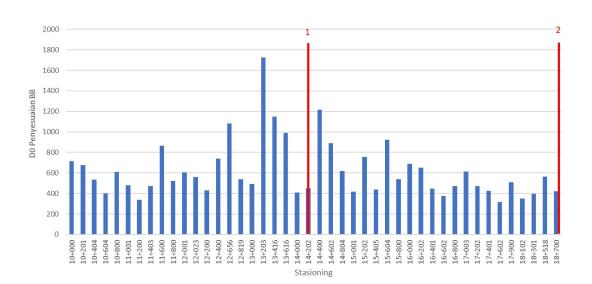
Figure 4. D<sub>0</sub> deflection segmentation with AMPT 47°C
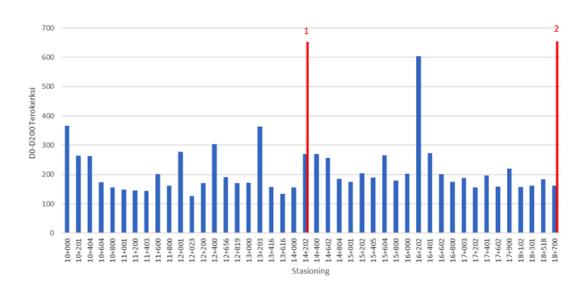
Figure 5. D0 – D200 deflection segmentation with AMPT 47°C
14+400+18+700. The result can be seen in Figure 4 for \(D_0\) deflection and Figure 5 for lendutan \(D_0 - D_{200}\)deflection.
4.5 Deflection analysis with austroads method
Structural evaluation of the flexible pavement for the Tanah Runtuh - Tawaeli National Road section would be carried out using deflection from the results of the FWD test and would use 5 (five) different average pavement temperature values, where the first is the temperature value from the WMAP analysis on the Austroads method, then the temperature value set by the 2017 MDP, which is 42°C for coastal areas, 41°C as the average temperature in Indonesia, and 38°C for mountainous areas and 35°C as the lowest limit for pavement temperatures.
In the deflection analysis, it will be found that there is a segmentation division, based on the type of representative Deflection and Curvature. Figure 6 is segmentation for representative Deflection and Figure 7 is segmentation for representative Curvature.
To obtain the Characteristic Deflection (CD) value, standardization is needed, which is shown in Table 10. Meanwhile the standardization factor for CC is shown in Figure 8.
Based on Table 10, standardization factor for Deflection is 1.1 because the deflection test tool used is an FWD tool.
Table 8. Representative D<sub>0</sub> deflection with AMPT on different temperature
| AMPT | Segment | Average D0 | Coeff of Variation | Representative D0 | Representative D0 |
|---|---|---|---|---|---|
| AWIFI | Segment | μm | % | μm | mm |
| 47°C | 1 | 570.023 | 28.332 | 835.688 | 0.836 |
| 47 0 | 2 | 520.065 | 28.381 | 762.864 | 0.763 |
| 42°C | 1 | 523.45 | 24 | 729.808 | 0.73 |
| 42 0 | 2 | 476.012 | 24 | 661.702 | 0.662 |
| 38°C | 1 | 519.353 | 24 | 724.097 | 0.724 |
| 30 C | 2 | 470.723 | 24 | 654.35 | 0.654 |
| 35°C | 1 | 506.898 | 28 | 743.143 | 0.743 |
| 2 | 458.039 | 28 | 666.481 | 0.666 |
Tabel 9. Representative D<sub>0</sub> - D<sub>200</sub> deflection with AMPT on different temperature
| AMPT | Segment | Average D0 | Coeff of Variation | Representative D0 | Representative D0 |
|---|---|---|---|---|---|
| AWIFI | Segment | μm | % | μm | mm |
| 47°C | 1 | 189.377 | 28.098 | 189.377 | 0.189 |
| 47 C | 2 | 198.059 | 18.798 | 198.059 | 0.198 |
| 42°C | 1 | 178.856 | 28 | 178.856 | 0.179 |
| 42 C | 2 | 162.298 | 19 | 162.298 | 0.162 |
| 38°C | 1 | 163.469 | 28 | 163.469 | 0.163 |
| 30 C | 2 | 145.858 | 18 | 145.858 | 0.146 |
| 35°C | 1 | 159.455 | 27.326 | 159.455 | 0.159 |
| 35 C | 2 | 143.037 | 16.065 | 143.037 | 0.143 |
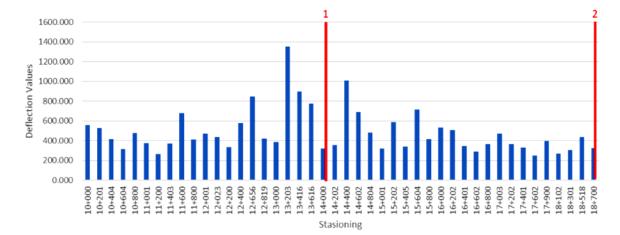
Figure 6. Segmentation for deflection
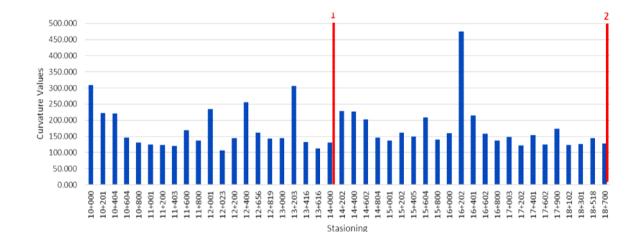
Figure 7. Segmentation for curvature
Table 10. Standardization factor for deflection (Austroads, 2019)
| Deflection Measurement Device | Deflection Standardization Factor |
|---|---|
| Deflectograph, 80 kN single axle with dual tyres | 1.2 |
| TSD, 50 kN dual tyres | 1.2 |
| Falling Weight Deflectometer, 40 kN load | 1.1 |
Table 11. CD and CC values based on standardization factor for WMAPT with different temperature
| Drepre | sentative | Characteristic Deflection | Characteristic Curvature | ||
|---|---|---|---|---|---|
| WMAPT | Segment | Deflection | Curvature | Characteristic Deflection | Characteristic Curvature |
| m | ım | mm | mm | ||
| 47°C | 1 | 0.547 | 0.205 | 0.603 | 0.205 |
| 47 C | 2 | 0.469 | 0.184 | 0.517 | 0.184 |
| 4000 | 1 | 0.563 | 0.237 | 0.619 | 0.237 |
| 42°C | 2 | 0.507 | 0.198 | 0.558 | 0.198 |
| 4400 | 1 | 0.557 | 0.225 | 0.614 | 0.225 |
| 41°C | 2 | 0.506 | 0.191 | 0.557 | 0.192 |
| 0000 | 1 | 0.499 | 0.215 | 0.55 | 0.216 |
| 38°C | 2 | 0.49 | 0.192 | 0.539 | 0.192 |
| 25°0 | 1 | 0.481 | 0.216 | 0.53 | 0.217 |
| 35°C | 2 | 0.473 | 0.191 | 0.521 | 0.192 |
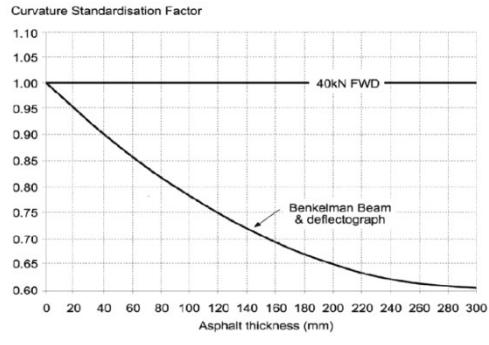
Figure 8. Standardization factor for curvature (Austroads, 2008)
Next, based on Figure 8, the standardization factor for curvature using the FWD tool is 1.
The result of deflection calculation using the Austroads method is used to obtain the Characteristic Deflection (CD) value to obtain the overlay thickness based on damage due to permanent deformation, and to obtain the Characteristic Curvature (CC) value to obtain the overlay thickness based on cracking due to fatigue.
4.6 Comparison of deflection analysis using 2017 MDP method and austroads method
The deflection analysis with both methods is the same using 5 (five) different values of average pavement temperature. The following is a recapitulation of the results of the deflection calculation using the two methods.
Based on Table 12 and Tabel 13 there is a decrease in representative deflection value along with decreasing temperature value which is the reference in the analysis of the deflection calculation. In addition, the deflection value would be used in the overlay thickness analysis where the representative \(D_0\) deflection and CD would be used for the overlay thickness based on permanent deformation, while representative \(D_{-0} - D_{200}\) deflection and CC would be used for overlay thickness based on fatigue due to cracking.
4.7 Overlay thickness analysis with 2017 MDP method
Overlay thickness analysis with 2017 method used the Falling Weight Deflectometer (FWD) deflection approach. Similar to the Austroads method, the 2017 MDP also takes into account the damage due to fatigue
7DEOH 5HFDSLWXODWLRQRIUHSUHVHQWDWLYHGHIOHFWLRQUHVXOWV XVLQJ0'3PHWKRG
| 5HSUHVHQWDWLYH' PP 5HSUHVHQWDWLYH'- ' PP | ||||
|---|---|---|---|---|
| 7HPSHUDWXUH | 6HJPHQW | 6HJPHQW | 6HJPHQW | 6HJPHQW |
| ƒ& | ||||
| ƒ& | ||||
| ƒ& | ||||
| ƒ& | ||||
| ƒ& | ||||
7DEOH 5HFDSLWXODWLRQRIUHSUHVHQWDWLYHGHIOHFWLRQUHVXOWV XVLQJDXVWURDGVPHWKRG
| &'PP | &&PP | |||
|---|---|---|---|---|
| 7HPSHUDWXUH | 6HJPHQW | 6HJPHQW | 6HJPHQW | 6HJPHQW |
| ƒ& | ||||
| ƒ& | ||||
| ƒ& | ||||
| ƒ& | ||||
| ƒ& |
FUDFNLQJ XVLQJ (6$ WUDIILF ORDGV DQG DOVR SHUPDQHQW GHIRUPDWLRQ XVLQJ (6$WUDIILFORDGV ,QWKH GHIOHFWLRQ DSSURDFKGDPDJHGXHWRIDWLJXHFUDFNLQJLVUHSUHVHQWHG E\'– ' DQGGDPDJHGXHWRSHUPDQHQWGHIRUPDWLRQ LVUHSUHVHQWHGE\'
7R REWDLQ WKH RYHUOD\ WKLFNQHVV ZLWK ' UHSUHVHQWDWLYH GHIOHFWLRQ DQG (6$ WKH JUDSK LQ )LJXUH PD\ EH XVHGDQGWRREWDLQWKHRYHUOD\WKLFNQHVVZLWK' – ' UHSUHVHQWDWLYHGHIOHFWLRQDQG(6$WKHJUDSKLQ)LJXUH PD\EHXVHG
7KH UHVXOWV RI WKH RYHUOD\ WKLFNQHVV DQDO\VLV EDVHG RQ GDPDJH GXH WR SHUPDQHQW GHIRUPDWLRQ LV SUHVHQWHG LQ 7DEOHDQGWKHUHVXOWVRIWKHRYHUOD\WKLFNQHVVDQDO\VLV EDVHGRQGDPDJHGXHWR IDWLJXHFUDFNLQJLVSUHVHQWHGLQ 7DEOH
2YHUOD\ WKLFNQHVV DQDO\VLV ZLWK DXVWURDGV PHWKRG
7KH RYHUOD\ WKLFNQHVV DQDO\VLV XVHV WKH UHVXOWV RI UHSUHVHQWDWLYH GHIOHFWLRQ VR WKHUH GLIIHUHQW WKLFNQHVV YDOXHVZRXOGEHREWDLQHG
,Q $XVWURDGV PHWKRG WKH RYHUOD\ WKLFNQHVV LV REWDLQHG EDVHGRQ&'YDOXHDQG&&YDOXH)RUWKH&'YDOXHWKH IROORZLQJJUDSKZDVREWDLQHG
%DVHGRQWKHJUDSKLQ)LJXUHZKDWDIIHFWVWKHYDOXH RIGHVLJQGHIOHFWLRQLVWKHYDOXHRIWUDIILFORDGZKHUHWKH WUDIILFORDGXVHGLV'6$5YDOXHRIVRWKDWD GHVLJQ GHIOHFWLRQ YDOXH RI PP LV REWDLQHG ,Q WKH $XVWURDGV PHWKRG LI WKH GHVLJQ GHIOHFWLRQ YDOXH LV JUHDWHUWKDQWKH&' YDOXHWKHQWKHUHLV QR QHHG IRU DQ RYHUOD\ ,Q WKH SUHYLRXV VXE-FKDSWHU LW ZDV IRXQG WKDW WKH &' YDOXH IRU DOO VHJPHQWV ZDV QRW PRUHWKDQ 7KH&' UHVXOWRQERWK VHJPHQWVZDV QRWPRUHWKDQWKH GHVLJQGHIOHFWLRQYDOXHVRWKDWDQRYHUOD\LVQRWQHHGHG
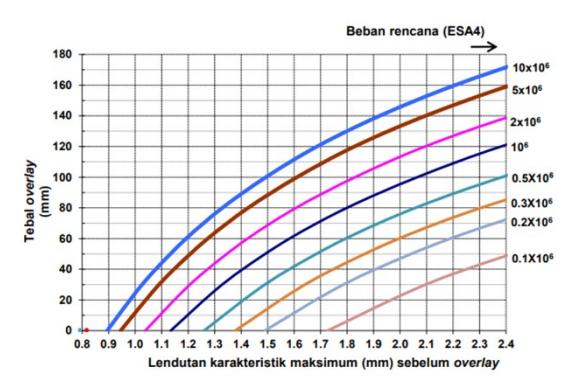
)LJXUH2YHUOD\VROXWLRQEDVHGRQEHQNHOPDQEHDP UHERXQGGHIOHFWLRQ0'3
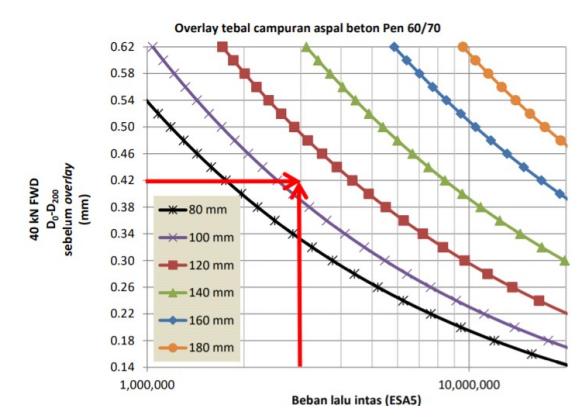
)LJXUH2YHUOD\WKLFNQHVVRIFRQYHQWLRQDODVSKDOWWR SUHYHQWIDWLJXHFUDFNLQJRQ$037&
7DEOH 5HFDSLWXODWLRQRIWKHUHVXOWVRIRYHUOD\WKLFNQHVV DQDO\VLVXVLQJ0'3PHWKRGIRUGDPDJHGXH WRSHUPDQHQWGHIRUPDWLRQ
| 0'32YHUOD\7KLFNQHVVPP | |||||
|---|---|---|---|---|---|
| 7HPSHUDWXUH | 6HJPHQW | 6HJPHQW | |||
| ƒ& | |||||
| ƒ& | |||||
| ƒ& | 2YHUOD\QRW QHHGHG | 2YHUOD\QRW QHHGHG | |||
| ƒ& | |||||
| ƒ& | |||||
7DEHO 5HFDSLWXODWLRQRIWKHUHVXOWVRIRYHUOD\WKLFNQHVV DQDO\VLVXVLQJ0'3PHWKRGIRUGDPDJHGXH WRIDWLJXH
| 7HPSHUDWXUH | 0'32YHUOD\7KLFNQHVVPP | ||
|---|---|---|---|
| 6HJPHQW | 6HJPHQ | ||
| ƒ& | |||
| ƒ& | |||
| ƒ& | |||
| ƒ& | |||
| ƒ& | |||
$IWHU REWDLQLQJ WKH GHVLJQ GHIOHFWLRQ YDOXH WKH QH[W VWHS LV WR GHWHUPLQH WKH RYHUOD\ WKLFNQHVV YDOXH IRU GDPDJH GXH WR IDWLJXH FUDFNLQJ ZKHUH WKH JUDSK RI GHIOHFWLRQ FKDUDFWHULVWLF EHIRUH RYHUOD\ IRU:0$37 ! & ZDV XVHG LQ DFFRUGDQFH ZLWK $XVWURDGV VKRZQLQ)LJXUH
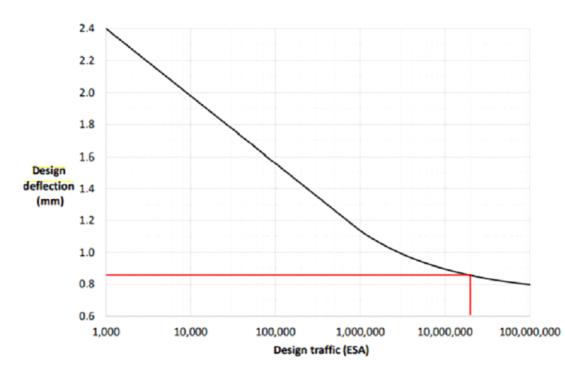
)LJXUH'HVLJQGHOIHFWLRQIRUGDPDJHGXHWRSHUPDQHQW GHIRUPDWLRQ$XVWURDGV
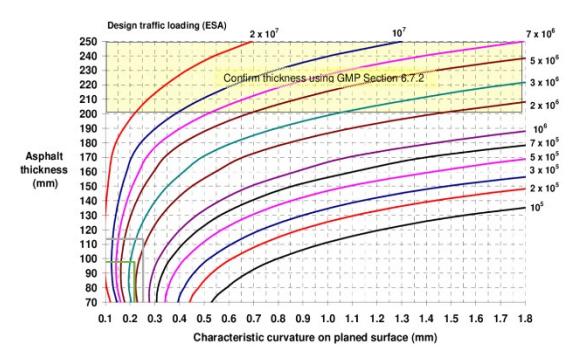
)LJXUH2YHUOD\WKLFNQHVVEDVHGRQGHIOHFWLRQ FKDUDFWHULVWLF$XVWURDGV
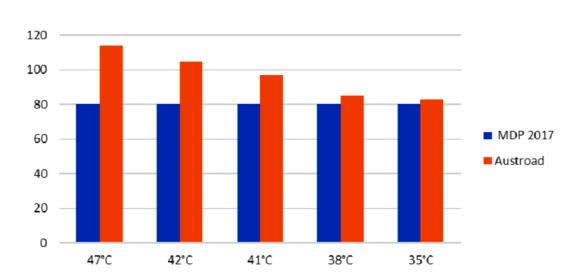
)LJXUH&RPSDULVRQRIRYHUOD\WKLFNQHVVRQVHJPHQW EDVHGRQGDPDJHGXHWRIDWLJXHIRU0'3 PHWKRGDQGDXVWURDGVPHWKRG
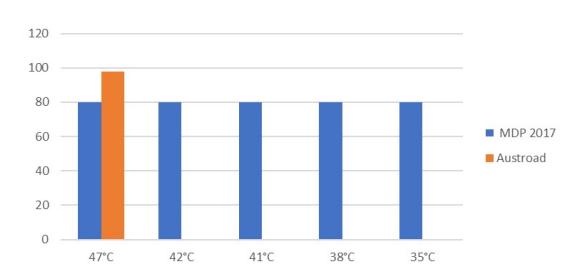
)LJXUH&RPSDULVRQRIRYHUOD\WKLFNQHVRQVHJPHQW EDVHGRQGDPDJHGXHWRIDWLJXHIRU0'3 PHWKRGDQGDXVWURDGVPHWKRG
&RPSDULVRQ RI RYHUOD\ WKLFNQHVV DQDO\VLV UHVXOWV ZLWK 0'3PHWKRG DQG DXVWURDGV PHWKRG
7R REWDLQ WKH RYHUOD\ WKLFNQHVV YDOXH ERWK PHWKRGV XVH WKH DSSURDFK ZLWK GHIOHFWLRQ IURP ):' WHVW
7DEOH 5HFDSLWXODWLRQRIGHIOHFWLRQFDOFXODWLRQUHVXOWZLWK DXVWURDGVPHWKRGIRUGDPDJHGXHWRIDWLJXH
| 7HPSHUDWXUH | $XVWURDGV2YHUOD\7KLFNQHVV PP | ||
|---|---|---|---|
| 6HJPHQW | 6HJPHQW | ||
| ƒ& | |||
| ƒ& | |||
| ƒ& | |||
| ƒ& | |||
| ƒ& | |||
7DEOH 5HFDSLWXODWLRQRIGHIOHFWLRQFDOFXODWLRQUHVXOW ZLWKDXVWURDGVPHWKRGIRUGDPDJHGXHWR SHUPDQHQWGHIRUPDWLRQ
| 7HPSHUDWXUH | $XVWURDGV 2YHUOD\7KLFNQHVV PP | ||
|---|---|---|---|
| 6HJPHQW | 6HJPHQW | ||
| ƒ& | |||
| ƒ& | |||
| ƒ& | 2YHUOD\QRWQHHGHG | 2YHUOD\QRWQHHGHG | |
| ƒ& | |||
| ƒ& | |||
7DEOH &RPSDULVRQRIRYHUOD\WKLFNQHVVDQDO\VLV UHVXOWVEDVHGRQGDPDJHGXHWRIDWLJXHZLWK DXVWURDGVPHWKRGDQG0'3PHWKRG
| 7HPSHUDWXUH | 0HWKRG2YHUOD\ 7KLFNQHVVPP | $XVWURDGV0HWKRG2YHUOD\ 7KLFNQHVVPP | ||
|---|---|---|---|---|
| 6HJPHQW | 6HJPHQW | 6HJPHQW | 6HJPHQW | |
| ƒ& | ||||
| ƒ& | ||||
| ƒ& | ||||
| ƒ& | ||||
| ƒ& | ||||
7DEOH &RPSDULVRQRIRYHUOD\WKLFNQHVVUHVXOW DQDO\VLVEDVHGRQGDPDJDHGXHWRSHUPDQHQW GHIRUPDWLRQZLWK0'3PHWKRGDQG DXVWURDGVPHWKRG
| 7HPSHUDWXUH | 0'30HWKRG2YHUOD\ 7KLFNQHVVPP | $XVWURDGV0HWKRG 2YHUOD\7KLFNQHVVPP | ||
|---|---|---|---|---|
| 6HJPHQW | 6HJPHQW | 6HJPHQW | 6HJPHQW | |
| ƒ& | ||||
| ƒ& | ||||
| ƒ& | 2YHUOD\QRW QHHGHG | 2YHUOD\QRW QHHGHG | 2YHUOD\QRW QHHGHG | 2YHUOD\QRW QHHGHG |
| ƒ& | ||||
| ƒ& | ||||
UHVXOWV 7KH IROORZLQJLVWKH RYHUOD\WKLFNQHVV UHVXOWV WKDWKDYHEHHQDQDO\]HGXVLQJERWKPHWKRGV
7KH RYHUOD\ WKLFNQHVV IRU GDPDJH GXH WR IDWLJXH REWDLQHGZLWK0'30HWKRGKDVWKH VDPHYDOXH ZKLFK LV PP IRU ERWK VHJPHQWV 0HDQZKLOH WKH RYHUOD\WKLFNQHVVXVLQJ$XVWURDGVPHWKRGKDVYDU\LQJ
values. For all overlay thickness based on permanent deformation, there is no need for overlay.
5. Discussions
After analyzing with Austroads method and 2017 MDP Method, each of these methods can be discussed. The discussion for both methods is as follows.
- 1. The discussion for 2017 MDP method is as follows.
- a. The Vehicle Damage Factor used has taken into account the load due to permanent deformation and cracking due to fatigue, so that when traffic load analysis is conducted, the value has been divided according to the damage that had occurred
- b. The deflection analysis used may use the approach with FWD test results.
- c. In deflection analysis, the D<sub>0</sub> value needs to be adjusted to the Benkelman Beam deflection so that an advanced analysis can be conducted.
- d. Overlay thickness analysis was conducted with the design chart method so that it could be directly used easily but there could also be inaccuracies.
- e. The overlay thickness obtained has a consistent value despite using different average pavement temperature (AMPT) values because the resulting deflection values did not have a much wide range.
- 2. The discussion for the 2017 Austroads Method is as
- a. In the traffic load analysis, the Austroads method has taken into account the load due to damage due to permanent deformation and fatigue.
- b. For the deflection analysis, an approach with the FWD (Falling Weight Deflectometer) test may be conducted to obtain the required overlay thickness value.
- c. In the deflection analysis for Characteristic Deflection, the design deflection is only affected by the DSAR7 value without being affected with the temperature value, so all design deflections obtained are the same.
- d. The overlay thickness analysis used chart analysis to get the required overlay thickness, so that it is easier, but it can also be less accurate.
- e. The overlay thickness obtained varied for every temperature based on fatigue.
- f. From the analysis results, it could be seen that the different WMAPT values can produce different overlay thickness values, where a difference of one temperature value can change the resulting overlay thickness.
From the results of the analysis above, the 2017 Pavement Design Manual (MDP) and Austroads methods each have their own advantages and disadvantages, so that these two methods can be used as a reference in calculating structural evaluation and determining the value of overlay thickness for Indonesia.
6. Conclusions
From the results of the research that has been conducted for the Tanah Runtuh - Tawaeli National Road section using the Austroads method and the 2017 Pavement Design Manual, the following conclusions can be drawn:
- 1. In the deflection analysis using the Austroads method, two types of deflection characteristics were produced according to their respective damage, namely Characteristic Deflection for damage due to permanent deformation and Characteristic Curvature for damage due to fatigue cracking.
- 2. In the deflection analysis using the 2017 MDP, two representative deflections were obtained, namely representative D<sub>0</sub> for damage due to permanent deformation and representative D<sub>0</sub>-D<sub>200</sub> for damage due to fatigue.
- 3. From the results of the deflection analysis using the MDP and Austroads methods, segmentation division is divided into two sections where the first section starts from STA 10+000 to 12+656 and the second section starts from ST.
- 4. In the overlay analysis using the Austroads method, it is found that the thickness values vary for each temperature on the fatigue damage, while for permanent deformation damage there is no need for an overlay with a design life of 10 years.
- 5. The overlay thickness obtained from the analysis results with Austroads methods are 114 mm and 98 mm for WMAPT 47°C, 105 mm for WMAPT 42°C, 97 mm for WMAPT 41°C, 85 mm for WMAPT 38° C, and 83 mm for WMAPT 35°C.
- 6. From the results of the analysis, it is found that the temperature difference can affect the value of the overlay thickness produced.
- 7. In the overlay analysis using the 2017 Pavement Design Manual method, the overlay thickness is consistent with 80 mm for all segments for fatigue damage, while for permanent deformation damage there is no need for an overlay during the design life of 10 years.
References
AASHTO. (1993). Guide for Design of Pavement D.C: Structures. Washington Association of State Highway and Transportation Officials.
Austroads. (2008). Technical Basis of Austroads Guide to Pavement Technology Part 2: Pavement Structural Design. Sydney: Austroads Ltd.
Austroads. (2009). Guide to Pavement Technology Part 7 Pavement Maintanance. Sydney: Austroads
- $XVWURDGV *XLGH WR 3DYHPHQW 7HFKQRORJ\ 3DUW 3DYHPHQW 6WUXFWXUDO 'HVLJQ 6\GQH\ $XVWURDGV/WG
- $XVWURDGV *XLGH 7R 3DYHPHQW 7HFKQRORJ\ 3DUW 3DYHPHQW 6WUXFWXUDO 'HVLJQ 6\GQH\ $XVWURDGV/GV
- $XVWURDGV *XLGH WR 3DYHPHQW 7HFKQRORJ\ 3DUW 3DYHPHQW (YDOXDWLRQ DQG 7UHDWPHQW 'HVLJQ 6\GQH\$XVWURDGV/WG
- %UHWUHJHU$ 'HIOHFWLRQ 7HVWLQJ RI(DUWKZRUN DQG 3DYHPHQW /D\HUV 6\GQH\ 16: *RYHUQPHQW
- 'LUHNWRUDW % 0DQXDO 'HVDLQ 3HUNHUDVDQ -DODQ -DNDUWD.HPHQWULDQ3835
- 'LUHNWRUDW % 0 6XSOHPHQ 0DQXDO 'HVDLQ 3HUNHUDVDQ -DODQ -DNDUWD 'LUHNWRWRUDW -HQGHUDO%LQD0DUJD
- )HUQDQGH] & < (YDOXDVL .RQGLVL 6WUXNWXUDO 3HUNHUDVDQ /HQWXU 0HQJJXQDNDQ 0HWRGD $XVWURDG GDQ 0HWRGH 0DQXDO 'HVDLQ 3HUNHUDVDQ -DODQ 0'3 6WXGL .DVXV -DODQ1DVLRQDO-DWLEDUDQJ- /DQJXWGDQ%DWDV .RWD &LEDGDN - 6XNDEXPL %DQGXQJ ,QVWLWXW 7HNQRORJL%DQGXQJ
- )LWULDQLQJVLK / 3HUDQFDQJDQ 7HEDO 3HUNHUDVDQ/HQWXUGHQJDQ6RIWZDUH&LUFO\ %DQGXQJ,QVWLWXW7HNQRORJL1DVLRQDO
- /DX < 6 $QDOLVLV 7HEDO /DSLV 7DPEDK 3HUNHUDVDQ /HQWXU GHQJDQ 0HQJJXQDNDQ 0HWRGD $XVWURDG GDQ 3URJUDP .(13$9( 6WXGL .DVXV -DODQ 7RO &,3$/, &LNRSR - 3DOLPDQDQ NP VDPSDL GHQJDQ %DQGXQJ ,QVWLWXW7HNQRORJL %DQGXQJ
- 3DUGLDULQL ' (YDOXDVL 6WUXNWXUDO 3HUNHUDVDQ /HQWXU 0HQJJXQDNDQ 0HWRGH $$6+72 GDQ $XVWURDGV 6WXGL .DVXV 7HPSLQR - %DWDV 6XPVHO -DOLQWLP %DQGXQJ ,QVWLWXW 7HNQRORJL%DQGXQJ
- 3UDWDPL 3 ) (YDOXDVL 6WUXNWXUDO3HUNHUDVDQ /HQWXU 0HQJJXQDNDQ 0HWRGH 0DQXDO 'HVDLQ 3HUNHUDVDQ -DODQ GDQ 0HWRGH $VSKDOW ,QVWLWXWH6WXGL.DVXV-DOXU3DQWXUD%WV.RWD 3DPDQXNDQ - 6HZR %DQGXQJ ,QVWLWXW 7HNQRORJL%DQGXQJ
- 38 3HGRPDQ3HUHQFDQDDQ 7HEDO3HUNHUDVDQ /HQWXU -DNDUWD'HSDUWHPHQ3HNHUMDDQ8PXP
- 3835 &DUD 8ML /HQGXWDQ 3HUPXNDDQ -DODQ GHQJDQ):' -DNDUWD.HPHQWULDQ3835
- 6LPDQMXQWDN 5 % 3HUHQFDQDDQ 7HEDO 3HUNHUDVDQ /HQWXU 0HQJJXQDNDQ 0HWRGH $XVWURDGV5HND5DFDQD
- 8PXP ' 3 3HUHQFDQDDQ 7HEDO /DSLV 7DPEDK 3HUNHUDVDQ /HQWXU GHQJDQ 0HWRGH /HQGXWDQ -DNDUWD 'HSDUWHPHQ 3HNHUMDDQ 8PXP
- :LERZR$ .DMLDQ3HUEDQGLQJDQ7HEDO/DSLV 7DPEDK 3HUNHUDVDQ /HQWXU 0HQJJXQDNDQ 0HWRGH $XVWURDGV GDQ 0HWRGH %LQD 0DUJD 6WXGL .DVXV -DODQ 1DVLRQDO 3DQWXUD 3DOLPDQDQ - &LUHERQ %DQGXQJ ,QVWLWXW7HNQRORJ\%DQGXQJ