

1. Introduction
1.1 New capital city of Indonesia
1.1.1 Background
The historical record shows that in the Dutch Colonial era, the government mentioned the idea of Indonesia's capital city translocation (Purwanto, 2021). The idea
emerged since then but never turned into concrete action until the second reign of President Joko Widodo. There are a few considerations for switching the location of Indonesia's capital city to Penajam Paser, Borneo Island, such as the lower potential of disaster risk compared to other regions, geographically positioned in the centre of Indonesia's territory and near the well-developed urban areas (Balikpapan and Samarinda). The land is primarily government-owned
(Purwanto, 2021). Industrial plantation forests dominate most of the designated areas (Widjayatnika, 2018). The geological structure condition of the Sotek district is anti-clinal and synclinal, dominated by limestone (BAPPEDA Penajam Paser Utara, 2014). As limestone is well-known as a durable material for construction, the Head of Development Penajam Paser Utara City Council confirmed that the soil condition could suit the infrastructure development (AM. 2019). The new capital city of Indonesia in East Kalimantan is called Nusantara. This paper will express the New Capital City in Indonesia as Nusantara City. The relocation of Indonesia's capital city is a national large -scale strategic project requiring massive resources and many construction projects. The government planned to construct the development into three main zones: blue, yellow, and grey (AM. 2019), where blue is for the Central Governmental Region and yellow is for the Main Capital City Region. Grey will be an extension of the Capital City Region. The planned total area is about 256.142,74 hectares, with 56.180,87 hectares dedicated to the city centre (Purwanto, 2021). The city centre will include the government's essential facilities such as National Palace, government offices, main worship places, complex diplomatic area, Indonesian police and an army base, educational facility, medical facility, and residency area for public servant officers (Nainggolan, 2020). About 221.000 government officers were assigned and moved to the Nusantara, the National Development Planning Agency estimates that around 2.918 landed houses and 1.484 flats will accommodate them (Nainggolan, 2020). The construction of these massive residences starts in 2021-2024 .
1.1.2 The concept of future city.
In 2019, National Development Planning Agency stated that the development of Nusantara would bring in the concept of Smart and the Most Sustainable City (Ministry of National Development Planning, 2019) (updated based on the interview with the Ministry of Public Works). Creating a future city in the urban area in developing countries has challenges. There are challenges in the local government's system, the inadequacy of transport infrastructures, social and economic inequality and environmental consideration (Riffat, 2016). There are probably about 43 national regulations that need to be revised regarding Nusantara's positioning arrangement, regional boundaries, constitution and structure of local government, particular region for the centre of administration, and spatial and environmental planning for the Nusantara's development (Purwanto, 2021). There is a possibility of a functional shift of land use because the existing forest in the surrounding area of the designated location for Nusantara is unclassified as a protected forest (AM. 2019).
The infrastructure development of Nusantara requires to meet international standards and requirements. Developing a Smart Cities framework should align the strategic aspect (management process and implementations), processes (interoperability aspects), and technical aspects (developing the digital infrastructures) (Heaton, 2020). The currently adopted building, structural, mechanical, and plumbing codes follow the International Building Code, International Residential Code, and International Plumbing Code. The energy regulation follows the International Energy Conservation Code (Lee, 2018).
Table 1 shows the international standards for the creation of smart infrastructures.
2. Infrastructure development in Indonesia
According to the 2020 Quarterly Construction Establishment Survey (QCES) (BPS, 2020), the Central Bureau of Statistics (Indonesia) stated that Indonesia's Gross Domestic Product (GDP) was at a 10.56 per cent rate. The housing demand will continuously increase following the growth of the population, with a growth rate of 0.62 % within 2030-2035 (Jones, 2010). The initiative of Sustainable Development Goals (SDG) and the decarbonisation pathway toward 2030 has
Table 1. International standards for smart infrastructures (Heaton, and Parlikad, 2020)
| Category | Reference | Descriptions | |
|---|---|---|---|
| Strategic | ISO 8000 Quality Management System | To provide a framework for improving data quality in conjunction with Quality Management System | |
| Strategic | ISO 9000 Quality Management System | To provide a framework for a quality management system within an organisation | |
| Strategic/Process | ISO 55000 Asset Management | To provide a framework for adopting an asset management system for infrastructure asset | |
| Strategic | ISO 26000 Guidance on social responsibility | Guides the social responsibility and stakeholder engagement | |
| Process | ISO 37101 Sustainable development in communities - Management system for sustainable development | To provide the requirement for a management system for sustainable development in communities | |
| Process/ Technical | ISO 37120 Sustainable development in communities' indicators for city services and quality of life | To provide definitions and methodology for a set of city indicators and improved quality of life | |
| Process | ISO/TR 37150 Smart community infrastructure - Review of existing activities relevant to metrics | To provide current metrics and processes used to measure digital infrastructure in smart city | |
| Technical | ISO/TR 37151 Smart community infrastructure - Principles and requirements for performance metric | To provide the requirement for community infrastructure performance metrics | |
| Proses | ISO/TR 37152 Smart community infrastructure - Common framework for development and operation | To provide a framework for the development of smart community infrastructures | |
become one of the criteria for public policy development. Intelligent, green, and sustainable infrastructure is developing the future city. In developed countries such as EU countries, Japan and Singapore, their construction sector has focused on the sustainability requirement. Their government also incentivised the industry towards the net-zero carbon era in 2050 (McKinsey & Company, 2019). Modular construction offers a higher value for energy efficiency index, interchangeability functionality, the standard quality, which are worth its values compared to the conventional method, as shown in Figure 1.
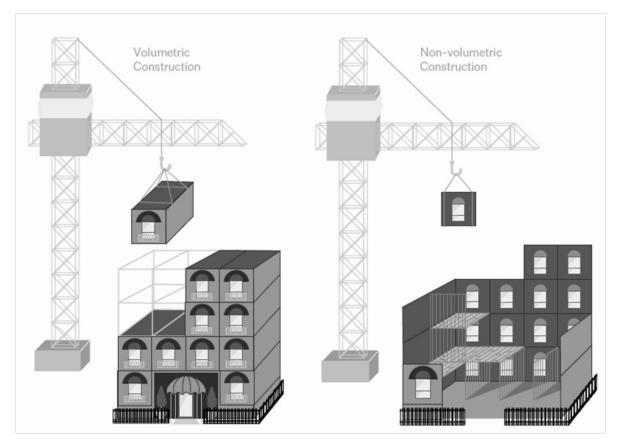
Figure 1. Onsite construction vs modular construction (The American Institute of Architects, 2019)
By adopting the modular construction method, Indonesia will meet the eight criteria of sustainable development goals. The modular construction method achieves eight Sustainable Development Goals (SDG) parameters. Figure 2 shows the SDG applicable to the implementation of modular construction.
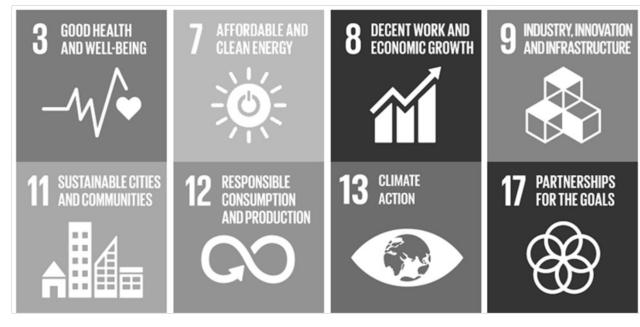
Figure 2. Sustainable development goals for modular construction.
The sustainability criterion for building infrastructures should consider a few aspects such as (1) Environmental: related to material, water, and energy consumption, waste generation, and carbon emission; (2) Economical: related to construction lifecycle cost; (3) Social: people comfort (noise reduction, thermal condition, indoor air quality), human interaction, and user flexibility; (4) Disaster resiliency: earthquake resistance and flood resistance (Maleki, 2019).
The decision-making for the infrastructure development should consider the dignity of the built environment
lifecycle that consists of (1) Process for land acquisition concerning the socio-economical condition of the local people; (2) Planning and financing of the public infrastructure, housing and transportation infrastructure with consideration of non-corruption and climate resiliency; (3) Design of the civil and architecture with inclusion of accessibility, physical and mental health; (4) Construction stage with consideration of high quality and managing construction worker's rights, health, and safety; (5) Operational, management and maintenance stage with technology adaption; and (6) Demolition & redevelopment with consideration of responsible disposal, re-use, recycling of building materials, project legacy, or land vacating (Institute for Human Rights and Business, 2019).
Performing standardisation and modularisation minimises the difficulty of ensuring the dignity of design and construction, where continuous monitoring of project integration is required. In this paper, the authors propose a strategy to overcome the challenges of creating a future city in North Penajam, East Kalimantan, by implementing the modular or off-site construction method to supply supporting infrastructures such as hospitals and school and office buildings. The modular construction concept can be the answer to the idea of Green, Smart and Sustainable (Ministry of National Development Planning, 2019). The supply chain modular construction cost is considered on the high-end side with about 10% to 15% of the entire building to accommodate the higher outlay cost for an initial fee of prefabricated construction, the off-site yard, and installation cost using heavy-duty cranes to lift and stack the modules (McKinsey & Company, 2019). Gibb (1999) stated that there are four degrees of modularisation comprising (1) components manufacture and subassembly, (2) non-volumetric preassembly, (3) volumetric preassembly and (4) an assembled modular building (Wuni, 2020). Figure 3 shows the stakeholder mapping for the modular construction (Manley, at al., 2009).
3. Research Methodology
The possibility of modular construction starts by examining the site condition from the building's environmental state, supply, and demand. The authors evaluate the modular construction application and the
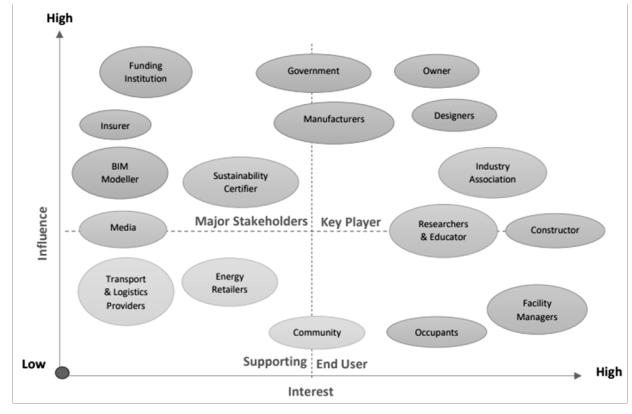
Figure 3. Stakeholder mapping for modular construction (Manley, at al., 2009)
comparison with the traditional construction from technical and cost aspects. Figure 4 shows the research methodology for this study.
4. Result and Discussion
4.1 The production management
Managing off-site infrastructure production or modular construction should be supported with five components: workforce, materials, methods, machines, and money. The details are as follows
a. Workforce
In modular construction development, considering the labour supply is essential. According to the Ministry of Public Works (Works Mi of P, 2021), East Kalimantan Province has 9,481 skilled construction workers with 3 Class Qualifications, as shown in Table 2.
Table 2. The total number of skilled construction workers (Works Mi of P, 2021)
| Class | Qualification | Working Experience | Total Workers |
|---|---|---|---|
| 1 | Minimum D1 (Diploma 1) | Min. 3 years | 5443 |
| 2 | Minimum Vocational High School | Min. 3 years | 1216 |
| 3 | Minimum Elementary School | Min. 2 years | 2882 |
Based on the above data, East Kalimantan Province has an ample supply of skilled labour and can be a potential indicator for the development of modular construction. On the other side, the migration of government officials from the current Capital City of Jakarta will support the level of engineers' and officers' needs.
b. Materials
There are two primary materials for making modular construction modules: cement/concrete and steel. Researchers found that Balikpapan City has quite a several suppliers for both materials. Cement/concrete is supplied from Tuban (East Java), Maros (South Sulawesi), and Pangkep (South Sulawesi). Furthermore, steel is supplied from Cilegon (Banten), Derawan (South Kalimantan), Sebuku (South Kalimantan), Lengkabana (South Sulawesi), Longkana (South Sulawesi), and Verbeek, (Central Sulawesi).
c. Methods
The modular block for the apartment building is usually divided into two types of alternatives the reinforced concrete module with an estimated weight of 20-35 tons each and the steel module with a lighter weight of 15 to 20 tons. The module blocks require completed protection packaging during transportation and handling, with either temporary or fixed roof decking, temporary stiffening, and lifting. A lifting frame is used during the handling - the installation methods are stacking with the hoisting by crane (Koraishy, at al., 2011).
d. Machine
Modular block fabrications use automatic or semiautomatic constructions. The components use precast technology, mass engineer timber (MET) or hybrid (Koraishy, at al., 2011). The welding for steel modules usually uses robotic welding - the concrete precast uses an automated machine to produce uniform quality.
e. Money
Modular construction models are considered standard in a developed country. The government in the developing countries emphasises the contractors to adopt this smart construction since it reduces waste and adopts a sustainability mindset - the infrastructure's funding from the national budget, public-private partnership scheme, or international bank loan. The recent funding criteria are clean environmental goals and financial sustainability indicators (Asian Development Bank, 2022).
4.2 SWOT analysis
The application of modular construction in Nusantara's infrastructure development promotes sustainability and a green environment, aligned with Nusantara's development theme. Figure 5 shows the drivers, enablers, and barriers to applying modular construction in Nusantara.
The analysis has focused on assessing the strengths, weaknesses, opportunities, and threats of implementing modular construction. Table 3 shows the SWOT analysis for implementing the modular construction method in Nusantara.
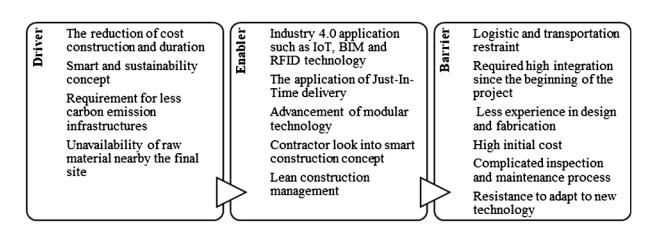
Figure 5. Driver, enabler, and barrier of application of modular construction
(Kamali, and Hewage 2016; Liu, at al., 2019; Nanyam, at al., 2017)
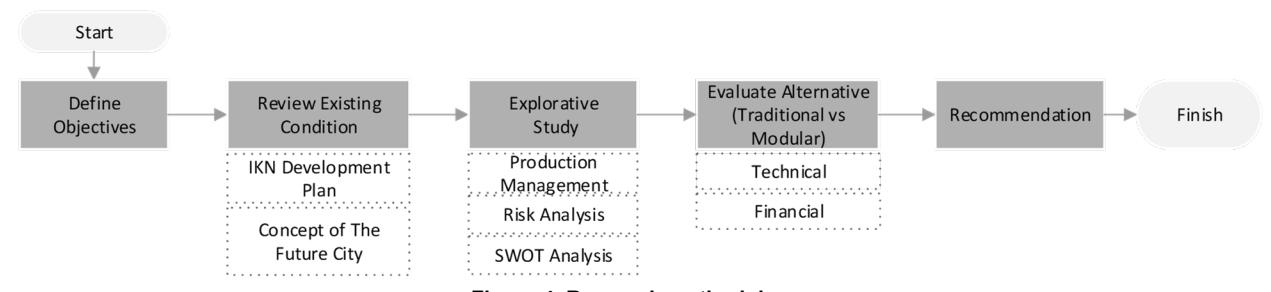
Figure 4. Research methodology.
210 Jurnal Teknik Sipil
Table 3. SWOT analysis for implementing modular building in Nusantara (Lee, and Kim, 2018; Green, at al., 2014; Li, at al., 2019)
| STRENGTHS | WEAKNESS | ||
|---|---|---|---|
| 1 | Project cost reduction | 1 | The limitation of capacity Building |
| 2 | Project time reduction | 2 | The negative perception toward Industry 4.0 technology |
| 3 | Improving productivity | 3 | Difficulties in the integration of modular block |
| 4 | Improving quality and standardisation | 4 | Relatively high cost in inspection and maintenance |
| 5 | Construction waste reduction | 5 | Complexity in the integration |
| 6 | Working in control working environment | 6 | Transportation constraints |
| 7 | Promoting energy efficiency | ||
| OPPORTUNITIES | THREATS | ||
| 1 | The need for Affordable Housing/Building | 1 | High initial investment |
| 2 | Job creation | 2 | Difficulty in financing |
| 3 | Contribution to Sustainability | 3 | Negative attitude toward a new method |
| 4 | Financial approval | 4 | Competition in market trends |
Table 4. Risk assessment categories (AS/NZS 4360, 2004)
| Consequences | ||||||||
|---|---|---|---|---|---|---|---|---|
| Likelihood | 1 | 2 | 3 | 4 | 5 | |||
| Insignificant | Minor | Moderate | Major | Catastrophic | ||||
| 1 | Rare | L | L | M | H | H | ||
| 2 | Unlikely | L | L | M | H | E | ||
| 3 | Moderate | L | M | H | E | E | ||
| 4 | Likely | M | H | H | E | E | ||
| 5 | Almost Certain | H | H | E | E | E | ||
Legend:
- E = Extreme risk; immediate action required
- H = High risk; senior management attention needed
- M = Moderate risk; management responsibility must be specified
- L = Low risk; manage by routine procedures
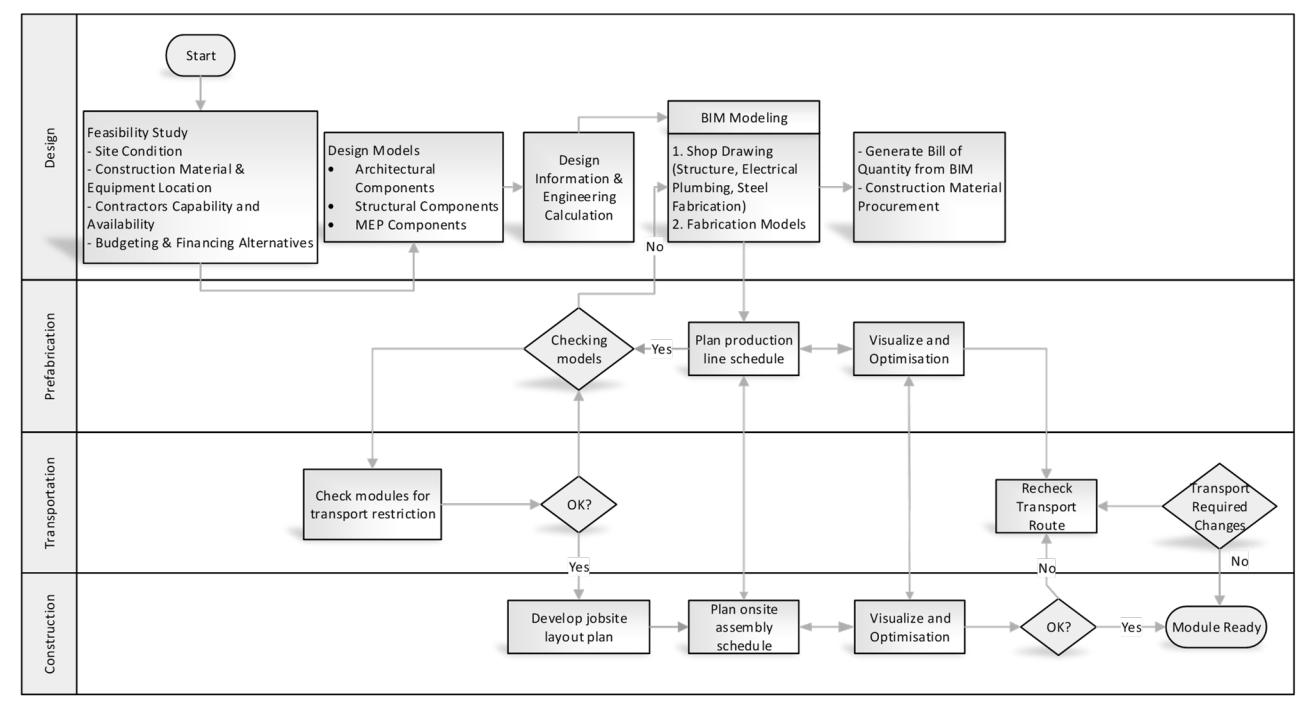
Figure 6. Modular construction process planning (Ezzeddine, and García, 2021)
Table 5. Risk analysis for implementing modular construction in Nusantara
(McKinsey & Company, 2019; Wuni, at al., 2020; Liu, at al., 2019)
| Type of Risk | Likelihood | Consequences | Risk Matrix | Mitigation Risk | ||
|---|---|---|---|---|---|---|
| Implementation Risk | ||||||
| 1. | Contractor's lack of experience in executing modular construction methods | 2 | 4 | High | Joint Venture/Partnership with experience contracted | |
| 2. | Lack of best management practices and experiences | 2 | 2 | Low | Involving project stakeholders to collaborate closely | |
| 3. | Inadequate Modular design codes and standards | 1 | 2 | Low | Formulate a policy for modular construction | |
| 4. | Lack of quality monitoring mechanism | 2 | 3 | Moderate | Using IoT and sensor technology | |
| 5. | Massive dominance of traditional construction | 3 | 2 | Moderate | Training Human Resources to adapt to Industry 4.0 | |
| Sı | ipply Chain Risk | |||||
| 1 | The design information gap between designer and fabricator | 2 | 3 | Moderate | Stakeholder integration starting the beginning of the projects | |
| 2 | Inconsistency of logistic composition | 3 | 2 | Moderate | Scheduling and procurement configuration | |
| 3 | Supply Chain Distribution and Instabilities | 2 | 3 | Moderate | Resources planning control and workflow | |
| 4 | Insufficient capacity of modular manufacturers | 1 | 3 | Moderate | Ensure the proper scheduling for production as per the required capacity | |
| Schedule Risk | ||||||
| 1 | Delays in modular delivery | 2 | 3 | Moderate | Scheduling optimisation | |
| 2 | Crane failure | 1 | 2 | Low | Ensure maintenance and provision of contingency plan | |
| 3 | Permit/Design Approval | 2 | 3 | Moderate | Integrating permits in the early stage of construction | |
| lı | nvestment Risk | |||||
| 1 | The economic, political, and social condition | 2 | 2 | Low | Stakeholder integration starting the beginning of the projects | |
| 2 | Lending rate, currency fluctuation, and inflation | 1 | 2 | Low | ||
| 3 | Inaccurate investment valuation | 1 | 3 | Moderate | Involving strong funding institution | |
| 4 | High initial capital cost and construction prices | 2 | 4 | High | ||
| 5 | Lack of stable modules manufacturers and suppliers | 2 | 3 | Moderate | Joint Venture/Partnership with experience contracted | |
| 6 | Traditional mindset | 3 | 2 | Moderate | HR training for the application of Industry 4.0 | |
| 8 | Structural Risks | |||||
| 1 | Poor cooperation among multi-interface | 2 | 3 | Moderate | Stakeholder integration starting the beginning of the projects | |
| 2 | Flexing, warping, and damage from transportation and handling | 1 | 3 | Moderate | Multi-hazard reliability design consideration | |
| 3 | Geometric conflicts between module and site interfaces | 2 | 3 | Moderate | Usage of application of BIM and 3D volumetric software design | |
| 4 | Dimensional and geometric tolerances | 3 | 2 | Moderate | Hire an experienced designer and engineer | |
| Safe | ty/Ergonomic Risl | K | ||||
| 1 | Struck by tilt-up roof objects during hoisting and rigging of large items | 1 | 3 | Moderate | Eliminate or reduce ergonomic risk | |
| 2 | Lifting, carrying, erecting of heavy panelled walls | 2 | 3 | Moderate | Ensure application of PPE (Personal Protective Equipment) | |
| 3 | Exposure to combustion fumes, excessive noise, and carcinogenic compounds | 3 | 2 | Moderate | Systematic workflow, 5S | |
| 4 | Repeated motion and overexertion | 1 | 1 | Low | Application of the Lean Integrated Kaizen | |
| 5 | Falls from ladders, roofs, and attic areas | 1 | 3 | Moderate | Housekeeping | |
4.3 Risk analysis
In the modular construction methods, to avoid issues during construction stages, the designer should consider the module assembly modification and installation, water penetration during construction (stacked and unstacked modules), the access for inspection, the fire protection cost, the work environmental safety issues, the construction worker skills, module access hole and architectural flexibility (Pang, at al., 2016). The authors perform a risk analysis to understand the high risk of implementing modular construction for infrastructure development in Nusantara, as shown in Table 4.
The monitoring of the modular construction using the application of a combination of BIM software and
RFID (Radio-Frequency Identification) tag. The authentication check for the module part performs when composing the moulding part onto a module. The RFID tag also improves the efficiency in creating the cargo manifest for transporting to the construction site (Abbott, at al., 2020). The combination of BIM software and RFID is considered a good tool for monitoring modular construction's entire supply chain process. Figure 6 shows the flowchart for the adaption of BIM software into the whole of modular construction planning.
4.4 The modular construction potential application in nusantara, Indonesia
In this study, modular construction more focusing on the potential application of modular construction for
212 Jurnal Teknik Sipil
Table 6. Adapted modular construction cost model (Mills, 2017)
| Activities | Unit | Unit Cost | Percentage |
|---|---|---|---|
| A. SHELL AND CORE WORKS | 2022 | ||
| Substructure | m2 | $ 30.95 | 0.26% |
| Frame and upperfloors | m2 | $ 23.95 | 2.00% |
| Stairs (G to 16 floor) | m2 | $ 7.48 | 0.62% |
| Roof | m2 | $ 11.23 | 0.94% |
| External walls, windows, doors, balconies | m2 | $ 73.42 | 6.12% |
| Internal walls, partition and doors | m2 | $ 3.72 | 0.31% |
| Wall finishes | m2 | $ 9.83 | 0.82% |
| Floor finishes | m2 | $ 4.02 | 0.34% |
| Ceiling finishes | m2 | $ 0.86 | 0.07% |
| Fittings, furnishing and equipment | m2 | $ 265.49 | 22.13% |
| Sanitary ware | m2 | $ 0.41 | 0.03% |
| Mechanical, Electrical, Pumbling | m2 | $ 129.11 | 10.76% |
| Preliminaries and Contingencies | m2 | $ 152.36 | 12.70% |
| SUB TOTAL A (SHELL & COREWORKS) | m2 | $ 712.84 | 59.43% |
| B. RESIDENTIAL FITOUT WORKS | |||
| Internal walls, partition and doors | m2 | $ 17.10 | 1.43% |
| Wall finishes | m2 | $ 17.78 | 1.48% |
| Floor finishes | m2 | $ 22.91 | 1.91% |
| Ceiling finishes | m2 | $ 9.24 | 0.77% |
| Fittings, furnishing and equipment | m2 | $ 90.97 | 7.58% |
| Sanitary ware | m2 | $ 17.10 | 1.43% |
| Mechanical Electrical Pumbling | m2 | $ 252.27 | 21.03% |
| Preliminaries and Contingencies | m2 | $ 19.00 | 1.58% |
| SUB TOTAL B (FIT OUT WORKS) | m2 | $ 446.37 | 37.21% |
| External works (allowance) | m2 | $ 25.87 | 2.16% |
| Utilities | m2 | $ 14.38 | 1.20% |
| SUBTOTAL C (EXTERNAL WORKS) | m2 | $ 40.24 | 3.36% |
| TOTAL A + B + C | m2 | $ 1,199.45 | 100.00% |
the apartment block. Modular construction methods should consider multi-criteria factors such as resources, lifecycle cost, environmental requirements, architectural quality, and functionality (Balcomb and Curtner, 2002). The analysis of infrastructure development costs starts from the preliminary to the disposal stage. The lifecycle cost for modular construction (Mao, at al., 2016) uses the following equation:
\[MLC = FC + MC + PC + CC + FMC + DC + OC\] (1)
Where:
MLC = Modular construction lifecycle cost PC = Preliminary Cost (Land acquisition cost and development fees)
MC = Management cost
FC = Financial cost OC = Overhead cost
CC = Capital Cost (Tendering Cost, Design Cost, Prefabricated Cost, Construction Cost)
FMC = Facility Management Cost (Operating Cost, Maintenance and Replacement Cost)
DC = Disposal cost (Demolition and site clearance)
The onsite construction cost includes site preparation, substructure, super substructure, finishes, assembly, fitout, and external works. In contrast, the prefabricated price consists of prefabrication component cost and transportation fee (Mao, at al., 2016). Table 6 shows the modular construction unit cost model (Mills, 2017).
The cost analysis for the modular construction includes the pricing of MEP (Mechanical, Electrical and Plumbing) installation as part of the modular blocks in the manufacturing facility. MEP installation in conventional construction methods requires completing all the structural buildings. For Nusantara's infrastructure development, the government may utilise the off-site modular construction method to accelerate the provision of essential infrastructure in Nusantara. Converting the existing fabrication yard in the East Kalimantan area into a modular fabrication space will open new job markets.
5. Conclusion and Further Research
5.1 Conclusion
1. There is a high possibility of implementing the modular or off-site prefabrication construction concept for infrastructure development in Nusantara. The modular construction method provides high-quality standard infrastructure and promotes an innovative and
Table 7. Propose decision-making criteria for infrastructure
| Criteria /Sub Criteria | Option 1 - Conventional | Option 2 - Modular | |||
|---|---|---|---|---|---|
| CRITERIA: TECHNOLOGY | |||||
| Design Layout One time application | Repetitive design and process | ||||
| Productivity | Adaptation to onsite design | Increase productivity with automation | |||
| Quality Performance | Potentially nonstandard quality | High and uniform quality (automation) | |||
| Time Savings | Normal | 20-50% time savings | |||
| Tracking and Monitoring | Manual tracking | Easy tracking by RFID [28] | |||
| Adaption to Industry 4.0 | The broad range of onsite skills | 80% of workers in manufacturer facility | |||
| Project delayed | Low certainty in delivery | Higher certainty in delivery | |||
| Reworks or repair | Require proper planning | Minimise reworks | |||
| Supply Chain Integration | Manual monitoring and checking | Possibility for higher efficiency (Inventory & Transportation) by using BIM | |||
| Technology | Manual handling | Automation Construction | |||
| CRITERIA: ENVIRONMENTAL | |||||
| Construction material waste | High | Almost zero material waste (JIT) | |||
| Re-use and recycling | Not applicable | High potential for re-use and recycling | |||
| Level of carbon emission | High | Low | |||
| Transportation impact | High | Higher efficiency in the transport of raw materials | |||
| Weather dependency | Depending on the site condition | Modules fabricated in a manufacturing facility | |||
| Energy Efficiency | Normal | Environmental Adaptation/Modification | |||
| CRITERIA: SOCIAL | |||||
| Energy Efficiency | Normal | Environmental Adaptation/Modification | |||
| Durability | Unpredictable | Extended durability | |||
| New Job Market | Normal | New construction market [12] | |||
| Labour safety and well being | Normal | Promote a safer work environment | |||
| CRITERIA: STRUCTURAL AND ARCHITECTURAL | |||||
| Structural Flexibility | Fixed Location | Interchangeable/Movable | |||
| Economic of Scale | Small to Large Scale Demand | Medium to Large Scale Demand | |||
| Stability requirements | Normal | Normal | |||
| Indoor Air Quality | Normal | Normal | |||
| Installation Method | Time-consuming (depending on weather and site condition) | Modules assembly on site | |||
| CRITERIA: ECONOMY | |||||
| Capital Cost | Relatively less capital investment | High capital investment | |||
| Construction Cost | Higher construction cost | Potential reduction in construction cost | |||
| Operational & Maintenance | Relatively easy | Required special contractor maintenance | |||
| MEP Cost | Built-in separately | Included in the modular blocks | |||
| Cost per m2 | US$ 1250 | US$1200 | |||
Table 7 shows the decision-making criteria for selecting the infrastructure construction method.
- sustainable vision. The sustainability criteria should involve all economic, social, and environmental aspects.
- 2. In order to ensure the successful application of the modular construction method, it is advisable to have integrated planning for the modular supply chain at all stages, including design, prefabrication, transportation, and construction with BIM software and RFID technology.
- 3. The authors identify several potential risks in modular construction applications, such as implementation, supply chain, structural, schedule, and investment risks. The supply chain risk also introduces difficulties in optimising the transport and logistics
- costs for transferring the modular blocks from the manufacturing facilities to the installations.
- 4. The government should engage competent contractors experienced in modular construction to mitigate all hazards. On the social side, educating the local people to adapt to smart technology will support the development of infrastructure sustainability development.
5.2 Further research
The deepening research of this study is to optimise transport and logistics cost for transporting prefabricated modules from the fabrication yard to the
214 Jurnal Teknik Sipil
construction site in North Penajam Paser, East Kalimantan.
References
- Abbott E, Chua D. The Intelligent use of RFID in Prefabricated, Construction Work Flow and BIM Volumetric. MATEC Web Conf. 2020;312.
- AM H. Tanah di Sotek Penajam Bukan Rawa Bergambut dan Berbatu Bara, Cocok jadi Ibu Kota Baru RI Artikel ini telah tayang di TribunKaltim.co dengan judul Tanah di Sotek Penajam Bukan Rawa Bergambut dan Berbatu Bara, Cocok jadi Ibu Kota Baru RI. Tribun Kaltim Co [Internet]. 2019 Aug 20; Available from: https:// kaltim.tribunnews.com/2019/08/ 20/tanah-disotek-penajam-bukan-rawa-bergambut-danberbatu-bara-cocok-jadi-ibu-kota-baru-ri
- AS/NZS 4360. AS/NZS 4360. Australian/New Zealand Risk Management. Aust Stand / New Zel Stand 43602004. 2004;30.
- Asian Development Bank. ASEAN Infrastructure Fund Overview_ Asian Development Bank [Internet]. Asian Development Bank. 2015 [cited 2022 Jan 14]. Available from: http://www.adb.org/site/aif/ overview
- Balcomb JD, Curtner A. Multi-criteria decision-making process for buildings. 2002;(June):528–35.
- BAPPEDA Penajam Paser Utara. Rencana Progam Investasi Infrastruktur Jangka Menengah (RPI2- JM) Tahun 2014-2018 Kabupaten Penajam Paser Utara [Internet]. 2014. Available from:https:// sippa.ciptakarya. pu.go.id/sippa_online/ws_file/ dokumen/rpi2jm/Docrpijm_1479189526bab_Iv_ Profil_Kab__Penajam_Paser_Utara.Pdf
- BPS-Statistic Indonesia. Construction Indicator Quarter 2/2020. Jakarta; 2020.
- Dakhli Z, Lafhaj Z, Bernard M. Key Considerations before Integrating Modular Construction: Adaptation to the Traditional French Construction Processes. Modul Offsite Constr Summit Proc. 2015;(August):131–42.
- Dodge Data & Analytics. Prefabrication and Modular Construction 2020 [Internet]. SmartMarket Report. 2020. 68 p. Available from: www.construction.com/ toolkit/reports
- Ezzeddine A, García de Soto B. Connecting teams in modular construction projects using game engine technology. Autom Constr [Internet]. 2021; 132:103887. Available from: https:// doi.org/10.1016/j.autcon.2021.103887
- Global Infrastructure Initiative. Voices on Infrastructure Scaling modular construction. Voices [Internet]. 2019;(September). Available from: https://www.mckinsey.com/~/media/
- McKinsey/Business Functions/Operations/Our Insights/Voices on Infrastructure Scaling modular construction/GII-Voices-Sept-2019.pdf
- Green J, Hargroves K, Datta K, Bunning J. Review of the Strengths, Weaknesses, Opportunities, and Threats of Manufactured Buildings for the Sustainable Built Environment National Research Centre. Curtin Univ Sustain Policy Inst [Internet]. 2014; Available from: https:// sbenrc.com.au/app/uploads/2018/02/Strengths-Weaknesses-Opportunities-and-Threats-of-Manufactured-Buildings.pdf
- Heaton, James; Parlikad AK. A Conceptual Framework for the Alignment of Infrastructure Asset to Citizen Requirements in Smart Cities. In: Parlikad AK, editor. Value-Based and Intelligent Asset Management. 1st ed. Cham: Springer Nature Switzerland; 2020. p. 39–63.
- Hyun H, Kim H, Lee HS, Park M, Lee J. The integrated design process for modular construction projects reduces rework. Sustain. 2020;12(2):1–19.
- Institute for Human Rights and Business. Dignity by Design: Human Rights and the Built Environment Lifecycle. 2019;29. Available from: https://www.ihrb.org/focus-areas/builtenvironment/report-dignity-by-design-humanrights-and-the-built-environment-lifecycle
- Jiang Y, Zhao D, Wang D, Xing Y. Sustainable performance of buildings through modular prefabrication in the construction phase: A comparative study. Sustain. 2019;11(20).
- Jones GW. The 2010-2035 Indonesian Population Projection. UNFPA. 2014.
- Kamali M, Hewage K. Life cycle performance of modular buildings: A critical review. Renew Sustain Energy Rev [Internet]. 2016;62:1171– 83. Available from: http://dx.doi.org/10.1016/ j.rser.2016.05.031
- Kamali M, Hewage K, Sadiq R. Conventional versus modular construction methods: A comparative cradle-to-gate LCA for residential buildings. Energy Build. 2019;204(December).
- Koraishy BM, Wood KL, Tilstra A. Design for Manufacturing and Assembly. Wiley Encycl Oper Res Manag Sci. 2011;
- Lee N, Kim SJ. Factors Influencing the Construction Industry's Shift to Modular Construction. 54th ASC Annual Int Conf Proc [Internet]. 2018;529 –36. Available from: ascpro0.ascweb.org/ archives/2018/CPRT158002018.pdf
- Liu WQ, Hwang BG, Shan M, Looi KY. Prefabricated Prefinished Volumetric Construction: Key Constraints and Mitigation Strategies. IOP Conf Ser Earth Environ Sci. 2019;385(1).
- Liu WQ, Hwang BG, Shan M, Looi KY, Pang SD, Liew JYRL, et al. Robustness of Prefabricated Prefinished Volumetric Construction (PPVC) High-rise Building. Autom Constr [Internet]. 2019;385(1):4. Available from: https:// www.mckinsey.com/industries/capital-projectsand-infrastructure/our-insights/modularconstruction-from-projects-to-products
- Li YS, Hwang BG, Shan M, Looi KY. Developing a Knowledge-based Decision Support System for Prefabricated Prefinished Volumetric Construction. IOP Conf Ser Earth Environ Sci. 2019;385(1).
- Maleki B, Casanovas Rubio MDM, de la Fuente Antequera A. The multi-criteria assessment of sustainable residential high-rise building design. Present Trab en Congr [Internet]. 2019;(October):375–83. Available from: https://futur.upc.edu/27778704
- Manley, Karen; Rose T. Innovative Practices in the Australian Built Environment Sector: An Information Resource for Industry QUT Digital Repository: Manley, Karen and Mckell, Sue and Rose, Timothy M . ( 2009 ) Innovative for Industry. Icon. Net Pty Ltd, Brisbane, Queen. Vol. 1. 2009.
- Mao C, Xie F, Hou L, Wu P, Wang J, Wang X. Cost analysis for sustainable off-site construction based on a multiple-case study in China. Habitat Int [Internet]. 2016; 57:215–22. Available from: http://dx.doi.org/10.1016/ j.habitatint.2016.08.002
- McKinsey & Company. Modular construction: From projects to products [Internet]. Capital Projects & Infrastructure. 2019. Available from: https://www.mckinsey.com/industries/ capital-projects-and-infrastructure/ourinsights/modular-construction-from-projects-toproducts.
- Mills R. Cost model: Modular construction. Build Mag [Internet]. 2017;(April):18. Available from: https://www.building.co.uk/cost-modelmodular-construction/5087206.article.
- Ministry of National Development Planning. Dampak Ekonomi dan Skema Pembiayaan Pemindahan Ibu Kota Negara. Kementeri Perenc Pembang Nas. 2019;1–24.
- Nainggolan SY. Ibu Kota Baru Dibagi Tiga Zona. medcom.id [Internet]. 2020 [cited 2021 Dec 20]; Available from: https://www.medcom.id/ nasional/peristiwa/8KyXdG3k-ibu-kota-barudibagi-tiga-zona.
- Nanyam VPSN, Sawhney A, Gupta PA. Evaluating Off -site Technologies for Affordable Housing. Procedia Eng [Internet]. 2017;196(June
- 2017):135–43. Available from: http:// dx.doi.org/10.1016/j.proeng.2017.07.183
- Pang SD, Liew JYRL, Dai Z, Wang Y. Prefabricated Prefinished Volumetric Construction Joining Techniques Review. Modul Offsite Constr Summit Proc. 2016;(September).
- Purwanto A. Ibu Kota Baru Indonesia: Kilas Balik, Regulasi, Tahapan Persiapan, Pembiayaan dan Dampak Ekonomi. KompasPedia [Internet]. 2021 [cited 2021 Dec 20]; Available from: https://kompaspedia. kompas.id/baca/paparantopik/ibu-kota-baru-indonesia-kilas-balikregulasi-tahapan-persiapan-pembiayaan-dandampak-ekonomi.
- Riffat S, Powell R, Aydin D. Future cities and environmental sustainability. Futur Cities Environ [Internet]. 2016;2(0):1. Available from: http://dx.doi.org/10.1186/s40984-016-0014-2.
- The American Institute of Architects. Design for modular construction: An introduction for architects. Natl Inst Build Sci [Internet]. 2019;1–41. Available from: http://content.aia. org/sites/default/files/2019-03/Materials_Practice_ Guide_Modular_Construction.pdf .
- Widjayatnika B, Baskoro DPT, Pravitasari AE. Analisis Perubahan Penggunaan Lahan dan Arahan Pemanfaatan Ruang untuk Pertanian di Kabupaten Penajam Paser Utara, Provinsi Kalimantan Timur. J Reg Rural Dev Plan. 2018;1(3):243.
- Works Mi of P. Tenaga Terampil Konstruksi [Internet]. Open Data PUPR. 2021 [cited 2021 Dec 20]. Available from: https://data.pu.go.id/ dataset/tenaga-terampil-konstruksi.
- Wuni IY, Shen GQ, Hwang B-G. Risks of modular integrated construction: A review and future research directions. Front Eng Manag. 2020;7 (1):63–80.