

1. Introduction
Transportation agencies and paving industry are constantly looking for innovations to increase pavement performance and construction efficiency, reducing the environmental impacts with advance environmental management and conserving natural resources. Material technology innovation has opened up opportunities for agencies and the pavement industry towards implementation to achieve this goal. High-performance concrete, self-compacting concrete, warm and cold mix asphalt, recycled materials, and nano materials are some examples of innovations that have been made.
Issues arising from the use of reclaimed materials (RAP and RAM) are mostly related to performance, resilience, fitness, and environmental effects. Others issues related to field implementation include material design, cost analysis, specifications, and quality control
have to be explored and also require a lot of research efforts toward actual field uses.
Portland cement is a construction material that has been used widely for a very long time, but most changes in the production process have been constrained by regulations in the energy and environmental sectors in recent years (European Commission, 1999). It is generally accepted that sustainable development of cementitious materials and advancements from the construction industries can be achieved by maximizing the use of pozzolanic materials to reduce the consumption of Portland cement. In addition using Supplementary Cementing Materials (SCMs) in concrete effected on physical and mechanical properties, such as strength and volume stability, the durability of concrete must be taken into account as a performance requirement. (Sujivorakul et al., 2011; Mehta et al., 1987).
The use of RAP and RAM in Cement Treated Recycled Base (CTRB) mixtures as base materials in pavement construction applications, promotes the use of RAP and RAM materials for other pavement layer applications with tangible cost savings and reducing depletion of natural resources (Guthrie et al., 2007; Nantung et al., 2011). However, varying in strength, stiffness characteristics and final products of these materials limit their use in pavement construction, rehabilitation and maintenance. In particular, when used as a substitute for total natural aggregate, it often does not meet the material specification requirements as a guideline set by Bina Marga. To overcome these limitation, the partial replacement of Portland cement in pavement applications, a number of studies related to pozzolanic materials in the field of geotechnical engineering have been reported, such as soil stabilization for highway embankments, pavement bases and subbases, and tillage with cement or lime (Hoyos et al., 2011; Waani et al., 2014).
Pozzolans are commonly divided into natural and artificial pozzolans. Natural pozzolans are true pozzolans, such as volcanic ash (VA), volcanic pumice (VP), volcanic tuffs, and trass, have been used for a very long time as cementitious materials whereas artificial pozzolans include silica by-products, such as fly ash, silica fumes. viscous and metallurgical slag (blast furnace slag, steel slag and nonferrous slag) (Papadakis and Tsimas, 2002). Natural Pozzolan (trass) as a pozzolanic material can be used as an addition or substitution for Portland cement due to its cementitious characteristic. Previous research studies already indicated that substituting cement with pozzolans in concrete mixes will affect strength development of the hydration product because of their reaction with lime (calcium hydroxide) liberated during the hydration of cement. Amorphous silica present in the pozzolanic materials combines with lime and forms cementitious materials. These materials can also improve the durability of concrete and the rate of gain in strength and can also reduce the rate of liberation of heat, which is beneficial for mass concrete. According to Mindess and Young (1981), in the hydration process of cement, calcium silicate hydrate (C3S2H3) is formed from:
- 1) Tricalcium silicate reacted to water as follow: 2C3S + 6H------------ C3S2H3 + 3CH
- 2) Dicalcium silicate reacted to water as follow: 2C2S + 4H------------ C3S2H3 + CH
Depending on the pozzolanic activity, a low rate of strength development in the early age of concrete will give a higher ultimate strength in concrete samples. However, recent developments indicated that a disadvantage in early strength can be overcome by finely grinding the pozzolanic material to increase the specific surface area of the pozzolanic particles will increase the hydration contact areas with the cementitious materials (Paya et al., 1997; Jongpradist et al., 2010). Therefore, ground pozzolan can partially replace a small portion of cement content in a cementitious mixture to produce desirable physical and mechanical properties in addition to achieving environmentally friendly construction project and lower cost in pavement construction. Paya et al. (1997) reported by grinding the pozzolans, the hollow of coarse particles, reduces both the particle size and the porosity and it produced beneficial modifications of the chemical, morphological, physical and mineralogical properties of the fly ash ( Kiattikomol et al. 2001;).
According to American Concrete Institute (ACI, 1996) and (ACI, 2001), the following factors that affect the concrete with pozzolanic materials: SiO2 + Al2O3 + Fe2O3 content, The degree of amourpheness of its structure and Fineness of its particles, pozzolanic activity, and curing conditions of concrete influence certain properties of concrete. Sengul and Tasdemir (2009) indicated that to improve strength and to reduce chloride permeability in concrete, pozzolans are more effective in the low range water-to-binder ratio concrete mixes. Partial replacement of cement with pozzolanic materials, such as Fly Ash, Rice Husk Ash, and Palm Oil Fuel Ash, leads to reduced admixture water requirements, increase strength and strain characteristic, flexural toughness, and water absorption in Fiber Reinforced Glass Panels (GFRC). As a result, the use of pozzolans in commercial GFRC production is recommended.
Bentz et al. (2009) confirmed, reducing the ratio of water content and cement content (w/c) in cement paste significantly increased the compressive strength of the mixture but also increased autogenus shrinkage and increased semidiabatic temperature increase, both of which could increase the tendency of cracking at the early-age properties of Cement-Based Materials.
The benefits of using pozzolans are a reduction in cost and an improvement in mechanical properties of the final products, and a reduction of CO2 emission (Sujivorakul et al., 2011). An Indian study conducted by Swaminathan and Nair (1968) reported a satisfactory performance of a treated base course pavement using fly ash as a filler. It was capable of serving 5000 vehicles daily during 2 consecutive years. A study to identify the effect of cement content in soil -cement mixture for low bearing capacity soil is a common technique to soil improvement (Conoli et al., 2009). In those cases, the pavement failure mechanism usually starts in tensile stresses at the base of the improved layer. Kumar et al. (2008) confirmed that the addition of pozzolanic material as supplementary material increased the tensile resistance of base course. This increases indicates the ability of the mixture to overcome the effects of fatigue cracking and low temperature in Hot-Mix Asphalt pavement. An increase in the amount of pozzolanic material results an increased in ITS and retained stability. However, an increase in the amount of pozzolanic material resulted in decreased of rutting resistance.
Based on the literature reviews above, it makes sense to use indirect tensile strength as an indicator of CTRB mechanical chracteristic for pavement construction applications. Consoli et al. (2011) confirmed that the unique relationship for tensile strength (qt) versus porosity to cementitious content ratio (η/Civ) for cementtreated soil mixtures and the coefficients and the equations's form were the function of the soil charactristic. For Cement Treated Recycled Base (CTRB) Mixtures, (Waani et al., 2014) also confirmed that a unique relationship with those strengths was achieved by correlating the UCS (qu) with porosity (η), cementitious material content (Civ*), and time of curing (t). In this study by correlating those parameters to assess the Indirect Tensile Strength, a methodology to predict the tensile strength of the CTRB can be developed by considering the effect of different parameters as a rational criteria. The parameters included in the experiment are the amount of cementitious materials (Civ*), porosity (η) and the voids-to-cementitious ratio (η/Civ*) of the CTRB
2. Research Significance
This study aims to quantify the influence of the amount of cementitious material, (cement and trass), porosity of CTRB mixtures's tensile strength and to evaluate (adjusted or not) the use of η/Civ* as variable to assess tensile strength of the mixtures (ITS). This research primary contribution is to demonstate the relationships between ITS and η/Civ* as an appropriate equation to evaluate the tensile strength for CTRB mixtures.
3. Experimental Program
3.1 Materials
3.1.1 RAP and RAM
Two CTRB mixtures, RAP 40% : 60% RAM and RAP 60% : 40% RAM were used in this research. The RAP materials utilized in this study were taken from the removed pavement surface layer made of asphalt concrete and the RAM aggregates were from the base course pavement materials. All the surface and base course material samples collected were under major rehabilitation projects in West Java. The physical
property and testing requirements of RAP and RAM were in accordance to the Indonesian standard test method, SNI. Table 1 shows the properties of both RAP and RAM including their sieve size and grain-size distribution in Figure 1. According to the AASHTO (American Association of State Highway and Transportation Officials) soil classification procedure designations, these two RAP and RAM materials were designated as non-plastic soil and Well-Graded Gravel (GW) soil respectively.
Figure 1 shows the aggregate grain-size distribution from sieve analysis of the RAP 40% : 60% RAM and RAP 60% : 40% RAM samples. It shows that a combined gradation of RAP and RAM has nominal maximum size of 1.0 inch and material percentage that passed sieve no. 40 and no. 200 are 9.2% and 5.1% (RAP 40% : 60% RAM) and 11.6% and 7% (RAP 60% : 40% RAM)
3.1.2 Portland cement
The Specific gravity (Gs) of Portland cement type I used in this research program was 3.14 with partially replaced of natural pozzolan, trass in 2%, 4% and 6% design cement content in mixtures as shown in Table 2.
3.1.3 Natural pozzolan (Trass)
The classifications of pozzolans in the concrete mixtures requires a complete evaluation of their pozzolanic effects in concrete as a Supplementary Cementitious Materials (SCMs). Trass used in this study as a cement substitution was from Manado, North Sulawesi. It is originates from volcanic eruption deposits and is considered to have pozzolanic potential to be used as an additive in cement mixtures. It is well known that pozzolanic materials generally have negative effects on strengths at the early age in concrete and mortar mixes (Yetgin and Cafdar, 2006; Indrawati and Manaf, 2011). However, recent development indicated that the disadvantage of the early strength can be overcome by finely grinding the pozzolan material to
Tabel 1. Material RAP and RAM's physical properties
| No. | Tests Abrasion | Test Results | ||||
|---|---|---|---|---|---|---|
| RAM | RAP | Test Method | ||||
| 1. | 20.00 | - | SNI 03-2417-1991 | |||
| Fine | Coarse | Fine | Coarse | |||
| 2. | Bulk Specific Gravity | 2.609 | 2.570 | 2.340 | 2.503 | SNI 03-1969-1990 |
| 3. | SSD Specific Gravity | 2.660 | 2.640 | 2.399 | 3.556 | SNI 03-1969-1990 |
| 4. | Apparent Specific Gravity | 2.748 | 2.765 | 2.487 | 2.642 | SNI 03-1969-1990 |
| Apparent Specific Gravity (mix) | 40% RAP : 60% RAM | 2.680 | ||||
| 5. | 60% RAP : 40% RAM | 2.640 | ||||
| 6. | Water Absorption (%) | 1.947 | 2.754 | 2.533 | 2.103 | SNI 03-1970-1990 |
| 7. | Sieve Analysis | See Figure 1. | SNI 03-1968-1990 | |||
| Loose weight (kg) | 1.60 | 1.52 | ||||
| 8. | Compacted weight (kg) | 1.69 | 1.66 | SNI 03-4804-1998 | ||
| 9. | Clay lumps (%) | 1.65 | - | SNI 03-4141-1996 | ||
| 10. | Plasticity Index | NP | - | SNI 03-1966-1990 | ||
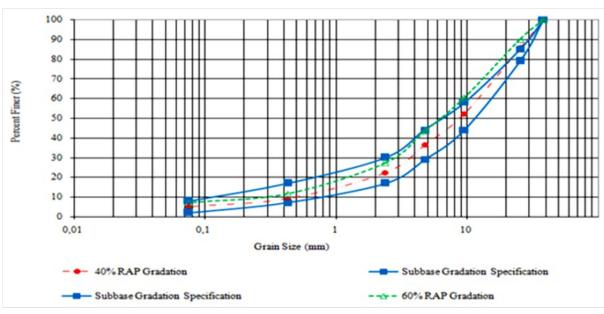
Figure 1. Sieve size and grain-size distribution of RAP and RAM
increase the specific surface area of the pozzolan as to increase the contact areas with the cementitious materials (Paya et al., 1997; Jongpradist et al., 2010). Ground pozzolan may partially replace a small portion of cement content in a cementitious mix design to produce desirable physical and mechanical properties, in addition to achieving environmentally friendly and low-cost pavement construction. Before use, Trass is dried in the sun for about 1-2 days to reduce its high moisture content to about 0.5%. After that, this tras sieved through sieve No. 200 and mechanically milled until more than 95% passes sieve no. 325 (or 45 micrometers) by weight according to American Society of Testing and Materials (ASTM) test procedure C 430.
The test were conducted in three parts: (i) characterization of physical and mechanical properties of RAP, and RAM for CTRB mixtures; (ii) a Proctor compaction test were conducted to determine the optimum moisture content (OMC) and maximum dry density (MDD) of the CTRB mixtures in the laboratory, based on the modified Proctor test procedure in accordance with the Indonesian Compaction Standard (SNI 03-1742-1990), which is the same as Standard Test Method for Laboratory Compaction Characteristics (ASTM D1557) of Soil Using Modified Effort, Method C). Each specimen was cast in a cylindrical mold the size was 4 by 4.58 inches consisting of 5 layers and each layer was compacted with a 10 lb with drop height of 18 inches by 25 times impacts. After each layer is compacted, at the top of each layer is made a bit rough so as to create mutual bonding between each layer. In the last layer 5 collisions are added to flatten the surface of the test object. The maximum particle size of RAP and RAM materials was 1.5 inches and prior to mixing, to remove residual moisture, the materials of RAP and RAM were air-dried for 2 days. To determine OMC and MDD also use the samples from these tests; and (iii) Indirect Tensile Strength (ITS) and Resilient Modulus (MR) tests for two CTRB mixtures
containing 40% RAP : 60% RAM and 60% RAP : 40% RAM and named as RAP40 and RAP60, respectively, for the rest of the paper.
The following sections will describe the steps for each part individually. Table 2 shows the CTRB mixture compositions, cement contents, and trass contents.
Indirect tensile strength (ITS) tests in accordance with ASTM D 6931 testing procedures were conducted using cylindrical specimen size 50 mm in diameter and 100 mm in height. For CTRB mixtures, the selection process of moisture contents (γd) and dry unit weights (ω) in this research was determined using the values close to the maximum dry unit weight and optimum moisture content obtained from the modified Proctor compaction testing curves. To evaluate the influence of sample porosities on tensile strengths, the moisture content was kept constant and additional dry unit weights were chosen considering a range at which the specimens could be molded using lower compaction energies of the CTRB mixtures.
AASHTO '86 indicates that ITS can be used as an indicator that can be correlated with the crack resistance of the concrete mixture. Changes in the volume (shrinkage) of the cement mixture due to the drying shrinkage process after hydration is one of the causes of cracks in the concrete or cement pavement layer. This occurs due to a chemical reaction between cement and carbon dioxide due to the presence of water in the mixture. The result of changes in molecular structure due to this reaction results change of volume, if the expansive strength that occurs due to a change in volume exceeds the tensile strength (ITS) of the cement mixture material, it will cause damage. Thus, it can be concluded that the increase in ITS value due to the substitution of trass in cement in the CTRB mixture will reduce cracks due to the hydration process.
Another CTRB mixtures mechanical property testing to measure the stiffness of the mixtures was conducted in accordance with the Test Method for Indirect Tension Test for Resilient Modulus of Bituminous Mixtures ASTM D4123 to determine the resilient modulus values using repeated load indirect tension test protocol. This testing procedure covers a range of temperatures, loads, loading frequencies, and load durations to create response curves to determine the resilient modulus. The test series consist of testing at loading pulse width of 250 milli seconds; pulse repetition period of 3000 milli seconds; conditioning pulse count of 5; target temperature of 35 °C, peak loading force of 1300 Newtons, and assumed Poisson's ratio of 0.4.
Tabel 2. CTRB mixture compositions
| RAP : RAM (%) | Civ (%) Cement content | Tw (%) Trass content |
|---|---|---|
| 40 : 60 | 2; 4; 6 | 0; 15; 30 |
| 60 : 40 | (by weight of total RAP and RAM material) | (by weight of cement) |
4. Result and Discussion Mixtures Porosity
4.1 Mixtures porosity
Due to the differences in composition of RAP and RAM materials, the specific gravities of CTRB samples varies based on mixture proportions. For the RAP40, the specific gravity Gss was 2.677 while for the RAP60 the specific gravity (Gss) was 2.636. The Portland cement and natural pozzolan, trass's specific gravities were (Gsc) = 3.14 and Gst = 2.42. The specific gravity of RAP and RAM (Gss), cement (Gsc), and trass (Gst), determine the porosity of the CTRB sample, the porosity of the mixture can be calculated using Eq. (1). This formula was modified from the formula for determining porosity in soil mixture stabilized with cement developed by Consoli (Consoli et al., 2011). By assuming the porosity value (\(\eta\)) of the CTRB sample is affected by the trass in the mixture, the porosity values were calculated with this formula.
Table 3 shows the percentage composition of cement and trass in the CTRB mixture and as the cementitious material content (cement and trass, Civ*) increase will to some extend decrease the porosity \((\eta)\) of the two CTRB mixtures. This was due to the addition of cementitious material content (Civ*) in the mixture, especially the grinded trass particles passed the sieve size no. 325 of more than 95%, therefore increasing the specific surface area of the trass particles, so the number of contacts become larger and reduce the voids in mix.
4.2 Indirect tensile strength test
In this research project, an attempt was made to determine the tensile strength of CTRB samples using
Tabel 3. Effect of cementitious material on porosity for CTRB (RAP40) and (RAP60) mixtures
| Mixtures | Cement:Trass | ŋ | ||
|---|---|---|---|---|
| wiixtures | RAP 40% | RAP 60% | ||
| A1 | 2% : 0% | 20.56 | 20.47 | |
| A2 | 85%A1:15%A1 | 22.05 | 19.42 | |
| A3 | 70%A1:30%A1 | 21.02 | 19.01 | |
| B1 | 4%:0% | 21.02 | 19.51 | |
| B2 | 85%B1:15%B1 | 20.09 | 18.77 | |
| В3 | 70%B1:30%B1 | 19.53 | 17.23 | |
| C1 | 6%:0% | 20.79 | 20.79 | |
| C2 | 85%C1:15%C1 | 19.17 | 17.98 | |
| C3 | 70%C1:30%C1 | 18.89 | 16.83 | |
partial cement replacement with natural pozzolan, taking into account the effect of natural pozzolan (trass) pozzolanic activity in the mixtures. The tensile strength value was assumed not as a result of the existence of the Portland cement in the mixtures, nonetheless to the influence of cement and trass materials content expressed by Civ* and an efficiency factor of trass (\(\alpha\)). Equation (2) and (3) show the compressive strength f'(c) in relation to the equivalent cement content as well as the efficiency factor of trass (\(\alpha\)). This equation can also be used to predict the effect of natural pozzolan (trass) on compressive strength, f'(c), in the mixtures if the compressive strength is known from sample testing (Waani et al., 2014).
\[f'_{(c)} = K \left( \frac{1}{\text{Fw/}C_{tv}^*} - \alpha \right) \tag{2}\]
Where Civ* is the equivalent cementitious material, and Civ is percentage of Portland cement, Fw is percentage trass and \(\alpha\) is efficiency factor of trass for replacement of Portland cement.
According to Papadakis and Tsimas (2002) The efficiency factor (a) is the function of grain-size distribution and chemical composition of the pozzolanic materials as a replacement of cement in the mixtures. Equation (3) shows the equivalent cement content formula:
\[C_{iv}^* = C_{iv} + \alpha Fw \tag{3}\]
Effect of equivalent cementitious material content and porosity on indirect tensile strength of two CTRB mixtures were also evaluated in this study. Figure 2 shows a power function between ITS and equivalent cementitious material (Civ*). The best correlation (R2 = 0.988; 0.972) and (R2= 0.841; 0.999) can be observed between equivalent cementitious material (Civ*) and the tensile strength (ITS) for the two CTRB mixtures considering separately the trass contents tested (15% and 30%)
While Figure 3 shows the correlation between ITS and porosity (\(\eta\)) and best correlation (R2 = 0.859; 0.929) of the CTRB mixture RAP40 and (R2 = 0.941; 0.527) of the CTRB mixture RAP60. This shows that the substitution of trass for cement in the CTRB mixture has a positive effect on the tensile stress of the mixture. The pozzolanic reaction also affects the voids in the mixture so the mixture becomes more solid. Consoli et al. (2011), stated that the reduced pore content in the mixture would increase the splitting tensile strength
\[\boldsymbol{\eta} = 100 - 100 \left[ \begin{pmatrix} \frac{\gamma_{\rm d} V_{\rm S}}{\frac{100}{100} + \frac{\gamma_{\rm d} V_{\rm S}}{100}} \\ \frac{100}{100} + \frac{\gamma_{\rm d} V_{\rm S}}{\frac{100}{100}} \\ \frac{100}{G_{\rm S}_{\rm c}} \end{pmatrix} + \begin{pmatrix} \frac{\gamma_{\rm d} V_{\rm S}}{\frac{100}{100} + \frac{\gamma_{\rm d} V_{\rm S}}{100}} \\ \frac{100}{G_{\rm S}_{\rm c}} \\ \end{pmatrix} + \begin{pmatrix} \frac{\gamma_{\rm d} V_{\rm S}}{\frac{100}{100} + \frac{\gamma_{\rm d} V_{\rm S}}{100}} \\ \frac{100}{G_{\rm S}_{\rm t}} \\ \end{pmatrix} \right] / V_{\rm S}\](1)
= porosity
= mixture dry density (gr/cm3)
= specimen volume (cm3)
= Civ (cement content) (%)
Fw = trass content (%)
GSs = RAP and RAM specific gravity
GSc = cement specific gravity
GSt = trass specific gravity
substantially as a consequence of increasing the area of contact between the particles in the mixture. The addition or substitution of pozzolanic materials for cement can improve the microscopic properties of the cement paste, where the pore structure changes from large capillary pores to small, gel-like pores due to the pozzolanic reaction and hydration process so as to reduce cracking in the mixture (Cheng et al., 2008).
Figure 2 and 3 shows the increase in the ITS value of the CTRB mixtures occurred along with the increase in the cementitious material content (Civ*) and reduction in the porosity (η) of the mixture. This is due to the presence of grinding trass that wraps the aggregate perfectly due to the increase in the specific surface area of the trass and the increase in the specific surface area of the trass minimizes the voids in the mixture thereby increasing the bond between the aggregates and resulting in resistance to tensile stress of the mixture.
The correlation between η/Civ* and ITS as shown in Figure 4 describes the Volumetric cementitious materials content is adjusted by different RAP and RAM composition in the CTRB mixtures.
Moreover, the best correlation of η/Civ* to ITS can be observed in Figure 4 of the CTRB studied (coefficient of determination R2 = 0.920 and 0.995) for RAP40 with 15% and 30% substitution of trass to Portland
cement. Best correlation of η/Civ* to ITS of the CTRB studied (coefficient of determination R2 = 0.988 and 0.937) for RAP60 with 15% and 30% substitution of trass to Portland cement.
This experimental design enables a good formulation of a mechanical parameter to be applied in the design of base and subbase pavement base on the common failure mechanism of pavement material due to excessive tensile stress at the bottom of the stabilized layer in addition to the quality control of the earthwork. Cementitious materials content and the ratio of Voids/Cementitious materials content effected on Tensile Strength of two CTRB Mixtures Studied as shown in Figure 4.
Figures 2 to 4 show unique correlations in each CTRB mixture between the ITS with the physical properties of the mixtures. Therefore, the ITS is an exact parameter in evaluating the predicted performance of the mixtures based on strength alone. As a result, for each of the two CTRB mixtures in this experiment, a target ITS value can be estimated by both a reduction in porosity (η) and an increase in equivalent cementitious materials (Civ*).
4.3 Resilient modulus
Since the 1986 AASHTO Pavement Design Guide, resilient modulus is becoming the parameter of choice
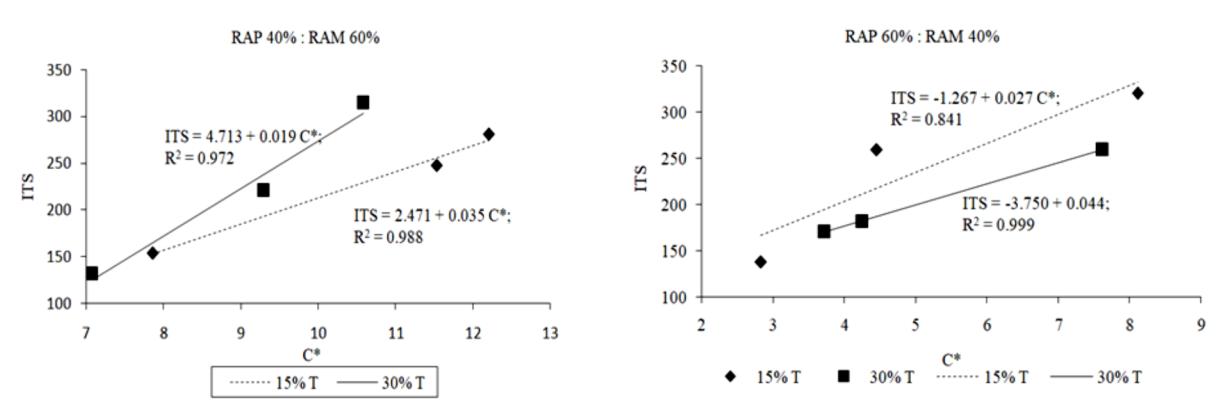
Figure 2. Correlation between ITS and C*
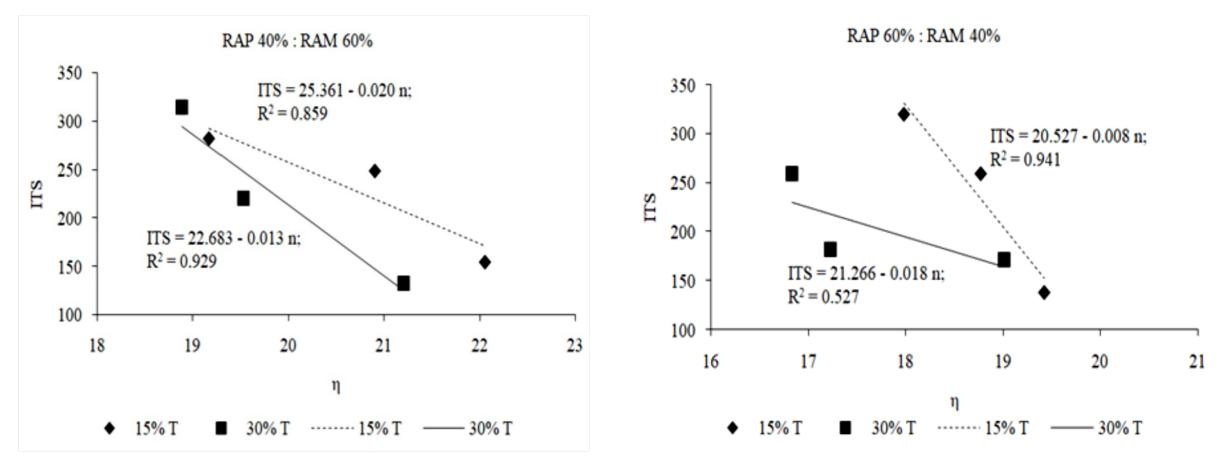
Figure 3. Correlation between ITS and porosity (ƞ)
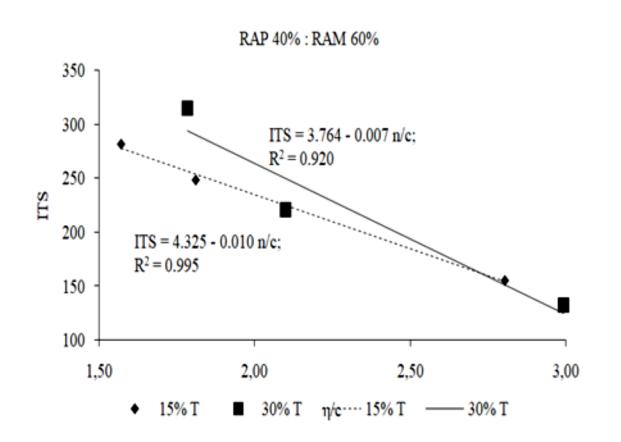
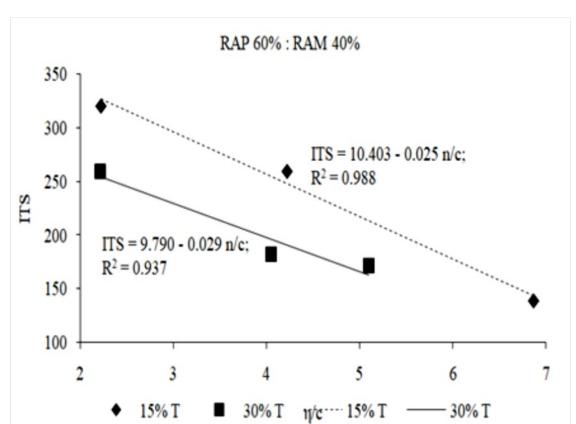
Figure 4. Correlation between voids/cement ratio and ITS
for pavement designers as an input parameter for multilayered elastic analysis and design of pavement to indicate the stiffness of the soil foundation and pavement base. Since the performance of pavement depends on the stresses and strains in the pavement layers that depend on the stiffness of the material, resilient modulus is a very important parameter to predict the pavement performance. The higher the resilient modulus value of a pavement material the smaller the stresses and strains in the pavement layers, until at a certain point, the pavement layers system becomes a semi-rigid pavement with different pavement layers responses. Figure 5 shows the resilient modulus for the RAP40 and RAP60 CTRB mixtures with cementitious material content variation (Civ*).
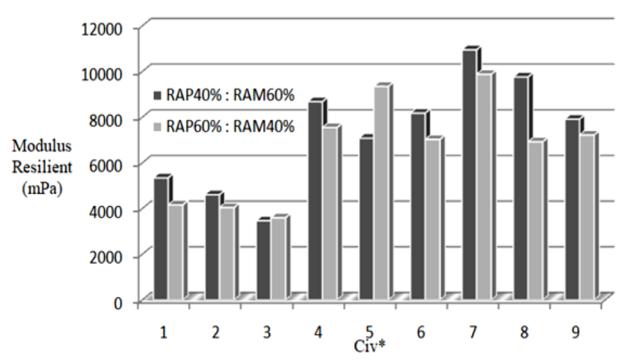
Figure 5. Correlation between modulus resilient and Civ*
The results of the laboratory investigation confirmed that cement and trass content (Civ*) will increase the resilient modulus in the two CTRB mixtures where the RAP40 mixture has a slightly higher MR than the RAP60 mixture. These results indicate RAP40 mixture is stiffer than the RAP60 CTRB mixture because containing larger Reclaimed Aggregate Material (no asphalt ingredient).
5. Conclusions
The experiments and research results from this research study achieved important results that are applicable for implementation of CTRB using natural pozzolan to achieve desired materials properties that are suitable for pavement base in pavement applications. Based on the results of the experiment, several significant conclusions can be withdrawn:
- 1. The increase in cementitious material (cement and trass) content (Civ*) slightly decreases the porosity (η) for the two CTRB mixtures in the experiment.
- 2. The propose of this research effort is the first known as a fundamental role in assessment to predict Indirect Tensile Strength (ITS) of CTRB based on the ratio of η/Civ* index (porosity to cementitious materials content), incorporating with partially replacing the Portland cement by trass. The correlation between those parameters and the Indirect Tensile Strength (ITS) is presented in a relationship of ITS to the porosity η and the cementitious material content Civ*
- 3. From the observation, the mixtures with high RAP content (RAP60) with high bitumenous material and finer aggregat material content are parameters that significantly influence the Indirect Tensile Strength (ITS). Porosity (η), cementitious material content, Civ*, and for the η/Civ*, the predicted ITS shows a good correlation with these parameters.
- 4. The research results show that substitution of natural pozzolan from Manado, Sulawesi Utara, Indonesia to Portland cement has potential benefits and efficacy into Cement Treated Recycled Base Mixture as a pavement base course material and can be implemented in the field to increase the pavement base course material's mechanical properties successfully. However this research indicated that the proportion of cement and the chemical and physical characteristics of trass in the mixtures effected the efficiency factor of trass., i.e. pozzolanic index.
- 5. Resilient Modulus MR slightly increased with the increase of cementitious material (cement and trass) content (Civ*) for the two CTRB mixtures. Therefore, the stresses and strains of the pavement layers are reduced to achieve longer pavement life.
Acknowledgments
The authors wish to express their gratitude to Ministry of Research, Technology and Higher Education, Republic of Indonesia for the support given to the research group in financial matter. Also to the anonymous reviewers in improving the content of this manuscript through their insightful comments and suggestions.
References
- ACI, 1996. "Use of Fly Ash in Concrete" American Concrete Institute Committee 232-2R. Farmington Hills, MI.
- ACI, 2001. "Use of Raw or Processed Natural Pozzolans in Concrete" ACI Committee 232. 1R-00 Report.
- ASTM C 430, 1996. "Standard Test Method for Fineness of Hydraulic Cement by the 45-µm (No. 325) Sieve.
- ASTM D4123-82, 1995. "Standard Test Method for Indirect Tension Test for Resilient Modulus of Bituminous Mixtures".
- ASTM D1557. "Standard Test Method for Laboratory Compaction Characteristic of Soil Using Modified Effort, Method C
- ASTM, 1982. "Standard test Method for Indirect Tensile Strength". ASTM D 4123-82
- AASHTO, 1986. "Guide For Design of Pavement Structures." American Association of State Highway and Transportation Officials. Washington, D.C. Bentz, P., Dale, Max, A., and John, W., 2009. "Early-Age Properties of Cement-Based Materials. II : Influence of Water-to-Cement Ratio." Journal of Materials in Civil Engineering, ASCE, Vol. 21, No. 9, pp. 512-517
- Cheng A. S., Yen T., Liu Y. W., and Sheen Y. N., 2008. "Relation Between Porosity And Compressive Strength of Slag Concrete" 2008. https://doi.org/10.1061/41016(314)310
- Consoli, N. C., Fonseca, A.V., Cruz, R. C., and Silva, S. R., 2011. "Voids/Cement Ratio Controlling Tensile Strength of Cement-Treated Soils." Journal of Geotechnical and Geoenvironmental Engineering, Vol. 137, No. 11, ASCE, 2011, pp 1126–1131.
- Consoli, N. C., Viana da Fonseca, A., Cruz, R. C., and Heineck, K., S., 2009. "Fundamental parameters for the stiffness and strength control of artificially cemented sand." Journal Geotech. Geoenviron. Eng., 135(9), 2009, 1347–1353.
- European Commission ~1999. "Integrated pollution prevention control: Reference document on best
- available techniques in the cement and lime manufacturing industries. Institute for Prospective Technological Studies", Joint Research Center,
- Guthrie, W. S., Dane, C., and Eggett, D.L, 2007. "Effects of Reclaimed Asphalt Pavement on Mechanical Properties of Base Materials." Journal of the Transportation Research Board of the National Academies, Washington D.C, 2007, pp. 44-52.
- Guthrie, W. S., Sebasta, S., and Scullion, T., 2002. "Selecting Optimum Cement Content for Stabilizing Aggregate Base Materials". FHWA/ TX-05/Technical Report 7-4920-2Hoyos, L. R. M.ASCE; Anand J. Puppala, A. J. M.ASCE; and Ordonez, C. A. " Characterization of Cement-Fiber-Treated Reclaimed Asphalt Pavement Aggregates: Preliminary Investigation". Journal of Materials in Civil Engineering, Vol. 23, No. 7, ASCE, ISSN 0899 -1561/7-977–989, 2011.
- Indrawati, V. and Manaf, A., 2011. "Multiphases Hydration of the Activated Binary Blend Portland Cement-trass." Proc. of The 3rd International Conference of EACEF (European Asian Civil Engineering Forum) Univ. Atma Jaya Yogyakarta, Indonesia, sept. 2011.
- Jongpradist, P., Jumlongrach, N., Youwai, S. and S. Chucheepsakul, 2010. "Influence of Fly Ash on unconfined Compressive Strength of Cement at High Water Content". Journal of Materials in Civil Engineering, Vol. 22, No.1, ASCE, pp 49-58.
- Kiattikomal, Jaturapitakkul, C., Songpiriyakij, S and Chutubtim, S., 2001. "A Study of Ground Coarse Fly Ashes With Different Finesses from Various Sources as Pozzolanic Materials". Cement and Concrete Composites 23, 2001, pp 335-343.
- Kumar, P., Mehndiratta, H. C., and Singh, V., 2008. "Use of fly ash in bituminous layer of pavement", Indian Highways, 2008, 41–50.
- Mehta, P., K., 1987. "Natural Pozzolans: Supplementary Cementing Materials for Concrete," CANMET -SP-86-8E, Canadian Government Publishing Center, Supply and Services, 1987, K1A0S9.
- Mindess, S., and J.F. Young, 1981. "Concrete". Prentice-Hall, Inc. EngleWood Cliffs, N.J. 07632
- Nantung, T., Ji, Y., Shields, T., 2011. "Pavement Structural Evaluation and Design of Full-Depth Reclamation (FDR) Pavement". Submitted for presentation and possible publication in the 90th Transportation Research Board Annual meeting, January 2011.Papadakis, V. G., Tsimas, S. "Supplementary cementing materials in
- concrete Part I: efficiency and design" Cement and Concrete Research 32, 2002, pp 1525–1532.
- Paya, J., Monzo, J., Borrachero, M.V., Peris, E., and Gonzales-Lopez, E., 1997. "Mechanical Treatments of Fly Ashes. Part III: Studies on Strength Development of Ground Fly Ashes (GFA)-Cement Mortars". Cement and Concrete Research. Vol 27. No 9, 1997, pp 365-1377.
- Sengul, O and Tasdemir, M. A., 2009 "Compressive Strength and Rapid Chloride Permeability of Concretes with Ground Fly Ash and Slag". Journal of Materials in Civil Engineering, Vol. 21, No. 9, ASCE, 2009, pp 494–501
- Sujivorakul, C., Jaturapitakkul, C., and Taotip, A., 2011. "Utilization of Fly Ash, Rice Husk Ash, and Palm Oil Fuel Ash in Glass Fiber-reinforced Concrete". Journal of Materials in Civil Engineering, ASCE Vol. 23, No. 9, 2011, pp 1281-1288.
- SNI 03-1742-1990. "Cara Uji Kepadatan Ringan Untuk Tanah"
- Swaminathan, C. G., and Nair, K. 1968. "Fly ash as a filler in bituminous mixes." Road Research Paper 69, CRRI, 1968, pp 16–24.
- Waani, J., Sri Prabandiyani, R. W., Setiadji, B. H., 2014. "Influence of Natural Pozzolan on Porosity-Cementitious Materials Ratio in Controlling the Strength of Cement Treated Recycled Base Pavement Mixtures". International Refereed Journal of Engineering and Science. Vol. 3, Issue: 11 p-ISSN: 2319-1821, 2014, pp 04-11.
- Yetgin, S., Cavdar, A., 2006. "Study of Effect of natural Pozzolan on Properties of Cement Mortars" Journal of Materials in Civil Engineering, ASCE, Vol. 18, No. 6, pp. 813-816.
Voids to Cementitious Materials Ratio as a Control...