

Abstrak
Cement-treated base (CTB) adalah lapisan pondasi perkerasan yang terdiri dari campuran agregat dengan air dan semen dalam kadar yang relatif rendah. CTB dapat memberikan daya dukung lapis pondasi yang lebih kuat dan kaku, serta membutuhkan ketebalan lapis perkerasan yang lebih tipis dibandingkan dengan penggunaan lapis granular. Namun, CTB rentan terhadap kerusakan retak reflektif. Oleh karena itu, CTB tidak boleh terlalu kaku dan kuat tekannya perlu dibatasi. Penelitian ini dilakukan untuk menganalisis pengaruh variasi kadar semen, gradasi, dan kepadatan campuran terhadap kuat tekan, kuat lentur, dan modulus elastisitas. Dalam penelitian ini juga dilakukan analisis ketahanan struktur perkerasan lentur dengan CTB terhadap kelelahan aspal dan kegagalan deformasi permanen dengan menggunakan metode AUSTROADS 2017 dan program CIRCLY 6.0. Kekakuan CTB dengan gradasi Bina Marga dibangun oleh material agregat, sedangkan kekakuan CTB dengan gradasi FAA dibangun oleh semen dan material agregat cenderung memberikan perilaku yang fleksibel karena lebih mudah bergerak. Hasil penelitian menunjukkan bahwa CTB dengan gradasi FAA dan kadar semen 5% menghasilkan kuat tekan 7 hari sebesar 3,28 MPa yang dinyatakan sebagai kombinasi campuran yang optimal karena memberikan ketahanan yang lebih baik terhadap kelelahan dan kegagalan deformasi permanen.
Kata-kata Kunci: CTB, deformasi permanen, kelelahan aspal, kuat lentur, kuat tekan, modulus elastitas.
1. Pendahuluan
The base layer used in road pavements generally uses granular materials with certain specifications. However, currently Cement-Treated Base (CTB) is used to increase the bearing capacity of the pavement base layer. CTB is an increased-strength granular layer
stabilized with cement. Halsted et al. (2006) stated that Cement-Treated Base(CTB) is a general term used for a mixture of native soil and/or aggregate with a certain amount of Portland Cement and water, then hardens after compaction and curing to form a strong, durable, and frost-resistant pavement material.
Cement-Treated Base (CTB) has several advantages over granular materials, including the ability to provide a stronger and stiffer base layer, and the required CTB thickness is usually thinner (Austroads, 2017; Halsted et al., 2006; Rahane et al., 2022). CTB that have higher stiffness than granular base layer produces lower deflections, resulting in lower surface strain and longer pavement life. CTB can distribute the load received from the surface layer to a wider area so that it can reduce the pressure that occurs on the subgrade (George, 1990; PCA, 2003). Despite its many advantages, CTB has the potential to cause damage to the pavement structure, in the form of reflective cracking that impacts the surface layer (Halsted et al., 2006; PCA, 2003). Cracks in CTB may occur due to its high stiffness characteristics so the mixture tends to be brittle. The higher the value of CTB compressive strength, the higher the stiffness so it tends to be more brittle and has the potential to experience large cracks. Gregory E. Halsted et al. (2006) also stated that the compressive strength of CTB needs to be controlled in such a way so that it still meets the required specifications but does not easily experience large cracks (fractures) which result in reflective cracking to the overlying layers.
The design and construction of the CTB layer for road pavements in Indonesia follow the provisions of the Second Revision of Indonesia's General Highways Specifications 2018 by using a granular layer (in the Indonesian language referred as Lapis Fondasi Agregat Kelas A/LFA). Meanwhile, the design and construction of CTB layers for pavements on airport runways follow the provisions of FAA AC 150/5370-10G (2014), where the aggregates used have finer gradation than LFA and use lower density levels. The two specifications also required different compressive
strength values, FAA AC 150/5370-10G allows the use of CTB with a lower compressive strength (2,758 MPa) compared to the Second Revision of Indonesia's General Highways Specifications 2018 (4,315 MPa). In this study, experimental preparation and testing of CTB mixtures will be carried out in the laboratory using two variations of aggregate based on FAA AC 150/5370-10G provisions and the Second Indonesia's General Highways Revision of Specifications 2018, as well as three different variations of cement content. Based on the results obtained from research in the laboratory, CTB made based on these two specifications will be compared by conducting an analysis of the pavement structure's resistance to fatigue failure and permanent deformation to determine which CTB mixture is more effective to use.
2. Materials and Methodology
For this research, CTB mixture was prepared using Ordinary Portland Cement (OPC) Type I with three variations of cement content, aggregate from Mount Lagadar using two variations of gradation, and water using the Optimum Moisture Content value which is obtained from the Proctor Test. Prior to mixing the CTB, aggregate properties were tested based on the Second Revision of Indonesia's General Highways Specifications 2018 and FAA AC 150/5370-10G, as shown in Table 1.
After testing the aggregate properties, a proctor test was carried out using two gradation variations (based on the Second Revision of Indonesia's General Highways Specifications 2018 using SNI 1743:2018 and FAA AC 150/5370-10G using ASTM D558-11, and three variations in cement content (2%, 3% and 5%) to determine the optimum water content and
Table 1. Aggregate properties test result
| No. | Aggregate Properties | Test Method | Requirement | Test Result |
|---|---|---|---|---|
| 1 | Los Angeles Abrasion | ASTM C131 | 0% - 40% | 28,66% |
| 2 | Percentage of fractured particles in coarse aggregate (retrained on the 3/8-inch sieve) | SNI 7619:2012 | 95% / 90% | 98% / 97% |
| 3 | Liquid Limit | ASTM D4318 | 0 - 25 | Non-Plastic |
| 4 | Plasticity Index | ASTM D4318 | 0 - 6 | Non-Plastic |
| 5 | Plasticity Index multiplied by % Passing 0,075(No. 200) sieve | - | Max. 25 | Non-Plastic |
| 6 | Clay Lumps and Friable Particles in Aggregates | SNI 03-4141-1996 | 0% - 5% | 0,30% |
| 7 | Ratio of % Passing 0,075 mm (No. 200) Sieve and % Passing 0,425 mm (No. 40) Sieve | - | Max. 2/3 | 0,071 |
Source: Result of analysis, 2023
Table 2. Proctor test result
| Variation | Aggregate Gradation | Cement Content | Optimum MoistureContent | Maximum Dry Density(ton/m³) |
|---|---|---|---|---|
| 1 | Bina Marga | 2% | 8,36% | 2,09 |
| 2 | Bina Marga | 3% | 8,53% | 2,12 |
| 3 | Bina Marga | 5% | 8,31% | 2,18 |
| 4 | FAA | 2% | 11,32% | 1,85 |
| 5 | FAA | 3% | 13,12% | 1,87 |
| 6 | FAA | 5% | 13,00% | 1,90 |
Source: Result of analysis, 2023
190 Jurnal Teknik Sipil
Table 3. Flexible pavement structure analysis parameter
| Parameter | Value | ||
|---|---|---|---|
| Reliability | 80% | ||
| NHVAG | 2,8 | ||
| ESA/HVAG | 1,29 | ||
| Characteristics of Subgrade | |||
| - CBR | 6% | ||
| - Type of Subgrade Material | Cohesive | ||
| - Poisson's Ratio | 0,45 | ||
| Characteristics of Granular Layer | |||
| - Vertical Modulus | 300 MPa | ||
| - Poisson's Ratio | 0,35 | ||
| Characteristics of CTB | |||
| - CTB Variation | Bina Marga Gradation with 3% Cement Content | FAA Gradation with 5% Cement Content | |
| - Compressive Strength | 4,68 MPa | 3,28 MPa | |
| - Flexural Strength | 0,968 MPa | 0,736 MPa | |
| - In-service fatigue constant (K) | 94,13 | ||
| - Reliability Factor (RF) | 4,7 | 4,7 | |
| Pre-cracking phase | |||
| - Modulus | 6.261,79 MPa | 3.104,88 MPa | |
| - Poisson's Ratio | 0,2 | 0,2 | |
| Post-cracking phase | |||
| - Modulus | 500 MPa | ||
| - Poisson's Ratio | 0,35 | ||
| Characteristics of Asphalt Layer | |||
| - Shift Factor (SF) | 6 | ||
| - Reliability Factor | 2,4 | ||
| Asphalt Concrete Wearing Course (ACWC) | |||
| - Modulus | 1.100 MPa | ||
| - Poisson's Ratio | 0,4 | ||
| - Volume of Bitumen | 12,2% | ||
| Asphalt Concrete Binder Course (ACBC) | |||
| - Modulus | 1.200 MPa | ||
| - Poisson's Ratio | 0,4 | ||
| - Volume of Bitumen | 11,5% | ||
| Asphalt Concrete Base Course (AC Base) | |||
| - Modulus | 1.600 MPa | ||
| - Poisson's Ratio | 0,4 | ||
| - Volume of Bitumen | 11,5% | ||
Source: Result of analysis, 2023
density level that needs to be achieved. The results of the proctor test can be seen in Table 2.
Furthermore, the Optimum Moisture Content (OMC) and Maximum Dry Density (MDD) obtained from the test results are used to determine the required amount of aggregate and water that needs to be added to the CTB mixture. Specimens for each variation of the CTB mixture were prepared based on ASTM D1632 in the form of cylinders with a size of 10 x 20 cm (4 pieces) and in the form of beam with a size of 10 x 10 x 35 cm (3 pieces). After making the CTB mixture, the compressive strength, flexural strength, and modulus of elasticity of CTB were tested based on ASTM and SNI standards. The compressive strength of CTB was tested based on ASTM D1633 concerning Standard Test Methods for Compressive Strength of Molded Soil-Cement Cylinders at the age of 7 days using a Universal
Testing Machine with the application of a constant load until the specimen failed (indicated by a continuously decreasing load value). The flexural strength was tested based on ASTM D1635 concerning the Standard Test Method for Flexural Strength of Soil-Cement Using Simple Beam with Third-Point Loading. The modulus was tested based on ASTM C469 concerning the Standard Test Method Static Modulus of Elasticity and Poisson's Ratio of Concrete in Compression.
CTB compressive strength is tested to find out which mixture meets the compressive strength criteria specified by the requirements of Bina Marga and FAA specifications. Meanwhile, the flexural strength and elastic modulus were tested to be used as input data in the analysis of flexible pavement structure using the CTB as the pavement base layer (Austroads, 2017). The analysis was carried out using the AUSTROADS 2017
method and assisted using the CIRCLY 6.0 program. Analysis using the CIRCLY 6.0 program provides output data in the form of horizontal critical strain at the bottom of the asphalt layer, horizontal critical strain at the bottom of the CTB layer,and vertical strain at the top of the subgrade layer. The critical strain values obtained are used to analyze the resistance of pavement structures to asphalt fatigue and permanent deformation using the AUSTROADS 2017 method. Pavement structure's resistance to asphalt fatigue and permanent deformation represented in ESA5 unitsthat are used by Manual Desain Perkerasan Jalan (the manual used in Indonesia). Parameter data used for the design of flexible pavement structures can be seen in Table 3.
3. Result and Discussion
3.1 Mechanical properties test result
3.1.1 Compressive strength test result
The compressive strength of CTB is tested to find out how much strength the material can withstand loads until itfails. Tests were carried out on five cylindrical specimens measuring 10 x 20 cm at 7 days of age. The result of theCTB compressive strength test is shown in Figure 1. The CTB which meets the required compressive value are the second and sixth variations. The second variation of CTB has Bina Marga gradation and 3% cement content, resulting in 4,68 MPa of compressive strength that meets the Second Revision of Indonesia's General Highways Specifications 2018 required value (4,315 MPa – 5,394 MPa). The sixth variation of CTB has FAA gradation and 5% cement content, resulting in 3,28 MPa of compressive strength that meets the FAA AC 150/5370 -10G requiredvalue (2,758 MPa – 5,516 MPa).
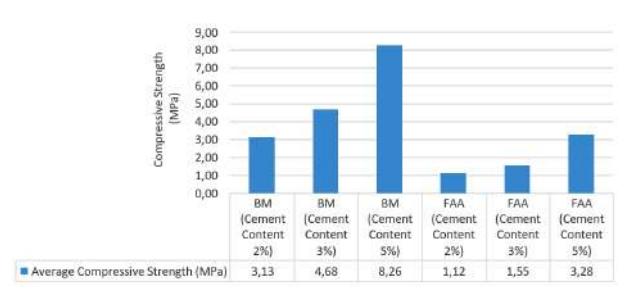
Figure 1. Result of compressive strength test (7 days value)
3.1.2 Flexural strength test result
The flexural strength of CTB is tested to be used as an input parameter in pavement structure analysis. Tests were carried out on three beam specimens measuring 10 x 10 x 35 cm. The result of the CTB flexural strength test is shown in Figure 2. The CTB which meets the typical flexural strength value are the second and sixth variations. The second variation of CTB has Bina Marga gradation and 3% cement content, resulting in 0,968 MPa of flexuralstrength. The sixth variation of CTB has FAA gradation and 5% cement content, resultingin 0,736 MPa of flexural strength. Both
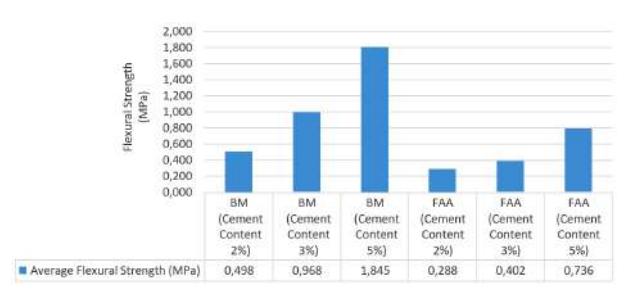
Figure 2. Result of flexural strength test (7 days value)
variations meet the PCA typical value (0,7 MPa – 1,4 MPa).
3.1.3 Elastic modulus test result
The elastic modulus of CTB is tested to be used as an input parameter in pavement structure analysis. Tests were carried out on three cylindrical specimens measuring 10 x 20 cm. The result of the CTB elastic modulus test is shown in Figure 3. The CTB which meets the typical elastic modulus value are the first, second, and sixth variations. The first variation of CTB has Bina Marga gradation and 2% cement content, resulting in 4.078 MPa of elastic modulus. This variation does not meet the Second Revision of Indonesia's General Highways Specifications 2018 compressive strength requirement, therefore this variation will not be used in pavement structure analysis. The second variation of CTB has Bina Marga gradation and 3% cement content, resulting in 6.261 MPa of elastic modulus. The sixth variation of CTB has FAA gradation and 5% cement content, resulting in 3.104 MPa of elastic modulus. All three variations meet the AUSTROADS typical value (3.000 MPa – 8.000 MPa).
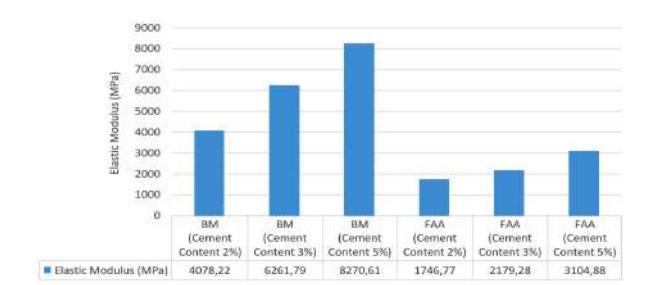
Figure 3. Result of elastic modulus test
3.2 Mechanical properties test analysis
3.2.1 Effect of cement content on CTB mechanical properties
At the same aggregate gradation, the higher the cement content used in the mixture, the higher the compressive strength, flexural strength, and elastic modulus of CTB. This result in line with the results of research conducted by Mandal et al. (2017), A. Ismail et al. (2014), Ekwulo E. O. and Eme D. B. (2017). The greater the cement content used in the CTB mixture will increase the bond between the aggregates so that it will produce higher stiffness and strength. The compressive strength of CTB with the Bina Marga gradation is more sensitive to the addition of cement content when compared to the CTB with FAA gradation. Since the strength of CTB must be limited, the addition of cement content in CTB with Bina Marga gradation needs to be more careful so that the compressive strength of CTB is not too high.
3.2.2 Effect of aggregate gradation and proctor test procedure on CTB mechanical properties
At the same cement content, CTB with an aggregate gradation that tends to be coarser (Bina Marga gradation) produces higher compressive strength at a higher density level. In the meantime, the flexural strength and elastic modulus increased as the compressive strength increased. This result in line with the results of research conducted by Ekwulo E. O. and Eme D. B. (2017), who found that CTB with finer gradation tend to have lower compressive strength and elastic modulus. A higher level of density is obtained from compaction using modified compaction. CTB with FAA gradation (finer aggregate size distribution) is compacted at a lighter density to make the material less rigid and easier to move, thus it has more flexible behavior. It is expected to form a small crack pattern on the CTB, thus minimizing the potential of reflective crack to the surface layer. In the CTB mixture with FAA gradation, stiffness is built up by cement therefore the stiffness of CTB with FAA gradation is easier to control. Whereas CTB with Bina Marga gradation (coarser aggregate size distribution) is compacted at a higher density level, this causes the layer to have more rigid characteristics and the material will be difficult to move. In the CTB mixture with Bina Marga gradation, the stiffness is built up by the aggregate material (initially stiff). According to this, it can be concluded that the most determining factor affecting the strength of CTB is aggregate gradation.
3.2.3 Correlation between CTB mechanical properties
The correlation of the CTB mechanical properties is shown in Table 4. CTB with the FAA gradation has more flexible properties, as a slight increase in compressive strength will increase the flexural strength considerably when compared to CTB with Bina Marga gradation. In addition, the increase in flexural strength will not increase the elastic modulus too much. Based on this, it can be said that CTB with FAA gradation has more flexible and more elastic (more easily deformed) properties when compared to CTB with Bina Marga gradation.
3.3 Pavement Structural Analysis
The analysis was conducted on the flexible pavement structure using CTB (second and sixth variation because it has compressive strength values that meet the requirements) and granular base layers. The analysis of the flexible pavement structure with CTB layer was carried out in 2 (two) conditions, as follows 1. If the thickness of the asphalt surface layer above the CTB is designed to be < 175 mm.
Based on AUSTROADS 2017, if the thickness of the asphalt surface layer above the CTB is more than 175 mm, it can minimize the potential risk of reflective cracking, so that the CTB is designed not to crack until the end of its planned life or until the planned traffic load is reached.
2. If the thickness of the asphalt surface layer above the CTB is designed to be ≥ 175 mm
Based on AUSTROADS 2017, if the thickness of the asphalt surface layer above the CTB is more than 175 mm, it can minimize the potential risk of reflective cracking, so that the CTB layer can be designed to experience fatigue before the designed traffic load is reached.
Meanwhile, the analysis on the flexible pavement structure with granular base layer is conducted to be compared with the calculation and analysis results of flexible pavement structure using CTB layer. The result of the pavementstructure analysis is shown in Table 5 and Table 6.
Flexible pavement structures with CTB and asphalt layer thickness above CTB < 175 mm can only be used for roads with very low traffic loads. However, this pavement structure is less effective than the use of an aggregate foundation layer (LFA), as it requires a thicker asphalt layer which is more expensive. The durability of the pavement structure is analyzed against asphalt fatigue failure and permanent deformation. The failure of the flexural pavement structure is determined based on the fatigue failure of the CTB layer at the end of the design life. The higher the CTB's flexural strength value and the lower the elastic modulus will result in greater CTB in- service fatigue, so that the CTB's resistance to fatigue failure will be greater (Austroads, 2017). The thicker the pavement layer and the higher the elastic modulus of the pavement layer above the subgrade, the resistance of the pavement structure to permanent deformation failure will tend to
Table 4. Correlation of CTB mechanical properties
| Parameter | CTB Variation | Correlation |
|---|---|---|
| BM Gradation | E = 1.213 x fc' | |
| Elastic Modulus (E) – Compressive Strength (fc') | FAA Gradation | E = 1.302 x fc' |
| BM Gradation | fs = 19,63% x fc' | |
| Flexural Strength (fs) – Compressive Strength (fc') | FAA Gradation | fs = 24,67% x fc' |
| BM Gradation | E = 6.382 x fs | |
| Elastic Modulus (E) – Flexural Strength (fs) | FAA Gradation | E = 5.235 x fs |
Source: Result of analysis, 2023
Table 5. Result of pavement structural analysis (asphalt layer over CTB < 175 mm)
| DesignTraffic | Base Layer | Layer Thickness (mm) | Damage Fatigue Total | Allowable Repetition Load (ESA) | ||
|---|---|---|---|---|---|---|
| Load (ESA) | Type | Asphalt Fatigue | CTB Fatigue | Permanent Deformation | ||
| 95.000 | CTB (BM Gradation, 3% Cement Content) | AC-WC = 40 AC-BC = 130 CTB = 300 LFA = 150 | 1,685 x 10-8 | 9,731x 10-1 | 10.889.806.995.789 | |
| Granular Layer | AC-WC = 50 LFA = 400 | 7,259 x 10-2 | - | 30.432.477 | ||
| 2.900.000 | CTB (FAA Gradation, 5% Cement Content) | AC-WC = 40 AC-BC = 130 CTB = 300 LFA = 150 | 2,039 x 10-6 | 9,822 x 10-1 | 1.882.014.416.070 | |
| Granular Layer | AC-WC = 40 AC-BC = 120 LFA = 300 | 4,735 x 10-1 | - | 163.591.024 | ||
Source: Result of analysis, 2023
Table 6. Result of pavement structural analysis (asphalt layer over CTB ≥ 175 mm)
| DesignTraffic | Base Layer | Layer | Allowable Repetition Load (ESA) | |
|---|---|---|---|---|
| Load (ESA) | Type | Thickness (mm) | Asphalt Fatigue | Permanent Deformation |
| CTB Thickness 150 m | ||||
| CTB (BM Gradation, 3% Cement Content) | AC-WC = 40 AC-BC = 60 AC Base = 85 | 47.718.267 | 883.276.348 | |
| 45.000.000 | CTB (FAA Gradation, 5% Cement Content) | CTB = 150 LFA = 150 | 47.721.672 | 883.279.686 |
| Granular Layer | AC-WC = 40 AC-BC = 60 AC Base = 145 LFA = 300 | 80.379.478 | 3.926.944.967 | |
| CTB Thickness 250 m | ||||
| CTB (BM Gradation, 3% Cement Content) | AC-WC = 50 AC-BC = 60 AC Base = 110 | |||
| 250.000.000 | CTB (FAA Gradation, 5% Cement Content) | CTB = 250 LFA = 150 | ||
| Granular Layer | AC-WC = 40 AC-BC = 60 AC Base = 200 LFA = 300 | |||
| CTB Thickness 300 m | ||||
| CTB (BM Gradation, 3% Cement Content) | AC-WC = 40 AC-BC = 60 AC Base = 140 | |||
| 650.000.000 | CTB (FAA Gradation, 5% Cement Content) | CTB = 300 LFA = 150 | ||
| Granular Layer | AC-WC = 40 AC-BC = 60 AC Base = 230 LFA = 400 | |||
Source: Result of analysis, 2023 be greater. Strain caused by the traffic load will be carried by the pavement layer so that the strain received by the subgrade will be smaller (George, 1990; Portland Cement Association, 2003).
Flexible pavement structures with CTB and asphalt layer thickness above CTB ≥ 175 mm can be used for roads with medium and high traffic loads, and more
effective than using a granular base layer. These results are in line with Souliman et al. (2021), Francois et al. (2019), Vaibhav P. Patil and A.V. Karvekar (2019) in their study, whofound that CTB provides better fatigue and damage resistance compared to conventional flexible pavements usinggranular base. The use of CTB can reduce the required thickness of pavement layers but can carry the same trafficload, this result is in line with the research conducted by Sharma et al. (2019). The durability of the pavement structure is analyzed against asphalt fatigue failure and permanent deformation. The durability of the pavement structure using the CTB with FAA gradation is greater than using CTB with Bina Marga gradation, the differencewill be more significant if using a thicker pavement layer.
- For pavement structure with 150 mm CTB layer, the fatigue failure resistance of the pavement structure using FAA gradation is 0,00714% greater and the permanent deformation failure resistance of the pavement structure using FAA gradation is 0,00038% greater than using CTB with Bina Marga gradation.
- For pavement structure with 250 mm CTB layer, the fatigue failure resistance of the pavement structure using FAA gradation is 0,97% greater and the permanent deformation failure resistance of the pavement structure using FAA gradation is 0,01% greater than using CTB with Bina Marga gradation.
- For pavement structure with 300 mm CTB layer, the fatigue failure resistance of the pavement structure using FAA gradation is 7,64% greater and the permanent deformation failure resistance of the pavement structure using FAA gradation is 0,07% greater than using CTB with Bina Marga gradation.
For a very high design traffic load (650.000.000 ESA), the use of CTB layer with FAA gradation and 5% cement content can provide a slightly thinner pavement layer when compared to using CTB layer with Bina Marga gradation and 3% cement content. Pavement structural failure is determined based on total asphalt fatigue failure (pre and post-cracking CTB phases). The higher the flexural strength value and the lower the elastic modulus willresult in greater CTB in-service fatigue, so that the CTB's resistance to fatigue failure and permanent deformation failure will be greater (Austroads, 2017). This affects the resistance to total asphalt fatigue failure (pre and post- cracking CTB phases) to become greater.
4. Conclusion
Based on the results of data processing and analysis, the following conclusions are obtained:
- 1. The higher the cement content of the mixture, the higher the compressive strength, flexural strength, and elastic modulus as the bond between the aggregates increases. The compressive strength of CTB with Bina Marga gradation is more sensitive to the addition of cement content when compared to CTB with FAA gradation. Thus, the addition of cement content to the CTB with Bina Marga gradation needs to be done more carefully, because the compressive strength value of CTB must be limited to minimize the potential of reflective cracking.
- 2. Aggregate gradation is the main factor affecting the strength of CTB. CTB with Bina Marga gradation has an aggregate distribution that tends to be coarse so that it tends to be stiff even though cement has not been added to the mixture (initially stiff). Whereas CTB with FAA gradation has an aggregate
- distribution that tends to be finer so that it has more flexible properties because it is easier to move. The crack pattern is expected to occur with a small size (crushed) and does not result in reflection cracks onto the surface layer. Stiffness in CTB FAA gradation is built by cement so it is easier to control.
- 3. CTB layer is effectively used on flexible pavement structures with thick asphalt layers (≥ 175 mm) and medium-high traffic loads.
- 4. For the same pavement layer thickness, the use of CTB with FAA gradation and 5% cement content can carrya greater traffic load when compared to the use of CTB with Bina Marga gradation and 3% cement content (becomes more significant as the pavement layer used gets thicker). This is influenced by the higher flexural strength and lower elastic modulus possessed by CTB with FAA gradation.
- 5. Based on this research, the most optimum CTB mix composition has aggregate with gradation in accordance with FAA AC No: 150/5370-10G, 5% cement content, and Optimum Moisture Content of 13% with Maximum Dry Density of 1,9 ton/m3 . This mixture was determined as the most optimum mixture because have a compressive strength that meets the required value and carries a larger traffic load.
References
- American Society for Testing and Materials. (2000). ASTM D1635-00 Standard Test Method for Flexural Strength of Soil-Cement Using Simple Beam with Third-Point Loading. Pennsylvania.
- American Society for Testing and Materials. (2007). ASTM D1632-07 Standard Practice for Making and Curing Soil-Cement Compression and Flexure Test Specimens in the Laboratory. Pennsylvania.
- American Society for Testing and Materials. (2010). ASTM C131-06 Standard Test Method for Resistance to Degradation of Small-Size Coarse Aggregate by Abrasion and Impact in the Los Angeles Machine. Pennsylvania.
- American Society for Testing and Materials. (2011). ASTM D558-11 Standard Test Methods for Moisture-Density(Unit Weight) Relations of Soil-Cement Mixtures. Pennsylvania.
- American Society for Testing and Materials. (2014). ASTM C469/C469M-14 Standard Test Method for Static Modulus of Elasticity and Poisson's Ratio of Concrete in Compression. Pennsylvania.
- American Society for Testing and Materials. (2017). ASTM D1633-17 Standard Test Methods for Compressive Strength of Molded Soil-Cement Cylinders. Pennsylvania.
- American Society for Testing and Materials. (2018). ASTM D4318-17e1 Standard Test Methods for
- Liquid Limit,Plastic Limit, and Plasticity Index of Soils. Pennsylvania.
- Asrie, B. N. (2023). Effect of Cement Content and Aggregate Gradation on Compressive Strength, Flexural Strength, and Elastic Modulusof Cementreated Base. Master's Program Thesis, Institut Teknologi Bandung.
- Austroads. (2017). Guide to Pavement Technology Part 2: Pavement Structural Design. Sydney: Austroads.
- Directorate General of Highways. (2017). Pavement Design Manual No. 02/M/BM/2017. Jakarta: Ministry of Public Works and Housing.
- Directorate General of Highways. (2020). Circular Letter of the Minister of Public Works and Housing No. 18/SE/Db/2020 on Supplement to the 2017 Pavement Design Manual. Jakarta: Ministry of Public Works and Housing.
- Directorate General of Highways. (2020). General Specifications of Highways 2018 (Second Revision). Jakarta: Ministry of Public Works and Housing.
- Federal Aviation Administration. (2014). Advisory Circular No: 150/5370-10G Standards for Specifying Construction of Airports. United States: Federal Aviation Administration.
- Francois, A., Ali, A., & Mehta, Y. (2019, doi: 10.1080/10298436.2017.1366766). Evaluating The Impact of Different Types of Stabilised Bases on The Overall Performance of Flexible Pavements. International Journal of Pavement Engineering, 20(8), 938-946.
- Francois, A., Offenbacker, D., & Mehta, Y. (2022; doi: 10.1201/9781003222880-15). Evaluating the cost effectiveness of using various types of stabilized base layers in flexible pavements. Eleventh International Conference on the Bearing Capacity of Roads, 1.
- George, K. P. (1990). Characterization and Structural Design of Cement-Treated Base. Mississippi: Department of Civil Engineering, University of Mississippi.
- Halsted, G. E., Luhr, D. R., & Adaska, W. S. (2006). Guide to Cement-Treated Base. Illinois: Portland Cement Association.
- Indonesian National Standard Agency. (2008). SNI 1743:2008 Density Test Method for Soil. Jakarta, Indonesia.
- Indonesian National Standard Agency. (2012). SNI 7619:2012 Test Method for Determination of Percentage of Fractured Particles in Coarse Aggregates. Jakarta.
- Indonesian National Standards Agency. (1996). SNI 03 -4141-1996 Test Method for Clay Clumps and Friable Grains in Aggregate. Jakarta.
- Ismail, A., Baghini, M. S., Karim, M. R., Shokri, F., Al -mansoba, R. A., Firoozi, A. A., & Firoozi, A. A. (2014, doi: 10.4028/www.scientific.net/ AMM.507.353). Laboratory Investigation on The Strength Characteristics of Cement-Treated Base. Trans Tech Publications, 507, 353-360.
- Mandal, T., Edil, T. B., & Tinjum, J. M. (2017, doi: 10.1080/14680629.2017.1325772). Study on Flexural Strength, Modulus, and Fatigue Cracking of Cementitiously Stabilised Materials. Road Materials and Pavement Design, 19(7), 1546-1562.
- O., Ekwulo. E., & B., Eme. D. (2017). Effect of Aggregate Gradation on Compressive Strength and Elastic Modulus of Cement Treated Aggregate Base Material for Highway Pavement. IOSR Journal of Engineering, 07 (10), 79-89.
- Patil, V. P., & Karvekar, A. (2019). A Study of Cement Treated Base and Sub Base in Flexible Pavement. International Research Journal of Engineering and Technology, 06(08).
- Portland Cement Association. (2003). Reflective Cracking in Cement-Stabilized Pavement, IS527. Illinois: Portland Cement Association.
- Rahane, A. B., More, S. A., Shinde, S. V., Daundkar, S. V., & Ahire, D. R. (2022, doi: 10.22214/ ijraset.2022.43487). A Comparative Study of Cement-Treated Sub-Base and Granular Sub-Base. International Journal for Research in Applied Science & Engineering Technology, 10 (v). doi:https://doi.org/10.22214/ijraset.2022. 43487
- Sharma, H., Bhardwaj, H., & Nagar, D. (2019). Economic Analysis of use of Cement Treated Base & Sub-Base in Flexible Pavement. International Journal of Engineering Research & Technology, 8(07).
- Souliman, M. I., GC, H., & Mohammed, Z. (2021, https://doi.org/10.3390/infrastructures6080110). Enhanced Flexible Pavement Performance Using Treated Compared to Untreated Aggregate Bases: A Comparative Case Study in the Southern United States. Infrastructures, MDPI, 6, 110.