

Abstrak
Salah satu permasalahan yang cukup berat dan mengancam ekosistem di wilayah pesisir adalah abrasi. Untuk itu diperlukan struktur pelindung pantai yang efektif dan stabil dengan material yang mudah dan murah dengan kombinasi sebagai budidaya kerang hijau untuk menambah nilai ekonomi untuk masyarakat. Metode yang digunakan dalam penelitian ini yakni dengan mengombinasikan dan menganalisis data sekunder serta pengumpulan data arsip. Didapatkan hasil bahwa kondisi ekologis perairan Desa Bedono, Kecamatan Sayung, Kabupaten Demak memenuhi syarat untuk dapat digunakan sebagai lokasi budidaya kerang hijau. Bambu digunakan dengan panjang minimal 7.5 meter dan kedalaman pemancangan 2 meter. Dari sisi kelayakan finansial cukup menguntungkan dengan nilai NPV pada usaha budidaya kerang hijau metode tancap sebesar Rp1,202,383. Nilai Net B/C pada usaha budidaya kerang hijau metode tancap sebesar 1.20. Berdasarkan kriteria kelayakan NPV dan Net B/C, usaha budidaya kerang hijau dengan metode tancap layak dijalankan. Konsep struktur ini dianggap memenuhi prinsip ekologi berdasarkan assessment pada setiap komponennya.
Kata-kata Kunci: Abrasi, pemecah gelombang, kerang hijau, pelindung pantai natural
1. Introduction
Coastal erosion has become one of the problems that pose a significant threat to the ecosystem in coastal areas, requiring full attention from the central government, local authorities, and communities around the coastal areas (Pratikto et al., 2014). On the northern coast of Central Java, the area affected by abrasion has reached 5,500 hectares spread across 10 cities. One area experiencing particularly severe abrasion is the coast in the Sayung District, Demak Regency. In this area, the issues at hand are pretty severe, especially regarding
* Penulis korespondensi: izqiyustina@itb.ac.id the decline in land function due to coastal erosion and seawater inundation in a 582.8-hectare brackish pond area, which has been flooded for five years and subsequently disappeared (Damaywanti, 2013).
A significant amount of funding is required to construct large-scale coastal protection structures using hard-structure (e.g., concrete). Therefore, there is a need for a coastal protection structure with materials that are easy, affordable, yet effective and stable. For example, bamboo is commonly used to support construction processes in lower- to middle-income communities. It is readily available and economically priced. Despite this, its capability and durability has proven to be sufficiently long-lasting and robust for various small to medium-scale constructions (Sulaiman & Larasari, 2017).
The design of this bamboo-based breakwater construction is conceptualized to have multiple effects. In addition, to reduce the height of wave transmission, this carefully arranged bamboo structure can also serve as a platform for cultivating green mussels (perna viridis). The design of bamboo pole-type breakwaters can be installed in front of the mangrove area. The choice of this location is not only to provide a favourable environment for green mussel cultivation but also directly relates to the third function of these breakwaters, which is to protect the mangrove ecosystem from relatively high ocean waves, particularly in areas where the mangrove ecosystem is still in its early stages of development.
In this research, the design of the coastal protection system, combined with a facility for cultivating green mussels (perna viridis), is analyzed in such a way that it is suitable for remote areas based on the following criteria: i) The protection system is cost-effective. ii) It is manually constructed since heavy machinery is not feasible in remote areas. iii) It consists of natural vegetation, with mangrove trees being the main component of the protection system due to their widespread availability along most coastal areas in Indonesia (Yuanita et al., 2018, 2019, 2020, 2021).
One crucial aspect to consider when cultivating green mussels is the cultivation location. The chosen location must be conducive to the growth and survival of green mussels; otherwise, they may not thrive and could potentially die. The success of the cultivation venture is heavily contingent on location selection. Parameters related to the aquatic environment, such as water salinity, dissolved oxygen levels, current velocity,
Table 1. Water parameters for mussel cultivation
| No | Parameter | Nilai |
|---|---|---|
| 1 | Temperature | 29-34oC |
| 2 | Salinity | 15-30 ppt |
| 3 | Current Velocity | 0.1-0.8 m/s |
| 4 | Dissolved Oxygen | 5.6-6.0 mg/l |
| 5 | pH | 7-8 |
| 6 | Brightness | 21-56 cm |
| 7 | Depth | 1-2 m |
sediment composition, temperature, pH, and depth, need to be considered, as outlined in Table 1. A cultivation location is deemed suitable if it meets the requirements for the cultivar's livelihood. Therefore, a study on the suitability of land for green mussel cultivation is necessary to optimize the production output for the coastal communities in the Sayung District.
The theoretical aspects of the bamboo structure are calculated using a numerical model previously developed to assess wave attenuation in mangrove forests (Massel et al., 1999; Phan et al., 2019). This model can predict the dissipation or reduction of energy due to wave-vegetation interactions. The wave transmission through the bamboo structure is similar to the configuration of stems and roots in a mangrove forest. Hence, a numerical model can be utilized to evaluate the performance of bamboo as a wave attenuator. As Halide et al. (2004) demonstrated, several factors need consideration in determining the appropriate depth of the bamboo structure into the substrate. First, the lateral forces acting on each bamboo with a specific spatial density should not be too significant, as it may cause the bamboo to detach. The numerical model estimates the magnitude of forces induced by waves with specific characteristics on the bamboo poles.
Once the construction design is completed, one step to enhance the sustainability of this structure is the application of ecological principles linking the design process with the environment, where the design process must be capable of conserving the environmental conditions. The relationship between engineering design and this principle is often referred to as Building with Nature or BwN (De Vriend et al, 2015)
Therefore, this research focuses on developing feasibility study for sustainable coastal protection using environmentally friendly bamboo, with the case study area in Bedono Village, Sayung District, Demak Regency. This study combines the function of cultivating green mussels (perna viridis) to enhance the economic value for the community. Therefore, in order to validate this concept, an income and financial feasibility analysis is also conducted for this green mussel cultivation venture. This design concept is a pioneering study before implementation in the laboratory and field. It can thus be used as a reference and initial guideline before embarking on core research.
2. Study Area
Bedono Village is located within Sayung District, Demak Regency. Its geographical coordinates range from 6°54'38.6" to 6°55'54.4" latitude and 110° 28'39.6" to 110°30'22.8" longitude. The village boasts a coastline stretching around 6.4 kilometers, encompassing a mangrove area of roughly 37.4 hectares. Apart from its renowned abundant marine resources, Bedono Village also possesses the potential for cultivating green mussels, primarily through the bamboo stake method (Rejeki et al, 2021). This practice has varying degrees of influence on the coastline behind these bamboo structures.
For this study, observations were carried out using the Google Earth Pro at the green mussel (perna viridis) cultivation site in Bedono Village, Sayung District, Demak, Central Java, spanning from 1985 to 2022. The findings indicate alterations in the coastline around the green mussel cultivation area. Some areas experienced a reduction in land, while others saw an increase in sedimentation. This was particularly noticeable at points behind the bamboo structures where the mussel cultivation occurs. Additionally, there were observed accumulations of sediment behind these structures. At present, coastal abrasion and tidal flooding are taking place along the coastline of Demak Regency, including Bedono Village. This has led to a transformation in the length of Demak's coastline, extending from 17.4 kilometers to 30.4 kilometers as can be seen in Figure 1.
Based on observations of coastline changes conducted through Google Earth Pro, there have been quite significant alterations, particularly towards the end of the 19<sup>th</sup> century or approaching the 20<sup>th</sup>. This condition aligns with the findings of a study by Desmawan (2015), which stated that the abrasion occurring in the Sayung District over the last 20 years is estimated to be the most extensive in the northern and southern coastal areas of Java, and even in Indonesia. The affected area measures approximately 2,116.54 hectares, causing the coastline to recede by 5.1 kilometers from its position in 1994.
3. Data and Methodology
This study employed a research approach that integrates concurrent embedded design or model with qualitative methodology as the primary technique. As defined by Creswell (2008), mixed methods research is an approach that blends qualitative and quantitative elements. Additionally, the research adopted a descriptive orientation underpinned by a thorough literature review. This allowed for the acquisition of pertinent information and data pertaining to the research problem through an analysis of diverse concepts drawn from compiled archives. These archives encompassed various sources such as books, journals, findings from thesis and dissertation research, as well as other digitally available resources.
3.1 Data analysis
In order to determine the length and depth of bamboo penetration into the substrate, wave transformation modelling was performed with the assistance of the
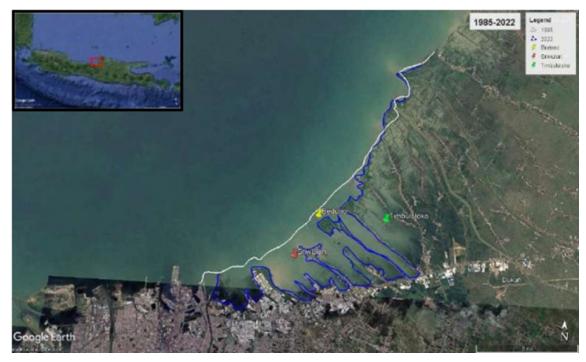
Figure 1. The study area showing coastline profile from 1985 and 2020
SWAN program at the study location (Malau, 2021). Due to the relatively small study area, a multi-scale nested grid method was necessary to observe the impact of the temporary wave breaker on wave height. The multi-scale nested grid started with a nesting grid in domain 1 (D1), followed by domain 2 (D3), and so on up to domain 5 (D5). According to the SWAN manual, the recommended grid size transformation is 1/2 or 1/3 of the previous grid size. In this modelling, a grid size transformation of 1/3 from the previous grid size was applied from D1 to D4, and for the transformation from D4 to D5, a value of 1/2 was used, as shown in Figure 2 and Table 2.
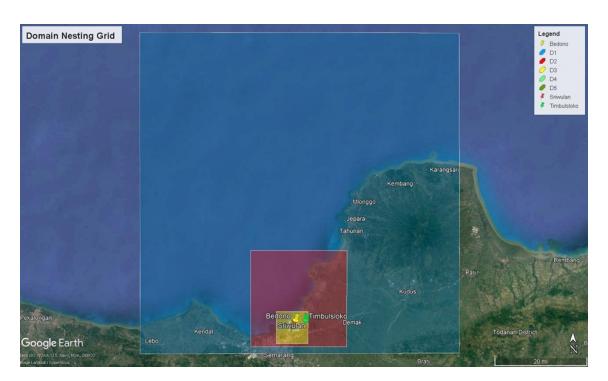
Figure 2. Model domain at the study area
Table 2. Number of grids in each model domain
| Name of Domain - | Number of Grid | |
|---|---|---|
| Name of Domain — | Horizontal | Vertical |
| D1 | 111 | 111 |
| D2 | 111 | 111 |
| D3 | 111 | 111 |
| D4 | 222 | 222 |
| D5 | 333 | 333 |
According to Halide (2014), the depth of piling depends on the Keulegan-Carpenter number (KC) and the ratio between the gap distance of adjacent piles, G, and the diameter of the pile, D. The KC number is defined by Equation (1).
\[KC = U_m T_p / D \tag{1}\]
\(U_m\) represents the water particle velocity and \(T_p\) is the wave period. According to Li and Ye (1990), a KC value > 30 indicates that the drag force is more dominant than the inertia force on a structure. Therefore, scouring depth prediction calculations can be performed using the tree model equation by Etemad and Ghaemi (2011) to estimate scour depth around a group of piles caused by incoming waves, as indicated by Equation (2).
\[S/D = \begin{cases} 0.05 \frac{n^{0.46} KC^{0.95} (1 - exp \mathcal{E} - G/D - 0.1))^{0.20}}{m^{0.67}}, & G/D \le 2.46 \\ 0.48 \frac{n^{0.14} KC^{0.47} (1 - exp \mathcal{E} - G/D - 0.1))^{0.16}}{m^{0.08}}, & G/D > 2.46 \end{cases}\](2)
3.2 Economic analysis
3.2.1 Income analysis
The results of these component calculations are derived from research conducted by Shafiya (2019) in the Kasemen District, Serang City, Banten. The analysis of income from green mussel cultivation is employed to determine the efficiency level for each method of green mussel cultivation obtained from production activities at that location. Before assessing the efficiency level, it is necessary to determine the total income first. According to Soekartawi (1991), total income is obtained by subtracting total costs from total revenue in a production process. One type of cost used in income analysis is depreciation cost, as indicated in Equation (3).
\[Depreciation \ cost = (NB - NS) / n \tag{3}\]
NB represents the purchase value (IDR), NS is the residual value (IDR), and is divided by the economic value (years).
The income analysis in this study is then continued by calculating the level of economic efficiency, expressed in the R/C ratio (Return and Cost ratio) as adapted from Hanafie (2010), which can be seen in Equation (4).
\[R/C = \begin{cases} on \ cash \ costs = \frac{Total \ revenue}{Cash \ costs} \\ on \ toal \ costs = \frac{Total \ revenue}{Total \ costs} \end{cases}\](4)
The R/C ratio in this study has the following criteria:
- 1. R/C ratio > 1: Green mussel cultivation is considered profitable.
- 2. R/C ratio = 1: Green mussel cultivation is neither profitable nor unprofitable, known as the Break Even Point (BEP) condition.
- 3. R/C ratio < 1: Green mussel cultivation is considered not profitable.
3.2.2 Cost-benefit analysis
The cost-benefit analysis in this research aims to identify values that determine the economic feasibility of the stake method for cultivating green mussels, using financial criteria such as Net Present Value (NPV), Net Benefit Cost Ratio (B/C), and Internal Rate of Return (IRR).
4. Result and Discussion
4.1 Cultivation principle
The first thing to consider in cultivating green mussels is the adherence to cultivation principles. The selected cultivation location must support the life of green mussels, as they will not grow and may even die if the conditions are not suitable. The success of the cultivation venture heavily depends on the selection of the location. Among various physical, chemical, and biological parameters in seawater, there are certain priority parameters, as presented in Table 3.
Based on the actual conditions at the study location, it is evident that the study site in Bedono Village, Sayung District, Demak Regency, meets the priority criteria for these cultivation principles.
4.2 Engineering principle
The maximum wave height behind the temporary breakwater is set at 0.6 meters to ensure that the growth of mangroves is not disrupted due to wave forces. Based on the modelling results using SWAN, it can be stated that the layout of the wave breaker structure from the modelling meets the design criteria as it obtains a wave height value behind the structure of 0.6 meters.
The required breaking force for a pile depth of 200 cm is 135.65 N, while the drag force value on the bamboo pile is 10.5 N. It can be concluded that a bamboo pile depth of 200 cm is considered sufficient to overcome scouring and breaking forces. Therefore, the total required length of bamboo is 7.5 meters. The cross section of the bamboo layout is illustrated in Figure 3 and the 3D design for the coastal protection structure with green mussels can be seen in Figure 4.
Table 4. Water parameters for mussel cultivation
| Dominant Wind | Wave Height (m) | ||
|---|---|---|---|
| Direction | Without Breakwater | With Breakwater | |
| Utara | 1.28 | 0.60 | |
| Timur Laut | 1.26 | 0.57 | |
| Barat Laut | 1.16 | 0.55 | |
Table 3. Priority parameters for mussel cultivation
| Priority Parameters | Actual Conditions |
|---|---|
| Location free from pollution and far from residential areas, industries, and ports | Approximately 7 km from Tanjung Mas Port, Semarang |
| Location protected from strong winds, waves, or large swells | Average wave height 0.3 – 0.6 m |
| Fertile waters, typically located near river estuaries and mangrove forests, with muddy-sandy seabed, regular water mass movement, moderate tides, and rich in plankton (flora and fauna) | Study area near the Sayung and Morosari Mangrove Conservation Park |
| Moderate water currents | 0.1 – 0.8 m/s |
| Water quality: temperature 26-31°C, salinity 27-34 ppt, pH 6-8, water clarity 3.5-4.0 m | Temperature 29-34°C, Salinity 15-30 ppt, pH 7- 8, clarity 0.5 m |
| Easily accessible | Accessible by fishing boats |
| Safe from theft or sabotage disturbances | Relative |
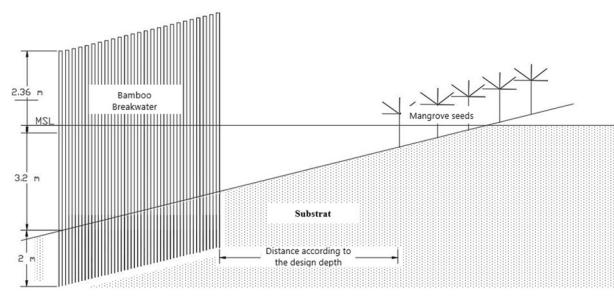
Figure3. Cross section of the breakwater design
Figure 4. Three-dimensional design of a 5 x 1 m coastal protection structure
Based on the initial analysis at the study site, namely Bedono Village, Sayung District, Demak Regency, the layout installation points for the coastal protection structure are obtained, as shown in Figure 5 with red square symbols. This location is strategically positioned to support one of the main functions of the structure, which is the cultivation of green mussels. The proximity to the Sayung and Morosari mangrove conservation parks suggests that the location is fertile and rich in nutrients, supporting the sustainability of green mussel life.
4.3 Income and financial feasibility analysis
Income analysis is employed to determine the R/C ratio, which indicates whether green mussel cultivation is profitable per season. The income from green mussel
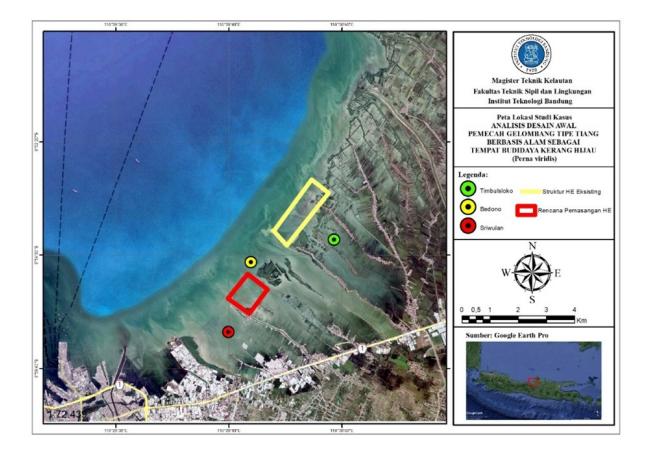
Figure 5. Layout of the planned installation location for the structure
Table 5. Result of income analysis
| Components | Total (IDR/chart/ season) |
|---|---|
| Total Revenue (A) | 5,664,060 |
| Fixed Cash Costs | |
| 1. Chart maintenance | 1,060,000 |
| 2. Boat fuel (chart control) | 402,220 |
| Total Fixed Cash Costs (B) | 1,462,220 |
| Fixed Non-Cash Costs | |
| 1. Boat rental (chart control) | 624,000 |
| 2. Depreciation | 840,000 |
| Total Fixed Non-Cash Costs (C) | 1,464,000 |
| Total Fixed Costs (D = B+C) | 2,926,220 |
| Variable Cash Costs | |
| 1. Boat rental and fuel (harvest) | 629,333 |
| 2. Harvest labor wages | 1,573,333 |
| Total Variable Costs (E) | 2,202,666 |
| Cash Costs (F = B + E) | 3,664,886 |
| Non-cash Costs (G = C) | 1,464,000 |
| Total Costs (H = F + G) | 5,128,886 |
| Profit Over Cash Costs (A – F) | 1,999,174 |
| Profit Over Total Costs (A – H) | 535,174 |
| R/C Ratio Over Cash Costs (A / F) | 1.545 |
| R/C Ratio Over Total Costs (A / H) | 1.104 |
cultivation considers the total revenue from the harvest with the total production cost of green mussels incurred per season. The results of the income analysis in determining the R/C ratio can be seen in Table 5.
In Table 5, the R/C ratio value on total costs for stakebased green mussel cultivation is 1.104. This indicates that every total cost incurred for green mussel cultivation amounting to Rp 1 will result in revenue of Rp 1.104 for stake-based cultivators. From the income analysis results in this study, it can be concluded that green mussel cultivation with the stake method is financially viable, both in terms of cash costs and total costs incurred per season.
Financial analysis in cost-benefit analysis is conducted to compare the financial feasibility of green mussel cultivation. The indicators analyzed include NPV, Net B/C, and IRR, as shown in Table 6.
Based on the analysis results in Table 6, it is shown that the NPV value for stake-based green mussel cultivation is Rp 1,202,383, indicating that stake-based green mussel cultivation in Kasemen District has an additional benefit for the present value of Rp 1,202,383.
Table 6. NPV, Net B/C, and IRR values per chart in green mussel cultivation
| Indikator | ||
|---|---|---|
| NPV (Rp) | Net B/C | IRR (%) |
| 1,202,383 | 1.20 | 15 |
Table 7. Assessment results on ecological principles
| No. | Ecological Principles | Score |
|---|---|---|
| 1 | Continuity (Does not significantly disrupt water flow and sediment) | 2 |
| 2 | No Direct Human Disturbance (Minimizes direct human disturbance to the ecosystem) | 3 |
| 3 | Endogeneity (Exotic species tend to struggle against invasive species arriving in the ecosystem) | 0 |
| 4 | Population Viability (Supports a species' ability to survive beyond critical thresholds) | 3 |
| 5 | Opportunities for Endangered Species (Hydraulic infrastructure helps provide new habitats, restore connectivity, and enhance the life cycles of species) | 3 |
| 6 | Food Web Level (Supports food availability for the entire food web) | 3 |
| 7 | Opportunities for Ecological Succession (Natural changes in the species existing in an ecosystem over time) | 3 |
| 8 | Zone Integrity (Ensures that natural parts of an ecosystem are fully represented) | 3 |
| 9 | Characteristics of Organic Cycles (Integrity of carbon, nitrogen, phosphorus, and silicon outputs in an ecosystem) | 3 |
| 10 | Quality of Physical and Chemical Characteristics of Water (Ensures that the distribution of water quality status can be maintained) | 0 |
| 11 | Resilience (Ecosystem's capacity to maintain its integrity after consecutive disturbances) | 1 |
The Net B/C value for stake-based green mussel cultivation is 1.20, which means that every cost expenditure of Rp 1 will increase the benefit by Rp 1.20 for cultivators using the stake method. Based on the feasibility criteria of NPV and Net B/C, stakebased green mussel cultivation is financially viable. The IRR value for stake-based green mussel cultivation is 15%, indicating that the cultivation method is feasible because it has a higher IRR value than the discount rate based on the rupiah deposit interest rate at Bank BRI, which is 6.5% at the time of the study (March 2019).
4.4 Ecological principles
Based on the considerations of cultivation and engineering principles that have been met for the construction of this structure, it is further complemented with ecological principles. These principles demonstrate whether the coastal protection structure created has supported sustainable principles. Based on the assessment in Table 7, all results show positive values, and there are no assessment results indicating a -1 or conflicting figure. Therefore, the tentative conclusion obtained is that this nature-based coastal protection structure also supports ecological principles.
5. Conclusions
From the results of this study, it can be concluded that:
1. An approach that blends both qualitative and quantitative elements can be implemented successfully in the feasibility study of sustainable coastal protection in the coastal area of Bedono Village, Sayung District, Demak.
- 2. The initial concept design of the breakwater can be obtained from the calculations based on engineering principles..
- 3. From the financial feasibility perspective, it is considered quite profitable with an NPV value of Rp 1,202,383 in the green mussel cultivation business using the stake method. The Net B/C value in this cultivation method is 1.20, meaning that each expenditure of Rp 1 will increase the benefit by Rp 1.20 for stakeholders using the stake method. Based on the feasibility criteria of NPV and Net B/C, the green mussel cultivation business with the stake method is deemed viable.
- 4. Based on the feasibility study, this nature-based coastal protection structure can support the ecological principles.