

1. Introduction
Asbuton, an abbreviation for Aspal Batu Buton (Buton Rock Asphalt), is a natural asphalt resource found on Buton Island in Southeast Sulawesi
Province, Indonesia. With its substantial Asbuton reserves, Indonesia is recognized as the largest producer of natural asphalt in the world. Despite this, the utilization of Asbuton remains limited, whereas domestic asphalt demand reaches approximately 1.2 to
* Penulis Korespondensi: fitraramdhani05@gmail.com
2 million tons annually—about half of which still relies on imports from various countries (Kurniaji, 2008; Nono K., 2005). Ideally, this supply shortage could be addressed by utilizing natural resources such as Asbuton, rubber, and palm oil (Ramdhani, 2018; Ramdhani, 2021;Ramdhani,2019; Ramdhani, 2020; Ramdhani, 2023 and Ramdhani, 2024). The performance of asphalt mixtures is highly influenced by the rheological properties of asphalt, which are determined by its chemical composition and physical characteristics. Therefore, understanding the rheological behavior of asphalt is essential prior to the production of asphalt mixtures, as changes in one property can significantly affect the others.
Asbuton exhibits viscoelastic behavior, characterized by its transition from brittle to slightly plastic, plastic, and fluid states under increasing temperatures. This indicates that asphalt also transitions from pseudoplastic flow to Newtonian (ideal-viscous) behavior depending on temperature and loading time (Rahman, 2010). The viscoelastic properties, assessed through rheological parameters, significantly influence the durability of asphalt pavement layers.
In this study, the rheological behavior of 80/100 penetration asphalt modified with pure Asbuton was evaluated using a master curve and black diagram. The master curve provides insight into the effects of temperature and loading frequency on the modified asphalt. The black diagram illustrates changes in the bitumen's stiffness modulus and phase angle due to the addition of pure Asbuton.Understanding the viscoelastic contribution of pure Asbuton in 80/100 penetration asphalt is expected to enhance the rheological performance of petroleum-based asphalt, which remains widely used in pavement construction.
Research on Asbuton has been extensively conducted by previous studies (Subagio, 2005; Subagio, 2007; Affandi, 2007; Hermadi, 2008; Subagio, 2009; Sentosa, 2010; Setiawan, 2011; Al-Amri, 2013; Pataras, 2017; Suaryana, 2018; Gusty, 2024). The optimum content of pure Asbuton used as an additive in 60/70 penetration grade asphalt mixtures, based on various parameters and evaluation criteria, has been identified as 10% pure Asbuton (Indriyati, 2012). To enhance the utilization of Asbuton, this study employs a softer asphalt binder with a higher penetration grade, namely Pen 80/100. It is expected that this approach will improve the use of Asbuton in Indonesia and maximize its application as an additive material.
2. Research Methodology
This study was conducted by combining 80/100 penetration grade asphalt with pure Asbuton. The research focuses on two main components: basic rheological property testing and mechanistic rheological property testing. The basic rheological properties were evaluated using a range of pure Asbuton content: 0%, 2%, 6%, 10%, 30%, 50%, 70%, 90%, 94%, 98%, and 100%. Meanwhile, mechanistic rheological properties were assessed using a Dynamic Shear Rheometer (DSR) with pure Asbuton content variations of 0%, 2%, 6%, 10%, and 30%. Dynamic Shear Rheometer (DSR) testing was performed under three conditioning states: original, RTFO, and PAV conditions.
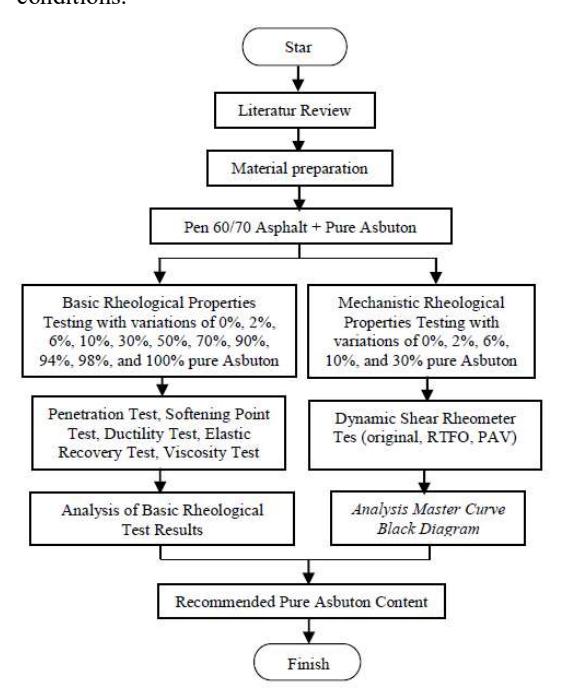
Figure 1. Research Flowchart
Figure 2. Dynamic Shear Rheometer (DSR) Device
Figure 3. 80/100 Penetration Asphalt Modified with Pure Asbuton
Basic rheological testing was carried out through penetration tests, softening point tests, ductility tests, and Viscosity, elastic recovery tests to examine the physical characteristics of the bitumen. On the other hand, mechanistic rheological properties were assessed using DSR testing (Figure 2), further analyzed using a master curve and black diagram. The flowchart of this study can be seen in Figure 1. The 80/100 Penetration Asphalt Modified with Pure Asbuton is presented in Figure 3.
3. Results and Discussion
3.1. Effect of pure asbuton content on basic rheological parameters
The relationship between pure Asbuton content (Ab) and penetration value (Pen), as obtained from the test results, is presented in Figure 4 as follows:
\[Pen = 88,4 \cdot 10^{-2,504 \text{ (Ab)}}\] (1)
From Figure 3, it can be observed that the addition of pure Asbuton content to the 80/100 penetration grade asphalt mixture decreases the penetration value, thereby increasing the hardness of the bitumen. In addition, the relationship between pure Asbuton content (Ab) and the Softening Point, as obtained in Figure 5, is presented as follows:
\[SP = 19,331 (Ab) + 49,107\] (2)
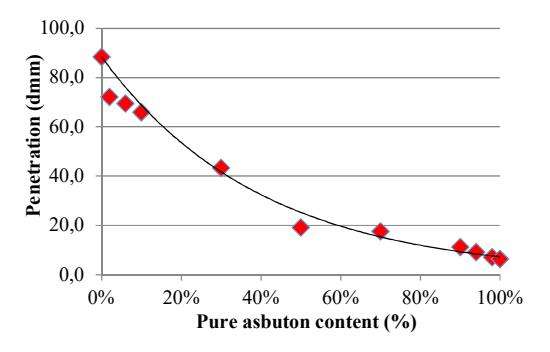
Figure 4. Correlation Between Pure Asbuton Content and Asphalt Penetration Value
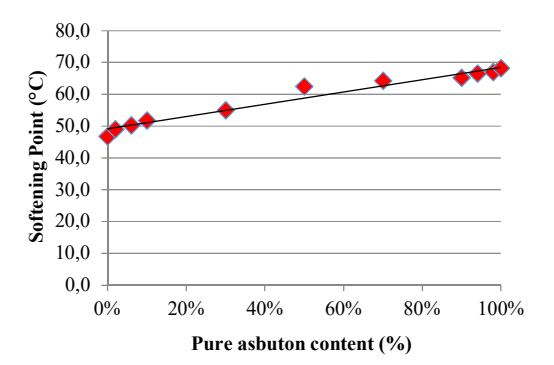
Figure 5. Correlation Between Pure Asbuton Content and the Softening Point of Asphalt
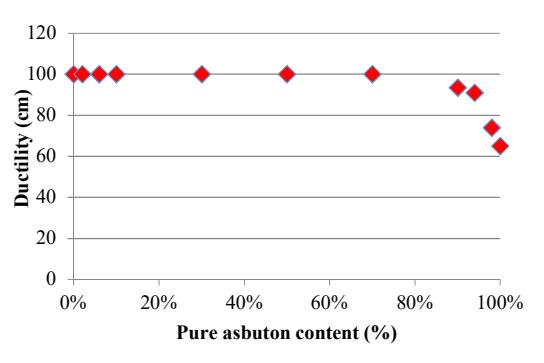
Figure 6. Correlation Between Pure Asbuton Content and Asphalt Ductility
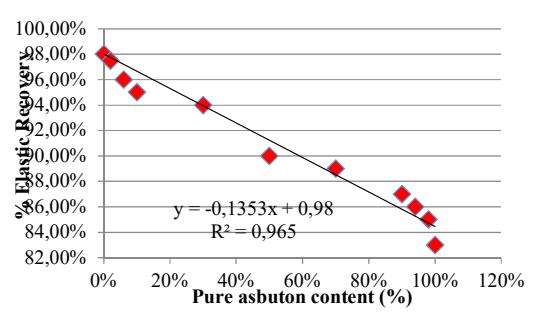
Figure 7. Correlation Between Pure Asbuton Content and Elastic Recovery of Asphalt
Based on Figure 6 and Figure 7, it can be seen that the rheological properties of the mixture between pure Asbuton and Pen 80/100 asphalt show a decrease in penetration value down to 6.3 dmm, an increase in softening point up to 68.3 °C, a decrease in ductility down to 93.5 cm at 90% pure Asbuton content, and a decrease in elastic recovery by up to 83% with each addition of pure Asbuton content. Viscosity testing was conducted with five variations of pure Asbuton content using the Saybolt-Furol apparatus. The relationship between temperature and Kinematic Viscosity for each percentage of pure Asbuton content, as presented in Figure 8, shows that both the compaction and mixing temperatures increase with the addition of pure Asbuton content. This indicates that as the percentage of pure Asbuton increases, the asphalt mixture becomes thicker. Specifically, with the addition of 70% pure Asbuton, the mixing and compaction temperatures rise to a higher value, reaching 179°C. The use of such high mixing and compaction temperatures may lead to the degradation of the Pen 80/100 asphalt at these temperatures, thereby reducing the overall performance of the mixture.
In addition, rotational viscosity testing was also conducted using a Brookfield viscometer. This test was performed with only three variations of bitumen, namely 0%, 10%, and 30% pure Asbuton content. From Figure 9 above, it can be observed that the comparison between Asbuton content in the Kinematic Viscosity (Saybolt) and Rotational Viscosity (Brookfield) tests for compaction and mixing temperatures shows that the compaction and mixing temperatures obtained from the kinematic viscosity (Saybolt) test are lower than those obtained from the rotational viscosity (Brookfield) test. This discrepancy is attributed to the uneven heating at the nozzle of the Saybolt apparatus.
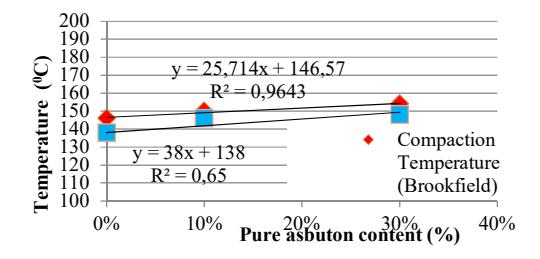
Figure 8. Comparative Analysis of Pure Asbuton Content on Kinematic (Saybolt) and Rotational (Brookfield) Viscosities at Compaction Temperature.
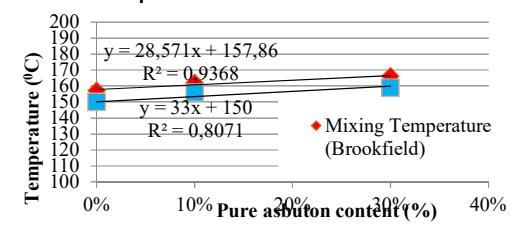
Figure 9. Comparative Analysis of Pure Asbuton Content on Kinematic (Saybolt) and Rotational (Brookfield) Viscosities at Mixing Temperature
Laboratory testing using a Dynamic Shear Rheometer (DSR) was conducted with variations of 0%, 2%, 6%, 10%, and 30% pure Asbuton content, and a temperature sweep starting from 46°C, 52°C, 58°C, 64°C, 70°C, 76°C, and 82°C. The results showed the Performance Grade (PG) values, as depicted in the figure. Additionally, the Complex Shear Modulus (G) and Phase Angle (δ) for the various pure Asbuton
content variations exhibited an increase in Complex Shear Modulus (G) and a decrease in Phase Angle (δ) with the addition of pure Asbuton (Ramdhani, 2021; Indriyati, E. W., 2013; Rahman, H., 2010; Rahman, H., 2018; Alkam, R. B., 2018). The relationship between pure Asbuton content and Performance Grade (PG) from the test results is presented in Figure 10.
After analysis, the relationship between pure Asbuton content and Performance Grade (PG) shows that the Performance Grade value increases as the pure Asbuton content increases. This condition indicates that the asphalt's resistance to high temperatures tends to improve with the addition of pure Asbuton.
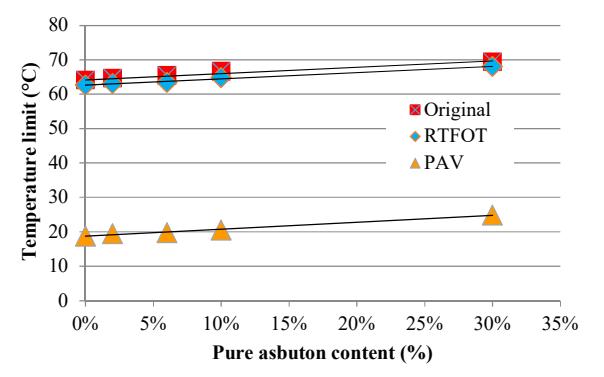
Figure 10. Relationship between Performance Grade (PG) and Pure Asbuton Content
From the review, the relationship between pure Asbuton content (Ab) and Performance Grade (PG) is obtained as follows:
Original condition
\[PG = 16,915 (Ab) + 63,31\] (4)
PAV condition
\[PG = 20,719 \text{ (Ab)} + 18,53 \tag{5}\]
3.2. Master curve
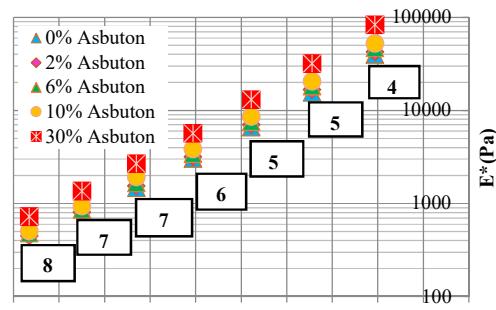
This Master Curve analysis aims to examine the relationship between Bitumen Stiffness Modulus (E*) and the Shifting Factor (Master Curve). The Master Curve presented below illustrates that as the test temperature increases, the shifting factor decreases, while the Bitumen Stiffness Modulus (E*) decreases with the reduction in the shifting factor. Figure 11. demonstrates that the addition of pure Asbuton content influences the sensitivity of asphalt to changes in temperature and loading frequency. The flatter the slope of the master curve, the less sensitive the asphalt is to changes in temperature and loading frequency. This condition is desirable as it indicates that the asphalt has a wide range of temperature and frequency
tolerance, making it more suitable for practical field applications.
-2,2002,0001,8001,6001,4001,2001,0000,8000,6000,4000,200 log (alpha T*f)
Master Curve for Pure Asbuton Content Figure 11. Ranging from 0% to 30%
3.3. Black Diagram
The Black Diagram analysis conducted in this study examines the relationship between Bitumen Stiffness Modulus (E*) and Phase Angle. From the Black Diagram presented in Figure 12, it is evident that as the pure Asbuton content increases, the Bitumen Stiffness Modulus (E*) also increases enhanced durability of the bitumen. An increase in Phase Angle (δ) leads to a decrease in Bitumen Stiffness Modulus (E*), suggesting that a lower Bitumen Stiffness Modulus corresponds to a more viscous and less elastic bitumen. Additionally, the addition of pure Asbuton affects the Phase Angle (\(\delta\)); as the pure Asbuton content increases, the Phase Angle \((\delta)\)decreases, indicating enhanced durability of the bitumen. An increase in Phase Angle (δ) leads to a decrease in Bitumen Stiffness Modulus (E*), suggesting that a lower Bitumen Stiffness Modulus corresponds to a more viscous and less elastic bitumen
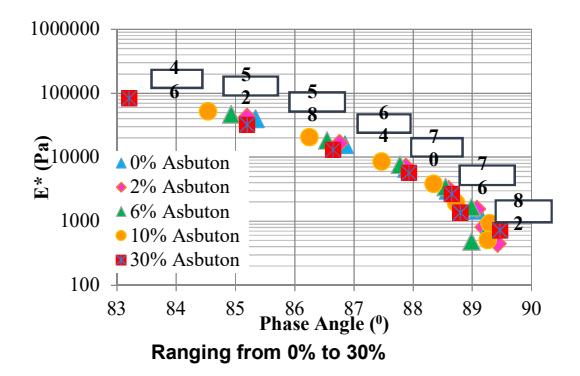
Another finding from the Black Diagram analysis is that the maximum testing temperature in Indonesia is set at 70 °C. This testing temperature is intended to simulate the pavement temperature conditions in Indonesia
4. Conclusion
Based on the data analysis conducted in this study, several conclusions can be drawn as follows:
- From the review of the rheological properties of the mixture of pure Asbuton content and Pen 80/100 asphalt, it was concluded that there was a decrease in penetration value to 6.3 dmm, an increase in Softening Point to 68.3 °C, a decrease in ductility to 93.5 cm at 90% pure Asbuton content, and a decrease in elastic recovery by up to 83% with each addition of pure Asbuton content. For Kinematic Viscosity (Saybolt) at 30% pure Asbuton content, the mixing temperature was 159 °C and the compaction temperature was 148 °C, while for Rotational Viscosity (Brookfield), the mixing temperature was 166 °C and the compaction temperature was 154 °C.
- 2. From the analysis of the rheological properties, it can be concluded that the mixture of pure Asbuton and Pen 80/100 asphalt experienced an increase in Performance Grade (PG) up to 69.91 °C in the original condition, 68.24 °C in the RTFO condition, and 24.85 °C in the PAV condition.
- By developing the Master Curve, it was found that the bitumen became more sensitive to changes in temperature and loading frequency. In the Black Diagram analysis, there was a decrease in Phase Angle (\(\delta\)) to 83.21° with the addition of pure Asbuton content, indicating that the bitumen became more durable.