

1 Introduction
Visual art is a unique ways to share the knowledge. The role of artists is to deliver certain kinds of knowledge to society through their artwork. As stated by Raleigh [1] that fine art is a special mode of thought and knowledge. He added that the experience of fine art works fundamentally a sharing knowledge that deliberated as contributing to a theory of fine arts as communicable knowledge. Perhaps, exceptionally regards a modern innovation that art as knowledge. However, the communication of art in Malaysia seems like unconvincing enough to bridging art and community. According to Mat [2] that in Malaysia the production of visual artworks are merely presentation of beauty. It is not in-depth study on content to be delivered to society that create meaning to artwork. Furthermore, the presentation of knowledge in artwork solely depend on artist statement. He added that in the world of visual art is not concerning about beauty alone but also emphasized art knowledge that need to deliver to society. Where, there should be plenty of art discourse or art talk after exhibition has been conducted because artworks cannot speak by itself. Therefore, the discourse or art talk should interpret into writing or publication. However, the lack of art writing or journal leads to the insufficient source of art knowledge.
Indeed, the lack of art discourse, criticism and appreciation contribute to the disability of art knowledge development. As stated by Badrolhisham [3] that Malaysian art scene experiencing the crisis of art knowledge. He believed that art can offer more than what we expect in term of art knowledge development. It can create sophisticated society and contribute to intellectual artists in visual art field. Art knowledge (meaning creation) by the artist has not been properly study in order to uplift the development of visual art. Indeed, not many studies about the knowledge of art made by artists, academicians, curators, or any person involved in the art fields. Finally, the importance of knowledge through the art has yet to accomplish. However, it is something that needs to discuss in order for thought and art knowledge develop. Therefore, the present study sought to examine the problem that we have in visual art that cause to the lack of art knowledge development and infertility of visual art research. The objectives of this paper are: (i) this study aims to reveal the significance of art knowledge in the world of visual art.; and (ii) that will expose some issues and problem that led to the crisis of art knowledge in Malaysia visual art.
2 Malaysian Arts
2.1 Art Scene Today
"In Malaysia, I find the depth missing. The intensity of our time does not happen anymore. I don't see young artists talking anymore, not like me and Piyadasa…There is no commonality, and no shared vision…they are more individualistic. Without theory, you can't go deep. You need theory to go deep. Otherwise we end up imitating the west. We have produced practitioners but we have not produced thinkers, historians, philosophers, theoreticians…the thinkers are missing, the mind is not there, that's why buat gambar saja! (only making picture)'' Sulaiman [4].
The above quote is not an untypical response to Malaysian art now and, at least in its development, its ambiguous visual art scene status. Art in Malaysia has a particular branch that requires exploration in further strengthening to be able to compete with the west. Visual art has a purpose in developing the arts in Malaysia. However, there are many things that need to be improved. From the development of contemporary visual art it is showing an increase in the commercial. As explained by the late Syed Ahmad Jamal [5] that what happens now it is really healthy, but it is mixed with the commercial success of art because artists are very easy to make money.
However, as emphasized by Sulaiman [4], in Malaysia, producing works of art seems like loss of canine due to the lack of thinkers in art, no theory of art and young artists did not expose them self based on intellectual values. He added that globalization has a significant impact in Malaysia and in particular the possibility to be represented by digital media. There are many young artists in Malaysia who embraced the new media. The increasing focus on matters that are very personal and intimate was the revelation for many artists. With the advent of globalization and digital media, it becomes increasingly difficult for political and religious fatwa has held a dominant used to enjoy, here lies the hope and the future of Malaysian art. Apparently most of the artists in Malaysia are influenced by the material to produce artwork including digital media.
In terms of thinking through the art it happened in the Malaysian art but it is not obvious. National Cultural Congress in the 1970's has seen the movement of artists to find their own identity. Various efforts have been made to introduce Islamic influences, Malay identity or Akar-akar Peribumi but it must be present from an inside of artist's own self. Artist cannot be tied to a direction in producing works of art. Their own cultural values and identity comes from inside the heart of the artists themselves.
However, as state by Sulaiman [4] that before Cultural Congress the Malaysian artist does not know the essence of their traditional art. In fact, after the Cultural Congress and Islamic resurgence in 1971 it showed a positive side to the art traditions of Malaysian artists. However, Malaysian art has difficult to identified because of a variety of ethnic and racial. According to Sabapathy [7] that the late Piyadasa mentioned about the danger in this country is the Chinese tend to think their way stops when trying to find the identity of the Chineseness, the Malays think the stories they stopped in order to meet Malayness and Islamicness and Indians are also the same. He added that we need to think outside the box and should not be trapped in the search for identity. The question of identity is still not found and the question of thinking also has yet to be identified. Malaysia art still has a long journey to bring our own art to outside. Therefore, it requires extensive knowledge of art and has a great thinking to explore and lift the prestige of our art.
3 Malaysian Contemporary Arts
In Malaysia, late Datuk Syed Ahmad Jamal mentioned that contemporary art beginning from 1980. In 1980s, some changes in the visual arts in Malaysia
more emphasis on the use of materials in creative works. It is a variation from previous years many of whom use watercolor, oil and acrylic paint. Diversity in the use of this material is infectious until now. In other words, the contemporary value of change from decade to decade, just from the use of substances. As mentioned by Anassuwandi [8] in the 1980's, the mix-media style is prominent and widely used by the practitioners and in the 1990's can be said at all exhibitions organized, you'll see the used of mix-media on the artwork by the artists. Movement of thought by artists like blurred by the use of a variety materials. In other hand, the main emphasis given by Malaysian artists seemed to be more to the skills of materials use.
On June 7, 2010, our former Deputy Prime Minister Tan Sri Muhyiddin Yassin has launched Aliya and Farouk Khan Collection Book and immediately paid tribute to the Malaysia Contemporary Art. The launch of this book is a tribute to the development of contemporary art in Malaysia. According to Anurendra [9] that Aliya and Farouk Khan Collection is the largest collection of contemporary art in this country. This unique collection has become the most important body of artwork in terms of curatorial and historical importance as well as value. It is based on a strong belief that the works of our artists is in international standing.
However, the measurement is still a mystery. Collection and appreciation of the art work is done but if viewed through the creation of new thought and meaning sought to define ourselves is still puzzling. According to Nurhanim [10] as early the 1930's until now, the Malaysian modern art seems to grow without 'thought', body work and intuition of the curators (who are not crowd). The slow progress is driven solely by the artists themselves whether the influence of lecturers in universities, or consciousness as a result of reading, experience and experimentation them, and the impact of market fluctuations art. Malaysian contemporary art still has the values of thought brought into the artwork. As stated by Mat [11] that it is very easy to describe Malaysian Visual artwork in term of formalistic aspect, skills and materialistic. However, the intellectualism and knowledge or contribution is still questioning. Some artists talk about identity, politics, religion in which these issues will be thought that artists trying to convey to the community. However, such thoughts seem blurred due to the lack of art criticism activities and discussions about the latest exhibitions.
4 Artists and Contribution
Artists and art are precursors to the formation of knowledge covering various fields such as sociology, psychology, technology, science and much more. Being the artist with the mentality to gain from the sale of paintings alone would not contribute to the formation of knowledge. Pursuant to Nasir [12] the educational purposes is actually more to the formation of knowledge and not a taught to become rich. Typical Malaysian mentality is to think about wealth, fame and profit rather than the knowledge that need to be develop. It is time for us to shift and make change to the world of contemporary visual art in Malaysia.
The education system should be reformed in order for us to solve this crisis. Art is still not seen as the root of the other areas in the country. 'Art for Society', that is championed by an average of artists in Malaysia. Produce work to meet the desire of society and for them. However, the society still cannot understand the work of art and the most miserable when they are assuming this is a work of vain. As Badrolhisham [3] explain that the society still think the work of art is 'stupid' work and artists are 'crazy' elitist. It is worse when the artists themselves are still trapped in the existing of ambiguities reality art. Produce works that provide more benefits and meet the tastes of the society based on reason "art for society '. His intention is to see the gap between the art knowledge and the art objects. However, the question of the art object embody the art knowledge should be explored and studied. Thus, the thinking impact will include in the art knowledge itself.
In Malaysia, artists are expected to contribute to the epistemology of art. From explanation by Badrolhisham [3] that we need to contribute to humanity development based on knowledge of art. We have to admit now that our art is in crisis of epistemology. Malaysian artists are more likely to produce beauty mass or object that so called uniqueness, difference, power of these forms to be a proud. However, these objects are not so much to offer the epistemology of art to the public. Meaning, these objects should be supported by a comprehensive study in terms of its context. This supported by Nasir [12] that improvement or change is not based on artistic grandeur of the object or shape. The form and shape is the site to search for desired changes in the development of information sharing. Therefore, this study will continued exploration on the role of objects and ideas behind the transformation of art by the artist.
5 Thinking through the Art
The significances of thinking are to generate the knowledge in the visual art itself. Therefore, thinking that will determine the impact on the visual arts in Malaysia, whether it is to shift or to remain an old school style. Impact is shift or potential change in one or more areas whether the potential change happen in the economic, environmental, and social or health and well-being. Thinking impact in visual art mean the shift or potential change in 'arts knowledge' in artworks, as such painting, print making, sculpture and so on. 'Arts knowledge' as Badrolhisham [3] mentioned people often ask about the arts, and that choice is one way to engage them in line with what they believe the art is to educate them. He believed that with this interaction, the health of art environment will be developed.
Thinking impact will be produce the discourse or debate in order to build the intellectual climate of artist's creative journey. For example, 'Towards a Mystical Reality (TMR)' (1974) by Redza Piyadasa and Sulaiman Esa sprang up the atmosphere of art in our art scene with the values of thought. At that time, their thoughts disturb or in other words make the audience feel 'uncomfortable'. On the outward, they were trying to shift the existing paradigm during that time. TMR is a manifesto that attempts to highlight eastern elements in the visual arts in Malaysia at that time. However, this manifesto seems unable to give a strong impact on intellectual values and theory of art itself. This manifesto is based on the philosophy of TMR members who wish to bring intellectual values in the world of art- making.
6 Art, Artist and Society
According to Jeanne [13] that Marxist point of view, art is always about society and artists who have always been part of the culture, art has never independent or absolute. The use of symbols to communicate meaning directly, but allegory is an indirect cluster or collection of meanings. As a result of the breakdown of the union of humans with a sense of spirituality, modern art is always indirect and referential because modern art is tied to capitalist ideology, which is merely bourgeois thought, an illusion that conceals the facts of construction of beliefs.
Furthermore, Nasir [12] state that to treat contemporary art as the relationship between art and society. Firstly, one must convincingly argue on its own terms against an art that is content to fold itself into the channels of communication and around everyday life. This means that we must go deeper, if artists think that the art is able to expand its borders to facilitate innovation, and then it is no longer able to distinguish himself from the world. Artist need to open up more space to allow viewers to interact with the new model is the core communication and exchange. This is also the thrust of anti-elitism in visual art.
Arts have a particular context or community referral. Artwork will not be free from any form of assessment. According to Abdullah [14], mass media have a social responsibility and their own countries in the dissemination of ideas and images of art and culture in line with the ideologies and expectations of the nation. Ideology and the hope of this nation is the question. What forms required by society of the production of artworks by the artist. It is certainly the knowledge that can shape the development of thinking. Knowledge of art is able to penetrate other areas in order to build an intellectual community. This has been emphasized by Badrolhisham [3] that knowledge of the arts is growing and has enriched other branches of knowledge such as sociology, psychology, philosophy and so forth. Nasir [15] state that art is a reflection to create the state of consciousness and how the audience looks at it and developed into new experience. In which art can be understood as the process of investigation, which means that an object made by an artist can be viewed as a means to collect and maintain information and understanding. In other words, the role of art work is to give voice to by interpretation in the context of the appropriate theory, where the final product can be seen to reveal their stories (i.e. the whole body of knowledge).
However, in Malaysia art knowledge seems cannot reach the boundary of the other fields. It is difficult to foster interaction within the community and artists. This supported by Nasir [16] states that the complexity for us to explain the visual art foundation in the transformation of ideas into form a way to make the true function of art is often missed and not have any progress. Understanding in the visual meaning is often vague and not in the precise platform. Precise mean is an interaction of art objects in our constructive knowledge of the needs and functions. As a result, it is more geared to the needs of society is the knowledge of art rather than objects.
7 Results and Discussion
As a result, there is a lack of visual communication in Malaysia in order to deliver the art knowledge to society. Government support is needed to revamp the syllabus and curriculum in art which more emphasis on theory, philosophy and criticism rather than skills and technical alone. Indeed, this is the time for us to increase the program such as discourse, art talk or academic activity that relate to the art knowledge. Therefore, society will benefits in term of understanding and art knowledge that artist tries to convey. It is hope that this paper will provides opportunity for all to see the potential that could be explore in order to enhance our art knowledge development particularly in Malaysia.
The Table 1 shows the feedbacks from 3 different expertise which is consist of curators, academician and art collectors. The feedbacks based on main problems of Malaysia visual art, the weaknesses of art education in higher level, the problems of art criticism in Malaysia, the constraints of art knowledge development and prediction of Malaysia visual art future. Referred to art knowledge column above, it is clearly stated that we had lack of publication in visual art field, lack of intelligent art writer, curator and institution. These several problems lead to prediction that Malaysia visual art field future is ambiguous, no definite direction and insufficient art scholar.
Table 1 Respondent's Feedback owards Main Problems in Malaysia Visual Art.
| Respondents | Main Problems | Art Education | Art Criticism | Art Knowledge | Visual Art Future |
|---|---|---|---|---|---|
| CR1 | Unbalance | Lack of | Non-exist | Lack of | Ambiguous |
| (Curator) | between skills and thinking | writing | publication | ||
| CR2 | Lack of thinking | Lack of research | Non-exist | Lack of publication | No definite direction |
| CR3 | Sense of schizophrenia modularity | The future is what we do | |||
| AC1 | Gap in the | Lack of | Not much | Not much | Prepared for |
| (Academician) | scholars world | talented students | intelligent | the scholars | |
| AC2 | National identity issues | Don't know | |||
| AR1 | Art | Need changes | No space to | No need to | Positive but |
| (Artist) | management | in art syllabus | survive | long explanation | still under 'comfort zone' |
| AR2 | Lack of government support | No critical discussion in education levels | Non-exist | Lack of Art writer | Education decide |
| AR3 | Not enough of government support | Lack of art consumerism | Not much | Superficial and analytical writing only | Convey the order and meaning |
| ARC1 | Lack of | Education | Almost non | Not enough | No direction |
| (Art Collector) | intelligent publication | focus more on sciences | exist | knowledge | |
| ARC2 | History of Art in Malaysia | Art history failure | No center and non exist | Lack of intelligent art writer, curator and institution | Malays artist will growing fast |
The Table 1 shows the feedbacks from 3 different expertise which is consist of curators, academician and art collectors. The feedbacks based on main problems of Malaysia visual art, the weaknesses of art education in higher level, the problems of art criticism in Malaysia, the constraints of art knowledge development and prediction of Malaysia visual art future. Referred to art knowledge column above, it is clearly stated that we had lack of publication in visual art field, lack of intelligent art writer, curator and institution. These several problems lead to prediction that Malaysia visual art field future is ambiguous, no definite direction and insufficient art scholar.
However, the problems of art knowledge development can be solve and used if assistance from the government and the authorities properly channeled. Below is a figure of how aid and channels to be carried out to enrich the knowledge and thinking in the visual arts:
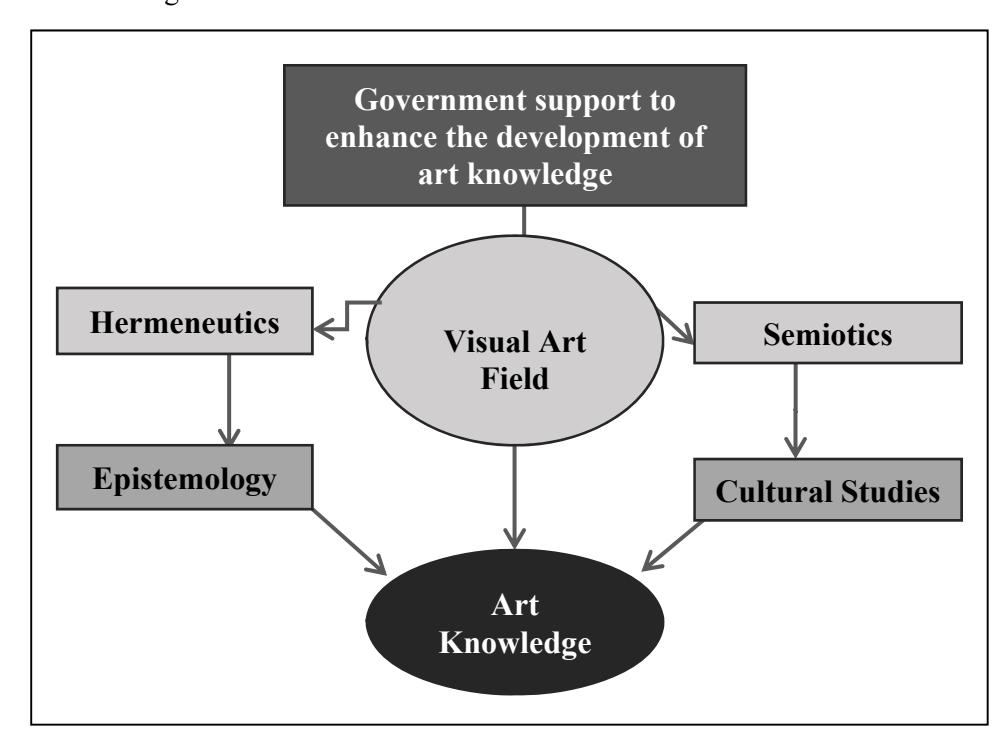
Figure 1 Government aid towards art knowledge development.
The Figure 1 shows the suggestion of government distribution aid on the aspects of art knowledge development. Government support should emphasize on the backdated art syllabus and curriculum in Malaysia. There are needs to highlight the areas of Hermeneutics and Semiotics. Where, this process will enrich the knowledge in the field of Hermeneutics and Semiotics based on Cultural Studies or epistemology. Therefore, it will certainly benefit the society and develop their critical thinking. However, it necessarily needs to increase the study and research in the areas under the auspices of contemporary visual arts. The role of public and private galleries needed in order to increase program such as discussion and criticism as well as appreciation. In fact, each of exhibitions needs to be pervaded with the process of assessment and discussion to enhance the development of knowledge in the visual arts. The hope is to see the visual arts in Malaysia able to compete with the outside world in the generation of meaning and knowledge through art. This is a big time for us to nurture thinking with knowledge rather than solely skills and technique.
8 Conclusion
As a conclusion, art knowledge is important to the development of visual art. Where, we should bridging art knowledge to society through art talk, discussion, and review session of the exhibition. The results of the discussion or review session can be published through journal writing, book, catalog and so on. In order to realize this events, government plays an important role to strengthen art education syllabus and emphasize the development of visual art field in term of epistemology aspect. This paper specifically created to reveal several factors that become constraints for development of art knowledge in visual art field. Therefore, it is opportunity to explore or study the constraints that has been revealed.