

1 Introduction
African textile printing is based on the Javanese batik technique, which was introduced to West Africa during the second half of the 19<sup>th</sup> Century [1]. Wax print is the most worn and the most valued fabric in West Africa. It has a repetition of motifs, which are combined with different textures and colors. Motifs are required for designing any art, whether it is jewelry, ceramics, fashion, furniture, or textiles. According to Simanis-Laimins [2], a motif is a repeated pattern, often creating a sense of rhythm. Motifs help unify a group of elements and give the viewer a sense of narration [3]. It could be an object or a shape arranged in different ways. Characteristic features of African prints include an orderly repetition of motifs that are interrupted by a shift in texture, direction or scale [4]. These motifs (mostly taken from nature) have played an important role in the designs of these fabrics. They are usually bigger in size and the main symbol in African prints.
Texture is one of the main subtle design elements that make African prints rich and interesting. According to Seivewright [5], texture refers to the surface quality of objects and appeals to our sense of touch. In fabric decoration, texture refers to the decoration of fabrics with motifs reduced to smaller sizes. They can be in the form of lines, dots, geometric shapes and natural objects reduced to smaller sizes. These textures are usually arranged around motifs. In African prints, the idea behind the use of textures is to add beauty and contrast to the entire design and fabric.
Color is another element that adds beauty to African prints. Textile designers have long recognized the importance of color to the design. It provides information, both visual and psychological [6]. Color affects the way we perceive the world, evoking certain emotions and feelings. Color qualitatively alters all other elements in a textile design. The color of a fabric can attract one's attention or change one's mood and says a lot about a person's orientation and outlook.
According to Adam [4], design elements in African prints consist of irregular and regular designs and these provide a source of vitality for the people to behold. The asymmetric style (i.e. irregular designs) also activates a sense of movement for the beholder unlike the symmetrical design characteristics of European and other traditions [4]. These regular and irregular designs gave the early wax prints unique characteristic features that appealed to consumers. These prints were given proverbial names, catch phrases and slogans to promote sales. Such prints are referred to as classical prints because they have existed for ages and are still sought after by consumers. Names of such fabrics in Ghana include: 'Kun pa', 'Owu atwedeε baako mforo', 'Akyekyedeε akyi', 'Kodu sa', 'Su bura', 'Dua kor gye mframa abu', 'εfie bosea', 'Eniwa', 'Awhene pa nkasa', 'Awhere po', 'Ludu aba', 'Odo chain', 'Akofona', 'Sika wo ntaban', 'Afame wa' and 'Asobayere'. Classical prints have large motifs, overlapping colors, a wax print effect, accidental crackles and regular textures distributed around the motifs.
In textile design, certain elements and principles are used to create the desired visual effects [6]. The elements and principles used in classical prints are quite different from those used in contemporary prints produced in the 1990s and the 21st century. Contemporary prints, including 'Wooded', Nustyle' and 'Da diva' in Ghana, are printed with a rotary screen-printing machine. These contemporary prints do not have the original wax print features; instead, rotary screens are used to imitate the wax effect. More colors are used as compared to the classical prints and they are mostly analogous colors. Motifs used are often smaller in size and the designs come with textures displayed at specific parts rather than being displayed all over the fabric. In some instances, textures are used without motifs. The contemporary prints do not carry proverbial names and catch phrases.
Textile designers in the 21st century function in an environment that is characterized by increased competition, enhanced consumer awareness, and rapidly developing technology. In order to adapt to and thrive in this changing environment, textile designers have to be extremely innovative. Therefore, there is a need to have a third concept that merges classical and contemporary designs and will in effect broaden the scope of African print designs. This will be to the advantage of both manufacturers and consumers because manufacturers on the one hand will have a wide range of designs to produce, and on the other hand consumers will have a wide range of designs to choose from.
2 Methodology
This study is a practice-based research based on the transitional design approach using observation as data collection research tool and Adobe Photoshop as design tool to generate the results. Observation was carried out on samples of African prints at the Ghana Textile Printing Company (GTP) and Akosombo Textile Limited (ATL) distribution outlets as well as some retail shops in Kumasi. The sample cloth studies included real wax prints, 'Wooden', 'Da Viva' and 'Nustyle' prints. A collection of old African prints (classical prints) was also studied. Observation was carried out in order to identify the characteristics of the different types of African prints. Based on the observation, a number of classical print designs were selected, edited and redeveloped into new designs christened 'Classicon' prints using Adobe Photoshop.
All computer images are either bitmap or vector images. Abobe Illustrator is a vector-based program and Adobe Photoshop is a bitmap-based program [7]. Bitmap images are made up of individual pixels. According to Centner and Vereker [7], pixels are defined by a grid – the amount of pixels in an image make up the overall resolution of the image. Bitmap images distort when they are scaled, reduced or rotated. This feature makes it easy to manipulate photoshop images. Photoshop uses elements as a template enabling you to reproduce and modify the pattern as you wish [8]. One object can produce thousands of different results. Twelve (12) different Classicon prints were generated from six (6) classical designs.
3 Results and Discussions
3.1 Incorporation of Classical and Contemporary Style into Classicon
The meaning of development work is to take an initial design and change the proportions, size, details or features of it little by little, in order to give some added dimension to an accessory [9]. The present study combined the characteristics of contemporary and classical African print designs into a new African print design christened Classicon. The name Classicon was derived from 'classical' and 'contemporary' because the motifs were developed from classical prints while the application of color, size and arrangement of motifs and distribution of textures were inspired by the contemporary style. Thus, the Classicon prints combine the proverbial classical African print style and the contemporary style.
3.2 Classicon Print 1
The motif was developed from the classical print pattern known as 'Kodu sa' in Plate 1 (Figure 1(a)). 'Kodu sa' means bunch of bananas and it represents unity. The 'Kodu sa' motif is made up of abstract bananas arranged in a semi-circular formation. The background of the cloth has a regular texture displayed around the motif. The texture is made up of lines crossing each other at a 90° angle and with small dots at the intersection. The fabric has accidental crackles running through it.
3.3 Design Process
In the first stage, the textures of the original 'Kodu sa' motif were removed as shown in Plate 2 (Figure 1(b)). In the second stage, copies of the motifs were made and one turned 90° in a clockwise direction and the other was turned counterclockwise as shown in Plate 3 (Figure 1(c)). The motifs in Plate 3 were joined together to form the final motif as shown in Plate 4 (Figure 1(d)). Copies of the final motif arranged in a meandering order with different textures and colors are shown in Plates 5, 6 and 7 (Figure 2).
In Plate 5 (Classicon print 1A, in Figure 2(a)), the original 'Kodu sa' textures are displayed in between the meandering motifs. The textures are made of lines crossing each other at an angle. Portions of the textures were selected and filled with color to add beauty to the work. The motifs in the work were also reduced in size to conform to the current trend. The meandering arrangement of the motifs also creates a sort of movement in the work. The design has different shades of green, which creates harmony in the work. In Plate 6 (Classicon print 1B, in Figure 2(b)), wax crackles are displayed in between the meandering
motifs, making the work look like a wax print. Different shades of violet were used to create harmony in the work. Textures in the form of dots are displayed in between the meandering motifs in Plate 7 (Classicon print 1C, in Figure 2(c)). There is also a contrast between the tiny textures and the motifs. The yellow background also creates a contrast with the brown colored motif.
Figure 1 (a) Plate 1: original 'Kodu sa' (classical print), (b) Plate 2, (c) Plate 3, (d) Plate 4.
Figure 2 (a) Plate 5 (Classicon print 1A), (b) Plate 6 (Classicon print 1B), (c) Plate 7 (Classicon print 1C).
3.4 Classicon Print 2
The Classicon print 2 motif was developed from the 'Akyekyedeɛ akyi' design in Plate 8 (Figure 3(a)). 'Akekyedeɛ akyi' was developed from the structure of a tortoise and literally means 'the back of a tortoise' and it signifies independence and self-sufficiency. The outline of the design is represented with curved lines, while the inside is decorated with textures composed of dots. Textures in the form of question marks are displayed around the motif.
3.5 Design Process
The textures around the original motif (Plate 8) were removed as shown in Plate 9. Two copies of the motif in Plate 9 (Figure 3(b)) were made and joined together as shown in Plate 10 (Figure 3(c)). Two copies of the motif in Plate 10 were made and one was turned upward and the other was turned downward to form the final motif, which was arranged in full as shown in Plate 11 (Figure 3(d)). Plates 12, 13 and 14 shows the Classicon 2 design in different color combinations, textures and treatments (Figure 4).
Figure 3 (a) Plate 8 : Original 'Akekyedeε akyi' (classical print), (b) Plate 9, (c) Plate 10, (d) Plate 11.
Figure 4 (a) Plate 12: Classicon print 2A, (b) Plate 13: Classicon print 2B, (c) Plate 14: Classicon print 2C.
In Plate 12 (Classicon print 2A, in Figure 4(a)), the motifs are joined to create additional design in between the motifs. The motifs were printed in a deep blue color against a lighter blue background. The motifs have white outlines to make them more visible. Applying these outlines resulted in textures that were accidentally created. In Plate 13 (Classicon print 2B, in Figure 4(b)), textures are distributed in the form of tree bark in between the motifs to enhance the design. The inversion of textures that take the background color creates additional texture. There is also a contrast between the color of the motif and the background. Plate 14 (Classicon print 2C, in Figure 4(c)) has multiple colors making the print more attractive. The textures in between the motifs were also intentionally created to make the motifs stand out clearly.
3.6 Classicon Print 3
The Classicon print 3 motif was developed from the 'Afe bi ve asiane' design shown in Plate 15 (Figure 5(a)). 'Afe bi ye asiane' literally means 'some years are evil'. The motifs in the cloth are made up of thick winding lines. Very small lines that look like thorns are represented at the ends of the motifs. Inside the thick lines are small round spots that run through the entire motif. There are also crackle effects running through the fabric.
3.7 Design Process
The line textures around the original motif were removed and part of the design was isolated as shown in Plate 16 (Figure 5(b)). Copies of the design were made and turned at different angles as shown in Plate 17 (Figure 5(c)). The designs were then joined together to form a whole as shown in Plate 18 (Figure 5(b)). A copy of the design in Plate 16 was made and placed in the middle of the design in Plate 18 to form the final motif as shown in Plate 19 (Figure 5(d)). The full drop arrangement and the spot design technique were combined in the final designs as shown in Plates 20 and 21 (Figure 6).
Figure 5 (a) Plate 15: 'Afe bi ye asiane' (classical print), (b) Plate 16, (c) Plate 17, (d) Plate 18, (e) Plate 19.
In Plate 20 (Classicon print 3A, in Figure 6(a)), portions of the design in between the motifs were solely filled with color, while the remaining portions were filled with textures, thus creating variety in the work. The dots within the lines of the motifs also create additional textures. The winding lines create seemingly endless movement. The combination of textures, motifs and colors in the work shows contrast, harmony, variety and movement. In Plate 21 (Classicon print 3B, in Figure 6(b)), the background is filled with wax crackles.
Portions of the texture were filled with a lemon green color, while the remaining portions were filled with a sea blue color. This distribution of color creates variety and contrast in the work.
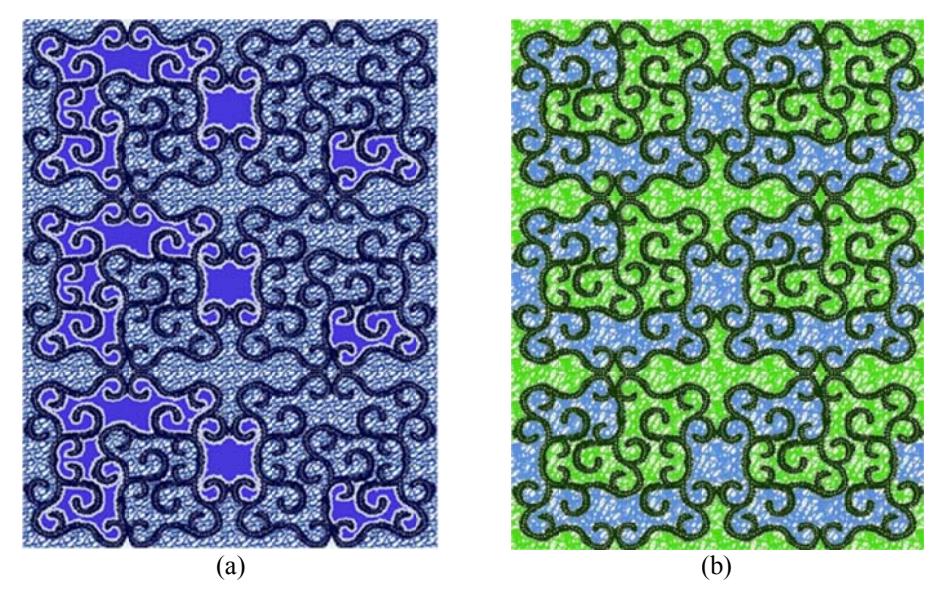
Figure 6 (a) Plate 20: Classicon print 3A, (b) Plate 21: Classicon print 3B.
3.8 Classicon Print 4
The Classicon print 4 design was developed from the classical print 'ɛfie abosea' (Plate 22), which literally means 'gravels of a house'. This indicates that your closest friend can be your enemy. The 'Efie abosea' motifs are made of block designs with a line texture within them. The blocks are mostly joined together by accidental crackles as shown in Plate 4 (Figure 1(d)).
3.9 Design Process
The background of the design was removed to make the blocks stand out as shown in Plate 23. The designs were given outlines and then inversed as shown in Plates 24 and 25 respectively. The motifs were put in 2 different color combinations with different treatments as shown in Plates 26 and 27 (Figure 8).
The designs in Plate 26 (Classicon print 4A, in Figure 8(a)) were given outlines to make them stand out clearly. In between the blocks are varied contour lines representing textures. The design has green and coffee colored blocks against a cream colored background. The outlines are in a brown color. The varied sizes of the blocks also create variety in the work. Plate 27 (Classicon Print 4B, in Figure 8(b)) has spot textures distributed in between the blocks. The design has a cream background, wine textures and coffee colored blocks, thus creating harmony in the work.
Figure 7 Plate 22: original 'efie abosea' (classical print), (b) Plate 23, (c) Plate 24, (d) Plate 25.
Figure 8 (a) Plate 26: Classicon print 4A, (b) Plate 27: Classicon print 4B.
Classicon Print 5 3.10
The Classicon print 5 motif was developed from 'Sedee', which means 'cowry shells', as shown in Plate 28 (Figure 9(a)). The motifs are usually bigger in size and are separated from one another. They are made up of varying dots and a half crescent moon shape with serrated edges. The motifs were reduced in size, joined together and arranged in a meandering order in the horizontal direction.
3.11 Design Processes
The plane background of the design was removed to make the motif stand out as shown in Plate 29 (Figure 9(b)). The motif was then inversed as shown in Plate
30 (Figure 9(c)). Two copies of the inversed motif were made and one was turned in the opposite direction as shown in Plate 31 (Figure 9(d)). The final design in a horizontal meandering order is shown in Plate 32 (Figure 10).
Figure 9 (a) Plate 28: 'Sedee' (classical print), (b) Plate 29, (c) Plate 30, (d) Plate 31.
Figure 10 Plate 32: Classicon print 5.
In Plate 33 (Classicon print 5) the motifs were arranged in a meandering order. Textures were distributed in between the motifs to unite with the dots in the motif. This design has three colors that have been interchangeably arranged to create harmony and contrast.
3.12 Classicon Print 6
The Classicon print 6 motif was developed from 'Su bura' as shown in Plate 34 (Figure 11(a)). 'Su bura' means 'well water'. The motifs are in the form of circles with textures arranged in spiral form. The design is in a full drop arrangement with textures in the form of dots displayed around them.
3.13 Design process
The background textures were removed to make the motif stand out as shown in Plate 35 (Figure 11(b)). The motif was inversed to form another motif as shown in Plate 36 (Figure 11(b)). The final design is shown in Plate 37 (Figure 12).
Figure 11 (a) Plate 34: Original "su bura" (classical print), (b) Plate 35, (c) Plate 36.
Figure 12 Plate 37: Classicon print 6.
Plate 37 (Classicon print 6) is in the form of circles with textures arranged in spiral form. The design has multiple colors, which enhances the beauty of the design. In between the motifs are rectangular shapes that were intentionally created to add beauty to the design. The yellow rectangular shapes also create contrast in the work.
4 Conclusion
African prints have seen significant changes since they were introduced into the country by the Europeans. While contemporary designs, which are mostly fancy
prints, are gaining prominence, the classical prints that carry proverbial names are still sought after by consumers, especially the elderly.
In order to broaden the patronage of African prints, the researcher developed the Classicon prints. These prints incorporate colors and elements characteristic of contemporary prints and provide a unique blend of the classical, which are a reservoir of the cultural philosophies of the Ghanaian, and the contemporary, which capture the energy and vivacity of youth. This way, all tastes and preferences of consumers of African print will be met, leading to improved profitability and the creation of employment opportunities.
The study recommends Classicon prints for Afro-centric designers as the prints not only preserve African ethnic patterns but update African classical prints to suit current trends of fashion. It also recommends collaboration between textile and fashion designers to conceptually ideate designs with an African identity that will suit the current fashion trends. This will in turn boost consumer confidence in textile producers and fashion designers.