

1 Introduction
Cottage industries are global phenomenon that plays a significant role in improving the socio-economic conditions of the common man and society in general. A cottage industry is a small-scale firm operated by people who usually work at home with the assistance of some skilled or unskilled personnel in order to produce consumer goods, sustaining local productivity and technological innovation and supporting the government objective of entrepreneurship [1-3]. Cottage industries are similar to ancient practices among the people of Nigeria; this is evident in the various indigenous vocations usually practiced by men and women in their courtyard and backyard, such as beer brewing, bead making, smithery, weaving, cloth dyeing, calabash carving, leatherwork, tailoring and pottery, among others [4].
Ceramic ware are one of the first utilitarian materials used by man. The end products are obtained by firing shaped clay to a high temperature in order to transform the physical and chemical characteristics of the original clay to a new substance with hardness and durability. Pottery is and has been practiced everywhere in the world where man has contact with clay, although its development varies as a result of differences in clay supply, civilization, technology, techniques and usage [5,6]. The ancient terracotta sculpture traditions of Nok and Ile-Ife in North-Central and Southwestern Nigeria respectively were made with the usual processes of traditional hand-built pottery and firing [7-9]. Various academic studies have also discovered that traditional pottery has been practiced extensively in every culture in Nigeria, though with slight variations. Material, forms, style, techniques, technology, tools, typology and usage of pottery wares in Nigeria are also featured in several academic publications [9-13].
In Nigeria, pottery is widely practiced by women as a viable cottage industry vocation. The practice is basically taught through family apprenticeship as daughters learn the skill of pottery making from their mothers while men assist them by digging clay and gathering fuel for firing. Hand-building is the sole technique of pottery making among traditional potters, who use the open firing method. Embellishment of pottery wares through burnishing, engraving, earthpainting, incisions, relief and roulette design is also a common practice in the region. Traditional pottery products are made in varieties of red and blackened terracotta wares and are mainly used for domestic, industrial, ceremonial and religious purposes [11,13,14].
However, technological advancement and interactions by Africans with Western culture through colonization and Western education have changed tastes and trends in ceramics wares in the contemporary era. Several attempts have been made by both non-Nigerians and Nigerians to train local potters in other to meet the needs of the emerging ceramic market. The most successful among those attempts was the pottery workshop organized by Michael Cardew in Abuja between 1950 and 1965, which led to the establishment of the Abuja Pottery Training Centre, where both men and women were introduced to the use of the throwing wheel, kiln, glazing as well as other new ceramic materials and techniques in order to inter-marry traditional pottery with modern ceramic techniques and technologies. Many of the trainees of the center later established their own cottage pottery centers in their different homelands [15-17].
Moreover, introduction of ceramics/ceramic design into the tertiary education curriculum in Nigeria also contributed to the growth of indigenous and cottage pottery practice. Although there are different philosophies and visions on establishing ceramics sections in various art schools in Nigeria, ceramic training in Nigerian art schools is set up to incorporate modern ceramic technologies into indigenous pottery practices through various scientific innovations in order to meet new ceramic market demand and to improve human resources as well as to promote the technological, industrial and economical development of the country. The aforesaid is in line with Kalilu & Ayodele's [18] claim that visual art is a catalyst for cultural, technological and industrial growth as it promotes invention and manufacture of locally sourced materials, equipment and products.
There are also various initiatives that have been put in place to train ceramic students in Nigeria. These include seminars, symposiums and workshops for ceramic students, which are usually led by formal and informal trained potters as well as other stakeholders from the ceramic industry in order to gain an understanding of cultural aesthetics, traditional pottery practice and modern ceramic entrepreneurship [14]. Moreover, the Students' Industrial Work Experience Scheme (SIWES), which is an essential part of the tertiary institution curriculum with the objectives of building students' capacity and empowering them for self-reliance after graduation, has also created a strong link between institutions and industries in the training of ceramic students to develop entrepreneurship skills in students and prepare them to face the challenges of entrepreneurship after their training. It has also assisted some ceramics graduates in establishing their own enterprises [19]. Availability of funds by various corporate bodies also promotes the growth of cottage ceramic industries. The main factors that influence the development of cottage ceramic industries in Nigeria are shown in Figure 1.
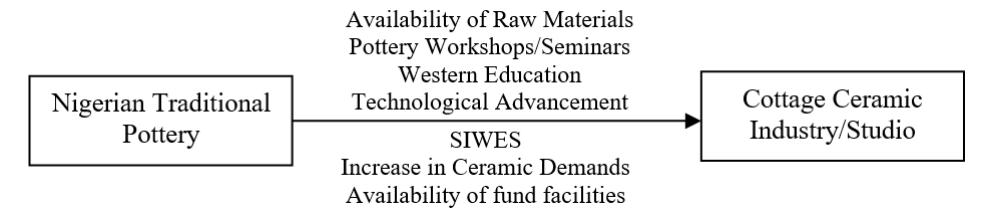
Figure 1 Factors that influence the development of cottage ceramic industries in Nigeria.
Traditional pottery, ceramic industries and ceramic education in Nigeria are improving steadily, but there is still a scholastic gap with regard to changes in equipment, technology and technique of production between cottage ceramic
industries in Southwestern Nigeria and contemporary Nigerian pottery in general. This needs to be studied before valuable information is lost in the vicissitude of time as most of these industries are currently declining. Against this background, this study examined the technology and techniques of extant cottage ceramic industries in Southwestern Nigeria. The scope of this study was Southwestern Nigeria. The region comprises of Ekiti, Lagos, Ogun, Ondo, Osun and Oyo and it approximately stretches between longitude 2° 30' and 6° East and latitude 6° and 9° North (Figure 2). This study was conducted with the aim of observing factors that influence the development of cottage ceramic industries in this area, identifying materials and equipment, as well as analyzing trends in technology, techniques, and products of extant cottage ceramic industries. This study was studio art survey that employed direct participant observation in the field and oral interviews conducted between 2009 and 2016, complimented with relevant bibliographical materials to collect data from selected cottage ceramic industries.
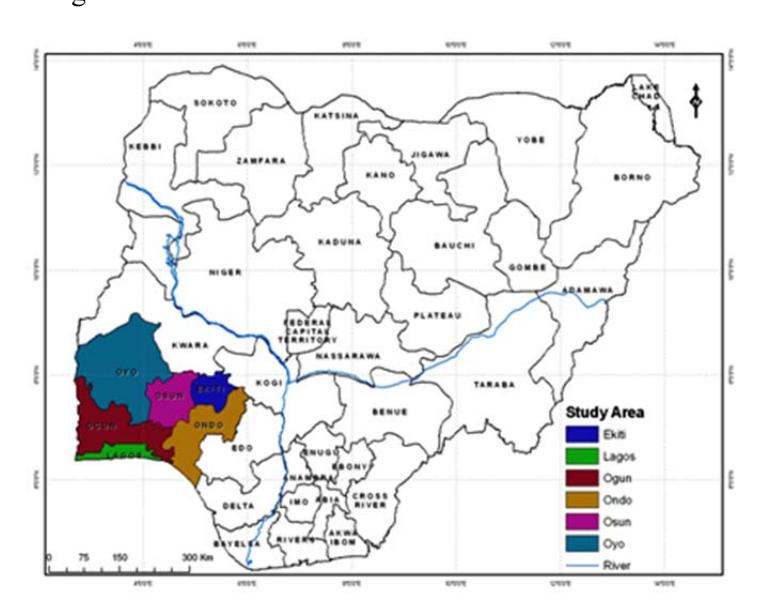
Figure 2 Location of Southwestern Nigeria in relation to the rest of Nigeria [20].
2 Survey of Cottage Ceramic Industries in Southwestern Nigeria
The development of cottage/small, medium and large-scale ceramic industries in Southwestern Nigeria were high between 1980s and 1990s as a result of availability of raw materials and high demand for ceramic wares. Several academic publications [17,19,21-23] have observed that over sixty cottage ceramics industries were established between 1980 and 2000 in Southwestern
Nigeria. However, the cost of imported ceramic raw materials and low patronage of locally produced ceramic wares among other challenges brought about extinction of some of the earliest ceramic industries [17,23]. However, extant cottage ceramic industries in Southwestern Nigeria were established by graduates of formal art schools, workshop-trained and studio-trained potters. This was a result of professional skills acquired by the graduates who specialized in Ceramics during their formal training in school and the exposure to ceramic production and business practice during their Student Industrial Working Experience (SIWES). The increase in demand for ceramic products, the boom in the ceramic market and the availability of raw materials for ceramic production also influenced entrepreneurs, workshop-trained, and self-trained potters, to establish their own cottage studio. However, of the more than sixty cottage ceramic industries that have been were identified by various scholars across the Southwestern Nigeria, few are still in operation presently [17,19,21,23].
Notable among extant producing cottage ceramics industries in the Southwestern Nigeria are Atamora Pottery Centre, Atamora, Ikire, Osun State (formerly Sweet Art Nigeria Limited, Ikeja, Lagos) as well as Dabow Pottery, Ikeja; Wonderful Pottery Centre, Igando; Pot-Purity Pottery Centre, Ikeja, Earth and Fire, Lekki Phase 1, Lagos (formerly in Ibadan) and Women and Youth Art Foundation, Surulere, Lagos (formerly in Ibadan) and Pojo Pottery Centre, Badagry Lagos. God's Grace Ceramic Industry, Ibadan; Saubana and Sons Ceramics, Ibadan and Dapo Art Gallery, Oyo; in Oyo state; Boluwaji Ceramic industry, Ado-Ekiti and Fiyinfoluwa Ceramics, Ikere-Ekiti in Ekiti State; [17,19,21,23]. Most of these industries are producing on a part-time basis as the operators of these centres have other jobs or vocations beside their cottage industry.
Cottage ceramic industries in Southwestern Nigeria are mostly operated in small spaces in the backyard of a building or a portion of space with limited equipment. They are basically managed by the owner with the help of students as part of an industrial training scheme or other semi-skilled laborers when the need arises. Despite the increase in demand for ceramic wares, the products of these cottage ceramic industries are not receiving adequate patronage compared to imported ceramic wares, which eventually leads to closure of most of them while those who are still in operation produce at low capacity, as the majority of patrons prefer imported wares to locally produced ones [17,23].
3 Materials, Technology and Techniques
Many of the extinct cottage ceramic industries in Southwestern Nigeria depended largely on imported equipment and materials, especially glazes, which increased their cost of production. This led to low patronage and eventually to their collapse [17,22]. However, the currently existing cottage ceramic industries are using locally sourced materials, tools and fabricated equipment supplemented with few imported ones so as to reduce capital costs and avoid dependence on imported materials and equipment. Adoption of appropriate and intermediate technologies also encourages technological innovations based on using local skills and materials to produce consumer goods at minimal cost rather than depending on imported goods [24] and entrepreneurship skills that the operators of these cottage ceramic industries have acquired during their respective trainings. The following section therefore discusses how materials (clay, glaze and paint), equipment (potter's wheel, pug mill and kiln), techniques of production (throwing, hand-building, mould casting and jiggering) as well as methods of embellishing the wares (glazing and painting) are employed in these industries.
3.1 Clay and Its Preparation
The availability of clay as the major material for production of ceramic wares makes the ceramic practice viable in Southwestern Nigeria. Clay is a product of continuous disintegration of igneous rock through the process of weathering. Its typology, colors, and plasticity depend on its mode of formation and location of sedimentation, which affects its chemical and physical characteristics [25,26]. The primary clay, known as kaolin, which is residual clay, is mined at the base of highlands and is used to compound clay bodies with secondary clay and cannot be used alone as they are not plastic enough for moulding. Secondary clay is clay that has been transported away from the mother rock. Potters usually collect the clay by themselves with a hoe, digger and shovel or buy it. The clays that are used for various ceramic productions among these cottage industries in Southwestern Nigeria are common clays, because of their plasticity and they are usually collected in large quantities from a stream or along riverbanks, where boreholes, dams, drainages and wells are dug as well as a road construction sites.
Clay is not technically usable in its raw state. It should be processed and sometimes combined with other clay(s). The mixture of clay varies among the cottage ceramic industries due to differences in chemical and physical properties of their clays as well as the techniques of production and nature of the wares to be produced. Majority of these ceramic cottage industries prepare their throwing and slip casting clay through manual sieving methods. Manual sieving of clay is more tedious and time consuming compared to preparation of clay through a blunger or pug mill. Manual sieving is usually done by soaking different types of clay inside a plastic bowl, metal container or concrete clay pit for several days, before mixing them together and then sieving them through a mesh (Figure 3). The sieved clay is allowed to settle down before decanting. The decanting slip is then poured into a cloth sack and pressure is exerted on it (Figure 4), spreading it on framed cloth or pouring it into a plaster bowl to allow it to become leather-hard for throwing, while slip for casting is preserved in a container. Some also prepare their clays by sieving it into a powder before mixing it with water for jiggering and jollying, hand-building and throwing. Moreover, Atamora Pottery Centre and Dapo Art Gallery sometimes prepare their clays with pug mills.
Figure 3 Clay mixing at Atamora Pottery Centre, Atamora, Ikire. Courtesy: Rofiat Abdulsalam, 2015.
Figure 4 Drying of sieved clay by exerting pressure on it in a sack. Photograph by Segun Abiodun, 2016.
3.2 Equipment and Methods of Production
Potter's wheels, kilns and pug mills are the most common equipment found in cottage ceramic industries in Southwestern Nigeria. Majority of them use locally fabricated hand-driven potter's wheels, a type known as 'Slave and Master', improvised cutting wires, spatulas and trimming tools. A hand-driven potter's wheel is designed to be rotated by someone else while the potter is throwing the ware on the wheel. It is usually constructed attaching a circular rim to the back axle of a vehicle that is mounted on a wooden or metal frame (Figures 5 and 6). Some of these industries also use imported kick and electric potter's wheels for their throwing.
Throwing on a potter's wheel is the most common technique of pottery production. Throwing is a technique that involves centering, opening and gradual pulling of clay on the potter's wheels in order to form a cylinder that can eventually be shaped to the desired form (Figure 7, 8 and 9). To produce large pottery, several cylinders are usually thrown separately and joined together on the wheel. Thrown wares are usually produced as a single piece, composition or assemblage. These leather-hard thrown wares are also decorated with clay coils, engraved, incised as well as adorned with low and high relief designs using hand-building techniques (Figures 10-12). Atamora Pottery uses a locally made extruding machine with different dice to extrude clay coils for decoration of thrown wares (Figure 13).
Figure 5 Hand-driven ('Slave and Master') potter's wheel mounted on a wooden frame at God's Grace Ceramic Industry, Ibadan. Photograph by Segun Abiodun, 2011.
Figure 6 Hand-driven ('Slave and Master') potter's wheel mounted on a metal frame at Dapo Art Gallery, Oyo. Photograph by Segun Abiodun, 2011.
Figure 7 Ibunkunoluwa Ayoola of Atamora Pottery Centre, Atamora, Ikire opening clay on a 'Slave and Master' throwing wheel. Photograph by Abiodun Segun, 2016.
Figure 8 Ibunkunoluwa Ayoola shaping joined cylinders on the wheel. Photograph by Abiodun Segun, 2016.
Figure 9 Pojo Pottery Centre, Badagry shaping a flower vase on the throwing wheel. Photography by Rofiat Abdulsalam, 2015.
Figure 10 Composition of thrown flowerpots produced by Dapo Art Gallery, Oyo Photography by Segun Abiodun 2015.
Figure 11 Composition of thrown pottery titled Home with incised design at Atamora Pottery Centre, Atamora, Ikire. Photograph by Abiodun Segun, 2016.
Figure 12 Flower vase decorated with coils at Atamora Pottery Centre, Atamora, Ikire. Photograph by Segun Abiodun 2014.
Figure 14 Dapo Eyinade of Dapo Art Gallery Oyo designing a flower pot in both low and high reliefs. Photograph by Segun Abiodun 2009.
Figure 13 Industrial training student extrudes clay coil at Atamora Pottery Centre, Atamora, Ikire. Photograph by Damilola Oyewo, 2014.
Figure 15 Abstract composition with figures attached to thrown pot at Atamora Pottery Centtre, Atamora, Ikire. Photograph by Abiodun Segun, 2014.
Handbuilding is a traditional method that involves the art of using clay coil, slab and pinch to mould an object. The technique is not commonly used for mass production among these cottage ceramic industries; it is only employed to make designs and various compositions on thrown wares (Figures 14 and 15). It is also used for modeling ceramic-sculpture pieces and models that can be used to produce mould for mass casting.
Mould casting means using a single-piece mould (negative of a model) or multiple-piece moulds made of plaster of Paris (POP), aluminum, metal, silicon or fiberglass in order to mass produce accurate copies of the original model of any ware through slip and press casting as well as jiggering and jollying techniques. Among the cottage ceramic industries in Southwestern Nigeria, press and slip casting is the most common mould casting technique and it is usually done with locally produced moulds and some imported ones. Initially, most of these industries depended on imported moulds for their casting but in recent times they produce their own moulds. Locally produced multiple-piece moulds used by these industries are majorly casted with plaster of Paris because of its ability to easily absorb moisture from the clay slip, while single-piece moulds are also produced with plaster, cement, silicon, aluminum and metal. Plaster moulds are usually produced by partitioning the model and creating locks on the partitions before pouring slurry plaster on it. The cast will be left for some hours in order to set before it can be separated after the plaster has been solidified and then dried in the sun before using for press or slip casting (Figure 16).
Figure 16 Locally produced P.O.P mould of Benin Queen Mother Head at Women and Youth Art Foundation, Ibadan (now Surulere, Lagos). Photograph by Segun Abiodun, 2009.
Figure 17 Formed slip cast wares inside plaster moulds. Photograph by Segun Abiodun, 2009.
Slip casting is an act of mass-producing identical ceramic wares by pouring prepared clay slip into a multiple-piece plaster mould. The clay slip then settles on the inner surface of the mould through capillary attraction, following the shape of the mould. After the desired thickness of clay has been deposited in the mould, the remaining clay slip is then poured out (Figure 17) and the mould is left for some hours before it can be separated, depending on the size of the mould, the composition of the clay slip and the quality of the plaster. The cast is eventually removed from the mould after it has separated itself from the mould.
The cast will be further trimmed and dressed in order to give it a good finishing before drying. The duration of slip casting depends on the types of clay used in preparing the slip, the porosity of the plaster mould and sometimes the temperature in the studio. Some cottage industries use a combination of kaolin and secondary clay at varied proportions for preparing their slip while some use secondary clay alone [27]. Slip casting is usually used to produce ceramicsculpture pieces by these industries.
Press casting among these cottage ceramic industries is usually achieved through manual and mechanical means. Manual press casting is done by pressing a lump of clay into a single-piece mould made of plaster, cement, metal or silicon (Figure 18). It is commonly used to cast motifs that are used to designing thrown wares. Moreover, manual press casting is also adopted in producing bricks that are used for kiln construction through metal or wooden moulds (Figure 19).
Figure 18 Casting of motif through pressing method in a plaster mould. Photograph by Segun Abiodun, 2016.
Figure 19 Casting of bricks in a metal mould. Photograph by Segun Abiodun, 2016.
Mechanical press casting is done through the use of a mechanical device that is employed by some cottage ceramic industries in the region. Notable in mechanical press casting is the hydraulic system press with metal mould for casting ceramic water filters, which was introduced to Atamora Pottery Centre, Atamora, Ikire in 2013 by Potters Water Action Group (PWAG), USA (a nongovernmental organization that is campaigning against waterborne diseases) in collaboration with the Government of Osun State, Nigeria. The hydraulic press system is made up of a metal frame with two bell shaped moulds and a jack and pulley device (Figure 20).
To cast with the hydraulic press, an inner mould is placed on a wooden slab and covered with nylon to prevent the clay from sticking to the mould before a mixture of clay and sawdust is spread over the mould (Figure 21). Then it is pressed with the hydraulic jack in order to compress the clay body together and to remove excess clay (Figure 22). The hydraulic press is then released and the cast will be left for some hours before it is removed from the inner mould. The rim of the cast is dressed and perfected on the wheel and then allowed to dry (Figure 23).
Figure 20 Hydraulic press with metal mould for casting ceramic water filters at Atamora Pottery Centre, Atamora, Ikire, Osun State. Photograph by Damilola Oyewo, 2014.
Figure 21 Covering of inner mould with nylon and clay in preparation for hydraulic press casting at Atamora Pottery Centre, Atamora, Ikire. Photograph by Damilola Oyewo, 2014.
Figure 22 Ibunkunoluwa Ayoola is operating the pulley system of the hydraulic metal mould press for casting ceramic water filters Photograph by Damilola Oyewo, 2014.
Figure 23 Ibunkunoluwa Ayoola is dressing a casted ceramic water filter on the throwing wheel. Photograph by Damilola Oyewo, 2014.
Figure 24 Terracotta water pots and Ceramic water filters on display at Atamora Pottery Centre, Atamora, Ikire. Photograph by Abiodun Segun, 2016.
Figure 26 Kick wheel with jigger and jolly device at Musa Raymond Venture Ceramic Section. Photograph by Abiodun Segun, 2009.
Figure 25 Water pot with ceramic water filter produced by Atamora Pottery Centre, Atamora, Ikire. Photograph by Segun Abiodun, 2014.
Figure 27 Charcoal stove with ceramic insulator by Musa Raymond Venture, Oyo. Photograph by Abiodun Segun, 2009.
The clay body of the ceramic water filter is prepared from clay and sawdust in varied proportions so that the sawdust will burn off, leaving voids that allow water to pass through the wall of the filter. Charcoal is also introduced to the filter body for effective water filtration. The filtration rate of each ceramic filter is checked by observing the amount of water filtered per hour in order to examine the size of the open pores before examining the purity of the filtered water through microbial analysis. The ceramic water filters are sometimes
coated with colloidal silver, an antimicrobial agent. The ceramic water filters are thereby placed in designed terracotta water pots (Figure 24-25).
Jigger and jolly is not a common a technique used in these industries. However, Musa Raymond Venture Ceramic Section, Oyo uses jigger and jolly devices mounted on kicked and electric potter's wheels to jigger charcoal stove insulators (Figure 26-27). Details of the production techniques in these industries are given in Table 1.
Table 1 Techniques of production used in Cottage Ceramic Industries in Southwestern Nigeria.
| S/N | Cottage Scale Ceramic Industry | Technique |
|---|---|---|
| 1 | Atamora Pottery Centre, Atamora, Ikire, Osun State | Throwing, Hand-building, |
| (formerly Sweet Art Nigeria Limited, Ikeja, Lagos) | Mould casting | |
| 2 | Dapo Art Gallery, Kosobo, Oyo, Oyo State | Throwing, Hand-building, casting |
| 3 | Musa Raymond Venture Ceramics Section, Agodongbo, | Jiggering |
| Fola Tyre Area, Oyo, Oyo State | ||
| 4 | God's Grace Ceramic Industry, Old Ife Road, Ibadan, | Throwing, Hand-building, |
| Oyo State | Mould casting | |
| 5 | Boluwaji Ceramic Industry, Ado Ekiti, Ekiti State | Throwing, Hand-building, |
| Mould casting | ||
| 6 | Fiyinfolu Ceramics, Ikere-Ekiti, Ekiti State | Throwing, Hand-building, |
| Mould casting | ||
| 7 | Saubana and Sons Ceramics, Orita Challenge, Ibadan | Throwing, Hand-building, |
| Mould casting | ||
| 8 | Earth and Fire Clay Work, Lekki Phase 1, Lagos State (formerly in Ibadan) | Throwing, Hand-building |
| 9 | Women and Youth Art Foundation (WY Art), Surulere, | Throwing, Hand-building, |
| Lagos (formerly in Ibadan) | Mould casting | |
| 10 | Pojo Pottery Centre, Badagry Lagos | Throwing, Hand-building, |
| Mould casting | ||
| 11 | Dabow Pottery, Ikeja Lagos | Throwing, Hand-building |
| 12 | Wonderful Pottery Centre, Igbando Lagos | Throwing, Hand-building |
| 13 | Pot-Purity Pottery Centre, Ikeja Lagos | Throwing, Hand-building |
Pottery wares produced with various techniques by these cottage ceramic industries are usually fired in locally constructed kilns. Potters build their own varieties of downdraught kilns mostly with locally produced fired bricks made from laterite, kaolin or bodies composed of laterite, clay and kaolin. Their kilns usually have one chamber designed to use wood, gas, kerosene or diesel as fuel for firing. Wood is most the common fuel used by these industries since it is the cheapest available fuel for firing in the area (Figure 28).
Since recent times, some industries are using kerosene and used oil because of the stress involved in firing with wood and the high cost of gas. Kerosene is used to fire the kiln by filling a gas cylinder with kerosene and then it is pressurized with a compressor before connecting it to the burner (Figure 29). Moreover, some industries such as Women and Youth Art Foundation, Ibadan (now in Surulere, Lagos), and Dapo Art Gallery, Oyo have imported electric kilns, which they rarely use because of the cost of power supply. Most of these cottage ceramic industries use empirical methods of firing without any temperature-measuring device to fire their wares, while some use pyrometric cones.
Figure 28 Stacking of wood kiln for firing of pottery at Dapo Art Gallery, Oyo. Photograph by Abiodun Segun, 2017.
Figure 29 Filling of gas cylinder with kerosene at God's Grace Ceramic Industry, Ibadan. Photograph by Abiodun Segun, 2009.
3.3 Glazing and Paint Embellishments
Glaze firing is also practiced among the cottage ceramic industries in Southwestern Nigeria but their glazed wares are small in number compared to terracotta wares. A glaze is a permanent glass coating on ceramic wares, which does not only prevent terracotta wares from absorbing water or any other liquid but also adds aesthetic value and gives a good shining finishing to the ceramic wares. Glazes are compounded by either empirical or scientific analytical methods from three main components, which include silica, alumina and fluxes, which can be sourced from various materials and minerals [25,28,29]. Majority of cottage ceramic industries formulate their own various types of ash, feldspathic, fritted, and quartz glazes among others from local sourced materials and some industrially prepared ingredients in recent times, while some still depend on imported glazes. Their compounded glazes are soft, low-temperature glazes that range between 600 °C and 1050 °C, which can be either transparent or coloured by adding metallic colorant oxides to the glaze batch. The colors used are basically shades of brown, dark green, cobalt blue grey and white or a combination of two or more colors with no on-glaze design (Figures 30-33).
Figure 30 Brown coloured glazed dish fired from locally prepared glaze by God's Grace Ceramic Industry, Ibadan. Photograph by Abiodun Segun, 2009.
Figure 31 Blue- and white coloured glazed cup fired from locally prepared glaze by Pojo Pottery Centre, Badagry. Photograph by Rofia Abdulsalam, 2015.
Figure 32 Brown coloured glazed Crucifix fired from locally prepared glaze by Pojo Pottery Centre, Badagry. Photograph by Rofia Abdulsalam, 2015.
Figure 33 Brown coloured glazed flower vase fired from locally prepared glaze Dapo Art Gallery, Oyo. Photograph by Abiodun Segun, 2015.
However, technicality involved in compounding glazes, the high cost of some industrial prepared glaze's ingredients, dependence of some industries on already prepared glazes and the cost of fuel for glaze firing contributes to the increased cost of producing glazed wares among these industries when compared to imported ceramic wares. Thus, the cottage ceramic industries in Southwestern Nigeria now produce only few glazed wares while the majority of their products are terracotta embellished with enamels, varnish, emulsion and other materials.
Figure 34 Flower vase embellished with paint by Dapo Art Gallery, Oyo. Photograph by Abiodun Segun, 2009.
Figure 35 Thrown pot embellished with cloth and enamel paint by Dapo Art Gallery, Oyo. Photograph by Abiodun Segun, 2009.
Figure 36 Painted terracotta flowerpots on display at Wonderful Pottery Centre Sale Point in Lagos. Photograph by Rofiat Abdulsalam, 2014.
Figure 37 Terracotta flowerpots embellished with gloss paint by Atamora Pottery Centre, Atamora, Ikire. Photograph by Abiodun Segun, 2014.
Figure 38 Gloss-paint and varnish designed flower vases at Pot-Purity Pottery Centre, Ikeja (Kashim & Adelabu in [19]).
Currently, embellished terracotta wares are commonly produced by these industries in varieties of styles. Gloss paints of various brands are the most common enamels used by these cottage ceramic industries for embellishing their terracotta wares to make them attractive and give them a shining effect. This, however, is not durable and in no way has the same quality as glaze. Smooth and textured emulsion paints and varnish are also employed with other materials to decorate pottery wares for aesthetic purposes.
Terracotta pots are painted with a brush or a spray gun before they are further designed with various patterns. Some terracotta wares are also embellished by attaching pieces of cloth or other materials before they are finally painted (Figures 34-38). However, these media are currently employed by these industries in several ways to produce varieties of embellished decorative wares because they are cheaper to produce than glazed wares. Details of the technical breakdown among cottage ceramic industries in Southwestern Nigeria are given in Figure 39.
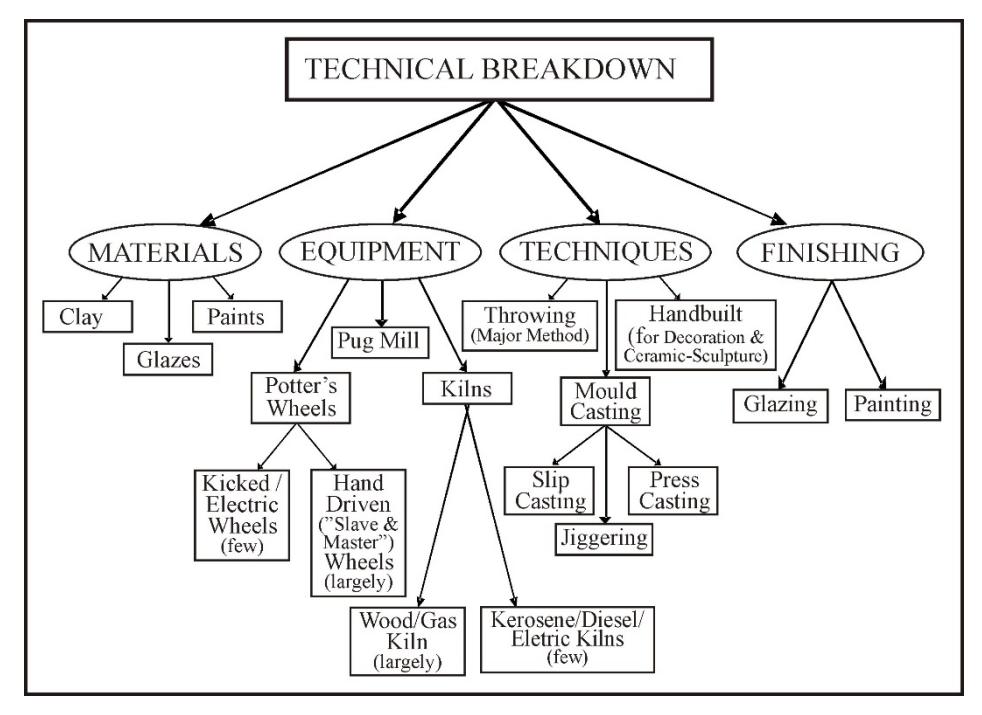
Figure 39 Technical breakdown in cottage ceramic industries in Southwestern Nigeria.
4 Conclusion and Recommendations
The ever-growing demands for new ceramic products as a result of changing trends in technology and Western education transformation of Nigerian traditional pottery eventually gave birth to modern cottage ceramic industries. The sustainability of these cottage ceramic industries in Southwestern Nigeria is dependent on the availability of clay as the basic material for ceramic production as well as the development of indigenous adaptations of appropriate and intermediate technologies. The majority of these industries are using simple equipment and tools that were locally sourced. Some of these industries also depend on imported glazes and other raw materials, which eventually leads to high production costs, while some formal art school and workshop trained ceramists/potters compound their glazes locally in order to minimize the cost.
The most commonly used production technique is throwing while mould casting is not widely adopted by these industries. Handbuilding is seldom used for mass production by these industries but it is used to design their throwing wares or to produce ceramic-sculptures. Their products are basically embellished terracotta wares with some glazed ones for decorative purposes.
However, Atamora Pottery Centre produces ceramic water filters that can be used to treat water for drinking. In spite of contributions of cottage ceramic industries to the development of indigenous ceramics production in Nigeria, the range of their products is limited and their production and selling costs are high when compared to imported ceramic wares, which affects their patronage and eventually has led to the closure of most of the cottage ceramic industries. Those who are in operation are patronized by a small number of middle class people who commission them to produce souvenirs and flower pots for decorative purposes.
There is a need for these cottage industries to improve their techniques and technologies in order to produce varieties of ceramic products such as tableware, tiles, sanitary wares, electric insulators, etc. This can be achieved if there are synergies between the cottage ceramic industries and academics, the Ceramic Researchers Association of Nigeria (CeRAN), the Craft Potter Association of Nigeria (CPAN), research institutes and other relevant stakeholders in multi-disciplinary researches and utilization of various research breakthroughs to improve industrial ceramic production in Nigeria. The government and all relevant stakeholders should promote Nigeria made pottery and ceramic wares by formulating policies that promote the usage of indigenous products. Funds should also be made available to these industries in order to procure the necessary materials, tools and equipment to widen the scope of their products. This will not only reduce dependence on imported ceramic wares but also promote the cottage ceramic industry in Nigeria to meet international standards, especially in the production of ceramic wares, and create more job opportunities and increase economical development of the country in general.