

1 Introduction
Having a good educational background is essential for every individual in order to compete in today's job market. For this reason, the pressure to excel academically exists for students at all levels of education, not to mention other factors such as family, social, economy, and politics, which are also driving forces for young people to obtain the best quality of education to secure a good future. The Malaysia Education Blueprint (2013-2025) published by the Ministry of Education Malaysia [1] reveals that the Malaysian education system gives more importance to certain academic domains, i.e. science, technology, engineering, and mathematics (STEM) education, as they bear the capacity to boost the country's economy. However, visual arts education (pendidikan seni visual) should also be emphasized in the education system due to the fact that creative minds are needed in every field. According to Mat [2], there is a visual
art crisis in Malaysia as a result of a lack of art knowledge caused by conventional classroom teaching, which limits the development of student's artistic potential and knowledge of art. The subject of visual art is taught to underperforming students in the arts and humanities stream (sastera ikhtisas) as it is claimed to be easier to learn compared to science subjects. Although the subject of visual art enables art stream students to achieve good results on the Malaysian Certificate of Education (Sijil Pelajaran Malaysia, SPM), does the current classroom art education actually provide long-term benefits for the students? This study aimed to investigate problems and issues around the placement of students into the arts stream and its effect on art knowledge development in Malaysian secondary schools.
2 Learning Syllabus of Visual Arts Education in Malaysian Secondary Schools
Two main contents are issued by the National Curriculum Development Centre [3] concerning teaching visual arts education: visual art production, and art history and visual art appreciation. Based on the learning contents of the visual arts education syllabus for secondary schools, the level of exposure to and understanding of visual art seem to be weak as the learning objectives focus more on the student's technical skills for producing artworks rather than on knowledge about art. Chalmers [4] states that art education that is only based on technical skills for producing artworks does not have much impact on developing the learner's knowledge of art. Instead, art knowledge can be strengthened by art theory, art criticism, and introduction to contemporary arts in the syllabus [5]. Meanwhile, current formal art education at the secondary school level in Malaysia more emphasizes the ability to produce artworks that looks good rather than exploring its content.
Pooke and Newall [6] suggest that art practice and the concept of creating art objects with aesthetic values is universal, regardless of the media used, such as painting, sculpture, film, performance, and even architecture. Art comprises everything that relates to drawing, sculpture and painting. Therefore, a thorough exposure to knowledge of art is needed in visual arts education, especially at the secondary school level, as it will provide a good impression of the student's artistic potential in the future.
3 Methodology
In this study, qualitative methods were used to obtain the data to be analyzed through quantitative methods. The qualitative methods were used for issues related to perception, interpretation and experience. The quantitative analysis was done based on a full review of the qualitative data. Interpretations of the findings were blended using Denzin's [7] method of triangulation. Triangulation is achieved by using data from various sources and collection methods. Here, these included face-to-face interviews, observations and literature study. These three evaluators played a role in the search for similarities in the findings in order to assess their validity. Figure 1 shows an illustration of the triangulation method.
Figure 1 Elements in Denzin's triangulation method.
Face-to-face interviews were conducted among a total of 25 respondents, consisting of 5 teachers, 5 art teachers, 2 assessor teachers, 3 art lecturers and 10 students. The interviews were carried out to gather data on problems and issues in visual arts education in secondary schools, especially regarding the matter of student placement in the arts stream, the impact of which was considered for further analysis. The respondents were also required to share their understanding and opinions on visual arts education at the secondary school level. In addition, issues related to the importance of visual arts education were also discussed.
In the triangulation of data, observation is one of the methods to get data before they are used for evaluation to assess the validity of the outcomes. In this study, observations were carried out at selected high schools, i.e. SMK Seri Perak, SMK Methodis, SMK Panglima Bukit Gantang and SMK Tun Shed Barakbah. The selection was based on the yearly art education assessment results.
Table 1 shows the details of the observation's dates and venues during the data collection phase of the study. In order to complete the third component of the triangulation method, a literature study was conducted. The most important document was the Malaysia Education Blueprint (2013-2025). The data from the face-to-face interviews, observations and literature study were analyzed to search for differences and similarities in the outcomes.
| Observation | Time | Venue |
|---|---|---|
| Visual Art Classes (Pembelajaran PSV) | 12 June 2017 to 5 September 2017 | SMK Seri Perak, Parit Buntar SMK Tun Shed Barakbah, Nibong Tebal SMK Panglima Bukit Gantang, Parit Buntar |
| Exam Technique (SPM - Sijil Pelajaran Malaysia) (PSV - Pendidikan Seni Visual) | 28 August 2017 | SMK Seri Perak, Parit Buntar |
| Art Workshop | 12 July 2017 | SMK Seri Perak, Parit Buntar |
Table 1 Details of observation timeline.
4 Placement of Students into the Arts Stream; Visual Arts Education Subject Selection
Asmawi, et al. [8] refer to the term 'art' as things that are intricate or beautiful. No matter how intricate or beautiful art can be, the question here is how important it is in the education system. The education system in Malaysia does not seem to give much importance to formal art education at the upper secondary level. Secondary four students are assigned to curricular streams based on their results in Level Three Assessment (Penilaian Tahap Tiga or PT3), whereby well-performing students are encouraged to enter the science stream, while the rest are placed in the arts and humanities stream, which requires them to take visual arts as one of their subjects. The National Curriculum Development Centre [3] encourages students to get into the science stream rather than the arts stream, which causes visual arts education to be marginalized. The case of underperforming students being placed into the arts stream needs to be re-examined; teaching and learning visual arts must be upgraded to inspire students to become more eager to learn and explore art. The Figure 2 shows the process of student placement at the upper secondary level based the present curricular system in Malaysia.
Based on the National Curriculum Development Centre [3], students who excel in subjects such as Malay, English, history, mathematics, and science are encouraged to enter the science or technical streams as the Ministry of Education aims to fulfill a 6:4 ratio of students in every national secondary school, especially at the upper secondary level, to pursue science and technology studies. Furthermore, the Ministry of Education [1] intends to nurture creativity in students through STEM education, as mentioned in the Malaysia Education Blueprint 2013-2025.
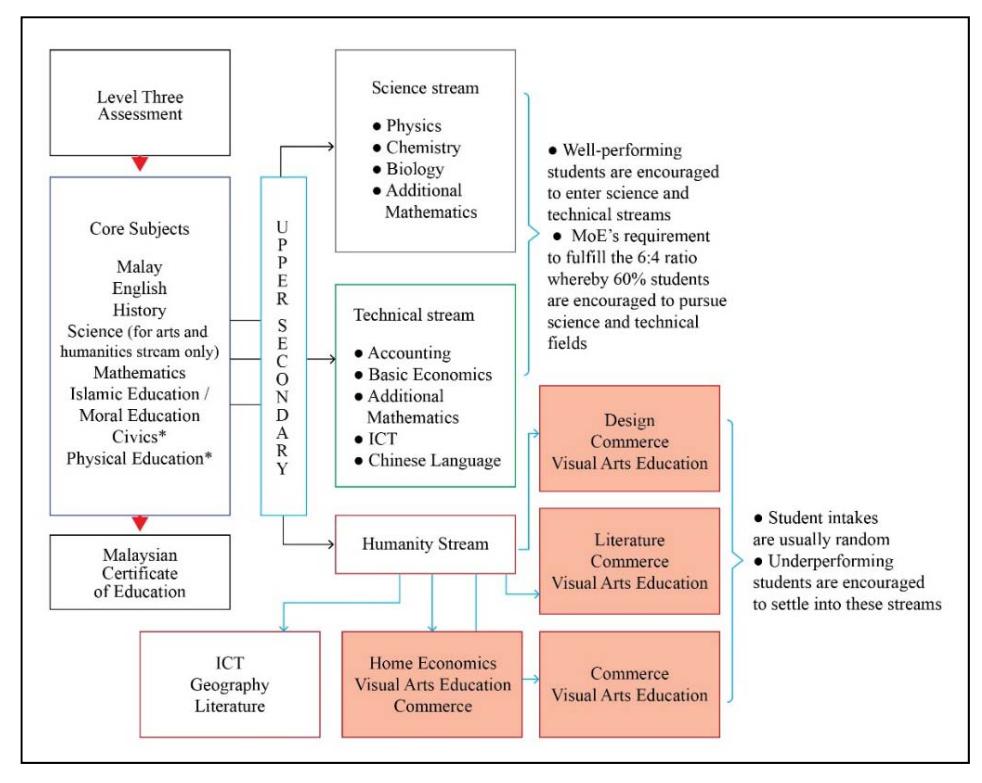
Figure 2 Flowchart of the process of student placement at the upper secondary level in Malaysia [9].
Based on the National Curriculum Development Centre [3], students who excel in subjects such as Malay, English, history, mathematics, and science are encouraged to enter the science or technical streams as the Ministry of Education aims to fulfill a 6:4 ratio of students in every national secondary school, especially at the upper secondary level, to pursue science and technology studies. Furthermore, the Ministry of Education [1] intends to nurture creativity in students through STEM education, as mentioned in the Malaysia Education Blueprint 2013-2025.
Students who do not fulfill the criteria to enter the science and technology stream are encouraged to go to the arts and humanities stream as the elective subjects that are offered there are not 'heavy', matching the learning capability of students who are categorized as academically weak. Interestingly, the placement of students into these curricular streams is not based on their interest and some are forced to be content with taking art as a subject as there is no
other choice for them in the existing system, which ultimately affects the learning of the subject, especially in secondary four and five. On the other hand, science and technology students are not encouraged to take additional subjects from the arts and humanities stream, because this is believed to be unnecessary as the science subjects do not need support from any of the subjects from the art and humanities stream. The absence of visual arts education in the list of subjects of the science stream students denies them access to formal art education.
While Malaysia's education system seems to stick to STEM education, several well-developed countries have shifted their focus to Science, Technology, Engineering, Arts, and Mathematics (STEAM) education. The importance of STEAM education is mentioned in several references, such as Rufo [10], who suggests that the presence of art education seems to increase a learner's creativity in exploring STEM subjects. Fang [11] supports the position that creative values that are learned through formal art classes can add positive qualities such as the ability to work in a team and creating healthy competition in group work. The shift from STEM to STEAM education in South Korea has evidently benefited both teachers and students as it helped them to solve problems in more creative and innovative ways [11].
There are three national art schools in Malaysia, located in Kuala Lumpur, Sarawak, and Johor. However, the quota issued by the Ministry of Education Malaysia [12] state that the intake of each is limited to 60-70 secondary one students per year. Prospective students are required to take a test (Sesi Serlahan Seni) to qualify for a Malaysian art school (Sekolah Seni Malaysia). Similarly, placement of students into the visual art stream in national secondary schools is supposed to be based on a test to determine whether a student is qualified to be in the visual art stream.
5 Visual Arts Education
Formal art education in Malaysia's national school system perceives art merely as having certain skills to create something. In contrast, according to Crawshaw and Gkartzios [13], art in a contemporary sense is the process of creation or exploring new methods to create art and the involvement of society in art activities. Mat [2] suggests that artist engagement with the public in art activities helps to spread awareness on art while also boosting the economy in the art sector. For instance, activities such as art talks, performance art, murals and many more may pique society's interest to learn more about visual art. These practices should be fostered from the early stages of visual arts education so that art knowledge can continue to develop until the end of school education.
It is also important for students to realize that visual arts education is more than just learning the skills for making art objects. According to Abu [14] art education should not revolve around creating art objects alone and hence the subject of visual art also requires learning topics that involve comprehension and appreciation of art in order to build a solid knowledge of art.
Secondary education in national schools is result-oriented and not based on the students' interests and talents. Carr [15] states that the learning process in national school has to educate and socialize, however, the students' right to learn is regulated under an education system that restricts the idea of education freedom. This has an impact towards the development of creative thinking in students when they are forced to choose a field that is set by the school system. Furthermore, the education system in Malaysia emphasizes STEM education in the hope that students will become more creative in mastering these subjects without realizing that art education is also relevant in learning sciences and it is very much needed for cultivating creative minds in the science and technology fields [16]. This proves that implementation of STEM education needs to be done in parallel with visual arts education at the upper secondary level in order to boost creativity in students.
6 Importance of Arts in Education
The arts can benefit many, especially in the education field, however, they do not get much attention in the education system in Malaysia. Several studies have shown that art helps to boost confidence, especially among young people, as its practice can help to develop cognitive skills in processing and analyzing information [17]. This is further supported by Deasy [18]: cognitive development through visual arts education can be learned through abstract, critical, and reflective thinking. It is also an alternative to a learning process that requires research and communication to express ideas, information, emotions, and comprehension. Visual art as a subject is therefore important for students at the upper secondary level as it is necessary to nurture individuals with creative minds.
Other than that, integrating art education into other learning subjects is a great help in the students' learning process. Deasy [18] elaborates that learning environments that use art as a medium may facilitate the process of learning and at the same time increase the active participation of students in group activities. Implementing art into other learning subjects helps students to understand the value of empathy, historical references and cultural differences [19]. Hence, art is proven highly useful as it can be implemented in the learning process and also provide assistance in any learning field.
7 Research Outcome and Discussions
Based on a series of interviews conducted among a total of 25 respondents, the main problems in the visual arts education crisis are mostly caused by the system of student placement into curricular streams based on the national examination results. Secondly, the support from the Ministry of Education is necessary in order to reform the current curricular system and the learning contents of visual arts education, especially at the upper secondary level, whereby the learning syllabus must include a fair balance between learning theory and technical skills for making art objects. In addition, more art related programs, such as art talks, study trips to contemporary art galleries, are needed to expand the knowledge horizon of art among students.
Table 2 Feedback on the Visual Arts Education Crisis at the Upper Secondary Level.
| Group | Main Problem | Effects of Student Placement | Visual Arts Education | Other Problems | Approach |
|---|---|---|---|---|---|
| Teacher 1 | Placement of students based on examination results | Students unable to give high commitment | More technical | Lack of notes on visual arts education Role of visual arts education teachers | Effective teaching of technical skills by visual arts education teachers |
| Teacher 2 | Underperforming students in the arts and humanities stream | Mostly forced to do things against their interest | Art making skills | Role of teacher in planning lessons | Only concentrated on students that are interested in the subject |
| Teacher 3 | Students with poor results being placed into the arts and humanities stream | Affects other learning subjects | Drawing and coloring | Role of teacher in planning lessons | Only concentrated on students that are interested in the subject |
| Teacher 4 | Students with poor results are encouraged to go to arts and humanities stream | Students unable to give high commitment | Technical skills | Teacher has to find ways to attract students' interests | Only concentrate on students that are interested in the subject |
| Teacher 5 | Students have no interest in visual arts | Problems in visual arts education learning | Requires technical skills | Role of teacher in class | Only concentrated on students that are interested in the subject |
| Visual Arts Education Teacher 1 | Students are forced to take up visual arts education as a subject | More technical | Subject notes depend on external texts and the role of MoE | Additional classes and art demonstrations by visual arts education teacher | |
| Visual arts education Teacher 2 | Placement of students based on Level Three Assessment | Drawing helps students in reaching target | Lack of notes on visual arts education and poorly equipped art studio | Additional classes for theory learning and drawing | |
| Visual arts education Teacher 3 | Placement of students done randomly and not based on the students' wants | Problems in classroom learning | Drawing and art making need to be emphasized | Lack of notes on visual arts education | Additional classes for theory learning and drawing |
| Visual arts education Teacher 4 | Placement of students not done based on student's interest | Problems in doing course work | Need for technical skills apart from theory | Lack of notes on visual arts education | Additional classes for theory learning and drawing |
| Visual arts education | Placement of students not based on student's interest | Poor commitment from students | Technical skills | Lack of notes on visual arts | Additional classes for theory learning and |
| Group | Main Problem | Effects of Student Placement | Visual Arts Education | Other Problems | Approach |
|---|---|---|---|---|---|
| Teacher 5 | education | drawing | |||
| Visual arts education Teacher Appraisal 1 | Students from other curricular streams should have the freedom to choose visual arts education as a subject | Performance depends on student commitment | More technical | Art theories based on outdated texts | Additional classes and art demonstrations by visual arts education teacher |
| Visual arts education Teacher Appraisal 2 | Placement of students done randomly | Performance depends on student effort | Put emphasis to technical skills such as drawing and product making | Texts for visual arts education for Secondary Four and Five is still not available | Additional class and more focus on students with high potential |
| Lecturer 1 | Placement of students not done based on interest and wants | Performance depends on student commitment and the teaching method | More technical | Ministry's role in the education system | Application of selected theories of education in visual arts education |
| Lecturer 2 | Placement of students into curricular streams at the upper secondary has to be re-evaluated | Learning approach affects the students' way of learning until university | More technical learning than theory | Ministry's role in the education system | An upgrade is needed, especially of the school's art program level |
| Lecturer 3 | Placement of students into visual arts stream has to be re-evaluated | Student's perception of art still confined within drawing and other conventional ways of art making | More technical learning than theory | Ministry's role in the education system | Art education needs to be in synch with contemporary trends in art |
| Student 1 | No other choice | Unable to do the best | Has to know how to draw | Role of school and teachers | Additional classes other than learning from the internet |
| Student 2 | No other choice | Cannot draw | Has to know how to draw | Role of school and teachers | Additional classes |
| Student 3 | No other choice | Cannot draw | |||
| Student 4 | No other choice | Cannot draw | Has to know how to draw | Role of teachers | Additional classes |
| Student 5 | No other choice than visual arts education subject is offered in the class | Has interest but cannot draw | Has to know how to draw and understand art theory | Role of schoolteachers and individual | Additional classes and learning drawing techniques through social media such as Instagram and many more |
| Student 6 | No other choice | Not interested | Drawing skills | Role of teachers | Additional classes |
| Student 7 | Majority factor | Not interested | Drawing skills | Role of teachers | Additional classes |
| Student 8 | Majority factor | Not interested | Drawing skills | Role of teachers | Additional classes |
| Student 9 | No other choice | Not interested | Drawing skills and understand theory | Role of teachers | Additional classes |
| Student 10 | Majority factor | Not interested | Drawing skills | Role of teachers | Additional classes |
Table 2 shows the feedback from the respondents, including several groups of teachers, visual arts education teachers, appraisal teachers, lecturers, and students from the visual art stream at the upper secondary level. The second column shows the main problems in the visual arts education crisis in Malaysia, which is the existing curricular system of placement of students into curricular streams. This system limits the students' access to art knowledge as visual arts education is not emphasized in the Malaysia Education Blueprint 2013-2025.
Other than that there are also some additional problems pertaining to visual arts education at the upper secondary level. Based on the interviews, 15 respondents with an education background stated that the current system of student placement into curricular streams is one of the factors that cause visual art to be categorized as a subject for underperforming students. A total of ten teachers, including visual art teachers and non-arts stream teachers, indicated that the student placement system affects the visual art subject at the upper secondary level. Appraisal Teacher 1 and 2 suggested that students should be given the freedom to take up visual art as a subject and that the placement of students into the arts stream should be done according to capability and willingness of the student and should not be done randomly.
Similarly, several educators from higher learning institutions suggested that the student placement system is one of the factors that cause visual arts education to be marginalized in the Malaysian education system. According to Lecturer 1, the main problem in visual arts education is that students are assigned to the art stream regardless of their interest and wants. Lecturer 2 and 3 also stated that the system of placement of students in the visual art stream must be reevaluated so that the knowledge learned through the visual art classes does not go to waste.
On the other hand, the feedback from the student group confirmed that students are assigned to the arts stream regardless of their interest and wants. Seven respondents mentioned that they had no choice in selecting the curricular stream to suit their learning capacity and interests at the upper secondary level. Surprisingly, three respondents of the student group stated that the decision to be content with choosing the arts stream was based on a majority factor, i.e. peer influence.
The placement of students according to the existing system affects the overall teaching and learning process in the visual art classes. Table 2 shows that four out of five teachers indicated that assigning students to curricular streams regardless of their interest affects the learning process as students do not give full commitment to the visual art class. According to Teacher 2, this does not only impact the learning process of the visual art class, but also that of other subjects. Four out of five respondents from the visual art teachers group mentioned the same problem of the lack of willingness of students to commit to the class. Visual Art Teacher 4 stated that the commitment problem in students can often be encountered through the end outcome of Paper Three as part of the visual art coursework.
Appraisal Teacher 1 and 2 believe that the commitment and interest of the student are important in any learning process at the upper secondary level.
However, the feedback from three respondents in the lecturer group showed different opinions, where Lecturer 1 believes that student performance depends on their commitment and how teachers can pique the interest of their students in visual arts education at the upper secondary level. Lecturer 2 suggested that the visual art teaching approach in secondary school affects the students' learning style upon pursuing further studies in the art field. This was supported by Lecturer 3, who stated that some students perceive art knowledge as revolving only around drawing.
Furthermore, the placement of students also affects the overall performance in visual arts education at the upper secondary level. Ten respondents from the student group claimed that they did not have the skills to create art, whereas, ironically, visual art teaching at the upper secondary level highly emphasizes the development of technical skills, especially in drawing and art making. This can be seen through the feedback from 20 respondents on the teaching of visual art in secondary school. On the other hand, the topic of art theory in the visual art syllabus mostly focuses on craft making and the history of conventional art forms. The general implementation of the subject has to be improved from time to time by government authorities in order to build solid knowledge on art at the upper secondary level. According to 15 respondents from the secondary school teachers and higher learning institution lecturers group, teaching and learning aids for visual arts education have to be upgraded from time to time and at the same time the student placement into the arts stream has to be re-evaluated. Placement of students into the arts stream has to be done according to the ability and willingness of the students, as the exposure to the subject of visual art according to one's interest may help to reveal the student's future artistic potential.
These problems in visual arts education can be resolved if the government is actively involved in incorporating art knowledge into the education system in Malaysia. The flowchart in Figure 3 shows how art knowledge can be vastly developed with proper help from the government.
Figure 3 shows that the government plays an important role in the development of education in Malaysia. The curriculum implementation of visual arts education should be re-examined to enable all students to be free to take visual art as a subject. Secondly, the learning contents of visual art classes need to be revised from time to time to ensure that the art knowledge learned develops according to and relevant to contemporary trends in art.
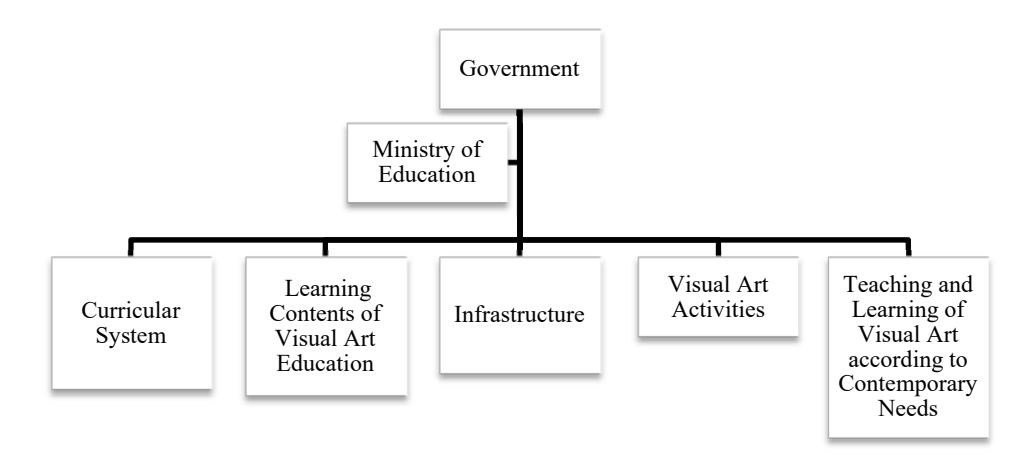
Figure 3 Governmental support in art knowledge development agenda.
Encouraging exposure to contemporary art is highly crucial so that the students' perception of art is not confined to conventional art forms such as drawing, painting and crafts. Infrastructure such as a comprehensive textbook, especially for secondary four and five, and a well-equipped art studio for art-making activities must be upgraded every now and then. Finally, the teaching and learning of visual art also have to be improved according to current trends in the art scene and contemporary needs. Thus, the government has the power to change the future of visual arts education to cultivate students with artistic minds and who at the same time are skilled in art making.
8 Conclusion
According to the above discussion, there are many problems and issues pertaining to visual arts education at the upper secondary level. Placement of students into curricular streams based on examination results causes formal art education to stop at the upper secondary level, especially among the science stream students. Assigning visual arts education to students in the arts and humanities stream does not mean that this subject should be exclusive for underperforming students. In fact, if learned well it may help students to realize their creative potential. The existing system in which underperforming students are placed into the arts stream must be thoroughly revised, as visual art deserves the same amount of attention as STEM subjects in school. The integration of the arts into education has been proven to be effective in several well-developed countries where the STEAM approach is central to the education system. These countries are frontrunners in the current global industrial revolution that values creativity and innovation.
Malaysia's art knowledge crisis stems from long unaddressed problems related to formal art education, especially at the upper secondary level. The absence of fresh learning contents in the syllabus may have contributed to a lack of interest in art among the students in the arts stream. As a result, students have been unable to discover their artistic potential. This is unfortunate, as the country is in dire need of more brilliant minds in the visual arts field to spread knowledge and awareness on the importance of art for society. On the other hand, this also contributes to the admission of students who have no deep interest in visual art into higher art education, where university lecturers have difficulty in educating students from secondary school with almost zero art knowledge due to the existing system in which underperforming students are placed into the arts stream.
The learning process of the subject of visual art is supposed to have a positive impact on students who choose or are assigned to curricular streams. Still, proper contents for formal art education are needed to eradicate common misconceptions, for example that learning art only involves the making of art, as it can never contribute to a deeper understanding of art knowledge. However, the researcher remains hopeful that the problems and issues that occur in visual arts education in Malaysia can be resolved through support and help from the government. The researcher also believes that visual arts education has the potential to contribute significantly to nurturing creative minds for Malaysia's nation building agenda if it is given the same chance and importance as other subjects at the upper secondary level.