

1 Introduction
1.1 The Lighting Design Process
According to Friedman [1], design is a rational, logical and sequential process. The design process has been analyzed by many researchers [e.g. 2-5]. In general, the traditional design process can be divided into five stages: 1) problem definition, 2) problem analysis, 3) developing alternative solutions, 4) deciding on the best solution, and 5) conveying decisions into effective action. Like any other form of design, the process of cinematic and television lighting design should depend on systematic procedures with clear and well-defined steps [6]. The objective of such a process is to combine the creative process with strategic control. The more strategically successful the lighting design is, the more accurately and consistently it can trigger similar responses in different viewers, causing them to respond in a certain way to an on-screen film or a displayed program [7].
A lighting designer is responsible for presenting the visual space in which a performance (i.e. film or television program) takes place. Ideally, this should be accomplished through reading and analyzing the script, researching materials related to the production, discussions with the director, and collaboration with other designers [8]. Malkiewicz [9] states that for a particular production, a lighting designer has to gather relevant information and make a number of informed decisions. Every lighting designer gathers information in their own particular way. That information will be translated later into a lighting design in terms of direction, color and quality. The lighting design framework is therefore a sequential process, which should be similar to any other design process, as described by Lam [10,11]:
- 1. State research problems and goals,
- 2. Select desired lighting effects,
- 3. Design and select light sources,
- 4. Check effects and other criteria (such as brightness ratios and lighting levels),
- 5. Redesign: go back to step number three if necessary.
1.2 Lighting Designers' Knowledge Resources and Study Rationale
The present study investigated and articulated Egyptian lighting designers' knowledge resources during their design processes. It tried to make a new contribution in the field of lighting design by helping in presenting the lack of knowledge resources available to designers and where research is required and should be focused. This is because of the following reasons:
- 1. Generally speaking, the knowledge of lighting designers is considered to be of the tacit type of knowledge [12]. Tacit knowledge is a set of 'know-how' skills that are hard to articulate in formal language, as they contain subjective insights, intuitions and hunches, and are transferred usually by observation, imitation and practice without verbalization [13,14]. Due to its implicit nature, tacit knowledge in the field of lighting is typically shared only among colleagues who work in the same film/program through faceto-face interactions [15].
- 2. The existing guidelines for lighting design, according to Malkiewicz [9], are based almost entirely on the opinions of experts rather than on the results of empirical research. As Keating [16] explains: "It is certainly plausible that a low-key lighting scheme might signify 'ambiguity'. Indeed, it may be one of the very best candidates for this task. However, it is not the only candidate for the job, and it is equally well suited for many other jobs. So how do we know that this is the job it is actually given?"
- 3. Most of the available literature in the field of cinematic and television lighting design consists of textbooks containing untested opinions and experiences. As Dr. David Carter, former President of the Society of Light and Lighting, points out: "Research is making a limited contribution to lighting design. Former generations worked on the basis of experience and accumulated knowledge and although the role of research directly in design decisions may be small, research findings may initiate trains of thought leading to new approaches." [17]
- 4. Lighting designers contribute to a genre of film (e.g. action, comedy, romance, horror, etc.) or television program (e.g. news, sitcom, drama, etc.) with a specific style of lighting, which they always apply when working on similar films or programs. The majority of cinema studios and TV broadcasting stations encourage these procedures due to time and resource limitations characterizing the nature of their work. Hence, it could be quite difficult to describe a general clear model of the actual cinematic and television lighting design process. Usually, no preliminary discussion or planning takes place before creating the lighting design of a film or program [18].
2 Research Methods and General Procedures
Primary data were gathered for this study through a questionnaire survey. A structured questionnaire was circulated among a group of professional lighting designers, lighting directors, cameramen, and directors of photography working in the Egyptian media industry. This allowed an incorporation of a wide breadth of attitudes and opinions towards the problem under investigation. The questionnaire method was selected as the most appropriate for collection of the required data. The key factor in favor of this method was that a relatively large number of those working in the field of lighting design in Egypt could be contacted and asked to provide information for the purpose of this study [19]. The questionnaire form used helped to gain knowledge and understanding of valuable information that serves the key problem under investigation. The utility of both closed- and open-ended questions was considered. The latter provide the respondents with the flexibility to freely express their views on the subject under consideration [20]. A copy of the questionnaire form used is included in Appendix 1.
A representative sample of Egyptian lighting designers was expected to be able to identify a whole range of potential opinions and recommendations that could be generalized afterwards to the larger community of Egyptian lighting designers. The researcher was able to reach a total number of 45 lighting designers, lighting directors, cameramen and directors of photography, and persuaded them to take part in the questionnaire survey. During the processing of the completed questionnaires, 8 of the returned forms were found incomplete, missing most of the answers and thus they were eliminated from the sample. Eventually, the total number of completed forms processed was 37.
3 Results and Discussion
The data collected via the empirical part of this research work proved to be of great value, providing insight into the issues raised through a literature review and fulfilling the requirements of answering the research questions.
3.1 Respondents' Main Field of Lighting Design
Twenty-one respondents (56.75%) of all those who responded to the survey were television lighting designers and lighting directors. Television cameramen came were the second largest group with 12 respondents (32.43%) followed by cinematographers and directors of photography with 4 respondents (10.81%) of the sample.
3.2 Respondents' Years of Experience
Ten of all survey respondents had between 11 to 20 years of experience in the field of lighting design. Four of them reported having more than 30 years of experience. Six lighting designers with experience ranging from 21 to 30 years took part in the survey. Meanwhile, 11 designers stated that their experience was between 6 to 10 years, and only 6 designers had experience limited to between 1 and 5 years (Figure 1).
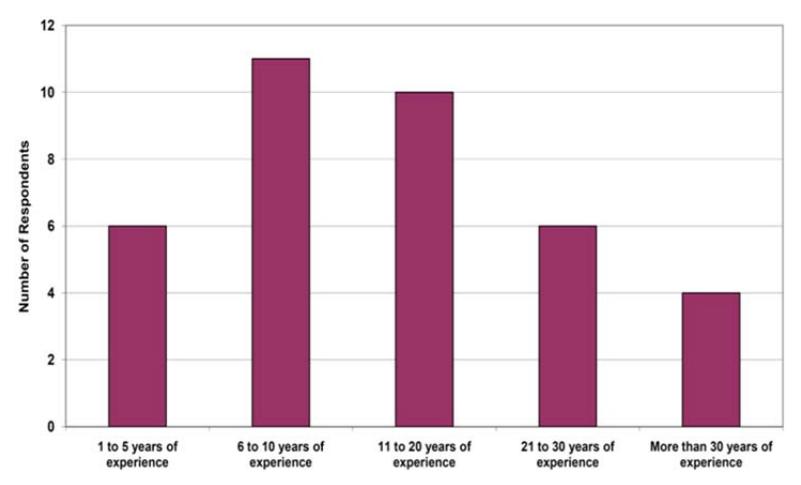
Figure 1 Respondents' years of experience.
3.3 Respondents' Knowledge Resources During The Design Process
Thirteen designers stated that they depend mainly on their own past experience when developing their lighting designs. 'Point of view and feeling' came second with a score of 8. 'Known practice traditions' was likely to be the third most chosen answer with a score of 7. Five designers reported their background education to be their primary source in the lighting design process. Only 4 designers said that they rely on what they have read in textbooks when developing their lighting designs. No designer at all indicated that they depend on the results of scientific research in planning their lighting designs (Figure 2).
A number of designers pointed out some other knowledge resources they depend on during their design processes beside the above categories. Some examples of these opinions are: 'Colleagues'; 'Life experience'; 'The mood as specified by the script'; Type of audience, performance, and set'; An understanding of the elements of design and their effect on viewers' reactions'.
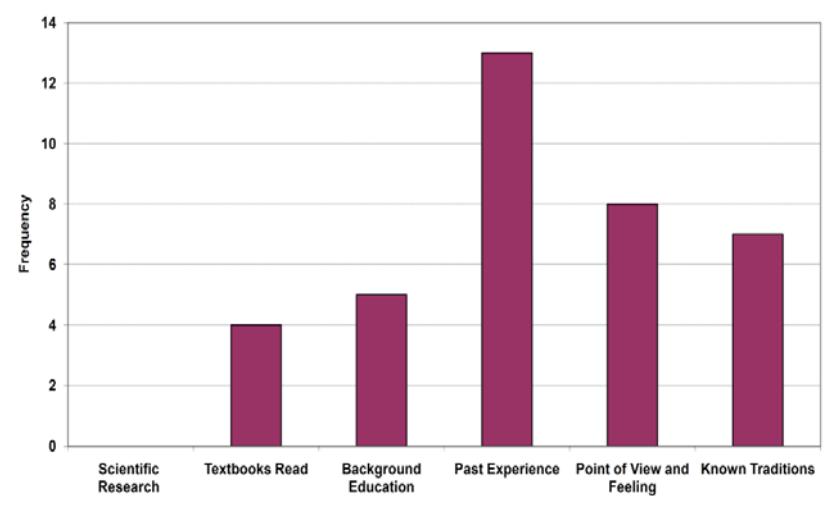
Figure 2 Respondents' knowledge resources during their design process.
3.4 Associations Between Respondents' Field of Lighting Design and Their Knowledge Resources
A percentage of 62.3% of respondents who work as television lighting directors and lighting designers replied that they depend mainly on their past experience in planning their designs. Both 'Point of view and feeling' and 'Background education' gained the same score from television lighting directors and lighting designers, with a percentage of 14.6% for each. 'Textbooks read' and 'Known traditions' came last with 5.1% and 3.4% respectively (Table 2 and Figure 3).
| Textbooks read | Background education | Past experience | Point of view and feeling | Known traditions | |
|---|---|---|---|---|---|
| Television lighting designers & lighting directors | 5.1% | 14.6% | 62.3% | 14.6% | 3.4% |
| Cinematographers & directors of photography | 10.0% | 5.0% | 10.0% | 35.8% | 39.2% |
| Television cameramen | 2.6% | 8.8% | 70.6% | 10.8% | 7.2% |
Table 1 Associations between respondents' field of lighting design and their knowledge resources.
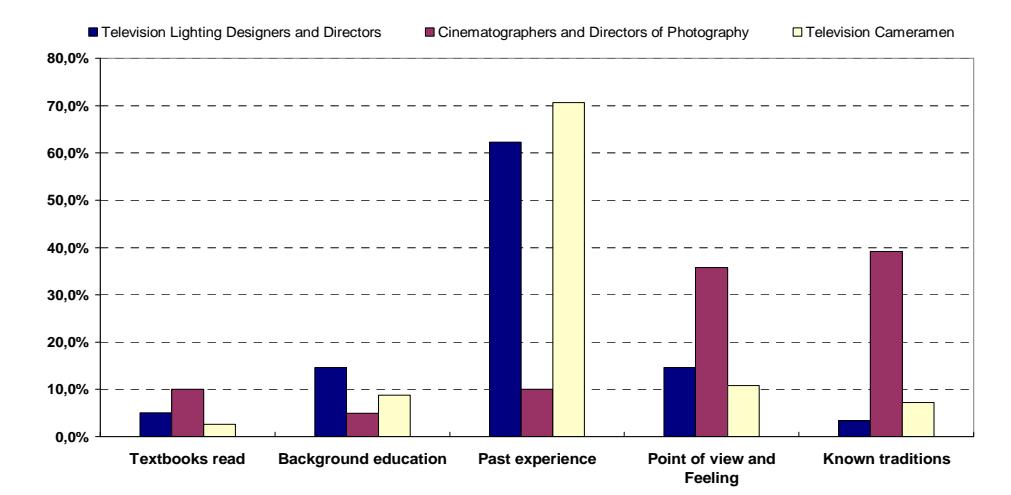
Figure 3 Associations between respondents' field of lighting design and their knowledge resources.
The situation was significantly different for cinematographers and directors of photography, as 39.2% of them named 'Known traditions' to be their ultimate knowledge resource during the lighting design process. 'Point of view and feeling' came second in importance for cinematographers, at 35.8%. Meanwhile, 'Background education' was the last knowledge resource in attracting cinematographers' interest with a percentage of only 5.0%. Television cameramen shared with television lighting directors and lighting designers their opinion about past experience as being the primary knowledge resource during the design process; 70.6% of them indicated so. On the other hand, 7.2% of television cameramen indicated 'Known traditions' as their source of inspiration during the design process. Television cameramen saw 'Textbooks read' as the least important resource of knowledge they use in their work.
3.5 Associations Between Respondents' Years of Experience and Their Knowledge Resources
Significant associations were found between the designers' years of experience and some particular knowledge resources. For example, the more years of experience the designers have, the more they depend on their past experience in developing their designs and ignore their background education or any textbooks they have read. On the other hand, the fewer years of experience the designers have, the more they rely on their point of view and feeling, and give background education and textbooks relatively similar importance (Table 2 and Figure 4).
Table 2 Associations between respondents' years of experience and their knowledge resources.
| Textbooks | Background | Past | Point of view | Known | |
|---|---|---|---|---|---|
| read | education | experience | and feeling | traditions | |
| 1 to 5 years of experience | 14% | 16% | 20% | 46% | 4% |
| 6 to 10 years of experience | 26.7% | 13.3% | 26.7% | 13.3% | 20% |
| 11 to 20 years of experience | 9.2% | 22.7% | 34.4% | 19.5% | 14.2% |
| 21 to 30 years of experience | 3.8% | 4.5% | 43.1% | 31.5% | 17.1% |
| More than 30 years of experience | 11.8% | 10.5% | 35.3% | 21.8% | 20.6% |
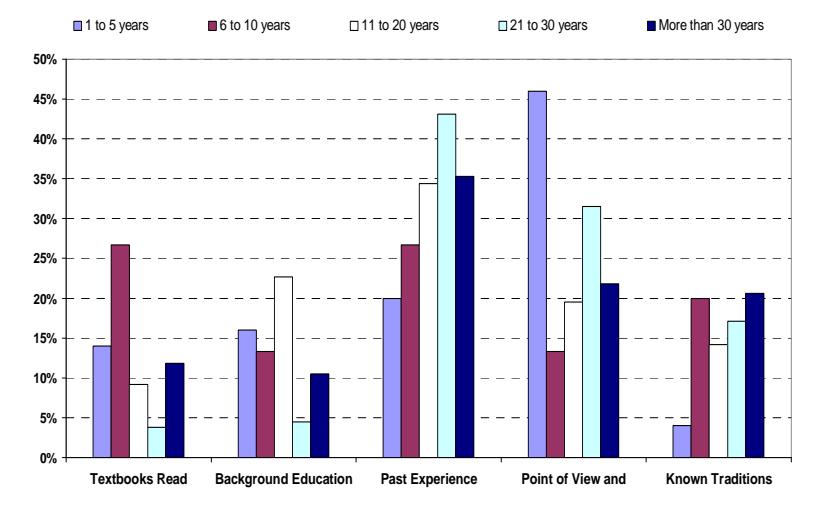
Figure 4 Associations between respondents' years of experience and their knowledge resources.
Actually, what the above results suggest of associations between lighting designers' experience and their choices of knowledge resources is likely to take place among other designers within different design disciplines, or even among non-design practitioners, as the more the person designs and/or practices, the more they learn from their own past work and previous attempts, and the more
they feel knowing much more in their field than what they have read or were taught at the beginning of their career.
Even though this could be accepted as an existing reality, it may not be an ideal way of performing the tasks required from designers. Lighting designers, whatever the years of their experience may be, should not depend only on their previous attempts and past work in developing their designs. Doing so may finish the job successfully from the point of view of many people, but lighting may not help or have a significant role in creating an effective image able to communicate with the viewers in a proper way.
3.6 Respondents' Qualitative Comments
Within their qualitative comments, some respondents criticized the research notion of investigating lighting designers' knowledge resources during their design processes. Some examples of what they have said are:
- 1. "A lot of design is subjective depending so much on the observer's experience and background."
- 2. "It depends on the subject, the background, the previous shot and the following shot."
- 3. "It's not an intellectual checklist that you use; it's completely emotional and somewhat cultural."
Although this study admits the existence of individual differences between different designers, and also the notion that a lot of design is subjective and depends on the viewer's own characteristics and unique personality, this cannot be an excuse for not attempting to research lighting design and investigate how it could be better developed and employed. Otherwise, this research would lose any value, along with all other design studies. Lighting design is not less than any other scientific subject, it needs to be investigated systematically in order to advance and to stay up to date with all the cultural and technological changes taking place every day.
4 Summary of Main Findings
This study helped in focusing on the limited scale of research in the field of cinematic and television lighting design and the lack of knowledge resources available to lighting designers during their design process. The main findings of this study were:
a. Egyptian lighting designers' main knowledge resource during their design process is their own past experience. 'Point of view and feeling' serve as their second resource. 'Known traditions' are also among Egyptian lighting designers' primary knowledge resources. On the other hand, a limited
- number of Egyptian lighting designers depend on 'Textbooks read' or on their 'Background education' in planning their designs. Meanwhile, none of the Egyptian lighting designers depends on the results of scientific research.
- b. The more years of practice Egyptian lighting designers have, the more they depend on their past experience in developing their designs and the less background education or textbooks they have read play a role. On the other hand, the fewer years of experience Egyptian designers have, the more they rely on their background education, textbooks they have read, and their point of view and feeling.
5 Conclusion
This study investigated different knowledge resources informing television and film lighting design practice in Egypt. Egyptian lighting directors, lighting designers and those who have an interest one way or another in lighting design (i.e. cameramen, cinematographers and directors of photography) were the study's primary data sources. Beside the quantitative data gathered using the study's questionnaire survey, it was also successful in gathering rich qualitative opinions from many participants. The opinions and experiences of the participants were used as sources of insight through the investigated subject, while the researcher's involvement was limited to the truthful interpretation of the participants' viewpoints. The study pointed out the lack of knowledge resources available to Egyptian lighting designers and the need of more scientific studies focused on the discipline of lighting design in order to establish a database of findings, theories and paradigms in this field of knowledge.
Acknowledgement
The researcher would like to acknowledge the help and support of all the respondents who took part in the study questionnaire survey.