

1 Introduction
Motorcycles are the most used type of vehicle in Indonesia. In 2017, the number of motorcycles used in Indonesia was 113 million units or 81.6% of the total number of vehicles in Indonesia [1]. Based on 2018's motorcycle sales data, the scooter is the type contributing the most, i.e. as many as 84.6% of total sales, i.e. 6.4 million units [2]. The main reasons why people choose a scooter model are: ease and comfort of riding and being the type of motorcycle that is ridden more than the other types. According to the Indonesian Motorcycle Industry Association, scooters in Indonesia can be divided into two different segments based on the engine capacity, i.e. scooters with engine capacity below 125 cc and scooters with engine capacity above 125 cc. The scooters with engine capacity below 125 cc predominate sales with a contribution of 64.86% [2].
Regarding their shape, scooters used in Indonesia can be classified based on size, type, and shape characteristics.
The designs of scooters in Indonesia are developed by designers working for motorcycle brand owners, considering not only the general characteristics of Indonesian riders, but also regional characteristics. However, there is no design orientation specifically for female riders. The same is true for the general representation of scooters in communication materials, which is not oriented towards women as riders. Some scooter models have specific colors and product graphics in addition to featuring a female photo model as the rider in the communication materials in order to attract the interest of women.
In Indonesia, the number of female motorcycle riders has consistently increased over the past 10 years. The portion of female riders was 19% in 2008, which grew to 30.8% in 2019. An increase of 11.8% in the ratio of female riders was recorded during that period [3]. The number of the female population in Indonesia was 49.76% in 2018, or 131.5 million. This number is projected to exceed that of the male population in 2032 [4]. With the increase of female riders along with the increase of the female population, a good understanding of their needs is essential to create effective scooter designs for female riders. Market segmentation based on gender is an important variable [5].
Gender difference also influences the perception of motorcycle design, such as the perception of size, performance and shape characteristics [6]. Gender difference is not only related to fundamental physiological differences but also to cognitive differences [7]. In consumer psychology, by understanding how each gender has a different cognitive processing style, affective response and reaction to a product is important for anticipating their product choices and preferences [8]. In product design, the understanding of gender differences in relation to product features is important to enable the designer to communicate with different market segments and produce effective products for each segment [9]. Related to the emotional design, gender difference is one of the most important factors to be considered [10].
According to Meyers-Levy and Loken [8] there are four theoretical approaches for explaining gender differences, namely socio-cultural, evolutionary, hormone and brain science approaches, and the selectivity hypothesis. Overall, the most prominent finding related to the distinction between preferences of males and females is that the latter have a more communal mindset, which means that they have an orientation towards other people and put other people's needs before the fulfillment of their own satisfaction [11]; they are more sensitive toward signs from their environment, making them adjust their behavior to suit the environmental context [12]; they are more responsive to negative stimuli from their environment [13] so they are more cautious and avoidance focused; they have emotional intelligence and the female brain is dominated by the capability of empathy [14]; women process information or data comprehensively so they have more ability to detect, elaborate more extensively, and utilize both direct and indirect information when forming an assessment, and when they make decisions, women consider all personal and conditional aspects and all available product attributes [15].
Women have their own style of product selection, which for them is a form of recreation by enjoying the process of choosing from a wide variety of choices and focusing on each product's details. [16]. Women also tend to spend more time paying attention to the details of a product design [17], product features [18], and aspects related to 'people' [19]. Regarding motorcycles, women select models that are light in weight, small in size and easy to use, have large storage space, and can be used to pick up their children and go shopping [6]. Women use scooters more for shared purposes. In addition, riding comfort and performance are equally important factors in choosing a scooter apart from consideration of the design [3].
A holistic understanding of human beings and their needs provides an overall viewpoint in the process of product design. Based on the human factor, Jordan [20] distinguishes a three-level hierarchy in the related needs, namely functionality, usability, and pleasurability. By understanding the pleasurability level of a product it can be understood that the relationship between a person and a product is not only limited to the functionality and usability aspects of someone's cognitive and physical characteristics, but also the understanding of his/her emotional characteristics. Pleasurability itself consists of four aspects, namely (1) physio-pleasure, which is obtained from the senses and sensory organs and is closely related to the physical aspect of the human body; (2) socio-pleasure, which is closely related to the relationship and interaction with the surrounding environment and other people; (3) psycho-pleasure, which is closely related to ease of operation and psychological benefits obtained from a product; and (4) ideo-pleasure, which is related to values owned by someone, which determine how to take action and evaluate himself/herself. In order to have an overall understanding it is necessary to have a good understanding of the pleasurability factor [20].
Product aesthetics, such as shape and color, influences the emotional response towards a product [21]. An interesting product is seen to function better, and the attractiveness of a product results in a positive emotion that makes the process of using the product seem more pleasant, ignoring difficulties that may exist in its use. The shape of a product as one of the elements related to a product's appearance can influence the emotion of the user [22]. Norman in [22] also
states that there are three interaction levels between a product and its user, namely (1) visceral, which is related to the product's appearance; (2) behavioral, which is related to the pleasure and effectiveness in usage; and (3) reflective, which is influenced by background experience. Physio-pleasure combines aspects obtained in the visceral and the behavioral processes. Sociopleasure combines the behavioral and reflective processes, while psychopleasure is related to behavioral processes. Ideo-pleasure is a reflection of experience, so it is a reflective process.
A study of female rider's perception toward scooter designs in Indonesia was conducted with a descriptive analysis of quantitative data obtained through a survey of 150 female riders in Bandung regarding their perception toward 6 different shapes of scooters that were selected to form an overview of scooter designs available in Indonesia based on 16 relevant pleasurability factors. Firstly, a descriptive analysis of quantitative data was conducted to obtain an evaluation of female rider perception of scooter designs in Indonesia based on pleasurability factors and to identify shapes of scooters that are interesting to female riders. Secondly, a factor analysis was conducted toward quantitative data on female rider perception toward 6 different scooter designs to classify the factors formed for each design. Based on the classification, a mapping of female rider perception toward each scooter design in Indonesia was conducted.
The perception evaluation and the identification of scooter designs can provide insights that can be used by designers or motorcycle industries in developing and determining scooter designs that appreciate gender differences to meet the preferences of female riders. Additionally, it can provide insights into the composition of an appropriate scooter image in communication materials and as an effort to better understand female rider characteristics, which can be used in further developing the motorcycle industry and businesses in Indonesia.
2 Research Methodology
The perception study was conducted through a survey with in-depth interviews by using a questionnaire and stimulus cards on 150 female rider respondents with an age of 17 to 35 years from Bandung, the capital city of West Java province, which is the largest contributor to motorcycle sales in Indonesia. The randomly chosen respondents were female scooter riders who were familiar with the study objects and rode scooters for their personal needs.
The motorcycle brand was not the respondents' main reason for purchasing their scooters. The study objects were scooters available in Indonesia and were chosen based on the highest sales numbers in order to represent all groups of scooters available in Indonesia, as shown in Table 1. The number of respondents for each scooter model was the same to eliminate a possible tendency of respondents toward one of the scooters.
Stimuli Motorcycle A Motorcycle B Motorcycle C Model Honda BeAT Yamaha Mio Honda Vario Picture Stimuli Motorcycle D Motorcycle E Motorcycle F Model Honda PCX Yamaha NMax Honda Scoopy Picture
Table 1 Stimulus pictures of study objects.
The questionnaire consisted of both open- and closed-ended questions. A preinterview questionnaire regarding the respondents' profile and psychography, was used to match the respondents against predetermined criteria. The respondents were asked to look at the stimulus pictures and assess their own perception toward the shape on a Likert scale. The assessment score was interpreted by dividing the scores into the following four categories: a score of 1.00-3.25 = 'totally disagree', a score of 3.25-5.50 = 'disagree', a score of 5.50- 7.75 = 'agree', a score of 7.75-10.00 = 'totally agree'. The assessment was divided into 16 pleasurability aspects of 4 pleasurability types determined based on the reasons for choosing scooters in Indonesia [3]. The stimulus cards consisted of six scooter pictures as study objects, consisting of colorless and monocromatic images with the same dimetric projection angle.
3 Discussion and Result of Study
The obtained quantitative data were processed using the inferential statistics approach through a descriptive analysis to describe the data related to the respondents' perception and through factor analysis with the help of the SPPS software application, version 23, to determine the dominant factors in each scooter design. The factor analysis used principal component analysis and varimax rotation with Kaiser normalization.
3.1 Perception of Scooter Designs in Indonesia
Women have the following perception toward scooter designs: they look highquality, are comfortable to ride, can be used by all family members, are exciting and relaxing to ride, and give self-confidence when ridden, as shown in Table 2. Out of four types of pleasurability, the female rider perception covered only three types, namely physio-pleasure, socio-pleasure, and psycho-pleasure based on the finding that the socio-pleasure and the ideo-pleasure aspects were not significantly represented. Based on the product-user interaction level [22] it is still in the visceral and behavioral phases and has not yet reached the reflective phase, which is influenced by socio-pleasure and ideo-pleasure aspects. To increase the interaction and to strengthen the relationship between scooters and their users and to be able to increase female rider preference toward a scooter design, the interaction level needs improving. According to Norman [22], a product with an attractive appearance will be perceived to function better.
Table 2 Statistic data of pleasurability factors based on scale category.
| Factor | Motorcycle | Scale Category | ||||||||||
|---|---|---|---|---|---|---|---|---|---|---|---|---|
| Pleasure | A | B | C | D | E | F | Mean | TD | D | A | TA | |
| Physio | High-quality | 7.55 | 7.48 | 8.70 | 9.19 | 9.15 | 8.34 | 8.40 | 0 | 0 | 2 | 4 |
| Comfortable | 7.99 | 7.39 | 7.88 | 8.31 | 8.31 | 8.48 | 8.06 | 0 | 0 | 1 | 5 | |
| Light | 8.75 | 7.08 | 5.86 | 5.21 | 5.31 | 8.34 | 6.76 | 0 | 2 | 2 | 2 | |
| Slim/Agile | 8.78 | 7.27 | 6.07 | 5.09 | 5.35 | 7.99 | 6.76 | 0 | 2 | 2 | 2 | |
| Socio | Able to be used by family members | 8.48 | 7.91 | 7.92 | 7.15 | 7.24 | 8.46 | 7.86 | 0 | 0 | 2 | 4 |
| Status-related | 6.34 | 6.37 | 6.91 | 7.97 | 7.73 | 6.84 | 7.03 | 0 | 0 | 5 | 1 | |
| Distinctive /Prominent | 5.87 | 5.90 | 7.24 | 8.55 | 8.45 | 7.27 | 7.21 | 0 | 0 | 4 | 2 | |
| Environmentally acceptable | 6.68 | 6.66 | 7.37 | 8.01 | 7.85 | 7.39 | 7.33 | 0 | 0 | 4 | 2 | |
| Exciting | 7.98 | 7.33 | 7.81 | 8.08 | 8.20 | 8.23 | 7.94 | 0 | 0 | 1 | 5 | |
| Relaxing | 8.23 | 7.51 | 7.65 | 8.07 | 7.95 | 8.40 | 7.97 | 0 | 0 | 2 | 4 | |
| Psycho | Self-confident | 7.56 | 7.02 | 7.85 | 8.68 | 8.49 | 7.97 | 7.93 | 0 | 0 | 2 | 4 |
| Free and Easy | 8.22 | 7.37 | 7.52 | 7.65 | 7.77 | 8.25 | 7.80 | 0 | 0 | 4 | 3 | |
| Ideo | Feminine | 7.64 | 6.13 | 5.90 | 5.75 | 5.26 | 8.85 | 6.59 | 0 | 1 | 4 | 1 |
| Independent | 7.30 | 6.90 | 7.47 | 7.71 | 7.75 | 7.71 | 7.47 | 0 | 0 | 5 | 1 | |
| Environmentally Friendly | 7.74 | 7.25 | 7.56 | 7.46 | 7.53 | 8.06 | 7.60 | 0 | 0 | 5 | 1 | |
| Economical | 8.24 | 7.49 | 6.35 | 4.51 | 5.26 | 7.63 | 6.58 | 0 | 2 | 3 | 1 | |
| Scale | TD | 0 | 0 | 0 | 0 | 0 | 0 | |||||
| D | 0 | 0 | 0 | 3 | 4 | 0 | ||||||
| A | 8 | 15 | 11 | 5 | 3 | 5 | ||||||
| TA | 8 | 1 | 5 | 8 | 9 | 11 | ||||||
Overall, scooter designs in Indonesia can represent several female gender characteristics, namely 'communal', i.e. can be used by all family members (a socio-pleasure aspect); empathy and emotional intelligence, i.e. scooters that are exciting and relaxing to ride, and give self-confidence (psycho-pleasure aspects). The more the scooter designs can give pleasurability, the higher the preference of female riders will increase, with the tendency of women to process information comprehensively and consider all available information.
3.2 Attractive Scooter Designs
Out of the six scooter designs as stimuli, the scooter model that gave the most pleasurability to female riders was Motorcycle F, the Honda Scoopy. The perception of a light-weight scooter that looks slim and agile gives the feeling of a free and easy ride, and looks feminine and environmentally-friendly, which is an ideo-pleasure aspect. These are the pleasurability factors in the perception of the motorcycle design shown in Table 2. Out of all six scooter designs, the Honda Scoopy was the only one that was perceived as 'feminine', which is important related to the female gender stereotype of women who are concerned about opinions from their environment [12].
From the answers to the questionnaire of the in-depth interviews, the front side and front lamp of scooters are the most attractive parts to female riders. For the Honda PCX and the Yamaha NMax, the seat and footrest are especially attractive parts, whereas for the Honda Scoopy, the rear view mirror with its distinctive shape is an especially attractive part to female riders. The details of the automatic scooter shape is important for female riders in accordance with the female characteristic of spending time paying attention to details of product designs [17]. Additionally, based on the selectivity hypothesis [15], women process information comprehensively by considering the subject and object of product attributes, and respond to subtle cues and details [18].
3.3 Pleasurability Factor of Scooter Designs
The result of the factor analysis shows the formation of different numbers of factors for each scooter design although the given pleasurability aspect was the same. This indicates that the perception base on the pleasurability aspect can be influenced by scooter designs with the different factor formation. The increasing number of factors that are formed can be seen as an increasing number of different variables that are perceived by female riders in the scooter designs, and because female comprehensively process and accept information to make a decision [8], a larger number of variables supports a more positive female rider perception toward a scooter design. Based on the pleasurability factor formation, the overall factor analysis as shown in Table 3, the physiopleasure aspect 'high-quality' is closely related to the psycho-pleasure factor. The socio-pleasure aspect 'can be used by family members' of scooters A, B and C has a correlation with the psycho-pleasure factor, but as for scooters with a larger size, such as scooters D and E, also with Motorcycle F, which has different shape characteristics, has more correlation with the ideo-pleasure aspect 'economical'.
Table 3 Pleasurability factor formation.
| Model | Factor 1 | Factor 2 | Factor 3 | Factor 4 |
|---|---|---|---|---|
| (1) High-quality | (6) Status-related | (2) Comfortable | (13) Feminine | |
| (5) Can be used by | (7) Distinctive/ | (3) Light | (14) Independent | |
| Motorcycle A | family members | prominent | (4) Slim/agile | (15) Environmentally |
| (9) Exciting | (8) Environmentally | friendly | ||
| (10) Relaxing | accepted | (16) Economical | ||
| (11) Self-confident | ||||
| (12) Free and easy | ||||
| (1) High-quality | (6) Status-related | |||
| (2) Comfortable | (7) Distinctive/ | |||
| (3) Light | prominent | |||
| (4) Slim/agile | (8) Environmentally | |||
| (5) Can be used by | accepted | |||
| Motorcycle | family members | (11) Self-confident | ||
| (9) Exciting | (14) Independent | |||
| B | (10) Relaxing | |||
| (12) Free and easy | ||||
| (13) Feminine | ||||
| (15) Environmentally | ||||
| friendly | ||||
| (16) Economical | ||||
| (1) High-quality | (3) Light | (6) Status-related | ||
| (2) Comfortable | (4) Slim/agile | (7) Distinctive/ | ||
| (5) Can be used by other | (13) Feminine | prominent | ||
| family members | (16) Economical | (8) Environmentally | ||
| Motorcycle | (9) Exciting | accepted | ||
| (10) Relaxing | ||||
| C | (11) Self-confident | |||
| (12) Free and easy | ||||
| (14) Independent | ||||
| (15) Environmentally | ||||
| friendly | ||||
| (1) High-quality | (3) Light | (6) Status-related | ||
| (2) Comfortable | (4) Slim/agile | (7) Distictive/prominent | ||
| (9) Exciting | (5) Can be used by other | (8) Environmentally | ||
| Motorcycle | (10) Relaxing | family members | accepted | |
| D | (11) Self-confident | (13) Feminine | ||
| (12) Free and easy | (16) Economical | |||
| (14) Independent | ||||
| (15) Environmentally | ||||
| friendly | ||||
| (1) High-quality | (3) Light | (6) Status-related | ||
| (2) Comfortable | (4) Slim/agile | (7) Distinctive/ | ||
| (9) Exciting | (5) Can be used by other | prominent | ||
| Motorcycle | (10) Relaxing | family members | (8) Environmentally | |
| E | (11) Self-confident | (13) Feminine | accepted | |
| (12) Free and easy | (16) Economical | |||
| (14) Independent | ||||
| (15) Environmentally | ||||
| friendly | ||||
| (1) High-quality | (6) Status-related | (13) Feminine | (5) Can be used by other | |
| (2) Comfortable | (7) Distinctive/ | (14) Independent | family members | |
| Motorcycle F | (3) Light | prominent | (15) Environmentally | (16) Economical |
| (4) Slim/agile | (8) Environmentally | friendly | ||
| (9) Exciting | accepted | |||
| (10) Relaxing | ||||
| (11) Self-confident | ||||
| (12) Free and easy |
For large-sized scooters, the 'economical' aspect is also correlated with the 'feminine' aspect. For small-sized scooters such as A and B, the physiopleasure perception of 'comfortable' has a strong correlation with the 'lightweight' and 'slim and agile' appearance. For other scooter models, 'comfortable' is more correlated with the psycho-pleasure factor.
As a result of the perceptual matrix based on two factors that are formed with the highest variance in Figure 1 it can been seen that overall the dominant distribution is in quadrant II, where both pleasurability factors have strong influence on the perception of female riders toward each scooter model. This is also in line with the female gender characteristic of being more comprehensive in accordance with the selectivity hypothesis.
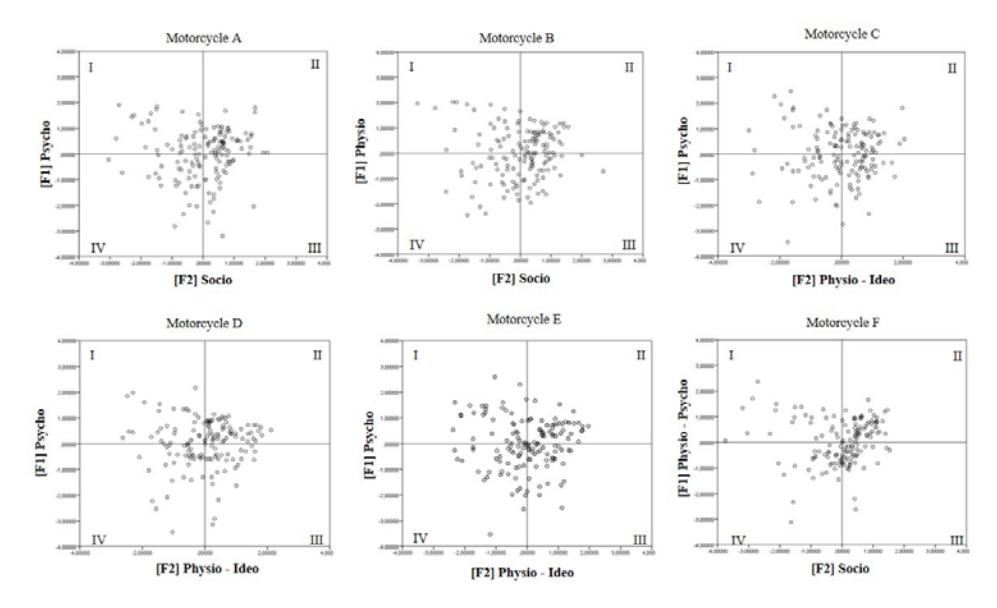
Figure 1 Perceptual matrix graph of the scooter models.
In addition to the dominant distribution in quadrant II, from Factor 2 (F2) in the overall perceptual matrix, there are two groups of scooter models, while the grouping based on F1 from the factor analysis for each scooter model classifies the scooter into three groups as shown in Table 4.
| Motorcycle | ||||||||
|---|---|---|---|---|---|---|---|---|
| Pleasurability | A | B | C | D | E | F | ||
| Psycho | F1 | F1 | F1 | F1 | F1 | |||
| Socio | F2 | F2 | F2 | |||||
| Physio | F1 | F1 | ||||||
| Ideo | F2 | F2 | F2 | |||||
Table 4 Factor analysis of scooter models.
Mapping based on the factors with the largest loading (F1 and F2) gives the grouping of scooter designs based on the perception of female riders shown in Figure 2.
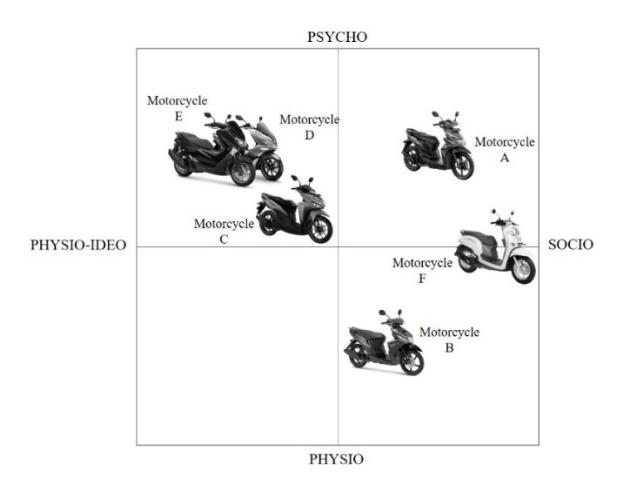
Figure 2 Mapping of scooter designs based on factor analysis.
Scooter models D and E are in the same quadrant position, with the same large size and the same attractive components, namely seats and footrests, and both have a similar perception despite having different shape characteristics. Motorcycle F has shape characteristics of a scooter design that are different from those of the other scooters, not only the overall shape but also smaller components, for example the attractive rear view mirror, has a better pleasurability perception. It occupies a position in its own quadrant with a perception of the socio-pleasure factor as well as the psycho-pleasure and physio-pleasure factors. Scooter A has a smaller size as well as a type and shape characteristics similar to scooter B, but has a different pleasurability perception and occupies a different quadrant area. This confirms even more that, in addition to size, type and the scooter shape characteristics, the design has an influence on female rider perception based on the pleasurability factor, both overall and of specific components.
4 Conclusion and Suggestions
Based on the result of this study, the scooter designs had a perception in accordance with female gender characteristics, i.e. communal, and highly empathic/emotional. However, the perception consisted only of three pleasurability factors and did not reach the reflective level. By considering the characteristics of female gender, a significant fulfillment of the pleasurability
factor in future scooter designs can improve the perception of female riders toward scooter designs in Indonesia and enhance the product-user interaction.
The pleasurability factor had different perceptions for each scooter design. The size, type and shape characteristics as well as detailed components of the scooters were things that influenced the perception of female riders and possibly led to a different pleasurability perception. The understanding of different perceptions related to pleasurability toward scooter designs by female riders can be used to make the communication material more relevant to their perception in order to attract more interest of female riders. In addition, a good understanding of gender characteristics as well as the perception of female riders toward the designs of scooters can provide ideas to develop future designs of scooters.