

1 Introduction
Considering the current demand for sustainable children's products, from traditional to practical, from aesthetic to flexible, safe and environmentallyfriendly, researchers and businesses have introduced sustainable design concepts to children's products. Sustainable design is a combination of integrated technological, economic, environmental and social factors. It is environmentally conscious in fulfilling function, quality, lifespan and the cost of the product, considering the environmental and social health and economic attributes of the product throughout its life cycle. Gam [1] found that women with at least one child are interested in sustainable and eco-friendly products that are beneficial for their children, which also inspires parents to act in an environmentally responsible manner.
Received November 23rd, 2020, Accepted for publication June 6th, 2021. Copyright © 2020 Published by ITB Institute for Research and Community Services, ISSN: 2337-5795, DOI: 10.5614/j.vad.2021.13.1.3
Previous researches mainly focused on design strategies for multifunctional clothing concerning sustainable development in the fashion market [2-5]. The design of multifunctional clothing incorporates the application of ergonomic concepts and in-depth analysis of aesthetics and practicality to achieve the objectives of children's clothing and to promote harmonious growth in society. The acceptation levels for multifunctional clothing are high, indicating that most participants want to see clothes as a creative fashion alternative. Although multifunctional clothing plays a major role in the apparel industry, the main target group is an adult audience. Unfortunately, children's multifactional clothing is relatively rare [6]. Therefore, multifunctional children's clothing was selected as the main subject for this study.
The research objective was to promote sustainable wear by focusing on the advanced multifunctional design process for children's clothing by following the Eco-fashion design model [7]. Following the selection of the design concept, four items of multifunctional children's clothing were developed using the framework of this model.
2 Literature Review
2.1 Children's Clothing Design
Children's products are designed to meet physical and psychological needs. They should be designed based on children's actual needs, with new shapes and a unique appearance in order to attract children's attention [8]. Children not only like clothes but enjoy buying them [9]. Complicated clothing designs can cause visual fatigue. Children's clothing design should adopt a simple and flexible style and cultivate children's aesthetic consciousness [10]. Children's clothing design should be comfortable, convenient, safe, etc., and extra attention should be paid to actual demand, production costs, and adherence to a humanoriented design concept that is in line with the laws of children's growth, physical and mental health [11,12]. Chu and Rahman [13] state that color is the most powerful visual communication component of children's products. Children are receptive to color, which can stimulate their desire to buy, emotionalize, and enhance their imagination. According to Cui et al. [14], children's clothing should be designed in bright colors and high saturation may trigger children's emotional happiness and enjoyment. Likewise, psychologically depressing grey tones can easily trigger a vulnerable and timid mood in children. In addition, complex color matching is not helpful for children's recognition and memory but may complicate children's thinking and learning ability, anxiety and irritability.
Previous researchers investigated several issues during the design of children's clothing:
- 1. Clothes for children between 2 and 12 years should not have cords or drawstrings in the hood and neck area. Instead, Velcro, snap, and button closures can be used on jacket hoods instead of drawstrings (ASTM F1816- 9, Australian Competition and Consumer Commission, 2011).
- 2. The fabric used in children's clothing should be free of formaldehyde and phthalates during the production and have no raw edges (ASTM F1816-97, Consumer Product Safety Improvement Act of 2008).
- 3. Pom-poms, sequins, and beads are not recommended for children's clothing up to 4 years of age; screen-printing, embroidery patterns and other simple fabric designs can be good alternatives (ASTM F1816-97).
- 4. Attachments such as buttons should not have sharp edges and should have at least 2 stitches attached to ensure that the part is kept flat and secure (European standard EN 14682, 2007).
- 5. Testing fabrics for children's clothing for durability, not only in order to meet safety requirements but also to help produce longer-lasting clothing (European standard EN 14682, 2007).
- 6. Applying a multifunctional design concept in children's clothing can increase consumption, as children grow up quickly [15].
- 7. The use of a single fabric can have an impact on the recycling process after use, allowing easy disassembly [1].
2.2 Multifunctional Clothing Design
Multifunctional clothing design is defined as a method of clothing design that apart from aesthetics and basic user security considers performing multiple functions towards more utilization [15]. Multifunctional clothes (also known as convertibles or transformers) are pieces of clothing that can be worn in more than one way or that serve several different purposes by producing clothes that do more with less. The use of attached cloth straps, ties, buttons or other built-in adjustment tools may be altered in such clothes [16]. This can increase the rate of use and increase the lifespan of the clothing and reduce disposal [4], which could be a possible solution for the issue of excessive clothing consumption through the fashion industry. Therefore, multifunctional clothing can be an alternative revenue stream for the fashion industry as a positive idea for the young consumer market towards sustainability [2]. Multifunctional clothes have multifunctional capabilities that allow users to eliminate trade-offs between incompatible requirements. Farrer [17] states that multifunctional clothing may minimize the over-consumption of clothing and that consumers can engage in a sustainable activity. Multifunctional design concepts such as all-in-one represent a type of sustainable clothing [2], which is a response to the environmental crisis resulting from the rapid growth of human and economic needs [18]. This type of clothing is expected to increase the frequency of use of a commodity and to extend the clothing life cycle, as it can be repeatedly transformed into different types [19]. Multifunctional clothes are divided into four categories: (1) folded designs that can be transformed by folding or tying down pieces [20]; (2) modular structures with small parts that can be used, removed or replaced independently [20, 21]; (3) smart clothing that incorporates technologies or smart materials [22, 23]; and (4) transformable items, called multi-life designs [2, 5].
The current study focused on modular design since it gives the parents the largest number of options on how the children's clothing can be styled [20, 21]. In this unique method, fasteners such as zippers, hooks and eyes, Velcro tape or buttons attach individual clothing components. Thus, these components can be unconnected and re-connected to produce a completely different type of clothing. One of the major problems facing sustainable fashion design is reducing fabric waste. There is up to 10 per cent of waste even during the design process for children's clothing [24]. Rissanen [24] has proposed a zerofabric waste design technique that uses a sustainable re-patterning approach. In this technique, the curves in the necklines, the waists and the armholes are consciously studied so that once the patterns are laid on the fabric, concave curves match the convex curves and all the fabric is covered. As a result, no waste is produced, reducing waste from 10% to 0% [25].
2.3 Eco-Fashion Design Model
Recently, Jalil and Shaharuddin [7] have developed the Eco-fashion design model with a focus on life-cycle clothing. This model is based on three notions of sustainable development: (1) recyclable resources so that all clothes can become green products; (2) reorganization of the product structure and the embodiment of a multifunctional purpose that can extend the life cycle of clothing; and (3) strengthening designs that meet consumer needs. As shown in Figure 1, the basic model consists of three main steps: problem definition, creative exploration, and implementation leading to recycling.
3 Methodology
An exploration of multifunctional children's clothing was conducted based on the Eco-fashion design model [7]. In the creative exploration phase, the design team defined the design criteria to address sustainability issues. Material features such as quality, price, a functional and aesthetic look were considered. In addition, research was done to see if recycled polyester is suitable for digital
printing and clothes for activity purposes. The design phase was further continued with the proposed concept of multifunctional convertible design and zero-waste techniques. Four multifunctional children's clothing items were designed called Multifunctional Doraemon Sleeveless Shirt (Design 1), Multifunctional SpongeBob Shirt (Design 2), Multifunctional Paw Patrol Chase Overall (Design 3), and Multifunctional Paw Patrol Skye Overall Dress (Design 4) by the second author. These iconic cartoon characters were chosen because they are popular with children aged between 3 and 6. The iconic color of these cartoon characters is in reference to the interests of children, as Chong [26] found that Malaysian children are interested in cartoon characters in blue, pink and yellow colors.
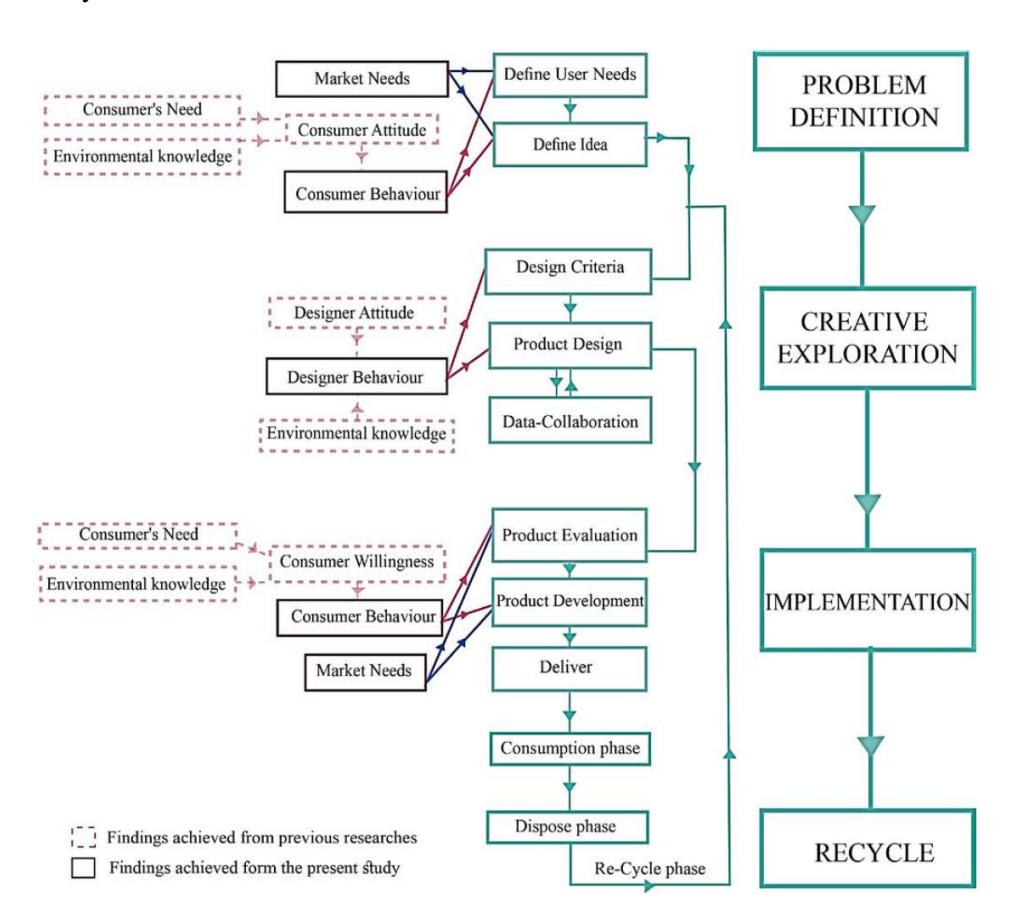
Figure 1 Eco-fashion Design Model process.
3.1 Design Criteria
The collection of sustainable materials consists of recyclable or recycled materials that can be used in the long term. Besides, designers need to be very careful in their choice of materials, as during design development they are hazards in eco children's clothing. Therefore, it is important to select fabrics at an acceptable price with a sufficient quality level when buying children's clothing. Nevertheless, the functional and aesthetic characteristics of sustainable materials are also important. As shown in Table 1, the materials were selected based on the following design criteria: environmental protection property, good quality, acceptable price, high performance, and good appearance.
The outer and inner layers of the clothing were made of non-hazardous biodegradable materials, technical or biological nutrients. The initial goal in the sourcing of the inner layer fabrics was to use organic cotton, which is suitable from a health perspective [1]. The researchers decided to choose two types of organic cotton fabrics for the main part (body) and polyester fabric for the cartoon panels, which are not in contact with the child's body. The advantage of choosing a polyester fabric is that it can be recycled or burned for energy, it has an acceptable price and it has good quality. Organic cotton fabrics are commonly used in casual clothing due to their comfort, recyclability, good quality, subtle appearance, and high-performance versatility. According to McDonough and Braungart [27], recycling is the most appropriate solution for the recovery of technical nutrients. Therefore, to achieve acceptable quality after recycling, it is not recommended to combine two different materials in a fiber structure.
Parts Type of Materials Descriptions Outer layers Printed polyester fabric Ability to be recycled or burned Suitable for a more durable result Inner layers Organic cotton fabric Ability to be composted returning nutrients to the earth Reactive dye with no formaldehyde or phthalates contents Tricot cotton binding tape rib Accessories Plastic zipper, clasp, plastic button, magnetic clasp, snap-hook clasp, cotton thread Ability to be recycled or burned for energy
Table 1 Profile of materials.
3.2 Design Detail
To offer some insight into practical design solutions, two design methods were employed and four core prototypes were created for experimental investigation.
The philosophy of the design and production of four multifunctional prototypes was mainly based on three sustainable designs practices:
- 1. zero-waste design
- 2. design for disassembly, and
- 3. multifunctional/detachable design.
Thus, the four designs were created based on the principles of sustainability and multi-functionality. Due to the acceptance of zero-waste design for patternmaking in children's clothing, the designer did not focus on a fashionable design style.
All prototypes were designed and developed using 3D simulation software CLO3D and draping them to find the best use of the fabrics, as well as pattern making and grading for mass-production. As shown in Figure 2, the computeraided design (CAD) package Gemini Pattern Editor was applied to the pattern making and grading process of all separate pieces using the zero-waste design approach. For this study, global standards were used for clothing measurement. Besides, the CAD software aims to achieve efficiency in the process of ecofashion design, such as paper elimination, time saving, and money saving. By back-and-forth experimenting between fashionable and multifunctional apparel, the original design is altered during the design process. The study involved the design of four items of clothing using a jigsaw puzzle technique. As a side note, to concentrate on environmental issues, sustainable strategies are required to optimize the use of garments and minimize fabric waste, as well as to assist the recycling scheme with disassembly specifications during the design process. Using this technique, a geometric area is fixed to create clothes with minimum or zero fabric waste. The researchers decided to keep the jacket and shirt without additions while still retaining an attractive appearance in order to minimize material use and enable easy recycling. The pattern making was critical due to the limited size and type of fabrics. Convertibility was the main point of the design. Hence, all the clothes were made with some detachable parts using zippers and snap press buttons for attaching or detaching joints to increase interchangeability.
For each design, this step was divided in four to show the details. Design 1 and Design 2 are interchangeable and consist of different clothing parts that the user can attach and remove. Hence, for these prototypes, a zipper was used. The third design concept (Design 3) is an enhancement of Design 2. Eight pieces of fabric make up this multifunctional prototype and each piece is linked to a zipper. This can be translated from a central prototype into many different types by mixing and matching the clothing components in Design 3 (or different prototypes). Finally, with Design 3, Design 4 includes the same idea, where six fabric pieces can be linked to create distinct outfits.
4 Results
4.1 Multifunctional Clothing Design
Table 2 shows the process of the Eco-fashion design model for multifunctional clothing.
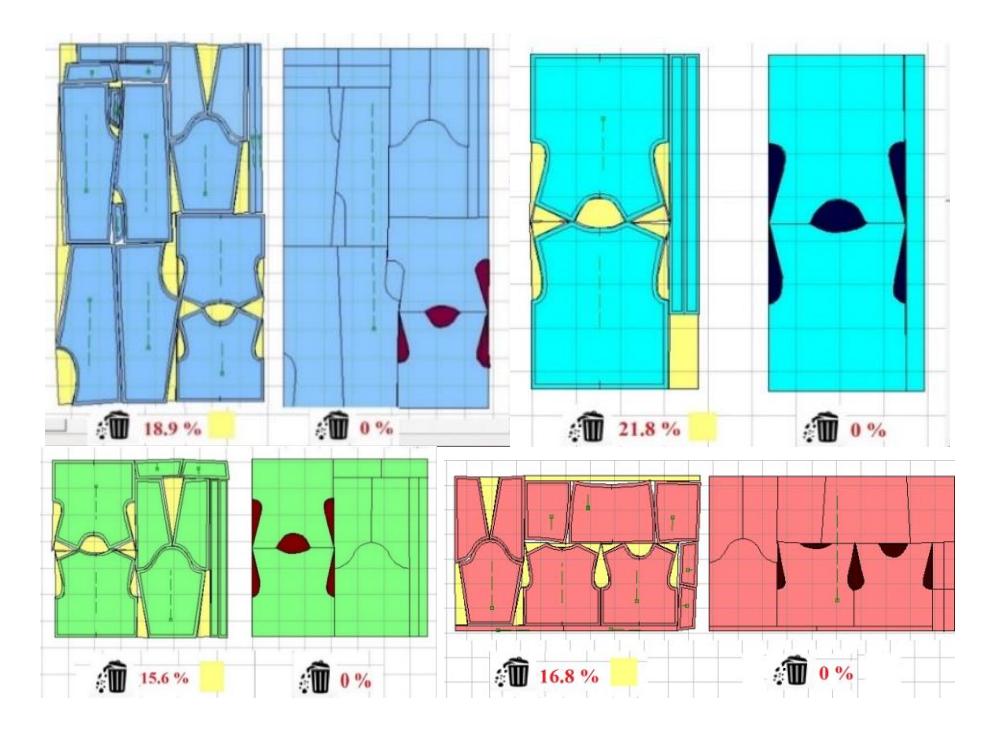
Figure 2 Zero-waste pattern making of four prototypes in 2D software (left: conventional pattern cutting, right: zero-waste pattern cutting).
As shown in Table 3, all goals to develop multifunctional children's clothing were achieved in this study. Organic cotton was chosen due to the good quality, which allows it to be washed more frequently than other fabrics.
All items of clothing were designed based on the zero-fabric waste principle. Thus, the fabrics remaining from the main parts in the body pattern were applied for other purposes, such as making ears or hands of the cartoon characters. Overall, functional clothing has a good look, with a functional design to allow for a sustainable lifespan. After their useful lifespan has been reached, the clothes can be disassembled and recycled easily. Cotton fabrics can either become compost or repurposed. The polyester fabrics can be melted down and then re-created into new fabric or burned for energy. The polyester
buttons and zippers can be reused or recycled for another purpose. All in all, the four items of multifunctional children's clothing met the requirements outlined at the beginning of the research. They were designed based on the characteristics of multifunctional convertible clothes and the use of invisible buttons and zippers. The items do not have zippers in sensitive areas of the child's body. The polyester panels can easily be removed for washing or recycling purposes. Furthermore, the buttons are hidden and are used to attach two different fabrics.
Table 2 Process of the Eco-fashion Design Model for Multifunctional Clothing.
Step 1: Problem Definition & Research
Problem identification: Excessive children's clothing consumption as well as increasing children's clothing and fabric waste cause environmental concerns.
Problem analysis: Purchasing many children's clothes for a few months due to physical changes (growing up) that may influence the actions of parents towards the purpose of buying children's clothing.
Search for alternative: Multifunctional children's clothing and sustainable attributes based on market needs.
Concept generation: Positive reaction toward choosing multifunctional children's clothing among parents based on searching their needs as well as market needs.
Definitive idea selection: Creating four items of multifunctional children's clothing with consideration of sustainable characteristics based on parent concerns and environmental knowledge.
Environment protection: Twill organic cotton and polyester fabrics, zipper, hidden buttons and threads were selected based on environmental friendliness, good quality, acceptable price, high performance and good appearance based on the designers' environmental knowledge, and perceived material and design features.
Quality and pricing value requirements: The price of twill organic cotton fabric is acceptable. Moreover, the quality of twill organic cotton available in the textile market is good and it is pleasant to the touch according to the opinion of the designers.
Functional and aesthetic requirements: Good functionality in children's activities, as well as consideration of children's willingness and their dreams to wear pretty clothes (important in mass-production of children's clothing), smoothness, durability, elasticity and good resilience, derived from the designers' opinion of twill organic cotton fabric.
Conceptual design: Design prototypes using 3D simulation software and draping to find the best use of the fabrics and pattern making and grading for mass-production, so there is no waste of fabric or paper, based on the designers' environmental knowledge and concerns.
Embodiment design: Using (1) zero-waste design for minimization of fabric waste, (2) multifunctional design for optimizing clothing utilization as well as allowing for adaptation/upgradeability, (3) design for disassembly based on the designers' preference for a functional, aesthetic and technical look of the design.
Step 2: Creative Exploration
Table 3 Benefits of Multifunctional Children's Clothing.
Goal Achievement
All fabrics were used with no waste produced.
Zero-waste design for children's clothing for the first time
Separate pieces were designed, with polyester and cotton fabric connected through hidden buttons. Therefore, there is no problem with laundering and recycling purposes.
Recyclable/design for disassembly
Separate pieces were designed, with zippers to attach them and each item can be worn in more than three different ways.
Multifunctional properties
The designer followed the guideline of standards in children's clothing design mentioned in the Introduction. All clothing is attached by using zippers, and the number of accessories was minimized.
Safety and convenience
Good quality
Most of the used fabric is organic cotton, which is friendly for the child's body. The cartoon panel is made of polyester material and does not touch the children's body. The tests showed that the quality of organic cotton and polyester is good in terms of strength, where they are still durable after laundering more than five times.
5 Conclusion
Due to the pollution caused by the children's clothing industry, whether in production, use or disposal, this research applied the sustainable design framework of the Eco-fashion design model. Most consumers (parents) purchase children's clothing at least once in every four to six months, so the consumption of children's clothing is increasing rapidly. The research pursued several alternatives to solve problems in the children's clothing market by considering related aspects of economic, aesthetic, and functional issues. Hence, a multifunctional design solution was examined along with other relevant factors.
The second phase led to the exploration of design criteria that concentrated on the specifics and ingenuity of the design process contributing to the selection of eco-fashion fabrics like organic cotton and recycled polyester and zero-waste multifunctional aspects to promote environmental conservation, health concerns, and practical and aesthetic requirements. The results showed that the separate attaching and detaching parts in the multifunctional children's clothing are easy to manage. This study proposes multifunctional children's clothing, where among others a shirt (jacket or skirt) can be transformed into a bag. Moreover, only two types of fabrics were used and designed to be separate, so they can be recycled easily after usage. The advantage of this approach is the simplification of the manufacturing process, consisting of several parts, and the convenience of product transformation. The manufacturability of the design and the processing methods used allow these designs to be mass-produced. Multifunctional children's designs are cost-effective in terms of material and labor costs. The objective of this design concept is to improve the product transformation and expand the functionality of the product. This design enables the consumer to expand the product's functionality as well as to increase the ease of use during transformation. Henceforth, the multifunctional children's clothing can be worn as a jacket with sleeves, a vest without sleeves, an overall, trousers, shorts, a complete dress, and finally used as a bag. All items are interconnected by zippers, with the possibility of adjusting the waist.
In other words, applying the Eco-fashion design model can lead to reducing negative environmental and social impacts. This model assisted the design team in identifying the materials, so that the amount of unsafe materials released into the natural and living environment, where they could become a health threat, can be reduced. Besides, all the multifunctional children's clothing can be recycled and returned to the economic system instead of burning. This can help to reduce excessive use of material resources, thus supporting recycling programs and decreasing the use of other material resources and the creation of waste. This study allows the designer to promote multifunctional children's
clothing to society and the apparel industry. However, due to the use of zerowaste design, the choice of fashionable designs is limited. Further investigation of the multifunctional design concept can be done by exploring new techniques and technologies. Additionally, studying the development of style and accessories in multifunctional clothing would be highly beneficial.
Acknowledgements
This study was supported by the Research Innovation and Enterprise Centre, Universiti Malaysia Sarawak through P. Ramlee Chair research grant no. F03/PRC/1929/2019.