

1 Introduction
Malaysia is a furniture exporter operating globally and the furniture industry has become important for the country's economy [1]. According to the National Export Council in 2017, it is expected that by 2020 this industry will generate RM 12 billion in revenue, with employment opportunities of around 240,000, and is set to continue contributing to the nation's export earnings.
The President of the Malaysian Furniture Council (MFC), Chua Chun Chai, has stated that Malaysia's furniture exports are expected to grow by 8%, exceeding RM 10 billion in 2017, which is nearly two-thirds of the RM 16 billion target of the National Timber Industry Policy (NATIP) 2009-2020 of the Malaysian Timber Industry Board, a stronger pace compared with 4.1% to RM 9.5 billion in
Received July 16th, 2019, Accepted for publication September 5th, 2021. Copyright © 2021 Published by ITB Institute for Research and Community Services, ISSN: 2337-5795, DOI: 10.5614/j.vad.2021.13.2.1 2016. To remain competitive in the market, the furniture industry can be further improved through product innovation and the creation of high-value segments.
In order to sustain and build up a strong identity and gain a competitive advantage, the furniture industry can no longer depend on financial input to boost the sector; it has to add value through design. This can be done by moving from original equipment manufacturing (OEM) to original design manufacturing (ODM), impart innovation and manufacture well-designed furniture locally [1], [2]. Furniture designers and manufacturers must look into many aspects of contemporary and modern living, which is expected to change how people use and choose furniture according to new urbanization, living-space experience and eco-design trends.
Table 1 shows the value in Ringgit Malaysia of furniture exports and imports from 2002 to 2013, as reported by MATRADE and MFPC. The export values reflect the importance of the furniture industry for Malaysia's trade economy.
| Table 1 Overview of Malaysia's Furniture Trade, 2002-2013. | ||||
|---|---|---|---|---|
| Year | Export | Import | ||
| RM Mil. | Change (%) | RM Mil. | Change (%) | |
| 2002 | 5,539.0 | 8.9 | 650.0 | 71.4 |
| 2003 | 6,009.0 | 8.5 | 723.0 | 11.2 |
7,050.6 17.3 1,032.9 42.9 7,054.7 6.4 1,254.3 21.4 8,083.7 7.7 1,319.5 5.2 8,241.4 2.0 1,331.3 0.9 8,692.6 5.5 1,460.3 9.7 7,622.7 -12.3 1,092.0 -25.2 7,959.2 4.4 1,311.0 20.1 7,670.3 -3.6 1,340.1 2.2 8,002.1 4.3 1,396.2 4.2 p 7,358.3 -8.1 1,547.8 10.9
Source: MATRADE & MFPC
2 Methodology
This study used mixed methods to collect data, i.e. in-depth interviews, surveys and observation. These were conducted during two editions of Malaysia
International Furniture Fair 2018 and 2019 at MITEC Kuala Lumpur. For the interviews, the respondents were selected from a group of designers, design managers and manufacturers who participated in both events. Semi-structured questions were employed about the participants' views on perceptions, issues and challenges of integrating cultural elements in furniture design. Observation was done on a range of furniture exhibited at MIFF 2018 and 2019 with respect to designs, materials, colors and traces of cultural elements incorporated in the products.
Each year, five pieces of furniture designed by industrial design students of Universiti Malaysia Sarawak selected from the PUSAKA/UNIMAS furniture design competition are exhibited at MIFF. All furniture integrates Sarawak cultural elements in the designs. During the exhibition, the survey was distributed to visitors of the Millennials@Design gallery at MIFF 2018 and MIFF 2019, where the PUSAKA/UNIMAS exhibitors were situated. The survey questions covered the practicality, marketability, functionality, aesthetics and ergonomics of the furniture design.
3 Results and Discussion: Cultural Concept in Furniture Design
Figure 1 shows each five furniture designs exhibited at MIFF2018 and MIFF2019.
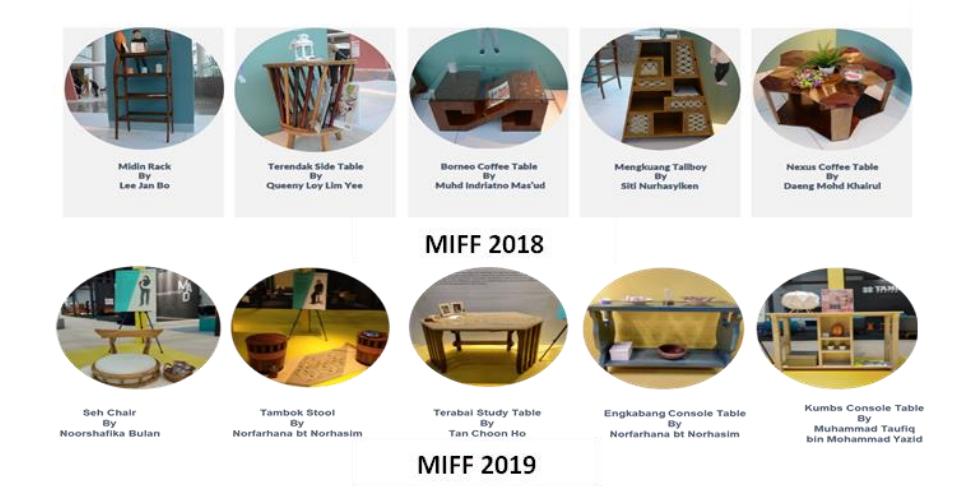
Figure 1 Furniture Designs exhibited at MIFF2018 and MIFF2019.
Each design integrates Sarawak cultural elements inspired by local flora and material culture.
Figure 2 shows the number of visitors for each category during the MIFF exhibition in 2018 and 2019. The category Others includes industrial designers, suppliers, students, contractors and researchers among the visitors. In general, the survey results showed a positive attitude towards attempts to integrate cultural elements in furniture design. It is appreciated and perceived as a potential added value and competitive advantage of the products. However, there are some areas that can still be improved, including aspects such as ergonomics, safety and the materials used.
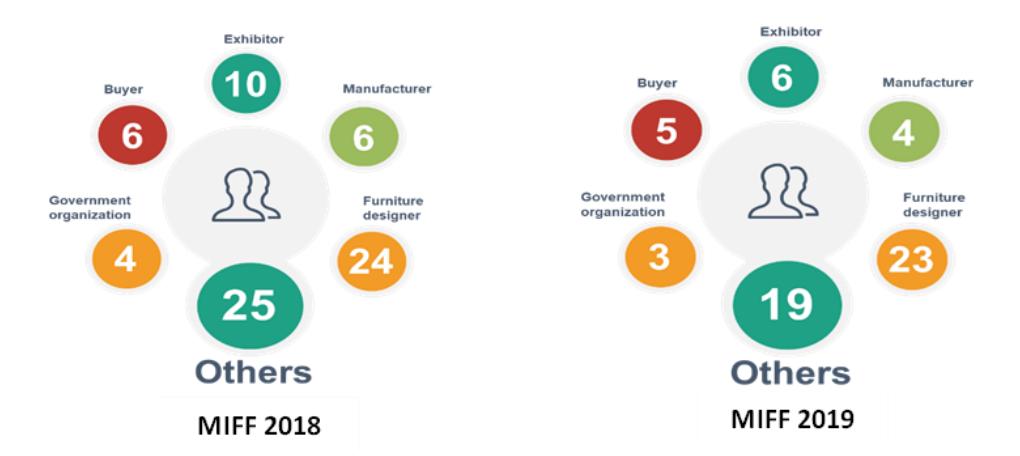
Figure 2 Visitor and participant survey at MIFF 2018 and MIFF 2019.
Apart from the surveys, this research also interviewed designers, manufacturers and managers on perceptions, issues and challenges of integrating cultural concepts in furniture design. According to Philip Yap, a Malaysian designer and business consultant based in China, indigenous values extracted from culture are unique, but they cannot be translated directly, as the export market may not accept the idea [3]. As he mentioned, Sarawak, Borneo; is a multi-racial country with a diverse culture. Malaysia can fully benefit from this by using local cultural elements in its furniture design and gain a competitive advantage. The challenge is how to integrate these elements into furniture design.
The design needs a creative twist in order to be accepted by the furniture industry and the global market. Interviews with designers such as Sujak, Farah and Adela revealed that they use different cultural or indigenous elements in their furniture designs. They integrate materials, colors, motifs, forms, shapes and storytelling to create designs that are unique to Malaysian culture. Studies by Gervasius Herry Purwoko & Tri Novianto Puji Utomo & Wina Christina focused on the feasibility of integrating cultural elements in design, looking as an example at lurik, a traditional Indonesian weaving fabric [4], [5]. They found that using lurik as an aesthetic feature of furniture has high potential and is recommended to be further explored and developed. The findings of the study suggest that in order for furniture designs with cultural elements to be well received by the global market, the development of new motives or patterns such as lurik is crucial and should be done continuously. Four pieces of furniture with lurik designs are shown in Figure 4. Moreover, Figure 3 shows the weaving process of lurik fabric designs using a traditional weaving loom.
Figure 3 Lurik handwoven fabric 2017 from https://www.mymagz.net/.
Figure 4 Furniture designs exhibited at MIFF2018 and MIFF2019.
4 Strategies of Furniture Designers and Manufacturers
4.1 Prominent Stylistic Feature
The stylistic feature of weaving was a prominent cultural element observed at both MIFF2018 and MIFF2019. This style imparts the handicraft value in furniture, highlighting its decoration, natural materials and visual texture. In MIFF2018, this weaving style was found in various chair designs. The designs mainly used natural materials and a basic weaving technique and were constructed with natural materials such as wood and rattan or metal. In comparison, weaving was also seen in various furniture designs exhibited at MIFF2019 but explored in other product variants, including a coffee table, a stool, a cabinet and a closet (Figure 5). The style mainly functions as an aesthetic element to improve the visual characteristics of the furniture. Designers and manufacturers can experiment with cultural elements in furniture design to give it a character that creates a unique identity, to complement the individuality and contemporary modern life style of consumers.
Figure 5 Weaving style furniture photographed by the author at (a) MIFF 2018 and (b) MIFF 2019.
Based on the interviews done with some designers and manufacturers during the Malaysian International Furniture Fair in 2018 and 2019, several design strategies are applied by local designers and manufacturers in using cultural elements in furniture design. They realize that using local elements in furniture is important to enhance the product value and is able to create a strong identity in the global market. This premise is supported in earlier stated that designing a product with local features can emphasize its cultural value and that this is a crucial part of the design process [6],[7],[8],[9].
4.2 PYD Associates
Sarawak has abundant natural resources, including various species of timber. Local designers should use this potential to the fullest in their creations. Acacia, nibong and nyatoh are among the local timbers that are worth exploring and it is urgent for Malaysian designers to introduce local resources in furniture design to penetrate the mid to high end market.
In 2015, Yap utilized a local hardwood, sepetir, in his No 1 Collection, inspired by the mid-20th century Scandinavian style (Figure 6). He believes that a good combination of color, fabric and shape, fused in a modern style is able to elevate the standard of local furniture design as a competitive advantage in the global market.
Figure 6 The No 1 Collection of Philip Yap photographed by Wong, 2015 [10].
4.3 Studio Bikin and Kedai Bikin
Adela and Farah are the designers and owners of Studio Bikin and Kedai Bikin, who produce Malaysian crafted furniture and home accessories. One of their products is the Merdeka Chair, also known as the 'round chair' (Figure 7). The original chair design was first introduced and popular in the 1960s. Their idea to reintroduce and modernize the chair design was underlined by giving it the name Merdeka. Instead of using rattan, they use colored plastic string in red, yellow, white and blue, representing Malaysia's national flag, Jalur Gemilang. It is hoped that people will get a nostalgic feeling and memories when sitting in the chair.
The designers refer to several elements: rebranding an artefact that was popular during the Merdeka era and the colors of Malaysia Jalur Gemilang to connect to Malaysian culture and heritage as the identity of their product.
Figure 7 The Merdeka Chair in MIFF2018 at MITEC, Kuala Lumpur, 2018.
4.4 BSL Furniture
The BSL Furniture company engages with local talent to design their products. One of the designers is Victoria Pamela, the Gold Award winner of MIFF 2017. Her creation, Babnyo (a contraction of 'Baba' and 'Nyonya') series was inspired by the traditional Baba Nyonya furniture (Figure 8). The designer cleverly integrated solid light-colored timber with Baba Nyonya turquoise and chamfer to emphasize the modern contemporary style and minimalist concept.
Figure 8 Babnyo series by Victoria Pamela for BSL Furniture at MIFF2018.
Fusing all these elements, the intention to bring back memories of the traditional Baba Nyonya-style furniture was realized.
4.5 Oasis Furniture
The Lolla Collection of stools designed by Sujak is inspired by a Malay traditional delicacy, kuih bahulu. Sujak uses a storytelling approach in his designs (Figure 9). He finds it very important to convey culture and arts in the form of a story and translate it into a product. Malaysian designers should take the opportunity to introduce multicultural elements to the world as a product identity. For example, bahulu is sweet Malay kuih, served during the festive season and ceremonies such as Hari Raya. Sujak translated it into stools with various sizes and vibrant colors to reflect the harmonious living culture of the Malay and the joyous experience of the festive season.
Figure 9 Lolla Collection and Gill Sofa designed by Sujak [Images] 2018 from www.oasis.com.my [11].
Another design by Sujak is Gill, a single seater sofa inspired by the traditional metate, also known as batu giling. Batu giling is a grounding stone used by the Malays as a tool for processing chilies, grains and spices. The aesthetic appearance of batu giling utilized by Sujak as an aesthetic element that gives his design a sculptural feeling.
5 Conclusion
Based on the interviews with manufacturers and designers and observation at MIFF it can be concluded that local cultural elements have good potential as a strong identity in the global market, which can be developed as a core aesthetic feature of Malaysian furniture design. Differentiation and uniqueness of furniture can be achieved through cultural values, represented by aesthetics and emotion.
This enables the designer to create a different experience that can be a sustainable competitive advantage and a real strategy for commercial success.
Sarawak, Borneo has diverse arts and culture, which opens up unique opportunities for the development of furniture design and manufacture by integrating local ethnic aesthetic elements. The suitability and feasibility of cultural elements utilized in furniture design depend highly on trends that suit people's lifestyle and global market needs. Manufacturers and designers use different strategies, such as combining contemporary designs with local materials, colours, shapes and storytelling or embedding any other cultural in their furniture designs.
Acknowledgement
The author wants to thank PUSAKA for the funding from the research project Rethinking Design Practical Element and Aesthetic Value of Furniture Design: GL/I04/PUSAKA/2017 that made this study possible.