

1 Introduction
The overall noise level is commonly used to assess the quality of an urban acoustic environment. In Indonesia, noise conditions in urban areas are regulated under Ministerial Decree of Environment and Forestry KEP-48/MENLH/11/1996 about noise standards [1]. Although they have several limitations, such standards have become a guide for designing urban acoustic environments.
Brown et al. [2] discuss the limitations of noise-level-based acoustic evaluation methods that can also be used to design urban environments. The design is centered on the human experience in relation to the overall sound level and the primary strategy is to keep the sound level as low as possible. Another approach within the framework of soundscape, based on human perception, has been introduced in [3].
The soundscape is defined as an "acoustic environment as perceived or experienced and/or understood by people, in context", while the acoustic environment is defined as "sound from all sound sources as modified by the environment" [4]. According to this definition, the acoustic environment should be designed with four primary considerations in mind: human perception, context, sound sources, and the environment.
Brown et al. argue that acoustic environment design should prioritize not only the overall sound level but also the sound sources within the environment [2]. Numerous attempts have been made to determine the relationship between the sound source and perception, particularly in urban areas. Natural sounds, such as the sound of birds [5] or the sound of water ([6],[7]), have been shown to have a beneficial effect on how urban areas are perceived. Negative perceptions are triggered by mechanical sounds such as traffic and construction noise [8].
These findings have become the basis for designing urban acoustic environments in general. The design of an urban environment must prioritize enhancing desired sounds, minimizing undesirable sounds, or masking undesirable sounds [3]. Several attempts have been made to enhance wanted sounds such as introducing the sound of birds [9,10], and the sound of a water stream [9]. Reduced mechanical noise has been accomplished through the addition of noise barriers, particularly for traffic noise [11]. Another way to improve the sound quality is to use natural sounds such as water and bird sounds to mask unwanted sounds [12].
Although guidelines for urban design have been established, they remain overly broad. The general guidance may be the result of an experimental method that focuses on experiencing the environment in situ [13] or in laboratory conditions [14]. The limitation of these methods is the small number of stimuli that can be presented to the respondent. A novel approach was established by requiring respondents to create an acoustic environment using a simulator [15]. This approach ensures that data is gathered in accordance with the respondents' expectations, which plays a significant role in shaping how an urban area is perceived [16]. This method has been successful in establishing the specific relationship between sound source and perception [17], identifying the specific sound source that should be added/removed from an urban area [18,19], and identifying the sound mark associated with a particular urban area [19].
Previous studies identifying the relationship did not focus on specific activities. According to a previous study conducted by Bild et al. [20], people's responses to a soundscape are influenced by the activities that take place in those areas. Additionally, the study conducted by Tassia et al. demonstrated that different perceptions are required for performing different activities [19]. As a result, each activity requires a unique acoustic environment.
The purpose of this study was to characterize the urban acoustic conditions favorable for performing various activities comfortably. The study focused on two aspects: the expectation of overall sound level and the suitable acoustic environment for doing the different activities. The concept of soundscape expectation was applied by allowing the participants to compose a suitable acoustic environment. The outcomes can be used as a specific design guide for developing urban acoustic environments suitable for a variety of activities.
2 Methodology
The study was done by asking the participants to create a comfortable urban acoustic environment in Bandung for four distinct activities. The activities were: relaxing, reading a book, talking with friends, and playing with children. These activities were selected to represent individual activities and social activities that have been investigated in the previous study [21]. This study focused on general activities, whereas this study focused on specific activities that represent these two general types of activities.
The environment's context is a critical part of soundscape research [4]. Thus, prior to the experiment, the context was described as a comfortable urban acoustic environment in Bandung preferable for performing various activities. The Bandung context is important because the entire set of sound samples was recorded in the Bandung area and could provide the participant with a sense of familiarity with the city.
The participants designed the environment using an acoustic environment simulator that allowed them to add/remove sound sources in the environment, adjust the sound level of each sound source, and adjust the position of each sound source [15]. Automation was used to replicate the movement of the sound source in space. The sound environment was reproduced using an eight-speaker ambisonic system that allowed for 360-degree sound reproduction, as illustrated in Figure 1. The simulator enabled the participants to design an acoustic environment in real time, providing an immersive experience. The data from the acoustic environment design (sound level and sound source selection) were analyzed to determine how people in general expect the soundscape to be for doing various specific activities comfortably.
Figure 1 (a) Acoustic environment simulator, (b) dimensions of the room and the speaker layout.
As shown in Table 1, the simulator had 26 sound sources, representing natural sound, mechanical sound, human sound, and music. The sound sources were recorded in several locations throughout Bandung to represent typical sound sources found in the city. A Rode NTG2 microphone and a Zoom H2N recorder were used for recording.
Table 1 Sound sources used in acoustic environment simulator.
| Natural Sound | Mechanical Sound | Human Sound | Music |
|---|---|---|---|
| Rain | Traffic noise | People | Fast tempo music |
| Birds chirping | Car horn | Footsteps | Slow tempo music |
| Crickets | Train | People sweeping | Sundanese music |
| Wind | Car exhaust | Whistle | |
| Water stream | Airplane | Adhan | |
| Water fountain | Construction noise | Children playing | |
| People welding | Street performer | ||
| People playing tennis | |||
| People jogging | |||
| People playing basketball |
Fifty-one undergraduate students with a background in engineering physics volunteered to participate in the experiment. The participants ranged in age from 18 to 25 years old, with twenty-seven of them being female.
This study employed two distinct types of analysis. The first analysis compared the overall sound level based on the composition of the acoustic environment for the four different activities. The overall sound level data was taken by measuring the sound level of each composition reproduced via the multispeaker system. A correction for the sound level was added to accurately represent the actual sound level [14]. The difference in sound levels between the compositions representing different activities was then analyzed using analysis of variance (ANOVA).
A second analysis was done to identify the expectation of sound sources for doing the four different activities. The analysis was conducted by implementing the FreeViz algorithm. FreeViz is an optimization technique for determining the variables that distinguish various classes of data [22]. The algorithm can be found in Orange: Data Mining Toolbox in Python, which was used in this study [23]. The outcome is presented visually, making it simple to comprehend. The analysis identifies the sound sources that correspond to various activities. The outcome of this analysis can be used as a guide for designing an urban acoustic environment tailored to a specific activity. A similar approach was used to identify potential sound sources for enhancing the acoustic quality of several urban areas in Bandung [19]
3 Results and Discussion
3.1 Overall Sound Level for Different Activities
The overall sound level from various soundscape compositions representing various activities was determined by reproducing the acoustic environment composition and measuring it with BSWA MA 401 measurement microphones connected to BSWA MC3022 data acquisition hardware. The data were analyzed using ANOVA to compare the overall sound level of the composed acoustic environment for four different activities (reading, relaxing, talking with friends, and playing with children. At significance level p < 0.05 there was no significant effect of the composed acoustic environment's overall sound level for the four different activities [F(3,200) = 2.65, p = 0.06]. This result indicates that the expectation of the overall sound level in urban areas is not affected by the type of activities done in that space. This result is consistent with the previous study by Brown [2], who concluded that the soundscape may not be affected by the overall sound level but somewhat affected by the sound sources in the environment.
The overall sound level measurement from the participants' compositions of the acoustic environment is shown in Figure 2, with an average sound level of 43.6 dBA to 48.2 dBA. The laboratory condition's sound level must be corrected by 9.5 dB to represent the sensation of being in an actual location, as explained by Sudarsono et al. [14]. Table 2 illustrates the correction of the sound level.
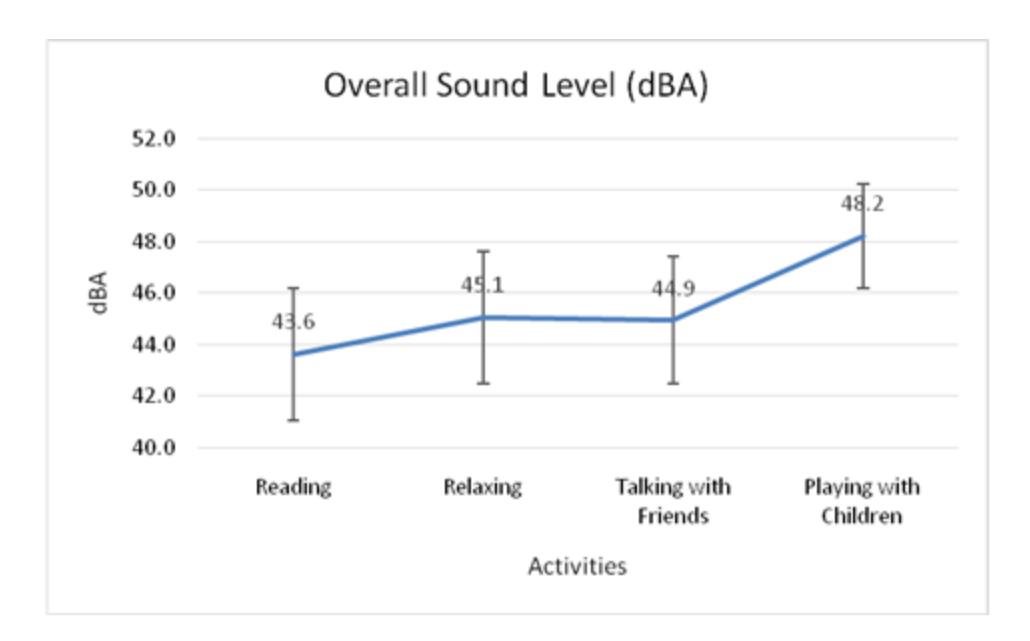
Figure 2 Overall sound level measurement from acoustic environment compositions (n = 51 for each activity).
Table 2 Average sound level of acoustic environment composition from various activities.
| Activities | |||||
|---|---|---|---|---|---|
| Reading | Relaxing | Talking with Friends | Playing with children | ||
| Average sound level from laboratory experiment (dBA) | 43.6 | 45.1 | 44.9 | 48.2 | |
| Correction (dB) | 9.5 | 9.5 | 9.5 | 9.5 | |
| Sound level in actual conditions (dBA) | 53.1 | 54.6 | 54.4 | 57.7 | |
The experiment showed that the average sound level of the acoustic environment compositions for the various activities varied between 53.1-57.7 dBA (after correction). This value is similar to the comfortable overall sound level in Europe, which is around 60 dBA [24].
The composition's data indicate that there is no distinguishable difference in the overall sound levels for various activities. As a result, determining a suitable acoustic environment merely on the basis of the overall sound level is not
appropriate. Additional investigation is required to determine the relationship between the sound source and an acoustically suitable environment for performing various activities.
3.2 Identification of Expected Sound Sources for Various Activities
The expected sound sources for various activities was determined using the FreeViz result. The result is visually represented and indicates which sound sources were significantly associated with which activities. Correlations can be either positive or negative. If the correlation is positive, the arrow will point in the same direction as the composition data and vice versa.
The result of the composition of an acoustic environment for relaxing activities is shown in Figure 3, which indicates which sound sources should be included or omitted from the composition. Wind, crickets, birds, adhan, Sundanese music, and the sound of a water stream are preferred. When engaging in relaxing activities, the sound of children playing and people conversing is omitted.
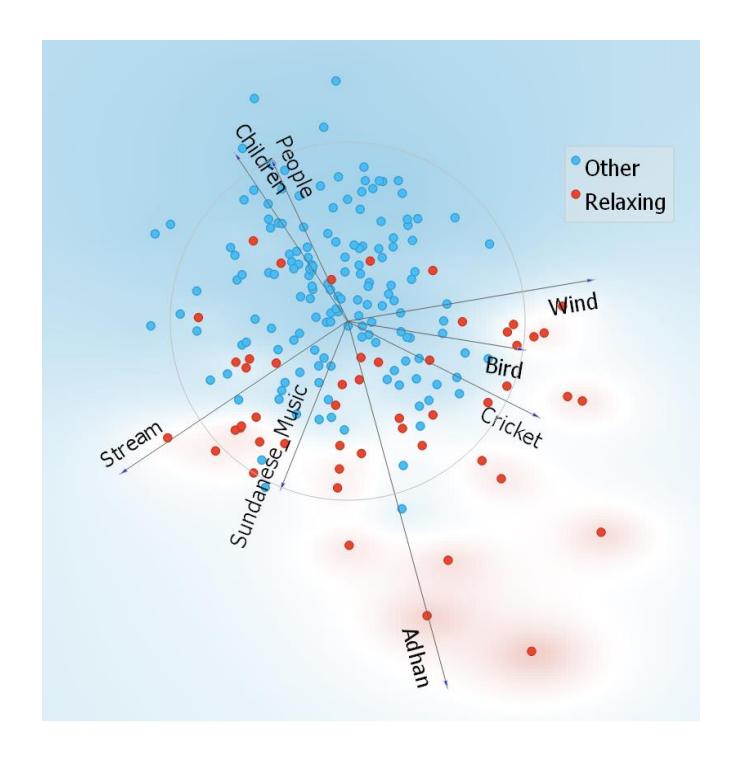
Figure 3 FreeViz result for relaxing activity.
Natural sound is expected for relaxing activities in general, which is consistent with the previous study [9]. The selection of adhan and Sundanese music is influenced by the cultural background of Bandung residents. The cultural context has an effect on how people interpret the acoustic environment, demonstrating the critical nature of contextual awareness in soundscape design [4].
The FreeViz result for the reading activity is shown in Figure 4. In general, the respondents anticipate reading to be accompanied by natural sound and slow music. Interestingly, people expect a different type of natural sound when they are reading versus when they are relaxing. This finding implies that various activities require the use of unique sound sources.
Figure 4 FreeViz result for reading activity.
Conversations with friends are expected to take place in an environment dominated by human sound, as illustrated in Figure 5. Additionally, participants anticipate the sound of footsteps, street performers, and passing traffic. In general, conversing with friends is expected to take place in a lively area with plenty of traffic. The sound of traffic is chosen to represent the urban environment in which people congregate [25]. This finding is consistent with a previous study on Bandung's city square's soundscape [18]. Children's voices are not expected to be heard, similar to the relaxing activity.
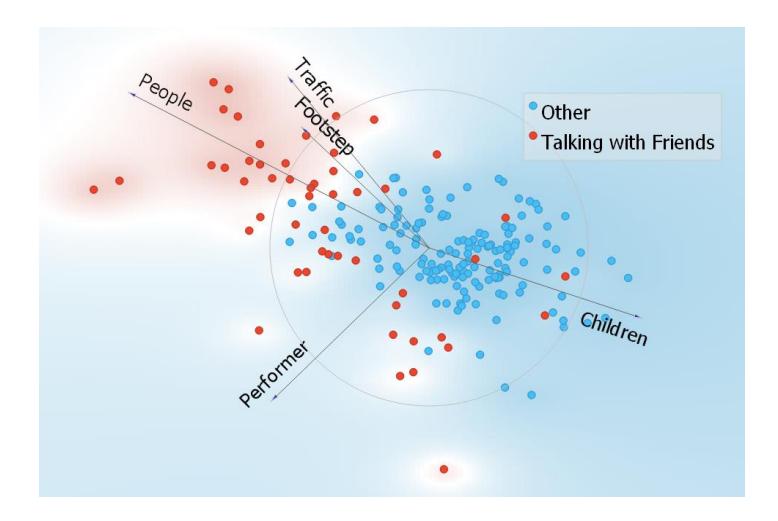
Figure 5 FreeViz result of talking with friends.
The activity of playing with children is expected to take place in a location where other children are present, as illustrated in Figure 6. Other sound sources have little effect on the acoustic environment expected for playing with children.
Figure 6 FreeViz result of playing with children
People expect a variety of acoustic environments for a variety of activities, which must be taken into account when designing an urban acoustic environment. The application of the soundscape expectations concept enables us to determine the expected sound source for various activities. The identification is advantageous as a guide for urban soundscape design.
4 Conclusion
Soundscape design must take into account a variety of factors, not just the overall sound level. This study demonstrated that the overall sound level of the various soundscape compositions representing various activities was not significantly different. The type of activities carried out in an urban area appears to be more influenced by another element, such as the expected sound sources.
This study identified the expected sound sources for different activities in an urban area. Relaxing activities were expected to take place in a setting with the sound of wind, birds, crickets, adhan, and Sundanese music, as well as a flowing stream of water. The sounds of people and children were not expected for doing relaxing activities. Reading is expected to take place in a setting with birds, rain, and slow music. For the activity of chatting with friends, the sounds of street performers, people, traffic, and footstep were expected. When people want to chat with friends, the sound of children was not expected. Playing with children was expected to take place in a shared space with other children. The outcome of this study provides guidance on how to design an acoustic environment suitable for a variety of activities. Additionally, the concept of soundscape composition can be used to collect data on how to design acoustic environments for a variety of contexts.
The example of the space used for studying soundscape expectations in this study was limited to a four different activities. In the future, soundscape analysis can be performed for many scenarios, such as historical and iconic areas, or to improve the existing acoustic environment. In addition, the respondents' backgrounds were not differentiated in this study. Further research can be conducted by comparing the composition results of people from various backgrounds.
Acknowledgements
This paper has been accepted for dissemination at the 2nd International Conference on Art, Craft, Culture and Desain (ICON ARCCADE 2021), and it has been presented on the 29-30 September 2021 under sub-theme "Recontextualizing the Urban Ecosystem".