

1 Introduction
In the last few years, especially under the current administration, Indonesia has prioritized infrastructure development, including the improvement of public transportation. Previous studies have reported several issues with human factors in public transport fleets [1],[2]. While most studies on public transport focused on fast-heavy vehicles such as buses, in this study we discuss the idea of low mass/low speed for first mile/last mile (FMLM) transportation modes such as bicycles and electric scooters [3],[4]. Electric bicycle sharing (e-bike sharing) has been growing in popularity nowadays, especially in developed countries. To develop an EBS, we used a human-centered design (HCD) approach that puts
Received August 7<sup>th</sup>, 2020, Accepted for publication June 14<sup>th</sup>, 2021. Copyright © 2021 Published by ITB Institute for Research and Community Services, ISSN: 2337-5795, DOI: 10.5614/j.vad.2021.13.2.2
humans as users before machines. Accordingly, the three design-thinking forces (people, business, and technology) were then translated into the three lenses of human-centered design, i.e. desirability (people) – what do people want, need and desire; feasibility (technology) – what is technically feasible; and viability (business) – what is financially viable [5]. Only incremental innovation will be generated by taking customers' expectations into account from within the boundaries of existing services or products [6]. Meanwhile, the user experience includes the users' emotions, beliefs, preferences, perceptions, physical and psychological responses, behaviors and accomplishments that have occurred before, during and after use [7]. There are two different models to describe the user experience, the David Garret model and the Armano model [8]. The Armano model draws back a few steps by seeking user insight, while the Garrett model underlines usability, structure, and interaction [9].
Figure 1 shows the analysis of user expectations in order to determine loyalty and satisfaction. EBS design guidelines were formulated according to the phases of pre-service (expectation), service (experience), and lastly post-service (satisfaction).
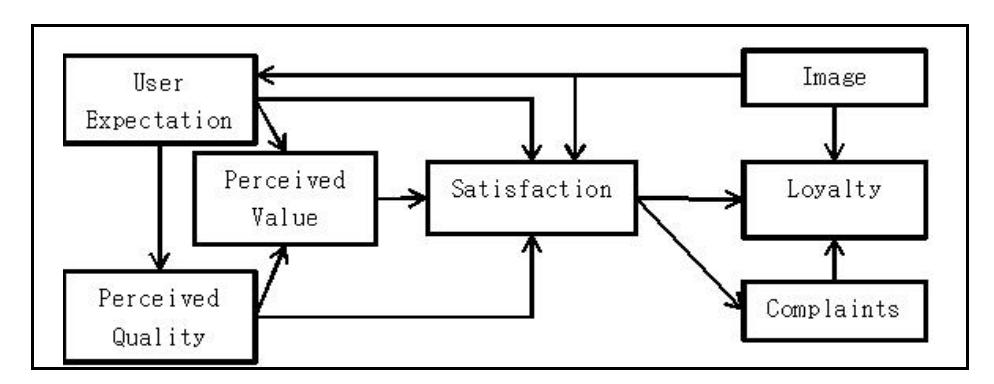
Figure 1 The role expectation of consumer behavior [10],[11].
Figure 2 shows the factors that underlay the FGI for data collecting, including internal and external factors. Potential users of EBS choose transportation facilities for their daily mobility that are suitable to their needs and desires. They compare EBS, particularly for FMLM, with other transport modes before deciding their preferred service. In the end, they express their opinion and satisfaction level compared to their expectations. Users are satisfied with the experience of using a service when it fulfills their expectations. A satisfied user will be a loyal consumer while a dissatisfied user will tend to not use the service again and switch to an alternative mode.
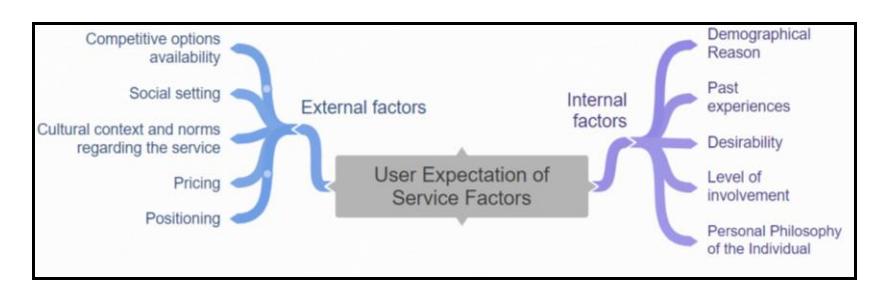
Figure 2 The influence factors of customer expectation of service.
The goal of this study was to find the appropriate design criteria by interviewing several potential users, with the goal of developing a suitable design strategy for e-bike sharing and its shelter in Indonesia. This main research question was explored further by drawing up more detailed research questions to provide the direction for the design process. In order to identify the e-bike and shelter design criteria, the exploration was expected to provide insights into the variables that influence the users' expectations for the EBS design concept, including needs, desires, behaviors, and perceptions.
2 Method
This research was carried out in Daegu, South Korea. Focus group interviews (FGI) were carried out consisting of storytelling sessions in which potential users discussed the experiences that shape their everyday lives in order to learn more about their commuting needs [12]. Purposive sample and open-structured interviews were conducted using a pre-determined list of questions. The participants had either stayed in Jabodetabek (Jakarta Metropolitan Area) or in Bandung, which are among Indonesia's most congested cities. At the time of the interview, they had been living in Daegu city, Republic of Korea, for over a year. The selected informants (n = 10) were aware of the importance of environmentally friendly transportation and the problem of road congestion in their community. As can be seen in Table 1, they had experience using public transportation in both Indonesia and Korea. A generalized probing question was utilized whenever clarification was required during the interviews.
The interviews of this study were conducted naturally with a holistic approach, using words and language descriptions. By conducting intense individual interviews focused on situations and objectives, FGI were used as a qualitative research technique [13]. With restricted samples, this study relied on the depth of the participants' insight.
| Code | Question | Description | Mean/Qty (P1-P10) |
|---|---|---|---|
| Q1 | Age | Years | 31,9 |
| Q2 | Gender | (1) Male | 10 |
| (2) Female | 0 | ||
| Q3 | Income | Million Rupiah (Rp) | 7,81 |
| Q4 | Distances | Kilometers (Km) 9,1 | |
| Q5 | Daily transportation mode? | (1) Motorcycle | 9 |
| (2) Car | 1 | ||
| (3) Public transport | 0 | ||
Table 1 Demography of participants.
The interviews were conducted personally with the interviewer using the Indonesian language and each interview lasted approximately between 16 and 32 min, depending on the subject's response and knowledge. The interviews taped with a video camera lasted from 16 and 13 minutes and were held lean on subjects, insights and responses. The interview transcripts were translated into English. The quotes were analyzed with qualitative content analysis approaches. Quotes were utilized throughout the study to illustrate emerging themes and typical points of view.
3 Result and Discussion
3.1 Result of Application of Human-Centered Design Approach
The data on user expectations obtained from the interviews were used to analyze the reason the participants did not use public transportation or integrated FMLM such as EBS. The user expectations were also important to guide future design outcomes.
The participants' responses showed that demography as an internal factor does not influence their preference for transportation modes. The participants tended to choose a private vehicle because they considered it the most convenient option. They got the private vehicle either by cash purchase, installment purchase, or as a gift from their parents. On the other hand, empirical research of low-income workers in Hong Kong found that they prefer to use public transit for their everyday movement because of its better performance and higher punctuality [14].
The interview findings indicated that user decisions are influenced by past experiences. Other internal factors and influences are desirability, involvement
level, and personal philosophy. The FGI indicated that most of the participants had low satisfaction with the existing public transport system in Indonesia and desired service improvement. To switch to public transport from using a private vehicle as daily transportation mode requires an adequate service level with minimum tolerable expectation. This is supported by research that states that customers are more willing to make such a decision after having had a good experience and they are less likely to repeat previous mistakes [15].
Table 2 Interview factors and response.
| Expectation factor | Questions | Interview Response | |||
|---|---|---|---|---|---|
| Internal Factors | |||||
| • | Demography | Daily distances and public transport affordability | Adequate | ||
| • • | Past experience Desirability | Experience with existing infrastructure | Less satisfied | ||
| Preferred mode of transportation | Well organized mode and infrastructure | ||||
| • | Involvement level | Motivation for using EBS | Expectations are high if the situation is ideal | ||
| • | Personal philosophy | Minimum requirement of commuting service | Expectations are high if the situation is ideal | ||
| External Factors | |||||
| • | Comparative choice Social environment /setting Cultural context and norms | Preferable commuting mode | Ideally with motorcycle | ||
| • • | The feeling when EBS is socialized | Other users' influence | |||
| Positive effects of using EBS | Healthier and more sustainable | ||||
| Negative effects of using EBS | Safety, security and job issues | ||||
| • | Reason for renting Pricing | Underlying reason for using EBS | More sustainable, | ||
| • | Affordability expectation of bicycle sharing | healthy and affordable From IDR up to 10.000/hour | |||
| • | Positioning | Role of EBS | High expectation yet conditional on ideal environment | ||
This paper also considered external factors, where influence comes from factors outside of the users. These factors significantly affect consumers in their decision-making [16]. Consideration of these factors may explain the success of scooter renting in Indonesia, which has attracted users with an affordable price and a new experience [17],[18],[19]. The awareness of the healthier nature of sustainable transportation is also increasing as the Indonesian government prioritizes it by developing supporting infrastructure.
The results of this study showed the underlying expectation factors for key aspects in the design of EBS in Indonesia. The expectation factors, the question stimuli and the responses from the participants are shown in Table 2.
3.2 Adaptation stages
3.2.1 Pre-Adoption
The participants were asked about their experiences using public transportation and bicycles in Indonesia and their expectations of EBS. All informants used private vehicles for their mobility in Indonesia. The interviews also revealed that the decision to use public transportation is not influenced by pay ability, trip distance, total average income, or age.
Actually, I don't have a problem with the price of using public transportation compared to my average monthly income, but I prefer to use a motorbike in everyday life... Indeed, the prices of the two types of transportation are almost the same, but using a private vehicle is faster, more comfortable, and more efficient. (P5)
The majority of participants expressed being unsatisfied with the public transportation system in Indonesia.
On my daily commute, the roads are heavily congested... The traffic conditions are quite bad... I'm quite unsatisfied with the experience of using public transportation and the integration that has been provided by the government... It's simpler, easier, and more reliable to use my own car or ride-hailing... (P9)
Travel time is another factor that influences the decision to use a private vehicle for daily mobility. All participants stated that using public transportation would take at least twice as much time compared to using a private vehicle. Therefore, travel time is also one of the factors that significantly influence the users' decision.
Using public transportation, my travel can take twice as long... It only takes 15 to 20 minutes if I use my motorbike... (P10)
All participants stated that certain incidental intentions were the reason to use public transportation and bicycling. For daily transportation with various considerations, they prefer to use a private vehicle, especially a motorcycle.
I use public transportation only incidentally, for example, the train when I am going out of town... Meanwhile, I last used a bicycle about 10 years ago for exercise. (P6)
3.2.2 Adoption
Based on the expectations of the participants, the service quality of the current public transport system needs to be improved to attract them to use it for daily commuting.
I hope that traffic conditions in Indonesia can be as well-planned as in South Korea so that congestion can be overcome... The integration of sidewalks and bicycle lanes with subways and buses is needed for mass transportation... If the ideal conditions are met, then I would use a vehicle that is healthy, environmentally friendly, cheap, and lowemission such as an electric bicycle for their integration... (P8)
3.2.3 Adaptation
Most participants were found to be willing to adapt to commuting using public transportation and a bicycle every day.
Here (in Daegu, South Korea) I can predict the time of the trip when using public transportation, such as bus and subway integrated with a bicycle, as my first-mile solution. (P7)
They also adapted to the cashless system that is used as the payment method, which they expect to be applied in the EBS.
I believe that a cashless payment system for EBS should be used in connection with the MRT and BRT transportation cards, such as an emoney card so that we only need one card to pay. (P1)
3.2.4 Acceptance
Meanwhile, when asked about their experience using public transport such as bus and subway, bicycles and bicycle infrastructure in South Korea, the participants answered positively. They all intended to use this mode as their main transport mode in South Korea rather than when in Indonesia.
I never use public transport and a bicycle as my daily transportation in Indonesia... However, since I stay in South Korea I prefer to use public transport (bus and subway) and a bicycle for my daily commute because of the well-designed infrastructure integration, wide sidewalks and bicycle lanes, and reliable public transportation (P7).
From the results of the FGI above we investigated the user adaptation process based on Ref. [20]. We also analyzed the influential factors and the stage of behavior change, as shown in Figure 3.
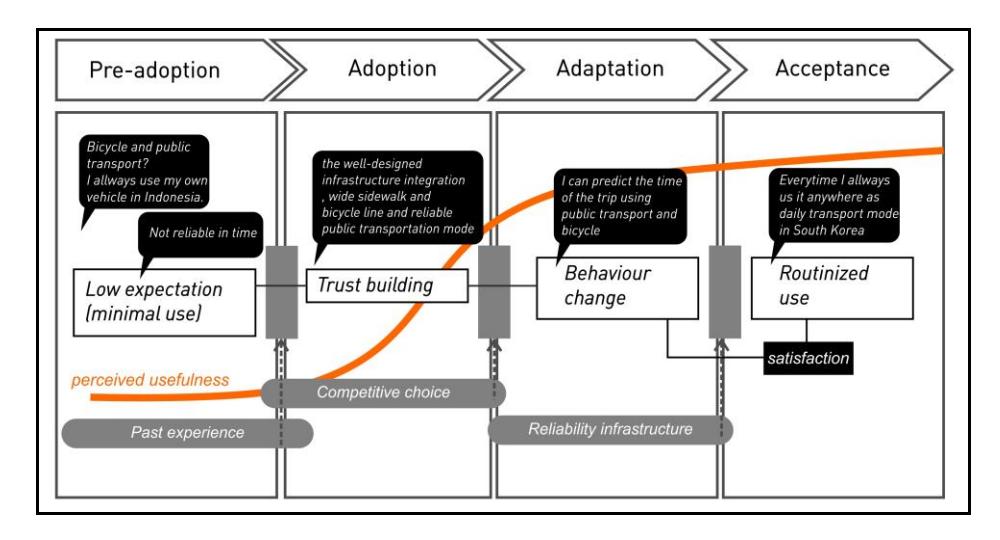
Figure 3 User adaptation stages.
3.3 Journey Expectation Map Based on User Insight
The results from the FGI were used for generating two scenarios using EBS based on user insight, as shown in Figure 4. Basically, there are two potential payment methods in using an EBS, involving either a cashless mobile appbased system or a transportation card system. Furthermore, a journey expectation map when using EBS was generated from the FGI, as shown in Figure 5.
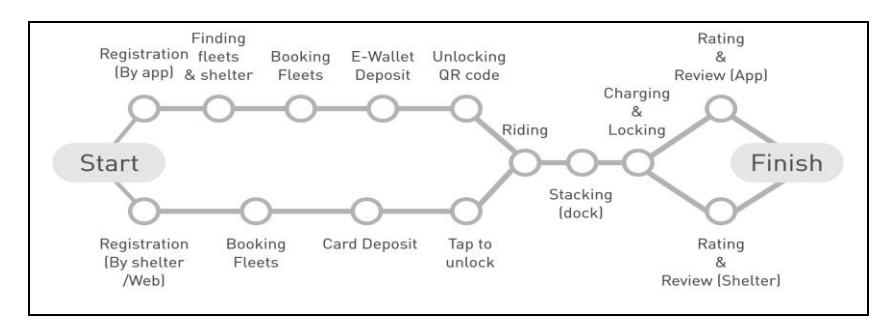
Figure 4 Flow chart of the scenario gathered from the interviewers.
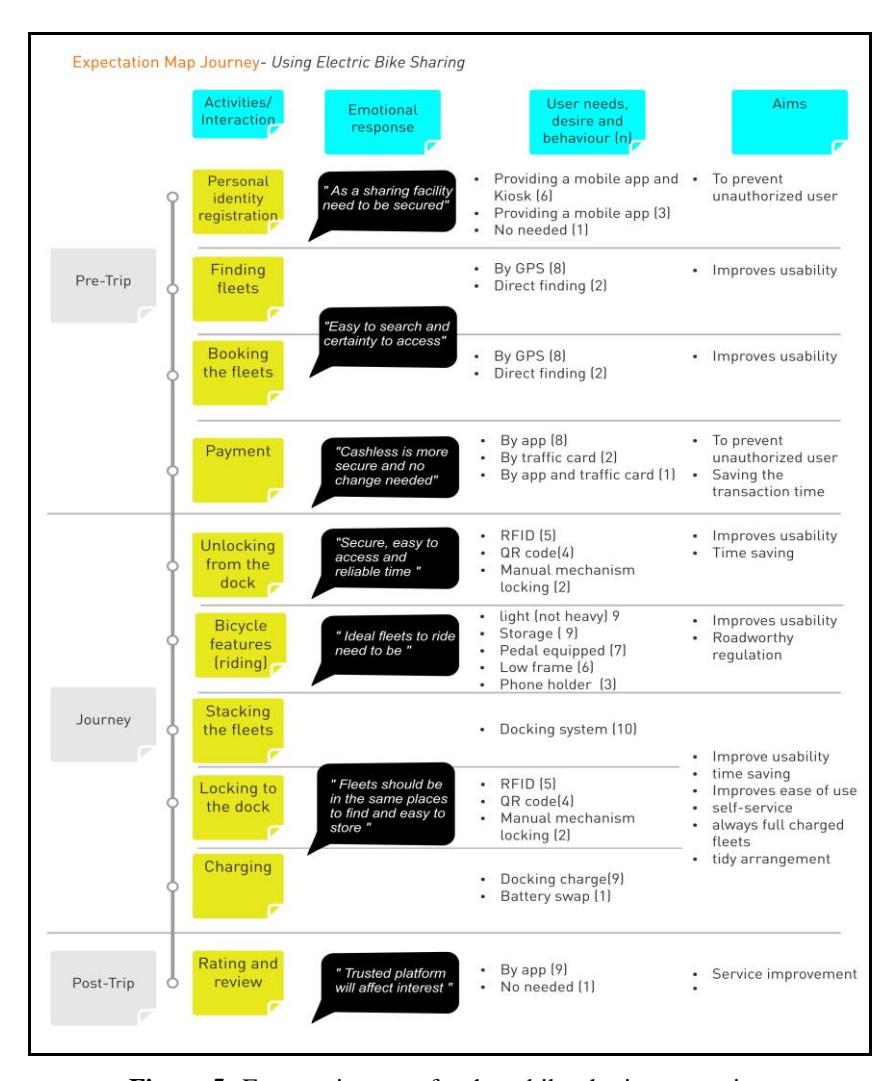
Figure 5 Expectation map for the e-bike sharing scenarios.
Designing products and services based on user desirability strengthens the feasibility of an innovation. The use of an EBS will lead to the emergence of a new experience. Designing based on user expectations as insight in predicting the use of EBS in Indonesia is important in order to develop design requirements before the prototyping and usability testing phases. Figure 6 shows the discovered the key criteria that underlie the EBS design requirements gathered from the FGI.
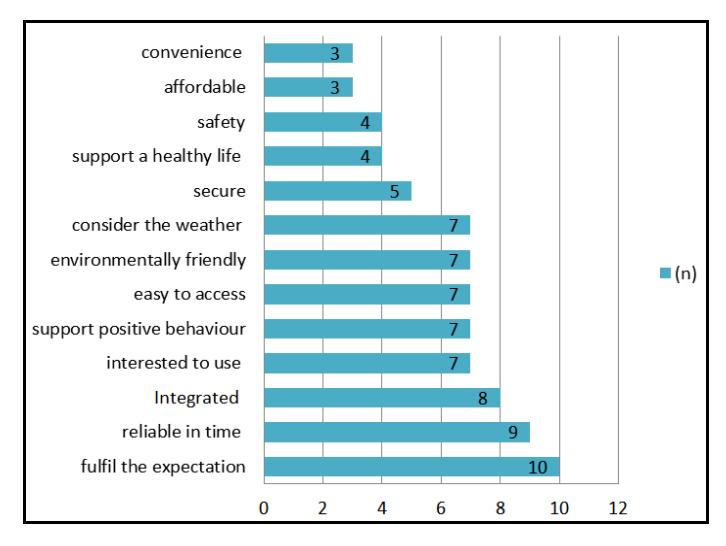
Figure 6 User needs criteria generated from the FGI.
4 Conclusion
Perceptions and expectations of potential EBS users in Indonesia were investigated in this study. Based on their experiences regarding the service of public transportation, infrastructure and bicycling in Indonesia, the current level of service is not adequate. To reach a user satisfying level, the safety, reliability, and travel time of the transportation mode has to be enhanced. However, a healthier lifestyle and less traffic congestion are desired by the users and thus they hope EBS will be introduced as an option. Thus, desirability as an internal factor can be stimulated by one of the external factors, namely usability of expected EBS.
Gathering user expectations and user insight related to the desires and needs of potential EBS users is the empathize phase in design thinking. The research findings can be used as a reference for stakeholders to improve the service of public transport and infrastructure in Indonesia. This study resulted in key points and suggestions for future quantitative research of EBS aspects and the related requirements. Moreover, the limitations of a qualitative study need to be reduced by using reliable research equipment, quantitative investigation, and prototype testing intended for an iterative process.
We may conclude from the findings of this study that Indonesia should promote regular cycling as a sustainable mode of transportation, similar to what the Netherlands has done. The improvement of the existing infrastructure to induce behavioral changes requires support from the government. For example, pedestrianization, expanding sidewalks, establishing more bicycle lanes, providing a clear regulation for e-bikes, and building more EBS shelters in order to improve accessibility. Furthermore, the current public transportation needs several improvements, such as optimization of the integration of bus, train and subway to get more reliable routes and schedules.
EBS development must be supported by several stakeholders, including the government, the community, local industries, ICT providers, and many others. Increasing the domestic component level in manufacturing, especially based on increased research and key technology component capacity, can be a solution for the involvement of local industries. Furthermore, existing apps from the sharing economy such as ride-hailing apps can be potential ICT stakeholders of EBS. The government should prioritize design requirements that are tailored to the Indonesian conditions.
In addition, the Indonesian government can learn from developed countries through mature urban planning research. The provision of decent road infrastructure and transportation that accommodate pedestrians will yield ecofriendly mobility to solve environmental issues such as air pollution and congestion. If a user satisfying level is achieved, public awareness about using environmentally friendly public transportation will increase.