

1 Introduction
Masahiro Mori presented the uncanny valley theory on the psychological effects of lifelike robots [1]. The uncanny valley is a phenomenon that occurs in robotics and is portrayed in animation, in which things that look incredibly similar to a human face but depart somewhat from its natural appearance or natural movements and expressions are seen as disturbing, uncanny, and repulsive. In other opinion by [2] uncanny valley notion is applicable to any type of human item, including caricatures, dolls, masks, avatars in virtual influencers (VI), and computer-generated performers in films [3]. The uncanny valley also refers that to the feeling of uneasiness and discomfort people experience when observing extremely lifelike virtual beings.
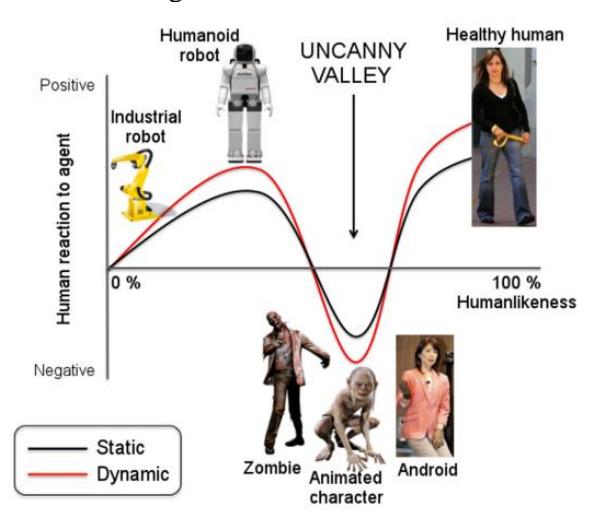
Figure 1 Uncanny Valley Graph (Mori, 1970) and visual representative of the uncanny valley effect for fixed and moving components with differing levels of human likeness quantities [4].
This study evaluates the way a specific audience viewed the value of 3D characters shown in movies and animated films. In addition, previous research according to [5],it also reinforces the ominous feeling of the uncanny valley due to the perceived longer duration of Computer Graphics (CGI) performance, greater limitations, and major visuals, even though they are realistic looking. There are also other evidence that supports that animation styles and techniques should not only concentrate on avoiding realistic animation but in other hand, such as putting considerations on specific target markets and the genre of the animation. The research identified the critical questions applied in this research are: Does the uncanny valley effect explicitly exists in 3D characters in a form 3D actors in film? Does the uncanny valley concept is so important? Is the uncanny valley effect significant? And does it is affecting the appreciation of the film itself? If so, what is the relationship between uncanny valley and its impact on film?
2 Method
The research was constructed with two components. The first component were selected visual stimuli is divided into 2 categories, i.e., realistic and accurate looking human characters for the first component. Concurrently, for the second
stimulus, the researcher chose 2 components of subject with fewer humanlike characteristics. The sampling technique was chosen among undergraduate animation students in Sarawak and Malaysia, and the total number of responses of n= 127. The second component consist of self-administered surveys containing videos and images were delivered via email and social networks. The participants were asked to provide ratings for all embedded videos and photos on questionnaires. All of the visuals (CG actors) representations of well-recognized characters from recent films. The purpose of the process was to measure the participants' competence to recognize the selected characters.
2.1 Measurement
The list of questions are included from the survey is given in Table 1. In this test the mean (Equation 1) and the Levene's -test were applied to identify specific discrepancies between variables. Since the mean is the most often employed measure of central tendency, as an accurate representation of the data. Then, Levene's test (ANOVA) was conducted to obtain the variance across the groups' in the -test findings.
\[\mu = \sum x p(x)\]
2.2 Characters
The films' popularity justified the selection of the characters, and as the audience's familiarity with the characters or performers was necessary. Consequently, the test questions were produced based on the test's measurement. The first criterion requires that each figure possess a human appearance that was portrayed as accurately and realistically as possible. This characteristic is essential for administering the data seen in Figure 1 to an uncanny valley graph (horizontal axis). The second criterion developed if the respondents was unfamiliar with the character or not. It is imperative to highlight that the objective was to cover the most extensive possible spectrum of uncanny valley properties. The test evaluated the human resemblance characteristic based on characters from Cicakman 3 (S1 in Table 1)that, depict humans as accurately as possible [6]. The same was the case one with the "Wheely" (S2) character in the Wheely film, which was chosen to represent the least human-likeness.
Concerning the familiarity of the characters and actors, the uniqueness of the film's key characters is evaluated. Therefore, based on popularity in recent film, and meet the uncanny valley elements, the test recommended the real actor of the character "Cicakman" from the film Cicakman 3 (2015) (S1) [6] film and the animated character of "Wheely" from the film Wheely (2018) in (S2) [7]. All of the test's characters were chosen from recent popular films in Malaysia, making a requirement of familiarity.
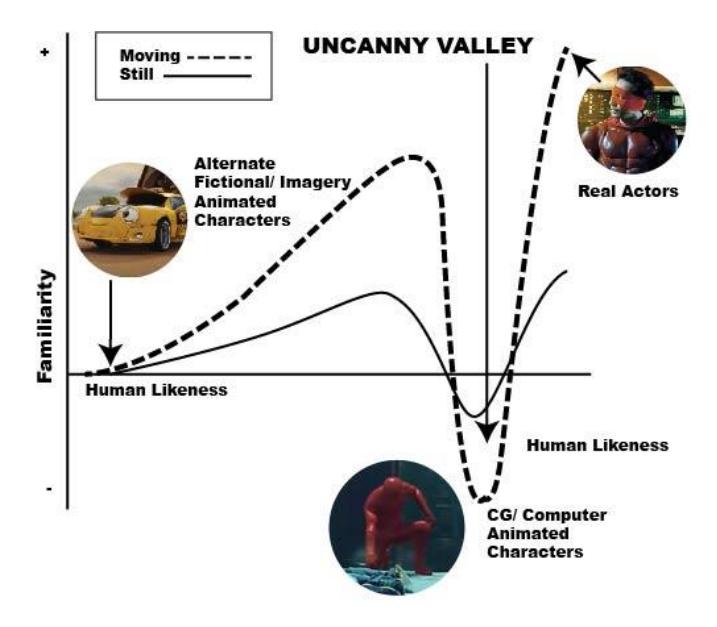
Figure 2 Mori's graph results on actual actors versus CGI characters versus fictional/imagery characters.
There were some factors to consider and constraints to anticipate while selecting the appropriate characters. The expressions in the video had to be impartial, realistic and as humanlike possible. The sequential evaluation consisted of observing Figure 2, a real human versus a CGI version. The chosen human character was supposed to be blended into a natural or 'natural' environment. The complete lists of characters named in the survey is given in Table 1 along with a detailed explanation of name, film title, and digital actor names.
2.3 Survey
The questionnaire consisted of the items outlined in Table 2 accordingly. Participants are requested to subjectively indicate how they feel about the character. To avoid misinterpretation, the questions were constructed in a manner that was as specific and economical as possible, considering the participants' demographics. In accordance with the primary research objective of locating the uncanny valley, each participant was expected to identify feelings of strangeness or unease while seeing the CG actors, corresponding to the uncanny valley effect. Observation-based supplementary questions were also used regarding their response to the level of human likeness and realism.
Table 1 Actors/Characters and film origins described in the survey.
Description
Film Name: Cicakman 3 (2015) [6] Director: Yusri Abdul Halim and Ghaz Abu Bakar Name of Character: Cicakman (Zizan Razak) Comparison of Actual Human Action and Natural Pose with CGI Resting Posture and Climbing Pose in S1. A Mixture of CGI and Actual Actors in the Film.
Description
Film Name: Wheely (2018) [7] Director: Yusry Abdul Halim Name of character: Wheely (Zizan Razak) A Fictional CGI Characteristic of Human with the Same Human Voice Actors for the Whole Duration of Film (Zizan Razak)
Table 2 The questions of the survey form.
| Question | Alternative | Type of question | |
|---|---|---|---|
| 1. Are you familiar with the character | A. Yes | Single Choice | |
| above? | B. No | ||
| C. Don't Know | |||
| 2. How familiar are you with the short | A. Very Familiar | Single Choice | |
| movie clip shown? | B. Moderately Familiar | ||
| C. Unfamiliar | |||
| 3. How realistic is the movie clip shown? | A. Very Realistic | Single Choice | |
| B. Moderately Realistic | |||
| C. Unrealistic | |||
| D. Don't Know | |||
| 4. Do you feel discomfort (strangeness) | A. Yes | Single Choice | |
| looking to the above character? | B. No | ||
| C. Don't Know | |||
| 5. Does the character above makes you | A. Yes | Single Choice | |
| feel eerie? | B. No | ||
| C. Don't Know | |||
| 6. Which part most influenced in the | A. Face | Single Choice | |
| discomfort seeing the character? | B. Upper Body | ||
| C. Lower Body | |||
| D. Character Movement | |||
3 Results
The results were obtained within of two weeks, with n=127 questionnaire distributions. Statistical analysis was then conducted using IBM SPSS version 23. Cronbach's alpha test were preliminary conducted to ensure that all variables were reliable and relevant. As indicated in Table 3, all 12 items of the alpha coefficient had an internal consistency of .507, which is a low value for alpha due low sets of questions.
Table 3 Reliability statistics.
| Cronbach's Alpha | Cronbach's Alpha Based on Standardized Items | N of Items |
|---|---|---|
| .507 | .599 | 12 |
The results in Table 4 indicate that neither relationship between the respondents' familiarity with S1 (still photos) or V1 (video images) and the character's Moderately realistic level was statistically significant (M = 1.100). In opposite, the answer Don't know of the character with significantly higher for S1 user's familiarity with (S1 at M = 1.7500). The graph in Figure 3 (Graph 1) also shows that the assumption of normality was evaluated and determine to be moderate, as the three groups' distribution with skew and kurtosis were less than 2 and 9, according to [7].
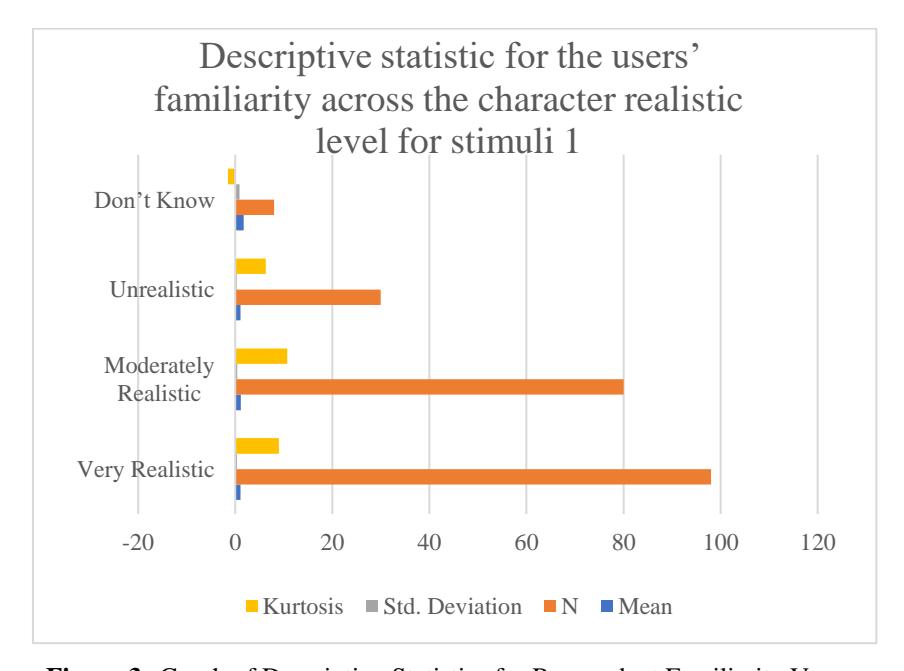
Figure 3 Graph of Descriptive Statistics for Respondent Familiarity Versus Character Realistic Level.
| S1 | Mean | N | Std. Deviation | Kurtosis | Skewness | ||
|---|---|---|---|---|---|---|---|
| Very Realistic | 1.1111 | 98 | .3333 | 9.000 | 3.000 | ||
| Moderately Realistic | 1.1375 | 80 | .44277 | 10.703 | 3.351 | ||
| Unrealistic | 1.1000 | 30 | .30513 | 6.308 | 2.809 | ||
| Don't know | 1.7500 | 8 | .88641 | -1.481 | .615 | ||
| Test of Homogeneity of Variance for Stimuli 1 | |||||||
| Stimuli | Levene's statistic | df1 | df2 | Sig. | |||
| S1 | 6.394 | 3 | 123 | .000 | |||
Table 4 Descriptive Statistics for Respondent Familiarity versus Character Realistic Level for Stimuli 1.
In the sequence of test, the assumption of homogeneity of variances was tested and shows moderate results based on Levene's F-test in Table 4 for S1 (still photos), F (3, 123) = 6.39 p = .000. In contrast, Table 5 demonstrates that the Very realistic level of the character was much lower for the S2 (still photos) versus respondent familiarity with the character (M = 1.25) compared to the answer Don't know the character, with significantly higher for S2 (still photos) (Don't know, M = 1.89).
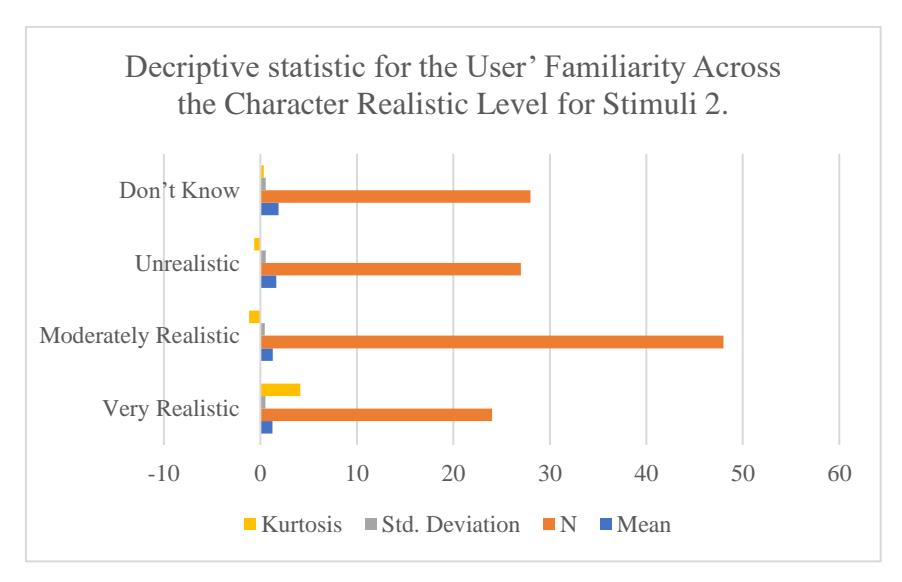
Figure 4 Graph of Descriptive Statistics for Users' Familiarity Versus Character Realistic Level for Stimuli 2.
In the similar test sequence, in Levene's F-test for S2 (still images), the assumption of homogeneity of variances stated in Table 5 was examined and found to be sufficient, F (3, 123) = .794 p = .500.
| S2 | Mean | N | Std. | Kurtosis | Skewness |
|---|---|---|---|---|---|
| Deviation | |||||
| Very Realistic | 1.2500 | 24 | .53161 | 4.143 | 2.131 |
| Moderately Realistic | 1.2917 | 48 | .45934 | -1.154 | .947 |
| Unrealistic | 1.6667 | 27 | .55470 | 650 | .000 |
| Don't Know | 1.8929 | 28 | .56695 | .363 | 039 |
| Test of Homogeneity of Variances for Stimuli 2 | |||||
| Stimuli | Levene's Statistic | df1 | df2 | Sig. | |
| S2 | .794 | 3 | 123 | .500 |
Table 5 Descriptive tatistics for the Users' Familiarity Versus Character Realistic Level for Stimuli 2.
4 Results
The results show discrepancies between the uncanny valley effect and the audience's familiarity with the character. Interestingly, the results showed how that human likeness was significantly higher for the moderately realistic level for Cicakman 3 (2015), with a mean of 1.1375 and a standard deviation SD = .44277, while for Wheely (2018) and this show a high value for unrealistic level with mean of 1.6667 and an SD of .55470. This research concluded that the more discomfort was felt on response to the artificial CGI characters, when the characters was very familiar to the audience, as can be seen in Figure 5. Hence, the visuals created a disturbing impression, supporting the uncanny valley effect.
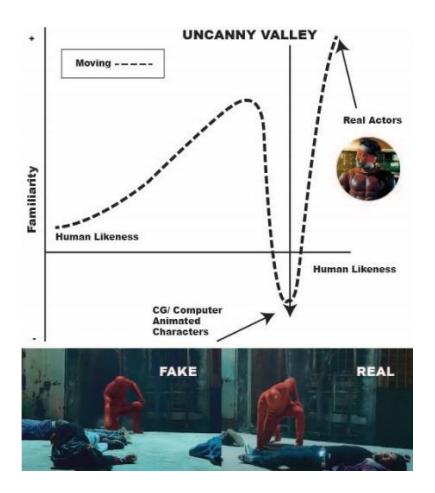
Figure 5 Mori's Graph Results for Uncanny Valley Effect of artificial CGI characters.
The result of the survey found whether the participants knew about the characters, as shown in Graph 3. The findings highlighted that the feature, which is known as Cicakman (S1) is fairly well-recognized and highlight higher familiarity by the recognize actor. The opposite was true for the fictional character Wheely (S2)
character is known less than average by the participants according to Figure 6. Based on the answer obtained, it can be explained that well-known characters suggest greater levels of familiarity since they are located in the higher part of the graph of familiarity.
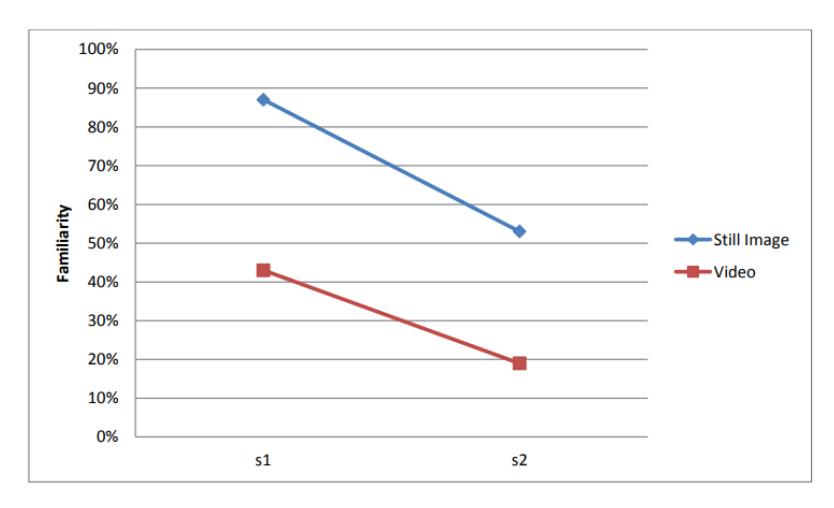
Figure 6 Mori's Graph on the Uncanny Valley Effect of Artificial CGI Characters Comparison.
5 Conclusion
The findings of this study reveal a discrepancy between the effects of the uncanny valley and the respondents' familiarity with the character. Surprisingly, human likeness was significantly higher based on the Moderately realistic with; mean = 1.1375, SD = .44277 for Cicakman 3 (2015), and show, and show, a high value for the Unrealistic level with mean = 1.6667, SD = .55470 for movie Wheely (2018). This study concluded that the more familiar a character was to the audience, the more discomfort they felt when looking at the digital actors. The results showed the audience impression of flaws in the Computer graphic imagery (CGI), as can be seen in Figure 5. As a result, the visuals will leave discomforting impression, giving credence to the uncanny valley theory. The results envisage how realistic looking characters motivate uncanny valley responses towards the audience. Trends of increasing application of Computer Graphic Imagery (CGI) characters with realistic facial, features and realistic looking backgrounds are increasingly applied in local films are becoming readily to access and costeffective. This is due to the affordability of hardware and software to small postproduction companies and business start-ups. This was still rare decades ago, due to limited resources to access high-end equipment and lacking specific skills to generate realistic characters. We can foresee a future trend of more local
producers to access real actors with CGI characters, i.e., cheaper and improved realistic characters, hence, producing more seamlessly and overwhelmed the feeling of the uncanny valley effect.
Acknowledgement
This article and research were supported by Universiti Malaysia Kelantan Short Term Grant with reference number of UMK.PC/B01.08.11/600-5/2/3 (85162).