

1 Introduction
Identity is inspired and controlled by culture. For identity to be accepted by individuals, consensus and equality are attained through the provision of meaning using a system of symbols that represent its position [1-4]. The concept of identity is formed/reflected through the emphasis given on current issues related to nationalism, where ethnic identity prioritizes the local context and personal identity of individuals in dealing with various issues related to the aspect of identity at the global level [5-8]. Culture is synonymous with identity because it is a medium that represents the daily life and activities of a community or a society [6,9,10]. Culture is formed from several aspects, such as socio-economic situation, gender, age, geographical location, language, ethnicity, race, religion, and political status [11]. All these criteria symbolize national identity [12].
Received November 10<sup>th</sup>, 2023, Revised December 14<sup>th</sup>, 2023, Accepted for publication December 22<sup>nd</sup>, 2023. Copyright © 2023 Published by ITB Institute for Research and Community Services, ISSN: 2337-5795, DOI: 10.5614/j.vad.2023.15.2.5
In line with the development of technology, numerous animations have been produced with various styles and distinctive identities [13]. Western and Japanese animations are synonymous with the iconic Disney, superhero and anime characters that are symbolic of their country's identity [14]. This is evident from the study conducted by Anne (1999) [15], entitled An Animated Imbalance, Japan's Television Heroines in Asia, which reported the domination of foreign animations over local television programs. Malaysia was previously considered unsuccessful in producing high-quality animation in terms of pictures and cinematography, with the production of only a short film entitled Sang Kancil (1978), an animated series entitled Usop Sontorian (1995), and a feature film entitled Silat Legenda (1998). Before the production of the Usop Sontorian series, as demonstrated in reports up to 1995 (refer Table 1), Malaysia was still incapable of advancing in the animation industry, as not a single local animation was produced in that time period.
Table 1 Television animation programs for children in Asia (1995) [15].
| Country | Program Resource – Minutes/ year (Percent for all programs) | Total Percentage for all children's programs | ||
|---|---|---|---|---|
Local Foreign | ||||
| India | 3,120 (2.98%) | 40,560 (38.80%) | 41.79 | |
| Malaysia | - | 20,280 (37.14%) | 37.14 | |
| China | 6,760 (10.92%) | 14,560 (23.52%) | 34.44 | |
| Sri Lanka | 540 (2.13%) | 6,000 (23.72%) | 25.85 | |
| Nepal | 2080 (21.05%) | - | 21.05 | |
| India – Doordarshan | 4420 (7.17%) | 7,800 (12.65%) | 19.38 | |
| Pakistan | - | 7,280 (15.38%) | 15.38 | |
| Thailand | 1,040 (4.25%) | - | 4.25 | |
The count for a week of airtime in 1995
The development of Malaysian animation also affects the formation of students' animated characters. This happens due to the interaction between influence, development, improvement and progress in local animation production. Regarding the list of Malaysian animations after the year 2000, a total of 86 animated series and films have been produced until 2016. This demonstrates that the local animation industry is now at an encouraging level. Although there is a large influx of animations from abroad, these do not completely marginalize local animation. For instance, the first Malaysian animated film that hit the box office was Upin Ipin (2019) with RM 26 million in revenue, followed by Ejen Ali (2019) with RM 30.75 million in revenue. Next, Boboiboy 2 (2019) made RM 30 million, and later Mechamato (2022) managed to achieve a record revenue, i.e., RM 35.88 million [16].
Research in the field of animation often involves respondents such as students, lecturers, and animation activists focusing on the field of education. Examples include studies on the positive and negative effects of animation on the behavior of primary and secondary school students because of watching animation on television [17]. Other than that, Mohd Amir and Md Sidin [18] reported on understanding Malaysian animation characteristics via semiotic analysis. On a different note, a study conducted by Fadli and Md Sidin [19] focused only on the documentation of data on animation-related subjects offered.
In contrast, this study views the role of animation through the works produced by local students who are still new to formally learning the basics of arts at higher education institutions. Besides, this study also considered the issue of local identity through the animated characters produced by the local students. Although this issue is often debated, the studies conducted by local scholars have not investigated the role of students as future artists in the animation industry. Similarly, regarding the impact of local animation, emphasis should be put on current issues in the animation industry, such as copyright, broadcasting, budget constraints, and competition, which make it difficult for Malaysian animation to stand out compared to foreign animation [18]. Hence, this study aimed to examine the influence of Malaysian, Japanese and Western animated character designs on local university students' production of their character designs.
2 Methodology
Semiotics involves the study of signs and symbols in everyday life, and also of anything that 'gives meaning' to something. Signs are the basis of all communication. Signs not only carry information but also form a structural system of signs [20]. Signs can be identified in the form of words, images, sounds, movements and objects. Proving the existence of influence on the identity of their animated characters requires students to have a clear understanding of the meaning behind the visuals produced [21]. Through signs, symbols and indices such as Peirce's theory of signs (1931) is the right foundation for answering our research questions about the influence of identity. Objects as reference material can also be identified when the students are exposed to different media such as television and comics. Signs that resemble the characteristics of Japanese, Western or local animation would be visible once the students begin to create their work.
This study was conducted based on semiotic theory, followed by a research method that employed a content analysis approach using the SPSS software. Through content analysis, hypotheses were tested in identifying the 'signs' of imitation in students' works and to see whether their animation characters' identities were related to local and foreign animated characters. Using a total of 177 works of diploma students from both private and public institutions of higher education in graphics, multimedia, and animation courses throughout Malaysia, the data were analyzed to provide accurate patterns. The process of analyzing the results of the work usually involves descriptive interpretation and explanation through a qualitative method [22]. Thus, using a quantitative method through the content analysis approach is a novel contribution to the methodology of studies of the current topic that is relevant and usable. A selection of work was made from students who were following courses that offer subjects related to digital illustration or character design at private and public institutions of higher education (DV). The interpretations of the students' works were then analyzed in detail to determine the 'signs' (Peirce, 1931) of influence (Japanese, Western, or Malaysian animation) through the variables of physical characteristics (IV 1), national characteristics (IV 2), and color (IV 3) [18,23,24] (see the theoretical framework in Figure 1).
The three variables tested were: physique, national characteristics, and color.
a. Physique (IV 1)
The first variable, the physique (limbs), concerns the shape of the face, hair, eyes, nose, mouth, body and legs.
b. National characteristics (IV 2)
The second variable is national characteristics, which concerns the costumes (attire, accessories, weapons, shoes), icons, games and entertainment, festivals, and backgrounds (landscapes and buildings).
c. Color (IV 3)
The third variable is color, used in examining the technique, stroke, temperature, mood, and emotion in the students' works.
However, two additional categories of the physique and color concepts were analyzed based on their importance as discussed by Shirong Lu [23] and Fennell et al. [24]. Both scholars discussed the role of physique as one of the pertinent factors in identifying an ethnicity to differentiate the identity of a country through animated characters [15]. The coloring style can also differentiate the identity of a country's animated characters; Japan prefers simple and clean coloring techniques, while the West uses more realistic and thorough techniques. The criteria of physique and color are new indicators that were tested, and some clear differences in the animated characters from Malaysia, Japan and the West were found. The addition of this indicator is the latest contribution to the research methodology as a continuation of the study by Mohd Amir Mat Omar and Md Sidin Ahmad Ishak [18] on the characteristics of local animation based on national characteristics.
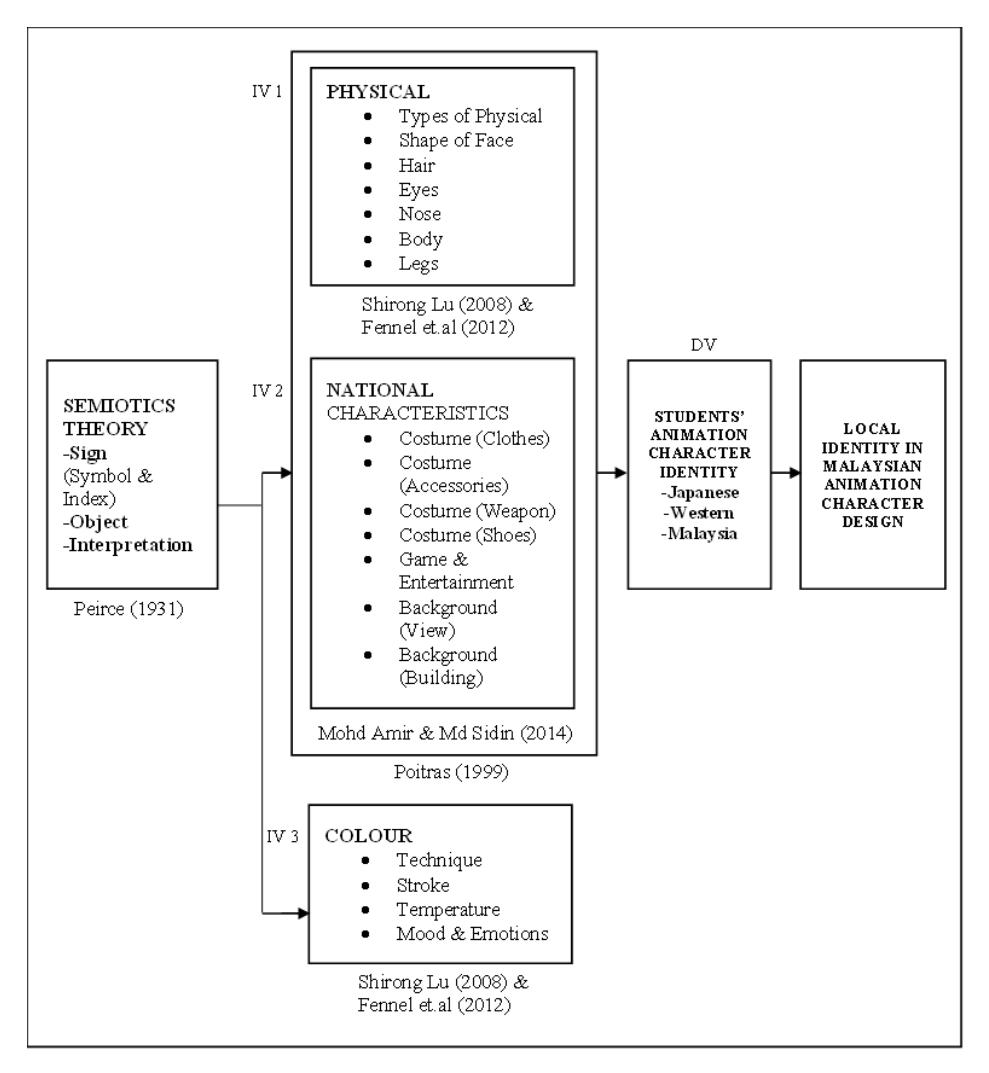
Figure 1 Theoretical framework based on the semiotic theory.
3 Results
Through the analysis of cross-distribution and Chi-Square, it was found that the criteria of physique, national characteristics, and colors produced in the students' works showed characteristics that were similar to those of both local and foreign animations. Referring to Table 2, the category of physique with indicators of the shape of face, eyes, hair, nose, mouth, body, and legs showed similarities with the characteristics of animated characters from Japan (J), Western countries (W), and Malaysia (M). As for national characteristics, only the costume catgeory, which refers to the attire (shirts and pants), showed related characteristics. For the category of accessories, weapons and shoes, it was found that only Western and Malaysian characteristics were present in the students' works. As for festivals and celebrations, it was found that only Malaysian characteristics were shown in the animation produced by the students. Meanwhile, the background scenery showed Japan as possessing related characteristics; while buildings showed no related characteristics among either Japan, Western countries, or Malaysia.
Table 2 Results of overall analysis of physique, national characteristics and color.
| No | Category | Characteristics | J | W | M | Results |
|---|---|---|---|---|---|---|
| 1. | Physique | Shape of Face | / | / | / | J, W, M |
| Eyes | / | / | / | J, W, M | ||
| Hair | / | / | / | J, W, M | ||
| Nose | / | / | / | J, W, M | ||
| Mouth | / | / | / | J, W, M | ||
| Body | / | / | / | J, W, M | ||
| Legs | / | / | / | J, W, M | ||
| 2. | National Characteristics | Costume (Attire) | / | / | / | J, W, M |
| Costume (Accessories) | X | X | X | Nil | ||
| Costume (Weapons) | X | X | X | Nil | ||
| Costume (Shoes) | / | / | / | J, W, M | ||
| Icon | X | X | X | Nil | ||
| Games & Entertainment | - | - | - | No Reading | ||
| Celebration | X | X | / | M | ||
| Background (Scenery) | / | X | X | J | ||
| Background (Buildings) | X | X | X | Nil | ||
| 3. | Color | Technique | X | X | / | M |
| Stroke | / | X | X | J | ||
| Temperature | X | X | X | Nil | ||
| Styling/ Remake | X | / | X | W | ||
| Mood & Emotion | X | / | / | W, M |
Similarly, the indicator of identity demonstrated that there were no related characteristics between Japanese, Western and Malaysian animations and the students' works. However, games and entertainment could not be interpreted because they did not record any readings. The criterion of color seemed to be inconsistent, whereby only Malaysian animations had related features; while color strokes only were only observed in Japanese animations, and color styling was only observed in Western animations. Color temperature was also a feature that was not related to Japanese, Western and Malaysian animations. However, mood and the emotion of color in Western and Malaysian animations had related characteristics in the students' works (refer Table 2). Details such as identity, games, entertainment, celebrations and festivals were given less attention by the students. Similarly, the background was less emphasized by the students, either in terms of scenery or buildings. Although national characteristics were the most
significant criteria of the animated faces and representations of a country, they were not taken seriously by the students [25]. Color was also found to have very little impact, except in terms of mood and emotion. This indicates that only the type of physique and not their national characteristics and colors were used as the students' source of inspiration.
However, some students applied elements of culture and legend in their works, such as Tuah Superion (A) (from the original character of the Malay (legendary warrior, Hang Tuah) with a costume resembling that of a warrior; Super Ipin (C) (from the original animated character of Upin and Ipin); and Batbatboy (B) (from the original animated character of Boboiboy). The use of similar names for the characters also clearly demonstrates an element of imitation of the works referenced by the students.
Based on the content analysis, for the costumes of their characters, the students were also found to be inspired by superheroes, as reflected in the character of Tuah Superion (A), which refers to the legendary character of Hang Tuah, who is historically famous for his acts of heroism. The character of Tuah Superion (A) was inspired for its costume by Captain America, a Western animated superhero, using the symbol of a star as shown in Figure 2. A symbol is a 'sign', which is a definition from sign theory based on the model of Peirce (1931), proving the existence of imitation in the students' works. However, Tuah Superion (A) was only similar to the character of Captain America from the West in terms of the characters' physique. On the other hand, local weapons such as keris and tanjak (head-dress) as part of their costume have Malaysian national characteristics.
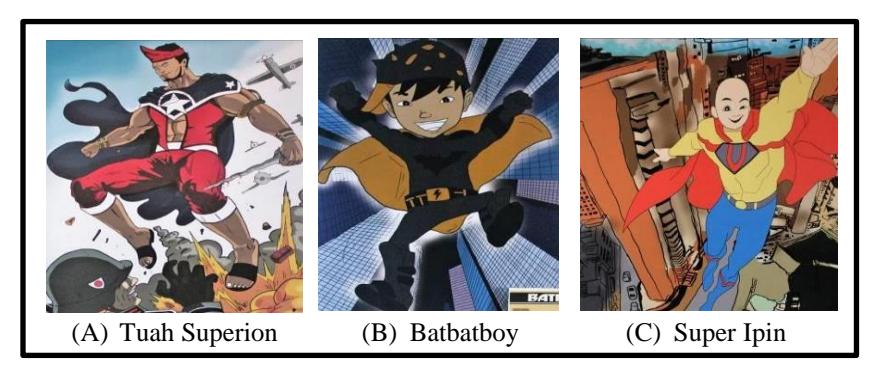
Figure 2 Pictures showing characters with names inspired by local character designs.
As depicted in Figure 2, the character of Batbatboy (B) has some similarities with the identity of the animated character from the series Boboiboy. The similarities are clear from the character's physique, namely the shape of the face, eyes, nose, mouth, hair, body and legs. The name of Batbatboy (B) also indicates imitation of the original character's name, Boboiboy. Furthermore, the flash symbol on the Batbatboy (B) belt is the same as the symbol on Boboiboy's attire (costume). The wearing of a hat is also clearly an imitation of the local animation Boboiboy. The physique and costume of the Super Ipin (C) character bears a resemblance to the identity of the original animated characters Upin and Ipin, while Super Ipin (C) imitates the physical traits of the original Western character Superman in terms of the shape of its face, eyes, nose, mouth and bald head, while the body and costume were also inspired by Superman. The name of the Super Ipin (C) character is taken from the name of one of the original characters from Upin and Ipin, thus proving the existence of imitation.
As indicated in the findings of the content analysis, coloring was done in the students' works using flat coloring techniques and fine strokes to depict the character's stable mood and emotions. All these techniques reflect Malaysian animations as their source of inspiration. This proves that although many people initially perceived the works produced by the students involved mostly as imitations of Japanese and Western animated characters, some students were still interested in local animation and advocated for local or national sentiments [26]. Hence, the works of these students that were inspired by animated characters with a local identity proved that Malaysian animations, such as Kampung Boy, Usop Sontorian and Keluang Man, still drew the attention of the students, including the latest animation productions, such as Upin and Ipin and Boboiboy [27-28].
Figure 3 Characters by students showing Japanese and Western characteristics.
Regarding the students' work in Figure 3, all three animated characters produced were similar to the original characters they referred to. Student A combined the original character of Goku in Dragon Ball (Japanese animation) with the character of Wolverine (Western), student B combined the character of Goku with the character of Captain America (Western), and student C combined the character of Goku with the character of Superman (Western). Therefore, it was evident that the identities of both Japanese and Western animated characters were used as sources of reference, while imitations also occurred in the students' works. The physique and costume were noticeably imitated from Japanese and Western animated characters. The students often applied the physical identity of Japanese animation characters, with big eyes, small noses, and bristle-like hair. As for the body, the students often referred to Western animations that feature perfect and muscular body shapes as a symbol of bravery. Among the identities of Japanese animated characters that were often referred to by the students were Goku from Dragon Ball, Naruto and Final Fantasy cartoons. As for the Western characters, the students favored superhero characters from the Marvel comics such as Superman, Batman, Spiderman, Thor, Iron Man and Wolverine, as well as Disney characters such as Elsa in Frozen. The descriptive analysis of character names produced by the students also revealed elements of imitation; the original characters' names were combined as part of the newly-created character's name. Among the character names produced was Batbatboy, which is a combination of the characters of Boboiboy and Batman, Fangthor which is a combination of Fang (Boboiboy) and Thor (Marvel), and also Super Ipin, which is a combination of Superman and Ipin. This clearly shows that the character's names are also included in the imitation by the students.
Table 3 Students' animation inspirational solutions.
| Solution (Inspiration) | Frequency (f) | Percentage (%) | ||
|---|---|---|---|---|
| Japanese | 80 | 45.2% | ||
| Western | 78 | 44.1% | ||
| Malaysian | 19 | 10.7% | ||
N = 177
Table 3 shows 177 works that represent the identity of animated characters produced by students from both Malaysian private and public institutions of higher education. Overall, the inspiration from Japanese animation was the highest with 45.2 percent (80), followed by Western animation at 44.1 percent (78), and Malaysian animation at 10.7 percent (19).
4 Conclusion
Concerning the objective of this study, it can be concluded that there are characteristics of local and foreign animation in the identities of the animated characters produced by Malaysian higher education students. Japanese and Western animations recorded a high influence, with a total of 89.3 percent compared to Malaysian animations at only 10.7 percent. It was also discovered that in terms of identification, no link existed between national characteristics of the Japanese, Western and Malaysian animations with the animated characters produced by the students, except for the costume indicator (attire, accessories, weapons, and shoes). It is also noted that there were characteristics of local
identity in the animated characters produced by students, thus proving that Malaysian animation also plays a significant role in the creation of the students' works. The greatness of the animation industry in Japan and the West cannot be disputed; they have always been chosen by animation fans not only for entertainment purposes but also as a reference for education and learning. This has been proven based on the analysis of the students' animated characters in this study.
In summary, future research can be conducted to examine the reasons for the students to be more inspired by Japanese and Western styles of animated character design compared to a Malaysian style. This is because the attraction of local animation movies and comic productions also has the potential to influence audience interest amongst teenagers and adults, hence contributing to the development of Malaysian character designs. On a different note, the findings of this study also raise the question of whether these cross-cultural forms lead to a new identity of Malaysian animation or whether it is only a transitory trend. To answer this, further studies on Malaysian animation must be conducted.
Acknowledgement
This paper has been accepted for dissemination at the 3rd International Conference on Art, Craft, Culture, and Design (ICON ARCCADE 2023), and it has been presented on the 12-13 October 2023 under the sub-theme 'Cross-Cultural Identity'.