

1 Introduction
Studio Ghibli's animated movie posters display diverse expression and presentation, unique and fresh in their aesthetic and artistic charm. For more than three decades, Hayao Miyazaki's Studio Ghibli has been a leading animation studio in Japan. As such, Studio Ghibli has emerged as an essential brand that validates pop culture in Japan, where it has released a wide range of products, from feature films to short animated films, to advertising campaigns for corporate partners and clients, to studio museums, and extensive merchandise [1]. An essential part of Studio Ghibli's legacy is its highly praised animation style [2]. Also, one of the strengths of Studio Ghibli's animation is the diversity of the plot
stories for its productions, which can change Westerners' perception of animation [3] with a genre dominated by fantasy stories adapted from various novels. Studios Ghibli is often called a fantasy story factory [4]. Furthermore, one of Studio Ghibli's productions, Spirited Away (2001), won the Best Animated Feature award in 2003 at the 75th Oscars. Almost all of their film titles get good scores on the Metacritic.com and Rottentomatoes.com websites [5]. The hallmark of Studio Ghibli's film production is touching stories full of human values without forgetting imagination suitable for children and adults [6].
Multimodal discourse analysis (MDA) is a text analysis approach that examines how different modes or elements of communication, such as written text, images, sounds, and gestures, are multimodally used together in a communication context. This approach seeks to understand how these various elements interact with each other to form richer and more complex meanings of communication. Multimodal discourse analysis is often used in language, communication, media, and graphic and visual design studies. Film posters are visual communication media used to convey cultural and commercial information about a film, consisting of graphic design elements such as images, text, typography, and colour [7]. Poster designs convey meanings that can be identified using multimodal analysis [8]. Multimodal research in the academic field has excellent potential and social value content [9]. In social science, education, and humanities research, movie posters are considered commercial posters and graphic design with images, colour, and text. Thus, they belong to the category of multimodal discourse. Multimodality is applied in different communication modes, one of which is multimodal discourse analysis, which consists of visual grammar, gestures, eye gaze, posture of body participants, colour, typography, and composition [10]. All of them are connected in a configuration of communication elements contained in media, in this case, in the form of a poster.
Movie posters are a form of systematic representation of the world shared and agreed upon by social groups and then communicated through various (multimodal) discourses [11] using qualitative and interpretative approaches. Studio Ghibli animation movie posters are a form of promotional media. Posters as promotional media are composed of a combination of text and visuals that contain information, thus including data that can be studied qualitatively [12]. Posters as mass communication media are considered attractive because of their design, which cohesively combines text and images [13]. Identifying the context of Studio Ghibli's animated movie posters is essential because knowing the context will make the movie posters easier to analyse. Each Studio Ghibli's animated movie poster appears as the 'face' representing a film, significantly influencing the public's interest in it and its commercial success. Movie posters provide basic information about the movie and express the main message and atmosphere [14]. Posters are displayed as media in public spaces, depicting the participants represented in them to the public, so it is appropriate to classify posters as part of outdoor advertising [15]. Movie posters must be able to capture the essence of the movie, which is a critical component that determines all visual design choices while indicating the genre of the movie in question [16]. When text is combined with other modalities, such as images, colours, fonts, and layouts, it becomes a multimodal text. Multimodal text is a visual communication tool that registers the grammar that defines the relationship between text and visuals in a context that allows verbal communication [17]. Fairclough in Bernardi [18] explains that to get the information in a poster, the movie poster needs to be analysed, where the analysis includes various types of text/typography, ranging from descriptions, short visual images, and hashtags for long descriptions. The value of the information in Studio Ghibli animation posters is determined by how these elements can transfer and produce meaning. The information in the posters makes each distinctive feature between movie posters, whether they relate to each other and how they interact with viewers.
Previous research has shown how MDA works in interpreting various media, such as posters, specifically movie posters, creating patterns of analysis in the form of structures. These patterns often tend to be the same, stagnant, and repetitive. The MDA method can dissect posters for different movie genres, such as comedy films or horror films. Studio Ghibli animation movie posters have not been the object of research in previous studies. The use of MDA on Studio Ghibli movie posters may provide partial information about animated films that are full of imagination and human interest; the posters of Studio Ghibli animated films are an essential research object related to the process of creating or designing meaning while communicating the fantasy animation genre through posters shows that the dynamics of conditions in the world may be more varied than we can imagine [19].
The object of this research is 25 posters of Studio Ghibli animation films released between 1984 and 2023. These 25 posters were selected as the research sample to find patterns and forms of the visual grammar contained in the MDA parameters, such as textual elements consisting of writing, sentences, and letterforms, and visual elements comprised of frames, gazes, colours, positions, and expressions of participants. By observing these elements in each poster, the types of multimodal narratives and visual forms can be accumulated to identify the use of a specific visual language in posters, using MDA to formulate Studio Ghibli's signature style. The purpose of identifying Studio Ghibli's signature style was to explore how these elements are used to reinforce visual messages and themes within the multimodal discourse analysis framework. To achieve this goal, it was necessary to conduct discourse analysis concerning various semiotics of modality, where language in posters is another form of visual image and is a 'body language' that has a semiotic form [20]. Therefore, although posters are visual communication media with a cultural approach [21], movie posters can display visual and verbal elements in the form of texts that can be used to see how visual grammar can work to give meaning to communication in posters. An evaluation was done in the final stage regarding the extent to which animated film posters achieve their purpose, how posters function as visual texts, and how they influence viewers.
2 Methodology
This research used a descriptive qualitative approach with some quantitative patterns. The use of interpretation with quantitative patterns aimed to make it easy to read data in many samples because the data is narrated. Qualitative methods are used in specific contexts to describe, analyse, and interpret samples collected with a verbal-linguistic description approach or an abductive approach informed by Halliday's social semiotic lens [22]. Halliday in Ryan [23] describes three types of metafunctions applied simultaneously in language use: ideational, interpersonal, and textual. Based on Halliday's theory, his systemic functional grammar paves the way for interpreting image meaning [10]. Kress and van Leeuwen in Schneider et al [24]. put forward the concept of visual grammar, a framework for analysing media containing visual images such as, in this case, movie posters.
In the concept of visual grammar, the various visual elements of a poster are treated as linguistic verbal structures. In multimodal verbal linguistics, we use different terms for things with the same subject. Kress and Van Leeuwen in Qurrota Ayuni and Darmayanti [25] argue that visual design can be viewed as a language so that visual design can be studied based on its metafunctions. In addition, there are two components in multimodal discourse analysis on poster analysis, namely represented participants and interactive participants. 'Multimodal' refers to several forms of representation used to build and connect ideas excitingly using different modalities. According to Kress and van Leeuwen (2001), multimodal discourse includes visual forms on posters, including auditory, textual, gestural, and textual forms, as well as being influenced by the language of the art displayed [26]. More than one of these modalities is used in the form or situation in which knowledge is represented [27]. Narrative processes represent phenomenological and experiential models of the participants in posters, situations, actions and events, and processes of change, while conceptual processes represent classification, analysis, and symbolic structures [28].
The primary data were analysed quantitatively with qualitative narratives to identify common patterns using semiotic tools to create meaning in the Ghibli Studio animated movie posters. A total of 25 official animated movie posters of Ghibli Studio were selected for analysis, dating from 1984 through 2023. All
Studio Ghibli movie posters belong to the fantasy adventure genre. Fantasy adventure is a genre of story that combines fantasy elements with adventure narratives that present impossible or magical worlds or events. The genre often features elements such as magic, fantasy creatures, parallel worlds, or mythology that involve the main character in an exciting journey or quest. Ghibli Studio movie posters were selected as primary data to ensure that the selected posters have many similarities in terms of multimodal meanings such as interpretation, purpose, and context of information. This research accommodated this in identifying multimodal analysis through patterns that show semiotic elements as the main elements that confirm meaning in the Ghibli animation genre, which is dominated by courage and strength, such as colour, size, shape, layout, typeface, as multimodal elements, where these elements are used to determine whether two linguistic items belong to the same unit [29]. Following Kress and van Leeuwen in Hermawan [30], the analysis process was carried out by open coding, categorization, and abstraction by elaborating in detail the key points that must be considered when conducting text and visual analysis in each poster using the concept of image reading with the elements forming multimodal analysis, as shown in Table 1.
Table 1 Multimodal elements in a poster.
| Writing | Image | Color | Typography | Layout | |
|---|---|---|---|---|---|
| The movie title | Visuals, typical | Use of color | Use of | Layout, graphic | |
| on the poster | Studio Ghibli | tone, main color, | typographic | design, elements | |
| illustrations | shades on the | elements that | |||
| poster | influence | ||||
| meaning-making | |||||
From the above table, the position of each element in the poster image can effectively convey information. For example, the left-right layout refers to given information and new information, the centre-mid layout refers to primary and secondary information, and the top-bottom layout refers to ideal details and accurate information [31]. Data in the form of visual modes can be analysed using visual grammar theory [32]. This study's analysis of verbal and visual modes was limited to ideational and interpersonal meanings. The next step was to interpret the relationship between the verbal and visual modes in constructing the meaning/message in the utterances considered poster characteristics in quantitative form. Then, the results of the data analysis were represented using narration. The linguistic texts of the posters, in this case, even if only the movie titles, were discussed to increase the accuracy of the interpretation of the representational meanings.
Due to the simplicity of the linguistic components in the posters, as there are only a small number of linguistic elements, the linguistic analysis needed to be discussed in depth. Therefore, this study only considered the semiotic aspect of the linguistic text, which was analysed in terms of compositional meaning. The meaning of the text was only considered as a clue to strengthen the interpretation of the visual image. Representational meaning deals with the way the image represents the relationship between the participants represented in the image [33]. The participants and the actions were analysed to see how the characters and backgrounds are portrayed and to find the relationships among these three elements. In an interactive sense, the automatic analysis of horizontal perspectives was unnecessary since all posters are presented in portrait orientation. Van Leeuwen outlines his visual grammar framework in three chapters: the first on compositional meaning, the second on interpersonal meaning, and the third on representational meaning. Most important is making the distinction between functional design and identity design [34]. The three metafunctions in visual grammar explain how semiotic modes represent objects and their constituent elements in a framework: (1) representational meaning: participants represented, type of process; (2) interpersonal meaning: gaze, social distance, horizontal/vertical perspective, modality; (3) compositional meaning: framing, information, value, and salience [35]. This visual grammar framework is displayed in the image below.
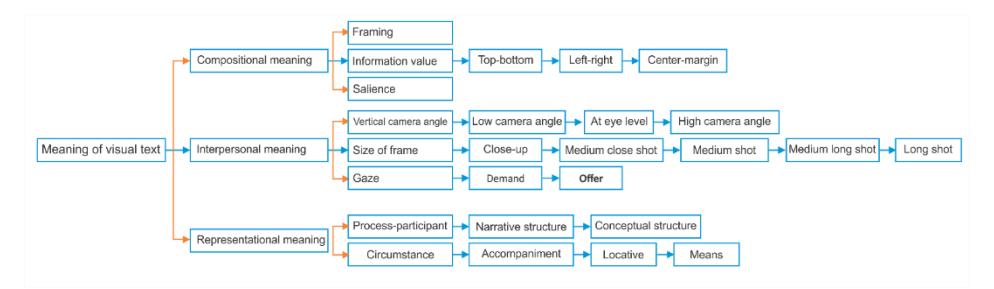
Figure 1 Visual grammar framework of three metafunctions in semiotics.
3 Results and Discussion
A total of 25 Ghibli Studio animated movie posters were analyzed using the visual components contained in the movie poster to understand better how animated movie posters can attract and resonate with viewers through multimodal discourse. To ensure that the 25 posters are official, the posters were taken from trusted film websites such as Imdb.com, Rottentomatoes.com, and Wikipedia.com and then grouped into a table with the Representational and Interpersonal meaning analysis results, as shown in Table 2 below.
\(\textbf{Table 2} \quad \text{Results of Visual Representational and Interpersonal Meaning analysis of the 25 posters.}\)
| Title | Poster | Size of Frame | Composi- tion | Title | Poster | Size of Frame | Composi- tion |
|---|---|---|---|---|---|---|---|
| Nausicaa of the Valley of the Wind (1984) | Nausicaä | Left-right Center margin nstances | The Cat Returns (2002) | Medium Top- | bottom | ||
| Structure | Conceptual Narrative | Gaze Offer | Structure | Conceptual Narrative | Gaze Offer | ||
| Castle in the Sky (1986) | CASTLE IN THE SKY | Long shot | Top- bottom | Howl's Moving Castle (2004) | MOVING CASTLE | Long shot | Top- bottom Center margin |
| Circumstances Accompaniment | Circumstances Locative | ||||||
| Structure | Conceptual Narrative | Gaze Offer | Structure | Conceptual Narrative | Gaze Offer | ||
| My Neighbor Totoro (1988) | E&I)ohtp | Long shot | Left- right Center margin | Tales from Earthsea (2006) | Long shot | Left- right Center margin | |
| Circumstances Locative | TALESTOONEARTHSEA | Circumstances Locative | |||||
| Structure | Conceptual Narrative | Gaze Demand | Structure | Conceptual Narrative | Gaze Offer | ||
| Grave of the Fireflies (1988) | GRAVE of the FIREFLIES | Medium long shot | Left- right | Ponyo (2008) | Long shot | Center margin | |
| mstances cative | Ponyo | nstances cative | |||||
| Structure | Conceptual Narrative | Gaze Demand | Structure | Conceptual Narrative | Gaze Demand | ||
| Kiki's Delivery Service (1989) | KIKIS | Medium long shot | Top- bottom Left- right Center | The Secret World of Arrietty (2010) | Arrietty | Medium long shot | Left- right Center margin |
| margin (20 Circumstances Locative | (2010) | Circumstances Locative | |||||
| Structure | Conceptual Narrative | Gaze Demand | Structure | Conceptual Narrative | Gaze Demand | ||
| Title | Poster | Size of Frame | Composi- tion | Title | Poster | Size of Frame | Composi- tion |
|---|---|---|---|---|---|---|---|
| Only Yesterda y (1991) | ONLY YESTERDAY | Medium Center long shot margin Circumstances Accompaniment | From Up on Poppy Hill (2011) | Porto Hall | Medium Center long shot margin Circumstances Accompaniment | ||
| Structure | Conceptual Narrative | Gaze Demand | Structure | Conceptual Narrative | Gaze Demand | ||
| Porco Rosso (1992) | Porco Rosso | Left-right Center margin | The Wind Rises (20213) | (f.,) (and (con) (fr.) THE WIND RISES | Long Top- shot Bottom left Circumstances Means | ||
| Structure | Conceptual Narrative | Gaze Demand | Structure | Conceptual Narrative | Gaze Offer | ||
| Ocean Waves (1993) | OCEAN WAVES | Medium long shot | Top- bottom Left- right | The Tale of the Princess Kaguya (2013) | THE TALE PRINCESS KAGUYA | Medium long shot | Top- bottom Center margin |
| Circumstances Accompaniment | (2013) | Circumstances Locative | |||||
| Structure | Conceptual Narrative | Gaze Offer | Structure | Conceptual Narrative | Gaze Offer | ||
| Pom Poko (1994) | Pom Poko | Medium long shot | Left- right Center margin | When Marnie Was | Marnie | Medium long shot | Center margin |
| Circumstances Locative | There (2014) | N- | Circumstances Means | ||||
| Structure | Conceptual Narrative | Gaze Demand | Structure | Conceptual Narrative | Gaze Offer | ||
| Whisper of the Heart (1995) | WHIJPER HEART | Top- bottom | The Red Turtle (2016) | THE*RED | Left- right nstances\neative | ||
| Structure | Conceptual Narrative | Gaze Offer | Structure | Conceptual Narrative | Gaze Offer | ||
| Title | Poster | Size of | Composi- | Title | Poster | Size of | Composi- |
|---|---|---|---|---|---|---|---|
| 1 OSICI | Frame | tion | Toster | Frame | tion | ||
| Princess | REPORTS SUBGRIDE PRINCESS | Medium | Top- | Earwig | 7 | Medium | Top- |
| Mononoke | Mononoke | close | Bottom | and the | A Company of the | long shot | bottom |
| (1997) | shot | Witch | 6 | ||||
| ~• | (2020) | ~. | |||||
| Circumstances | Circumstances | ||||||
| Accompaniment | Earwig and Wilch | Locative | |||||
| 0 | , d | G. | |||||
| Structure | Conceptual Narrative | Gaze Offer | Structure | Conceptual Narrative | Gaze Offer | ||
| Narrauve | Offer | Narrauve | Offer | ||||
| My | 5 | Medium | Left- right | The Boy | 000 | Close | Left- |
| Neighbors | HY NEIGHRORS | long shot | Center | and the | up | right | |
| the | THE PHINDIAS | margin | Heron | 1 | Center | ||
| Yamadas | (2023) | margin | |||||
| (1999) | ~• | 生ど君 | ~. | ||||
| Circumstances | 1 375 | Circumstances | |||||
| 27 9 3 4 4 4 4 4 4 4 4 4 4 4 4 4 4 4 4 4 4 | Loc | cative | かしは | Locative | |||
| Structure | Conceptual | Gaze | Structure | Conceptual | Gaze | ||
| Structure | Narrative | Offer | Structure | Narrative | Offer | ||
| Spirited | MIXAZAKITA | Medium | Top- | ||||
| Away | SPIRITED AWAY | close | bottom | ||||
| (2001) | TANK THE PROPERTY OF THE PARTY OF THE PARTY OF THE PARTY OF THE PARTY OF THE PARTY OF THE PARTY OF THE PARTY OF THE PARTY OF THE PARTY OF THE PARTY OF THE PARTY OF THE PARTY OF THE PARTY OF THE PARTY OF THE PARTY OF THE PARTY OF THE PARTY OF THE PARTY OF THE PARTY OF THE PARTY OF THE PARTY OF THE PARTY OF THE PARTY OF THE PARTY OF THE PARTY OF THE PARTY OF THE PARTY OF THE PARTY OF THE PARTY OF THE PARTY OF THE PARTY OF THE PARTY OF THE PARTY OF THE PARTY OF THE PARTY OF THE PARTY OF THE PARTY OF THE PARTY OF THE PARTY OF THE PARTY OF THE PARTY OF THE PARTY OF THE PARTY OF THE PARTY OF THE PARTY OF THE PARTY OF THE PARTY OF THE PARTY OF THE PARTY OF THE PARTY OF THE PARTY OF THE PARTY OF THE PARTY OF THE PARTY OF THE PARTY OF THE PARTY OF THE PARTY OF THE PARTY OF THE PARTY OF THE PARTY OF THE PARTY OF THE PARTY OF THE PARTY OF THE PARTY OF THE PARTY OF THE PARTY OF THE PARTY OF THE PARTY OF THE PARTY OF THE PARTY OF THE PARTY OF THE PARTY OF THE PARTY OF THE PARTY OF THE PARTY OF THE PARTY OF THE PARTY OF THE PARTY OF THE PARTY OF THE PARTY OF THE PARTY OF THE PARTY OF THE PARTY OF THE PARTY OF THE PARTY OF THE PARTY OF THE PARTY OF THE PARTY OF THE PARTY OF THE PARTY OF THE PARTY OF THE PARTY OF THE PARTY OF THE PARTY OF THE PARTY OF THE PARTY OF THE PARTY OF THE PARTY OF THE PARTY OF THE PARTY OF THE PARTY OF THE PARTY OF THE PARTY OF THE PARTY OF THE PARTY OF THE PARTY OF THE PARTY OF THE PARTY OF THE PARTY OF THE PARTY OF THE PARTY OF THE PARTY OF THE PARTY OF THE PARTY OF THE PARTY OF THE PARTY OF THE PARTY OF THE PARTY OF THE PARTY OF THE PARTY OF THE PARTY OF THE PARTY OF THE PARTY OF THE PARTY OF THE PARTY OF THE PARTY OF THE PARTY OF THE PARTY OF THE PARTY OF THE PARTY OF THE PARTY OF THE PARTY OF THE PARTY OF THE PARTY OF THE PARTY OF THE PARTY OF THE PARTY OF THE PARTY OF THE PARTY OF THE PARTY OF THE PARTY OF THE PARTY OF THE PARTY OF THE PARTY OF THE PARTY OF THE PARTY OF THE PARTY OF THE PARTY OF THE PARTY OF THE PARTY OF THE PARTY OF THE PARTY OF THE PARTY OF THE PARTY OF THE PARTY OF THE PARTY | shot | |||||
| ( ' 🍅 ' | Cinam | natanasa | |||||
| Circumstances Accompaniment | |||||||
| Accom | pannient | ||||||
| Structure | Conceptual | Gaze | |||||
| Narrative | Offer | ||||||
3.1 Meaning Representation
Representational meaning relates to the way an image presents visual aspects. From the table above, summarized representational meaning can be realized into three components: participants, process types, and states. The number of participants depicted in the poster is shown in Figure 2.
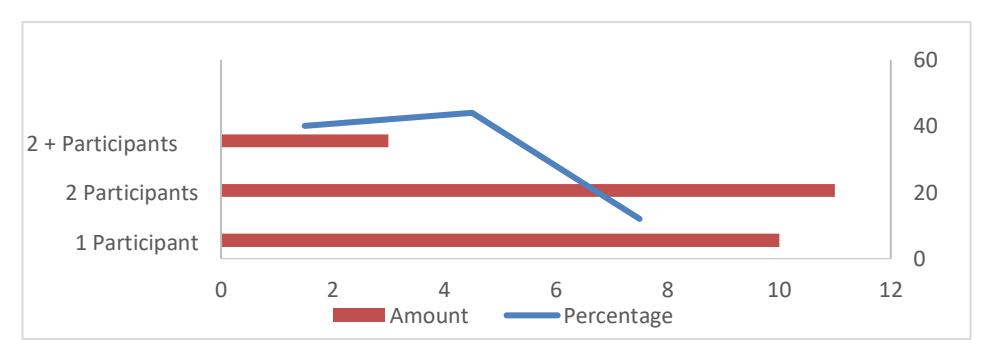
Figure 2 Number of participants depicted in the posters.
The movie's main character appears individually or uses only one or two participants. When there are two or more participants, viewers can quickly tell which character is the main character's partner. In Studio Ghibli's animation films, relationship dynamics occur between characters. The posters are relationship-oriented and tend to follow the tradition of imagining the conflicts created in the plot and the fantasy adventures that occur in the pacing, so the genre of Studio Ghibli animated films can be easily identified. On the other hand, some posters show only one participant, at 40 percent, or only one character, where the character has a relationship that has yet to be explicitly shown. So, almost 50 percent of Studio Ghibli's animated movie posters contain fantasy adventure content that is explicitly expressed in the poster, which creates a form of ambiguity that can stimulate the curiosity of engaging viewers. A recapitulation of the conceptual comparison and narrative structure can be seen in Figure 3.
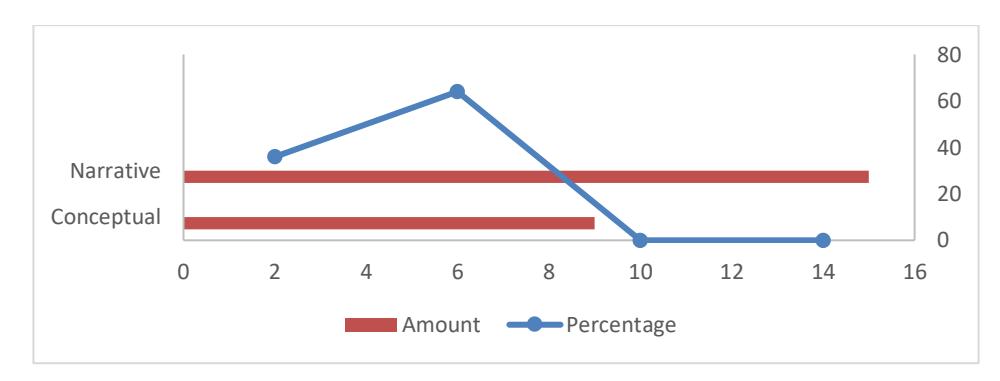
Figure 3 Comparison between conceptual and narrative structure.
Conceptual structures are used in 9 out of 25 posters, or 36 percent, representing the posters that feature a protagonist. Viewers can tell who the protagonist of the movie is through the character's appearance, but only a little is revealed about the story surrounding the character. For example, in Grave of the Fireflies (1988), which depicts the tragic story of a brother and sister during the 1945 war, the action of the brother carrying the sister shows how the narrative structure contains clues about the content of the animated film, which includes the tragedy of the actions taken by the participants. In My Neighbor Totoro (1988), the conceptual structure is identified as the two participants standing forward and being silent to each other, creating a silent condition and building an atmosphere that creates curiosity about the two participants on the poster. In 15 Studio Ghibli posters, narrative aspects related to the relationship between characters, such as standing, silence, or posing, are actions that can help viewers imagine the identity of the participants, giving a strong clue about how the film may end. This is based on the argument that the film's ending always remains to be discovered, whether it is a happy or a bad ending. However, one thing is sure: if the participants in the poster appear predominantly, then there are particular character developments, decisions, and actions, relationships between characters, antagonist or protagonist roles, emotional growth to moral messages, or essential themes in the story.
It is important to remember that each participant contributes uniquely to directing the story towards the end of the film. How these characters interact, learn, and grow during the story significantly affects how the story ends. Out of the 25 posters, there are 11, or about 44 percent, where the visuals do not directly show the fantasy adventure the participant is on. For example, in the Ocean Waves (1993) poster, the action of the woman sitting on the beach with the man behind her who is throwing stones towards the beach shows the facial expressions of both of them, not only to suggest a mysterious relationship but also to suggest a gap in feelings as the female and male characters are involved in a love triangle with a mysterious character who does not appear in the poster. From the 25 posters above, the distinction between narrative and conceptual posters can be more precise. This is because main verbs indicate the visual images and linguistic text that appear on the posters; the visual text shows a combination of various actions and reactions of each participant in one image; the interpretation of images is subjective, where in many cases, it is difficult to analyze whether the participants who are acting or who pose on a movie poster can indicate who they are in the film (in the context of the story).
To identify the conceptual and narrative aspects, one must still refer to the movie's storyline to create a clear flow in analyzing the posters. A conceptual structure can be seen in the movie poster for Castle in the Sky (1986), where the two participants who appear on the poster can be categorized as a narrative structure. Semiotically, this creates a meaning of identity where the two participants appear as a group of characters who interact as a couple even though they are visualized as two characters of different species. The interpretation of visual images on movie posters will always be subjective because many aspects influence it, so it cannot be easily codified into a categorization process. Finally, as a means and accompaniment, a background only appears in 8 out of 25 posters. In The Red Turtle (2016), two people walk on the beach; the movie tells the story of the survival journey of the male character who is stranded on an island and tries to save himself by building a raft to move to another place. In My Neighbors the Yamadas (1999), the extras play such an essential role in their interactions with the main characters that the appearance of the extras in the poster can be seen as a preview of the film's story.
3.2 Interactive Meaning
The interactive meaning is the social meaning, which is the connection established between the film poster and the viewer represented in three aspects, namely the vertical and camera angle, eye gaze, and frame size, as shown in Figure 4 of the poster's visual gaze choice aspect chart below.
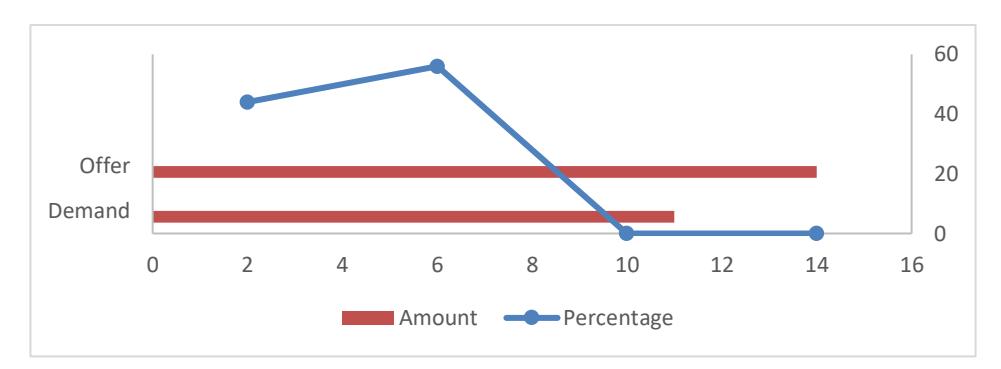
Figure 4 Variable frame sizes in posters.
In the context of visual representation, a gaze that does not produce a vector between the viewer's eyeline has a specific meaning. Since the represented object is not looking directly at the viewer but at a distant horizon, this can be considered an 'offer.' An offer on a movie poster is a form of information. The information will initiate an interactive text-image relationship in the direction of the participant's gaze towards the viewer, thus categorized as 'demand.' There are 11 posters, or 44 percent, with a gaze at the viewer to categorize it as an offer. Meanwhile, 14 posters, about 56 percent, are in the demand category. The type of demand that appears on most Studio Ghibli movie posters is a form of horizontal relationship between the viewer and the participants, where the main character is a symbol of the protagonist who will tell the story of his adventure to the viewers. In the movie When Marnie Was There (2014), two couples stand with their backs to each other, and it seems that they live together in a world of their own despite the silence; the two participants on the poster create a mystery that attracts the viewers. Based on the meaning of the representation, for example, the visual mode on the When Marnie Was There (2014) movie poster has an outline that is included in the narrative representation in the form of a nontransactional reactional process. This means that the poster shows the participants. In the movie Princess Mononoke (1997), the main character is riding a wolf, and neither of them looks directly at the viewer, which describes the background story of the male lead, who is traveling to a region in the west to remove his curse.
In Figure 5, the choice of framing device plays a dual role in connecting each element in the film poster. It is clear from the chart that the medium long shot and medium close shot are the most frequently used frames in Studio Ghibli animation movie posters. The visual appearance of the characters as participants are presented as 'ordinary people with extraordinary stories,' which provides an emotional bond between the participants and the audience through the facial expressions and body language used so that the appearance of the characters does not dominate the effect of the audience's feelings. In other words, the viewer is an observer who follows the story of the participants but cannot change the storyline. For example, in the movie poster of Spirited Away (2001), the camera perspective indicates an impressive and robust character portrayal of the protagonist to emphasize her specialty of commitment and having strong beliefs. The participants are represented as characters who are just as strong as the viewers, all depicted in the frame size findings.
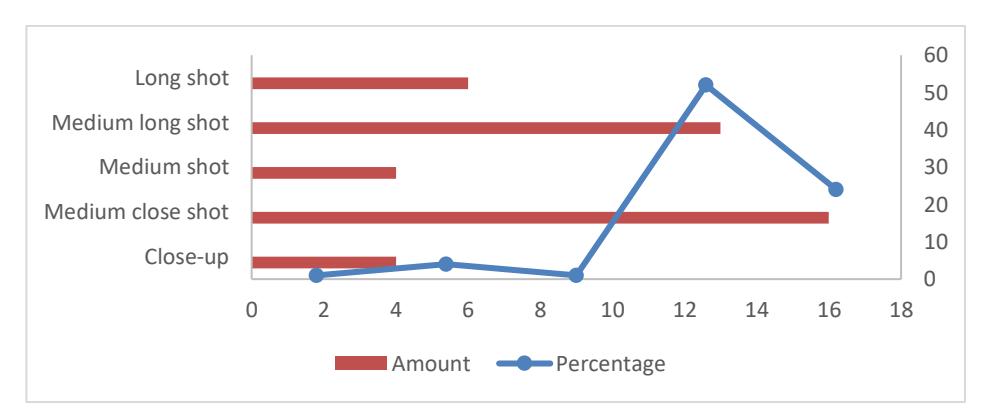
Figure 5 The choice of frame device in the posters.
3.3 Composition Meaning
The meaning of composition has three points: prominence, framing, and information value. A protrusion is an element that dominates other elements, where the viewer's focus is on the dominant element. In the posters of Studio Ghibli animated films, every main character and supporting character who appears as participants gives the impression of domination, either individually, in pairs, or in group interactions that appear prominently in all posters, except for the poster for The Boy and the Heron (2023), which appears in the form of a metaphor. In posters with character visuals or two participants, the main character has a 'demand' gaze, allowing viewers to transform information in each poster frame. For example, in From Up on Poppy Hill (2011), the man with the 'demand' gaze has more facial gestures than the woman sitting behind him. The woman sitting behind him, although less prominent in the poster, gesturally still indicates that she also plays a vital role in the movie. The film's title is a prominent element that appears large and in contrasting colors. The composition between the prominence of the visual image and the title of the movie as a linguistic element will always contain subjectivity because it is influenced by the element that most attracts the attention of viewers, which is the appearance of the main characters.
Then, the film's title consistently reinforces the character's existence, especially if the visual poster is designed with hot colors such as yellow, orange, and red and appears with dominant letterforms. Although words as linguistic elements appear to be spread all over the poster, the position of text as a multimodal element tends to have a dynamic and flexible frame style. Elements connected to the frame system, such as the names of the leading voice actors/actresses and the director, usually appear at the bottom. In contrast, other details, such as the film studio's brand, producer, and release date, are often placed at the bottom of the frame, even though they do not dominate the Studio Ghibli animation film posters.
The posters of Studio Ghibli's animated films contain two elements: text as a multimodal element and images. The function of text in Studio Ghibli animated movie posters is to highlight information about the movie. It is often designed as a semiotic element in the visual grammar to provide a balanced composition between visual images and other elements in the poster. In the movie posters of Kiki's Delivery Service (1989) and The Secret World of Arrietty (2010), the linguistic element that uses the same typeface and style (1990), where the display gives more or less the same prominence to both the title as the female participant in both films. In all 25 posters, the titles of the animated movies can be found at the top of the poster zone; the positioning of these elements, with a rather large font size, is very flexible. The tendency that the title of the film is placed next to the most prominent element, for example, a visual participant such as the title of the movie above the visual character, makes each visual element complement each other to form a composition that forms a single unit. In posters with many participants, the main character is often dominant, and in terms of poses, situations, facial expressions, and actions, they are linked and match the conditions of the illustrations on the poster. Ultimately, the information value associated with the location of the various elements that make up a Studio Ghibli animated movie poster all have a strong relationship with the viewer. This relationship in a multimodal context is called value information.
The value of information, as can be seen from the chart in Figure 6, the centremargin structure is the most frequently used; this structure is seen in the movie posters of Ocean Waves (1993) and When Marnie Was There (2014), with the format right in the middle of the image giving the impression of a centre of interest that is fundamental to the story of the film. The film's title, with its details on the top side, is the main message to invite moviegoers to find its unique features. The second form of information from the left-right structure uses a poster-style layout structure that contains information. If the movie poster is read as multimodal, then the left part of the poster is the part that contains information, and the right part contains information in the form of messages to be explored; the left-right structure can be found in 15 posters or about 60 percent of the total
number of posters. The last structure with a small amount is top-bottom, found in 11 posters, with a repetitive pattern where the participant is at the bottom and the movie title is at the top. This approach provides a visual media technique in a multimodal context that interrelates the participants while providing contrast in the form of dominant prominence on the poster and movie title. This can be seen in the movie posters for Grave of the Fireflies (1988), Only Yesterday (1991), and My Neighbour Totoro (1988), where the structure of the participants is arranged in a way so that they face each other. Subjects and visual objects semiotically show conflicts and bonds highlighted in interpreting the relationship between verbal and visual that interact with each other, even though they have different meanings when viewed separately. The movie poster for Howl's Moving Castle (2004) is the only poster that uses a vertical structure, with an empty space that structurally unites all groups of participants. Half of the image is left for the background, with a large space to show the main plot that is mysteriously unfolding.
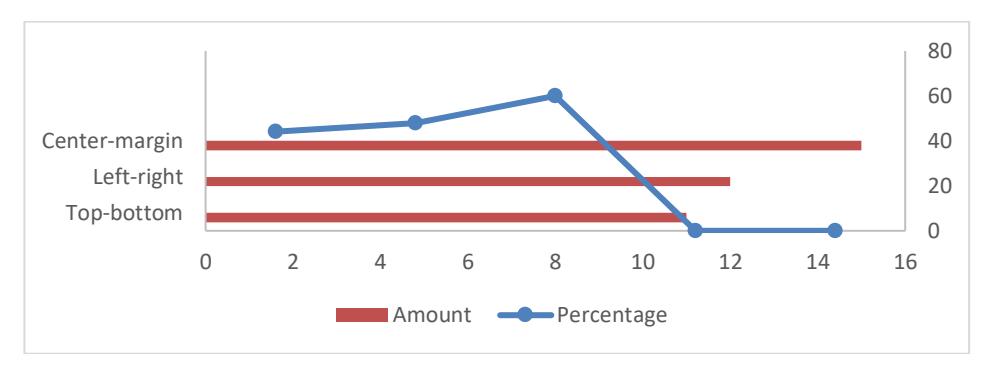
Figure 6 Information value in the posters.
4 Conclusion
Multimodal discourse analysis can break down visual images into elements that can be interpreted, especially in poster media; the analysis procedure distinguishes two stages: identification and classification. Exploration of Studio Ghibli's animated film posters showed several conventions in the design of these film posters. First, the participants who appear on Studio Ghibli's animated film posters with backgrounds using beautiful and imaginative 2D images (except the poster for The Earwig and the Witch, 2020) often depict the film's main characters or essential scenes. The images in movie posters communicate elements such as atmosphere, character, and conflict in the movies. In terms of representational meaning, the posters of Studio Ghibli's animated films can be divided into two types: character-oriented posters and relationship-oriented posters. Regarding the interactive meaning, any relationship created between participants in the poster
visuals and viewers is often maintained without any power relations involved. In addition, based on the meaning of representation, the visual mode is included in a narrative representation in the form of a non-transactional reactional process. This means that the participants in the movie poster are represented. Meanwhile, based on the interpersonal meaning, the direction of the object's view in the poster partly points directly to the audience to create a 'good feeling' that has a pleasant effect on the viewer and is suitable to play a prominent role by giving color, influence, and a preview of the plot of the film in the content of Studio Ghibli animation movie posters.
Ghibli Studio's animated movie posters deliver messages about touching stories full of human values without forgetting imagination, which is suitable for children and adults. Thus, there is a general pattern in visual selection to make the meaning in the posters of these animated films not follow the will of most viewers. However, there is a side of the creator's idealism in this case, where Hayao Miyazaki directs 80 percent of Studio Ghibli's movies. The idealism side is included in every aesthetic aspect so that the scope of the analysis of the three meanings of the Studio Ghibli animation film posters can reveal some information related to the storyline typical of the Studio Ghibli film, thus making the audience interested in the story of the character development. Related to the visual grammar framework of three metafunctions in semiotics and visual grammar, the well-structured Studio Ghibli animation movie posters always reflect how the stereotype of each participant can change from time to time depending on the cultural conditions of the local community so that discursively, it cannot be easily categorized into technical forms of discourse. The findings show that Studio Ghibli's movie posters are a medium that communicates this combination of visual elements and text uniquely. These posters are powerful depictions of the stories in the movies. Studio Ghibli posters tend to be visually appealing, with imaginative depictions of the beautiful and colorful fantasy worlds in their work combined with text such as the film title, essential quotes from the film, or other supporting text that can communicate the essence of the story that captures the feeling, atmosphere, or central theme of the film.