

1 Introduction
The creative process is a multifaceted process involving the creation of innovative and valuable ideas, products, or expressions [1]. The creative process is influenced by creative potential factors such as emotions, cognitive abilities, and contextual factors [2]. Cognitive factors such as emotion play a substantial role in the creative process, as they can impact the generation of novel and valuable ideas [1, 3]. Cognitive abilities, such as executive functions and working memory capacity, are also relevant for creativity [4, 5]. Lastly, contextual factors such as environmental affordance (e.g., virtual reality or VR) or media materiality can also influence the outcomes of the creative process [6, 7].
Received April 17th, 2024, Revised June 24th, 2024, Accepted for publication November 6th, 2024. Copyright © 2024 Published by ITB Institute for Research and Community Services, ISSN: 2337-5795, DOI: 10.5614/j.vad.2024.16.2.4
The role of media materiality in the creative process is not static but dynamic, constantly influencing and informing the creative outcomes. The physical characteristics and affordances of materials are not just passive elements but active participants that shape and guide the creative process [8]. In this context, creativity is a process of 'knowing through doing', where embodied material sensitivity is crucial to bringing ideas into reality [9]. It can be viewed as the exploration and invention of unexpected uses or action potentials for objects and materials [10]. Materiality in the artistic creative process is not isolated but ecological, involving interactions between the artist, the materials, and the environment [11]. This dynamic nature of materiality in the creative process can significantly aid in the development of frameworks and tools to enhance creativity [12].
Materiality in creative processes is not limited to physical materials but extends to digital devices and technologies [13]. Different media, whether traditional (e.g., paper, canvas) or digital (e.g., digital art tools, immersive VR environments), offer unique affordances that can influence the creative process. For instance, the tactile feedback of painting on canvas versus the virtual feedback of digital painting may result in different creative outcomes. The rapid advancement of technology and its integration into various forms of media, such as immersive VR, required further review study that could explore how these material differences impact creativity, considering cognitive, emotional, and artistic dimensions.
This review will assess the following categories: 1) physical media versus nonimmersive 2D or 3D media; 2) physical media versus immersive 3D media; 3) digital 2D media versus immersive 3D media; and 4) non-immersive 3D media versus immersive 3D media. The selection of these four comparison groups was motivated by the intention to systematically investigate how different media materiality influences the creative process. Each category represents a clear contrast in the sensory and interactive characteristics of the media, enabling a focused analysis of specific impacts. The outlines described below were the reasoning behind this classification.
1.1 Physical Media vs Non-immersive 2D or 3D Media
This comparison examines the fundamental difference between tangible, physical materials (e.g., clay, paint, wood) and their digital representations on flat screens or in non-immersive 3D environments. It investigates how the tactile, sensory feedback of physical materials influences creativity compared to the visual and potentially more abstract experience of digital representations.
1.2 Physical Media vs Immersive 3D Media
This group investigates the contrast between physical materials and their counterparts in immersive 3D environments (e.g., virtual or augmented reality). It explores how the immersive, embodied experience of interacting with virtual materials compares to the tactile engagement with physical ones and how this impacts the creative process.
1.3 Digital 2D Media vs Immersive 3D Media
This comparison focuses on the spectrum within digital media itself, contrasting the traditional 2D interfaces with the increasingly immersive 3D experiences. It seeks to understand how the added dimensionality, spatial awareness, and potential for embodied interaction in immersive 3D environments affect creative expression compared to 2D digital tools.
1.4 Non-immersive 3D Media vs Immersive 3D Media
This group further refines the analysis within the realm of 3D media, examining the difference between non-immersive 3D representations (e.g., on a screen) and fully immersive 3D environments. It investigates how the sense of presence, agency, and embodied interaction afforded by immersive 3D media influences creative processes compared to less immersive 3D experiences.
By structuring the review around these four comparison groups, this study aimed to:
- Emphasize the distinct influence of each form of media materiality on the creative process.
- Discern commonalities and differences in how different media materiality influences creativity.
- Obtain a deeper understanding of the connection between materiality and creative expression.
- Provide insights for artists, designers, and educators into how to leverage different media materiality to enhance creative outcomes.
2 Methods
We review the latest publications between 2013 and 2023 in major databases such as Scopus, ACM, and ScienceDirect, specifically studies that compare the impact of physical, digital, immersive media, and non-immersive media on the creative process. The combination of these databases allows for a comprehensive and multi-faceted approach to the research question. By accessing a wide range of publications from different disciplines, this review can discover emerging materials, technologies, and artistic practices related to media materiality.
The review was carried out in adherence with the PRISMA guidelines [14]. The research question focuses on understanding the impact of different media materiality on the creative process, specifically in the context of art and design. To capture the relevant literature, a combination of keywords and phrases was employed, including: "creative process," "creativity," "media materiality," "media materiality comparison," "art-making," "design process," "2D versus 3D", "physical versus digital media," "VR," "immersion," and "immersive versus non-immersive media." The keyword search strategy is outlined in Table 1.
Aspect Description Keyword selection Combined core terms ("media materiality," "creative process," etc.), related concepts ("affordances," "immersive" etc.), specific media examples ("VR", "digital media" etc.), and disciplinary terms ("artmaking" etc.) Search strategy Performed multiple searches with different keyword combinations, using Boolean operators (AND, OR) to refine results Database application Applied keywords across Scopus, ACM Digital Library, and ScienceDirect, adapting to each database's structure Additional considerations Used search filters and citation chaining, and iteratively refined the strategy Transparency and reproducibility Documented specific search strings, filters, and modifications for transparency and reproducibility
Tabel 1 Keyword search strategy.
We went through several rounds of selecting articles by reading titles and abstracts, gathering full texts, and reading the full articles. The criteria explained below were used to determine which articles were included or excluded during the process.
2.1 Inclusion Criteria
Studies were considered eligible for inclusion when they discuss the comparison of media materiality in the creative process, especially in artistic contexts and design processes. The focus of media comparisons is mainly between physical and digital media, or between immersive digital and non-immersive digital media. The population expected to be included are artists, designers, or general users in the artistic creative sphere. We also included case studies, theoretical
analyses, and empirical research from different disciplines that could offer a more multidimensional perspective on media materiality and creativity.
2.2 Exclusion Criteria
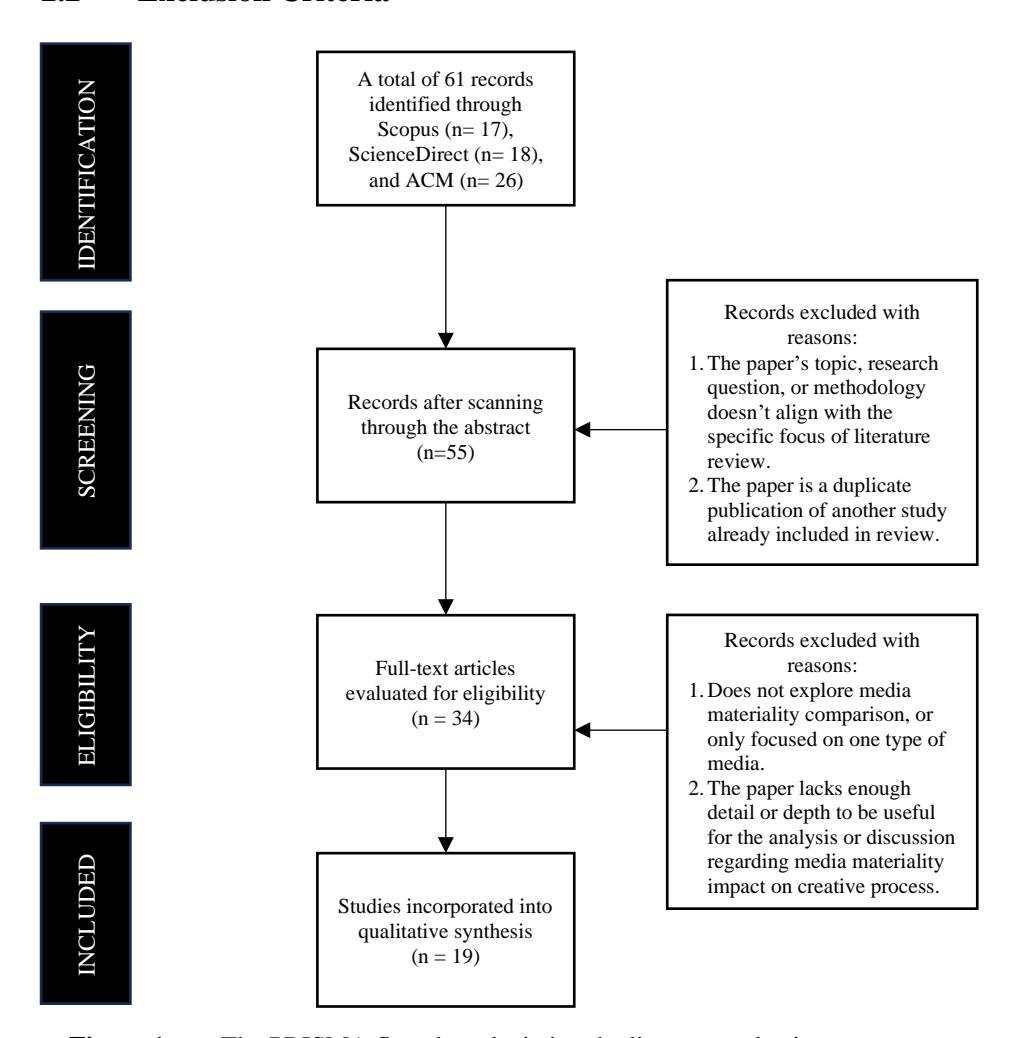
Figure 1 The PRISMA flowchart depicting the literature selection process.
Articles that do not provide full-text access were excluded from our research. In addition, we did not include studies that solely discuss the effect of a single type of media on creativity, such as research that only examined one type of media materiality, or research that focused solely on physiological or mental states without considering creative processes and outcomes. Furthermore, we only
considered the latest research published within 2013 to 2023. Figure 1 illustrates the literature selection process following the PRISMA approach.
3 Results
2014 Toh and Miller
2019 Heiden and Moyer [18]
2021 Frich and Neuwen [20]
[16]
We selected nineteen research articles that compare the impact of different media materiality on the creative process and performance. Table 2 provides a comprehensive overview of the reviewed publications categorized by media materiality and year of publication. To further analyze media materiality and its role in the creative process, comparison between media used in research, targeted participants, key findings, and future research will be discussed.
Tabel 2 Publications reviewed between 2013 and 2023.
- - -
[29]
Chai et al. [30]; Hagedorn et al. [31]
Demirkan [32]
Lee et al. [28] Vlah et al. [33]
| Year | Physical media vs non-immersive 2D or 3D media | Physical media vs immersive 3D media | Digital 2D media vs immersive 3D media | Non-immersive 3D media vs immersive 3D media |
|---|---|---|---|---|
| 2013 | Alcaide-Marzal | - | - | - |
| et al. [15] |
Non-immersive
2016 - Rieuf et al. [27] - 2018 Lee et al. [17] Yang et al. [21] - 2020 Sintonen [19] Yang and Lee [22] - Obeid and
Oti dan Crilly [23]; Richesin et al. [24]; Bitu et al. [25]
[26]
2022 - - Houzhangbe et al.
2023 - Chaniaud et al.
3.1 Creative Performance on Physical Media vs Non-immersive 2D or 3D Media
Research exploring how artists and designers interact with physical and digital materiality yields mixed conclusions. Toh and Miller [16] suggest that 2D representations may enhance novelty in ideation, while interacting with a physical example could increase idea variety. Heiden and Moyer [18] found that 3D reference materials increase task completion time without hindering accuracy or mental effort. Several studies examine the role of digital sculpting. Alcaide-Marzal et al. [15] found that 2D drawing it is superior for efficiency and accuracy but note the complementary value of 2D methods. Lee et al. [17] and Frich et al. [19] highlight the positive cognitive impact of digital tools, supporting idea exploration, spatial understanding, and both the generation and evaluation of design ideas. Sintonen's [19] autoethnographic study suggests that traditional analogue materials may encourage experimentation in artistic creation, while digital methods foster a more playful approach. Bitu et al. [25] provide surprising findings on the connection between sensory feedback and creativity. Using fingers on a tablet enhances the uniqueness of drawings for children and teens, exceeding the effects of pen and paper. Surprisingly, a stylus did not lead to less originality, and for older children, it surpassed the traditional method. These studies emphasize that a complex relationship exists between the tools used, how we engage with them, and the creative outcomes they produce. Table 3 presents publications related to creative performance on physical media, compared to nonimmersive 2D and 3D media.
Tabel 3 Publications regarding creative performance on physical media vs nonimmersive 2D or 3D media.
| Authors | Type of Media | Platform | Participants | Creative task |
|---|---|---|---|---|
| Alcaide-Marzal et al. [15] | Graphic tablet and pen on paper | ZBrush 4 | Twenty-two master's students in engineering design, all of whom already | Generating a wide range of solutions to a given design problem through |
| held a degree in industrial design | sketching | |||
| Toh and Miller [16] | Physical product and 2D picture | N/A | 89 first-year engineering design students (62 males, 27 females) between the ages of 18 and 21 (mean of 18.4) | Product interaction activity and an idea generation session with either a 2D pictorial image or a 3D product |
| Authors | Type of Media | Platform | Participants | Creative task |
|---|---|---|---|---|
| Lee et al. [17] | Graphic software and pen on paper | ZBrush | 8 professional designers | Design a fashion accessory; each participant developed a design using both a traditional sketch and a 3D sculpting tool |
| Heiden and Moyer [18] | 2D picture and 3D digital model | N/A | 27 (17 male, 10 female) | A set of tasks requiring participants to identify and document dimensions from digital 2D or 3D reference materials for an object |
| Sintonen [19] | Mobile phone and acrylic on paper | N/A | Researcher (auto ethnography) | Create art using acrylic and digital media (mobile phone) |
| Bitu et al. [25] | Using fingers (on a tablet), stylus (on a tablet) and pen (on paper). | N/A | The study included 69 children and adolescents aged 6 to 14 years, with a mean age of ten years | Participants were tasked with creating 3 original and 3 non-original drawings using their fingers on tablet, stylus on a tablet, and pen on paper |
| Frich et al. [20] | Analog tools (whiteboards, markers, and sticky notes) and digital | Webstrates | Thirty designers | Create a new online service for delivering milk and cookies, as well as develop a smart wardrobe. |
3.2 Creative Performance on Physical Media vs Immersive 3D Media
Five publications addressed creative performance difference between physical media and immersive 3D media: Yang et al. [21], Yang and Lee [22], Oti and Crilly [23], Richesin et al. [24], and Chaniaud et al. [26]. These studies compared the use of VR and traditional physical media such as pencil on paper, except Richesin et al. [24], who used VR and crayons, color pencils, markers, and pens.
Tabel 4 Publications regarding creative performance on physical media vs immersive 3D media.
| Author | Type of Media | Platform | Participants | Creative task |
|---|---|---|---|---|
| Yang et al. [21] | VR and pencil on paper | Tilt Brush | 60 undergraduates in a college of education | Draw or design a wearable technology product |
| Yang and Lee [22] | VR and pencil on paper | Tilt Brush | 8 | Design a modern dress for young women. |
| Oti and Crilly [23] | VR and pencil on paper | Gravity Sketch 3D | 16 undergraduate architecture students (13 women and 3 men) | Sketch 3D shape in VR and on paper |
| Richesin et al. [24] | VR and crayons, color pencils, markers, and pens | Tilt Brush | 44 undergraduate students (8 males and 36 females) | Draw freely utilizing any available tools in the Google Tilt Brush application and drawing utensils |
| Chaniaud et al. [26] | VR and pencil on paper | Time2Sketch | A total of 31 participants (15 females and 16 males), aged 18 to 62 years. | Recreate a writing desk using VR and traditional pencil on paper |
Yang et al. [21] aimed to see if VR could enhance creativity and induce a state of flow more effectively than traditional methods. They found that the VR system positively influenced participants' creativity by providing a more immersive and interactive environment for idea generation. Additionally, Oti and Crilly [23] examined the impact of immersive 3D drawing tools on visual cognition and communication. Participants indicated that their spatial abilities and physical movements influenced the quality of their VR sketches. This indicates that individual factors, such as spatial ability, can influence the outcomes of VR sketching.
Yang and Lee [22] compared the new way of drawing in 3D with the traditional way of drawing on paper. Yang and Lee [22] found that VR (VR) sketching helps designers think in new ways when creating concepts. It allows them to work in a 3D space, which can lead to more creative and holistic design approaches. VR sketching also helps designers focus on the important parts of their design without making unnecessary sketches. However, the features and representation of new concepts may be reduced when utilizing VR technology in comparison to traditional drawing. Similarly, the study by Chaniaud [26] and Richesin et al. [24] compared the skills required for traditional sketching versus VR sketching. Chaniaud [26] found that users who moved more achieved better-quality drawings, particularly for more complex shapes. Interestingly, the outcomes of the study by Richesin et al. [24] revealed that traditional art-making had a more significant impact on psychological outcomes, such as stress reduction and selfexpression, compared to VR experiences. This suggests that traditional artmaking may have unique benefits that VR experiences may not fully be able to replicate. Table 4 provides an overview of publications comparing creative performance on physical media versus immersive 3D media.
3.3 Creative Performance on Digital 2D Media vs Immersive 3D Media
A total of five publications comparing 2D digital media with immersive 3D media reported consistent results regarding the application of VR and immersive design tools in the design development. Lee et al. [28] observed that an immersive VR design tool can enhance cognitive processes like problem-solving and idea generation in fashion designers. 3D VR environments also seem to be particularly beneficial for creative inspiration compared to non-immersive 2D digital media [27] [29]. Chai et al. [30] found that designers working in 3D VR reported more positive emotions and produced more original and practical design ideas compared to those using 2D VR. VR also may promote a state of focused immersion conducive to creative thinking. Hagedorn et al. [31] observed increased brain activity in areas linked to creativity when participants were in a VR environment as opposed to a 2D screen. Overall, VR emerged as a valuable tool for enhancing creativity in design fields. The engaging and interactive qualities of VR seems to foster a more engaging design experience, leading to a higher generation of creative ideas. Table 5 below presents publications related to creative performance on digital 2D media versus immersive 3D media.
| Author | Type of Media | Platform | Participants | Creative task |
|---|---|---|---|---|
| Rieuf et al. [27] | Digital mood boards and VR | N/A | 20 designers | Kansei observation |
| Lee et al. [28] | Graphic tablet and VR | Photoshop CS6 and Tilt Brush | 10 fashion design experts | Develop a fashion design concept for women in their twenties or thirties, using the provided reference images |
| Houzhangbe et al. [29] | Interactive whiteboard and VR | a customized 3D sketching application | Sixty participants (15 women and 45 men), aged 19 to 36 years | Alternate uses task |
| Chai et al. [30] | 2D monitor and VR | Tilt Brush | 30 graduate students of industrial design age from 21 to 26 years | Drawing in VR with stimuli |
| Hagedorn et al. [31] | 2D monitor and VR | Oculus Quest | A total of 21 participants (15 females, 6 males) | Creative idea generation |
Tabel 5 Publications regarding creative performance on digital 2D media vs immersive 3D media.
3.4 Creative Performance on Non-immersive 3D Media vs Immersive 3D Media
Publications related to studies regarding the comparison of immersive 3D and non-immersive 3D media are still rare. There are only two publications that discuss this topic, namely Obeid & Demirkan [32] and Vlah et al. [33]. Obeid & Demirkan [32] discovered that both immersive and non-immersive VR can enhance creativity in design development. This is likely due to the ability of VR to enhance motivation and flow state within designers. The findings suggest that both types of virtual environments can successfully stimulate creativity during the design process. Similarly, Vlah, et al. [33] conducted two experiments and compared the use of VR with traditional 2D modelling tools. The results showed that participants using VR demonstrated higher levels of creativity and produced more innovative designs compared to those using traditional tools. This indicates that immersive media, such as VR, can have a particularly strong impact on creativity in design applications. Table 6 below presents an overview of publications examining creative performance in non-immersive versus immersive 3D media.
| Author | Type of | Platform | Participants | Creative task |
|---|---|---|---|---|
| Obeid and Demirkan [32] | Media Graphic tablet and VR | Gravity Sketch | 42 students from Department of Interior Architecture and Environmental Design | Create a 3D composition by arranging geometric forms in a specific sequence, pattern, or order, applying fundamental principles of basic design |
| Vlah et al. [33] | CAD and VR | Gravity Sketch | 7 students of mechanical engineering (6 male and one female) | Desktop and VR 3D surface modelling |
Tabel 6 Publications regarding creative performance on non-immersive 3D media vs immersive 3D media.
4 Discussion
Both immersive and non-immersive media, such as VR, have been found to have positive effects on creativity. The use of immersive VR environments can enhance features associated to creativity, including the flow state and inspiration, while VR as a 3D modelling tool has been shown to significantly enhance creativity and promote innovative design solutions [32] [33]. The results also indicate that VR can enhance creativity and sketch quality in design activities [21] [23] [24]. However, traditional art-making may have more significant psychological benefits compared to VR experiences [24]. While digital technologies are often seen as helpful for generating ideas, they may also restrict how creative those ideas can be. The review also indicates that, whether in 2D or 3D, familiarity with materials can help lower stress and anxiety levels in a nonclinical population [24].
The result of this review corroborates the theoretical framework of new materialism, which emphasizes the impact of materials in creative processes and design. The perspective of new materialism shifts the focus from a humancentered understanding of the world to one that considers both humans and materials (or technologies) as active participants in the creative process [34]. In this framework, materiality is not seen as passive but rather as a vibrant, active, and creative force that co-produces the world alongside humans. This concept, called material agency, challenges the traditional view where only humans have agency. New materialism suggests humans, materials, and technologies are interconnected, forming a unit where each element influences the others [34] [35] [36]. This blurs the line between subjects (humans) and objects (materials), and between culture and nature. New materialism suggests that both our identities and the properties of materials are constantly shaped by our interactions. This review
supports new materialism as a framework that acknowledges the interconnected relationships between people and materials.
In the context of the creative process, new materialism encourages a rethinking of the role of materials in design and art-making. Materials are not just tools to be used by artists and designers but are active participants that shape and are shaped by the creative process. This approach can lead to a more holistic and integrated understanding of design, where the materiality of objects is given as much consideration as their aesthetic or functional aspects.
The review also presented evidence supporting Material Engagement Theory (MET), which offers a framework for understanding human cognition as a dynamic, interactive system encompassing brains, bodies, and material forms [36]. MET views discovery as tightly intertwined with creation. It holds that the shape and significance of an object are not fixed beforehand but evolve during the inventive process of working with materials. The ideas of 'thinging' (thinking through and with materials) and 'metaplasticity' (materials' ability to mold and be molded by human engagement) emphasize the dynamic interplay between minds and materials that gives rise to creativity [38] [39]. These concepts suggest that creativity is an emergent property of the interaction between minds and materials. This review support MET that different materials have the potential to change human behavior and psychological processing, highlighting the constitutive role of materiality in creativity.
This review highlights the need to investigate how immersive materiality impacts creativity and the thought processes behind art and design work in future research. Immersive 3D sketching tools with helpful features, as well as VR and digital sculpting tools, deserve specific research focus. Future research must resolve the gap in understanding creativity in media such as VR and XR, even the combination of both, along with currently developing technology, namely artificial intelligence.
Future research into media materiality and creativity will be influenced by the evolving relationship between artificial intelligence (AI) and human creativity. AI can enhance human creativity by generating new ideas, exploring concepts, and producing innovative results. Instead of replacing creativity, it serves as a tool for augmenting it, helping assess the novelty, feasibility, and impact of creative work [40]. New materialism challenges traditional human-centric views, suggesting a future where researchers may explore how AI and generative technologies shape our understanding of the physical world [41]. This could potentially even lead to AI acting as a creative muse for new ideas and collaborations.
5 Conclusion
Materiality is a crucial factor in the creative process. The characteristics and affordances of materials inform and shape the creative process. The latest technological advances in digital materiality, especially VR, have the potential to enhance creative performance, but traditional media may have more significant psychological benefits compared to VR experiences. Overall, the comparison between traditional and digital media suggests that traditional media such as paper and pencil may perform better in terms of generating conceptual solutions, but immersive media such as VR have their own advantages and can still be productive creative and design tools.
Acknowledgments
This work was supported by the Center for Education Services, Ministry of Education, Culture, Research, and Technology of the Republic of Indonesia [grant number 202209090620].