

1 Introduction
In urban areas, the adaptability of spaces, structures and facilities to serve multiple purposes provides flexibility of use. This is important for sustainable urbanism, meeting social needs with economic efficiency. Carr and Dionisio [1] define flexible spaces as "urban areas that are suitable for short-term use, reconfigurable, community-oriented and open to a variety of experimental uses. In contrast to traditional planning, allowing for the direct participation of communities encourages a democratic process among users."
Design objects for urban areas are perceived together with complementary facilities, shaping the image in the physical, structural and cultural environment. Lynch [2] emphasizes impacts on the city, with temporary activities as important as stationary physical formation. Flexible urban furniture in the shape of modular units can be found in the literature. Siu and Wong [3], address "the flexible design principles in terms of user specific use, multifunctionality, easy operation and maintenance, accessibility and sustainability." Susanto and Ilmiani [4] consider "flexible urban furniture in terms of multiple use and spatial efficiency, especially in constrained spaces." In their research, they evaluated three different prototypes of flexible furniture (foldable, compressible and swivel mechanisms) in a neighborhood. Kolarevic and Malkawi [5] examined "the effects of parametric design and modular systems on urban furniture, indicating how these designs can be customized." Oxman [6] in his work The New Structuralism, analyzed the potential of a parametric approach in urban furniture design by evaluating arrays of possible implementations enabled by this approach.
For modular and parametric design, a technology transfer experiment modelled onto fragmented playing blocks was carried out in this study. Technology transfer in the architectural field is based on the integration of new materials, production techniques, and applications previously used in other sectors into architectural design. In furniture design, this process can lead to significant improvements in material utilization, production techniques, and functionality. For example, some fabrics and structural fabrics used in the fashion industry have been integrated into furniture design. In addition, new production technologies such as 3D printing allow the customization of furniture and the use of more flexible production methods [7].
In the present work, playing blocks were adapted to the furniture sector, which could offer innovative solutions in terms of both design and functionality. The modularity of playing block and the ease of assembly can provide flexible, demountable and customizable furniture design. Users can use 'playing blocks' as modules to assemble their furniture. Playing block style connection points allow furniture parts to be interchangeable. This 'piece-by-piece assembly' design approach inspires modular furniture concepts. There are alternative designs that can be directly transformed into furniture [8].
From this point of view, the present study aimed to harmonize elements of urban furniture through main modules in the form of H-shaped blocks. A unified technical and visual language was developed by arranging units into seating, lighting elements, pots, waste bins, walls, and boundaries. The model is intended to enable scenarios that convey all the dynamics required in public urban space. The open construction approach allows systematization of design coding, a key tool in planning, to keep the form under control while enabling flexibility through boundaries on volume, shape, or position [9]. In the cycle of use, the units are expected to be able to be deconstructed, transported and reinstalled easily by users. The guiding principles for building objects will be discussed as part of the model.
It is important to determine the performance of the material on the scale of the actual module, not only in terms of aesthetics and ergonomics but also in terms of the structural and manufacturing properties of the material. For this reason, an exact prototype was created for the design. This prototype serves to perceive how the material performs when applied in a design. By testing the usage of the H-blocks as furniture, it could be evaluated whether the material is ergonomically suitable. Especially for bench surfaces, user comfort and durability are important. Prototypes can show how the material performs in actual use at module scale due to vertical loads. In addition, the thickness of the vertical units has an influence on their overturning potential. Exact prototypes provide important data on both structural durability and aesthetic appearance.
Subdivision of cellular blocks is a fundamental design principle for open construction. The proposed structural organization is completely demountable, easily transportable and reusable, and therefore adaptable to any conditions. In the design, the monolithic dimension of concrete production was rejected and human-scale modules were proposed. At this point, molding potential and the solid structure of concrete were determinant in the choice of block base material. This brought forward the search for making concrete more durable, lightweight, and flexible. To reduce the weight of the units, carbon-fiber reinforced high strength concrete was preferred. Extruded fiber cement ensures advantages in terms of the versatility of section profiles, product performance characteristics, and production [10]. All decisions were focused on reducing mass and increasing flexibility. For this aim, the geometric boundaries of the units were defined and a mold system was designed as a flexible production solution. By testing the system during installation and use, it was possible to get feedback on how the material behaves during these processes through a survey. This provided important data on both the structural durability and ergonomics of the proposed design.
Design tools and construction methods make certain ways of production achievable. In terms of form, an identifiable compositional diversity in the layout was pursued. The general geometrical properties of the units were analyzed by a generative algorithm to define the parameters, potentials and limits of the design. Thus, a unique design language could be achieved from a holistic viewpoint. Meeting all requirements is possible by the creative generation of block arrangements. Cellular blocks enable the layout to be organized in the most efficient way without any wasted space. The modular units derived from the H-form are articulated in particular arrangements. Arrays of options are defined by predefined rules.
In the generative coding of design, different language types interweave, which are unpacked into grammatical maps [11]. A derivative design approach utilizes continuity of surfaces, modularity, algorithmic patterns, and deformation [12]. The standard masonry blockwork was reinterpreted through a form organization that allows for penetration. All components of the structural system are Hshaped cellular blocks. These modules can be assembled on-site in line with the type and dimensions of the furniture planned to be constructed. Identical blocks are linked to each other in horizontal and vertical directions. In the simplest arrangement, two building blocks are used. Close interaction with the ground is provided by anchorage at shaft slots. Foot and surface formation defines the rule for block assembly. The combinations of these modules enable different creations and offer a flexible alternative to the rigid character of urban furniture. In this context, to explore the typological diversity, a generative form-finding algorithm was used to analyze the whole set of possibilities in the topology optimization phase.
2 H-Shaped Blockwork
The relationship between design and tectonics can be addressed in the design of the elements' construction features. The physical, chemical and mechanical properties of the material and the detailing possibilities of the units determine the design limits.
2.1 Material and Production
Based on the easily moldable nature of concrete, a form that provides the desired flexible functionality was sought. In the literature, different connection methods can be found. A topological interlocking system offers advantages like eliminating mortar and increasing the flexibility of design arrangements [13]. The content of concrete is manageable. To decrease the vertical load of the system in the process of converting the material into a building product, reducing the weight of the modular units by low density was favored. Lightweight blocks can be produced by replacing the fine or coarse aggregate with a lightweight aggregate. Expanded polystyrene (EPS) beads ensure lightweight aggregate in a mortar that contains fly ash and supplementary cementitious material [14]. Also, glass fiber compound is used in order to increase its strength. EPS granules and the homogeneous distribution of the carbon-fiber content make the system lighter and more flowable than standard concrete. The fluidity of concrete in the production process offers convenience in creating modular system details. This feature was taken advantage of to determine the product form and mold detailing. A three-piece mold was used repeatedly to produce the prototype H-shaped blocks (see Figure 1).
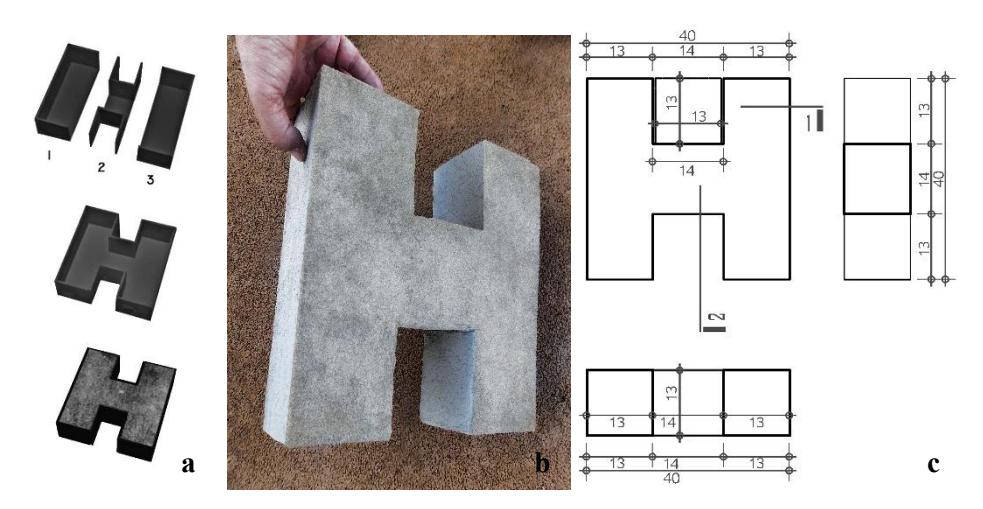
Figure 1 H-shaped concrete block dimensions and production phase: a) mold of a block, b) unit module, c) layout scheme.
Furniture production with flexible concrete blocks is an important opportunity to support environmental sustainability goals. Modular movable concrete blocks minimize cutting and assembly waste during construction thanks to standardized production processes. The reduced need for chemicals such as adhesives during assembly reduces the negative impact on the environment. The long-lasting and durable design reduces the need for renovation, limiting waste generation. Lightweight concrete uses fewer raw materials than traditional concrete, which reduces the rate at which natural resources are depleted.
2.2 Installation of Blocks
The cast concrete blocks can be joined together without the use of mortar or adhesive. The overhang at the top fits into hollows in the base of the block. This connection eliminates the need for binders. Therefore, the fills/voids defined by modules act as a frame. The blocks can be integrated easily depending on their dimensional and formal properties. Thanks to the interlocking of the blocks, it is possible to disconnect the units easily by hand without the need to use extra force. Blocks can be detached and repetitively used without damaging them. The interlocking blocks enable the system to be adapted to different needs. Due to this flexible configuration, the units are individualized. The order of the repetition of the unit module in the sequence is done according to topological rules (see Figure 2). The main objective of the geometrical arrangement is to have continuity in horizontal and vertical directions (see Figure 3).
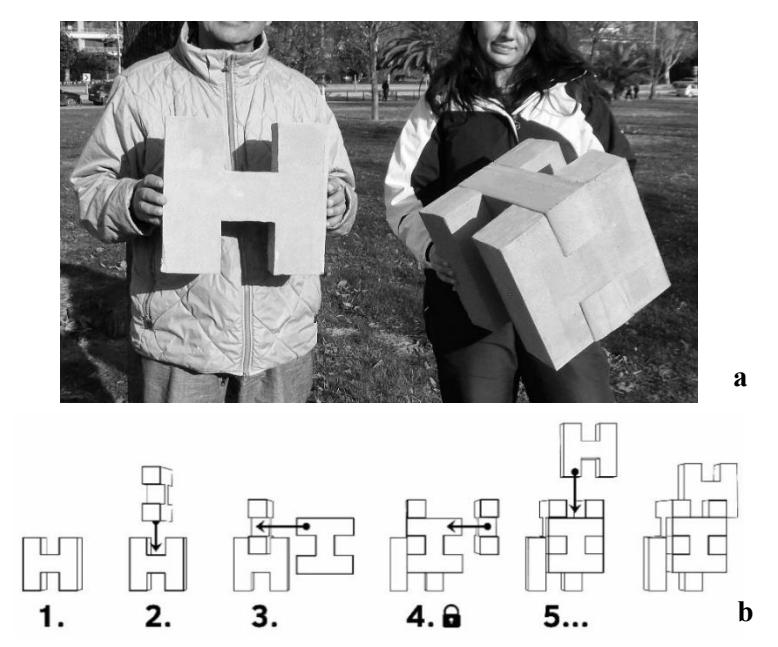
Figure 2 Installation of blocks: a) human scale of the modules, b) joining and interlocking of blocks.
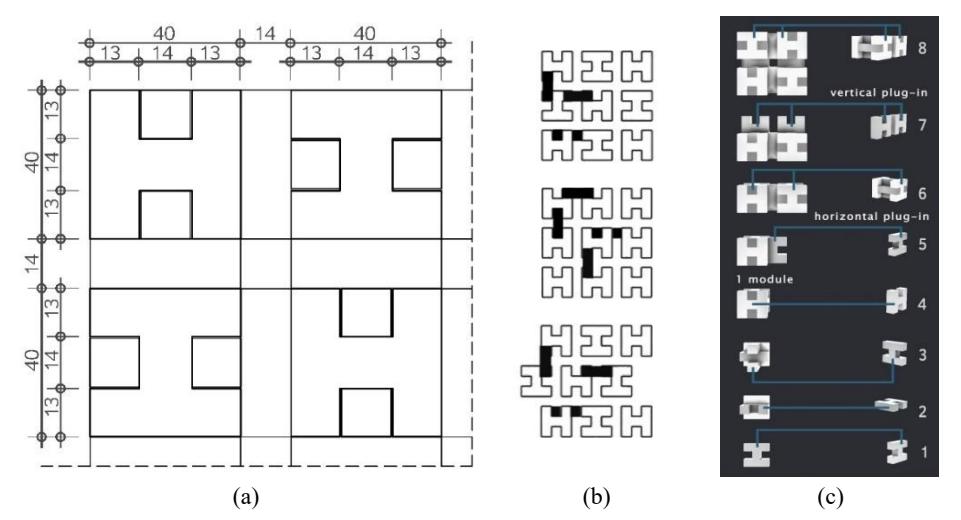
Figure 3 Organization of modules and units: a) vertical growth of elements, b) and c) surface formation.
Also, it is required to have efficiency in maintaining its structural integrity against different directional loads. A tensile structure implies the placement and bonding of individual components into a continuum. The geometric characteristics of masonry are part of a sequence of technical decisions [15]. Hblocks in different directions are lined up in planar coordination. Authenticity of form is achieved through a dialogue that occurs in the act of mutual integration. There are five types of H-block organization, depending on the horizontal/vertical surface direction, right and left splicing, and direct fitting. At the intersection points of the surfaces, the interlocking and closing of the mesh is also provided by blocks. This is aimed at connecting the objects by means of interlacing. H-blocks are added to the locked system in opposite directions to ensure lateral stability. The geometry has the most important function in the arrangement of inter-block relations. The matching of the blocks is important in terms of design and structural integrity (Figure 4). In this respect, the most important value in the integration of the design depends on the correlation between the units. In the installation, it is possible to select the appropriate density from the hollow/semi-filled/full mesh arrangement with the mesh layout.
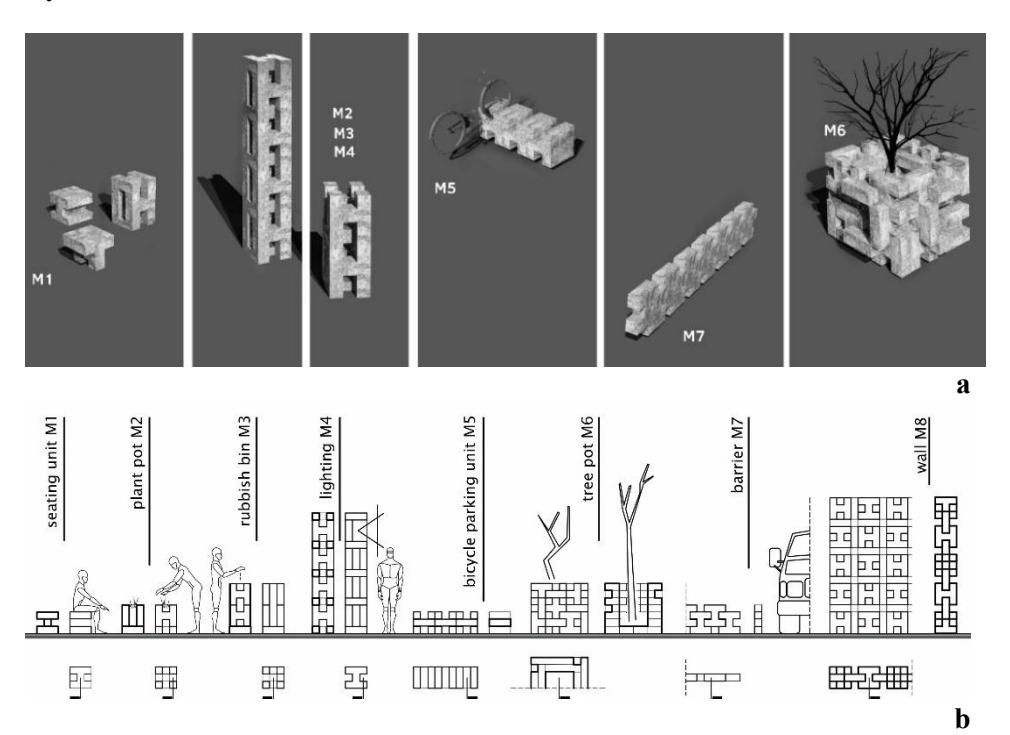
Figure 4 Urban furniture designs with H-shaped concrete blocks adapted to various functional uses.
The interlocking of the blocks enables the generation of different combinations. Additional blocks are connected to the main block by a locking arrangement. A basic unit consists of three parts. The upper part defines the functional surface. The arrangement on the vertical axis determines the height parameter of the entire module. The paneling of the surfaces as compression elements reinforces the vertical load transfer of the structure. The open construction technique enables endless modification. A geometric arrangement is used to create equipment for seating (M1), plant pots (M2), trash cans (M3), lighting (M4), bicycle parking (M5), tree pots (M6), barriers (M7), and walls (M8). There is no limit on module repetition. The number of modules varies dependent on the capacity of the unit (Figure 5). The application is continued until the requirements are met.
Figure 5 Seating units with M1/bench typology.
The surface organization is important in stool bench design. Ergonomics and durability are expected. Prototypes show how the material performs in actual use at module scale due to vertical loads. The modular design allows the stools to be re-placed or combined in various arrangements so they can be adapted to different events or social needs.
Units such as trash cans (M3), lighting elements (M4), tree pots (M6), and walls (M8) are designed with vertical components (Figures 6 and 7). The slenderness of these vertical elements affects their susceptibility to overturning; therefore, a robust cross-section is essential. The base unit is planned to sit firmly on the ground to ensure stability. If the vertical units are intended for display purposes, they can be supported by panels. When designed for lighting, appropriate supporting equipment must be integrated accordingly.
Figure 6 Vertical units M2/M3/M4/M8.
Figure 7 Vertical units M2/M3/M4/M8.
A practical design is used for the bicycle parking unit so that bicycles can be parked and fixed comfortably. It should include supportive structures that allow the bicycle to stand upright (Figure 8). Separators provide vertical separation. There are no limitations in terms of size. It can be repeated and applied as needed (see Figure 9).
Figure 8 Bicycle parking unit M5.
Figure 9 Barriers M7.
Installation starts with the transportation of prefabricated blocks to the site. The components can be applied without excavation by forming a row interlock. Montage can be carried out by a team with an initial level of experience. Blocks are anchored to the ground through shaft slots. Without the need for any binder, the process is carried out by dry construction. There is no waste during the deconstruction stage.
The designs can also be effectively implemented in large-scale urban projects. Large projects can be easily scaled by adding or reorganizing more modules. For example, in a large area such as a city park, in large-scale special events such as fairs and celebrations, a small initial design can be expanded over time by adding modules. The flexibility of modular systems allows for different functions to be combined in the same structure. Similar modules can be used for different urban areas (seating areas, walkways, green areas, social interaction areas) and multiple functions can be customized. Therefore, modular systems provide time and economic efficiency in large-scale projects.
3 Deriving Module Typology with Form Grammar
The unification of design elements in line with certain principles creates a composition. The order of components, the interface and details determine the design language in the composition. The composition is the harmonious integrity formed by the elements joined together for a specific objective. Each
architectural object has characteristic features. The specifications constitute a design language. Language consists of the arrangement of words into phrases. To derive the design parameters, a hierarchical algorithm can be defined to classify the arrangement into geometric features consisting of points, lines and surfaces. A set of rules mathematically expressing combinations of variations over a finite alphabet characterizes the shape grammar. According to the results of the design language research that were given by Chomsky [16], shape grammar falls into two main categories, i.e., recursive and analytic. Recursive grammar is a set of rules by which all possible sequences can be generated by successive rewriting based on a given initial image. This process reveals the patterns of the algorithm, including stylized repetitions. Differently from recursive grammar, analytical grammar allows to identify the parsing elements in the input sequence of a random string. These discrete items form the vocabulary. Thus, analytical grammar allows reading the code from which the form is derived.
The shape grammar algorithm, which was firstly used in art ontology by Stiny and Gips [17-18] is composed of points, lines, planes and volumes, assuming the spatial relationships of the form of the object. There are various studies in which the form is derived using parametric rules [19-21]. The algorithm generates a set of transformation rules to distinguish or combine elements when interpreting the organization. Shapes are the vocabulary of the grammar in a syntax. The grammatical code creates a parameterized function to interpret all the design elements (Figure 10).
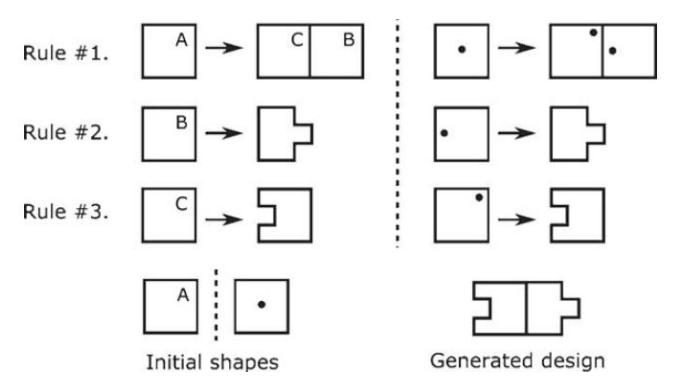
Figure 10 Descriptions with labels: alphabets (left) and points (right) [22].
Variations define new vocabulary by the shapes due to the use of parameters of rules. The process is based on finding simple geometric classification techniques so that data can be easily coded. The schema decomposes the image as a set of orders defined in a finite plane by bounded diagrams. Shape grammar is a kind of generative design algorithm. Each set of geometric shapes defined by transformation can express a design language. A shape rule is a couplet of left-hand side (LHS) and right-hand side (RHS) shapes representing the states before and after the rule application, respectively. To illustrate a common shape rule, the shape couplet is ordered and separated by an arrow symbol [22]. Simple geometries become symbolic objects by applying shape rules. A set of rules is applied to the initial shape while designing with the shape grammar. Rule sets are defined by actions such as adding or removing new parts to the initial shape, translating or rotating the shape. Rule application can be schematized with a rule (R) and one shape at derivation step n (Sn). Figure 11 models a rule set example according to this procedure.
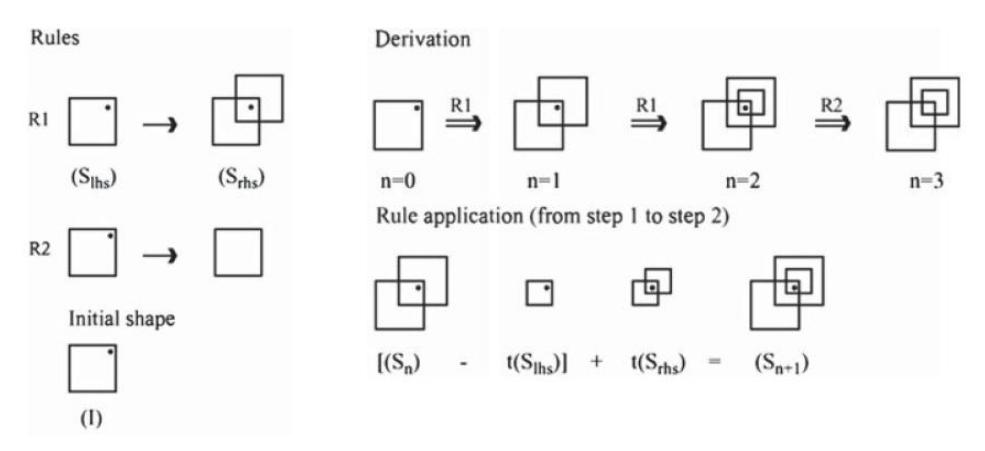
Figure 11 Example of shape grammar and computation of a rule [23].
- "A rule R in the form Slhs → Srhs may be applied to a shape Sn if there is a sub-shape embedded in Sn that is equal to the shape Slhs under a transformation τ. There is a matching when τ (Slhs) ≤ Sn."
- "The transformation of Slhs, and denoted by τ (Slhs), is applied to Srhs and is denoted by τ (Srhs). The computation of the rule is made by subtracting the sub-shape τ (Slhs) to the shape Sn and adding the shape τ (Srhs)" [23].
Analyzing a design captures its structure as simple grammatical rules. Algorithms can be established with morphological, dimensional, spatial analyses. Accordingly, it is possible to classify the formal characteristics of the object under various categories [24-25]. The relationship between an element and the resulting object forms an integration-based relation between two or more elements in terms of unity. Syntaxes of design grammar can be classified into diversity as geometrical forms and morphological forms and can be stated in the shaped content. In this context, in comparison with primary geometric forms, the hybrid structure determines effective diversity [26]. The combination of elements to create the final form generates different surface relationships. Tangency, overlapping, interpenetration, intersection, inclusion are among the ways of combining elements [27].
In the proposed model, the design language is reflected in the algorithm in a balance based on rhythm and hierarchy. The permutations, which are redefined in every diversifying circumstance according to the order in which the elements are combined, creating point, radial and superficial traces. The result may be legible in a simple appearance based on primary geometric forms or in a complex ensemble of multiple elements. Firstly, the H-blocks and their combination possibilities are defined as the vocabulary. The horizontal or vertical orientation of the blocks, the 90° or 180° angles of the connected surfaces, determine the variation of each additional item. Furthermore, intersection methods between blocks also define rules (Table 1). Insertion to the center, right-hand insertion (RHS), or left-hand insertion (LHS) create diversity. Generation principles reveal how to derive syntax.
Table 1 Joining rule formalization.
| Joint Probabilities | Derivation | Layers | Rule | ||
|---|---|---|---|---|---|
| [1] | Fitting to the intersection | Ĥ | • + | → | |
| [2] | End to end right direction (RHS) intersection | V180° + V180° | → | ||
| [3] | Vertical plug-in to the center | V180° + V'90° | → | • | |
| [4] | Left direction (LHS) horizontal plug-in | V180° + 0 N180° H180° | → | • | |
| [5] | Horizontal plug-in to the center | V180° + | → | 0 | |
The grammar of form applied in furniture design can provide rules that define the way objects are created. Just as the words and sentence structures of a language are organized according to rules, so rules can be used in furniture design to describe the way the blocks are arranged to create objects. A form grammar consists of production rules and an initial symbol. These rules help to create more complex structures.
In furniture design, these production rules can determine how each object (for example, a table or a bench) is assembled along with other objects. Considering urban furniture as objects made of blocks means that each block is a modular component that fulfils a specific function. These module units can be, for example, the components of a bench, such as the seat, the support base, etc. The grammar of form defines how these units are combined with each other, according to which rules they can be interchanged, and how different types of furniture can be produced by making different combinations.
For example: When constructing a seating area, the connection between the blocks is made with a connecting piece:
- Start Symbol: Bank
- Production Rules
- Bench → Seating Module + Base Module
- Seating Module → Two modules fitting to intersection
- Base Module → One module vertical plug-in to the center
With this procedure, it is possible to enable the design to be scalable. Thus, urban furniture can be created in different sizes or shapes. A bench for small parks and long seating areas for large squares can be made from the same modular structure. Production rules determine how the parts can be assembled and what characteristics they will have.
As a result of the intersection of the blocks, furniture meets urban functional objects such as seating elements, trash cans, etc. In the next stage, the way in which these units are juxtaposed also lays out a combination pattern. Linear/curvilinear, singular, plural installations are possible in public spaces such as streets, avenues and city squares. In this way, new syntax rules can be added to the already existing rules. The variations multiply due to the way of combination as:
- Linear Sequential Joining: Modules are articulated in a row configuration to enable different requirements in the urban landscape.
- Linear Adjoining: Modules, repeated to provide service in two directions within the urban texture, are articulated side by side in a linear arrangement.
- Joining by Definable Area: Modules come together adaptively within the urban landscape in various geometric plan layouts to provide service in all directions in a public courtyard to enable different occupancies.
In the reading of the elements together, it is important to establish the effect of integrity, where the features that the objects have independently can also be effective in collective expression. At the level of elements or derivative variations, characteristics are formed. Consequently, shape grammar defines the lexical scope and provides a way to investigate the principles of composition of items.
4 Evaluation and Comparison of the Construction System
The performance of the units in terms of functional and urban environmental aspects was researched through a survey. First, exact prototypes of the design modules were produced. These modules were moved to streets, squares and recreation areas to test their potential for application. In three specific areas, five categories of individuals, i.e., children, young people, young adults, middleaged and elderly people, were invited to participate. After the application, feedback in the form of the opinions of a total of fifteen participants was created through a questionnaire. The questionnaire included items related to the application such as lightness, ease of use, tightness, speed of assembly, and items related to use such as functionality, comfort, and visual adequacy (see Table 2).
The answers to the questionnaire were positive in terms of ease of assembly, quality of materials and parts, time and resource utilization. In the questions related to the usage phase, there were positive responses in terms of aesthetic and visual harmony, durability and longevity, duration of use and maintenance, but in the questions related to comfort and user experience, there were individual comments for each element, consisting of: seating (M1), plant pot (M2), garbage cans (M3), lighting (M4), bicycle parking (M5), tree pot (M6), barrier (M7) and wall (M8). While the design was found to be successful in terms of the seating solution, there were general evaluations such as that it could be challenging and unsafe to build vertically high units.
Literature data such as Grabiec et al. [28] and Allameh and Heidari [29] address the critical role of urban furniture in urban life and its dimensions, such as sustainability, functionality and aesthetics. The common expectation in all design processes is that urban furniture and public spaces serve various needs, such as social interaction, rest, and orientation (Figure 11). At the same time, it is expected to reflect the identity of cities and provide an aesthetic and environmentally compatible appearance with a conventional or contemporary style.
Table 2 Questions and values used in the survey.
| Subject | Question / Value | ||||
|---|---|---|---|---|---|
| 1. Assembly Phase | These questions aim to evaluate the furniture's installation process, ease of assembly, tools required, and post-assembly stability. | ||||
| a. Ease of | How easy was the assembly process? | (1 - Very Hard, 5 - Very Easy) | |||
| Installation: | Was the grammar of the instructions for assembly clear and understandable? | (Yes / No) | |||
| How many people were required to assemble the furniture? | (Alone / 2 people / 3+ people) | ||||
| Was any additional tool (e.g. special wrench, screw, tool) needed during assembly? | (Yes / No) If yes, what tools were needed? | ||||
| Did you experience any incompatibility or difficulties while assembling the parts? | (Yes / No) If the answer is yes, please describe the issues you experienced. | ||||
| b. Material and Part Quality: | Was the quality of the concrete blocks so poor that they caused problems during installation? | (Yes / No) | |||
| Were the joints between the concrete blocks solid? | (Yes / No) If the answer is no, what do you suggest to make the connections better? | ||||
| c. Time and Resource Use: | How long did the installation process take? Were the materials used during assembly sufficient? | (Specify in hours) (Yes / No) If no, what materials were needed? | |||
| 2. Usage Phase | These questions aim to understand the functionality of the design, comfort and problems that may arise in long-term use. They will be filled out separately for M1-M8 units. | ||||
| a. Comfort and User Experience: | How would you rate this street furniture design in terms of comfort while using it? | (1 - Very Uncomfortable, 5 - Very Comfortable) | |||
| Are appropriate ergonomics provided for users? | (Yes / No) If the answer is no, what improvements would you suggest? | ||||
| Are the size and placement of the furniture appropriate for the urban environment? | (Yes / No) If the answer is no, what changes do you think need to be made? | ||||
| Is the furniture suitable for a certain group of users (elderly, disabled, children, etc.)? | (Yes / No) If the answer is no, which user groups should we consider? | ||||
| b. Durability and Longevity: | Is this street furniture resistant to external factors (rain, wind, sun, etc.)? | (Yes / No) If no, what factors should it be more resistant to? | |||
| Do concrete blocks experience problems such as wear or cracking over time? | (Yes / No) If yes, what precautions can be taken? | ||||
| c. Aesthetics and Visual Harmony: | Is this street furniture design compatible with the environment in terms of color, shape, design and aesthetics? | (Yes / No) If no, what design changes do you think need to be made? | |||
| Do you think this design is in harmony with the other furniture in the city? | (Yes / No) If no, how can a fit be achieved? | ||||
| d. Duration of Use and Maintenance: | Does the furniture provide sufficient durability for long-term use? | (Yes / No) If no, in what areas should improvements be made? | |||
| Do you think the furniture will be easy to maintain? | (Yes / No) | ||||
| e. General Evaluation and | How would you evaluate this street furniture in general? | (1 - Very Bad, 5 - Very Good) | |||
| Recommendations: | Are there any improvements you think should be made to this design? | (Open-ended question) | |||
To understand the advantages and deficiencies of designing with segmented concrete blocks, it can be compared with other commonly used materials and design methodologies (Figure 12). Examining this comparison under headings such as cost, flexibility, and sustainability of production can highlight the unique contributions of the design.
Figure 12 Use of materials in conventional (a) [28] and contemporary (b) [29] urban furniture design.
From a cost perspective, concrete is generally a cheap and durable material, with low maintenance costs in the long term. Urban furniture made from concrete blocks can reduce costs through mass production or the use of local materials. In addition, the supply chain is generally robust due to the widespread availability of concrete. The transportation and labor costs of concrete can be high, especially if large pieces need to be transported or assembled. Furthermore, the concrete production process consumes energy, which leads to additional costs. Compared to other urban furniture materials, wood urban furniture can be aesthetically appealing, but can suffer from wear, deformation and insect infestation over time, especially when used outdoors. Metals can be durable and long-lasting but are more expensive to manufacture and assemble. In addition, the long-term maintenance of metal (especially rusting) can lead to additional costs. Plastic urban furniture can be lighter and more affordable. However, it can create problems in terms of sustainability and can be long-lasting. The cost of production is more variable than that of working with wood and it may not last as long if additional measures are not taken for durability. It can also be difficult to recycle.
The qualities of flexibility and adaptability are important, as the design can be easily modularized and changed according to different needs. The segmented concrete block modular structure is highly flexible thanks to the fact that the parts can be easily joined or removed. This makes it possible for the furniture to adapt to both small spaces and large open spaces. Furthermore, the ability to change the modules according to different needs (seating, supporting, resting) increases the adaptability of the design. Wood and metal can also offer modular designs; however, these materials may not be as strong as concrete and may be limited in terms of flexibility. Since plastic materials are generally lighter and more portable, they can be more advantageous than concrete in terms of flexibility and adaptability. However, plastic can have durability issues and environmental impacts.
Sustainability is important in terms of environmental impact, production process, material recycling and longevity of urban furniture. Segmented Concrete blocks are long-lasting and generally resistant to environmental impacts. It may also be possible to recycle concrete waste, which can reduce its environmental impact. As concrete can be produced with local materials, its transportation can also be more environmentally efficient. However, concrete production is a highly energy-intensive process. Cement production results in high carbon emissions, which can increase the environmental impact of concrete. Recycling concrete can be limited and waste management can further increase its environmental impact.
Wood, on the other hand, is a renewable natural resource, but is related to environmental issues such as deforestation problems and sustainable felling of trees. However, it is naturally recyclable and can be environmentally friendly. While metal is a recyclable material, its production is often energy intensive. Metals such as stainless steel and aluminum are long-lasting, but their production processes can damage the environment. Plastics often have negative environmental impacts. Recycling rates can be low, and it can take many years to biodegrade. Plastic materials are often less advantageous in terms of sustainability than concrete or wood. A flexible concrete block design with demountable parts is advantageous in various fields.
5 Conclusions
The formal description of the H-shaped urban furniture topology, which was presented in this paper, was evaluated on shape grammar derivation sequence. In the search for open construction, optimization strategies were proposed to maximize flexibility and minimize weight. Cellular concrete block units are considered with public spatial functions and prototype pattern combinations were generated. Blocks assist in the generative capability of form characteristics, either singularly or along with their shape features dominating the whole unit. Variants were created by using a genetic algorithm based on order of rules.
Decomposition of the combination possibilities of H-blocks with the grammar of form allows setting up systematic rules for structuring, organizing and combining the pieces of furniture to be designed. For this purpose,
- Identification of basic parts: The functions and optimum dimensions of the basic parts used in furniture design such as bases, seats are determined.
- Formulating syntax: Rules for how to assemble pieces of furniture are established.
- Configuration: By making the required arrangements for the assembly of the furniture units, the combination possibilities are completely defined.
Shape rule-schemata have been set to develop compositional arrangements. The experimental results showed how the derivative grammar can be used to generate optimal geometrical diversity patterns for design requirements. Interferences validate the algorithm's adaptability to various arrangements and make it a tool for different dimensional sizing and functionalities.
Furniture organization with movable concrete blocks offers significant opportunities for environmental sustainability and resource efficiency. The combination of lightweight and durable concrete blocks with a modular design offers both long-lasting and environmentally friendly solutions. Furthermore, recycling and upcycling scenarios support the circular economy, making significant contributions to waste management and resource conservation. In terms of recycling, end-used concrete blocks can be crushed and reused as aggregate and converted into new concrete products. In addition, the standardized dimensions of the blocks facilitate disassembly and increase the recovery of materials.
The movable blocks can be used in other designs to enable upcycling. For instance, it is possible to transform furniture into building elements. Or the blocks can be reused in landscape designs or urban art projects. Concrete blocks can be broken down and reused as lightweight filling material that provides thermal insulation. In addition, lightweight concrete blocks save energy during transportation, reducing the carbon footprint. Therefore, such designs can create a paradigm shift not only for the furniture industry but also for urban sustainability.