

1 Introduction
Discussing the historical association of the term 'Design' might appear absurd to some. It was only during the Industrial Revolution that the concept of 'Design,' or better, 'Industrial design', started. However, Ettore Sottsass once stated: "Everything is design, it is inevitable" [1]. So, why do we not recognize the craftsmanship of the past as the earliest manifestation of design ever introduced to humanity?
Already in the 19th century England, the Arts and Crafts Movement started representing decorative arts in a new way, in the attempt to reform the crafts sector and create an opposition to the industrial revolution and its massproduction [2]. Nowadays, it is commonplace to observe traditional forms, techniques, and motifs included in contemporary fashion and furniture design. Thus, we can observe how crafts have always influenced the products' design, and vice versa how design can be considered as integral part of crafts' planning too. In this article some pieces of furniture will be analysed not for their value as product design, instead, more emphasis will be put on the value they represent as creations of crafts design. This concept merges traditional techniques with modern design principles, crossing a variety of products. It attempts to transcend the origin of the word 'design' itself and the fact that design, particularly industrial design, arose from the rejection of single-crafted objects. Crafts Design reflects a resurgence of traditional craftsmanship in the post-industrial era, which has evolved in form and availability.
The convergence of Milan Design Week and the Korea Craft and Design Foundation (hereafter KCDF) provides a platform for reimaging craft-making as a form of design. This perspective offers a nuanced lens through which to view contemporary design, linking past techniques and traditions with today's furniture and daily needs. The matter at hand, therefore, is not merely furniture but rather the collision of cultures, in this case, the encounter between Italian and South Korean civilizations.
Milan (Italy) and South Korea are two very distant realities which unite annually thanks to the Milan International Design Week, also known as Salone del Mobile. Since 1961, Milan Design Week has represented one of the most important international venues showcasing designers and design companies worldwide.
For South Korea, the fair has increasingly become a significant venue for showcasing new designers, as well as Korean traditional crafts, thanks to the Korean Government and its foreign diplomacy, together with the KCDF which takes part in this annual event. In 2022, Maria Porro, President of Milan Design Week, highlighted its global importance, noting that 25% of the exhibitors are foreign, and the expansion of the Italian furniture export market to Chinese, East Asian, and South-East Asian markets of 11%, from 2021 to 2022 [3]. This signals the growing recognition of furniture design worldwide and underscores the increasing importance of the Milanese venue.
Korea and Italy's design relationship dates back to 1977 when the "Italy Industrial Design Exhibition" opened its doors, followed by the 1979 UK/Italy Industrial Design Exhibition. Moreover, at the opening of the Korea Design Center in 2001, the inaugural exhibition paid tribute to Italian Design, fostering connections between the domestic and international design worlds [4].
Design is herein considered as a form of public diplomacy and soft power. As South Korea has been spreading K-culture around the globe, not only through Kpop but also through its cuisine, its traditional culture, and its technology, more research should be carried out on the topics of Korean Crafts Design and Korean Design and their impact on the global stage [5].
Korean design has yet to be thoroughly investigated as an academic topic, even following government initiatives such as the establishment of the Korea Design Museum in central Seoul in 2008. Moreover, the broader scholarly perspective initiated by Seoul National University in the Department of Fine Arts in 1946, and subsequently by Ehwa Women's University [4], has not yet yielded comprehensive investigations into Korean design. Likewise, the history of Korean design history is a recent topic, with the publication of the first book on Korean design by Si-Hwa Jeong (Korean Modern Design) in 1976 (see Figure 1). The development of design concepts in the peninsula was heavily influenced by colonial and American forces [6], resulting in a diminished tradition of Korean crafts.
Figure 1 Cover of the book Korean Modern Design written by Si-Hwa Jeong.
This article tries to explore the history behind Korea's participation at the Milan Design Week and the aesthetic results of some pieces of furniture created thanks to the collaboration between Francesco Faccin, an Italian designer, and Hur Sung-Ja, a Korean craftswoman in the exhibition organized by KCDF. In the next section, the article delves into the analysis of the historical development of Korean Crafts Design and points out the official policies aimed at empowering
Korean traditional culture in the global market, specifically in the furniture industry.
2 Design in Korea
The concept of Design as we know it today originated in the Western world at the onset of the Second Industrial Revolution. In contrast, the Korean peninsula did not embrace the term until at least the 1960s [6].
The Korean term for design first appeared at the end of the 19th century under Japanese influence, when the term "crafts" (gongye, 공예, 工藝) in Japanese kōgei (工芸) and later the term "design" (도안 doan), from the Japanese 図案 zuan (design) [6] were introduced. Japanese influence can also be noted in the educational sector, where many Koreans, like Im Sook-Jae (1899-1937) [4], after finishing their education in Japanese Universities, repatriated and founded design companies.
However, furniture held an important significance in the Joseon period (1392- 1910), especially the items produced for the royal family. In fact, the design of furniture pieces was codified under the standards set by the state, as well as artisans were under the control of local or central government offices, in charge of maintaining specific standards. The gyeonyang (견양, 見樣), dating from that period, contains drawings of furniture samples and other objects destined for the royal court (see Figure 1). These drawings facilitated the maintenance of quality standards consistent with those of the royal court, ensuring the high-quality production of goods and furniture employed for state rituals or for the daily life of the royal family. The artisans appointed by the court were required to adhere to the instructions and regulations provided in these drawings which were published in the chancery scripts (Yeseo 예서) and the Royal Protocols (Uigwe 의궤). These drawings laid the foundation for contemporary patents and contributed to the emergence of public reproduction and imitation (see Figure 2). Indeed, during the Joseon dynasty (1397-1897), these samples began to be replicated to emulate the royal court style, becoming popular among the gentry who sought to incorporate copies of royal court furniture into their homes. Following this trend, artisans began compiling portfolios with sets of furniture they could offer in different styles. This emerging trend can be considered a precursor to subsequent industrial production, albeit still firmly rooted in traditional techniques.
Independent of royal production, a shift occurred in furniture production after the mid-17th century, due to the rise of a new social class. The consumption of goods spread wider into society and freelance artisans started to make their way into the industry. During this time a new style also started to appear, and the furniture began to represent new tastes based on the consumers' changing lifestyles. This led to a departure from strict royal guidelines, the products were customized to suit the preferences and needs of the gentry class [7].
Figure 2 Uigwe of Gyeongmo Palace - Joseon Dynasty 1776-1800 - Collection of Kyujanggak Institute for Korean Studies, Seoul National University.
Domestic changes were followed by the introduction of Western influences which began impacting Korean furniture and craft production from 1876, with the opening of the ports. An example was the substitution of bronze mirrors with glass mirrors, which started spreading after the 18th century [8], as well as the introduction of Western furniture, cars, and clothing attire taking the place of locally produced goods. Neo-Confucianism also had a role, as its life view of frugality diminished the role of craftsmen and artisans by hindering productions, thus stylistic and technical developments [9]. This was gradually followed by a later decline of traditional handcrafted objects during the Japanese colonisation and with the introduction of more modern and industrial techniques.
In 1899 the Governmental School of Commerce and Industry was officially established and in 1907 the establishment of the National Industrial Training Centre, an institution established during the Korean Empire to train craftsmen and systematize crafts production, played a role in shaping Korea's approach to crafts and design. This centre also played a role in transforming hand-made production into machine produced-one, through the slow introduction of training for technicians actioning machines.
Figure 3 Bowl with lead made in silver produced by the Hanseong Art Works, and detail of the production seal. Exhibited at the Seoul Crafts Museum, Seoul, South Korea [10].
In 1908 the Hanseong Craftworks Manufactory (한성미술품제작소) was established, later renamed as the Lee Wang-jik Art Factory (이왕직미술품제작소) between 1911-1922, to respond to the decommissioning of the state craftsman management system in Seoul. Craftsmen were organised in various specialities and produced a great variety of objects, including inlaid housewares and furniture. Craftsmen were divided by their technical knowledge: metal inlay artisans, lacquerware artisans, ceramic makers, lead wares makers, and more (see Figure 3). This workshop was established with the purpose of operating for the production of housewares, furniture, and clothing for the Yi Royal family, and also to mend to the low-quality production of that time due to the introduction of machinery. During the settling of Japanese authorities on Korean territories by 1910, the production gradually integrated Japanese style elements and opened the selling to the public, so that it was later considered as Japanese tourist souvenirs factory [11].
The International Expositions (such as the 1893 World's Columbian Exposition, Chicago World's Fair, and the 1900 Paris Exhibition) provided Korea with opportunities to learn industrial technology and modern production systems for craft production, as well as present Korean traditional crafts to the world (ceramics, lacquerwares, folding screens, silks, mats were some of the craft exhibited during these events). At the same time, with the modernization of the production systems, the focus on traditional craftsmanship shifted. International exhibitions provided further means to the improvement of factory produced crafts, as the Korean government exposed its concern over the backwardness of its crafts, compared to other exhibiting countries, and tried to respond by implementing policies voted to the improvement of crafts and their production systems. During the Japanese occupation, a twofold approach to crafts was in place, on one hand many Korean traditional crafts were highly appreciated by the Japanese, and some artisans were brought or invited to Japan to exhibit their creations; on the other hand, the ruling power introduced Western modern technologies and culture; from the social point of view, this meant the relocations of many workers from traditional jobs into modern production processes with the consequent slow abandonment of traditional techniques employed especially in the rural areas, and the substitution of locally grown plants varieties with more resistant crops and plants [12]. However, it was only after the Korean War that the first attempt to revitalize traditional crafts was made, starting from Park Chung-Hee's government.
Despite the many difficulties in tracing the start of modern design in Korea, some researchers consider the New Village Movement (Saemaul Undong 새마을운동) as one of the most important events that earmarked a significant shift in Korean design by bringing modernity and challenging traditional materials. Academics often refer to this new style as "the aesthetic of the straight line" (jikseonui mihak 직선의 미학) [12]. As it is often the case, design and industrial development go hand in hand; South Korea's towards industrialization came in the 1960s with the Park Chung Hee's regime. The Saemaul Undong helped in the construction of a cultural superstructure that functioned as the basis for economic modernization and comprised the aesthetic of straight lines, in the words of the economist and sociologist Woo Seok-Hoon (우석훈) [6].
The New Village Movement brought modernity and did away with tradition. The main goal was to destroy pre-modern materials, such as wood, bamboo, straw and earth, and substitute them with new modern materials like cement, steel bars, and slate. In the case of rural villages, earthen made structures, as well as wooden buildings were substituted with cement bricks, a huge collective effort was also made to solidify streets with cement, and at the same time enlarge them by destroying traditionally built structures. However, the institutional development of organizations dealing with design has consistently recognized Korean crafts as integral to the development of the modern Korean design landscape. This modernisation process lead by the government deeply engaged with corporations, so much that it is sometimes considered as a single entity with them, difficult to be differentiated [13]. The first decades after the Korean war were politically characterised by dictatorial governments, these shaped the Korean design, crafts and arts world by establishing a nationalistic approach to these fields in order to shape and reconstruct Koreans' public memory and reinforce political power, as Jong-Kyun Kim explains:
"A series of cultural and artistic movements such as 'Korean design', 'Korean architecture', 'Korean modernism', and 'Korean abstraction' were part of the government-led process of beautifying nationalism and were ultimately works of art with the attributes of propaganda [14]."
Since the 20th century, Korea has embarked on extensive training and promotion of design, which has been marked by the establishment of institutions and government-supported projects [12]. Exhibitions about Korean visual art and aesthetics also increased, with various exhibitions showcasing Korean everyday life objects, design culture, and design industry. The year 2008 witnessed the inauguration of the Modern Design Museum in Central Seoul, followed by the recent opening of the Seoul Museum of Craft Arts (SeMoCa) in November 2021. SeMoCa, in particular, stands as a promotion centre of traditional Korean craftsmanship and crafts, which are often put in connection with contemporary designers, showcasing the interaction between traditional techniques and contemporary market, heritage and innovation.
The Design History Society of Korea was founded in 2019; it is dedicated to documenting design-related events, individuals, discussions, and objects. Therefore, it is now possible to draw a timeline of the evolving landscape of the Korean design practice. The interest of the Korean government in crafts and design can be traced back to 1967 when President Park Chung-Hee visited the Korea Institute of Crafts and Design and left a note. His message, engraved in the four characters 美術輸出 (미술수추 misulsuchu), meaning "Art Export," laid the foundation for Korean design production and export policies. President Park envisioned design as a tool to boost domestic exports, thereby propelling the economic growth of the peninsula, as well as a strategic use of design for propagating national interests.
As noted by Professor Ch'oe Beom (최범), especially in developing nations:
"The biggest reason why modern countries are interested in design is economic. This is because design is viewed as an important national
economic element or means. This is particularly noticeable in the developmental state, which equates economic development with national development [4]."
In the 1970s, the Korea Design Packaging Center was established, which was formed by merging the Korea Export Design Center and the Korea Export Packaging Center. During this decade, many other centres, associations, and societies related to design emerged. In 1970, Professor Min Cheol-Hong of Seoul National University founded the Korea Society of Industrial Designers, followed in 1972 by the Korea Design Council (KDC), and the Korea Visual Design Society (KSDV). In 1978, the Korean Society of Design, a private institution promoting Korean design, also started becoming active [13]. This period reflects a concerted effort to institutionalize and foster the growth of the design sector in Korea. Unfortunately, the institutional modernisation of crafts and design products wasn't going hand in hand with the development of a particular artistic philosophy in the crafts sector, like it happened in other countries, such as the United Kingdom [15].
Following the establishment of numerous associations, design exhibitions gained significant momentum. In August 1966, from the 3rd to the 22nd at Gyeongbok Palace, the Ministry of Commerce and Industry initiated the organization of an annual design exhibition, the "Korea Commerce and Industry Art Exhibition" (大韓民國商工美術展覽會), which changed its name in 1976 to the "Korea Industrial Design Exhibition" (see Figure 4).
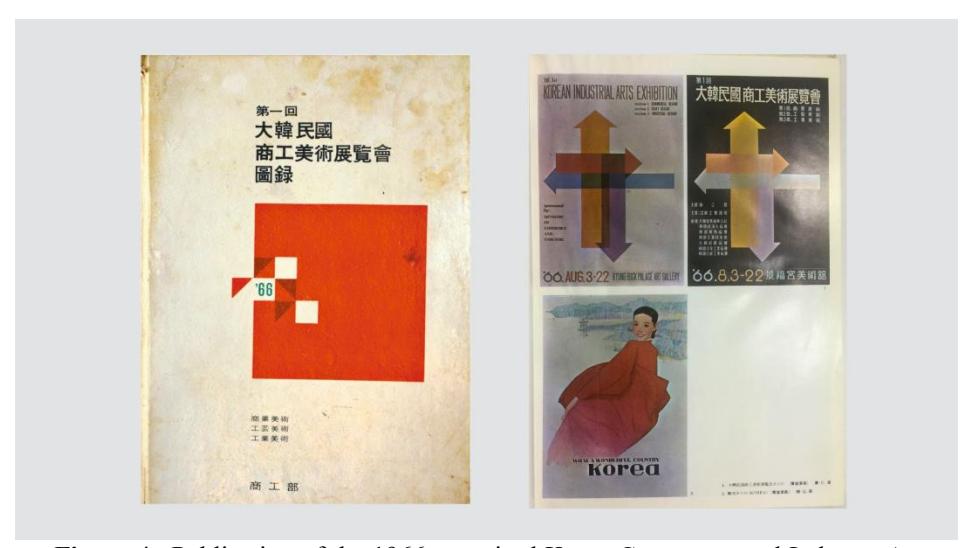
Figure 4 Publication of the 1966 organised Korea Commerce and Industry Art Exhibition.
This event was a key component of the "art export" policy implemented under the Park Chung-Hee presidency, aimed at boosting the export of craftworks while fostering connections between the art world and industrial production. The exhibition featured various categories, including the Commercial Art Department and the Industrial Art Department. Additionally, the Craft Art Department was established and subsequently renamed Craft Design under Presidential Decree No. 8249 in 1976.
During the 1980s, South Korea witnessed a shift in the design sector, moving away from Western materials and advanced technologies and favouring traditional Korean design, materials, and techniques. The South Korean government made a concerted effort to promote products that embodied a unique and distinct Korean aesthetic in the international market (yin-yang and five elements related goods, dancheong wooden colouring traditional method, hanbok Korean traditional women's dress, and taekwondo), this trend can also be explained by the willingness of the Korean government to relegate Korean traditional crafts to the colonial perspective of tourist attraction, and product [16]. This push for a distinctive Korean identity in exported products marked a significant moment for Korean design. The organization of the Olympics during this period drew national attention to the topic of developing national designers and the formation of a cohesive national identity. This increased focus was reflected in the proliferation of academic articles, exhibitions and governmentsponsored TV shows (like KBS 1TV's "The World is in an Era of Design Revolution" (세계는 디자인혁명 시대) [4], on the topic of design. Moreover, the deliberate expansion of social activities and events was aimed at increasing social awareness and establishing a foundation for the intersection of Korean identity and design principles.
During the 1990s, the governmental initiatives and policies for the empowerment of Korean design further intensified. Under President Kim Young-Sam, beginning in 1993, there was a transition from corporate-driven to public-driven promotion of design. In 1996, the Globalization Promotion Committee was established, together with the inauguration of the World Industrial Design Competition. President Kim Dae-Jung further emphasized the role of design as a critical component of the Korean export agenda.
Construction of the Korean Design Center commenced in December 1996 and was completed in 1998. A special inaugural event was held in 2001, with President Kim Dae-Jung and his wife in attendance, heralding the 21st century as the era for Korea to emerge as a design powerhouse [17]. In 1999 also the Cheongju Craft Biennale opened the doors to the public, it was the first such event dedicated to Korean crafts still running nowadays.
During Roh Moo-Hyun's presidency (2003-2007), the emphasis on public characteristics of design was reinforced, accompanied by a comprehensive national strategy. This commitment to culture and design as integral components of political agendas persisted through both Lee Myung-Bak's (2008-2013) and Park Geun-Hye's tenure (2013-2017), with the overarching goal of achieving "Cultural Prosperity". This domestic commitment to promote and fortify Korean culture and design also extended into foreign diplomacy through the bolstering of government-funded projects, as well as the development of numerous activities held at Korean cultural Institutes. These activities include participation at Milan Design Week, a joint effort between the Ministry of Culture, Sport, and Tourism and the KCDF.
3 KCDF and Milan Design Week
The KCDF was established in 2000 with the initial name of Korea Craft Promotion Foundation (Hanguk gongye munhwajinheungwon 한국공예문화진흥원) under the Ministry of Culture, Sports and Tourism. In 2006, the Craft Distribution and Support Center (gongye jonghab yutongjiwonsenteo 공예종합유통지원센터) was officially established, now known as KCDF Gallery (KCDF 갤러리). In 2010, the KCDF branch in charge of the organization of the exhibitions during the Milan Design Week was officially inaugurated under the name of Korea Craft & Design Culture Promotion Agency (Hanguk gongye dijain munhwajinheungwon 한국공예·디자인문화진흥원 ).
Since 2013, KCDF has actively participated in the Milan Design Week, showcasing Korean design and crafts through special exhibitions. The first exhibition in 2013, titled "Constancy and Change – Korean Design from 16 Traditional Craftsmen" (Hanguk gongyeui beopgochangsin 한국 공예의 법고창신) was held in the Triennale space [18]. The topic set the tone for subsequent exhibitions, focused on traditional culture and techniques, and respect for nature and natural processes. In 2023, the latest exhibition, entitled "Shift Craft" (see Figure 5), was organized within the premises of the Fondazione Giangiacomo Feltrinelli [13]. Over the course of eleven years, these exhibitions have consistently aimed to communicate Korean traditional crafts to Western audiences, portraying them as vibrant and dynamic practices that contribute to the creation of contemporary Korean furniture and lifestyle aesthetics. Drawing from the yearly topics used by KCDF to narrate the Milanese exhibitions, the audience can recognise a distinctive style of Korean housewares and furniture, all designed in the name of traditional techniques. The KCDF has tried over the years to reinstate a function-focused identity, deeply rooted in the Joseon ethos, characterised by neo-Confucian teachings. The objects exhibited portrayed a simple and plain taste, typical of the modesty and pursue of a simple life of neo-Confucianism. Natural materials are employed to "maximise the original properties of the material itself" [13].
Figure 5 Publications for the KCDF Exhibitions at the Milan Triennale: (Left) 2013 organised Constancy and Change; (right) 2023 organised Shift Craft.
On the other hand, since its inception, KCDF and the Ministry of Culture, Sports and Tourism have tried to internationalize Korean traditional culture and crafts; such efforts are evident in the 11 exhibitions organized for the Milan Design Week, where tradition is consistently portrayed as evolving into a contemporary and approachable style, occasionally drawing inspiration from Italian furniture styles from the 1960s. Noteworthy examples include the lacquered console crafted by Jang Kyung-Chun (장경춘) and Kim Sang-Su (김상수) in 2013, as well as the Rhythm of the Red Luster 0834 vase, which features a Venini-like style with a lacquer coating technique, created by Chung Hae-Cho (정해조), an apparent reference to the Murano glass Fazzoletto vase (see Figure 6). This vase is created using the Korean traditional lacquer technique, by employing sap (otchil) collected by hand from lacquer tree to coat the hemp fabric-made body of the object. Objects traditionally created with this technique presents straight and plain lines, the rigidity of the shape is here destroyed with the voluntary creation of loose and crinkled margins at the top of the vase. Like the Fazzoletto, from the historical Venetian company Venini, the material subdues to the shape making a rigid material appear soft and malleable. The traditional techniques and materials are in both cases reinvented to create a new shape which defies the eyes, hiding the object true materiality. In an interview, Chung Hae-Cho also explained that the colours employed in his works are a reminder of the five Korean traditional colours employed, also called obangsaek in Korean (red, green, yellow, black, and white).
Figure 6 From the left, Hemp and Lacquer Pot Rhythm of the Red Luster 0834 by Chung Hae-Cho; on the right Venini vase Fazzoletto [19-20].
The Meditation Chair presented during the 2016 exhibition by Choi Byung-Hoon also recalls various design pieces that have become today's icons. Firstly, the concept of the Meditation Chair of integrating linearity and minimalism, together with nature expresses a common style and concept with the Barbaglia and Colombo's Dove lamp for PAF. Sinuous geometry plays with weight distribution making use of a single pern, becoming a concept chair. However, the shape and structure are not too dissimilar from the teaching of Le Corbusier, especially when looking at LC4 Chaise Longue produced by Cassina based on the 1928 design by Charlotte Perriand, Le Corbusier, Pierre Jeanneret. Finally, this same style is not too far away from what is proposed by Zad with the Kobra chair, a design by Giovanni Cardinale (see Figure 7). These connections and references serve as valuable insights into the process of globalizing Korean traditional crafts and harnessing their potential through the international audience of Milan Design Week.
Figure 7 Top left: Choi meditation Chair [21]; top right: Dove lamp by Mario Barbaglia and Marco Colombo for PAF (1980) [22]; Bottom left: Giovanni Cardinali for ZAD Kobra Chair [23]; Bottom right: Cassina LC4 Chaise Longue designed by Charlotte Perriand, Le Corbusier, Pierre Jeanneret (1928) [24].
The year 2022 proved to be a pivotal year for both the Korean institutions and Milan Design Week, which commemorated its 60th anniversary. This significant milestone witnessed a notable collaboration between Korean traditional craftmakers and Italian contemporary furniture designers, fostering a rich crosscultural environment and project developments. The 10th exhibition, "Again from the Earth's Foundation", was entirely dedicated to craftsmanship and reverence for nature. At its core, the exhibition showcased the fusion of Italian and Korean cultures, through collaborations between Italian designers and Korean artisans, emphasizing the importance of "respecting others and building mutually beneficial relations" [25]. This cross-cultural exchange allowed Korean traditional crafts to express their dynamic and evolving nature on the global stage. Natural materials, hand-made processes, traditional Korean techniques and philosophical approaches to colouring (obang) were integrated on established Italian furniture pieces.
Three distinguished Italian designers - Michele DeLucchi, Mario Trimarchi and Francesco Faccin – collaborated with five Korean artisans: Park Gang-Yong (박강용), Gwon Lyu-Nam (유남권), Lee Hyung-Kun (이형근), Lee Ji-Ho
(이지호), and Hur Sung-Ja (허성자), resulting in the creation of new objects that symbolize the harmonious fusion of Italian and Korean civilizations [26].
This article delves into the collaboration between Francesco Faccin and Hur Sungja, by exploring three objects from both stylistic and technical perspectives. The three featured pieces – the Pelleossa chair, the Pepa wireless portable lamp, and the Gatherer hat - all exemplify the impeccable combination of industrial production and artisanal craftsmanship, seamlessly bridging Korean and Italian traditions.
Francesco Faccin is an Italian designer based in Milan, known for his exceptional contributions to contemporary design. He commenced his career working for Enzo Mari before establishing his own studio in Milan in 2007. Faccin is recognized as one of the most prominent designers of our era, with design principles firmly rooted in an appreciation for nature and a commitment to traditional processes. Notable among his creations is the Pelleossa chair (2013) and the Pepa portable lamp (2020), both inspired by Italian traditional culture and cuisine. These projects reflect Faccin's dedication to creating natural, simple, sustainable, and repairable designs [27].
On the Korean side, Hur Sung-Ja (허성자) emerges as a highly skilled craftswoman and the rightful inheritor of wanchojang (완초장, 莞草匠), the art of sedge weaving [28]. She is recognized as one of the nationally acclaimed practitioners of the intangible cultural heritage of sedge weaving, inscribed in the national intangible heritage list. She earned this position through her lifelong dedication to and participation in the official training. The tradition of sedge weaving can be traced back to the Silla period (668-935), as reported in the Samguksagi (삼국사기, History of the Three Kingdoms). During this time, sedge objects were produced exclusively for the royal family. The items crafted using this material and in the traditional technique were often presented to foreign delegations, particularly those from China, and eventually became trade commodities with foreign nations. Sedge weaving is traditionally from Ganghwa Island, where the artisan was born and where she started her career in 2000.
The first object in the collaboration is the Pelleossa chair, a project by Francesco Faccin. Translating to "skin-and-bones" in Italian, this chair draws direct inspiration from the rich tradition of Italian furniture. Specifically, Faccin was inspired by the Chiavarine chairs, a staple of Italian traditional furniture showcased in 1900 at the Paris International Exhibition [29], as well as by Gio Ponti's Superleggera chair designed in 1955 (see Figure 8).
Figure 8 Chiavari's chair, or Chiavarina, on the left an example dating 1807; next the modern reinterpretation by Gio Ponti in 1955 and produced by Cassina with the name Superleggera [30-31].
Pelleossa has been in production since 2011, featuring wood and leather as its primary materials. Thanks to the new collaboration in 2022, a new skin was applied, transforming Pelleossa into a cross-cultural bond. The slip seat, the top back, and the arm standards were modified and enriched with sedge weaving elements and structures by the skilled hands of Hur Sung-Ja (see Figure 9). This transformation embodies the fusion between Korean and Italian civilizations within the chair's design.
Sedge weaving was designated by the Korean government as an intangible cultural heritage in 1996, primarily associated with the creation of containers, mats, and small statues. However, the incorporation of sedge as part of a sitting object goes beyond conventional usage. The collaboration led to the substitution of the original elements with traditional Korean techniques, and materials, in this way demonstrating the adaptability, utility and beauty of Korean traditional methods.
Figure 9 Pelleossa chair: on the left the original version by Francesco Faccin, on the right the revisited version by Hur Sung-Ja [32].
The same approach was applied to the Pepa lamp. Resembling a traditional pepper mill found in many Italian kitchens and restaurants, this portable lamp is both simple and intricate in its design. It not only provides the imaginary shape of the pepper grinder with its wooden structure, but it also functions similarly – turning it on and off involves rotating the head and body in opposite directions. Using Pepa lamps is a complete experience that involves human touch, sight and interaction between the object and the user. Hur Sung-Ja substituted the external wooden material with a sedge-woven structure, providing a distinct tactile experience (see Figure 10).
The Gatherer Hat serves as the final object presented here and represents the sole full collaboration between the Italian designer and the Korean craftswoman. As the name suggests, it is a transformable hat with various functions, changing from headgear to a container or fruit tray. The idea was to combine the traditional Korean gat 갓 (Korean traditional hat) with the straw basket carried by Italian women on their heads brimming with harvest produce (see Figure 10). The project exemplifies the convergence of seemingly distant cultures with a shared
appreciation for artisanal skills and ancient traditions rich in cultural significance, as emphasized by Faccin's statement on his website:
"The project stems from the Korean Craft and Design Foundation's desire to join the two cultures that seems distant but that actually share a great sensitivity for artisanal skills, combined with ancient traditions full of cultural significance [33]."
Figure 10From the left: Gatherer Hat and two versions of the Pepa lamps in natural sedge colour and blue colour [34].
In many ways, the Korean exhibition realized what Gio Ponti had predicted, or rather hoped for, when he called for a "virtuous union between, art, craftsmanship and industry" in the 1920's [29].
4 Conclusions
The development of design in Korea remains relatively unexplored by the Western public despite the dominant international influence of major corporations like Samsung, LG, and Hyundai. Moreover, it is often clear that the cultural aspects and influences stemming from designers' backgrounds are often overlooked in favour of an international design aesthetic, which tends to disregard
local cultural nuances, particularly within educational institutions. For this reason, some researchers have turned their attention to cross-cultural design practices as a medium to develop Korean domestic design sensibilities and engage a broader international audience through culturally infused design projects and concepts.
Education plays a crucial role in facilitating design collaborations and influences, with a particular emphasis on fostering collaboration between craftspeople and designers. To address the need for a more nuanced understanding of traditional aspects and craftsmanship, the KCDF has primarily focused its annual exhibitions at the Milan Design Week on showcasing Korean traditional design, practices, and objects. These exhibitions often juxtapose Korean traditional design in the shape of materials and techniques, with contemporary design approaches, providing valuable insights into the evolution and interplay of these two realms. The identity of Korean crafts design developed in the post-colonial period coming to these days, which makes use of natural elements, and the Korean neo-Confucian approach of simplicity and frugality can easily fit contemporary design creations.
The notion of the arts, a broad term encompassing all visual expressions considered as the manifestation of Korean-ness within Korean civilization, has functioned as a driving force for the economy. However, it necessitates a thorough overhaul, a process initiated during the modernization efforts, started at the end of the 1960s and continued for all the Seventies, and embodied by the definition "Art Export". This modernization, unfortunately, also resulted in the destruction of traditional elements in Korean culture, replaced by modern Western stylizations, and the promotion of design as a tool of national development and ideological construction, positioning designers as contributors to national interests. During the presidency of Park Geun-Hye (2013-2017), a similar perspective to the one of the Seventies resurfaced. Park's administration reiterated the role of creativity and design in the economic growth through the creative economy policy.
Nevertheless, in recent decades, there has been a resurgence of traditional stylistic characteristics distinctive of Korean culture. However, these features have sometimes been excessively imitated without thoughtful adaptation to contemporary markets, resulting in a phenomenon often referred to as "K-ness." In this context, Architect Kim Hong-Sik has emphasised that inheriting tradition should not be limited to replicating appearances. He argues that, for instance, designing a school requires an understanding of the function, layout, and transformations of past educational buildings in order to meaningfully carry tradition forward into modern forms. While design is broadly seen as an intellectual activity that influences everyday life by balancing aesthetic and practical concerns, it is important to recognise that primitive forms continue to serve as foundations for contemporary objects, as demonstrated by the three examples presented here.
In this sense, Korean artisans make use of traditional archetypes to give a new life to their traditional techniques. Like in the example of sedge objects traditionally used for the everyday life of the royal family as well as gifts for receiving foreign guests, they are nowadays transformed into home décor for everyone, yet the crafting techniques are maintained and its simple elegance brought to the contemporary stage, well connecting with the functionality and technology of today's market requests.
The KCDF's 2022 exhibition sought to uphold the authenticity of traditional materials and techniques from Korean culture, integrating them into Italian contemporary furniture design. This approach sought to reinterpret their forms in the direction of modernization. Through this process, Korean traditional crafts have transformed into K-crafts. Initially, they were influenced by the global market, but now they have the power to influence the global market themselves. The outcome is the creation of objects and furniture that can evoke a new imagination of Korean cultural heritage, adapting to the international taste but without losing its Korean essence, which in this case lies in the making technique hold by the craftswoman. The result is a culturally odourless commodity.
What was once deemed impractical, distant, and too formal for contemporary lifestyles has adapted to the new societal norms and aesthetics influenced by globalization. Often, international formats serve as the basis for local adaptations and exports. Since the promotion of Korean crafts on the global stage, a reciprocal flow has emerged, with both sides influencing each other. While the impact of Korean design in the Western market warrants further in-depth analysis, 2022 signalled the promising prospects of what we can now refer to as K-crafts – a potent form of cultural expression poised to shape Korean public diplomacy in the near future.
Acknowledgement
This article was supported by the Seed Program for Korean Studies of the Ministry of Education of the Republic of Korea and the Korean Studies Promotion Service at the Academy of Korean Studies (AKS-2022-INC-2230007).