

1 Introduction
In Chinese philosophy, the concept of Taiji is a cosmological notion referring to the state of the world and its affairs in a state of the 'Supreme Ultimate.' This concept encompasses aesthetics and philosophy, serving as a framework for understanding the universe's fundamental principles. Moreover, Taiji embodies profound aesthetic ideals and reflects the Chinese people's cognitive processes and cultural beliefs. Numerous researchers have attempted to examine design techniques through the lens of Taiji philosophy [1]. This interdisciplinary and integrative study combines philosophy with design to investigate a design theory rooted in the Chinese thinking system. Zhou Dunyi (1017-1073) formulated a conceptual framework rooted in Taiji and aesthetics in examining pertinent scholarly literature [2]. According to his model, Wuji (the state of non-polarity) gives rise to the dynamic interplay of yin and yang. Taiji, representing the primordial state, engenders movement characterized by yang. As yang reaches its farthest extent, it transitions into a state of rest, thereby generating yin [3].
Furthermore, Yuan Hong provided an interpretation of the artistic aspects inherent in Zhou Dunyi's Taiji concept, focusing on the circle's inherent beauty, dynamic qualities, and ability to establish a harmonious relationship between the celestial and terrestrial realms [4]. In their study, Song and Liu delved into yinyang in graphic design [5]. Their exploration used Taoist principles, more specifically the yin-yang qualities, in analyzing various design components, including size, realism, hierarchy, and color contrast.
Thus, the topic of Taiji's potential in graphic design has sparked discussion. Nevertheless, existing research still needs to establish the specificities of utilizing Taiji design concepts in graphic design. Zhang Qiuyue and Wang Xiaoqin analyzed the design aspects of the Taiji diagram and its associated philosophy through the lens of oriental aesthetics [5]. The present study examined the correlation between Taiji and the field of graphic design by delving into the process of generating novel concepts within the realm of graphic design. Additionally, the research conducted by Qiuyue and Xiaoqin has demonstrated that the manipulation of light-dark contrast (light-dark contrast plays a crucial role in enhancing the efficiency of visual communication design [6]). This manipulation serves to reconstruct the multidimensional aspects of visual aesthetics.
This paper proposes a systematic method to investigate the practical application of the traditional yin-yang theory in graphic design. This study aimed to comprehensively understand the graphic design process by analyzing it from three distinct perspectives: spatial, informational, and reflective [7]. The research conducted by Qiuyue and Xiaoqin [5] was critically examined. The subsequent stance was thoroughly analyzed and discussed, exploring the viability of incorporating the principles of yin-yang philosophy into the realm of graphic design.
This paper presents an analysis of the application of philosophical principles derived from yin-yang Taiji to the design process, specifically focusing on the utilization of graphic design elements inspired by the characters from the Three Kingdoms period (220-280 AD), which encompassed the division of China into the dynastic states of Cao Wei, Shu Han, and Eastern Wu [8]. Numerous heroic individuals arose from the annals of this historical period. In the context of an experimental scenario, the findings of the design project suggest that the design methodologies employed in Taiji demonstrate effectiveness.
This paper presents a structured framework for conducting design exploration, which consists of five distinct steps: issue proposal, design exploration, discussion, contributions, and conclusion. Each stage is discussed in detail, highlighting its significance and role in the design process. The proposed framework provides a systematic approach to Taiji design philosophy exploration, facilitating a comprehensive analysis and evaluation of design solutions. This paper posits that Taiji's philosophy significantly influences Chinese design methodology, hence establishing Taiji design philosophy as a novel framework for multidisciplinary inquiry. This research used the characters from the Three Kingdoms in a graphic design practice as a case study to examine the viability of incorporating the Taiji design philosophy.
2 Related Research
The scholarly discourse surrounding the philosophical underpinnings of Taiji in the field of graphic design has brought to light a number of different themes between Chinese and international studies. Figure 1 presents a comprehensive overview of pertinent studies pertaining to the construction of the Taiji diagram, as sourced from the CNKI and Web of Science databases.
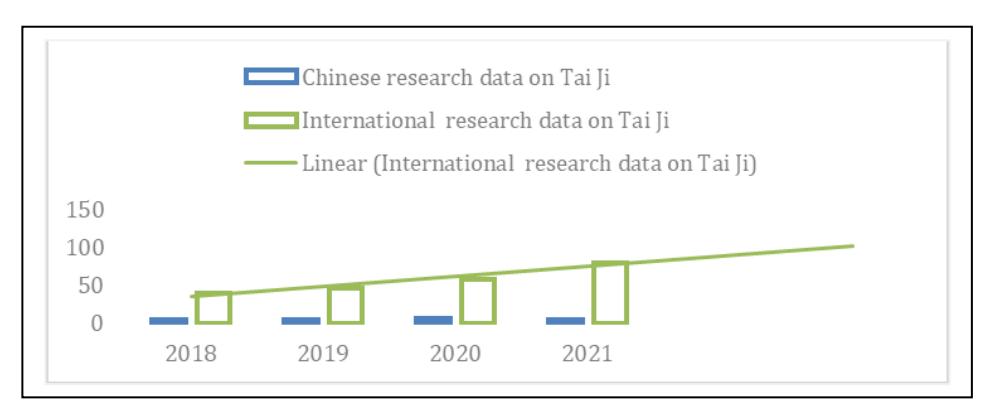
Figure 1 The blue curve represents the quantity of Chinese articles sourced from CNKI, while the green shape represents the quantity of international articles sourced from the Web of Science.
According to the chart:
1) The publication trend of research articles on Taiji diagrams exhibits a curvilinear pattern, with a persistent predominance of international publications over those originating from China.
- 2) Each year, there is a growing body of international research on Taiji and its applications in other fields. However, there needs to be more similar research formation in these areas.
- 3) Chinese scholars focus their attention on Taiji philosophy in innovative design studies, with a particular emphasis on visual analysis as their chosen study approach.
2.1 Taiji Philosophy Influence Graphic Design
This study primarily examined the intersection between philosophical concepts and design expression methodologies, employing visual analysis as the primary mode of investigation. Consequently, the research is centered on investigating the scholarly work of Chinese academics. The work has been significantly influenced by Zhou Dunyi's Taiji Tushuo [1], Yuan Hong's The Aesthetic Characteristics of Zhou Dunyi's View of Taiji [3], and the exploration conducted by Qiuyue and Xiaoqin on the relationship between the Taiji diagram and space construction in contemporary graphic design [5]. For example, Qiuyue and Xiaoqin's research examined the potential of integrating Taiji's philosophical principles into contemporary design practices with the aim of fostering greater harmony [5]. The predominant area of scholarly investigation centers on the philosophical principles of Taiji, which elucidate the interconnectedness of contrasting elements observed in various design attributes, including but not limited to closure and release, tautness and relaxation, luminosity and obscurity, and vacuity and solidity. Nevertheless, the study conducted by the researchers failed to provide a comprehensive explanation of the design methodologies that underlie the Taiji design philosophy. Shanshan's study notes highlight the incorporation of Taiji philosophy in visual graphic design, encompassing principles such as setting off, contrasting, and seeking common ground while preserving differences[19].
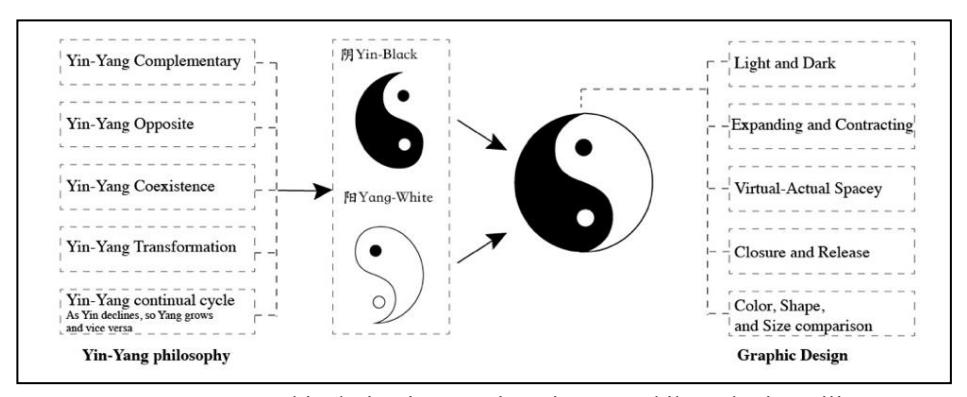
Figure 2 Graphic design interpreting yin-yang philosophy in Taiji.
The Taiji diagram arguably illustrates a flat composition form. Qiuyue and XiaoQin investigated how new design concepts can generate an infinite sense of three-dimensional virtual space within a limited graphic design space, which has implications for the modern graphic design industry [5]. There are numerous ways to create a virtual space in graphic design, including repetitive overlay, size variation, brightness variation, tilt, bend, and perspective effects. These are extremely effective design techniques for conveying a sense of space. They elaborate in their thesis on how to create space in Taiji diagrams by overlapping, overlapping through, and sharing shapes.
Many Chinese traditional designs were derived from the fundamental principles of the Taiji diagram, as exemplified by the 'Xixiangfeng' graphic (Figure 3) [9], commonly found on garments from the Qing dynasty. The graphic follows a composition characterized by an 'S' line, which combines both dynamic elements of rotational movement and static elements of balance, resulting in an aesthetic appeal [10]. The subdued and complementary characteristics the butterflies exhibit give rise to an intriguing artistic outcome. The various aspects of the butterflies, including their movement, flight, echoing, gyrations, and appearance, serve as manifestations of the principle of opposites and unity.
Figure 3 The evolution of the Taiji diagram to the 'Xixiangfeng' graphic [9].
However, there are also commonly observed in contemporary design. The design of the 2008 Olympic bid logo showcases a clever integration of the five rings symbolizing the five continents, which are artfully combined to create a 'Chinese knot' motif that represents the rich tradition of Chinese handicrafts. The left side of Figure 4 represents perpetual unity, collaboration, and interaction among global populations. The emblem of Phoenix TV, as depicted in the central portion of Figure 4, and the design concept employed in the Bank of China logo, as illustrated on the right side of Figure 4, exemplify the significant impact of Taiji design philosophy on Chinese design principles [10].
Figure 4 Beijing 2008 Olympic bid logo; Phoenix TV logo; Bank of China logo [10].
The above examples provide evidence of the influence of Taiji design thinking on Chinese design. It elucidates the application of yin and yang design thinking in graphic design.
2.2 Taiji Philosophy Influence in Graphic Design
Zhu initially introduced the Taiji philosophy methodology with the intention of utilizing the principle of 以易解易 (Everything develops and changes) to formulate a comprehensive framework for the Yi studies 易 学 [12]. The philosophical framework of Taiji thought is distinguished by its employment of figurative, holistic, and dialectical modes of thinking [11]. At its most rudimentary level, this ideology materializes through the interplay of yin and yang, which involves both opposition and unification. These theories have established a correlation between Taiji and the field of graphic design, as they contribute to the cultivation of holistic thinking within the realm of graphic design.
Based on the principles of Taiji philosophy, it is posited that all elements within the cosmos are subject to the influence of two contrasting yet interdependent forces, referred to as yin and yang [12]. These forces encompass opposing potentials, inherent characteristics, or factors. The foundation of traditional Chinese design is rooted in the principle of unity of opposites. This principle involves the exploration of contrasting design elements, including but not limited to closure and release, tension and relaxation, light and darkness, and emptiness and solidity [13]. On the other hand, there are design techniques, such as setting off, contrasting, seeking common ground.
The utilization of Taiji graphics serves as a pivotal reference point for the graphic composition of this study, while concurrently establishing a fundamental design
concept grounded in the Taiji philosophy. The conventional representation of Taiji, as depicted in Appendix A (please refer to the appendix for a comprehensive explanation), is an aesthetically pleasing illustration characterized by circular and curvilinear elements [14]. The visual attributes of this diagram encompass equilibrium, uniformity, and consonance. Figure 5 depicts the correlation among Taiji philosophy, Taiji aesthetics, Taiji diagram (refer to Appendix A for a complete explanation), and graphic design philosophy [16]. The philosophy of Taiji yin-yang places emphasis on the concept of opposites and contradictions, not as mere endpoints but rather as a method to attain a renewed equilibrium in the progression of all entities. The philosophy of yin-yang pertains to an intricate interpretation of the Taiji aesthetic, the Taiji diagram (refer to Appendix A for complete explanation), and the philosophy of graphic design.
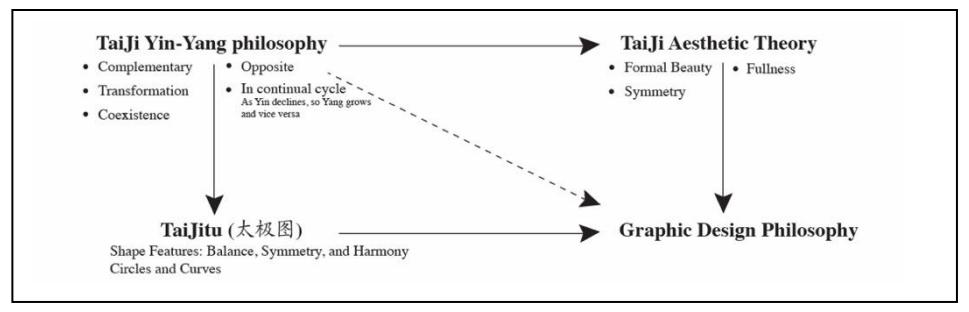
Figure 5 The relationship between Taiji philosophy, Taiji aesthetic, Taiji diagram, and graphic design philosophy.
The Taiji diagram, as shown in Figure 2, consists of two distinct elements: a black fish shape and a white fish shape. Additionally, two points are represented by a white and black fisheye. The intersection of the black and white elements creates an elegant S-shaped curve. For a visual representation, please refer to Appendix A. The Taiji symbol is an exemplary representation of an aesthetic composition incorporating two yin-yang sides, an 'S'-shaped curve in the center, and two points on the yin-yang sides [17]. Taiji represents the amalgamation of various entities, harmonizing the individual with the celestial realm. It fosters within individuals a sense of cohesion and tranquility, exhibiting characteristics of symmetry, equilibrium, harmony, and dynamism. The symbol depicted here represents the Taiji diagram in the point-line visual language (refer to Appendix A for a comprehensive explanation). The overall composition exhibits a harmonious and symmetrical structure, showcasing a notable equilibrium by juxtaposing contrasting elements and emphasizing harmony while alluding to a sense of fluidity.
The Taiji diagram (Figure 2), is considered the foremost manifestation of symmetrical aesthetics, serving as a prototypical illustration of the principles governing symmetry. As depicted in Appendix A, the Taiji diagram illustrates the philosophical concept of the Taiji doctrine, which emphasizes the pursuit of equilibrium between yin and yang within an inherently contradictory yet balanced physical structure. Furthermore, it promotes harmony among multiple contradictory and balanced physical entities. The graphic design practice in this study (see Section 4) concentrated on the characters from the Three Kingdoms, as detailed in Appendix B. In this context, graphic creativity experiments were conducted to support the design concept of yin and yang balance and to validate the aesthetic qualities of the design approach.
3 The Issue and Methodology in Taiji's Design Philosophy
3.1 The Issue
Previous scholarly investigations into the Taiji design philosophy have identified a set of commonly encountered design inquiries. The research problems are formulated as follows:
- 1) Can this Taiji design philosophy be classified as an interdisciplinary research subject?
- 2) This inquiry explores the potential application of the Taiji philosophy to the realm of graphic design.
- 3) What is the significance of the Taiji design philosophy implemented in the Three Kingdoms characters graphic design practice?
Existing scholarly literature has characterized graphic design as a representation in two-dimensional space, drawing upon the concept of virtual reality within the framework of the Taiji theory. Nevertheless, the representation of threedimensional virtual space in graphic design is inherently deceptive rather than precise, as it is constructed using certain misleading visual cues. The deliberate and intentional design aims to lead the viewer through a sequence of visually misleading elements, thereby creating an illusion of virtual spatiality within the image. There exist various techniques within the field of graphic design that can be employed to convey a virtual three-dimensional perception of space. These techniques encompass repetition and superimposition, alterations in size, changes in brightness, tilting, bending, as well as the utilization of perspective effects.
This study built upon Zhang'stheoretical framework of overlapping, intersecting, and shared spatial configurations and applied it to the analysis of character design in the Three Kingdoms (refer to Appendix B for a complete explanation). This section undertakes an analysis of the characteristics of the characters from the Three Kingdoms (refer to Appendix B for a complete explanation) from the standpoint of oriental aesthetics [22]. It further integrates the design elements of the Taiji diagram with its underlying philosophical concepts, thereby presenting a novel approach to conceptualizing design. Drawing inspiration from the design case, this methodological discussion will focus on the creation of an enduring flat design style within the confines of a limited graphic design space. This analysis holds significance for China's advancement in the realm of contemporary graphic design. Furthermore, it is imperative to consider the appropriate perspective from which to approach the extraction of traditional Chinese cultural materials. What kind of information should be extracted? To what extent? Furthermore, the question arises as to where one should commence when considering the domain of Chinese graphic design. The case of the Three Kingdoms with Taiji theory provides a more comprehensive analysis of the aforementioned topics.
3.2 The Research Method
This research adopted a qualitative research method to explore the path of its application in graphic design through the guidance of Taiji design philosophy (Figure 6). In the first phase of the research, the theoretical framework based on the core concepts of Taiji philosophy (balance, unity of opposites, dynamic change) was used to establish the guiding design principles. In the second phase, the graphics of the characters from the Three Kingdoms were selected as the research object through design exploration and a graphic design practice was carried out in conjunction with the Taiji design philosophy so as to validate the effectiveness and applicability of the Taiji design philosophy in design practices. The second stage of the research was carried out through design exploration. In the third stage, carried out through thematic analysis, three research findings were examined separately, i.e., 1) the graphic design of the Three Kingdoms characters encompasses multiple academic disciplines; 2) Taiji design methodology features; and 3) the value of Taiji design philosophy to develop a comprehensive understanding of the overall issue.
The purpose of this study was twofold: firstly, to explore whether the Taiji design method has theoretical guiding significance for graphic creative design; and secondly, to verify the feasibility of reconstructing the visual attributes of the Three Kingdoms era through the combination of the symmetry method and the yin and yang split representation. The Three Kingdoms characters graphic design practice was taken as the core, with an in-depth exploration of the value of Taiji design philosophy and its combination with the specific design practice process, which is systematically discussed in the design exploration.
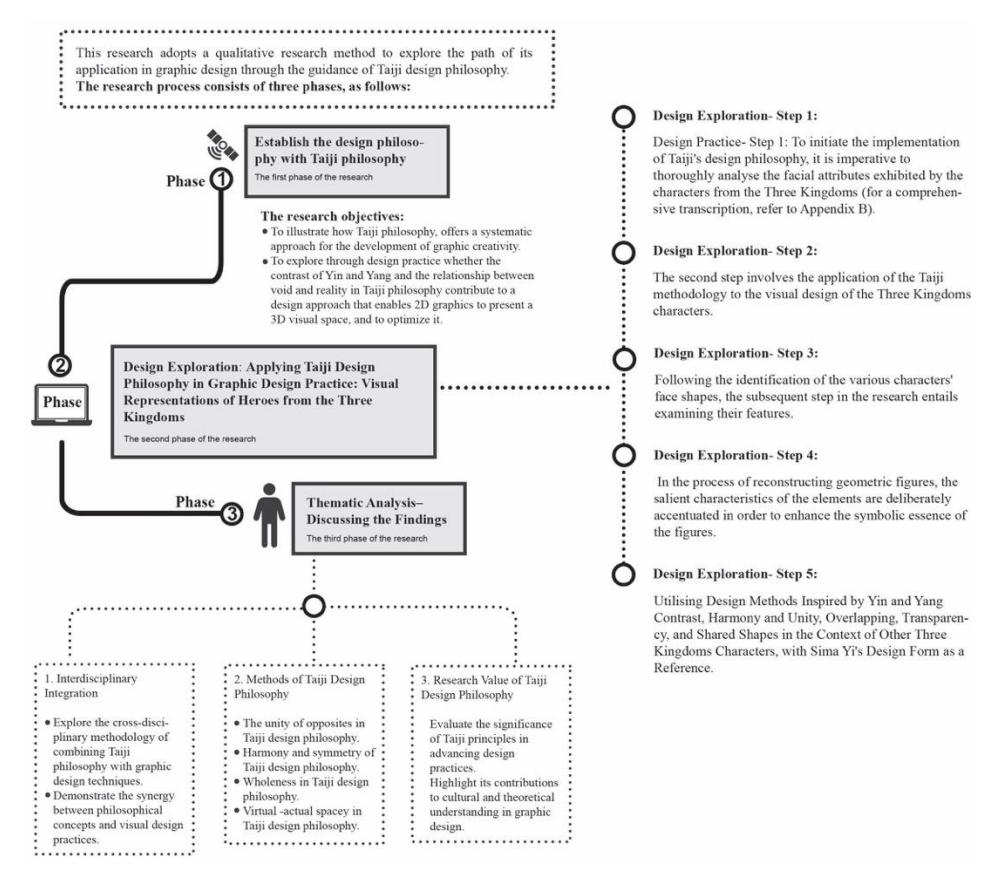
Figure 6 Research process of Taiji design philosophy.
4 Design Exploration
Our team initiated a design practice endeavor in 2015 that was grounded in the principles of Taiji's design philosophy. The project entailed creating a graphic design for characters from the Three Kingdoms, incorporating geometric elements and drawing inspiration from the Taiji design philosophy. In the subsequent discussion, we demonstrate the utilization of the Taiji design philosophy within the realm of graphic design throughout the design procedure. The research process involves several key steps: discovery, definition, information gathering, model construction, and contributions. This research examined the principles and concepts underlying the Taiji design philosophy and explored its connection to the field of graphic design. The design process, which gives precedence over design outcomes [21], associated with this philosophy is delineated into five distinct stages.
Design Practice – Step 1: To initiate the implementation of the Taiji design philosophy, it wasimperative to thoroughly analyze the facial attributes exhibited by the Three Kingdoms characters (refer to Appendix B for a brief explanation).
Table 1 Detailed depiction of the Three Kingdoms characters' looks: Liu Bei 刘 备 (161-223), Guan Yu 关羽 (?-220), Zhuge Liang 诸葛亮 (181-234), Cao Cao 曹操(155-220), Zhi Cao 曹植 (192-232), Yi Sima 司马懿 (179-251), Quan Sun 孙权(182-252), Gai Huang 黄盖 (?-210), and Yu Zhou 周瑜 (175-210).
| No | Hero Name | Personality | Facial Features |
|---|---|---|---|
| 1 | Bei Liu | Personality: generous nature, few words, joy and anger do not show; has a great ambition, good friends with the world's heroes (Chen, 1979) | Delicate features, square face, protruding ears. hands above his knees, eyes able to look at his ears, face like a crown of jade, lips like grease (Chen, 1979) |
| 2 | Yu Guan | Courageous and loyal (Chen, 1979) | Crown beard two feet long, slanted eyes, lying silkworm eyebrow, red face (Chen, 1979) |
| 3 | Liang Zhuge | Wise and brave, calm, courageous, cautious, untiring and stubborn (Chen,1979) | Wears a scarf and a crane cloak, floating like immortal (Chen, 1979) |
| 4 | Cao Cao | Atmospheric and courageous, suspicious (Chen,1979) | Thin eyes and long beard (Chen,1979) |
| 5 | Zhi Cao | Talent, intelligence, and literary prowess (Chen,1979) | Handsome, face like powder, lips like vermillion (Chen,1979) |
| 6 | Yi Sima | Smooth and decisive | Eagle eye (Chen,1979) |
| 7 | Quan Sun | Courteous, judicious, far sighted and slightly self possessed (Chen,1979) | Purple beard and blue eyes, with a bright eye and a large, square mouth |
| 8 | Gai Huang | Severe and rigid (Chen,1979) | Serious looking (Chen,1979), visual design references still from the 'Romance of the Three Kingdoms' TV series |
| 9 | Yu Zhou | Sharp-witted, resourceful, loyal, self-absorbed, jealous of talent and ability (Chen,1979) | Handsome and dashing (Chen,1979) |
By synthesizing Chen's depictions presented in the literary work Romance of the Three Kingdoms, we successfully derived the primary attributes from the characters' countenances. The character designs were derived from examining the physical attributes of civil authorities, characterized by round facial features, and military officials, distinguished by sharp angles, as described in the text. Civil leaders, military officials, and lords exhibit distinct variations in their head crowns, eyes, noses, eyebrows, and beards, as well as employing light and dark contrast techniques to enhance the spatial perception of the graphics. Table 1
illustrates a comprehensive portrayal of the individuals belonging to the Three Kingdoms.
Design Practice – Step 2: The second step involved the application of the Taiji methodology to the Three Kingdoms characters graphic design practice. The research employed the Three Kingdoms characters (refer to Appendix B for a brief explanation) as a case study for design purposes. The characters from the Three Kingdoms hold distinct political significance within the annals of Chinese history, with their distinctive traits and attributes meticulously expounded upon in the famous literary work. Previous research has utilized facial caricatures as a means to accentuate the anatomical and psychological attributes of the individuals [20]. Nguyen et al. (2011) employs a novel mesh-free parametric image warp technique to swiftly manipulate hair, face, and facial features (eyes, mouth, eyebrows, nose, and ears) [15]. The initial phase of our research involved the identification of facial shapes, drawing upon Min's research on the distinctive features observed in the Three Kingdoms period. The facial design is subsequently integrated with the Taiji principles of real and imaginary movements and contrasting techniques. The visual representation (see Figure 7) offers an initial portrayal of facial attributes using the Taiji design methodology. This approach employs the contrasting techniques of yin and yang to delineate the contours of the subject's visage, thereby showcasing its three-dimensional structure.
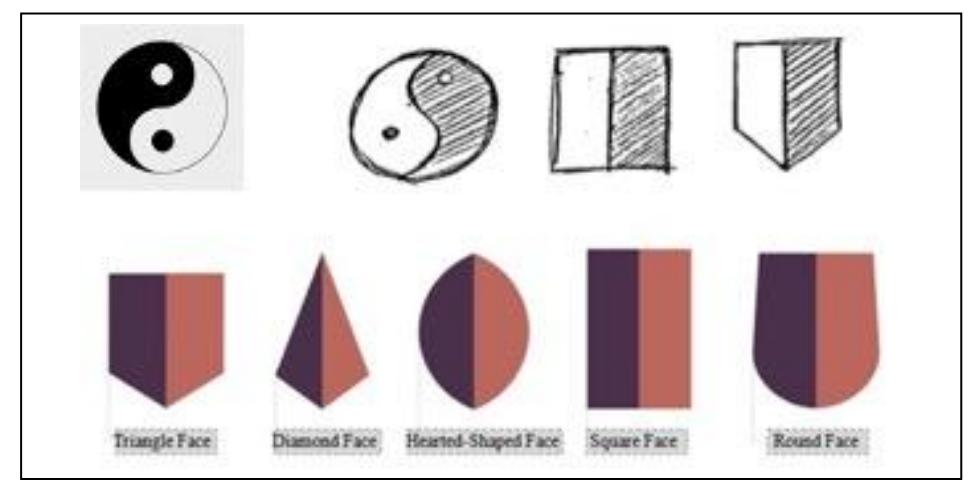
Figure 7 First-line sketches of facial features using the Taiji methodology. Different geometric character face shapes in second-line graphics.
Figure 7 draft: By conducting design experiments involving color blocks with contrasting light and dark shades, a three-dimensional effect is achieved, creating a spatial representation resembling the human head. Warm colors as the primary
palette enhances the visual impact of the Three Kingdoms graphics, evoking a passionate and vivid depiction. This design exemplifies the utilization of various character face shapes, implemented through symmetrical forms such as round, triangular, and square. It practically demonstrates the diverse geometric character face shapes arranged following distinct character personalities (see Figure 7) [23]. The Taiji theory of color contrast as part of the design approach focuses on the transition from two-dimensional to three-dimensional virtual space in graphic design, specifically in flat design, which is characterized by the absence of any three-dimensional elements.
Design Practice – Step 3: Following the identification of the various characters' face shapes, the subsequent step in the research entailed examining their features. The pivotal aspect of this phase revolves around determining how to effectively achieve the unity of opposites in Taiji design philosophy features. The significance of character graphics lies in their ability to establish a connection between the visual information presented and the audience's emotional response. Therefore, it is crucial for the geometry in the Three Kingdoms characters to accurately capture their distinctive traits.
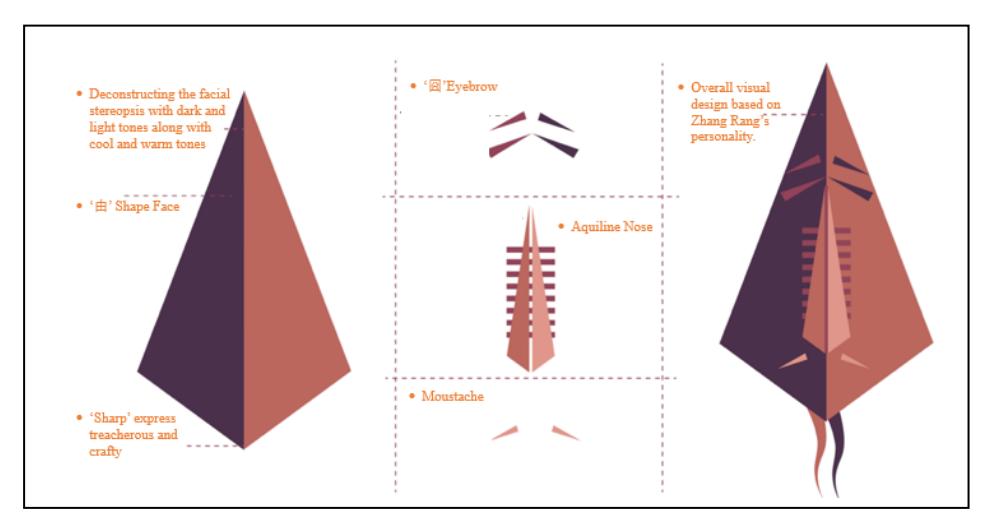
Figure 8 Geometric symbolic meaning of the characters' facial features of Zhang Rang (?-189) in The Three Kingdoms.
In the context of the experimental design, it is imperative to comprehend the character's primary attributes and amplify and emphasize their key facial features. To enhance the visual impact of Zhang Fei's appearance, features such as his leopard head, ring eyes, and tiger's beard were exaggerated. One instance that exemplifies the character of Zhang Rang (张让, ?-189) is his portrayal as a treacherous and cunning individual, which is conveyed through his physical
attributes, including his facial structure characterized by a distinct shape, a neatly trimmed eight-character beard, and a prominent hawk-like nose. The design approach incorporates the principles of symmetry and the interplay between light and dark, which are central to the Taiji design philosophy (see Figure 8).
Design Practice – Step 4: In the process of reconstructing geometric figures, the salient characteristics of the elements were deliberately accentuated in order to enhance the symbolic essence of the figures. The visual creativity of the graphic representation effectively achieves a sense of harmony and unity, aligning with the philosophical concept of 'unity of all things' [18] found in Taiji philosophy. The figure's structure exhibits a juxtaposition of light and dark elements, reminiscent of the traditional Chinese concept of yin-yang face 阴阳脸. This artistic technique is employed to reconstruct the character's visage, employing various triangular, square, and circular incisions that correspond to the character's personality and role. The secondary facial features are diminished, while the remaining five elements are accurately reconstructed to enhance the visual impact of the geometric symbols [24]. The design methods discussed in this study are based on the Taiji design methodology introduced by Zhang and Wang (2015). This methodology incorporates the use of overlapping, transparency, and sharing shapes to achieve graphic cutting effects and create a sense of two-dimensional space. Figure 9 depicts an anatomical illustration of Sima Yi 司马懿 (179-251), a prominent character from the Three Kingdoms period, employing the aforementioned design techniques.
Figure 9 Anatomical drawing of the Three Kingdoms character Sima Yi 司马懿 (179-251) (middle and right).
Design Practice – Step 5: The application of design methods inspired by yin and yang contrast, harmony and unity, overlapping, transparency, and shared shapes in the context of other Three Kingdoms characters, with Sima Yi's design form as a reference. The initial step involved an examination of the character's historical and cultural representation, encompassing an assessment of their
personality traits, physical attributes, and contextual placement within the literary canon. In this study, we propose a novel approach to represent the five senses by employing geometric shapes and graphic design techniques incorporating the contrasting principles of yin and yang.
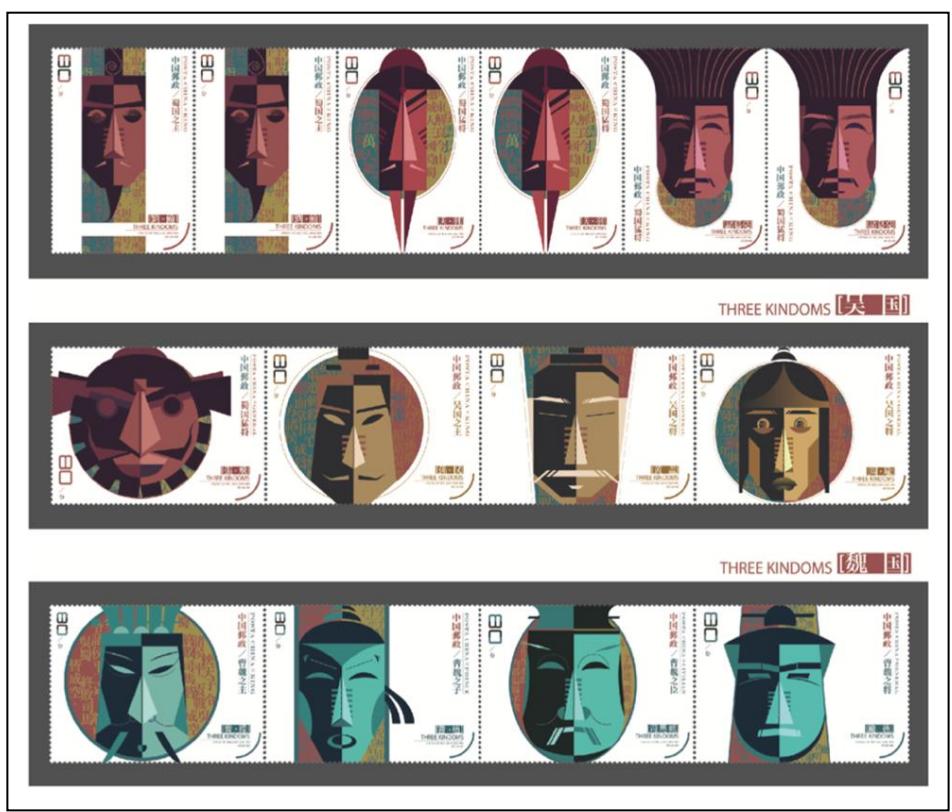
Figure 10 Visual design of Three Kingdoms characters with Taiji design methodology: Liu Bei 刘备 (161-223), Guan Yu 关羽 (?-220), Zhuge Liang 诸葛 亮 (181-234), Cao Cao 曹操 (155-220), Zhi Cao 曹植 (192-232), Yi Sima 司马 懿 (179-251), Quan Sun 孙权 (182-252), Yu Zhou 周瑜 (175-210) and Gai Huang 黄盖 (?-210).
Figure 10 presents the outcomes of the graphic design exercise involving 14 characters from the Three Kingdoms, utilizing the design techniques depicted in Figures 8 and 9. This experiment on the Taiji design methodology commenced by exploring the interplay between light and dark elements within the Three Kingdoms characters. The experimental design produced highly favorable outcomes characterized by a robust visual impact.
5 Discussion
5.1 Finding A: Examination of the Graphic Design of the Three Kingdom Characters Encompasses Multiple Academic Disciplines
This research represents an interdisciplinary approach that integrates the Taiji philosophy with graphic design methodologies, with the aim of investigating novel concepts within the field of graphic design. Despite the extensive body of research examining the correlation between the Taiji philosophy and graphic design, the field of interdisciplinary inquiry focused on the Taiji design philosophy has not yet attained the status of an autonomous academic discipline. Elucidating upon the principles underlying the Taiji design philosophy can be a challenging endeavor. The viability of the Taiji design methodology in previous research has been discussed in Section 2. This is further supported by the design experiments that were conducted and the resulting graphics presented in the Design Exploration section of the present study. This paper presents an argument regarding the viability of the Taiji design philosophy. It accomplishes this by examining the case of a graphic design practice applied to the characters from the Three Kingdoms. Additionally, it explores the application of the Taiji design philosophy in design expressions, thereby establishing a solid philosophical foundation for the ultimate objective of design.
5.2 Finding B: Taiji Design Methodology Features
Prior to examining the application of the Taiji design philosophy in the context of the Three Kingdoms characters graphic design practice, we conducted a series of experiments exploring different manifestations of the Taiji design principles. These experiments encompassed elements such as light and dark contrasts, symmetrical arrangements, holistic compositions, and curved forms, among others. Previous studies have demonstrated that the utilization of shadow segmentation and brightness combination techniques effectively restores the multidimensional visual aesthetic elements. Concurrently, it amplifies the multifaceted efficacy of aesthetic components in the field of graphic design. The present study has identified the feasibility of reconstructing the visual attributes of the Three Kingdoms era through the integration of the symmetry method and the representation of yin-yang segmentation. In order to circumvent a design style that may be perceived as dull and lacking in vibrant visual elements, it is advisable to seek alternative approaches. Hence, the methodology for designing tests commenced with the establishment of the character face design method as delineated by the facial golden ratios. It is imperative to amplify the primary characteristics. In the context of the graphic design of the Three Kingdoms characters (refer to Appendix B for a brief explanation), we adhered to the following elements that encapsulate the concept of Taiji; the technique of design
expression refers to the methodology employed in conveying artistic concepts and ideas through visual elements and aesthetics.
- a) The unity of opposites in Taiji design philosophy: According to Taiji design philosophy, yin and yang are two opposing yet complementary forces [1]. We focus on the contrast of design elements, such as the closing and releasing, tightening and loosening, light and darkness, and emptiness and solidity, by this fundamental principle of the unity of opposites. The existence is highlighted in contrast and design creation techniques such as setting off, contrasting, seeking common ground, and accepting differences are refined. This innovative approach generates numerous new ideas and thoughts for modern graphic design.
- b) Harmony and symmetry of Taiji design philosophy: Taiji is a precise and strict graphic language defined by a simple, orderly, and succinct composition with a two-in-one structure [18]. In the Taiji diagram, if the yin or yang fish are rotated around the center of the figure, then the yinyang fish overlap. For the composition of graphic design, this is a symmetrical design technique.
- c) Wholeness in Taiji design philosophy: The Taiji philosophy is based on the holistic thinking pattern of 'the unity of all things' [18], which establishes the integrity of the graphic and does not affect the overall design effect when the local structure changes.
- d) Virtual-actual space in Taiji design philosophy: There are many techniques to create a sense of three-dimensional space in graphic design, such as repetitive overlay, size change, lightness change, tilt, bend and perspective effect, etc., which are all very effective design methods to express a sense of space [5]. The design expression of light and dark is the key design expression of the Taiji design philosophy.
5.3 Finding C: Value of the Taiji Design Methodology
This research aimed to identify the underlying design principles and specific design elements associated with the Taiji design philosophy within the realm of graphic design. This section provides an overview of the design exploration conducted in the Three Kingdoms characters graphic design practice. The primary objective of this practice was to examine and address the following inquiry: How can designers effectively incorporate the principles of the Taiji design philosophy into the realm of graphic design? The present study revealed the design principles derived from the Taiji yin-yang philosophy. These principles encompass the unity of opposites, harmony and symmetry, wholeness, and the interplay between virtual and actual spaces within the Taiji design philosophy. The Taiji design philosophy, although relatively nascent, exhibits distinctiveness within the realm of traditional Chinese culture, effectively embodying a design style that is inherently Chinese. The present findings hold significance in a minimum of two manners. One argument posits that Taiji holds philosophical significance and that the Taiji diagram is a guiding principle for Chinese graphic design. Furthermore, the correlation between reality and emptiness in Taiji's theory facilitates graphic designers' conversion of twodimensional space into a three-dimensional space. Undoubtedly, a multitude of unresolved issues persist in the Taiji aesthetic formula.
The Taiji design method encompasses more than just the incorporation of the yin and yang principles, harmony, and unity. It also encompasses the utilization of absolute symmetry as an aesthetic compositional form. The findings from the second phase of the design exploration revealed that the design elements and philosophical concepts employed in the Taiji diagram facilitate a transition from a two-dimensional spatial perspective to a three-dimensional virtual space within the realm of graphic design. Additionally, this design approach engenders a graphic style that imparts a perception of boundlessness within the confines of graphic design's limited space. The graphic design outcomes of the 14 heroes in the fifth step of the design exploration process demonstrate a certain level of expression regarding the interplay between the Taiji design philosophy, design principles, and design expression techniques. This is evident in the graphic design of the Three Kingdoms characters.
6 Conclusion
The Taiji diagram (see Appendix A for comprehensive explanation) itself has a high aesthetic value from an aesthetic standpoint. The Taiji philosophy's harmonious beauty of movement and stillness has given the graphic design a more beautiful interpretation. The Taiji diagram of Zhou Dunyi 周敦颐 (1017- 1073) depicts a vibrant, orderly, and humanistic view of the universe, reflecting the Chinese philosopher's persistent pursuit of the ultimate realm of life and higher moral values (in the words of Youlan (1895-1990)). From this vantage point, this cosmic image has tremendous aesthetic value. This study applied Zhou Dunyi's aesthetic characteristics to an experimental Three Kingdoms character graphic design project to demonstrate its feasibility.
From a design methodology standpoint, Taiji describes how formless flat space becomes tangible. The Taiji diagram completes the two-dimensional description of the universe, providing new design ideas for graphic design that utilize twodimensional space as an expressive medium. This study analyzed the compositional elements such as points, lines, and surfaces in two-dimensional space and, by combining them with multiple types of aesthetic design guidelines for change, expresses the visual effect of three-dimensional or even multidimensional space, allowing the graphic design to transcend the boundary between two-dimensional and three-dimensional or even multi-dimensional space. Its expression of meaning is extended in two-dimensional space.
This study explored integrating Taiji yin-yang philosophy and aesthetic theory into design expression with a Chinese style. It aimed to elucidate the design philosophy of Taiji and its implications in creating a novel style that combines traditional elements with innovative combinations. This study examined a Three Kingdoms characters graphic design practice to support the plausibility of the Taiji design philosophy. It also explored the application of the Taiji design philosophy in the expression of design, thereby establishing a solid philosophical foundation for the ultimate objective of design. We intend to enhance the new design philosophy in the forthcoming period by investigating a 'return to the essence of design' by using the Taiji yin-yang design philosophy. This forthcoming research will focus on the ontological foundation, or to be more precise, the notion that design is deeply rooted in the philosophical underpinnings of Chinese history. Moreover, it posits that tangible prospects exist for shaping historical narratives across the temporal continuum encompassing the past, present, and future.
Acknowledgements
We are deeply grateful to all those who played a role in the success of this project. We thank Alicia Mascall, Cris Wassell, and Clare Ballinger for their invaluable input and support throughout the research process. Their insights and expertise were instrumental in shaping the direction of this research.