

1 Introduction
The school curriculum in Indonesia requires students to learn English. English lessons generally start in elementary school and some schools even train their students to become familiar with English starting in kindergarten. Many writings on scientific knowledge, technological developments, and newspapers containing international information are written in English [1]. One of the learning methods that has been implemented in elementary schools is telling stories in English. English storytelling is an activity that is quite often carried out in Indonesia as an effort to increase vocabulary and practice fluency in speaking English through light stories. Participating in storytelling activities is a kind of game activity [2]. According to information obtained from interviews with English teachers in
Jakarta and Bandung around the end of 2023, English storytelling activities in elementary schools are mostly encouraged in grades 4 to 6.
Picture stories can reveal a child's ability to formulate a story compared to the ability to remember a story formulated by someone else as in a retelling task [3]. In the world of education, one of many media that are quite often used are picture books. [4]. With the existence of these learning media, the teaching and learning processes become easier and more interesting, allowing students to understand and comprehend lessons more easily. Student learning efficiency increases because it meets learning objectives, helps maintain concentration in learning by adapting to student needs, boosts learning motivation, and provides a comprehensive learning experience that enables students to truly understand the material provided. Students need to engage in the learning process to allow them to actively participate, thus providing opportunities to be creative and develop their potential. [5]. By engaging students more in learning activities, it is hoped that they will understand the learning material more easily. Therefore, in this research, the author examined visual-based learning media for children that may enhance the quality of the English language learning process and the application of these media in English storytelling activities. The goals were to learn how learning media for English storytelling could help with language learning and story comprehension and how it would be projected in classroom storytelling activities.
Before conducting the research, it was necessary to consider the supporting aspects, such as the process of practicing telling stories in English, children's current learning process, and telling stories with pictures by children. Data were collected through literature study, interviews, experiment, and observations.
2 Contents
The research was carried out using a qualitative descriptive approach with the experiment method. Following the stages in conducting qualitative methods, as described by [6], namely the pre-field stage; entering the field; and data processing. For the first step, several teachers were interviewed to gain knowledge on the struggles of English learning for children and how English storytelling activities are conducted in elementary school. The author then designed an experiment flow based on the information given in the interviews. Observation data of children's word quantity improvement and story length told were noted down. The criteria for selecting the research subjects was elementary school students in grades 4 to 5 – as it is the ideal level for English sentence and grammar learning – who are attending public schools in DKI Jakarta and West Java. The subjects' school grades were also considered, based on common elementary schools English storytelling competition participants. The experiment was conducted with the help of teachers in learning institutions that offer English language lessons. A literature review and data collection through interviews were conducted to learn the depth of the problem and gain more knowledge in the use of design in education field, especially in language learning.
2.1 Creative English Storytelling
Storytelling is an activity to support children's development, to help them express and assign meaning to the world, to develop communication, recognition, and memory skills, and to strengthen relationships with peers and adults [7]. In [8], a study on the use of stories in learning English, it was found that the effectiveness of storytelling develops children's vocabulary, which is considered the most important element in second language learning. It is assumed that by enriching their vocabulary, communication that is easy to understand can already be done in a simple way by connecting words. It must be known that every child has a different level of communication or speech style. Children's speech styles are a general finding from [9], which proposed three types of speech styles when children look at pictures: (1) children who speak according to the standard (SS), i.e., those who are able to tell the story accordingly; (2) children who can develop stories (MC), i.e., those who are able to improvise a story starting from provided pictures; and (3) children who need to be motivated (PM), i.e., those who still need the help of teachers to utter words.
According to information gained from interviews with an experienced English storytelling competition judge and an English teacher, English storytelling competitions are too focused on acting and presentation rather than on telling stories in English. In several cases, the speaker does not understand the plot or the purpose of the story very well. This is because the practice process mostly involves memorizing a written text. With this way, children did not through the learning process by solving problems, understanding the meaning of each word, and arranging them into sentences so that they can communicate.
2.2 Creating Storytelling with Pictures
The use of storytelling through picture description empowers elementary school students by increasing oral production by stimulating real, authentic communication with their peers and teachers [10]. Telling a story with pictures has advantages from the visual/image aspect. In general, everything that can be visualized has the potential to contain meaning [11]. Based on [12], it was found that storytelling based on pictures is an effective technique for developing not only students' speaking skills but also their participation skills in the teachinglearning process and their motivation for learning foreign languages, as indicated by their research concerning English language learning.
Pictures have the ability to attract children's attention. Visualization in images can expand information on the real world. The skill of expressing stories using illustrations is often sequential, both related to form and meaning [11]. Previously, according to an Indonesian study on visual language (bahasa rupa) [13], there are two types of storytelling through images, namely Naturalis-Perspectif-Momenopname (NPM – Naturalist-Perspective-Snapshot) and Ruang-Waktu-Datar (RWD – Space-Time-Flat). Images with the NPM system freeze the moment in an image, allowing for an open interpretation, while images with the RWD system tend to be narrative and literal, so that every event depicted can be read. For example, using the RWD system, the relation of a cat, a bird, and a fish in Figure 1 can be interpreted based on their gestures and eye contact.
Figure 1 The relationship between image and word descriptions [14].
2.3 Designing Picture-based Learning Media
Even in the modern era, books remain as a key reference medium for students in learning a language formally. Reading books has advantages as well as disadvantages. Picture books are a good medium for learning languages. Books and reading are activities that are easy to do by opening a book, reading it, and turning the pages. However, with the decline in interest in reading activities, it would be beneficial if guidance from a teacher or parent assisted the process of getting used to reading.
The development of other learning media can also facilitate language learning. Different learning experiences can foster children's interest and curiosity. Students' attention in the learning process is one of the main keys to facilitate students' understanding of the material, so that their achievements will be better [15]. Many previous studies have proven that the use of other media that resemble games can attract students' interest in learning, as in [16], which used the snakes and ladders game as a learning medium. The use of learning media in learning
activities makes it easier for students to gain understanding and motivates them to learn, so that they get good learning results. Teachers must understand technical media and then explain it to their students, so they can utilize the media more easily.
Figure 2 Spot Goes on Holiday – flip book [17].
The experiment used a story applied in two different media. The selected story was taken from the picture story book Spot Goes on Holiday by Eric Hill, as shown in Figure 2. Spot Goes on Holiday tells the story of the main character Spot's journey playing on the beach with his mother and father. This picture book was chosen with the consideration that the book is written bilingually in English-Indonesian and has an interactive form of folding pictures (flip-the-flap). Apart from that, the story is written in short sentences in the form of dialogue, so the sentences would hopefully not hold the students back from telling the story.
A second visual-based learning media was designed with a learning kit system as a comparison to the existing picture book media. The learning kit aims to help students understand subjects more easily and systematically [18]. In learning stories in English, before students are ultimately expected to be proficient in telling stories, there are stages that must be passed. In the process of learning a language, knowledge of words (vocabulary) and then arranging them into sentences is an important key to achieving communication. According to the teacher interviews, the steps for elementary school English learning stages are: broadening the children's dictionary of words; learning to create simple sentences; to learning simple grammar and paragraphs of text. This is why three forms of media were designed for the learning kit. The media for the word recognition stage are flash cards, i.e., cards with pictures and words; for the sentence composing stage, a magnetic board with magnetic attributes with pictures and words are used; and finally for the story telling, big cue cards with pictures and story text sentences are used. Figure 3 explains the testing scheme for the learning kit used in the experiment. The communication strategy used in designing the second comparative media was to practice speaking by looking at pictures.
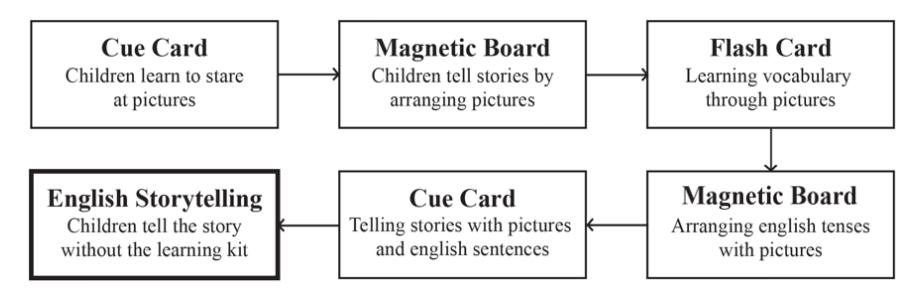
Figure 3 Scheme of the English storytelling learning kit.
The design of the learning kit was based on the comparison media, namely the book Spot Goes on Holiday. The image style and sentence forms that were applied did not change but several visual elements, such as the choice of layout, the style of drawing, and the choice of typeface, were adjusted based on data on visuals for children obtained from the literature.
2.4 Experimental Set-up
The experiment was carried out during English study sessions at the targeted tutoring institution. Usually, the study time for each student was set at 90 to 120 minutes, as shown in the timeline in Figures 4 and 5. Thus, the time for each stage of the experiment was set to suit the learning time typically provided for a study session by the learning institution.
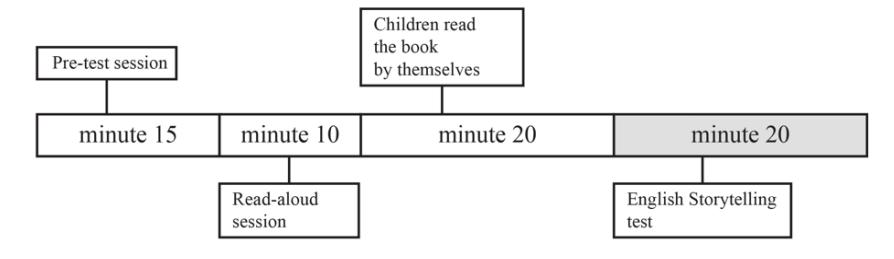
Figure 4 Timeline used in the experiment for study sessions with a picture book.
The experiment was carried out twice in two different places to increase the number of trial samples. The first trial was carried out at a tutoring institution called M3 Kids, located in Bojongsari District, Depok City, West Java, from February 20th , 2024 to February 23rd , 2024. The second trial was carried out at a tutoring institution called the Lembaga Pendidikan Rumah Belajar Mampang (LPRBM), located in Mampang District, South Jakarta, DKI Jakarta, from March 27th , 2024 to March 30th , 2024. Using the given time limit for each session, a sample of five children from each place was taken for data collection, i.e., ten research subjects in total.
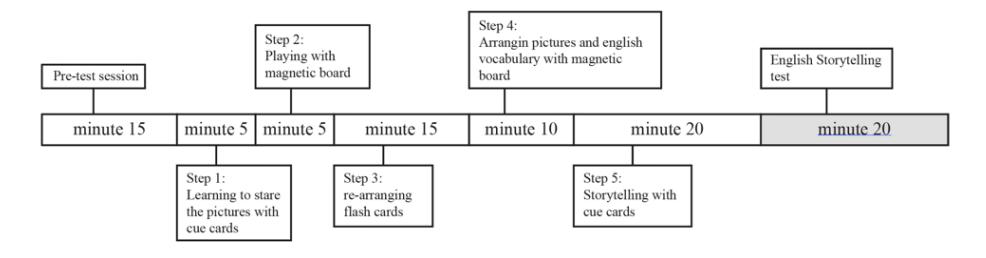
Figure 5 Timeline used in the experiment for study sessions with the storytelling learning kit.
3 Conducting the Experiment
3.1 Dividing into Speech Groups
During the pre-test session, subjects were grouped based on speech style based on the theory of the three types of speech style in [9]. The grouping aimed to measure the before-and-after results more accurately. Each participant took part in the experiment using the learning media, picture book or learning kit, that had been assigned to them. The data obtained were the basis for the analysis in this research.
| Study Group | Subject | Grade | Learning Institution | Speech Group |
|---|---|---|---|---|
| Picture Book (A) | Subject A1 | 4 | M3 Kids | SS |
| Subject A2 | 4 | M3 Kids | SS | |
| Subject A3 | 5 | LPRBM | SS | |
| Subject A4 | 5 | LPRBM | PM | |
| Subject A5 | 5 | LPRBM | PM | |
| Learning Kit (B) | Subject B1 | 5 | M3 Kids | SS |
| Subject B2 | 5 | M3 Kids | SS | |
| Subject B3 | 5 | M3 Kids | PM | |
| Subject B4 | 4 | LPRBM | PM | |
| Subject B5 | 4 | LPRBM | SS |
Table 1 Subject Demography.
Both experimental groups followed the same major trial flow: (1) pre-test session or tests conducted before receiving the test equipment, (2) media testing, and (3)
post-tests or tests conducted after receiving the media. Every word and sentence spoken in the pre-test and post-test sessions was recorded and analyzed for comparison between development before and after being given learning media, and also a result comparison between the two learning tools. In the pre-test, most students were in the SS category, i.e., they managed to tell the story as expected, while few were in the PM category, which means they needed the support of the teacher to speak. No students were in the MC category. As for the post-test, there were several categories that were noted down to learn about the students' improvements. These categories were: word count, word variation, grammar, sentence modification, story creativity, and a specific improvement category for the PM speech group.
3.2 Test Results Comparison
Based on the experiments carried out, the development and improvement of English storytelling proficiency can be seen when students were given a book or a learning kit as their learning media. The experimental results of the two learning medias were compared to determine differences in word improvement and creativity. Comparative analysis of the two groups was determined from the comparison of the word count, word variation, sentence modifications, and creativity in story improvisation. A comparison of the results of the two experimental groups with different learning media is listed in Table 2.
Table 2 Test Results Comparison.
| Comparison Category | Picture Book Group | Learning Kit Group |
|---|---|---|
| Word Count | Compared with the pre-test results, by using book learning media there was an increase in the number of words by 38.46% with a total of 39 words spoken by a total of five children during the pre-test to 54 in the post-test results. | There was an increase in the number of words by 127.2% with a total of 33 words spoken by a total of five children during the pre-test to 75 in the post-test results. |
| Word Variation | Students could say the words listed in the book. Some students who did not remember words could substitute them with other words which they did know, such as 'fishing' and 'football'. Every child could at least recognize the words 'beach' and 'Spot'. Only one child could say the form of an adjective, namely 'new'. | Students could say the words given in the learning kit. Some students who did not remember words could substitute them with other words which they did know, such as 'sand tower' and 'playing'. Adjectives were spoken more often, each child could say at least 1 adjective, including words that express emotions such as 'happy' and 'excited'. |
| Comparison | Picture Book Group | Learning Kit Group |
|---|---|---|
| Category | ||
| Grammar | Students could compose sentences using subject, predicate, and object, producing sentences that were easy to understand. The sentence structure was not perfect but the communication could be understood clearly. For one student in the PM speech group category (subject A4), the student said predicate words to explain events. | Students could compose sentences using subject, predicate, and object, producing sentences that were easy to understand. The sentence structure was not perfect but the communication could be understood clearly. |
| Sentence Modification | Sentence modifications that occurred with the average student included adding other words that are not listed in the book. One student (subject A3) could tell a story from a third-person point of view. | Two students could provide an elaboration of the incident in new sentences (Subjects B1 and B2) and added additional expressions to the characters. The average student told the story from a third-person point of view. |
| Story Creativity | One student could provide an improvised story, namely in the scene where Spot grabs Hippo's towel by saying 'Spot wants to shower' (Subject A3). The other four students did not show story improvisation. | Two students were able to express the character's feelings such as 'And then he's happy' and 'And he's excited' (Subjects B1 and B3). It was found that one student was able to give a name to a character, namely Spot's friend, 'Gosong', and the description of the hippo character as 'hippo' (subject B4). Another student could add a new scene that was not given in the story, namely swimming (Subject B5). |
| Improvement in PM Speech Group | Two students in the PM speech group were able to grasp the story well, but were less able to say many words when telling the story. Students could explain events in very short sentences. However, one student was able to tell a story with more various words than students in the SS speech group (Subject A5). | Two students in the PM speech group were able to capture the story and retell the story in short sentences. Both students could provide modifications to sentences and improvise stories. One student could tell a story with more words than the students in the SS speech group (Subject B4). |
There were differences in the results when the narrative was presented using the two different learning media and picture arrangements. For the learning kit, children tended to interact with each scene and each word, so it can be seen that the students had advantages in terms of word knowledge, sentence processing, and freedom to tell stories. The story in the picture book could be easily and quickly absorbed by the students, however, the storytelling by the students did not show much improvisation compared to the group using the learning kit and more complex words were less likely to be used. Both learning media could enrich students' vocabulary to some extent, as evidenced by the increase and addition of words in the English storytelling sessions.
4 Discussion
In learning a language, whether it is a native or a foreign language, vocabulary plays a crucial role. Several studies have been conducted on the use of visualbased learning media to train children in storytelling, such as storybooks and interactive tools to help children tell stories. The learning media in previous studies generally used images with little or no text. This research focused on specific outcomes of English language application, namely storytelling, utilizing images and design media as learning media in English language learning, including its application in more diverse and personalized English storytelling activities, tailored to the children's characteristics.
Based on the presentation of the experimental results, it is known that students who are given learning kit media based on English learning structures, from word recognition and sentence construction to storytelling, can increase their vocabulary more than students who are given storybook media. The group of students who received the learning kit media experienced a 127.2% increase in vocabulary compared to the pre-test results, while the group of students who received the storybook media experienced a 38.4% increase in vocabulary compared to the pre-test results.
Based on the experimental results, the group of students who used the learning kit media tended to make more changes or additions to the plot and sentences to clarify the context of the scene compared to the group of students with the help of a storybook. The story perspective applied in the book and learning kit was the same, namely using a first-person point of view. The character Mom is known from the first sentence, "Dad and I are taking you to the beach, Spot!" However, the learning kit followed up with a question sentence to review the situation in the picture. The group of students with the help of storybook learning media on average told stories from a first-person point of view, except for subject A3, who could tell stories from a third-person point of view. Meanwhile, all students in the group with the learning kit media learned to tell stories using a third-person point of view. In terms of story improvisation, the group using the learning kit tended to play around with the story, although they did not make extreme changes to the plot. Students could express character emotions and give names to characters who do not have names in the story. There was one student who combined a story from his own experience with Spot's story, interpreting one scene as another scene. In the picture book group, one student (subject A3) was able to elaborate on scenes in the book and change dialogue sentences into scene descriptions.
Apart from that, another finding was that there was a difference in improvement between the students in the PM speech group and other students. Students in the PM speech group were determined based on the guidance given when the students told stories in the pre-test session. Students with a PM speech style need thirdlevel assistance. Companions need to motivate these children more intensively than children with an SS or MC speech style [9]. In each learning media groups there were two students in the PM speech group. One PM student in the storybook media group did not have much improvement in storytelling (Subject A4), with an increase from 4 words to 5 words. This student described each scene not in sentence form but in fragments of words. One other student (Subject A5), had an improvement when compared to the pre-test session with an increase from 5 words to 11 words. Subject A5 was the only student in the storybook learning media group who could tell the story from a third-person perspective.
In the group with the designed learning kit media, both PM students (Subjects B3 and B4) had an increase in vocabulary after being given English learning media. Subject B3 had an increase when compared to the pre-test session from 4 words to 11 words, and subject B4 had an increase from 9 words to 21 words. Apart from improving their vocabulary, both subjects were able to modify the sentences in the given story and improvise on it, similar to students in the SS speech group who used the same learning media.
5 Conclusion
According to this research, the use of a learning kit can facilitate the learning process of English more effectively than picture books. The learning kit is designed to incorporate communication strategies that cover the stages of the learning process in English storytelling, including enriching vocabulary, composing sentences, and telling stories in English. By having semi-playful learning components, such as matching cards using flashcards and disassembling pictures using a magnetic board, students can have more creative storytelling. Apart from that, there are also advantages to using picture books as learning aids. Picture books convey the story's message more quickly than learning kit with shorter learning steps. As for research recommendations, apart from English, this learning media research can be implemented in learning processes of other languages with more varied media.