

1 Introduction
Nature has always served as an inspiration for scientists and designers in subjects and the fields of engineering, technology, materials, architecture, and design [1].
Received April 17th, 2025, Revised September 28th, 2025, Accepted for publication December 16th, 2025. Copyright © 2025 Published by ITB Institute for Research and Community Services, ISSN: 2337-5795, DOI: 10.5614/j.vad.2025.17.2.1 .X
Billions of years of evolution in animals, insects, and plants have inspired solutions to human challenges, like self-cleaning, energy conservation, and adaptive growth. Aristotle noted this process of intuitive imitation through observation, which, combined with exploration and experimentation, has allowed humans to solve problems and drive innovation [2].
The concept of imitating nature is called biomimicry. Biomimicry is the design approach of imitating nature's characteristics, studying organisms' behavior, shapes, and mechanism to solve human problems. It involves replicating biological forms, colors, and structure to create sustainable designs [3-4] (see Table 1). Author Janine Benyus defined biomimicry as the science of studying and imitating nature to solve human problems [1]. Derived from 'bio' (life) and 'mimicry'(imitation), biomimicry is more holistic than bionics, extending beyond engineering to areas like material science, product design, architecture, and communication, often referred to as biomimetic or nature-inspired design.
Table 1 Five ways of biomimicry design according to the research by Chen & Peng [4].
| Part of living being | Design process | Design element |
|---|---|---|
| Outlook | The creation of the form | Appearance |
| Structures | The creation of the proportions | Structure |
| Texture | The creation of the material | Texture |
| Color | The creation of the color | Color |
| Living mechanism | The creation of the function | Function |
The societal interest in health, beauty, and other external aspects has spurred significant evolution within the textile industry, largely facilitated by advancements in chemical engineering. Over the past decade, innovations in dyes, printing techniques, and the application of special chemical or natural ingredients to fabrics have broadened consumer choices. Among these innovations, fragrance textiles have garnered notable attention. A study by Khan and Kumar revealed that 72.2% of surveyed participants showed interest in purchasing fragrance textiles, with 54.2% willing to pay a premium for such products [5]. This interest reflects a historical appreciation for fragrance, which has long held cultural significance and enhanced the appeal of various goods, including textiles.
Fragrance in textiles often draws inspiration from natural scents used in aromatherapy or essential oils (EO) that are commonly extracted from plants [5]. For humans, fragrances can enhance sensory experiences and improve psychological and social well-being [6]. The growing demand for healthy, perfumed textiles has led researchers to focus on not only the fragrance's application but also on preserving its longevity [7-8]. Previous studies have
shown that a fabric's aesthetic and physical comfort are crucial in influencing consumer purchasing decisions [9], highlighting the holistic value of fragrance textiles. Drawing from nature's inspiration [1], this research aimed to explore the creation of nature-inspired fragrance textiles, emphasizing both their aromatic and visual appeal through biomimicry.
2 Methods
This research used a research-by-design approach through prototyping, since prototyping may be the best media or component in an experiment to test a hypothesis [10]. Using Chen & Peng's concept of intentional mimicry [4], the research unfolded in two prototyping stages: applying the fragrance of the ylangylang flower to fabric through microencapsulation and designing patterns based on the visual appearance of the ylang-ylang flower (Cananga odorata) (see Figure 1).
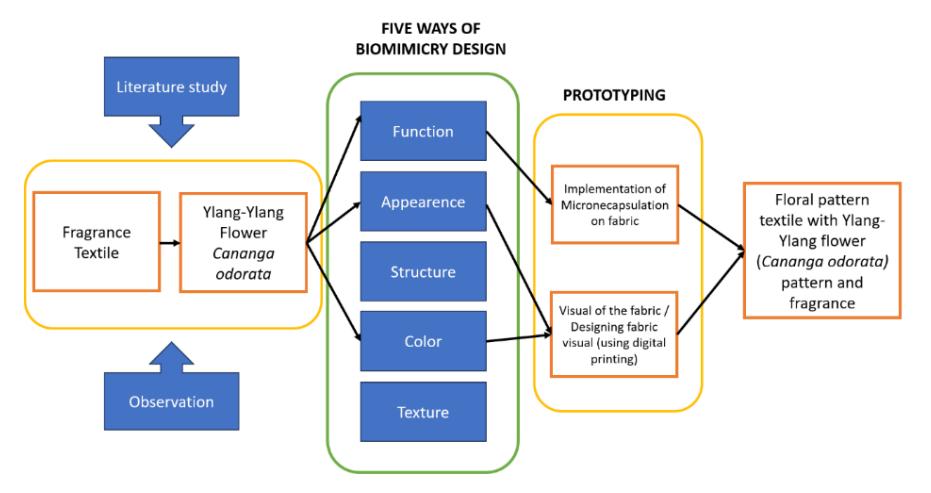
Figure 1 The research stages.
The experimental process of applying the fragrance of Cananga odorata to textile was conducted both prior to and after printing the pattern on fabric. Encapsulation was conducted through dip-coating the fabric. Encapsulation and coating of fragrance are seen as effective methods to prolong the fragrance holding time. There is a prominent advantage in using an organic polymer carrier, which is its adaptability of the release behavior based on molecular design. Thus, smart fragrance behavior may be incorporated [11]. A validation test was conducted through a performance profile test of the fragrance release control, using UVvisible spectrophotometry or UV-vis, as well as SEM to determine the visual cross-section of the fabric before and after the ylang-ylang flower fragrance was applied to it.
For the pattern designing stage, observation and visual analysis were conducted through a direct monitoring of ylang-ylang flowers available around the researcher's neighborhood. Out of the six stages of the growth of the ylang-ylang flower as explained by Ramadhani & Salamah [12], four were selected for this paper: bud, initial-flowering, end-flowering, and senescence. These stages were analyzed for appearance, color, and fragrance, key aspects of biomimicry design. Texture and structure were excluded since they were not relevant in this study. Color analysis was performed using Adobe Photoshop 2023 to extract and display CMYK codes, aiding in the textile pattern design.
2.1 Materials
The material used in prototyping was 100% cotton fabric. During the initial experiment of validation, a plain white cotton fabric was selected as control, to ensure that there would be no chemical contamination from the fabric dye if a printed fabric was used. After the pattern design as completed, the pattern was printed onto the cotton fabric. Validation was then conducted on both the plain and the printed fabric.
PEG 6000 polymer compound, nano silica, ethanol 96%, and ylang-ylang flower essential oil were the main materials used for microencapsulation. Polymer plays a prominent part in preserving the fragrance. Natural and synthetic polymer have been employed and refined to control the release of fragrance. The ideal fragrance carrier system is as follows: (1) the carrier should be able to maintain continuous release and the duration of release should be designed to suit the particular application; (2) the carrier should be able to control the release of the fragrance; (3) the carrier compound should not affect the odor of the fragrance; (4) the carrier compound should be chemically inert to the ingredient components in its application; (5) The carrier compound should be biologically compatible; (6) The cost of the compound should be as low as possible, as explained by Ghosh & Bhatkhande [13]. Thus, PEG 6000 was utilized since it is one of the polymer compounds largely used in textile manufacturing, including in the preparation of phase change materials to fabricate thermoregulating textile using microencapsulation [13-14] and in the health industry in producing time-release medicines, cell culture, wound sealing, and wound healing [15]. PEG was selected as the coating agent in the microencapsulation process, while nano silica was utilized for comparison.
3 Results
3.1 Application of Cananga odorata or Ylang-Ylang Flower Fragrance into Textile
The experiment process started with the modelling of a calibration curve for the ylang-ylang flower essential oil. The calibration curve was used for tracking changes in the performance of the fabric to which the encapsulation method had been applied, and then surveyed for its essential oil release during a seven-day period. In this calibration curve phase, the ylang-ylang flower essential oil was mixed with 96% ethanol and homogenized (using ultra homogenizer) to prepare seven solutions with concentrations measured in ppm units, i.e.,1 ppm, 3 ppm, 5 ppm, 10 ppm, 20 ppm, 30 ppm, and 50 ppm. The aim of the calibration curve was to discover the fragrance compound peak and its wavelength, along with its constant decline in accordance with fragrance ppm. The data obtained after the solution was made showed that a higher amount of essential oil within the ethanol constituted a higher slope in the graphics (see Figures 2 and 3). The curve also showed that the peak in essential oil compounds was located within 240 nm -to 330 nm.
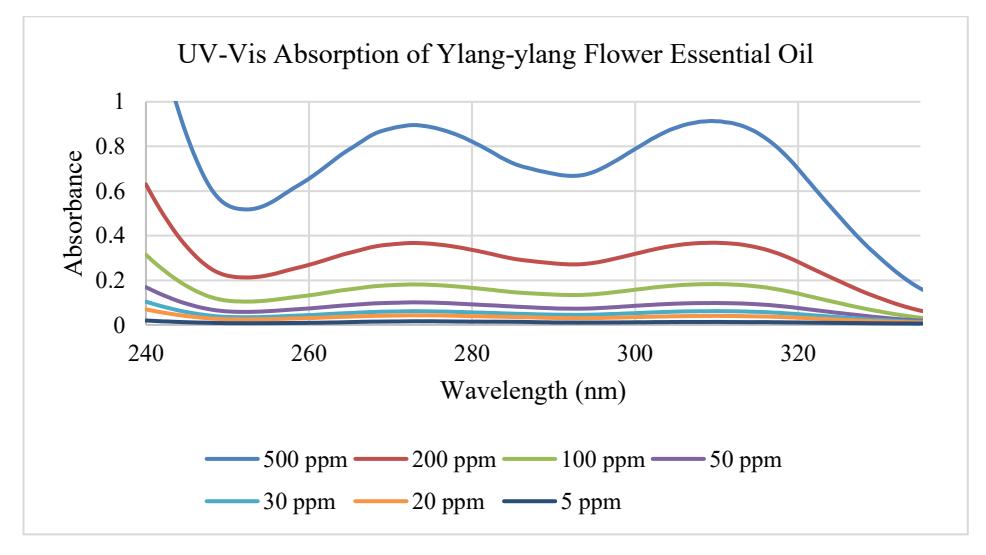
Figure 2 Result of UV-vis absorption of ylang-ylang flower essential oil.
The next step was the dipping process of a 5 x 5 cm plain sheet of fabric into 96% ethanol solution mixed with PEG 6000 and ylang-ylang flower fragrance oil. Four sheets of fabric were dip-coated into the solution and then dried. Afterwards, a UV-vis test was applied to the fabric, two or three days after the dip-coating process. During a 12-hour period, the aroma release performance was tested within four time intervals: 0 hours, 4 hours, 8 hours, and 12 hours. In each
interval, a piece of dip-coated dry fabric was dipped into ethanol solution for 60 minutes. This dipping step was repeated in accordance with the time intervals. In total, 4 containers of ethanol were utilized in this UV-vis test.
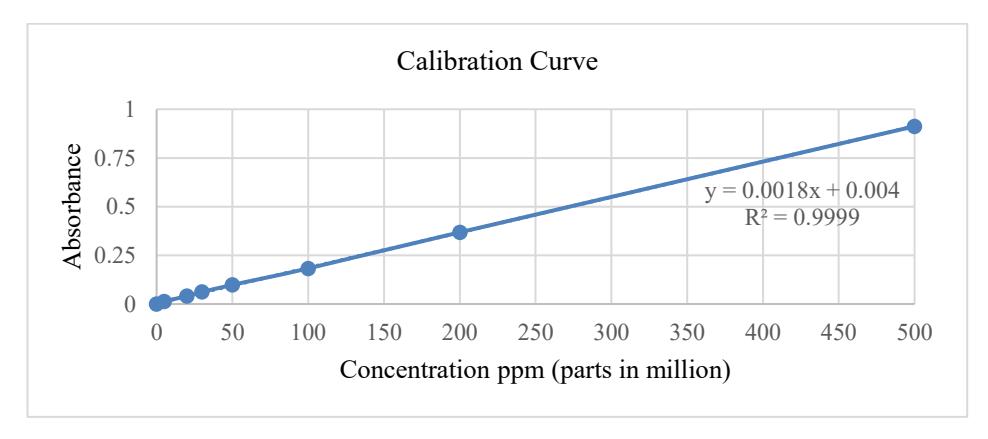
Figure 3 Ylang-ylang essential oil's calibration curve.
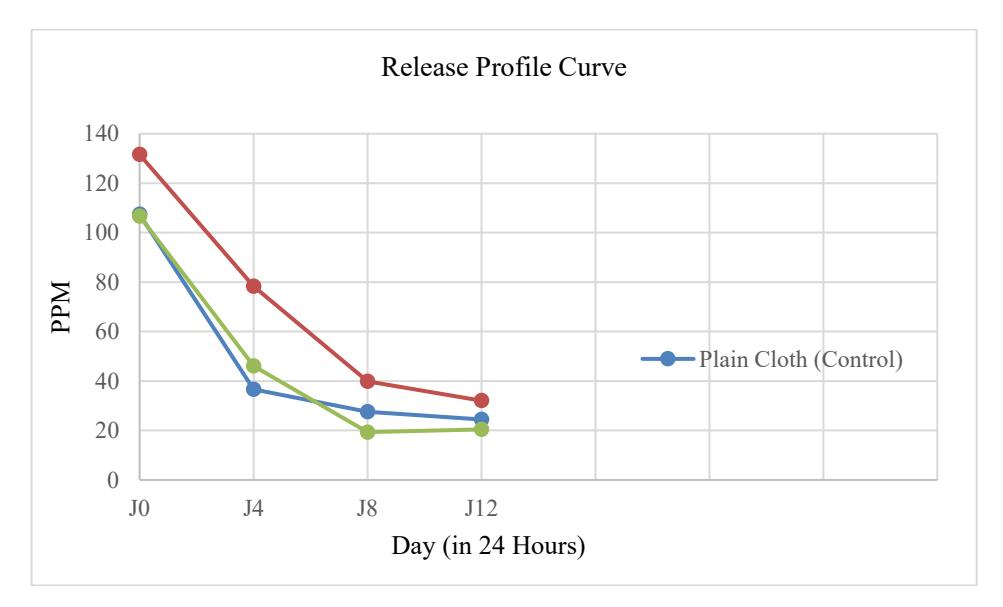
Figure 4 Release profile curve of fragrance textile "Ylang-Ylang Essential Oil".
The result of the UV-vis test showed that the performance of fragrance release on the textile using ylang-ylang flower essential oil and PEG 6000 was significantly better compared to the one with only essential oil and the one with nano silica. In fact, the performance was shown to be decreasing drastically when it entered an 8-hour timeframe. The curve showed a gradual decrease of fragrance compound in the textile within the time interval, indicated by the drop of the linear curve
displaying the decreasing amount of fragrance (see Figure 4). Thus, the results proved that the fragrance decreases over time, similar to the fragrance performance of real flowers. Afterwards, a SEM test was conducted for the fabric in a 1-hour timeframe after dipping and 25 hours after dipping using PEG to ascertain a cross-section view of the fabric.
Figure 5 SEM test results of fabric sample after 1 hour of dipping, magnified to 200 microns (left) and 20,0 microns (right).
Figure 6 SEM test results of fabric sample after 25 hours of dipping, magnified to 200 microns (left) and 20,0 microns (right).
Based on the SEM test results, the fabric that had undergone 1-hour (see Figure 5) and 25-hour (see figure 6) dipping did not display visible signs of microencapsulation, either at micro or millimicron scale (both 200 at micron and 20.0 micron magnification), even after the fragrance had been successfully applied and achieved satisfactory result on its UV-vis test. Keeping this in mind, as well as considering that the method used was dip-coating, it can thus be deduced that PEG microencapsulation ensures even coverage of the entire fabric down to its fibres.
Figure 7 Microencapsulation solution before (left) and after (right) patterned fabric immersion.
Figure 8 The end result of the fragrance textile prototypes after immersion.
In order to produce the end prototype, the digitally printed fabric also underwent the dipping process. Six sheets of fabric sized 25 x 25 cm were immersed in a solution of ylang-ylang essential oil and PEG. The results after immersion showed that there was no apparent color degradation in the printed pattern on the fabric. However, the solution liquid used for immersion displayed visible turbidity, with its color changing from clear to yellowish (see Figure 7). The fabric, meanwhile, retained the same color and visual appearance as the design (see figure 8).
3.2 Ylang-Ylang Flower Observation
The four growth stages of the ylang-ylang flower were documented and analyzed using Chen & Peng's concept of intentional mimicry [4] (see Table 2).
Table 2 Observation result of ylang-ylang flower with five ways of biomimicry design.
| No | Picture | Stages of | Five Aspects of Biomimicry Design | ||||
|---|---|---|---|---|---|---|---|
| Flower | Appearance | Color (main color) | Texture | Structure | Function | ||
| 1 | Bud | 1-2 cm in size with circular organic form | C:42 M:16 Y:81 K:1 | x | x | Yet to produce fragrance | |
| C:60 M:30 Y:100 K:11 | |||||||
| C:67 M:49 Y:85 K:46 | |||||||
| 2 | Initial flowering | Slightly circular organic form, predominantly green in color with hints of bright yellowish green on the tip, petals curl | C:64 M:26 Y:100 K:8 C:42 M:14 Y:100 K:0 | x | x | Yet to produce fragrance | |
| 3 | End flowering | at the tip Petals predominantly bright yellow in color. Each petal is elongated and tapered at the tip. Green on small section near the stalk. | C:1 M:13 Y:98 K:0 C:2 M:6 Y:97 K:0 | x | x | The strongest aroma is produced in this stage. | |
| 4 | Whitered or senescence | Flower withered, with petals drying up and turning straight. Color changes to brown or dark green at the stalk. | C:26 M:57 Y:89 K:10 C:32 M:67 Y:100 K:23 | x | x | Aroma gradually lessens or disappears completely. | |
3.3 Process of Designing the Textile Pattern
Patterns were designed based on the results obtained from observation. Considering that the biomimicry concept used here was intentional biomimicry, the design of the floral motifs not only relied on the shape of the flower based on the results of observation, but also new creations were composed using various other elements and objects. Floral patterns have always been utilized in textile products using the intentional biomimicry concept implicitly, because as Stoykova et al. [16] posits, floral pattern have never ceased to adapt and develop in response to contemporary fashion styles and trends. The three points of observation are appearance, color, and function, but in designing the textile pattern, color and appearance are the most integral data. In composing the design, the researchers created six designs (see Figure 9) along with the preeminent elements and the rationale behind the designs (see Table 3).
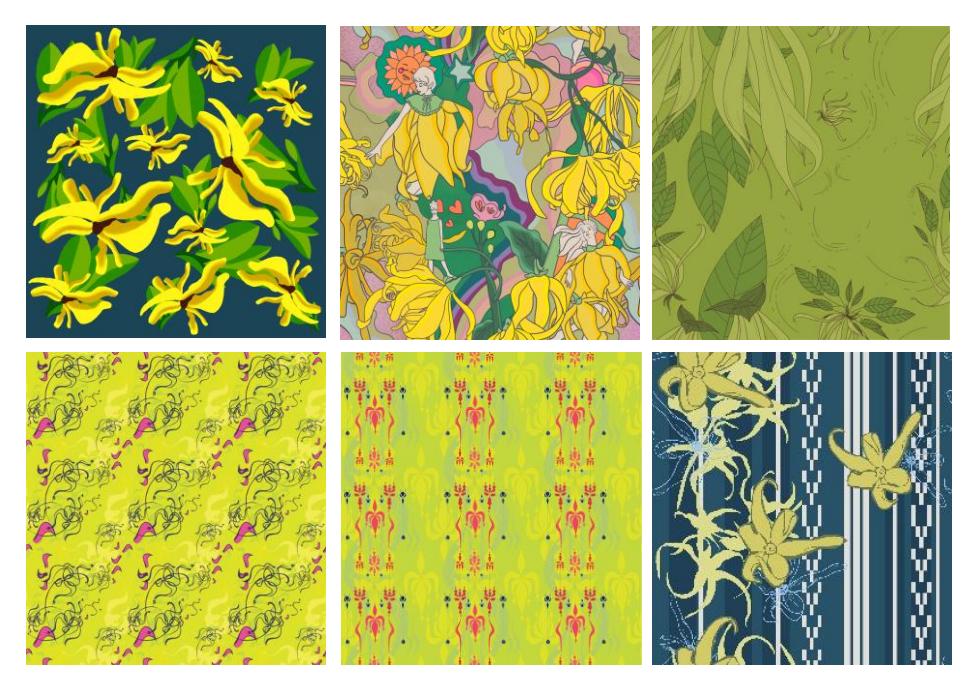
Figure 9 Flower pattern designs based on observation data result.
The designs were based on the ylang-ylang flowers as an object, but the patterns created by the researchers did not merely showcase the shape. As described by Sarah & Ankama Kweku [17] and Sanad [9], the visual of a product may affect consumer decisions. Therefore, creativity is essential in producing a textile pattern with a high-quality design that will draw market attention. Factors such as motifs/objects, pattern composition, rendering technique, as well as choice of colors are essential things to consider. Although the application of ylang-ylang
flowers as a pattern was intentional, the arrangement of the visual form of the flowers, the composition of the fabric, the choice of colors, and the underlying idea or the inspiration for the pattern were all taken into consideration. In order to ensure a more striking appearance of the textile, aside from applying fragrance to the fabric, the visual aspects were also creatively put together to highlight the visual potential of the ylang-ylang flower as the main attraction of the textile. This can be seen from the designs above. Two designs (number 2 and 4) incorporate the full form of the flower as the main object, whereas the other four (number 1, 3, 5, and 6) only include the flowers as pattern. Thus, each design delivers different visual displays although still focusing on the ylang-ylang flower as the main attraction.
Table 3 Flower patterns inspired from ylang-ylang flower.
| Pattern Design | Five Ways Biomimicry Design | ||||
|---|---|---|---|---|---|
| No | Design Main Idea | Appearance | Color | ||
| 1 | Inspired by the Cananga odorata flower which is known as one of Indonesia's signature flowers. It commonly grows in the region of Sumatra. Thus, the pattern does not only feature the flowers, but also synthesizes them with ulos, a type of traditional textile from Indonesia. | Featuring the whole shape of ylang-ylang flower, especially in the initial flowering stage, and combining it with a geometrical pattern and other colors. | Colors derived from the flower in its initial flowering stage. | ||
| 2 | Inspired by the Cananga odorata flower with slight alteration using color blocking on its shape and background, but still staying true to the organic form of the flower. | Featuring the end flowering stage of the plant combined with objects of foliage. | Colors predominantly derived from the flower in its end-flowering stage. | ||
| 3 | Inspired by the flower power era and the hippie movement of 1960s and 1970s, combining the object of Cananga odorata or ylang-ylang flower with abstract shapes and bold colors. | Featuring the end flowering stage of the plant combined with organic shapes, including figures of humans. | Colors predominantly derived from the flower in its end-flowering stage. | ||
| No | Pattern Design | Five Ways Biomimicry Design | |||
|---|---|---|---|---|---|
| Design Main Idea | Appearance | Color | |||
| 4 | Inspired by the Cananga odorata or the ylang-ylang flower as a natural object, therefore deriving the pattern design from the entire form of the flower and its foliage. | Featuring the plant in its initial flowering stage combined with objects of foliage. | Colors predominantly derived from the flower in its initial flowering stage. | ||
| 5 | Inspired by the scent of Cananga odorata or the ylang-ylang flower which is known for its antidepressant properties, so the design was tailored to look bright, lively, fresh, and light. Splashes of red color were applied to accentuate the design. Geometrical shapes inspired by one of Indonesia's traditional textiles, ulos. | Featuring the end flowering stage of the plant but with the shape of flower replaced by geometrical figures. | Colors entirely derived from the initial flowering stage. | ||
| 6 | Inspired by the scent of Cananga odorata or the ylang-ylang flower which is known for its antidepressant properties, so the design was tailored to look bright, lively, fresh, and light. Splashes of red color were applied to accentuate the design. Organic shapes are replaced by strokes of paintbrush to create a sense of light daubs of paint. | Featuring the end flowering stage of the plant but with the shape of the flower replaced by more organic shapes with silhouettes of brushstrokes. | Colors are entirely derived from the initial flowering stage. | ||
4 Conclusion
This research successfully demonstrated the design of fragrance textiles inspired by Indonesia's traditional flower, Cananga odorata. Using intentional biomimicry, digitally printed patterns were created to reflect the ylang-ylang flower's forms and colors, while PEG-based microencapsulation enabled a gradual fragrance release, closely mimicking the natural diffusion of the flower's scent. Together, these approaches highlight the potential of combining visual and fragrant design to create textiles with enhanced sensory and cultural value. The work also underscores how nature-inspired design can support broader themes of sustainability and cultural identity. By drawing from Indonesian flora, the project demonstrates how traditional heritage can inform contemporary material innovation, contributing to culturally grounded yet globally relevant design practices.
Future studies of this research should expand durability testing, including washing, abrasion, and heat resistance, to evaluate long-term performance in everyday use. Exploration of alternative, biodegradable encapsulation agents will further strengthen the sustainability of fragrance textiles. Equally important is user-centered evaluation, assessing not only the effectiveness of fragrance release but also the reception of visual motifs across different cultural and market contexts. Advancing in these directions will position fragrance textiles as innovative products that unite tradition, sustainability, and sensory experience.
Acknowledgment
This research was supported by the PPMI 2023 program of Institut Teknologi Bandung, Indonesia, and by the Advanced Material Processing Laboratory, Faculty of Industrial Engineering, Institut Teknologi Bandung, Indonesia by facilitating the experimental work. The authors would like to express their sincere gratitude for the support provided, which greatly contributed to the advancement of this study.