

1 Introduction
Culinary services are among Indonesia's largest and most lucrative business sectors [1-4], a significant portion of which revolves around ethnic cuisines adapted from local and international cultures. International-ethnic restaurants in Indonesia are dominated by Japanese and Korean offerings [5-7], partly due to
Received September 1 st, 2024, Revised December 11th, 2025, Accepted for publication March 17th, 2026. Copyright © 2025 Published by ITB Institute for Research and Community Services, ISSN: 2337-5795, DOI: 10.5614/j.vad.2025.17.2.5 the prevalence of Japanese and Korean popular culture among Indonesian urbanites. It is perhaps not an exaggeration to say that no shopping mall in Indonesia is complete without at least one Japanese or Korean restaurant. Localethnic restaurants have diverse offerings based on regional cultures such as Balinese, Javanese, Manado, Padang/Minang, Sundanese, and so on. Indonesian ethnic cuisines are often associated with informal street hawkers or low-budget eateries, but heightened business competition has brought initiatives to upgrade Indonesian ethnic restaurants [8-11]. Upscale Balinese and Javanese restaurants in particular can now be seen more frequently in Indonesian shopping malls, competing directly with Japanese and Korean restaurants. In this crowded marketplace, brand management has become an important mean for restaurants to stay competitive. One aspect of branding in the interior space is the focus of this paper: typography.
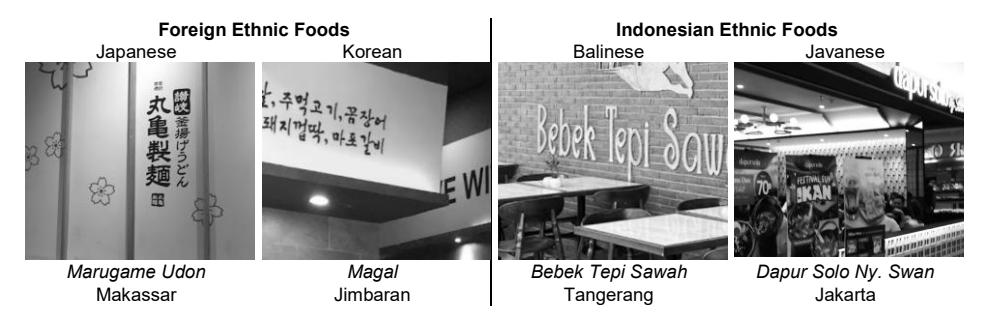
Figure 1 Examples of typographic artefacts in restaurants. Left: culture-specific scripts in Jp-Kr restaurants. Right: Latin alphabet in Bl-Jv restaurants (source: Google Maps).
Even with cursory examination, it is readily discernable that Japanese and Korean (hereinafter 'Jp-Kr') restaurants in Indonesia often utilize typographic artefacts in culture-specific scripts as an integral element of their interior branding. Decorative texts in kanji 漢字, hiragana ひらがな, and katakana カタカナ are prevalent throughout the dining space of Japanese restaurants, as are hangul 한글 texts in Korean restaurants (Figures 1 and 2). Although seemingly trivial, anecdotal accounts suggest that these scripts cater to Indonesian expectations of authenticity and play an important role in forming a favorable brand perception (cf. [12]). However, until now no studies have tested the veracity of these accounts. Inversely, Balinese and Javanese (hereinafter 'Bl-Jv') restaurants hardly ever use culture-specific scripts as part of their interior decor (Figures 1 and 2), despite the existence of Balinese script (aksara Bali ചാണതാമ്പൻ) and Javanese script (aksara Jawa amamanasan) as part of the respective cultures' indigenous writing traditions [13]. Why is this so? Focusing on this query reveals
<sup>1</sup> Anecdotally from the authors' experience. Admittedly, finding exact data for this is difficult.
an interesting intersection between interior design, multiscriptual typography, branding directions, and cultural perception within commercial space, which has yet to be studied closely in the context of Indonesia. This paper explores two main research questions regarding the use of culture-specific script typography within the restaurant space: 1) Do they affect brand perception? 2) What qualities do Indonesian consumers perceive when they are used?
Figure 2 Two restaurant fronts in Trans Studio Mall, Bandung. Compare the use of Latin and Japanese scripts in the Japanese restaurant signage (red arrows) with exclusive use of Latin script in the Javanese restaurant signage (yellow arrow) (source: authors, 2023).
2 Conceptual Background
In the global marketplace, food is increasingly valued for its authenticity linked to specific people, places, and times as an indication of quality. Being perceived as ethnically and culturally authentic is an important factor in ethnic restaurant branding [14-15]. Authenticity is produced from competing cultural values and commercial practices, with varying conceptions that can lead to very different assessments of the same product [16]. In a restaurant, consumers not only perceive authenticity and quality from the menu; various environmental elements within the dining space also influence consumer perception [17-22].
While interior designers often focus on aspects such as layout and furniture, one often overlooked element in dining spaces are typographic artefacts – that is, standing menu boards, signage, labels, tags, and other displayed writings that form the environmental graphic design (EGD) [23]. Typography makes information visible in the built environment [23], and specific brand values can be embedded in the spatial experience through purposeful selection of typographic elements [24]. This principle, however, becomes more complicated when we consider the existence of multiple scripts in the world. Many typographic resources default their discussion to the Latin script, while typographic intricacies in non-Latin scripts [25-31], 2 have been given less attention by professional designers, more so in Indonesia [32-34].
Since some of the key terms tend to be used in overlapping content matter between disciplines, to avoid confusion this paper will use the following definitions. 'Script' in this paper is synonymous with 'writing system,' that is, visual and tactile notation representing language with a set of defined graphemes [35]. 'Typeface' (often colloquially called 'font') refers to letters and numbers in a particular design [23]. 'Typography' refers to the art and technique of making written language legible, readable, and appealing for particular purposes [24, 36]. 3 The Latin alphabet, kanji, and aksara Bali are examples of scripts. Times New Roman, Malgun Gothic, and Vimala are examples of typefaces for Latin, hangul, and the Balinese script respectively. The selection of scripts and typefaces for restaurant signs that could contribute to a favorable consumer perception is an example of typography.
3 Method
3.1 Literature Synthesis
There are relatively few studies highlighting the intersection of interior design, non-Latin typography, and brand identity, although separate discussions on each topic are numerous. To better understand the general effect of non-Latin typography towards brand perception, this study started with a systematic synthesis of previous works [37] that investigated consumer perception of typographic elements within the restaurant space, with special attention to cases where non-Latin scripts were involved. These were collated and then synthesized through qualitative judgement into an informative summary. AI and LLMs were avoided in the formation of literature synthesis.4
3.2 Survey
To better understand the effect of non-Latin typography among Indonesian consumers, this study employed a quantitative survey. Data was collected through perceptual mapping methods with characteristics of A/B testing [38] using convenient sampling, and were then analyzed descriptively. Since the subject and specific context of this paper had no prior research, a simple frequency analysis
3 Strictly speaking, handwriting would fall under the domain of lettering or calligraphy, but for simplicity this paper considers it as a form of typography as it also involves the arrangement of written language.
2 Also, Ben Mitchell [67] 4 The main author agrees with the assessments of [68-70] that current AI models are not suitable for conveying truthful information regarding the complex, nuanced, cultural topics presented in this study.
[39] was conducted<sup>5</sup> to determine whether a follow-up study applying a more complex correlative/regressive method is worth pursuing.
For the survey, the authors prepared four fictitious ethnic restaurants with generic toponymic names: Arakawa (Japanese), Han-Gang (Korean), Batukaru (Balinese), and Sindoro (Javanese). Four variants of simple wordmark logos (labelled V1-V4) were created for each restaurant, where each variant represented different levels of culture-specific script application that are often seen in Indonesia. In V1, culture-specific scripts were not used in any capacity. In V2 culture-specific scripts were emulated through Latin exotypes. 6 The Jp-Kr exotypes mimic brush strokes, the standard writing tool in East Asian traditions. The Bl-Jv exotypes mimic idiosyncratic glyph forms in neutral body-text typefaces of the respective scripts. In V3 and V4, culture-specific scripts were used alongside Latin, namely hiragana for Arakawa (あらかわ), hangul for Han-Gang (한강), aksara Bali for Batukaru (লোডা) and aksara Jawa for Sindoro (alman). Both variations, however, have different visual hierarchies between the culture-specific scripts and Latin components. In V3, the culture-specific script is a secondary graphical component to the main Latin title. V4 is the opposite: whereas the culture-specific script is the main graphical component and is set in a display type based on indigenous calligraphy of the respective culture.<sup>7</sup> Through the use of indigenous scripts and styles, this paper treats V4 as representing the most culturally 'authentic' typographic option in relation to the restaurant's culture of origin. In total, 16 logos were created according to these specifications. For the participants in the survey to focus on the script element of the logos, compounding design factors such as color, size, and texture were minimized. Thus, the logos were uniformly presented in black and white with similar sizes in Table 1 below.
-
<sup>5</sup> Initially, a correlative/regressive method was considered for the data analysis. However, this method requires numeric, Likert, or binary code data, which would result in a prohibitively long survey for the purpose of this study.
<sup>6</sup> 'Exotype' is defined by Alessandrini [71] as "les caractères de forme latine, mais dont le dessin est ouvertement influencé par une graphie étrangère n'utilisant que peu (cyrillique) ou pas du tout (chinois) notre code alphabétique." The term is used in studies like such as Celhay, Boysselle, & Cohen [40], but Meletis [52] noted that the genre has numerous appellations, including 'foreign look font,' 'faux font,' 'ethnic font,' 'stereotypography,' and 'culturally thematic alphabet.' In Indonesian, the genre is called 'liraksara' [72].
<sup>7</sup> With the exception of Sindoro, which uses lettering created by the authors due to the absence of a suitable calligraphic display type.
Japanese Korean Balinese Javanese V1 (a) (a) (a) (a) (b) (b) (c) (d) (a, e) (a, f) (a, g) (a, h) (a, i) (a, j) (a, k) (a, l)
Table 1 Logos of fictitious ethnic restaurants created for the survey.
Typefaces used:
(a) Segoe UI, (b) Osake, (c) Balinese Family, (d) Upakarti, (e) Kozuka Gothic (hiragana), (f) Malgun Gothic (hangul), (g) Vimala (Balinese script), (h) Javanese Text (Javanese script), (i) Kouzan Brush Gyousyo (hiragana), (j) Nanum Brush Script (hangul), (k) Rekatta (Balinese script), (l) custom lettering (Javanese script)
The survey was designed using Google Form in the Indonesian language for greater user accessibility. The participants were tasked to complete a series of questions divided into five parts. The first part deals with respondent identity and general awareness of non-Latin scripts. In the second part, four logo variants of Arakawa were used as stimuli. The participants were briefed that they would be presented with four Japanese restaurant logos to be used as signage and must choose the one that best matches the following questions:
Table 2 Questions presented in the survey.
| Question | |
|---|---|
| Q1 | Which restaurant may have the highest price range? |
| Q2 | Which restaurant may have the lowest price range? |
| Q3 | Which restaurant may have the best food quality? |
| Q4 | Which restaurant may have the worst food quality? |
| Q5 | Which restaurant may have the best atmosphere? |
| Q6 | Which restaurant may have the worst atmosphere? |
The participants were told that information such as menu items, price, and interior photos for each restaurant were not available, so they had to make assumptions based on the logos alone. Each question was followed by four Arakawa logos in randomized order. The second part of the survey was concluded when Q1-Q6 had been administered. The third part followed the same format but used the Han-Gang logos as stimulus, followed by the Batukaru logos in the fourth part, and the Sindoro logos in the fifth part. An early version of the survey had additional cases for Thai and Sundanese, but test users remarked that six cases made the survey too lengthy, so only four cases were kept. Additionally, a Likert scale was experimented with, but the test users remarked that the resulting questionnaire was too tedious. It was then modified to reflect binary extremes. The survey was disseminated via social media between November and December 2023.
4 Discussion
4.1 Script Selection as Aspect of Branding
As mentioned in the literature review, typography involves visual manipulation of written elements that can embed a certain perception of values. Several studies have investigated applied typography in culinary industries (such as in food packaging, e.g. [40-42] and restaurant spaces, e.g. [43-46]) and how they affect consumer perception. For example, one study on ethnic restaurants frequented by American consumers found that a menu board with handwritten Latin texts contributed favorably to the perceived quality of the served food compared to a board with generic printed texts[45]. Another study found that Chinese restaurant signs with traditional Chinese characters set in a vertical layout could enhance the perceived authenticity among Chinese consumers compared to simplified Chinese. Interestingly, however, the effect did not materialize when the same traditional characters were set in a horizontal layout [46]. This shows that seemingly inconsequential typographical aspects such as the direction of the writing can affect consumer perception and that other aspects, such as typeface, size, and others, can be further configured to suit the target market and desired brand values. In localities where multiple scripts can be seen in daily life, however, determining the script precedes the detailed configuration of the typography, as consumers can have ingrained preconceptions towards the script itself that influence their perception of the overall brand.
To illustrate, let us consider Figure 3. Among various other ways, the written word 'coffee' can be presented in English with the Latin alphabet, in Japanese with katakana, or in Javanese with aksara Jawa. Each of these written forms will be perceived differently depending on the target market. Japanese consumer may consider coffee packaging in katakana as mundane, while Indonesian customers consider it exotic. Consequently, when the same product emblazoned with コー ヒー is sold to Japanese and Indonesian consumers, the latter may be more willing to pay a higher price than the former due to perceived exoticism of the script. When an appropriate script has been selected for a certain market, detailed typographic aspects could then be configured for a more nuanced brand positioning. To quote Roshchupkina & Kang [47], "Each [style] used in a particular writing system embodies distinctive cultural concepts and has different roles in daily life and education. Thus, they have their own meaning and can transfer it to a brand."
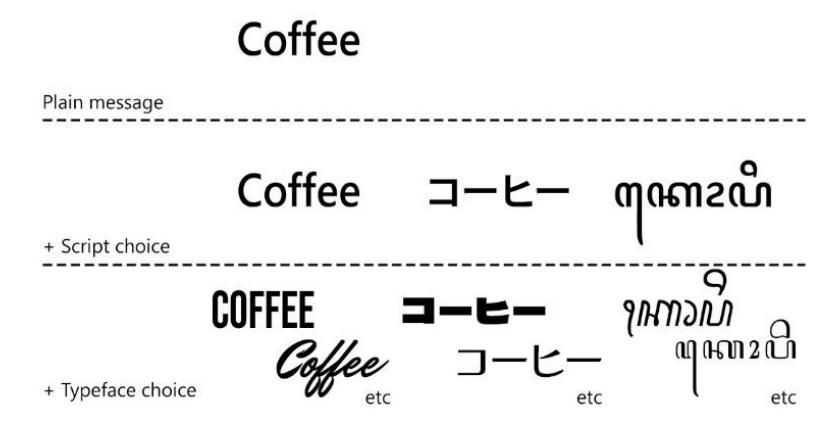
Figure 3 Examples of script choice and typeface choice that affect the plain message 'coffee.'
Compatibility issues between script, brand, and consumer expectations have been observed in several cases. Pepsi lost six million dollars during their first years in Russia and market analysts later realized that it was due to the transliteration of their product name into the Cyrillic кириллица script as Пепси. Russian consumers expected newly imported American products to be in the Latin script, whereas genuine Pepsi emblazoned with Cyrillic was perceived as a knockoff [48]. When Coca-Cola first entered the Chinese market, the product name was adapted into hànzì 漢字 as 可口可乐 (kěkǒukělè). But unlike Pepsi in Russia, the hànzì version was accepted by the Chinese market due to different consumer expectations and successful implementation of phono-semantic matching in the transliteration [49]. Several experiments noted distinct imagery from Japanese consumers when the same Japanese word for 'chair' was presented in different scripts; when Japanese see the kanji 椅子, an image of an old-fashioned but strongly built chair is usually generated, the katakana イス generates an image of a modern, elegant chair, while the hiragana いす is associated with a simple wooden chair [50]. A more recent study found that Korean consumers associate Latin alphabet with modernity, while hangul is associated with everydayness. Due to this association, Korean consumers would consider products like laptops to be more appealing when marketed with Latin branding, but products like ramyun are more appealing with hangul branding [47].
An interesting yet ambiguous case is when a script mimics another script, as in the case of Latin exotypes. Authors do not consider exotypes as a culture-specific script application, but they are important to examine, as they are often employed in ethnic food marketing. One study found that Latin exotypes in ethnic food packaging managed to elicit the perception of a specific origin and cultural designation among French consumers [40]. The study, however, noted that exotypes may be less effective when used for high-end products marketed towards discerning consumers, remarking that "…experts in Chinese cuisine might prefer to see real [hànzì] on food packaging, whereas novices might be reassured by the use of a 'Chinese' exotype that is easily understood by Western consumers" [40]. Other studies have argued that exotypes can be seen as a form of cultural appropriation and inauthenticity [51-52]. Using the Chinese example again, Latin exotypes that mimic hànzì only cater to exotic preconceptions of non-Chinese consumers, while lacking the stylistic nuances of authentic hànzì endemic to Chinese culture.
In spite of the relative frequency of cases in everyday life, the authors did not find any studies which explore the perception of culture-specific scripts among Indonesian viewers. Perhaps the nearest topic of relevance comes from linguistic landscape studies, which discuss social, cultural, and economical aspects of a society based on language manifestation within the public sphere, often in the form of signage when written language is concerned (e.g. [53-57]). Many of these studies noted the tendency to use English terms when signage serves a commercial purpose, including in restaurants and eateries. One study [56] found that Indonesian viewers are generally more inclined to patronize businesses that use English terms together with Indonesian in their EGD rather than those that only use Indonesian, although to what extent is still an open question. All of these studies, however, overwhelmingly focused on texts written in the Latin alphabet, so the analysis of perceived values of non-Latin scripts is lacking. Typographic studies of indigenous Indonesian scripts tend to be cursory, with many lacking compelling design analysis [24, 34].
Indonesian studies of interior branding often refer to the framework elaborated by Kuhteubl [58], who states that successful implementation of interior branding relies on three main principles: clear vision, unique story, and energy (e.g. [59- 62]). Unfortunately, many remarks based on these principles still heavily rely on tacit knowledge with little detailed description of specific interior attributes. Typographic artefactssuch as signs are sometimes mentioned under 'clear vision' or 'unique story' principles (e.g. [63]), but in-depth examination is often lacking. This is unfortunate, as theoretical frameworks from the field of typography, graphic design, or EGD could have been consulted for a more robust discussion.
In Indonesia, the use of culture-specific scripts is frequently seen in the EGD of Jp-Kr restaurants in signs, murals, menus, tags, posters, and other interior elements (e.g., Figure 4). These mostly serve as decor or 'flavor texts,' since substantive information like food descriptions and prices are still conveyed to consumers through conventional English or Indonesian texts written in the Latin alphabet. In some cases, decorative texts do not need to be coherent at all. Authors found one Korean restaurant (Figure 4) where the prominent hangul decorations contained nothing more than the nonsensical placeholder text lorem ipsum
(rendered as 로렘입숨). This suggests that the restaurant had some awareness that culture-specific scripts are appealing for Indonesian consumers, but did not expect consumers to actually be able to read the texts, thus prioritizing the presence of hangul in the EGD with no regard to its underlying meaning. In comparison, the authors have not found Bl-Jv restaurants where Bl-Jv scripts are used prominently as part of the EGD. In regions such as Bali, there are local regulations that mandate the implementations of local scripts (Balinese in this case) on certain outdoor signs [64], but often these implementations are poorly executed from a typographic and EGD point of view [34, pp. 174-175]. 8 Adding to the scarcity of visually compelling references (e.g. [13]), it is somewhat understandable that the potential use of Bl-Jv scripts in interior branding have escaped the notice of professional designers.
Figure 4 Left: example of Japanese script typography (red arrows) as interior elements in a Japanese restaurant in Bandung. The texts vary between brief notices and remarks about the menu. Right: example of hangul typography (red arrows) as interior elements in a Korean restaurant in Jakarta. The texts, however, are meaningless lorem ipsum (source: authors, 2023, 2026).
4.2 Survey Results
The authors managed to collect 100 participants, whose general profiles are summarized in Table 3 below. This is a convenient sample with a size and distribution that is not representative of the whole Indonesian population, but the resulting profile does have relevant bearings to the research question, as explained below.
8 Many of these regulations assume that inclusion of indigenous scripts in signage would increase public interest and therefore help preserve their existence. While somewhat wellintentioned, many such regulations lack consideration to practical application, design context, and typographic quality, reflecting superficial research typical of inept policy makers.
Table 3 General profile of respondents.
| General identity | Occupation | Student | 34 | ||
|---|---|---|---|---|---|
| Categories | % | Private employee | 27 | ||
| Gender | Female | 36 | Freelance/entrepreneur | 25 | |
| Male | 64 | Civil servant | 6 | ||
| Age group | 15-20 | 8 | Educator | 4 | |
| 21-30 | 61 | Others | 3 | ||
| 31-50 | 26 | Unemployed | 1 | ||
| >50 | 5 | Awareness to scripts beyond Latin | |||
| Province of | Categories | % | |||
| residence | Jawa Barat | 23 | |||
| Do you have | Yes | 47 | |||
| DI Yogyakarta | 17 | design | |||
| education | No | 53 | |||
| DKI Jakarta | 17 | background? | |||
| Can you read | Yes | 97 | |||
| Banten | 9 | other scripts | |||
| Jawa Timur | 9 | beside Latin? | No | 3 | |
| How often do you | Often | 17 | |||
| Bali | 5 | notice non-Latin | |||
| Lampung | 2 | scripts in culinary | Quite often | 43 | |
| Sumatra Selatan | 2 | products? | Quite rare | 20 | |
| Aceh | 1 | Rare | 16 | ||
| Jawa Tengah | 1 | Do not notice | 4 | ||
| Kalimantan | |||||
| Selatan | 1 | ||||
| Sumatra Utara | 1 | ||||
Over 60% of respondents self-reported as aged between 21 and 30 and 26% as between 31 and 50. These age ranges correspond to Millennials and Gen Z, which probably form the most important target market for Indonesian restaurant operators [4]. The food buying motives of Gen Z in particular are structured around selective internalization of disparate information (such as reviews from social influencers, aesthetic appearance, price, and so on), which results in a wide range of individualistic tastes [11, 65]. They tend to place more emphasis on quality and authenticity, are flexible in switching brands, and willing to pay more for an overall pleasing culinary experience [66]. In terms of geography, the respondents mostly resided in the western parts of the Indonesian archipelago, where many high-density urban centers are located. 47% of respondents reported that they had a design education background, while 53% did not, thus the survey results should represent a somewhat balanced reflection of 'common' and designers' taste. More than 97% of respondents reported that they can read at least one other script besides Latin, although the extent of their fluency was not inquired. 43% of respondents said they quite often encounter non-Latin scripts on culinary products. The scripts that were most noticed are Korean (hangul), Japanese (hiragana, katakana), Chinese (hànzì/hanja/kanji), and Arabic. Indigenous Indonesian scripts were also encountered but only by a very small minority of respondents, perhaps corresponding to SME products that use these scripts sporadically. The results of the main survey are discussed below (Figures 5, 6, and 7).
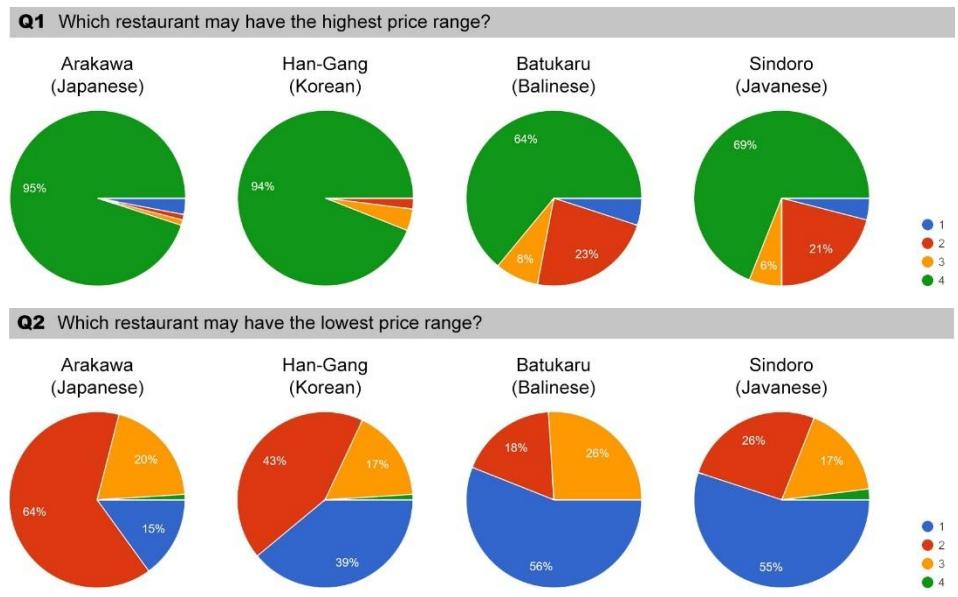
Figure 5 Survey results of Q1 and Q2 associated with price range.
The results of Q1 and Q2 (Figure 5) deal with price range. For logos that indicate the highest price range, the majority of respondents picked V4 logos (containing prominent culture-specific script in indigenous calligraphic style) across all restaurant cases. There is, however, notable disparity between Jp-Kr and Bl-Jv. More than 90% of respondents picked V4 in the Jp-Kr cases, but in the Bl-Jv cases the amount was lower, at 64% and 69%, respectively. For logos that indicate the lowest price range, the majority of respondents picked V2 logos (exotypes) in the Jp-Kr cases, while V1 logos (plain Latin only) were picked in the Bl-Jv cases. In other words, the majority of participants concurred that logos with prominent culture-specific scripts indicate a high price range across all observed ethnic restaurants but disagreed on which logos would indicate a low price range among restaurants. Price range can have a variable impact on prospective consumer perception, especially among young Indonesians [65]. Consumers may view high prices positively as a sign of superior quality, or negatively as exorbitant and intimidating. Likewise, low prices can be seen negatively as signs of inferior products but also positively as signs of affordability. Regardless, the price range perception is relevant here, as it directly affects perceived brand value.
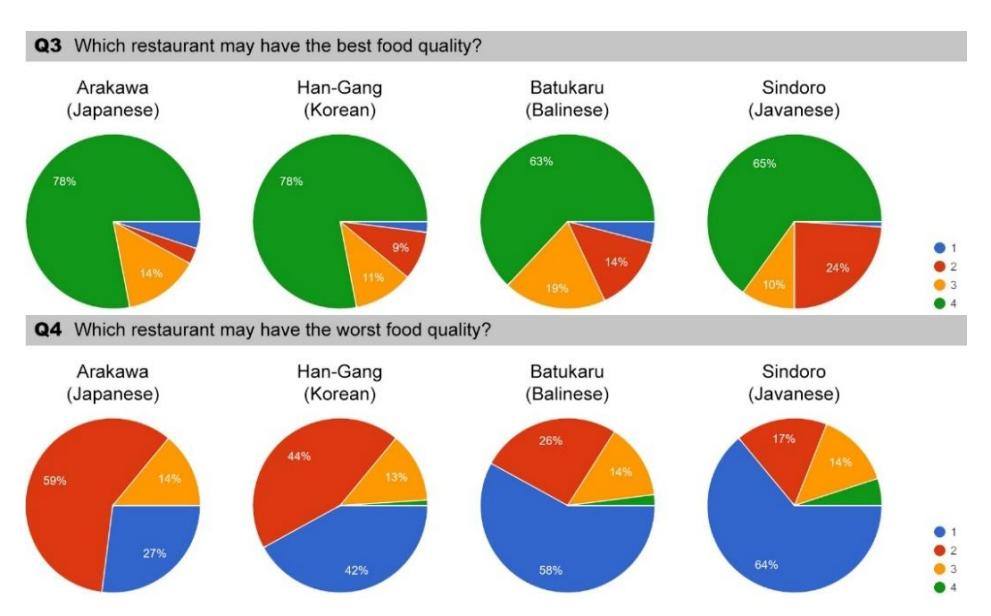
Figure 6 Survey result of Q3 and Q4 associated with food quality.
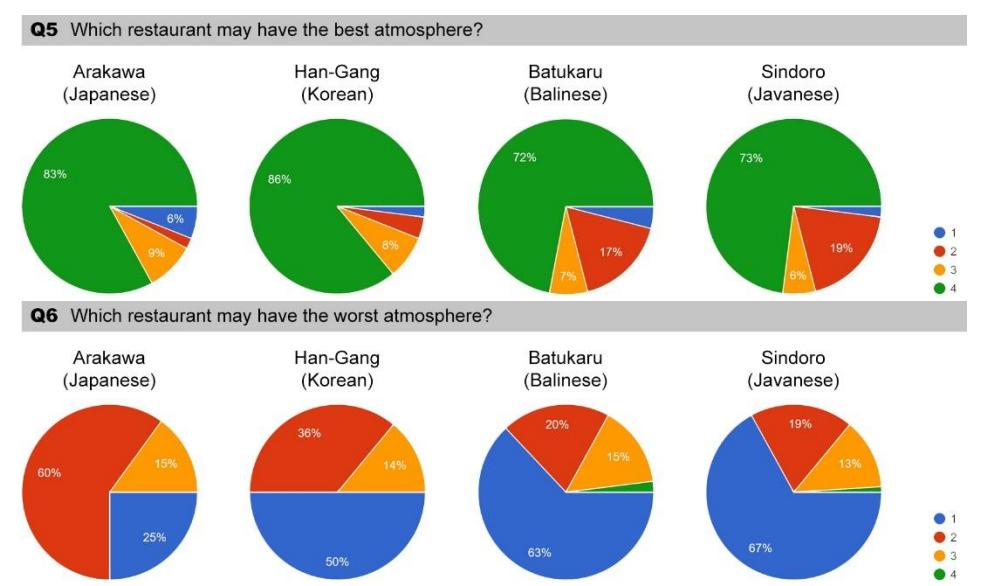
Figure 7 Survey result of Q5 and Q6 associated with restaurant atmosphere.
In Q3-6 (Figures 6 and 7), the participants were asked about their assumption of food and atmosphere quality in binary extremes of the best and the worst. In Q3, the majority of respondents picked V4 logos when asked to identify restaurants with the best food quality. In Q5, the majority of respondents also picked V4 logos when asked to identify restaurants with the best atmosphere. This was similar with the results of Q1, but there was less disparity between the Jp-Kr and Bl-Jv cases. An interesting difference could be discerned between Q3 and Q5. Across all restaurant cases, the percentage of respondents that choose V4 in Q5 (73 to 86%) was higher than V4 in Q3 (63 to 78%). In other words, more respondents related culture-specific scripts with a better restaurant atmosphere rather than with better food quality. While correlative calculation was not undertaken, these results suggest that culture-specific scripts have variable effects on consumer perception of brand aspects.
Regarding worst food quality and atmosphere, the results of Q4 and Q6 were very similar to the Q1 results, where the majority of respondents chose V1 or V2 logos. For the Jp-Kr cases, the majority pick was V2 logos, for Bl-Jv the majority pick was V1 logos. These results suggest that exotypes are not suitable for Jp-Kr restaurants that brand themselves as high-end establishments for Indonesian consumers, as V2 exotype-based logos tend to be picked as indicating the lowest food quality and atmosphere by the majority of respondents. This was not the case, however, for Bl-Jv restaurants, whose majority pick was V1. In other words, Bl-Jv exotypes are less regarded as signs of poor food quality and atmosphere, whereas Jp-Kr exotypes are more regarded as such.
From these results, we can establish that the use of Jp-Kr scripts indeed elicited the perception of high-end Jp-Kr restaurants among the majority of respondents. This supports the observation made by Puspitasari, Suryadi, and Widodo [12] that some Indonesian culinary products include Japanese scripts on their packaging even if their manufacture or product has no relation whatsoever with Japan—it is a marketing tool that signals quality and prestige. However, this advantage seems to hinge partly on the visual prominence of the script. If we look at the results again, only a middling number of respondents picked V3 logos (prominent Latin with secondary culture-specific script elements) in all questions and restaurant cases. From this, we can infer that the mere presence of culture-specific scripts is not enough; they must be presented with sufficient typographic quality to elicit the desired effect.
The case of Bl-Jv is interesting to consider. There is a lack of real-life cases where Bl-Jv typography is prominently used in interior dining spaces. Their use as in V4 is entirely hypothetical. However intriguingly, the majority of respondents still chose V4 as indicative of high-end Bl-Jv restaurants. For interior designers, this means integration of Bl-Jv scripts as part of Bl-Jv restaurants' EGD can play a significant role in creating a culturally authentic atmosphere while increasing the perceived brand value. Say, for example, an interior designer is tasked to design an upscale Balinese restaurant; judicious use of Balinese script typography on interior elements such as signs, menu boards, and murals can upscale the restaurant's branding. Even if the intended branding is not upper-scale, the usage of culture-specific script can augment the brand with a sense of cultural
authenticity. This insight may be applicable for other Indonesian ethnic restaurants or other commercial ventures, but further study is needed to confirm this notion.
5 Conclusion
The result of this study supports anecdotal accounts that typographic artefacts in culture-specific scripts can form a favorable brand perception among Indonesian consumers, specifically ethnic restaurants in this case. This perceived effect, however, has nuanced differences between observed cases. More respondents associated Jp-Kr typography with high quality Jp-Kr restaurants, compared to the number of respondents that associated Bl-Jv typography with high-quality Bl-Jv restaurants. In all observed cases, however, prominent use of culture-specific scripts was picked by the majority of respondents as indicative of higher quality. More respondents related culture-specific scripts with higher prices, followed by a better restaurant atmosphere and better food quality. While correlative calculation was not undertaken, these results suggest that the presence of culturespecific scripts has a subtler effect on certain perceived values compared to others.
These findings have theoretical and practical implications for restaurant operators and wider creative industries in Indonesia. These findings confirm that Indonesian consumers perceive culturally authentic typography as representing high-value restaurants in terms of price, food quality, and atmosphere. This is especially true for Jp-Kr typography, but Bl-Jv typography may have a similar appeal, despite the hitherto lack of application in real restaurants. Rather than a mere decorative after-thought, culture specific scripts and typography in dining spaces can be important design elements that appeal to potential consumers' authenticity perceptions.
The result of this study, however, is preliminary in nature. The authors have used a small sample taken opportunistically, simple descriptive data analysis, and limited context in interior attributes of ethnic restaurants. To further validate and generalize the results of this study, additional studies are warranted using more data and more rigorous methods.
Acknowledgements
The authors would like to thank Ben Mitchell, Ghina Amalia Yuhanida, Fernando Septony Siregar, Norbert Lindenberg, Setya Amrih Prasaja, and Surianto Rustan for their respective comments and assistance. The authors would also like to thank Rebecca Victoria Simatupang for her input on the language. No substantive part of this article was made by generative AI.