

PENDAHULUAN
Although critical reading and critical thinking seem difficult to implement, many find it useful to help students foster not only students" cognitive development, but also their knowledge about cognitive and self knowledge (metacognition) development. With the complexity of critical reading, it is probably acceptable to assume that critical thinking and critical reading are difficult to observe, difficult to teach, and unlikely to measure. Pavel Zemliansky (2008) agrees that to be a critical reader is not an overnight process since it requires a lot of practice and patience. With this relatively long and demanding process, I think it is important to deepen the understanding of critical reading and critical thinking concepts before embarking further on designing critical reading instruction. This review is expected to offer concepts of an abstract world to be a more tangible one.
There have been a number of notions proposed to define Critical Reading, or what others call as "close reading" or "active
reading" (Wheeler, Kip, 1998) from time to time. From a number of definitions offered since mid of 19th century, critical reading has been defined from limited scope of reading ability to wider coverage. Critical reading is defined in one or two specific abilities in "interpreting symbols or distinguishing the relevant from the irrelevant in problemsolving." (Gans, 1940) and (Triggs, 1959); judging "the veracity, validity, or worth of what is read, based on sound criteria or standards developed through previous experiences"( Robinson, 1964, p.3); analysing and evaluating certain types of arguments presented in text (Patching, William et.al, 1983) ; evaluating and judging the accuracy of statements and the soundness of the reasoning that leads to conclusions (Wolf, Willavene,et.al,1968); analytic activity (Kurland, 2010); judging how a text is argued (Knott, Deborah, 2009) In a broader scope, critical reading abilities include applying critical thinking to the reading process by (1) questioning and suspended judgment, (2) using methods of logical inquiry and problem solving and (3) evaluating in terms of some norm or standard or consensus (Russell, 1963); and (Smith, 1963); and "evaluating information and ideas, for deciding what to accept and believe, involving reflecting on the validity of what a reader has read in his/her prior knowledge and understanding of the world (Kurland,2000) Apart from different coverage of skills presented in those definitions, what I can highlight is the importance of the process requiring the reader to engage with logical inquiry/critical thinking approach to understand, analyse, evaluate and judge information and messages in texts by reflecting to his prior knowledge. Students with these skills, according to revised Bloom"s taxonomy, are considered to have a higher level of cognition as shown in the following pyramid in figure 1.
The definitions mentioned before, to me, do not give clear cut difference between what is called "critical reading" and any other type of reading. There must be a reason for attributing "critical" to the "reading". To clarify the concept of critical reading, another interpretation is offered by Makau (1990) by comparing and contrasting it with the other two types of reading. It is defined as reading to understand the information (content reading) and the spirit of message (empathic reading) in addition to analyse and to evaluate. Thus, I could say that to read critically, one should go through a levelled process not only to understand the information conceived and the spirit of the message conveyed but also to analyse and evaluate the text.
In addition to Makau"s concept, I agree that not all reading activity requires the reader to analyse and evaluate the text. There are times when one"s only need is to scan, especially when he needs to find the details, or skim when he needs to get the gist of the text. Thus, goal is the most dominant factor that influences the type of reading we adopt. It is because a certain goal can only be attained through a certain reading strategy requiring a certain level of thinking. With this idea in mind, I agree that critical reading requires more than just reading for content or information.
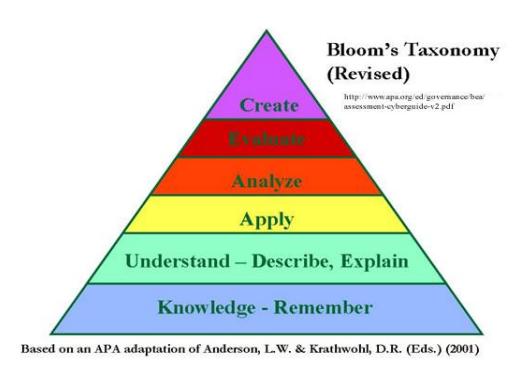
Figure 1 : Bloom"s Taxonomy (Revised)
Wheeler (1998) illustrates how these two goals require different types of discipline, types of mental activity, results created as well as the degree of understanding. Since reading to extract information is intended to seek facts and not to argue, the most effective way to learn is repetition. This kind of strategy requires mental activity requiring a certain degree of absorption especially memorization and passivity. This mental activity will result in students with an overwhelming number of facts to call to memory at any moment. The degree of understanding in reading for contents is to the level of understanding the fact provided in the text. In critical reading, however, since the goal is to determine the quality of the argument, it requires more than repetition. Wheeler (1998) concludes that to read critically, the most effective way to learn is to break the essay into logical subdivisions, to analyze each section's argument, to restate the argument in other words, to expand upon or question the findings. Through this process, the student is required to be active (pre-read, read closely for content, reread for argument/conclusion) and to spend more time to think the argument from different points of view (logical, rhetorical, historical, ethical, social, and personal). Wheeler (1998) adds that the student with this mental activity will have the mental habit of reflection, intellectual honesty, perceptivity to the text, subtlety in thought, and originality in insight. The degree of student" understanding in critical reading is not only understanding the facts but also fully understanding in addition to finding the implications, taking the statement, as well as putting the fact into a meaningful context of himself and his community.
Apart from different concepts of critical reading proposed by Gans (1940) and Triggs (1959); Robinson (1964, p.3); Patching, William et.al (1983); Wolf, Willavene, et.al (1968); Knott, Deborah (2009); Russell (1963); Smith (1963); (Kurland, 2000) and Makau (1999), they share one skill in common, reading. The term reading itself is defined by Anderson et al., (1985) as a set of procedures to build meaning from written texts demanding a quite complex competency in coordinating a series of interrelated sources of information. Another concept is offered by Wixson, Peters, Weber, & Roeber (1987) as a vigorous and purposeful interaction of (1) the reader's prior knowledge; (2) the information provided in the text; and (3) the context of the reading situation. These two definitions highlight the presence of engagement not only between the reader and the text but also between the reader and the text"s engagement with interrelated sources of information to build meaning. With this understanding, it is obvious now that critical reading is more than just reading activity coordinating the engagement among these parties, but critical reading requires the involvement of the reader"s critical thinking.
As the central skill in critical reading, the critical thinking concept has been mostly interpreted as intangible competencies in terms of its process. Thinking itself is our nature and everyone thinks. However, why does everyone come up with different answers, solutions or opinions when the topic/issue/problem they think is the same? What has everyone gone through so that they have different thinking outputs? What quality makes different outputs? What factors contribute different outputs? And how do they develop this quality? A number of studies have demonstrated the importance of thinking. According to Paul and Elder (2007) critical thinking is defined as the art of thinking in an analytical and evaluative way to make a betterment and in a more specific terms; it is defined as "self-directed, selfdisciplined, self-monitored, and self-corrective thinking" by adopting various skills for analysing, assessing, and reconstructing. To me, as art is unique in nature and each individual may have different creative forms, use different ways of expression, produce different levels of quality as well as publish his product using different media, I assume that "creative process" plays a very significant role in one"s critical thinking process which is quite different from one individual to another.
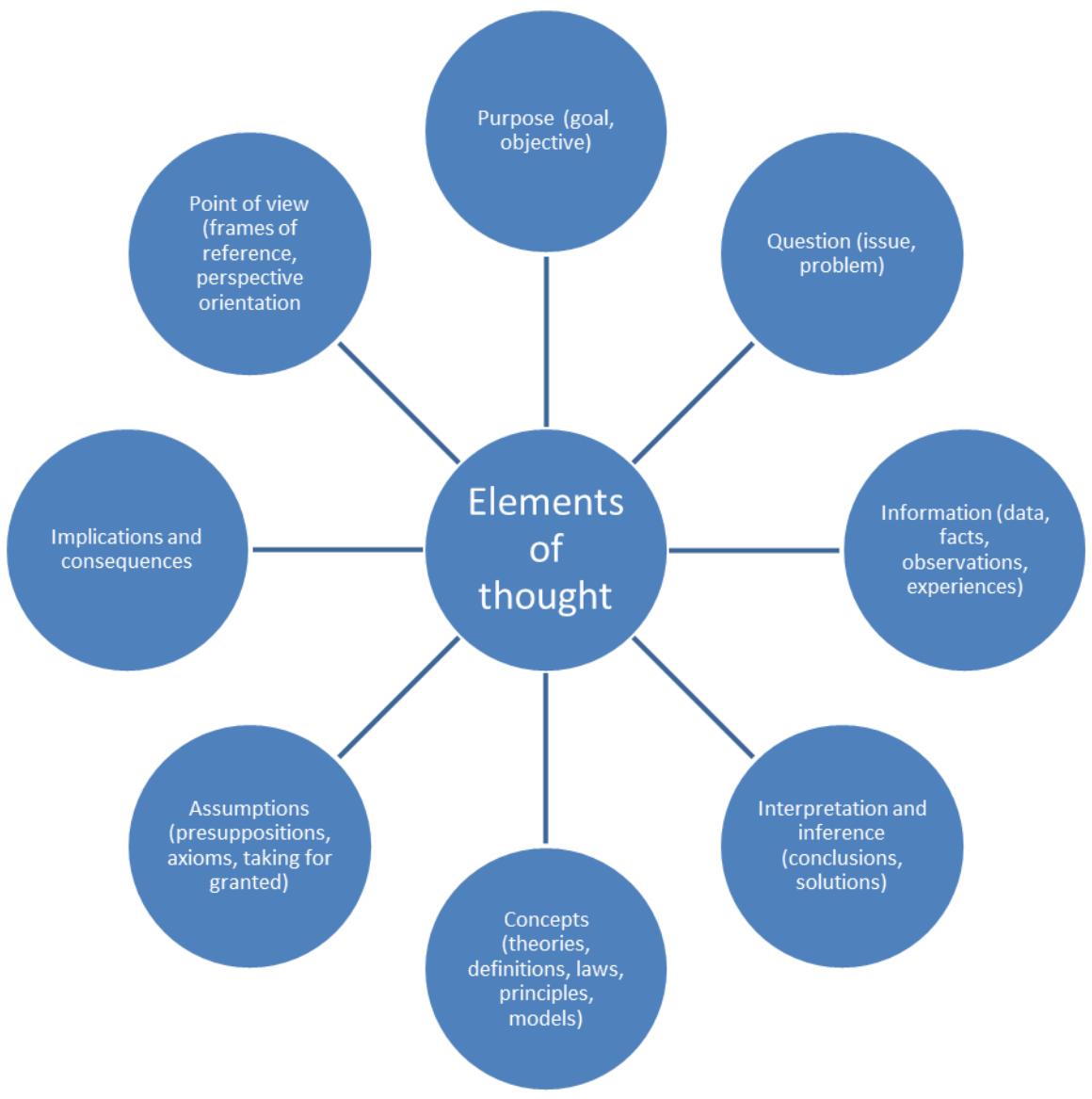
Figure 2: Elements of Thought Elements of Thought
Paul and Elder (2007)
The "creative process" especially in thinking is not easy but possible to observe and to teach, of course, with deeper understanding of it. As I have agreed before, if critical thinking is considered as art, the process of each individual"s thinking process can be seen as a creative process involving elements of thought such as suggested by Paul and Elder (2007) as described in figure 2.
A set of questions which then I call reflective questions is proposed by Paul and Elder (2007) to give more understanding of those elements as described in figure 3.
Another interpretation of critical thinking which I think requires more complex competencies is "rationally deciding what to do or believe (Ennis, 1981; Blair, 1983; Hitchcock, 1983); a more complicated and careful thinking process involving various ranges of skills and attitudes (Cottrell, 2005). However, these two concepts emphasize the importance of rational, in-depth and long process of thinking before taking any stance or position as well as answering and addressing a certain topic, issue or problem by providing logical reasons and reliable evidence.
| Reflective Questions | |
|---|---|
| Element | Reflective Questions |
| purpose (goal, objectives) | What am I trying to accomplish? |
| What is my central aim? My purpose? | |
| question (issue, problem) | What question am I raising? |
| What question am I addressing? | |
| Am I considering the complexities in the question? | |
| information (data, facts, | What information am I using in coming to that |
| observations, experiences) | conclusion? |
| What experience have I had to support this claim? | |
| What information do I need to settle the question? | |
| interpretation and | How did I reach this conclusion? |
| inference (conclusions, | Is there another way to interpret the information? |
| solutions) | |
| concepts (theories, | What is the main idea here? |
| definitions, laws, | Can I explain this idea? |
| principles, models) | |
| assumptions | What am I taking for granted? |
| (presuppositions, axioms, | What assumption has led me to that conclusion? |
| taking for granted) | |
| implications and | If someone accepted my position, what would be the |
| consequences | implications? |
| What am I implying? | |
| point of view (frames of | From what point of view am I looking at this issue? |
| reference, perspectives, | Is there another point of view should I consider? |
| orientation) |
(Adapted from Paul and Elder, 2007)
Figure 3: Reflective Questions
These concepts seem to be somewhat indescribable in terms of observable skills. My concern with these notions would be how I can manage to implement critical thinking in my critical reading instruction when the skills are still not concrete to me.
With this concern, there is a need to define critical thinking as something manageable. Scriven, Michael and Paul, Richard (2009) agree that critical thinking is the intellectual, active and skilful process of conceptualizing, applying, analysing, synthesizing, and/or evaluating information resulted from observation, experience, reflection, reasoning, or communication, underlying the belief. Compared to Ennis (1981); Blair (1983); Hitchcock (1983) and Cottrell (2005) the concept offered by Scriven, Michael and Paul, Richard (2009) seems more suitable for the context of my study in seeking an effective
model for critical reading instruction. In other words, this concept is formulated in the light of the existence of clearer target -belief, more specific process -conceptualizing, applying, analysing, synthesizing, and/or evaluating information; and through a practicable approach- observation, experience, as well as communication.
In the light of more acceptable concept, many have demonstrated high interest in putting this into practice. Critical thinking study has been associated with problem solving (Kurland, 2000); inquiry-based instruction (King, 1995), making cognitive process overt and explicit (Wollfson, Carnine, and Kameenui, 1982); reading and writing skills (Rice, 2012); practical examples on how to analyse and to evaluate statement (Manchester Metropolitan University, EDU, UNSW); analytical reading and reasoning (Wright, Larry, 2001); developing effective analysis and argument (Cottrell, Stella, 2005). These efforts demonstrate how critical thinking not only has a very significant role but has also been a thought-provoking topic to explore and has been associated with many aspects and skills in education including reading.
By taking a position in which critical reading is different from reading for extracting content or information, I expect that the nature of the critical reading instruction in this study will be mainly featured by critical thinking. Although Kurland"s (2000) definition about critical reading as a technique for discovering information and ideas within a text, which is essentially the same as the concept of reading for extracting information or contents offered by Makau (1990), the understanding of how these two work in the same platform has been highlighted as important. Kurland (2000) agrees that critical reading and critical thinking can be considered to complement each other in a way while reading, a reader uses his critical thinking skill to monitor his understanding. In this monitoring process, when a reader perceives the assertion provided in the text is ridiculous or irresponsible (critical thinking), a reader will read the text more closely and test his understanding about the text (critical reading). However, in terms of time sequence, critical reading takes place before critical thinking. In other words, one can only have critical thinking if he has fully understood a text.
In response to this, I would argue that it is also quite possible that critical thinking may take place before, whilst and after the reading process. Moreover if the concept of critical thinking is considered as the art of thinking (Paul and Elder, 2007) as I agree to define critical reading in this study, it opens flexibility to critical thinking to take place anytime before, during and after, or even need more than one layers of reading before critical thinking takes place. This is because as an art, critical thinking is quite different from one individual to another since each individual has different background knowledge, different points of view, different levels of sensitivity, different concerns and interests toward a certain issue resulting in different products of critical thinking with different quality and uniqueness.
What I believe a reader has in his mind before starting reading is motivation or purpose or question. This motivation is there, outside the text about to read that may drive the reader to seek the answer. Having this motivation certainly involves critical thinking that is probably derived from his previous knowledge, unanswered question, unsolved problems or incomplete search related to the text about to read. Similarly, whilst reading, a reader is engaged with the text in finding the answers of his motivation. This process requires the reader to analyse, evaluate, compare, contrast, as well as reflect to his own background knowledge to prove the argument offered by the writer of the text is correct. In addition, after the reading process which might not only once or twice, he will come up with a conclusion of whether the text meets his previous knowledge, unanswered question, unsolved problems or incomplete search, before he comes up with his own stance. In other words, critical thinking and critical reading can work together in harmony in one"s critical reading process.
Due to the unique process of critical thinking in reading, it is therefore unlikely to be physically identified, or numerically measured. However, as this study is intended to put critical thinking in synergy with critical reading, it is significant to build deeper understanding of what quality a critical reader should have. A clear cut opposition has been made by Kurland (2000) illustrating how Critical Readers and Non-Critical Readers approach a text in a different way. Both critical readers and non-critical readers are illustrated to go through the same two steps of recognising information of a text and restating remarks. At this stage, critical readers are still curious about an example given, what argument used, if it is appealing for sympathy, any comparison and contrast to clarify the points, and finally he or she will reflect the text as a whole to his/her prior knowledge. This classification, in my opinion does not represent the nature of thinking which tends to be cyclical rather than linear. In addition, I believe anytime a reader reads, the involvement of a certain degree of critical thinking is there. Thus, instead of putting them in Non-critical reader and critical reader which I think more judging, I would rather place them in less critical reader and more critical, giving more encouraging impressions to the students.
To identify different aspects of what I prefer to call – less critical reader and more critical reader, another difference of these two can also be seen from their attitude toward text. Less critical readers view information in the text more as facts while more critical readers view any single text as one"s description of the facts taking on a certain topic. Another interesting finding distinguishing these two is the aspect of how they learn. Less-critical readers tend to gain knowledge by memorizing the statements in the text which is a surface-level of learning; while more critical readers recognize not only what a text says but also how a text describes a topic. More critical readers have more various ways of learning allowing them to see every text as the unique creation of a unique author. A good example can be a history book which to lesscritical readers is to learn the facts of the situation or to discover an accepted interpretation of those events, whereas to more critical readers it is appreciated as how a particular perspective on the events and a particular selection of facts can lead to particular understanding.
To conclude, with the complexity of critical reading, it is important to cast a critical reading instruction with at least two significant aspects which are different from other reading instructions in general. The first aspect is a critical approach that should be adopted in the instruction and should be reflected in the learners" competence in critical thinking. This competency can be built through a series of critical approach such as how to approach a text, how to create meanings from a text, how to build interactions between the readers and the text, how to use various approaches; strategies; and techniques. In addition to critical approaches, the design of instruction should allow students to demonstrate their critical reading skills in an observable way and making teachers possible to teach as well as to identify students" different levels of critical reading skills. Therefore, a careful consideration of the kinds of the text should be made to allow critical thinking to happen in students" practice, and an instrument to identify students"critical thinking should be made available.