

INTRODUCTION
Bali is an Indonesian island that has specific characteristics, especially in a global context, in which Bali is deemed a representation of an almost perfect traffic of global cultures. In Bali, even the most ancient traditions and cultural ancient artifacts can coexist with contemporary cultures. Traditional ceremonies, for example, can be performed in the midst of a crowd of people coming from different countries around the world. In other words, Bali is an international village (geographically) of multi-space and multi-time (history), in which different cultures interact.
One of the relatively dominant traditional aspects and culture creations in Bali is crafts, especially ones using wood as the medium. In every corner of Bali we will naturally see the manifestation of craft work. In other words, Balinese craft is a panorama of everyday object that has blended with the nature of Bali (natural scenery of objects).
Considering the craft has become such a phenomenon, it is evident that the people of Bali are a craft
community, meaning the phenomenon of crafts has become embedded in the lives of the Balinese. Craft is part of their ritual and, often, the ritual itself serves as the physical forms of gods, sacred animals, clothing, and even equipment; their use in ceremonies is a vital element of rituals in Bali.
An intriguing question in relation to this is how the Balinese have efficaciously preserved those values which, in turn, technically represent the ability to produce craftwork amidst various influences of modern life and an increasingly open global society. This global society phenomenon is characterized by, among others, technological changes, which have significantly increased accesses to scientific and technical knowledge and the use of this knowledge to create new products and processes, including arts (Sirpa & Dillon, 2011). In turn, these changes have an impact on the craft producing habit of Balinese people, which was previously intended as a form of art that serves as a medium for shipping gods.
Potential influences also come from changes associated with economic growth, wealth creation, and increased mobility. One the on hand, these have led to a wider appreciation of cultural forms, but on the other they also become a threat that may potentially overrun the tradition (Sirpa & Dillon, 2011). These facts about influences to craft activities, in term of benefits or drawbacks, occur in many different cultures across the world.
There have been studies related to indigenous crafts conducted. Yakubu, Oboh Moses (2002), for instance, has performed research on arts, crafts and indigenous industries in Nigeria, which has revealed various
characteristics of the genres in the past and present and in traditional as well as modern Nigerian communities. It functions within religious intellectual and socio-economic contexts. It also depicts the relations between crafts, arts and religion. It also portrays arts and crafts as a major means of livelihood in pre-colonial, colonial, and contemporary times.
Another research regarding crafts has been conducted by Cohen, Jefrey H. and Browning, Anjali (2007) who have published their research on the decline of a craft: basket making in San Juan Guelavia, Oaxaca. It is revealed that the decreases in the crafts market there reflect several changes, i.e. a decline in their local use, a rise in the costs of their production, and a lack of support from exporters and an incapability to involve the export or tourist markets. Meanwhile, the local producers responded by moving into wage labor (locally and through migration) to secure their revenues.
Kokko, Sirpa and Dillon, Patrick (2011) performed research on crafts and craft education as expressions of cultural heritage: individual experiences and collective values among an international group of women university students. Their study explores relationships between crafts, craft education and cultural heritage as reflected in the individual experiences and collective values of fifteen female university students of different nationalities. The concluding perspectives offered are on: intellectual foundations for crafts in educational systems; competition between beliefs, ideas, and forms of behavior in respect of the practice of crafts and perceptions of cultural heritage; and tensions among the aesthetic and economic dimensions of crafts.
Another researcher, Fang-Wu Tung (2012), conducted a research on exploring craft-design collaborations in revitalizing a local craft. The study suggests that the concept of craft product design is embodied by combining what is desirable in craft with what is possible through design. It is revealed that designers can cultivate the local craft industry and empower artisans to further their own innovations. The research has highlighted the value of the alliance between craft and design as a mutual learning mechanism.
Gowlland, Geoffrey in 2012 published his research result on learning craft skills in China: apprenticeship and social capital in an artisan community of practice. His study addresses some of the consequences of collectivization and subsequent privatization of handicraft in China in the second half of the 20th century.
Researchers Gustami, SP., Wardani, Laksmi Kusuma, and Setiawan, Agus Heru (2014) performed research on craft arts and tourism in ceramic art village of Kasongan in Yogyakarta. The results have shown that the ceramic crafts tourist village of Kasongan is moving toward greater commoditization whereby the ceramics center is now more oriented towards meeting the needs of tourist industry in Yogyakarta. Because of the extensive interaction and positive response from public, ceramic crafts practitioners of Kasongan experience unique and characteristic creative period. The crafters manage to negotiate between the old and the new values.
This paper describes several craft phenomena in various places in Bali, while at the same time addressing several issues surrounding the daily
life there as one part of the results of the research conducted during one week observation in the island.
METHOD
This research aims to study the habits of the people whose everyday activities are conducted in connection with their productive and creative efforts in fulfilling their needs, both naturally and culturally. Thus, despite a variety of critical analysis, the result of this research, in general, is descriptive, describing how the crafting community in Bali performs their crafting activities.
For that reason, the method we used is ethnography. Ethnography, according to Spradley (2006: 4), is not mere research to study a community, but instead to learn from the community. Thus, the results of ethnographic research can be referred to as a source of information about the community studied, in this case how the community creating works of Balinese crafts perform these activities. In such ethnographic research, researchers' interpretation about something shall not exceed the interpretations embraced by and among the communities studied. Researchers act within the frame of putting the relevance of various relationships occurring within the community. Therefore, the scientific society is expected to gain specific information about a particular activity in the community.
Based on the above perspective, in this study, the current researchers performed various steps as follows:
1) Conducting research area mapping using written and oral resources. Written information was obtained and developed from various written sources (books, magazines, newspapers, internet sites, etc.). This activity was carried out before field implementation. Meanwhile,
- verbal information was explored and developed from a variety of oral sources in the field studied (community leaders, officials, observers, and others).
- 2) Conducting a thorough observation over the area determined in the research, making notes on various observables, which were considered to be related to the research problems and purposes;
- 3) Performing a closer observation over parties categorized as the object of this research, conducting written recording of a variety of communal activities of the craft artisans, including those outside work;
- 4) Visiting designated craft centers, ranging from the preparation of materials, the formation of the work object, refining, packaging, to marketing in nearby places, i.e. supermarkets in Denpasar. In the production centers the researchers blended and in several other places participated by learning to work
- while also performing talks about their lives;
- 5) Organizing Focus Group Discussion (FGD) with some parties considered competent: doers, analysts, academics, and government.
- 6) Performing analysis on the overall activities using relevant sources and writing report paper of the results of the research. The study was conducted by grounding on the theory and perspective of fluid and flexible culture. In other words, the theory was not positioned as the main strict basis, but rather as a referential aspect.
DATA DESCRIPTION CRAFT, FAMILY, AND FACTORY
As previously mentioned, the ability of craftsmanship is a natural characteristic of most Balinese people; thus, craft is the phenomenon of the whole family. The family in question could be from the lower class group,
Figure 1 A lower class family work together to create works of crafts in their house in a village in Ubud, Bali. They only perform the physical work as the materials are provided by other parties who have put their order. They only do rough work, a beginning phase of craftsmanship.
Photo source: Author
middle and up to upper class. Those from lower-class families generally become craft-labors/makers for the upper class group. Generally they do not make a complete whole of craftworks (from A to Z), but only certain parts instead, especially at the early stage when the work is still rough. They can perform the work at home, in groups with neighbors, and in a large factory.
Another interesting point to observe about creating crafts by the lower-class family is their natural ability, not a result of formal education or training but more of inherited genetic factor and strong environmental influence. At this level the work of creating the crafts, to some extent deemed beautiful, is not a job that requires a mere soft-skill, especially in the early stages of the creation, but also a hard-skill ability. That is, creating a work that seems soft that it could have been done or are classified as rough work. The figure below shows the phenomenon.
Among the middle-class family, the craftsmanship is accompanied by the ability to self-manage, meaning they
do the work by themselves using their own equipment and materials. They are generally working according to orders from the other parties, either from Bali or outside Bali, both in small and large quantities. They also have their own art shops, some of which employ a number of employees and run (are affiliated to) home industry.
At a broader level and higher quantity, the craftsmanship has eventually become a technical work in big factories, owned by major capitalintensive businesses. It can also be seen that the craftsmanship is not merely a matter of imagination, subtlety of flavors, and so on. In Bali, in fact, craftsmanship has become mechanistic, just as the production of other common objects produced in many manufacturing plants. Thus, craftsmanship has become synonymous with hard labor in general.
As a result, from the point of view of the doers (craftsmen) in term of their craftsmanship and their crafts, they can be classified as follows:
1. Lower level craftsmen, i.e. individuals or families who work as
Figure 2
A craftsman in inland Ubud, Bali, was making craft work (a form of hand) using a large chainsaw usually used for cutting down trees.
Source: Author
laborer- artisans. They are part of a series of creation, especially in the early phase of the formation of the structure of the work; it can be said that they earn their living not from the work of craft creation, but from their own sweat (labors).
- 2. Middle level craftsmen, i.e. individuals who manage their own work (creating and marketing); generally they have their own shops.
- 3. Upper level craftsmen, i.e. individuals or families who have big capital, producing craftworks in large quantities. In general they were initially craftsmen (doing their own work), but then act as the owners and employers of the company. In this sense, the craft work has turned into manufacturers' work.
CRAFTS AND TRADITIONAL MARKET
As is well known to the public at large, the marketing of works of craft has been very global. Marketing models have also become very diverse, ranging from the traditional ones to those using the Internet media. Many craft traders have now put their companies' address on the Internet websites.
Balinese crafts have penetrated the international market for a considerable time. Many foreign tourists who come to Bali become interested in establishing collaborations with Balinese craftsmen. They order Balinese crafts and then market them in their own countries. Recent developments indicate that they are now determining their own design. In other words, Balinese craftsmen now serve as artisans who have to fulfill the orders. This is what has been a growing concern among many people.
One interesting thing to notice about the marketing of Balinese crafts, however, is the presence of traditional craft markets selling craftworks to their own surrounding. This kind of market is called the Morning Market because it runs its operation in the morning, i.e., 06.00 to 08.00. The market that is located in Sukowati is in fact a "hidden" market, concealed by the Balinese from foreign tourists. In other words, there have been attempts to avoid foreign tourists from
Figure 3 In an art shop in Ubud, Bali. Source: Author
visiting this market.
The reason that it happens is the fact that the crafts marketed are craft objects in raw forms (half finished). These objects will then be purchased by other producers or owners of home industry for further processing. Certainly, the price of the works of crafts sold is very cheap. As soon as the crafts are taken by the art shop or other traders of different levels, the prices of the craft objects could rise four to five times as high.
CRAFTS AS ART
Among the craft producing artisans in Bali, there are some people who still maintain the aesthetic values of art. These works are made by the hands of those who have more sensitivity to the aesthetic values. Although the works are made at a very technical level of craftsmanship by the artisans - selected by the artists – the concept and the form of such works remain within the authority
Figure 4 Craft works stacked in a warehouse in a craft factory in Bali Source: Author
Figure 5 Art Morning Market in Sragen, Ubud, Bali. Source: Author of the artist. However, the difference between crafts and manufactured products is clear; a craft object is substantially handmade (Metcalf, 1997 in Sirpa & Dillon, 2011). This distinction in turn generates some ambiguity between the terms art and craft. Typically, art is seen as a manifestation of creativity, originality and innovativeness and is thus valued above craft which is seen as an activity demanding mere manual skills. In the case of Balinese crafts, for instance, to maintain the artistic and aesthetic values, the choice of materials (medium) is also highly considered. That is, the selected wood is not the regular
Figure 6 Half-finished crafts sold in the Art Morning Market, Sragen, Ubud, Bali. Source: Author
Figure 7 A statue in an art studio in Bali Source: Writer
logs but instead specific woods of very good quality.
CRAFT AND ART EDUCATION
Culture is not merely genetically inherited, but also passed on through learning process, both formally and informally. As explained in the previous section, the crafting ability of the people of Bali is in general an ability that is inherited through a process of informal education.
The influence of religion, tradition, and nature of Bali that are full of aesthetic values has taken a very large part in the formation of the people of Bali; in this case their ability to craft. Influences from outside Bali – tourists – have increasingly enriched the imagination of the Balinese.
Such conditions, in some cases, have caused some formal art education institutions such as Institut Seni Indonesia (ISI) or the Indonesian Arts Institute, Denpasar, to decrease in popularity. Some lecturers of ISI explained that there are very few Balinese who choose to study at the Craft Department. In discussions
between researchers, ISI, and the doers of the craft in Bali another different matter has been revealed, i.e. the craft curriculum and educational model in this formal institution are not as advanced as the developing craft phenomenon in the community. Thus, the people of Bali see the educational institutions as not providing sufficient technical capability for them, let alone provide innovations. As a result, they prefer to learn informally in the community rather than in the formal educational institutions.
RESULTS AND DISCUSSION Model of Creation and Inheritance in Relation to Religion, Culture, and Nature
Data regarding the activities of craft in Bali have been described above. From the description it is illustrated that Balinese craft is a cultural phenomenon that has become a natural phenomenon as well. In other words, the craft culture has become an embedded daily activity. The natural panorama of the Balinese craft is also strongly supported by the Hindu and Buddhist religious rituals
Figure 8 Focus Group Discussion about the inheritance patterns of Balinese Culture at Institut Seni Indonesia, Denpasar Source: Author which constitute the majority of the Balinese's religion. In short, Balinese aesthetics is a fusion of religious beliefs, nature and daily behavior. Hitherto, the patterns of the cultural inheritance in Bali have occurred within cycles. They kept rotating in space and time of their own culture, while here and there they remain in contact with cultures from outside the area. For the people of Bali, culture (including religion) is nature (culture as nature).
The cycle in such an activity could be called as reflective ability of the Balinese society, in this case how the craft artisans respond to stimuli given by their environment, i.e. natural environment, beliefs, and other elements that the people of Bali have had for generations. All of this has been so planted in the subconscious mind of the Balinese that it has become the collective subconsciousness of the society. Referring to Gustav Jung (1990: 10), the collective subconsciousness is exactly what triggers the sensitivity of the work of art, in this case works of craft. Thus, the work of craft has become part of the experience of the embodiment of the Balinese society. For the people of Bali, creating works of art is a daily ritual. In other words, art is the basic capital of Balinese culture.
The basic capital of culture has constantly been inherited in the crafting tradition in Bali. In other words, the crafting ability that has been passed on from generation to generation occurs naturally. In this sense, the relationship between nature and culture is complementary. On the one hand, nature has served as a strong foundation for the formation of culture, while, on the other, culture can never be separated from nature; culture has even become the nature itself.
Within its development, the rapid entry of foreign influences into Bali in some aspects has enriched the diversity of themes and technical ability of Balinese craftsmen. Often they gain new knowledge about the development of their technical capabilities from foreign designers. Some specific design ordered by foreign customers has caused Balinese craftsmen to continue to learn to sharpen and develop their technical capabilities.
It is of course considered positive; in some aspects, however, such phenomena result in negative effects, such as the Balinese craft artisans have increasingly ignored the spirit of the
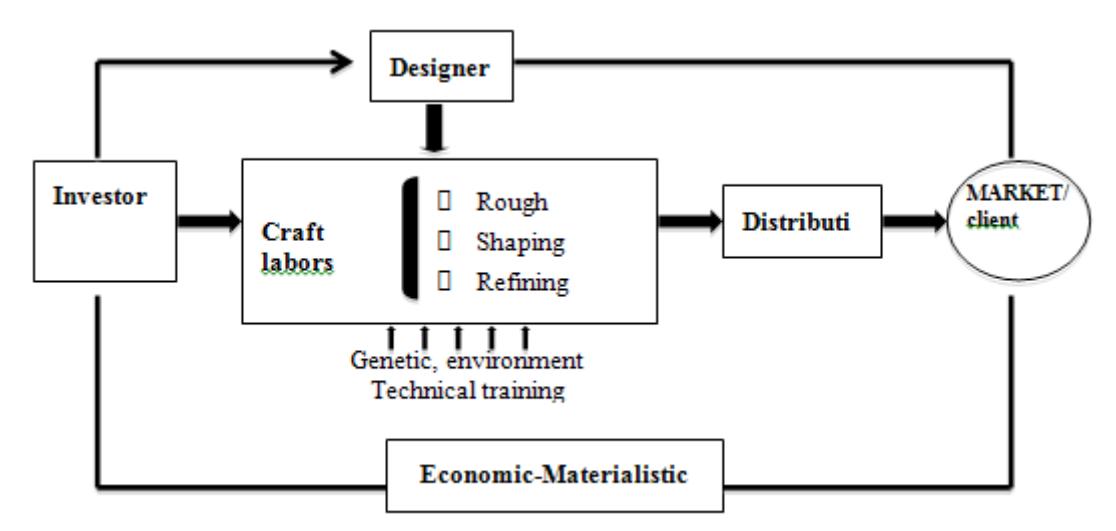
Figure 9 Flow of Balinese Craft Creation (by Author)
craft creation itself. They seem to have created distance between themselves and the Goddess Dewi Sri, for example, when they were amid the process of making a statue of the goddess. The Balinese craft artisans, especially at the lower level of workers, do not know who Dewi Sri they are carving through their craft work is. Similarly, it happens to other figures that actually exist in their daily life and culture.
In another context, this situation is similar to what is described by Walter J.Ong in his book Orality and Literacy (2004: 93), about a group of people working on writing letters but they cannot read the letters (illiterate). Similar to the "blind writer" mentioned in the book, Balinese craftsmen also do not have any knowledge, let alone a good understanding of their work. Creating works of craft is, therefore, mere unskilled labor oriented at earning wages.
There has been a growing concern among the Balinese craft artisans regarding this situation: urgency for earning their life on the one hand and absence of institutions, both public and private, that is able to explore more deeply the potential creativity of the craftsmen. Cultural training centers, specifically
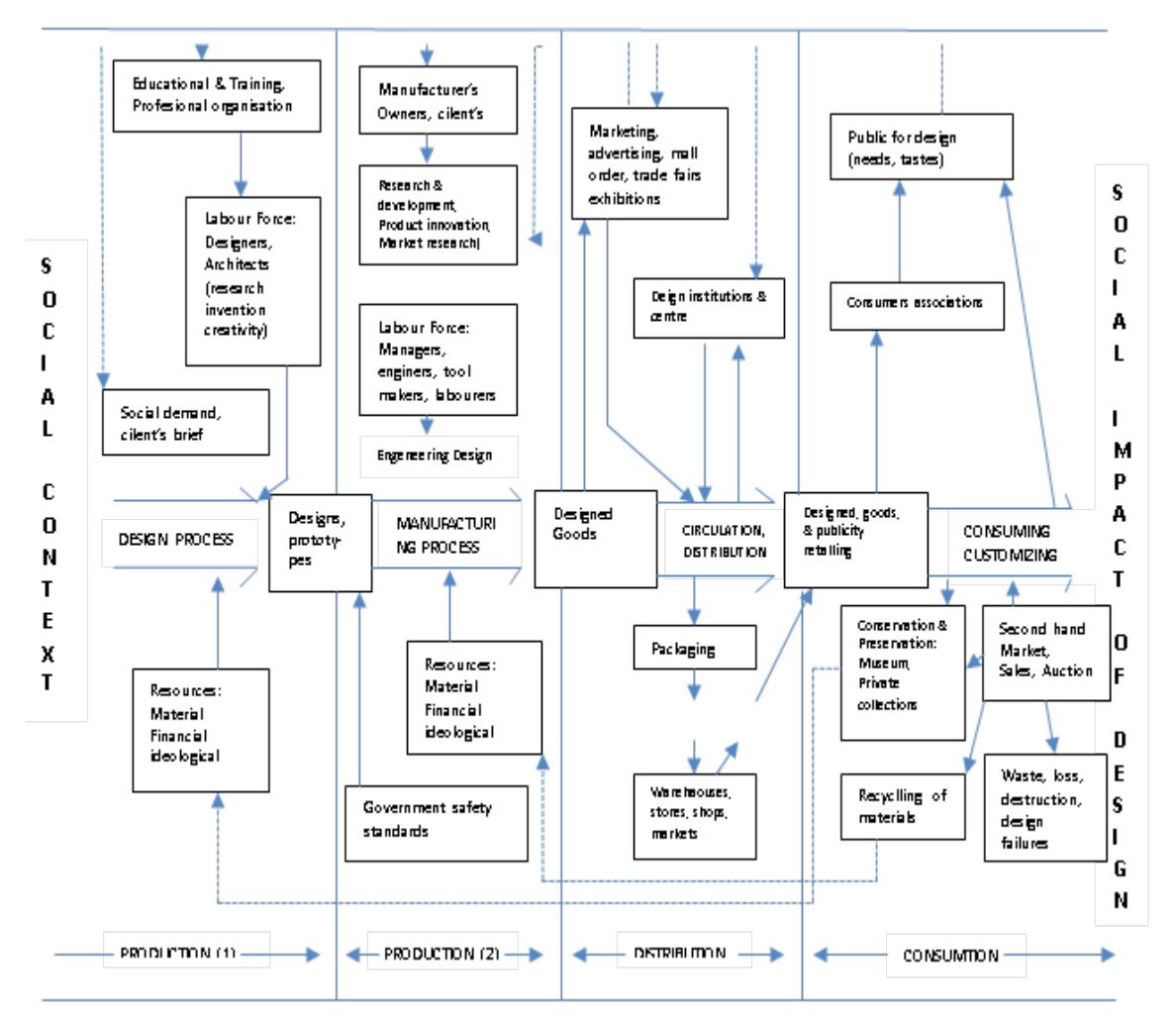
Figure 10 Design History's Field of Research: Production-Consumption Model
speaking, and job training in general, are performed only at the superficial level, namely on the effort to provide technical skill coaching. This has left an impression that the government's assumption of the craft workers, both cultural workers and (especially) the workers in general tend to be merely materialistic. In this perspective, the craftsmen were placed as a machine that can produce goods only. As a machine, the craftsmen will only work if given their "fuel", i.e. some amounts of money as a reward. It is evident that the craftsmen are no longer positioned as men who naturally have a variety of needs (primary, secondary, tertiary).
As human beings, craftsmen unquestionably require the input of knowledge for the development of their quality of life; beyond the technical skills they have as a capital to meet the economic needs. In the case of the artisans who are making the sculpture of goddess Dewi Sri, as described above, for example, the craftsmen are assumed to possess an understanding of who Dewi Sri is, the position of the mythical figure in the life of their ancestors, how they should behave in front of the myth, and so on. It is very likely that this knowledge what has enabled the craftsmen to develop their creativity in the process of creation. In their limited ability, such non-technical knowledge will undoubtedly enrich their imagination. Thus, the process of handing down the skill for creating craft work has become a process of civilization. Culture, by its definition, is a matter of creation. And creating is not limited to only tangible but also to intangible (abstract) things. Within the work of culture, the two things are inseparable.
This, however, does not happen in Bali. In the Focus Group discussion (FGD) attended by actors, academicians, and government officers, facilitated by this research, such thoughts were not mentioned or brought about to discussion. Each side tends to focus on improving technical skills, the role of higher education in relation to it, and marketing. As described in the data, the creation process of craftworks in Bali occurs as shown in the following chart:
We can see some interesting parts in the diagram. First, the creation process of the craftworks is a flow of capital from entrepreneurs (often owners of a galleries or art shops) to the market through the designers and artisans as workers. Thus, the works of craft are viewed as mere products whose values are not determined by those of the sign embodied by the object's form, but by the nominal values of their exchange rate in the market. Secondly, designers often place themselves as the party putting the order, hence part of the market. Thirdly, the workers (craftsmen) whose capacity is based on natural talent, environment, and heredity experienced specifications as craftsmen at the early stage (formation), smoothing, and finishing.
Flowchart of the production process of craftworks can be compared to the flow of the following design history (product) of John Walker (2010: 78).
Several important points can be found through the above comparison. First, the artisans are identical to the labors appearing in the second Walker column (Production 2). However, in the flow of the craftworks, other aspects listed in the Walker column (product innovation, market research, safety standards, ideological resources) are not found. This is due to the fact that the Balinese craftsmen are still living their traditional belief and therefore market research, and also those related to product innovation are not part of their concern. In other words, they (the employers or gallery owners) only sell "readily available goods", which is an ironic situation. On the one hand, the economic-materialistic vision has become a perspective in the working process; on the other, the ability to elaborate and develop the economicmaterialistic vision is still insufficient. As a result, the patterns for passing the skills down to the next generation have remained undefined. In fact, this situation has occurred not only in Bali but also in the various developments of the traditional artifacts found in different regions in Indonesia.
Second, in the distribution and consumption columns of the Walker diagram there are efforts to create images of goods of designs. Here, the design goods are modified into goods of publicity through the mechanism of advertising and planning habits among consumers. In the marketing of Balinese crafts, due to lack of innovation and research at its early stage, the distribution and marketing processes did not show any visible effort to create the image. The doers of Balinese handicraft businesses assume their work finished as soon as they have created the objects and hence the goods are considered ready for sale in the market. There has not any creative marketing strategy used to persuade potential buyers.
Bali craft works or works of other traditions do not need modern marketing strategies such as advertising due to the self-contained image of the crafts themselves. However, this image will only be present if raised simultaneously during the process of creation through the mechanism of narrative rearrangement. The craft work in the form of Goddess Dewi Sri, for example, must be created in conjunction with the narrative about the specified goddess. It is also probable that the work be done collaboratively with other fields, such as literature, music, and films.
Eroded Characteristics of Balinese
People
Based on the explanation above it is evident that there has been a shift in the perspective and attitude of Balinese craft artisans towards the process of creation and the results (products) themselves. The creative process and product, initially based on the local religion-based values, have shifted their basis into materialistic global markets. The situation has directly or indirectly had a significant influence on the perspective of the Balinese life as a whole. At the most extreme level, the Balinese people are deemed to be losing their spiritual values, hence also their characters.
For example, as shown by the data found in the field described above, the Balinese craft artisans no longer use woods from Bali, but ones imported from outside Bali, such as Sumatra and Java, due to the scarcity of the wood on the island. This is an indicator of the facts of the nature of Bali that is increasingly damaged. The craft artisans can only utilize woods but have never been able to grow. Nature has become the mistreated object, no longer seen in a harmonious relationship. The nature management of Bali has clearly removed its spiritual soul, or heading in the direction of the disappearance of the spirit.
In the context of nature management, the craftsmen's attitude towards the functions of woods is limited to placing wood as a material, in which wood no longer has a substantial function, namely to bind with the people of Bali. The relationship between wood and Balinese people is, therefore, mechanistic. The characteristics of Balinese society, which is based on Hindu spiritualism, which puts human – nature relationships in balance, are not represented in the craftsmanship. The human characters of Balinese people are not reflected in the process. Nowadays the design of Balinese craft is no longer
deemed to be based on nature and spirituality, but rather driven by mere economic interests.
Such situation and fact about the creation of nature are actually not only contrary to local values but also to the global phenomenon of the design itself. In relation to nature, as we know it, the latter phenomenon suggests the emergence of a discourse on ecological design. The term green design has been widely discussed within the last two decades. The increasingly damaged natural environment, causing more global warming, requires that the development in various fields always consider the environment as such. Product design, which has a lot of contacts with nature, is clearly involved in the field. Ecology design itself, as said by Yeang (1995: 4), is not just about physical matter, which appears to be the product design itself; it covers a wide range of complexities in the ecosystem. Ecosystem is central in the study of ecology. Referring to Hackel (1869) and IStock (1973) and Yeang (: 6) write:
"We can define ecology as a study of the interactions of organisms, populations, and biological species (including humans) with their living and nonliving environment; the composition change and stability of geographically localized groups of species, and the flow energy and matter within such groups of species (ecosystem)"
The craft creation model as shown by Balinese craftsmen, however, actually also occurs in other professions or in general to the whole people of Bali. This is, in fact, due not only to the urgency of economic needs, but also by other reasons in the context of modern life. The swift currents of modernity has led to a situation Bali as noted Anthony Giddens (2004: 9),
"Modernists, sebagaimana dapat dilihat oleh setiap orang yang hidup pada tahun terakhir abad ke-20, adalah fenomena
dengan dua ujung. Perkembangan institusi sosial modern dan persebaran mereka ke seluruh penjuru dunia telah menciptakan kesempatan yang lebih luas bagi manusia untuk menikmati eksistensi yang aman dan memuaskan ketimbang semua tipe sistem pramodern. Namun, modernitas juga mengandung sisi mengerikan, yang begitu nyata pada abad ini."
"Modernity, as seen by everyone who lived in the last years of the 20th century, is a two-end phenomenon. The development of the modern social institutions and their spread all over the world have created greater opportunities for people to enjoy a more secure and rewarding existence than any type of pre-modern system. But modernity also contains a terrible side, which is so evident in this century"
Bali cannot avoid this situation, especially when considering the fact that this island is an "international village", where tourists from various countries all over the world come to visit. Architecturally, Bali, especially in Ubud area, still demonstrates its local characteristics. At least, in some places in the region there are still many existing temples and other traditional buildings. However, it does not necessarily represent its people's behavior. The pecalang still wear traditional clothes, but their thoughts, talks, and deeds, are contradictory to their clothes.
Such is the creation model as well as the inheritance of creative craftsmanship ability in Bali today. To sum up, the creation model and inheritance has eliminated some substantial aspects, among others:
- 1) disregard of values, namely the cultural, historical, and spiritual values that serve as the basis of the craftworks;
- 2) Balinese crafts become soul-less artifacts; even if there beauty remains, it is limited to the external manifestation of beauty (aesthetics
form);
- 3) loss of Balinese uniqueness; Balinese craftworks turn into mere craftworks just like those of other areas;
- 4) loss of respect for the material (wood), which comes from natural origin; crafters tend to only exploit nature, instead of thinking about, for example, the effort to renew nature; the craftsmen tend to harvest but not to plant.
CONCLUSION
Bali is an Indonesian island that has a capital of nature, culture, and religion that are mutually supporting each other in building their existence, especially as a tourist destination island. The relationships between these elements have also been growing since the beginning of the creative spirit in the community. The way the Balinese people build houses, worship, dress, cultivate, and bury dead bodies is an embodiment of their creative force which is based on an the integrative relationship of the capitals above.
Craftsmanship is a concrete manifestation of creativity. Statues of gods, plants, animals, and other certain sacred objects made from wood are works born from the religious imagination of the people. Religious beliefs that are manifested into behavior (culture) are, of course, the common property of the society. Therefore, the creative power in craftsmanship has a collective nature. Without going through formal high education on craftsmanship, certain groups in the society have a natural ability to make craft objects.
The basic capital has then been passed down from generation to generation until now. It is within the span of history that the issue of inheritance is initiated, which is the absence of consciousness to see the inheritance issue in the context of the shifting of cultural tendency in line with the time development. Some efforts to increase the technical capabilities, such as training, have been carried out, either by the government, the private sector, and other related parties, which is incidental in nature. However, this effort is not accompanied by the expansion and deepening of insights into the values (religiosity, culture, environment) behind the technical activities. As a result, what have grown in Bali later are the "labor" craftsmen, instead of art or craftsmanship.
Technical mentality that has spawned such craftsmen is clearly very vulnerable against material temptation, especially as at the same time the artisans are facing economic problems. As a result, the development of craftsmanship has shifted towards the creation of work minus the actual values; as mentioned above, it has been embedded as the capital of their daily lives.
Based on that, the authors recommend to all related competent parties to make the above problems a serious concern. Crafts are a cultural product, and therefore the creation activities and its inheritance has become a matter of cultural inheritance; it should be addressed, positioned, and developed in a cultural perspective as well. In this sense, the cultural perspective is meant as the point of view that puts all daily activities as a manifestation of culture, which is consequently always associated with values. In this perspective, the pattern of the creation and the passing down of craftsmanship capability becomes synonymous with the inheritance patterns of the people's characteristics. Craftsmanship is a cultural activity, a continuous activity that supports the growth and development of human values, moving towards the development more civilized the people.