

ABSTRAK
Makalah ini berfokus pada refleksi atas temuan penelitian tentang pengembangan kriya anyam bambu dari sudut pandang teknokultur. Pengembangan kriya ini merupakan pengembangan hibrid yang menggabungkan teknik anyaman dari Bantul, Yogyakarta dan Beppu, Jepang. Penelitian ini bertujuan untuk meningkatkan kapasitas lokal untuk menghasilkan produk yang menampilkan karakter formal yang idiosinkretik. Selama berinteraksi dengan masyarakat lokal tersebut ditemukan persoalan menarik mengenai ukuran "tiga millimeter". Secara teknokultural, ukuran ini memilliki kaitan dengan bentangan pikiran atas situasi dunia nyata. Refleksi diskursifini menggunakan pendekatan fenomenologi. Refleksi teknokultural ini mengeksplorasi eksistensi ukuran ini; bagaimana hal ini bisa menjadi signifikan dan memungkinkan pendefinisian kualitas produk. Eksplorasi ini bermuara kepada beberapa pemikiran tentang kualitas kriya yang "benar" itu seperti apa. Lebih jauh lagi, diskusi mengenai temuan ini akan dipersempit pada konteks mengembangkan kerajinan yang identik.
Kata kunci: kriya anyaman bambu, subjektif, objektif, translasi budaya, teknokultur
INTRODUCTION
Referring to National Long-Term Development Plan (RPJPN 2005-2025), the vision of craft development 2015-2019 from Creative Industry Council of Indonesia is on the realization of craft subsector with its global competitiveness, and contribution to the sustainability of people welfare (Narjoko et.al., 2015, p. 67). As this plan continues to progress, craft development will always be set as a main concern in every phase of national development agenda. This concern
includes cultivation and preservation of natural resource, empowerment of human resource, and, of course, product design and development. Besides rattan and wood, bamboo can be regarded as the most popular and desired material to be developed (Esteve-Sendra et.al., 2012; Benton, 2015; Liese, 2015). In some educational institutions, research and development on bamboo is still a topic of research that is considered significant. For example, the 2011-2016 research scheme at Research Center of Cultural
Product and Environment of Bandung Institute of Technology shows that no less than 60% of research topics focus on research and development of local potentials, including craft development, in which 45% out of this 60% focused on bamboo-based craft (Research Report 2011-2016).
Although many parties have participated in developing some crafts, this does not necessarily make the overall development of the craft satisfactory as expected. Based on the preliminary observations of this research to bamboo craft centers in Rancabuaya (Banten), Bogor, Garut, Purwakarta, Sumedang (West Java), Brajan, Dlingo (Yogyakarta), Belega and Bona (Bali), it can be seen that the development of bamboo crafts in Indonesia is still limited. One of the reasons is that this craft is still regarded as a legacy from generation to generation and the development is still based on the same pattern of creation. Through this research on craft creation, it is assumed that the craft development needs to be approached from a more humanistic approach. In fact, craft obviously contains cultural aspect and values that are more significant than others. Many efforts in craft development are too technical and tend to be oriented to merely economic benefits only.
The research on craft creation works together with the Priggodani community of bamboo artisan in the village of Muntuk, Dlingo-Bantul. This community has run a workshop with Takayuki Shimizu, an artisan from Beppu, Japan. Also, from an interview note, there is an existence of 'three-millimeters'. The idea of this dimension was acquired by the Pringgodani community from the previous workshop. Furthermore, this dimension contains a lot of things that can be revealed and used as a conceptual foundation in developing local crafts, especially for Pringgodani communities.
In relation to the above description, the discussion on this dimension is expected to enrich the research findings so that it can make a real contribution to the craft development effort. It is expected that the result would be both concept and craft with more humanistic with a local, idiosyncratic sense.
METHOD
This research is inspired by the model of hibridity which is adapted from the model of hybridity of postcolonial space (Hidayat, 2010). This hibridity model consists of three groups of syntax and code (see figure 1). The first is syntax group of general patterns where Indonesian and Japanese weaving patterns are collected. The second syntax group is contextual pattern where specific weaving pattern from Bantul (Yogyakarta) and Beppu (Oita) are collected. The third syntax group is either individual or group code of art. This third group is actually derived from researchers' conceptual thought and refers to some abstractions of nature as the representation of naturalism in bamboo culture. The perspective of this research agrees with Bernd-Olaf Küppers who noted that a code is not a mere set of rules but also significant as a reservoir of value elements (2013: 67). Through such code, we can figure out the socio-cultural dimension beyond material object. In this sense, a code refers to sign of narration. It means that this kind of sign will refer to a narration and, furthermore, a narration to identity of individual or group. Meanwhile, syntax, or syntactical, is a dimension that interrelated with semantic and pragmatic dimension as well (see Schwarzfischer, 2011; Küppers, 2013). In this context, the syntax is the relation of cultural codes which reveal individual translation along with the identity of bamboo craft.
From this theoretical model, some prototypes of bamboo weaving craft are developed. Some parts of bamboo weaving are depicted in figure 2 below. Those prototypes are expected to meet the concept of image representing an intertwining and harmonious synergic character, such as natural, organic, and continuity as complementary values to stable and static. This concept of image is underpinned by four concepts of form, multi-sensorial, material and technique, and color and texture.
Research Implementation
Research Procedure is undertaken based on grouping as illustrated in figure 1. The data in this research are acquired by field observation – including interview with the artisans, literature study, and experiment. The observation was undertaken in several regions in Indonesia and Japan. In Indonesia, the coverage of observation is around West Java, Center Java, and Bali. In Japan, observation covers the area of Fukuoka city and Beppu in Oita prefecture. The sources for literature study were obtained from the manuscripts founded in libraries, internet, and some artisans' notes. Meanwhile, some experiments were undertaken in studio that is run by Pringgodani group at Bumi Pemuda Rahayu, Muntuk Village, Dlingo-Bantul and in ceramic studio at School of Design, Pelita Harapan University. The expected final result of this experiment was several alternatives of bamboo weaving craft that represents identical features of two cultures.
Findings: The Existence Of 'Three Millimeters'
During some experiments, as also aforementioned in the first section of this paper, we found an interesting subject that we considered as a fundamental idea in craft development. From the interview session, we noted one interesting fact that is well- remembered by the local artisans from previous workshop. It is about the specific dimension of 'threemillimeters'. One thing that makes this workshop interesting is in the compulsory in preparing a 3-mm-wide bamboo strip (or iratan in Indonesian). This dimension is important because it will determine the
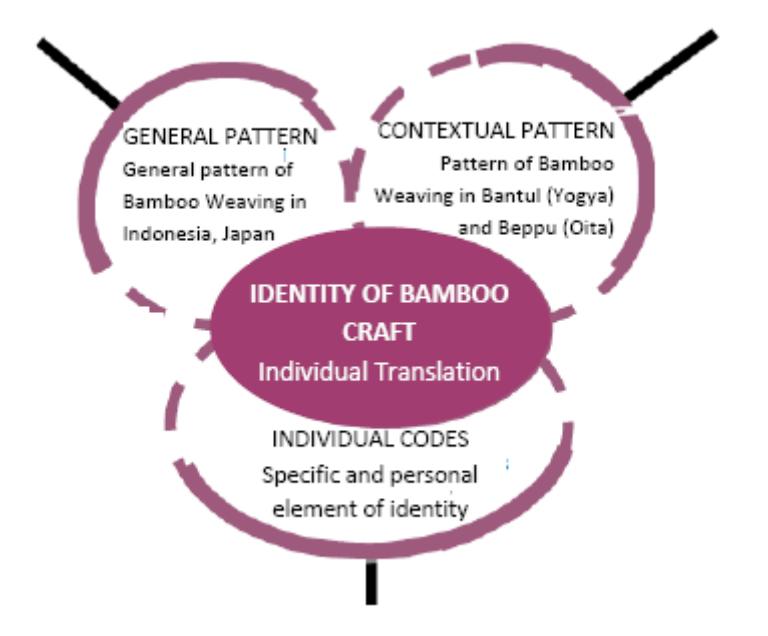
Figure 1 Model of Hibridity in Bamboo Weaving Craft Development (source: research documentation)
quality of the craft itself later.
Beppu's materials processing technology, bamboo weaving and bamboo craft preservation have great contributions in terms of precision, standardization of shapes, manufacturing process, and neatness. These features are obvously based on knowledge and experience. This is also what Japanese artists have thought to the Pringgodani community. However, the workshop is not a mere training. It also contains a conceptual dialogue between the artsit and community. The dialogue can be illustrated as follows (figure3).
As in figure 3, the main context is the dimension of 'three-millimeters'. In the dialogue, there are two sub-contexts, namely tangible and intangible. In the tangible sub-context, the subject of dialogue includes how to cut material to have a required precision, preparation requirement, and how to use some production tools. Meanwhile, in the intangible sub-context, the subject of dialogue could be on the sharpness of material, neatness, and quality. Although the subject of this dialogue is about the dimension of 'three-millimeters', what actually occurs is a dialogue that is influenced by the knowledge, experience, and consciousness of each artist. This means that there is a sort of thoughtful negotiation in this dialogue. This negotiation allows individuals to create a discourse among them, including the discourse of quality of the craft that they will produce.
RESULT AND DISCUSSION
A causal relationship between human and object (see Sterling, 2005, p. 8) is one of some subject matters in technocultural study. In his relation with the world, man needs objects as, for instance, a tool. This tool will help man in revealing and understanding the world. In order to make him handier with tool, man needs to understand the latent telic of his tool. In doing so, he needs to explore more about the logic and conceptual substance of his tool. In turn, such substance beneath the tool's physical embodiment will somehow persuade man's thought and tells him what he can or cannot do. In short, it
Figure 2 Bamboo Weaving Parts for Prototyping Process (Source: research documentation)
is an appropriation process of tool's conceptual substance to people's thought and worldview.
This appropriation is not merely in the operational context. Man can extend this appropriation to the understanding of –borrowing Martin Heidegger's term– 'being in the world'. The next horizon of reality that can be extended is the 'newness', such as new people, new process, new space, and so on.
''Newness' is about "how the people define the reality itself", including "the working process and the field which will be subjected to the 'newness', such as in the conceptions, characters, and forms" (see Darmawan, 2011: 485). As a buzzword, the 'newness' may appear to be complex. This 'newness' has a literal meaning in creating, finding, or experiencing something different. On the other hand, this 'newness' may also refer to the change of person's worldview. Edward J. Jepson Jr. (2004) argues that the worldview has potential in affecting person's behavior (p. 3), including his way of thinking (p. 7). Referring to the previous findings, the dimension of 'three-millimeters' also contains such 'newness' features. It is a 'newness' that is resulted from the operational process in material preparation. Furthermore, this kind of 'newness' may change the way the artisan understands the 'true' quality of product and promises various things in bamboo weaving development. Interview and artisan's note are significant sources of data for further reading on this craft research and development. During interview session, a narration on craft production can be revealed. This narration consists of many things, ranging from material preparation and development, technical difficulties and strategies, to meaning-making process. Meanwhile, the artisan's note can provide some sketches as the representation of: 1) artisan's experience, 2) idea exploration, including some attempts in finding technical solutions and aesthetical impressions, 3) artisan's adaptation to new information, such as information delivered from Beppu artisan who has different culture and mentality. A combination of these data can be benefit for this research project. Those provide further understanding about artisan, craft, and their transcendental interrelationship as subject and object.
Based on the previous description, the dimension of 'three-millimeters' implies the importance of mental preparedness in a craft development. Such mental preparedness will eventually
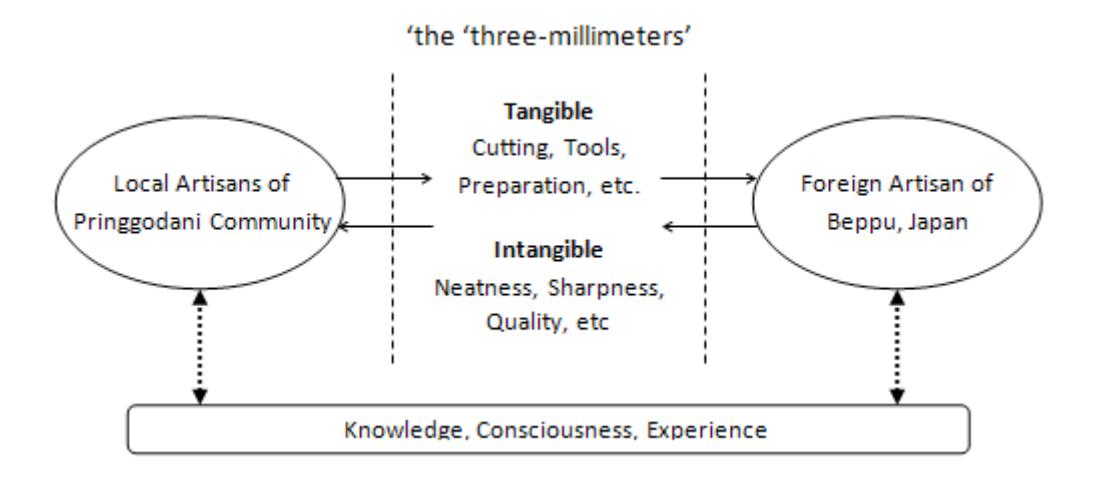
Figure 3 Conceptual Dialogue in the Context of ''three-millimeters''
influence and determine the quality of a craft product. However, the situation will be different if the quality of crafts is only seen from the market interest of a commodity. According to the International Trade Centre UNCTAD/ WTA (ITC) and World Intellectual Property Organization (WIPO), calling something a quality product usually implies that the customer perceives it to be better than competing products because of its functional or technical attributes and/or because of its outward appearance and style (2003, p. 13). This statement can be understood as customersatisfaction-oriented thought. Probably, it means that costumer satisfaction must be considered as an indicator of product quality. However, in craft development, the customer is not the main orientation. Here, the issue is on the interpretation to individual and his mentality. This may begin with a proper materials processing.
Besides its role and function as a commodity, bamboo essentially has a contextual exoticism attached with local culture. Such material exoticism makes the bamboo craft more demanding in the community, whether in a local, national, or international scale. Furthermore, there is another value shown by bamboo for life. Bamboo is not just a basic material for life support objects, such as ladders, chairs, and trays. Bamboo is often used as inspiration to contemplate and interpret life through some proverbial and parables. A fragment of a popular story written by William Edgar Geil (1904) portrays a life with bamboo in an interesting perspective:
A man can sit in a bamboo house under a bamboo roof, on a bamboo chair at a bamboo table, with a bamboo hat on his head, and bamboo sandals on his feet. He can at the same time hold in one hand a bamboo bowl, on the other hand bamboo chopsticks and eat bamboo sprouts. When through with his meal, which has been cooked over a bamboo fire, the table may be washed with a bamboo cloth, and he can fan himself with a bamboo fan, take a siesta on a bamboo bed, lying on a bamboo mat with his head resting on a bamboo pillow, his child may be lying in a bamboo cradle, playing with a bamboo toy. On rising, he would smoke a bamboo pipe and taking a bamboo pen, write on bamboo paper, or carry his articles in bamboo baskets suspended from a bamboo pole, with a bamboo umbrella over his head. He might then take a walk over a bamboo suspension bridge, drink water from a bamboo ladle, and scrape himself with a bamboo scraper. (A Yankee on the Yangtze, William Edgar Geil, 1904)
The story above seems to be a tale of bamboo and its functionality value. However, from a different perspective, it can also be said that it is the story of man who successfully understood the value of life. He can create a mutual reflection between life and bamboo: bamboo and life. This understanding was then being manifested through the narration about the existence of bamboo in everyday life.
Based on this discussion, the 'three-millimeters' may imply a discursive loop of subjective and objective matter. The 'three-millimeters' is a subjective because it contains abstract concepts like experience, awareness, and knowledge. On the other hand, this dimension is also objective because it can be measured physically and has its own embodiment of an object. Also, this subjective and objective bond can be benefit in interpreting the 'threemillimeters' as:
1. Mode of Translation (Subjective-Objective): The dimension of 'threemillimeters' is a representation of consciousness. This consciousness includes many things such as knowledge of self potential, instruments potential, energy
- potential, and material potential. When culture is understood as a conversation (Pfeiffer, 1986), the consciousness manifested in craft also contains the value of cultural translation.
- 2. Mode of Truth (Objective): This embodiment through a dimension of 'three-millimeters' reveals the truth behind it. This embodiment is actually an embodiment of knowledge and craft-making experience. This truth may also have been tested through a series of experimental use of tools and modification methods to achieve perfection. This truth has also been understood and believed by the artisan to be part of the process of cultural maturation. Thus, this dimension of 'three-millimeters' is true as manifestations, methods employments, experience, and knowledge.
- 3. Mode of Aesthetic (Objective-Subjective): The issue of beauty is not only being oriented to something that is sensually pleasing. The beauty here is closely related to the truth and goodness that comes from the accuracy of material and dimension. Although this beauty is generally more likely to be subjective, the accuracy of a dimension can put the beauty in an objective context. The accuracy of this objective dimension becomes one of the bases of appreciation, interpretation, and understanding of a creation. A clear expression of the form and shape becomes an example of physicalobjective aspects that can determine the creation's impression of quality.
Basically, the existence of 'threemillimeters' does not deny the economic interests. It does not even have something to do with any economically-related benefit. The main concern is to create a quality based on the truth. In this case, this truth begins with the truth of the material dimension. The truth of this material dimension will then determine the other truth, such as the truth of the form and the truth of the dimension. This truth will be the pathway towards the truth of the product quality and will lead to the truth, if not the merit, of the economic benefit that can be gained later.
According to the effort of craft development, it is necessary to note various things that can reveal the culturalhumanistic dimensions. Discovering this dimension can certainly be done by looking at everything that is considered potential and can build a new perspective. This can be done by employing several alternative approaches. As in this research activity, efforts should be made to deepen each phenomenon that is considered interesting and important for research findings. This deepening effort will require a research approach that may be different from typical research procedures.
The findings of ideas derived from the existence of this dimension of 'three-millimeters' have led to the discourse of craft development. It has been significant in exploring deeper the mental-cultural spheres that may be attached to that measure. This dimension is not a mere physical measurement. This dimension can be regarded as the pathway of translation. It is not a mere dimension. It is a process toward individual-cultural translation.
CONCLUSION
Craft development cannot be separated from the study of cultural dimensions of the artisan. Everything that is part of the creation process needs to be understood and appreciated. This understanding and appreciation process is the first step in determining the criteria of what a quality product is. Moreover, both of these processes will actually simplify the product development steps and the artisan empowerment. The research on craft creation with hybridity approach also seeks to explore and discover the hidden humanistic dimensions in every creation process. Thus, the produced craft will be presented as a cultural representation and other local potential advantages. These are the qualities that, in turn, will be able to determine the craft's market segmentation and economic benefit.
ACKNOWLEDGEMENT
This paper is a part of research investigation on 'Creating Bamboo Craft with Hibridity Approach: Combining Weaving Technique of Bantul-Beppu with Wood/Ceramic/Batik/Silver. This research was carried out under the scheme of the P3S (Penelitian Penciptaan dan Penyajian Seni) funded by Ministry of Research, Technology and Higher Education, 2017.