

ABSTRAK
Pada 2002, jumlah telepon selular (ponsel) melampaui jumlah garis tetap; dan pada tahun 2013, jumlah telepon selular pintar (ponsel pintar) melebihi jumlah komputer desktop dan laptop (Meeker, 2012; The Economist, 2012). Perubahan cepat dalam teknologi ini telah mengubah proses mendidik siswa. Ponsel, ponsel pintar, dan tablet menjadi sangat penting bagi semua orang karena manfaat dan kebergunaannya dalam pembelajaran bahasa jika digunakan secara efektif. Pembelajaran melalui seluler memiliki potensi besar dan banyak penelitian telah dilakukan untuk tujuan pendidikan. Tulisan ini ditujukan untuk prapelayanan guru bahasa Inggris, guru, dan dosen. Bagian pertama dari makalah ini membahas beberapa aplikasi yang berguna untuk belajar mandiri yang diikuti dengan cara memanfaatkan sebagian besar dari aplikasi tersebut. Bagian kedua membahas bagaimana aplikasi seluler mengubah pengajaran dan pembelajaran bahasa dengan mengelaborasi model SAMR Ruben Puentedura (R.R. Puentedura, 2011).
Kata Kunci: aplikasi seluler yang berguna untuk pembelajaran bahasa, model SAMR
INTRODUCTION
Students learning a new language need as much language support as possible. Students learning a new language need variety of language exposure. They need exposure of listening and speaking, and they also need to practice a lot of reading and writing in the language they learned. In this sense, technology has provided abundant resources for listening and reading as well as space for practicing speaking and writing. When teacher adds sound of voice to text, gives explanation orally
using video, especially when students can access it outside the classroom can give a personalized touch to students' learning experience. In this writing, some useful websites and Apps for writing and reading will not be discussed in detail.
Literature Review Some useful sites and mobile Apps
There are number of ideas have been widely available in the Internet. For example the following websites and Apps are useful and informative for learning and teaching writing; https://prowritingaid.
com/art/26/10-Free-Writing-Apps-and-Tools.aspx, https://collegeinfogeek.com/ writing-apps-and-websites/, http://www. onlineuniversities.com/blog/2010/03/100 free-and-useful-web-apps-for-writers/, https://www.commonsensemedia.org/lists/ writing-apps-and-websites
Here are some good websites and Apps for learning and teaching reading; http://www.teachthought.com/pedagogy/ literacy/15-of-the-best-educational-appsfor-improved-reading-comprehension/, http://www.readingrockets.org/literacyapps, http://blog.ed.ted.com/2015/09/19/25 awesome-apps-for-teachers-recommendedby-teachers/, https://www.popsugar.com/ tech/Best-Reading-Apps-38193336
In the next part listening and speaking will be discussed in detail since the writer find those two skills are essential and have not enough room in the context of classroom. The following, listening materials which can be personalized and suitable both for selfstudy and teaching are going to be discussed. In the past, before the era of Internet, listening materials both for self-study and teaching are difficult to be accessed and expensive. In this era, there are many online resources available and all the materials can be used or downloaded for free in just a click away. They are all user-friendly and completed with clickable button. Martinez (Martinez, 2010) compiled and categorized websites to be used for teaching listening into three categories, among others are websites which contain news in the form of audio, video and online radio, websites which speakers are not only native speakers but also non-native speakers.
News, songs, and radios
The followings are some interesting websites which are accessible through the internet in the form of audio and video. These are good for self-study especially for students of English Department to get exposure of real English. Some of them are about news or hottest events; some others are online radios and videos.
http://news.bbc.co.uk is a good resource for watching the World News. It offers the transcript of the news, with a short summary of the news by clicking on the option "One Minute World News."
http://www.voanews.com/ specialenglish/index.cfm provides reports on World News and information on American Culture and History which can be a learning tool for self-study.
http://www.bbc.co.uk/radio/ offers listening to the radio by entering this site as shown in figure 1.
Movie and teaching activities
Film can be a great recipe to pump up
Figure 1 Listen to the radio by just clicking the icons
motivation. Students, particularly teenagers, usually love to watch movies, and watching it together could be even more exciting for them. However, video watching cannot be the only activity in listening class. There should be a series of follow up activities to confirm students' comprehension or at least to get students' responses and feedback towards the video. Martinez (Martinez, 2010) mentioned some websites which can be used as the follow up activities after movie or video watching in listening classes.
http://www.youtube.com is for sure the most visited webpage for videos streaming. This is popular among students so they will know very well how to explore it. For teachers this is also resourceful in the sense that they can find many useful materials by typing the topic on the search box as illustrated below.
http://www.script–o–rama.com offers teachers both full transcripts and scripts from films, and also provides excellent information on socio pragmatic that can be used in many different ways.
http://www.movieweb.com/videos provides teachers with very detailed information about films. This can be used for activities, such as pre- or post-listening. The activities can be based around the information about actors, characters, different scenes and even the sound track about the film.
On top of these web-based materials,
'podcast' is one of the most popular inovations when talking about listening. Podcast provides good quality of recordings that can be shared and saved easily. Podcasts are available on the web. There are specific podcasts directories for teachers, such as http://www.apple.com/es/itunes where teachers can find many podcasts about many topics related to education by typing the key word on the search box. Podcast Alley (http:// www.podcastalley.com/) and Podcast Pickle (http://www.podcastpickle.com/) have similar facilities. Furthermore, teachers can go for specific websites which host podcasts designed for ESL learners, for example, http://www.eslpod.com or http://www. podcastsinenglish.com. In these two websites teachers can listen, download the podcasts. A learning guide with complete transcripts, additional vocabulary, extra explanations, cultural notes and comprehension questions are also provided.
English Listening Library Online for Selfstudy
In real life, students will interact not only with English native speaker but also with non-English native speaker. As in the real world students will encounter both situations. In addition, to cater the students' needs, one of the things that teachers can do is to adjust the level difficulties to the students' proficiency level. Authentic listening
Figure 2 Searching for videos on www.youtube.com
materials with activities can be accessed at www.elllo.org created and managed by Todd Beuckens, an English teacher based in Japan. ELLLO (English Listening Library Online) offers free listening activities for students. In this resource full website, there are over 2,500+ free lessons with audio, video, a script, interactive quiz and vocabulary support exercises. This website is appropriate for self-study. Each activity type is uniquely designed and focuses on different skills:
Views: These pages are predominantly audio interviews of various speakers talking about a range of topics. The language is natural and authentic than language in textbooks. All activities accompanied by downloadable audio, vocabulary lessons, and a quiz. This activity is mainly dialogues of two or three persons with different nationalities but occasionally monologues about a custom of a unique place or unique experience.
Videos: The videos presented in this website are similar to the Views activities and they feature various speakers talking about a wide range of popular topics. Captions are provided in the video so students can listen and read the text at the same time. A quiz is provided to enhance interest and as comprehension exercises.
Mixer: Mixer consists of six speakers answering the same question. These activities are designed to help students' comprehension. The length of the audio clip is short, fifteen to thirty seconds so students can focus on meaning and language used
News Center: These activities are short, animated news stories. These activities use more academic words compare to the other activities and scripted as real news on TV stations. Comprehension questions are provided for the students to be answered.
Games: These are short audio clips along with a picture that should be selected based on the audio. These tasks focus on listening for gist.
Scenes: These are short series
focused on the interactions of two characters in an audio slide show. Similar to the previous activities, vocabulary support, a quiz, and downloadable audio are provided.
Audio Notes: Audio notes are provided in most activities and they are short explanation of figurative or colloquial that are possibly new to students. The length of the audio explanation is about 30 seconds with the model pronunciation which is good for beginners.
Popular Video Streaming on Various Topics
The most popular video streaming after YouTube among young people is TED. The videos in TED are short, about 18 minutes or less. Ted was established in 1984 as a conference concentrating in Technology, Entertainment and Design. Today TED covers almost all topics ranging from science to global issues in many languages. The tag line for TED is spreading ideas to make some changes in attitudes, lives and possibly the world. Ted can be access at www.ted.com and the Apps can be downloaded at both App Store and Android. For language learning purposes, these videos give visual, language expressions, gestures. Other than that videos also give cultural and sociological of the language.
Smart Phones and Radio Streaming
Almost every student has smart phones and has the access of global radio. Instead of listening to local radios they can listen to various stations in many different languages. The use of online radio application on Android or iOS for sure can be an essential tool in supporting students' listening skill. Students will get exposure to listen to various accents, topics in many different forms such as talk show, interviews, news and many more. By using apps such as Tune in Radio, Pandora, Stitcher or many other available apps, students can choose any programs from many different Radio stations all over the world and get exposed to English
spoken in the real communication context be it native or non-native speakers.
Take an example of TuneIn Radio. TuneIn has all of the popular sports, news, music and talk radio as well as top podcasts. With downloading the Apps from App Store and Google Play Store student can listen to exclusive podcasts and share what they are listening with friends in their social media. In brief, accessing up-to-date material via Apps and Internet gives students exposure and opportunities to improve their listening skills outside the classroom. These materials can also be used for classroom activities. It is the teacher's job to choose and adapt for teaching purposes.
Supporting Speaking Skills through the Use of Technology
Similar to listening skill, practice speaking English and other foreign language was difficult in term of finding partner to practice outside the classroom. According to Liaw (1997), teachers should provide students with a language-rich environment in which they are constantly engaged in activities. Technology can easily facilitate this rich environment where students can interact and communicate with each other. In this case vocabularies needed for interaction can be taught prior to the use of computer; Kang and Dennis (Kang, S., & Dennis, 1995) write, "Any attempt to treat vocabulary learning as learning of isolated facts certainly will not promote real vocabulary knowledge". Computers can provide visual clues and vocabulary with context. The computer also allows students to become active learner in both one-onone and group environment. In other words, computers accommodate various of learning styles.
Oral Diaries Online
In second language learning a safe environment, a more personal and nuanced use of the language are important component (Thomas, 2008). Oral online diary fits with this safe environment. There are some oral diaries available for free such as Diaro and Private Diary (available both in Apps Store and Google Play Store). With this tool, students can record their daily activities and events. The students speak their information about their daily live instead of write it out (Nunan, 1999). With their mobile in their hands, it is likely that oral diaries will be use more frequently than paper-based diaries and more engaging (Gleaves, A., Walker, C., & Grey, 2007). The teacher's role in oral diaries is to encourage the stuents to keep recording their activities. These recording can also be used for classroom activities, such as listening to their friends diaries and discuss them in class (Zwart, R., Wubbles, T., Bergen, T., & Bolhuis, 2009). There are also various Apps that can be used for improving speaking skills. These Apps are
Figure 3 Choices and List of Station in Tune In Radio, www.tunein.com
not intended for language learning but have many features that can be used for teaching. In this case teacher's creativity is essential.
Siri
Siri resides on iPhone 4S and above that functions as a personal assistant. It responds to voice command rather than typed. The user can talk and give command to perform many tasks and Siri responds in human like voice. Siri can help user perform a number of tasks such as:
- Sending e-mails and SMS
- Making phone calls
- Finding specific messages in inbox and read the messages.
- Finding businesses nearby including directions on getting there — such as gas stations, banks, or restaurants
- Having spoken words transcribed into text
- Searching the web for anything and everything, including info and media
- Accessing music and podcasts using voice, adding and accessing calendar appointments, alarms, and reminders
- Posting updates to Facebook and Twitter
- Accessing and making notes
- Getting directions from point A to point B, using the iPhone's GPS
Unlike other speech-to-text technology, Siri works on the operating system level and understands which apps to open based on request. Siri makes connections based on the user relationships, uses humor to make the user smile, and is eager to learn more about the user's world, using advanced artificial intelligence (AI).
Android Platform Apps
There are similar and some even better apps available for Android platform that can also be used for teaching and learning. Below is a list on the Android platform.
Skyvi literally says "Siri like Assistant" next to its name. Skyvi is simple and straight forward user interface and suitable for Junior High Schools students. The user can reply to texts with voice (speaking practice).
Robin is a good companion when travelling, it gives the user voice directions, nearby tourist attractions, gas station and even weather reports. Robin is also good in cracking jokes. What good about Robin is that he keeps learning about the user on daily basis and constantly upgrading himself to suit the needs of the users.
In short, technology gives access for students to get exposed to rich resources, greater interactivity and opportunities to use English. The recorded teacher's voice which can be accessed from home can give personalized touch to students learning experience. Smart phones, both IOS and Android with their Artificial Intelligence and big data, the user can give voice commands
Figure 4 Siri interface, https://9to5mac.com/
METHOD
In the following mobile Apps will be discussed as English language teaching and learning tools. As mobile technologies develops very rapidly, it's important to look at their developments particularly, especially the development of Apps which can be utilized in the area of ELT. In the early stage, as mentioned earlier, computer programs, for learning languages, was in the form of text presented on screen, and the only way in which the learner could respond was by entering an answer at the keyboard. With the invention of global connectivity and artificial intelligent (AI), the development of smartphones goes beyond what can be imagined. Sounds, pictures, and motion pictures can be presented on the screen and the students can respond in the forms of sounds, pictures and even motion pictures. These mobile apps will be analyzed using
SAMR framework initiated by Puentedura (2011) as depicted in figure 7. The items of analysis comprise substitution, augmentation, modification and redefinition.
RESULT AND DISCUSSION How mobile Apps transform language
teaching and learning
With this development, for educators, mobile technologies give rooms and spaces for exploring new pedagogies by creating lesson plans in the light of the potential of new Apps and software. The Apps in the mobile can support wide range of pedagogical approaches, starting from traditional transmission and behaviorist approaches to communicative approach (Kukulska-Hulme.A., & Shield, 2008; Oakley, G. Pegrum, M., Faulkner, R. & Striepe, 2012). Furthermore, in a wider e-learning study, there is an evolving consensus that the potentials of mobile technologies are suited to approaches such as constructivism and social constructivism (Cochrane, 2014; Dikkers, 2011; Melhuish, K. & Falloon, 2010). Many Mobile Assisted Language Learning (MALL) studies come
Figure 5 Siri like for android interface, http://www.talkofweb.com/siri-for-android/
Figure 6 Robin-the Siri Challenger interface, https://surfsafely.com/siri-apps-forandroid/ to the same conclusion (Comas-Quinn, A. Mardomingo, R. & Valentine, 2009; Petersen, S.A., Divitini, M. & Chabert, 2009).
To illustrate the relation between teachers' readiness and technology development, the transformation of teaching and the use of technology can be seen in Ruben Puentedura's (Ruben R Puentedura, 2011) well-known SAMR model (Substitution, Augmentation, Modification, Redefinition). Teachers teaching by using technology, suggests Puentedura (Ruben R Puentedura, 2011), will begin on the lower levels of substitution. In this level, technology is used to replace paper and pen. Example of substitution is when the teacher asks students to write a paragraph individually using word processor, then present their writing using LCD, where there may be more efficient but no learning gains. The next level is called augmentation. Computer Technology provides variety of tools to execute common tasks. Example of augmentation is when the teacher give a task to the students to write a story online in a blog individually with images and links. Another example of augmentation is when the teacher ask the students to take a quiz online instead of using paper and pen. Changes on these levels might result at most in enhancement of learning, but not transformation. Transformation needs either task modification or redefinition. The example of modification is when students sharing their integrated notes in padlet for example and then incorporating them into essays posted on a padlet for feedback by classmates, which leads to real improvement of their writing. As a result of this interaction using padlet then there is significant learning gains. Example of task redefinition, students responding not through essays but through digital videos, which are put in a padlet and other students write comment and feedback for improvement before being shared online with a wider audience. This process of doing the task potentially leads to learning gains. Computer technology allows for new tasks that were previously unimaginable. It's apparent that for Puentedura, transformation essentially involves a change in a social constructivist direction, where students can actively co-create understanding.
Questions about transforming teaching & learning
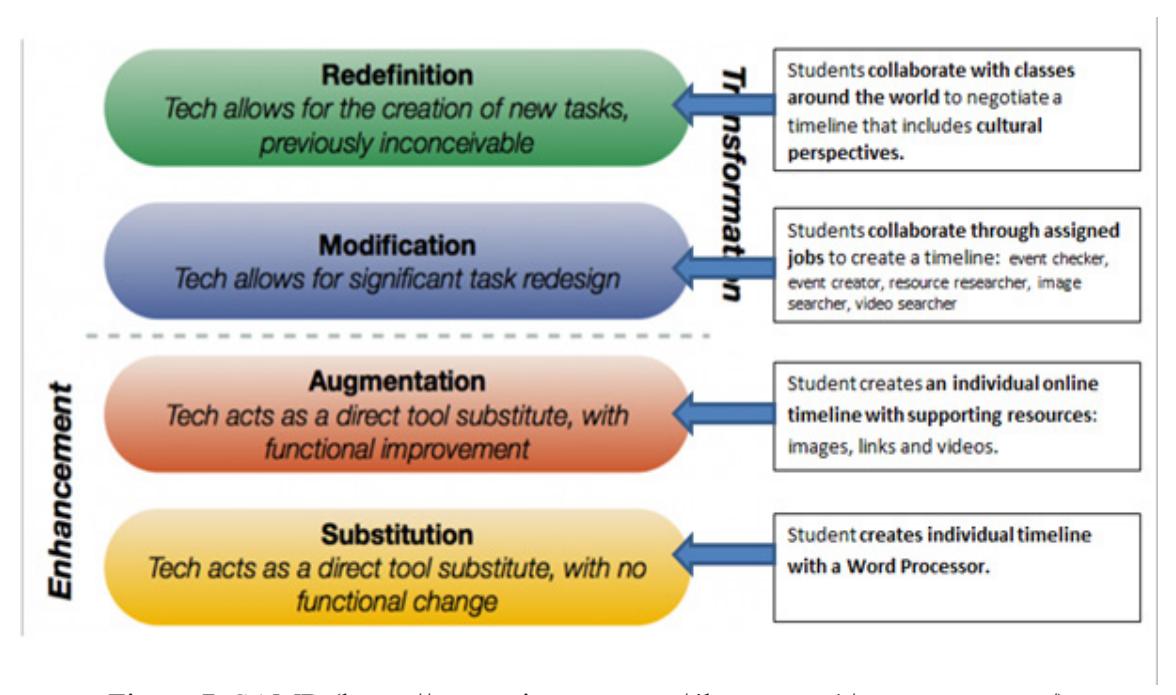
Figure 7 SAMR (https://www.pinterest.com/4boysmom1/samr-resources/)
Despite the enthusiasm, there is limited indication that teaching with technology improves learning more than teaching without technology. This idea is carefully captured in Thomas Russell's (Russell, 2010) No Significant Difference phenomenon, based on studies of technology in education. Recent studies focusing on digital tools in particular have found small improvements when they're used. In some cases, where the teaching is using digital tools and the tests are still using paper and pen – are we teaching digital skills but assessing print skills? (Burden, K., Hopkins, P., Male, T., Martin, S. & Trala, 2012; Livingstone, 2009).
CONCLUSION
There are many Apps and websites accessible through mobile phones which can be utilized for teaching and learning purposes. Various approaches and methodologies can be used. The range of these Apps and websites discussed above give flexibility to assure a fun and easy learning process on different aspect of language learning. Therefore, it's more about the pedagogy than the technology. Eventually, exploring the potentials of mobile Apps and software and using them to make existing approaches more efficient, as on Puentedura's substitution level, is conceivable. On the other hand, teachers who are willing to explore of the potentials of mobile Apps and software in the light of student-centered and engagement may find their teachings becoming more constructivist. Laurillard (Laurillard, 2012) suggests that for all their differences, the most important of 20th century pedagogical approaches are not entirely unsuited. Classroom teachers, even when they work in a mostly constructivist mode, don't shut out transmission or behaviourist approaches; very few language classes run entirely without grammar tutorials or vocabulary drills, for instance. The potential benefits of new technologies will only be realised if they are used with sensitivity to local contexts.