

ABSTRAK
Makalah ini ditulis berlandaskan hasil observasi lapangan terhadap arsitektur vernakuler rumah courtyard, di Kerala India Selatan. Arsitektur tradisional di India pada umumnya taat pada pengetahuan, yang ditulis dalam sebuah kitab tradisional. Namun, dari pengamatan lapangan, kami mengidentifikasi adanya pengecualian desain dari yang telah diatur dalam buku tradisional tersebut. Dalam kasus arsitektur rumah courtyard Kerala, beberapa pengecualian tersebut justru menunjukkan kesesuaian dengan arsitektur asli di Indonesia. Analisis dilakukan dengan menggunakan metode Tipologi, dan mengungkap enam tipologi serta dua langgam. Pada rumah courtyard Kerala aspek perempuan, dapur, orientasi utama terhadap air dan sungai, serta konsep lumbung mendapat tempat yang penting.
Kata Kunci: halaman rumah, india selatan, arsitektur hunian, kerala, naluketuu, manusyalayacandrika
INTRODUCTION
Courtyard-house is typical archietecture in South Asia. It is a common typology in India with various terms, such as, haveli in North India, wada in Maharasthra, rajbari in West Bengal, cathurmukham in Tamil nadu (Rhandanawa: 1999). In Kerala, it is called nalukettu, which means 4 (four)-halls-house encircling an inner-yard. The design follows a book of traditional architectural (vaastuvidya), the Manusyalaya Candrika (Achyutyan Prabhu: 1998). However, the field observations indicates that not all nalukettu faithfully follow the traditional book. Courtyard-house in Kerala seems to have more grounds on daily and popular architectural practice that may be alien to the classical text.
Kerala is the southernmost cultural unit and federation country in India. Except for earthquake, they have tropipical equatorial monsoon climates, paddy farming tradition, and history of traditional maritime network, like Indonesia. Given different climatic and cultural background from the rest of India subcontinent, but the shared ecological context with Indonesia, courtyard-house in Kerala becomes interesting and relevant topic to discuss about the shared architectural characters between India and Indonesia. This research is a part of study with the purpose to explore architectural interlinkages between South India, and Indonesian or Southeast Asia.
The aim of the study is to uncover the aspects that indicate the Indic and Indonesian characters in Kerala's architecture. Specifically, the objective of this research is: 1) to identify variations of typology of court-yard-house in Kerala, and to learn general architectonic characters of each type; and 2) to explore common principles of Southeast Asian architectures in the typology of Kerala courtyard-houses.
Literature Review Courtyard-House in Kerala according to Manusyalaya Candrika
Manusyalaya candrika is the traditional book about the architecture of Kerala, claimed to be written in 17th Cent.AD (Achyutyan and Prabhu, 1998, Thampuran, 2001). It contains prescription of Kerala's traditional residential architecture, including courtyard-house or nalukettu. Achyutyan and Prabhu (1998) elaborated it in a commentary text from which I draw some relevant principles for analyzing the courtyard-houses. Ideally, an abstract gridiron called mandala guides the configuration of nalukettu. The giridiron demonstrates concentric order that situates the highest rank god in the center of the mandala where no built form is allowed there. Superimposing the concentric order, is first, a diagonal hierarchical orientation gradually sloping down from northeast to southwest corner (Figure 1.a). The hierarchical placement of rooms follows this diagonal and concentric orientation (Figure 1.b). Second, upon this mandala, conceptual lines and dots are drawn, guided by the rules of sutram and marmam (Figure 1.c). Sutram (threads, Sans.) is a conceptual line(s) pulled perpendicularly and diagonally from every intersecting line of the grids and yielded intersecting dots (marmam, Sans.). This line represents positive energy flow. Upon this conceptual intersecting dots and lines, no objects or construction is allowed to stand and hinder the energy flow. Therefore, the marmam or dotted area is usually functioned as fenestrations and openings. Visually, the mandala, sutram, and marmam constitute the geometrical orientation principles that govern the ordering system of a nalukettu.
Formally, a nalukettu is composed of four independent halls (salas) around a courtyard facing the four cardinal directions (Figure. 2. a). A single proper hall (sala) is composed of the main hall (vidik sala) which is structurally identified by a ring-beams or wall plate, extended beam (diksala) to adjust the hall with the length of the building, and a connecting structure or alindam (Figure.2.b). Altogether, the multi-layering principles of the mandala, marmamsutram, fourfold salas, and diksalavidiksala constitute the structural principles of a nalukettu (Figure 2.C). These prescribed configuration consequently constitute axis mundi of the house.
Commonality of Kerala's Vernacular Courtyard House with Indonesia Architecture
Courtyard-house is the signature of South Asian architecture. It is a dwelling configuration commonly found in the semi-arid environment. In general, in India, a courtyard is believed to be a navelvoid containing primordial memory of trees, cut to construct houses (Bhattacharyya, 2007). In Kerala, the memory is marked by basil flower planted in the inner-yard – the tulasi. However, factually, the gravitation of spiritual activities orients toward granary (ara). According to her, the oldest nalukettu mostly appeared as a single open hall, extended by the width to some extent that leaves vertical vent stack in the middle and yielded courtyard. Closed space is situated in one or two
sides of the halls,where one of them was granary (ara). The important spatial placement of granary and inclination to wide living space are characters of vernacular architecture in Indonesia.
Some characters of Kerala's Courtyard-house contain architectural characters of the tropical Indonesian regions. Reimar Schefold (2004) generalized characters of Indonesian houses, but called it Formal features of Southeast Asian type-houses. According to him, all architectural characters found in Southeast Asia are available in Indonesia. Three of them confirm Kerala's characters. They are the tripartite house, outward slanting gable, and treatment of wood and timber. The roof is overwhelming and steep; therefore it allows rain to fall
directly onto the ground. Kerala's roof concept relates to the discussion about the insular Southeast Asian roof design (Vrocklage, 1936 in Waterson, 1997). Wooden construction combined with foliage construction is not the nature of Vedic Architecture. The Vedic or pre-Aryan architecture is rather established on solid construction material, like brick mud and stone rather than temporary and foliage construction. Kerala architecture dedicates its space to feminine characters and the importance of granary. This relates to Koji Sato's elaboration on granary dwelling in Southeast Asia (Sato, 1988). Its grand-built character related to Proto-Austronesian characters of South-east Asian architecture (Sato, 2015). Like
Scheme House Plan and Principle
Figure 1a Mandala Figure 1b Typical of Figure 1c Marmam
Figure 1 Geometrical Orientation Principles of nalukettu (redrawn from Achyutyan and Prabhu, 2001)
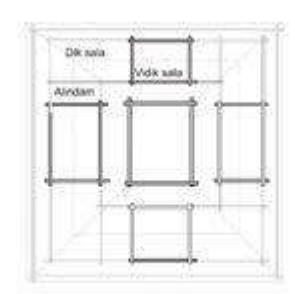
Figure 2a Four Sala Figure 2b Vidiksala Figure 2c Illustration of a Principle Principle design and the Superimposed Principles
Figure 2 Structural Principles of nalukettu (redrawn from Achyutyan and Prabhu, 2001)
Minangkabau Kerala adheres matrilineal kinship and take granary as its elementary residential structure (Widiastuti 2013).
METHOD
Typology is a study of architectural type. It assumes a common abstract form governing the variations of architectural forms (Moneo, 1978). The field observation covered 52 residential compounds, out of which 27 cases were courtyardhouses, belonging to various communities (Brahmin, Non-Brahmin, Christians, and Muslim). Typology is utilized as analytical tools to draw classification based on the spatial configuration of courtyardhouse. Conventional typology was merely means to classify, and to draw categories of designs. The contemporary typology emphasizes the analytical significance of the relationship between typical elements and the whole design (Hillier & Leaman, in Guney, 2007). Hillier & Leaman (in Guney, 2007) use biological terms 'genotype' to explain abstract relational models governing the arrangement of spaces, and 'phenotypes' to explain actual realization of genotypes in the different physical milieu. It makes typology as research instruments that can provide explanations about manifestations, and processes in architectural concepts (Djokić, 2009). The resulted types yielded by typology analysis is then encountered by indicators of Indonesian architectures as elaborated in literary review, to assess aspects that signify common genotypes of Indic and Indonesian architectural characters and highlight the spatial phenotypes.
RESULTS AND DISCUSSION
The typological analysis brings up two discussions about typologies, which are: 1) type of architectural style, 2) types of courtyard configuration. The diagrammatic elaborations are available in Table I.
Type of Architectural Style
The study identifies two general architecture styles in Kerala, namely: 1) Travancore Style of the Southern Kerala, and 2) Malabar Style of The Central and Northern Kerala. Travancore is taken from the name of a classical kingdom in South Kerala. Malabar is another name of Kerala, referred to an ancient maritime kingdom in central-north Kerala. Being busy maritime kingdoms both architectures absorbed many outside influences and yielded eclectic expression. Travancore architecture tends to have moderate size courtyard-house, small inner-yard, with open layout interior space. It demonstrates very rich timber construction and overwhelming hipped gable, and bent ridge roof architecture. Laterite masonry and wooden carpentry characterize Malabar Style. The masonry allows huge and multistories buildings, with intensive walled interior and eclectic ornamentation. The distinction between the two styles is not clear-cut but gradual, from south to north.
Types of Courtyard Configuration
Courtyard in nalukettu is called anakanam. Each community has its courtyard style. However, some common characters prevail. They are: 1) the courtyard dimension is generally small and generally varies from 1.8 m to 5 m spans; 2) courtyard-house has outer wall and tend to have at least one hall opened; 3) regardless of religion and communities, most of the houses give importance to kitchen, well, and orientation toward river; and 4) most courtyard-houses has a walled wooden hall containing raised granary in the middle (ara), semi basement storagepedestal or nilavara for storing utensils and farming tools, and one or two supporting rooms (kalavara) next to ara.
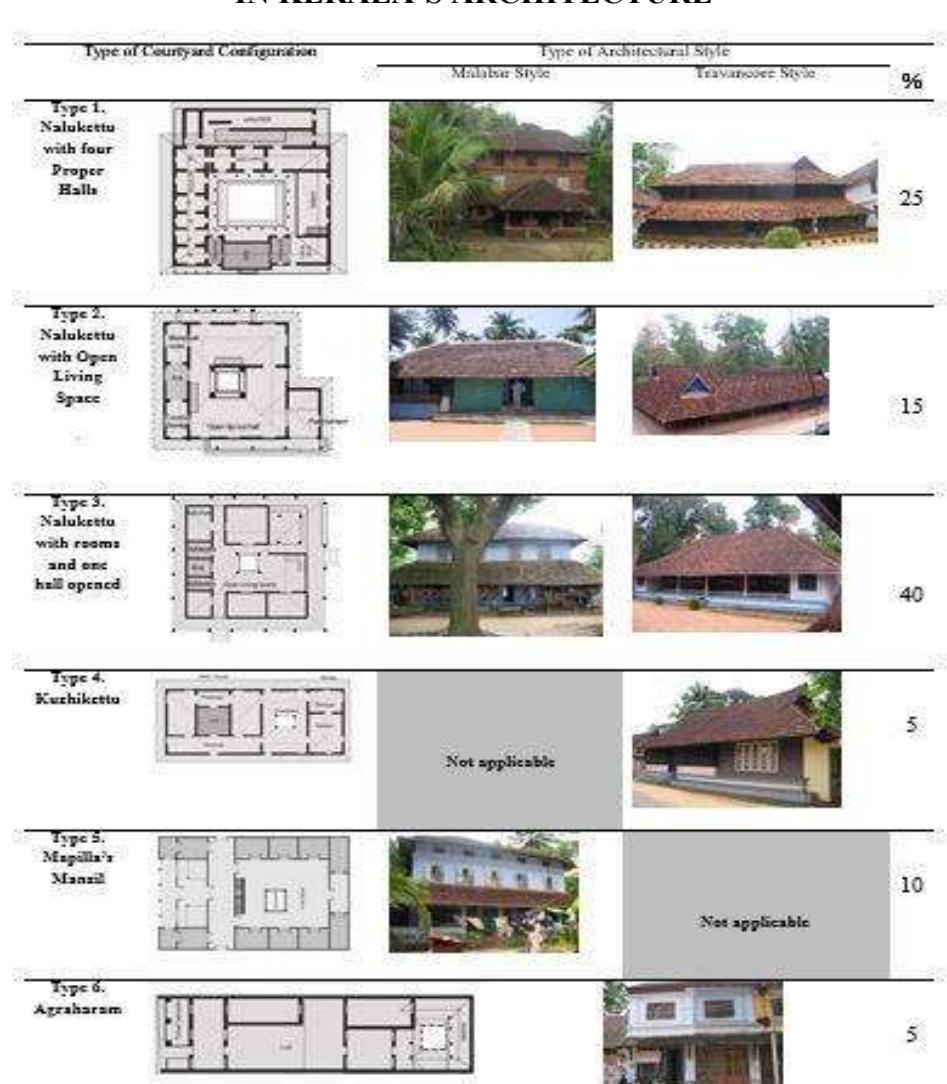
TABLE I SIX TYPOLOGY OF COURTYARD CONFIGURATION IN KERALA'S ARCHITECTURE
All relates to paddy farming activities. From these common charac-ters, more specific designs appear and classifiable in 6 (six) typologies of courtyard configuration with the follow-ing percentage among the samples as elaborated below.
Type 1. Nalukettu with four Proper Halls. Courtyard-house type 1 persistently follow the prescribed text of, Manusyalayachandrika, regarding geometrical orientation, structural principles of nalukettu. It may be obvious considering courtyardhouse of this typology usually belongs to Brahmin communities. It has aranilavara-kalavara. The dimension of the courtyard could reach as huge as 10 m widespan. The courtyard house generally maintains the south hall as open and floor raised for living space. This type occupies 25% of the samples.
Type 2. Nalukettu with Open Living Space. Courtyard-house type 2 appears as nalukettu with open layout interior space and fixed wall only in the perimeter of the house. It has one or two enclosed wooden halls containing ara, kalavara and nilavara, and a small pit in the middle of the interior approximately 1.5 to 2-meter span inner-yard. The structural principle is not faithful diksalavidiksala principles, but they keep the geometrical orientation principles. The basil flower occasionally put in the center of ankanam, or the front of the house facing eastward. In Kanyakumari district South Kerala, this typology is called arapura (paddy-house) (Widiastuti, 2013). Underlining the dominant use of timber, Thampuran (2001) considers this type indigenous South Kerala and Pre-Hindu. However, concerning spatial configuration the typology 2 are available in the entire Kerala, generally among the middle to lower class landlords, but using laterite material. The numbers of this type comprise 15% of the samples.
Type 3. Nalukettu with rooms and one hall opened. Courtyard-house type 3 persistently follow the geometrical orientation, and availability of aranilavara-kalavara. However, the structural principles relatively ignore dikvidiksala. The type has three halls and one open-hall in the western or southern side, encircling a small rectangular yard (ankanam). They are likely typology 1 of smaller size, with moderate inner yard span of 2 meters wide. This type is perhaps the mostly found nalukettu in the entire country regardless castes and communities. It covers 40% of the samples, and mostly found in Central Kerala,
Type 4. Kuzhikettu. Courtyardhouse type 4 is not a proper nalukettu, but single hall house with annex connected by two parallel passages that consequently leave an inner-pit (kuzhi) which is considered as a courtyard. The single hall contains ara-nilavara-kalavara with living space surrounding it, but has no orientation towards the courtyard. They keep marmam and principles, but ignore structural principles and orientation of nalukettu. Thampuran regarded this a pseudo-nalukettu, and named it kuzhikettu (Thampuran, 2001). The numbers covers 5% of the samples. The type is a regional style and so far, only found in South Kerala, among the Christian Syrian community, generally adhering to patrilineal and nuclear family.
Type 5. Mapilla Manzil. The Mapillas are major Muslim communities practicing matrilineal kinship. The house dedicates their rooms for female members. They call their house manzil. A manzil is generally huge bungalows with many rooms, like apartments. Their designs do not refer to Manusyalayachandrika with regards to geometrical orientation, and structural principles of nalukettu, but like other communities they put kitchen and female space in the most auspicious place inside the house. They also have no ara-nilavara-kalavara inside the house. However, the rear of the house has rooms arranged the way of aranilavara-kalavara. It is also considered auspicious and only for female entry. They have separated granary house outside the house. The courtyard is very small and insignificantly placed, but the space surrounding the courtyard is wide, considered auspicious, and designated for female. The male space is in the front veranda, namely kinanthara. Kinanthara is a front raisedspace, usually used for social space, and a processional limbus, where functions, marriage and feasts are held. It makes kinanthara of the Mapilla as important as courtyard in nalukettu. They are mostly in Central-North and available of 10% of the samples.
Type 6. Agraharam. Courtyardhouse type 6 is residential units standing in arrays of units, like town house, called agraharam, belonging to temple-community and available in temple quarters. It existed in Kerala but considered Tamil Nadu's origin. Generally, it appears as a small-elongated unit, fronted by a veranda with a raised floor for sitting, called thinnai. The courtyard is at the back of the house, more as living space. As they are not original from Kerala, they do not refer
| Type of courtyard | Timber construction | Hipped or roof | Hipped gabled-bent roof | Space under protruding eaves or veranda | Open lay out living space | Granary as center gravity of dwelling space | Space with few walls |
|---|---|---|---|---|---|---|---|
| Nalukettu1 | V | V | V | V | V | VV | 0 |
| Nalukettu2 | VV | VV | VV | VV | VV | VV | VV |
| Nalukettu 3 | VV | V | VV | VV | VV | VV | VV |
| Kuzhikettu | VV | VV | VV | VV | V | VV | VV |
| Manzil | 0 | V | 0 | V | VV | V | 0 |
| Agraharam | 0 | V | 0 | VV | 0 | 0 | 0 |
TABLE II ANALYSIS OF INDONESIAN CHARACTERS OF THE SIX TYPES OF COURTYARD HOUSE IN KERALA'S ARCHITECTURE
Note: VV = exist, V = exist in few places, 0= no existence to Manusyalayacandrika. They do not keep ara-kalavara in their house. The courtyard is available but very small, and demonstrate no proper geometrical order, as in nalukettu. Nevertheless, in Kerala they come from different traditions.
Analysis of Commonality with Southeast Asian Architecture
The six typologies and two styles are examined against the six indicators of Indonesian architectures, which are summarized as the use of timber construction, hipped or hipped-gable roof; bentroof, space under the protruding eaves or veranda, open layout living space, granary as center gravity of dwelling space, and space with few partitions (Table 2). The intensity of commonality increase in numbers toward the Southern part of Kerala, or in Travancore style.
CONCLUSION
Nalukettu in Kerala have uniqueness in term of: 1) being exceptional Indian architecture in a tropical climate, with the paddy-farming based living; and 2) giving importance to female and femininity. Ideally the formation of nalukettu refer to 1) the book of Manusyalayacandrika; and 2) tropical-monsoon characters that draw the typical sloping roof, deep eaves, timber constructions, and raised floor. The idea of auspiciousness is given to north and east orientation, where on kitchen and well are put. Despite adherence to Manusyalayachandrika, this orientation coincides with the position of the adjacent river, and water source in the highland of Western Ghats mountain ranges.
Conclusively, the study unravels six typology of Kerala courtyard houses. Except agraharam type, the five types carry common genotype of courtyard-house, which refer to granary, and maintain auspicious value to kitchen, and well. The following are some conclusions with regards to the typological analysis.
- 1) Type 1 (nalukettu with four proper halls) and type six (agraharam) consistently follow pure Vedic traditions. The indicator of Indic genotypes are the incorporation of earthen material other than timber (such as laterite and brick), and space for Hindu ritual and the courtyard itself. However, agraharam conveys strong Tamil characters that are often considered not part of Kerala architecture.
- 2) Type 5 or manzil contains eclectic style, not only local but also Western Style. Manzil specifically belongs to Muslim and matrilineal society. The veranda-kinanthara concept exceptionally reminded of the peringgitan in Javanese architecture.
- 3) The most Indonesian characters of Kerala architecture are hipped- roof, the