

ABSTRAK
Wayang merupakan salah satu seni tradisional bangsa Indonesia yang paling menonjol di antara banyak karya budaya lainnya. Namun, saat ini keberadaan wayang secara umum mulai terabaikan ditandai dengan fakta bahwa jumlah generasi muda yang tertarik pada pelestarian wayang semakin menurun. Hal ini diidentifikasi karena tidak ada media yang dapat dengan mudah diakses untuk dapat mempelajari wayang. Maka dikembangkan sebuah aplikasi dengan memanfaatkan Augmented Reality, sehingga ada media yang dapat digunakan untuk mempelajari wayang. Aplikasi ini akan menciptakan sebuah citra baru dalam pembelajaran wayang bagi anak. Wayang pada program ini akan dibuat dari kardus berbentuk rangka dan diberi penciri berupa AR Tag yang nantinya akan dipindai menggunakan webcam. Hasil program menunjukkan bahwa belajar wayang dengan augmented reality ini mampu meningkatkan ketertarikan siswa dari 31% menjadi 69%.
Kata kunci: simulator wayang, media pembelajaran, augmented reality
INTRODUCTION
Indonesia is a country with huge diversity of arts and cultures and Wayang is one of them. Nowadays where technology has been influencing many aspects of human life, mindset of the community has become a practical mindset (Muhammad, 2014). In this era all aspects of life have involved the role of technology, even the majority of Indonesians are mobile phone users. Along with the various types of technology that acilitate the pattern of human life, art and culture that has become the identity of the nation began to be abandoned, one of which is wayang.
Wayang is a shadow, picture or painting about the life of the universe. Wayang described various things not only humans, but also about human life in relation to other humans, nature, and God, that unite become one, and not separated from one another (Darmoko, 2010). Wayang kulit has a flat shape and is made of buffalo, goat, or cow skin. Wayang is one of the artwork that is popular in the java region. The beauty of wayang kulit is that it can unite various elements of art which include visual arts, literary arts, dance, sound art, drama, and music.
Figure 1 shows that in fact, based on the survey, 78% of the community did not know any wayang stories at all. In this study authors chose junior high school students as a sample. There are as many as 37 students (hereinafter referred to as participants) who are interested in participating in this research.
Figure 2 shows that most of the participants are an active user of social media technology (68%). However, based on the previous figure, most of participants are not aware of wayang or has minimum knowledge about wayang.
Figure 3 shows the various cause of why wayang is abandoned. The biggest factor is the duration of the wayang show which is too long. In fact, one wayang show can spend from 4 hours to 48 hours. In addition, the delivery of stories using the Javanese language (according to the type of wayang) was also one of the biggest factors that caused Semen Gresik Middle School children leave wayang.
Figure 4 explains that 61% of participants think that they had no easily accessible media about wayang causing their exposure to wayang stories very minimal. In addition, supporting equipment for playing wayang is also difficult to find.
An easily accessible medium for learning and playing wayang is then of the utmost importance. Hence a learning wayang medium based on technology that can be widely available and children friendly is developed. The writer initiates an idea to make an application which utilizes Augmented Reality technology that allows students to create a wayang show effortlessly, facilitating them in the process of learning to play wayang stories.
In this way, it is hoped that students of Semen Gresik Middle School and other junior high school students in general can learn wayang easily. As a result, the young generation will be interested in playing wayang and moreover understand the moral values in the wayang stories.
LITERATURE STUDY
Wardani conducted a study that aims to create learning catalog using Augmented Reality (AR) technology for Javanese script. AR is utilised to display an object of Javanese character in its 3D form which can be seen thoroughly and can be used effectively for learning. The study also develop marker that is arranged in a catalog which is more interesting than just a black and white catalog(Wardani, 2015).
The study conducted by Stanaya and team discusses the Augmented Reality to show the Panca Pandawa 3D model, along with wayang information. An application video and also the narration of each Panca Pandawa wayang character are also developed, to be installed on an Android smartphone. With the existence of this system, it is hoped that this can be a means of preserving and also providing
information about wayang kulit Panca Pandawa more interesting and interactive (Stanaya, Pande, Crisnapati, Harsemadi, & Naseer, 2017).
An article wrote by Dolhalit discusses the making of an application to play wayang kulit using Augmented Reality. In the manufacturing process, wayang are formed in 3D models while ARToolkit is used to model virtual displays similar to the real world. The application is created using Microsoft Visual C ++(Dolhalit & Jun, 2013).
A study conducted by Wulansari uses applications that use real time virtual puppet from digital cameras, as well as using markers and computers. Through the camera, the virtual puppet application will provide markers and then load 3D objects that resemble humans that can help users with virtual puppet. The application is created using the opensource C language, ARToolkit, Blender, and Lazarus(Zaini & Others, 2014).
The research by Piman makes the hand movements of the puppet that are played to be more interactive and realistic. The method used is the Bone and Bind tool that is in the Adobe Flash CS4 application, combined with texture mapping techniques and the standard Hanim model (Piman & Talib, 2012).
Another study conducted by Lam discusses the use of OpenGL to create interactive and realistic wayang animation and movements. The techniques used are geometric transformations and hierarchical modeling that allow interaction between the parts of the puppet during the animation process(Lam, Haji Talib, & Osman, 2008).
Based on the literature review, it can be concluded that no studies that has been made is the same with the authors' work. The wayang simulator that was developed did not change the way of playing the real wayang. Involving augmented reality technology, this application will become an application that can be a medium for learning together in the same way as playing conventional wayang.
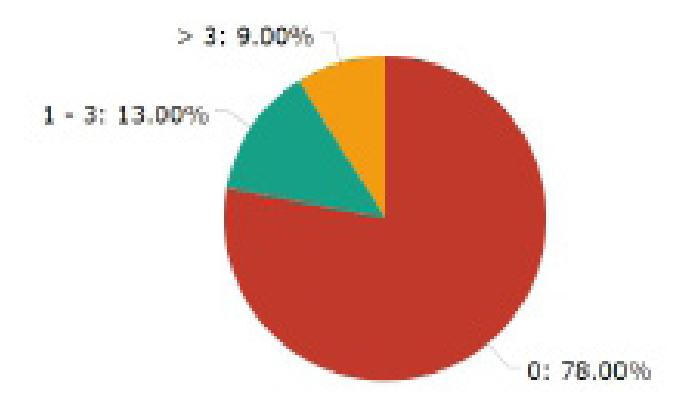
Figure 1 Knowledge of wayang stories
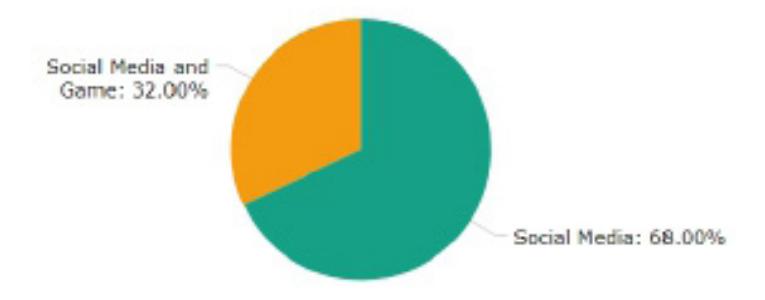
Figure 2 Survey Participant's background
Figure 3 The cause of why wayang is abandoned
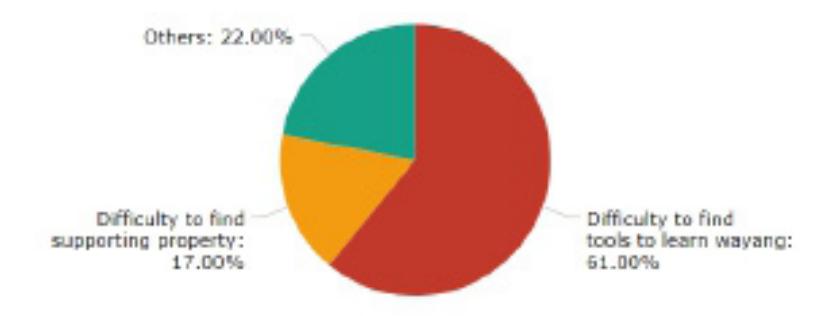
Figure 4 The cause of low interest in learning wayang
METHOD
The introduction of puppets is done in 2 phases. The first part discusses the technology used while the second part discusses how to introduce technology to students.
Wayang Simulator Puppets are visualized by the simulator that reads the AR-Code of the puppet moved by the dalang. Simulator is an application that run on a PC or laptop. In the wayang simulator application, several instructions will be provided, including instructions for making puppets and instructions on how to set the staging layout or wayang show. Since simulator can play sound effect, animation, and video, it will surely add more value and attraction in a show.
Figure 5 is a form of wayang puppet made, there are two types of wayang namely the shape of the Gunungan- a structure of triangle shape
inspired from volcano- and animals, while the second type is the wayang in the form of human. Each wayang, will be given an identifier in the form of AR-Code. The AR-Code listed on each puppet is unique according to its character. AR-Code will be read by the webcam and processed by the program to be transformed to the original character form of the wayang. AR-Code that is used here is a certain selected code since not all types of AR-Code can be used due to the difference in code recognition speed.
The materials used to make wayang are materials that can be easily found in the surrounding environment. Materials needed are cardboard or duplex, yarn, scissors and cutter. Equipped with these materials, students can make wayang according to the needed characters. All characters of wayang has the same shape. The difference is in the AR-Code embedded in each part.
Figure 5 Wayang Puppet
Figure 6 Layout of Wayang Stage by The Application
Wayang Performance Layout
Figure 6 illustrates some of the tools needed to make a wayang performance, namely:
- 1. Laptops are used to open applications, in which the assistant can set the background of the place and background music that can suit the wayang show / performance.
- 2. The webcam connected to the laptop is used to read the AR-Code written in the wayang.
- 3. The speaker connected to the laptop is used so that background music or sound effects can be heard by the audience.
- 4. The projector and screen are used to display the results of wayang images
- that have been processed in the program.
- 5. White cloth installed behind the dalang -in real wayang performance, dalang is the one who play the puppets-, to reduce noise (noise) in the identification process.
Introduction of Wayang to Students
In this part, details of wayang and simulator are discussed. There are 6 sessions with 2-4 hours duration each as shown in Table 1. Before the delivery of the material is started, the participants' knowledge is measured by providing a pre-test, while after the show, participants' knowledge is also measured via a post test.
Study of characters, and leather wayang characters
In an effort to expand knowledge about wayang, the author reads some literature on wayang and visit the cultural center to explore the history of wayang development. Observations are done to investigate wayang form, the pattern of the clothes worn by every character, as well as the documentation of the development of leather wayang performance from time to time. In addition to observation, interview is also conducted with several dalang to find out firsthand experience of playing wayang stories. Some of the authors also watched the conventional wayang performances and paid attention to the behavior of the audience of conventional wayang shows.
Introducing students with wayang characters.
Students are taught about wayang knowledge before they can tell the stories. This is done through sessions in class discussing about stories and wayang characters.
The introduction is done in session 1 to 3. In the first meeting the students learnt about the program and are given a test afterwards to measure the initial knowledge level. After that there is a presentation about general knowledge of wayang such as history, characters, and some famous legends.
Figure 7 The teaching process in SMPN Semen Gresik
The second and third meeting are about wayang stories in detail. Figure 7 shows junior high school students who were introduced to several popular wayang characters, commonly referred to as the Punakawan wayang group. Punakawan has very popular figures who can facilitate the initial process to attract junior high school students to learn wayang. In this second and third meeting the knowledge of the students were measured by asking the to retell the presented stories before. Also, in this part, the students were shown a video about wayang show so that they can imagine the real one.
Making wayang puppet
In the fourth meeting, the students are taught to make wayang puppet that will later be played in the simulation part. Figure 8 shows the training of wayang making. Participants is trained to make wayang according to the instructions provided in the application. This wayang making session includes template and ARCode printing, paper cutting based on the template, assembly of the paper parts, and embedding the AR-Code.
In the end of this session,
participants were asked for feedback regarding the materials used and the process of making wayang. Students convey that additional equipment is needed to facilitate the assembly, especially in the process of unification between parts of the puppets. The technique of unifying the puppets with parts of the body is also considered less
strong so that the puppets easily shake, and a supporting frame is needed so that the puppets are not easy to bend when played. The feedback given is used to improve the design of the template that has been created.
Introducing the application
The final stage of the puppet learning process is the introduction of students to the simulator. At this stage, all of the participants already have at least one wayang that will be read by the system.
The first thing students do is to learn to move the puppet and see the results on the projector screen. After students are able to understand how the simulator works, students learn to move the puppets and adapt the sounds according to the character of the selected puppet.
On the second day at this stage students are assigned to play a short story (5-10 minutes). Participants will play roles according to the wayang that have been made at the previous meeting. Participants will also begin to memorize narratives and dialogues and start playing stories through the application.
RESULTS AND DISCUSSION
- 1. The increased interest of students of Semen Gresik Middle School towards wayang. This can be seen from the enthusiasm of the participants who attended each teaching session. More than 90% of all students who enrolled in this program did participate in the sessions. Figure 9 shows the number of characters that are known by students before the program, most students only know 1-3 wayang and there are still 3% who do not know at all the name of the wayang characters. Figure 10 shows that most of the respondents have known at least 1-3 wayang characters, and 55% already know 3-5 wayang characters.
- 2. Semen Gresik Junior High School students already know at least 4 characters from the punakawan story, each student even has his favorite character.
- 3. Semen Gresik Junior High School students are also able to tell one round of the play and are able to draw conclusions from the story of the clown.
- 4. Models and instructions for making wayang. Figure 11 is an example of instructions part of making wayang given in the application. This application is equipped with a
- complete guide to making wayang. It is hoped that this guide can facilitate children, especially participants in this study to create wayang.
- 5. From the survey that we did before the program, only 31% were interested in learning puppets, this number increased to 69% after the program was implemented, most students think that how to play wayang using augmented reality is cool thing.
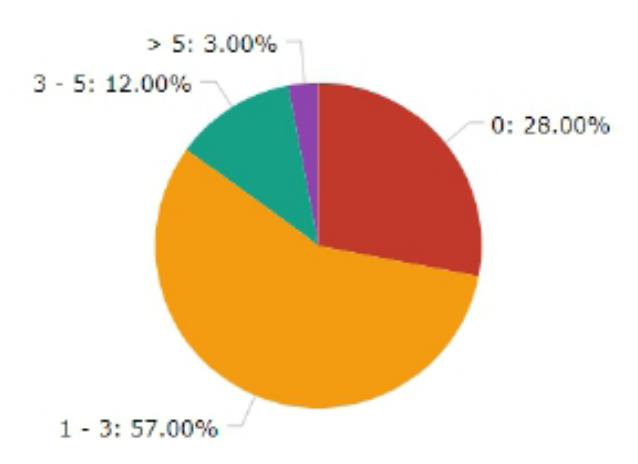
Figure 9 Number of wayang characters known before the program
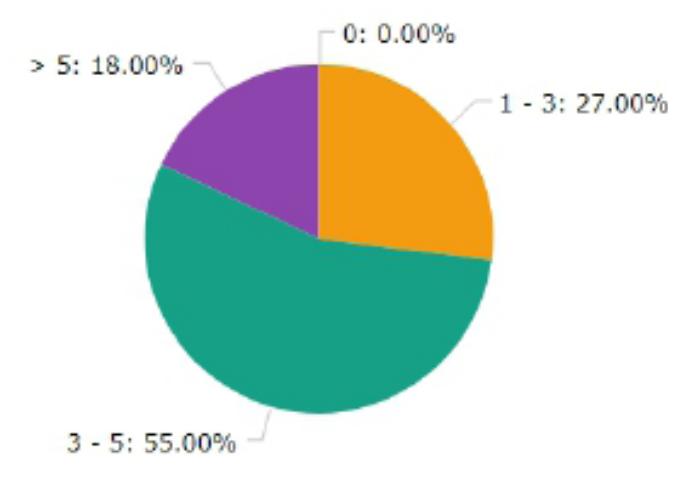
Figure 10 The number of wayang characters known after the program
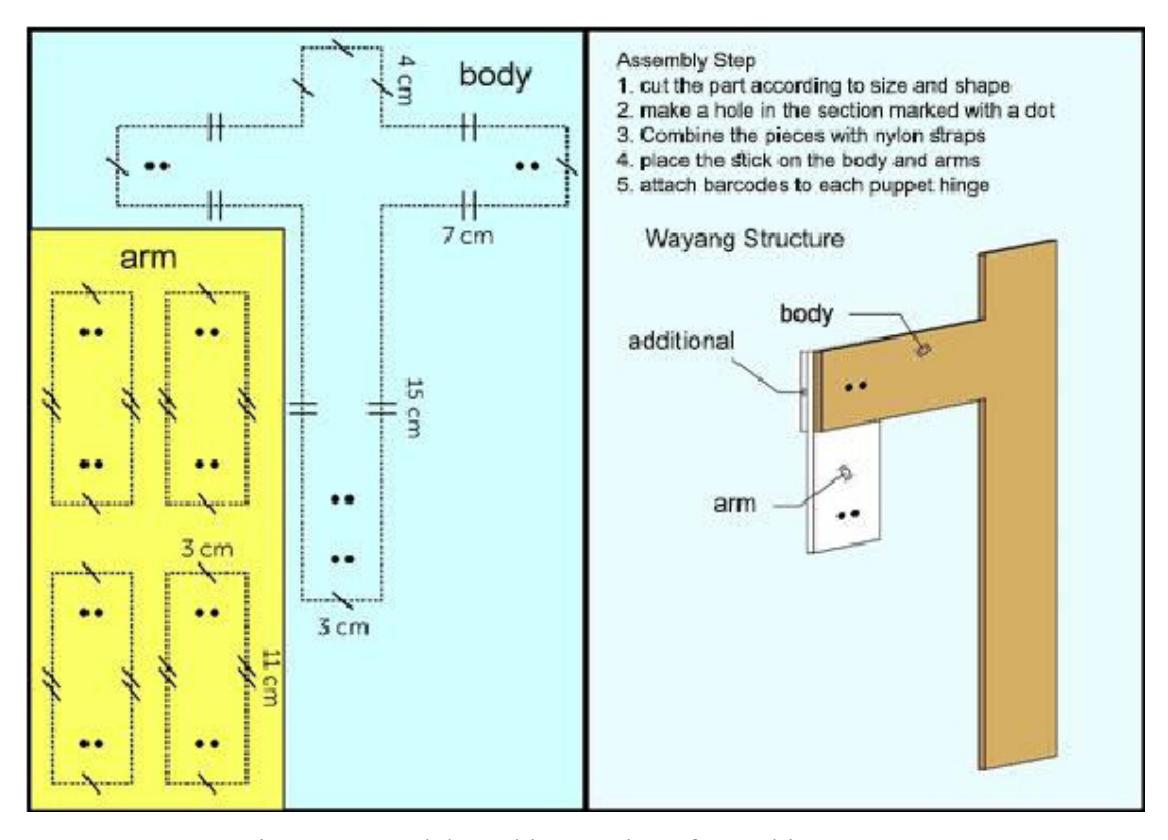
Figure 11 Models and instructions for making wayang
CONCLUSION
Based on the results described in this program, it can be concluded that the learning interest of Semen Gresik Middle School students towards wayang culture has been successfully built through this program. Survey data shows that target interest increases. Previously 31% of respondents said they were interested in learning wayang, but after the program was implemented, 69% of respondents were interested in learning wayang. In addition, this was also supported by attendance at each meeting which tended to increase and reached more than 90% of the total participants registered as participants in the study. In addition to measuring interest, the authors also before and after the program by conducting pre-test and post-test at each meeting. This program is an effective and creative media in building the character and learning interest of Semen Gresik Middle School students towards wayang
culture and has the potential to be applied to other target communities who have similar problems.
ACKNOWLEDGEMENT
This research has been made possible by the LPPM UISI under the scheme of "Hibah Riset Bersaing". We extend our gratitude for the support.