

ABSTRAK
Pembatasan Sosial Berskala Besar (PSBB) akibat wabah Covid-19 berdampak pada semua aspek kehidupan termasuk seni pertunjukan. Pelarangan adanya kerumunan yang merupakan ciri sebuah pertunjukan konvensional memaksa kreator dan pelaku seni pertunjukan untuk beradaptasi. Salah satu cara yang ditempuh adalah dengan mengadaptasi pertunjukan di dunia nyata (real) ke dunia maya (virtual) dan mengorbankan sejumlah aspek seni pertunjukan. Penelitian ini mengembangkan suatu model pertunjukan dari sendratari Hikayat Dipanegara yang diubah dari pementasan di dunia nyata ke dunia maya. Penelitian deskriptif kualitatif ini menggunakan metode eksperimentasi. Pemodelan dilakukan terhadap ruang pertunjukan, penampil, serta interaktifitas dan keterlibatan penonton dengan menggunakan teknologi digital, mencakup 3D modelling, motion capture, augmented reality dan real time game engine. Berdasarkan model yang dikembangkan, penelitian ini berhasil menemukenali sejumlah aspek yang bisa diadaptasi, serta keuntungan dan kerugian yang timbul akibat adaptasi tersebut.
Kata Kunci: adaptasi, pertunjukan, Covid-19, virtual
INTRODUCTION
The spread of the Covid-19 outbreak since December 2019 has caused more than 82,160 people to be exposed and more than 3,300 people died (liputan6.com 4/13/2020). This virus spread quickly, and more than 118 countries in the world were affected, so Tedros Adhanom Ghebreyesus, Director General of the World Health Organization (WHO) declared Covid-19 as a global pandemic (source: kompas.com 12/03/2020).
Indonesia became one of the countries that was badly affected. Based on data submitted by a spokesman for the Indonesian government for the handling of Covid-19, Achmad Yurianto, through a press conference at the BNPB Building in East Jakarta, Monday (4/13/2020), the number of positive cases of Covid-19 recorded 4,557 people and 399 people died.
In connection with the handling of the Covid-19 pandemic, President of the Republic of Indonesia Joko Widodo issued a Government Regulation on Large-Scale Social Restrictions (PSBB). The regulation was taken by the aim of breaking the chain of the spread of the corona virus. In accordance with the explanation in Law number 6/2018, PSBB is a restriction on the activities of residents in an area suspected of being infected with a disease and/or being contaminated.
PSBB can be applied in the form of consolation to schools and workplaces, restrictions on religious activities and restrictions on activities in public places or facilities. The policy stopped the various community activities that caused many people to lose their livelihoods, including artists who had been working in the informal sector.
Around 40,081 artists were eroded by Covid-19 due to the cancellation of performances and art festivals. Most of the epicenter areas of art workers are dominated by West Java, DKI Jakarta, Central Java, East Java and Yogyakarta.
Artists are consequently forced to be innovative, for example, by using the internet to take advantage of the knowledge and skills she/he already has by displaying his or her work online. Indeed, this limitation may also be accompanied by doubts and confusion in presenting their creating performance.
Characteristics of the performing arts are identical to the physical performance stage, from arts buildings, studios to alternative open spaces. This pandemic period urges performing artists to compromise and to change the performance space medium to online. It is evident that performing artists must and are willing to recode their artistic power over their creations to fit the online atmosphere.
The aesthetic elements also must be adjusted. As a result, the quality of the work is vulnerable to change. The distance between the audience and the performance artist that has been calculated is clearly separated by a digital screen, such as a gadget, laptop, and television.
Massive migration from the offline dimension to online in the context of live shows on various lines of performing arts become more challenging. One of the challenges that arises is the adequacy of internet data access so that the display does not actually stall or remain accessible until the end of the show for the sake of delivering a message. A display of a performing art clearly is deemed purer and touching when seen directly in a wide viewing angle. Now shrinking it to a gadget screen has the potential to make the audience lose the desire to enjoy the show. Taping has become an option, but it certainly raises a dilemma because it has the potential to make performance art even grazed into the dimension of film. In other words, there is a limited creative space for performing arts outputs when they must be digitalized and presented in an online environment.
The body has an increasingly important role in new media, especially in terms of its existence, representation, and diversification through various new media genres. At the simplest level, framing the body as a "digital" form means that the body is "information". In other words, body + information in a digital context - raises problems and complexity. Among the questions that may arise are regarding the methods of communication and exchange (how the information is socialized or placed), identification (how to recognize the digital body), and ethics (what implications we have for the 'digital' body). Do our interactions with new media (new media) imply that we are a digital body or that we have become a digital body? Does the digital body have a material form or does its presence have to be in absentia? (Fuery, P: 84)
The term digitalization of the body or 'digitalization of the body', the digital body or 'the digital body', and the body as digital or 'the body as digital', refers to various aspects of the subject of new media, including the role of identity and gender.
In new media and the culture in which the media are born and developed, the image and imagination of the body are always interesting themes. The large number of works of art that are born and grow in the realm of new media culture reflects the high appeal of this topic and reflects the continuous development of technology.
To understand how digital media affects our senses and our bodies, we must consider the relationship between digital technology and the body (and all the positive representations that can be developed from this relationship) through ethical reflection (Fuery, 2009. P: 84). It is very likely that questions will arise about the "existence" of a "digitalized body", with an emphasis on how a description of the body in new media will test the limits of body presence. The metaphorical perception of the existence of an electronic body is more textual and informational than as a real or corporeal being.
Based on this metaphorical understanding, we can examine how the digitization of the body forces us to fragment the concept of the body and re-question and evaluate the function and importance of certain cultural practices and performances. This approach can also help identify the link between the body and the issues of 'digitality' and materiality in relation to the formation of a new media culture (Fuery, 2009. P: 84).
Previous research that has been done on the representation and connection between the body and new media has generally concentrated on how the body can be modified in a technological context. The body as information and digitization of the body basically talk about digitizing information and modes of communication because these studies are a way to see the relationship and connection between corporeality and consciousness. Both aspects contain themes and modification issues - both conceptually and practically (Fuery, 2009).
The relationship between the body and technology is not a new issue in determining the work and understanding of new socio-cultural practices. What cultural practices contribute to the digitization of the body requires a great deal of determinism. For any position or location of the body and its representation in any medium, there are always many alternative understandings and interpretations. Disembodiment and embodiment theory can be used to analyze body virtualization. (Fuery, 2009. P: 90) The concept of how thinking about how the body and embodiment are related lies in the ability to identify social and cultural processes and practices which Hayles calls 'inscription' and incorporation.
Based on the characteristics of contextual knowledge, habitual, hidden consciousness and framing that allow embodiment incorporation, there are always changes and new technologies. When there is a shift in such practices, this shift is often manifested spatially and temporally. The symbiotic relationship between embodiment and technology lies in how Hayles differentiates between informatics materiality and information immateriality or how technological changes have changed the embodiment mode. (Hayles, 1999. P: 97). The latest technological development that has become the object of many studies related to the body, specifically the body in motion, is the use of new 3D (3-dimensional) media by utilizing motion capture techniques.
This transformation from one form (of art) into another has been the object of various research in semiotics. (Swasono, n.d.) 2007 stated that this transformation related to the reading of a text, citing Critchtey (1992: 22), "critical reading problems", citing Derrida (1976: xxxix) and "creative from text language into visual language," which is transformed into new works of art is not an easy task. Researchers
had to discuss deconstruction in order to gain understanding in expressing different creative visual languages, which had never been expressed through previous works or visual language.
Another study discusses Roman Jacobson's Intersemiotic Translation from one sign, i.e. verbal language, into another sign, i.e. visual sign (Kurniasih, Nuriman, & Jaelani, 2019). Both mention that one important aspect that plays a major role in the process of converting one sign into another is cultural values.
One specific study by Tang, et al. (2011) focusses on interactive dancing game with realtime recognition of continuous dance moves from 3D human motion capture.
This paper discusses an experiment result on how a performance titled Hikayat Dipanegara, originally designed for a live presentation in a real world, is adjusted to be presented in a virtual world using available technology, without sacrificing important aspects that were intended to be displayed in this show.
Hikayat Dipanegara is a multimedia performance featuring music, dance, theater inspired by Babad Dipanegara (or The Chronicle of Dipanegara) which is included in the world heritage list according to UNESCO (Gunawan, 2016). The chronicle itself has been the focus of many studies conducted by Carey (1982), (2012), (2015), who sees chronicle as an important historical source of information. The show is planned to be presented directly as a conventional show by gathering an audience in a place to enjoy the show and experience of interacting in an art performance.
However, due to the Government's PSBB regulation, conventional performances cannot be carried out and must be presented online.
This performance combines traditional and modern art with a hybrid concept, which combines traditional Sundanese-Javanese musical instruments, traditional-modern musical instruments, and uses digital technology, augmented reality, video mapping with content created using motion capture technology. As an experimental performance, Hikayat Dipanegara will also add new experiences by involving several actors in special costumes to interact with the audience.
Because the Covid-19 outbreak began to emerge at the end of 2019, until mid-2020 there have been quite several experiments carried out by performers, for example by holding online shows.
However, as many have feared, moving the show from offline to online actually eliminates important aspects of the performing arts, including immersion and interactivity.
For this reason, this study tries to create a model of adaptation from real to virtual performances by prioritizing aspects of immersion and interactivity. This is what makes this research different from similar research.
This study aims to create a model of adaptation from real to virtual performances and try to identify several aspects that can be adapted, as well as the advantages and disadvantages arising from such adaptations.
The findings from this study will be useful to help artists to continue working and get economic benefits from their work despite restrictions such as social distancing or the like.
METHOD
This research is a descriptive qualitative study, and for the purpose of the creation of the image of Diponegoro, the researchers have used Paul Milgram's (1994) Reality-Virtuality Continuum and its simple interpretation, which is well presented by Steve Bambury in virtualiteach. com as seen in Figure 1.
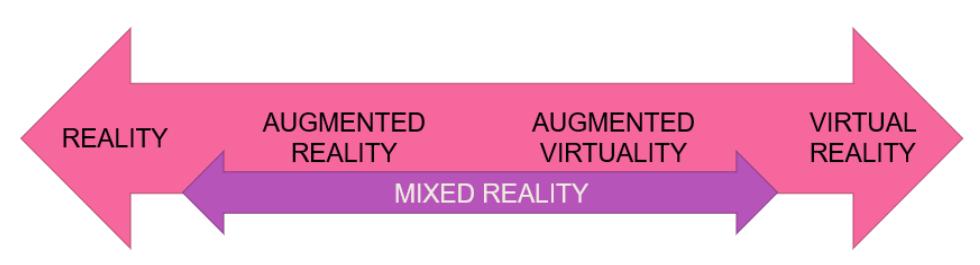
Fig.1 Reality-Virtuality Continuum by Paul Milgram (1994)
Reality is what we have now. Augmented Reality (AR) is a digital content being overlaid onto the real world (Courty & Corpetti, 2007),which one can see using a device such as cellphone, tablet, headset, etc. Some AR examples are Pokemon Go, Facebook Spark, Instagram filters, etc. Augmented Virtuality (AV) is the reverse of AR, in which the real world is augmenting the virtual world. Leap Motion technology is the best example for this AV.
Virtual Reality (VR) is the wholly synthetic experience. The user is immersed in a space that is digitally generated. While using a VR device (namely VR goggles), the user is unable to see the real world. Mixed Reality (MR) is the combination of all the abovementioned and represents a higher level of virtual experience. This term is sometimes called Extended Reality (XR).
There is another term, namely Hyper Reality which combines all the above and is embellished with additional sensory stimuli (for example water splash, breeze, odors, etc.) similar to that of 4D cinema.
RESULTS AND DISCUSSION
Converting a real conventional performance into a digital or virtual performance is conducted in several stages, namely modelling, combining, animating and presenting.
Modeling for this study has been conducted on the performance space, the characters, as well as interactivity and audience involvement using digital technology, including 3D generator, motion capture, augmented reality and real time game engine.
The venue that would have been a conventional performance space is Digital Arts Space at Paris van Java Mall, Bandung. This arctic-themed visual imagination venue has a room area of 200 m2. In the room there are supposed to be five video mapping screens mounted on the front, back, right, left, and to the floor.
Digital Arts Space has 3 parts, namely the waiting area, hallway, and main performance space. In the waiting area, spectators can buy tickets and wait their turn to enter.
The capacity of the audience for the show is 50 people. Aisle is a room that connects the waiting room with the main performance room. The main performance space measures 14X15X4 meters. Actual images of Digital Art Space are as follows:
Fig.2 The venue of Digital Arts Space of Kala. Kini Nanti at Paris van Java
Using accurate tri-dimensional software, the venue is modeled into a 3D environment. There were 10 performers, consisting of actors dressed in traditional Javanese and mingling with the audience.
Due to the Covid-19 PSBB, these actors must be replaced with 3D characters hence they are modelled using character generator and are positioned in the 3D environment.
For making character models in 3 dimensions, researchers used Blender software. The stages of generating 3D characters are as follows:
Fig.3. 3D modelling process of Pangeran Diponegoro's body
Fig.4. 3D modelling process of Pangeran Diponegoro's head based on Ki Roni Sodewo (the 7th descendant of Pangeran Diponegoro)
Meanwhile, to adapt immersion and interactivity, the researchers changed the show from real to virtual by using Unreal RPG (Role Playing Game) technology utilizing the perspective of FPS (First Person Shooter), so that the audience did not just sit quietly watching the show, but seemed to undergo adventure in the show.
To replace the LCD screen in the waiting room, researchers used Spark Augmented Reality, so that the audience can see themselves through a cellphone camera and be seen automatically wearing a turban like Prince Diponegoro. This filter has been approved by Facebook and Instagram and can be found in this link: https:// www.instagram.com/ar/389140745377643 .
| ITEM | REAL | VIRTUAL |
|---|---|---|
| Venue | tm. | |
| Actors | ||
| Interactivity | ||
| Experience | A report |
Fig.5. The adaptation from real to virtual
As for the atmosphere, the Unreal technology has been proven to give an impression of a different time and space.
Covid-19 and PSBB limitations have affected people's lives including artists.
Hikayat Dipanegara model brings more intimate relations between expertise in choreography and expertise in videography using digital media.
Steve Bambury (2017) in his website virtualiteach.com updated his description of the depth of virtual reality and how they relate to [learning] experiences, as shown in the figure below:
Nevertheless, performing arts culture is expected to remain alive, so digital display as a reprography of the show is merely an alternative platform.
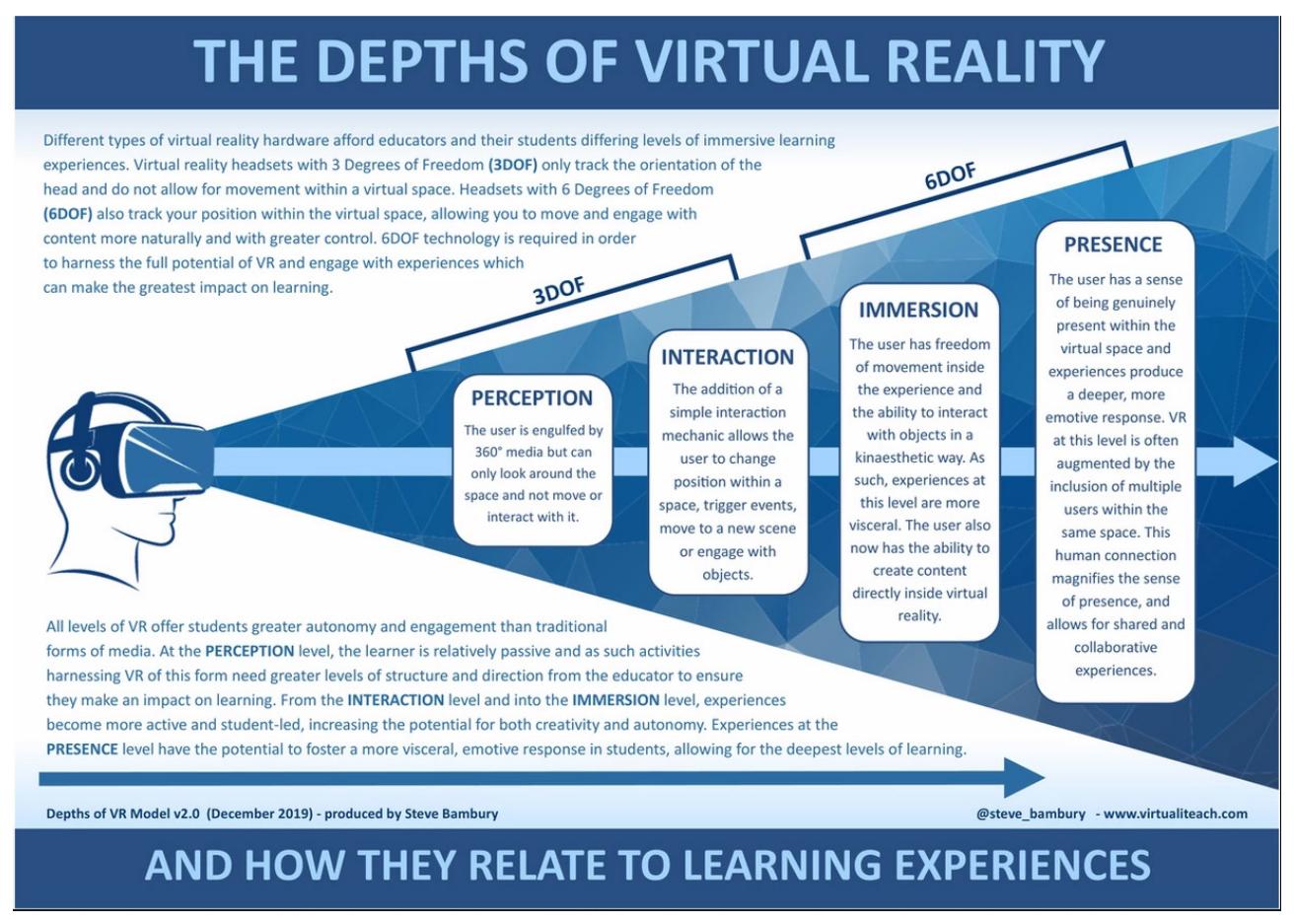
Fig. 6. Virtual experience stages according to Bambury
Based on Bambury's description, Hikayat Dipanegara brought a new platform that was not only temporary in the PSBB period but could be an alternative platform for artistic development and the spread of its promotion for new enthusiasts.
Hikayat Dipanegara which originally was designed for interactive performance with high participation from audience has fulfilled the perception, interaction, and immersion depth of virtual reality.
By using the upcoming technology, i.e. multiuser technology, the digital presentation of Hikayat Dipanegara will reach the presence depth, which will be coming in the near future since this multiuser technology already exists in digital gaming.
For the purposes of artistic development, the experience of working in such a way can be input into conventional works as performing arts in theater and other places of performance.
CONCLUSION
Hitherto, watching live performance on a conventional stage is deemed to have made the audience see the originality of the show as more authentic. Digital form, on the other hand, can offer solutions to the problem of time limitations in watching performances (Aristidou, 2015).
Digital technology that uses camera recording technology such as cinematography skills can open new perspectives in creating works and produce nuances of new works for the performance art.
There are still many new nuances that can occur when dance as an art meets videography using digital technology media.