

ABSTRAK
Penelitian ini bertujuan untuk mengetahui peran guru geografi dalam meningkatkan kesiapsiagaan bencana gempa bumi dan tsunami oleh peserta didik SMA di Banda Aceh. Penelitian ini adalah penelitian deskriptif dengan menggunakan pendekatan kuantitatif. Penelitian ini dilakukan di delapan SMA di Banda Aceh dengan sampel penelitian adalah 15 guru geografi dan 10 siswa di setiap sekolah yang dipilih dengan Purposive Random Sampling. Teknik pengumpulan data dilakukan melalui kuesioner yang dibagikan kepada guru dan item tes kepada siswa. Analisis data menggunakan teknik Statistik Deskriptif. Hasil penelitian menunjukkan bahwa peran guru dalam meningkatkan kesiapsiagaan bencana gempa dan tsunami di kalangan siswa didominasi oleh kategori sedang (40%). Berdasarkan hasil penelitian ini, dapat disimpulkan bahwa peran guru geografi dalam meningkatkan kesiapan siswa tidak memuaskan.
Kata kunci: guru geografi, gempa bumi dan tsunami, kesiapsiagaan bencana
INTRODUCTION
Natural dynamic affects human life both beneficially and harmfully. It is the harmful effect which is known as disaster. The increasing occurrence of disaster in various parts of the world has encouraged many countries to conduct research and studies which aim to arrange together the strategy to fight against disaster in order to save human life and to prevent property loss (Ersoy & Kocak, 2016). Indonesia is one of the countries which is prone to geological disaster such as landslide, volcano eruption, earthquake, and tsunami. It is because Indonesia islands lie on the convergence of three main plates in the world, namely Indo-Australian Plate, Eurasian Plate, and Pacific Plate. The movement of those three plates cause earthquakes and the path of that convergence of plates is located on the sea; if the earthquake occurs in the shallow part, big earthquake occurs, which subsequently will cause tsunami (Supriyono, 2015).
Earthquake and tsunami disaster that occurred on 26 December 2004 that struck Indian Ocean is one of the most terrible natural disasters that ever happened. This disaster had caused many people lose their lives and properties. One cause of that is because people who live in the coastal area did not understand about tsunami disaster preparedness. Learning from that earthquake and tsunami disaster, Indonesia should prepare its people to face disaster (Desfandi, 2014). The disaster mitigation effort in Indonesia which refers to juridical base is relatively late compared with some other countries which are prone to natural disaster (Gadeng, 2019). According to Suhardjo (2011), the concept of disaster solution is entirely just announced in law domain in 2007 by issuing The Act of Republic of Indonesia No.24 Year of 2007 about Disaster Mitigation.
Due to urgency and complexness of the problem in facing disaster, of course disaster solution must be done through various tracks, among others, is through formal and informal education without age limit. Young people as well as adults must understand about disaster preparedness. As we know, children are very
sensitive both physically and emotionally and are more vulnerable in emergency compared to adults. Because of that, they need to be protected and safeguarded by government and parents. This task should be the main priority in sustaining the next generation (Ersoy & Kocak, 2016). Similarly with its target, it is not only limited to certain group, but also must include all group of people. It is because disaster not only threats poor and uneducated people, but also threats rich educated people both in urban and rural area. Based on that concept, the disaster risk reduction needs to be done through formal and informal track (Suhardjo, 2011).
Education is a key element to build the country in producing developed citizens without marginalizing culture, universal heritage, and natural resource aspect sustainability (Mahar, et al, 2019). Education as a system plays role in developing students to possess knowledge is one of the potential tracks to grow and develop knowledge and understanding about disaster mitigation. Knowledge is the main factor and becomes the key for preparedness. The knowledge possessed usually can influence attitude and concern to be prepared in anticipating disaster before it occurs (Hidayati et al., 2010). Formal education has important role to build people awareness in facing disaster. The function of school in facing disaster risk includes facilitating and cooperating with surrounding environment to enhance people's skill, and school teaches children all forms of education both academically and non-academically through subject teacher (Adiyoso & Kanegae, 2013).
Geography learning has an important role in enhancing disaster preparedness among students. Introducing disaster literacy in geography learning can develop students' problem solving skill, particularly the problems related to natural disaster and geography (Susanto, Sumarmi & Susilo, 2016). Based on this proposition, geography as a subject in school needs quality learning in order to meet the education standard in Indonesia, which is increasingly improved day by day with the advance of technology (Mahat et al., 2019). In
Indonesia, in the geography learning for Senior High School 2013 Curriculum, i.e. the disaster mitigation topic, students are expected to be able to analyze the type and mitigation of natural disaster through education, local wisdom, and modern technology utilization. Then students are also expected to have basic competence in presenting examples of the application of mitigation and how to adapt it. Most importantly, students are also expected to be skillful in making the ground plan sketch, or map of local region disaster potential, and disaster mitigation strategy based on that map. Substantially, such an education is one effort to create a community who aware and responsive to disaster through Disaster Risk Reduction education (Suhardjo, 2011).
In Japan, in primary and secondary schools, disaster prevention education is taught under Health and Physical Education field as part of school safety education. But, bearing in mind that geographically Japan is very prone to disaster, people who live in Japan need to learn about disaster and disaster prevention with higher intensity. In secondary school, students learn specific features from natural environment in Japan and its natural disaster. Students learn how to evaluate the danger of disaster by objective data. Through that activity, they acquire ability to see disaster objectively (Ohnishi & Mitsuhashi, 2013).
Geography teacher plays an important role in introducing disaster literacy (Susanto et al., 2016). Therefore, it is important for a teacher to possess skills in managing the learning process in the class. This skill enables teacher to create learning atmosphere which is meaningful (Sari, 2017). Because of that, in developing the learning implementation plan effectively, a geography teacher should take into account the use of learning method that can attract and stimulate students' interest, both inside and outside class (Mahat et al., 2019). In disaster simulation practice in school, geography teacher can play an important role. For example, in earthquake disaster simulation, with instructions from the teacher, students can be quietly directed to go out from class toward the school park to gather. In Turkey, this practice is often considered as formality and not be done seriously. Even though teachers have very good attitude during training, they cannot do it well because they lack knowledge in detail for disaster preparedness (Ersoy & Kocak, 2016).
The role of the teacher in increasing disaster preparedness can be seen at least from six indicators, namely the teacher as a motivator; facilitator; organizer; informatory; counselor; and evaluator. Through these roles, it is hoped that it can improve students' preparedness in facing disasters, which includes aspects of knowledge and attitudes; emergency response plan; early warning system; and resource mobilization. The extent to the understanding about disaster's preparedness can be understood by students, depending on teacher's ability. One ability is that they must possess better knowledge about disaster preparedness and higher level of knowledge about disaster than their students (Hidayati et al., 2010). Based on this understanding, the aim of this study is to find out the role of geography teachers in enhancing earthquake and tsunami disaster preparedness among students of Public Senior High School in Banda Aceh; and disaster preparedness level among students of Public Senior High School in Banda Aceh.
METHODS
This research was conducted with a quantitative approach using descriptive statistical analysis. The study was conducted in April 2019 in eight Public Senior High Schools in Banda Aceh. The study samples consisted of 15 geography teachers and 77 students in eight Public Senior High Schools in Banda Aceh (Table 1). Sample was determined by using purposive sampling technique. The main consideration to determine the sample is that geography teachers who teach in those schools have experiences as teacher for more than 10 years and had applied 2013 Curriculum.
| TABLE 1 THE NUMBERS OF RESPONDENT |
|---|
| BASED ON STATUS AND ORIGIN OF SCHOOL |
| No | School | Teacher | Student |
|---|---|---|---|
| 1 | SMA Negeri 1 Banda Aceh | 1 | 10 |
| 2 | SMA Negeri 4 Banda Aceh | 3 | 10 |
| 3 | SMA Negeri 5 Banda Aceh | 2 | 9 |
| 4 | SMA Negeri 7 Banda Aceh | 3 | 10 |
| 5 | SMA Negeri 8 Banda Aceh | 2 | 9 |
| 6 | SMA Negeri 11 Banda Aceh | 1 | 10 |
| 7 | SMA Negeri 12 Banda Aceh | 2 | 10 |
| 8 | SMA Negeri 13 Banda Aceh | 1 | 9 |
| Total | 15 | 77 |
The technique used to collect the data about teachers' role in increasing understanding about disaster preparedness is through questionnaire. Before using the data, the questionnaires are tested for their validity and reliability. The answers gained from the questionnaires are given weight by using Likert Scale that consist of five alternative answers as showed in Table 2.
TABLE 2 THE CRITERIA OF LIKERT SCALE
| No | Criteria | Positive Score | Negative Score |
|---|---|---|---|
| 1 | Always | 5 | 1 |
| 2 | Often | 4 | 2 |
| 3 | Sometimes | 3 | 3 |
| 4 | Seldom | 2 | 4 |
| 5 | Never | 1 | 5 |
All questionnaires obtained were processed by using descriptive statistics. Then the results were categorized by referring to the categorizations which use the formulation of range, mean and standard deviation as showed in Table 3.
TABLE 3 CLASSIFICATION OF RESPONDENT ANSWER CATEGORY
| Interval | Category |
|---|---|
| x ≥ + 1.5 SD | Very High |
| + 0.5 SD ≤ x < + 1.5 SD | High |
| – 0.5 SD ≤ x < + 0.5 SD | Medium |
| – 1.5 SD ≤ x < – 0.5 SD | Low |
| x ≤ – 1.5 SD | Very Low |
The technique to collect data about earthquake and tsunami disaster preparedness among students is test. That test results were categorized by using categorization developed by LIPI, UNESCO and ISDR (2006) as showed in Table 4.
TABLE 4 DISASTER PREPAREDNESS LEVEL
| No | Range of Scores | Level of Preparedness | |
|---|---|---|---|
| 1 | 80 – 100 | Very Ready | |
| 2 | 65 – 79 | Ready | |
| 3 | 55 – 64 | Almost Ready | |
| 4 | 40 – 54 | Less Ready | |
| 5 | 0 – 39 | Not Ready | |
RESULTS AND DISCUSSION
We will discuss the findings of the study in two aspects: (1) the role of geography teachers in enhancing earthquake and tsunami disaster preparedness, and (2) earthquake and tsunami disaster preparedness among students.
The Role of Geography Teachers in Enhancing Earthquake and Tsunami Disaster Preparedness
In this research, the role of Geography teacher in increasing disaster preparedness can be seen at least from six indicators, namely the teacher as a motivator; facilitator; organizer; informatory; counselor; and evaluator. Based on the calculation and analysis, the result the role of geography teachers in enhancing earthquake and tsunami disaster preparedness among Senior High School students in Banda Aceh City was obtained. The result shows that the range is 45, mean 1130.06, and deviation standard 13.50. The analysis from data shows the distribution of frequency and categorization of teachers' role in enhancing earthquake and tsunami disaster preparedness among Senior High School students in Banda Aceh as showed in Table 5.
TABLE 5 TEACHER'S ROLE IN ENHANCING EARTHQUAKE AND TSUNAMI DISASTER PREPAREDNESS
| No | Interval | Frequency | Percentage | Category | |
|---|---|---|---|---|---|
| 1 | x ≥ 150.31 | 0 | 00.00 % | Very High | |
| 2 | 136.81 ≤ x < 150.31 | 4 | 26.67 % | High | |
| 3 | 123.31 ≤ x < 136.81 | 6 | 40.00 % | Medium | |
| 4 | 109.81 ≤ x < 123.31 | 4 | 26.67 % | Low | |
| 5 | x ≤ 109.81 | 1 | 06.66 % | Very Low | |
| Total | 15 | 100.00% |
Graphically, the study result in Table 5 about the role of geography teachers in enhancing earthquake and tsunami disaster preparedness
among students of Public Senior High School in Banda Aceh is as showed in Figure 1.
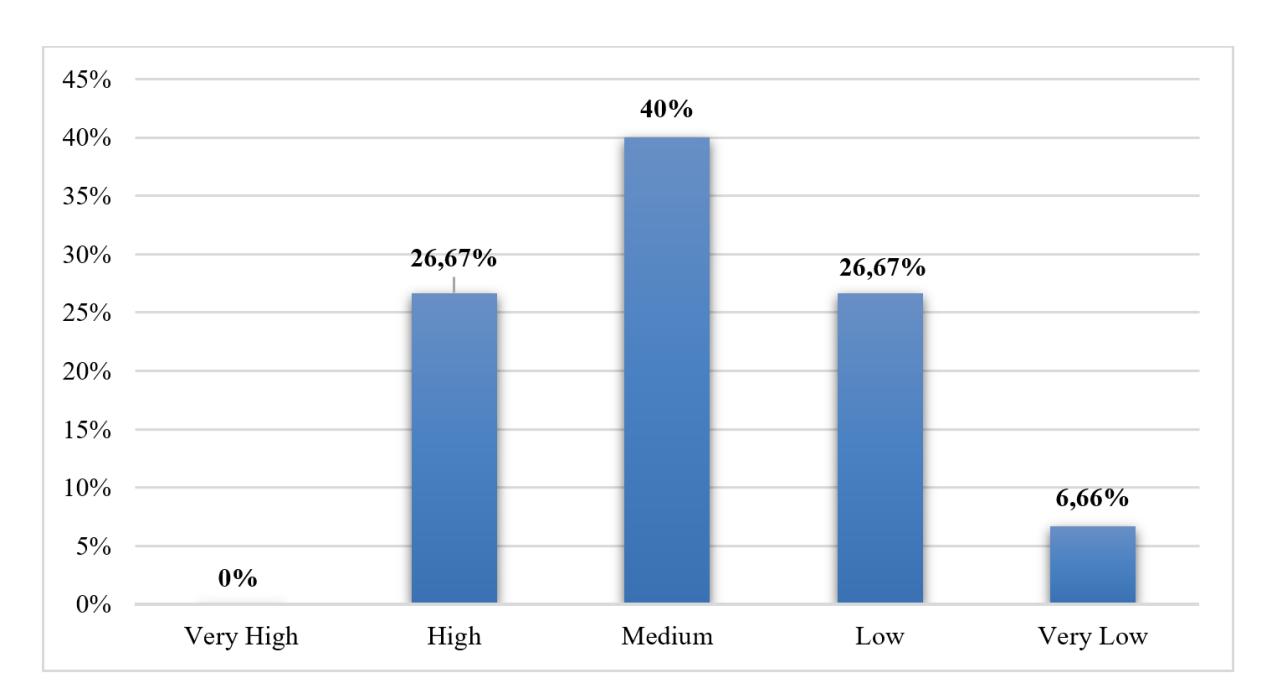
Figure 1 Graphic of Teacher's Role in Enhancing Earthquake and Tsunami Disaster Preparedness
Earthquake and Tsunami Disaster Preparedness among Students
The level of preparedness of students in dealing with earthquake and tsunami disasters in this study was measured based on four indicators, namely knowledge and attitudes; emergency response plan; early warning system; and resource mobilization. The result of the calculation and analysis of earthquake and tsunami disaster among students of Senior High School in Banda Aceh shows the result of range of 50, mean of 64.80 and deviation standard of 16.82. The result of percentage distribution of earthquake and tsunami disaster preparedness among students of Public Senior High School in Banda Aceh City is as showed in Table 6.
TABLE 6 GRAPHIC OF EARTHQUAKE AND TSUNAMI DISASTER PREPAREDNESS LEVEL AMONG STUDENTS
| No | Score Index | Number of Students | (%) | Level of Preparedness |
|---|---|---|---|---|
| 1 | 80 – 100 | 26 | 33.76% | Very Ready |
| 2 | 65 – 79 | 22 | 28.57% | Ready |
| 3 | 55 – 64 | 15 | 19.48% | Almost Ready |
| 4 | 40 – 54 | 8 | 10.38% | Less Ready |
| 5 | 0 - 39 | 6 | 7.80% | Not Ready |
| Total | 77 | 100.00% |
Graphically, the level of earthquake and tsunami disaster preparedness among students of Public Senior High School in Banda Aceh can be seen in Figure 2.
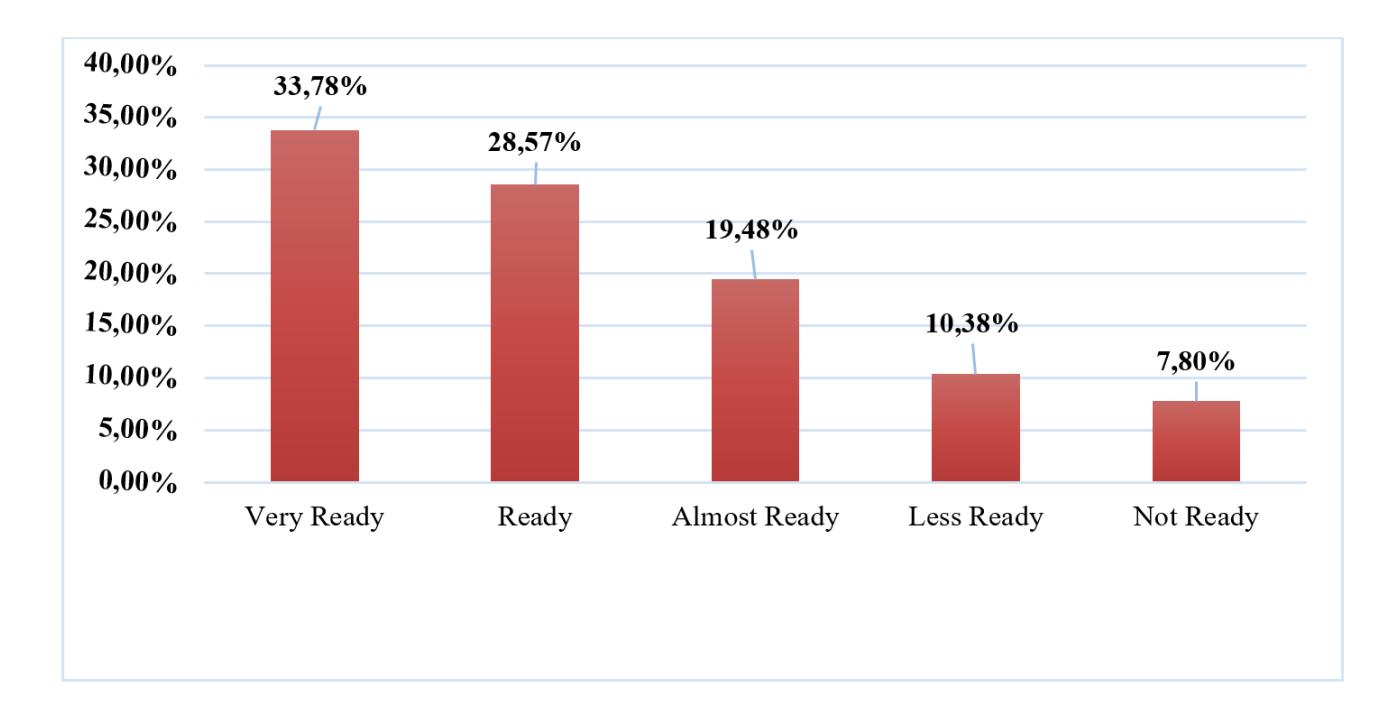
Figure 2 Graphic of Earthquake and Tsunami Disaster Preparedness Level among Students
In the era of globalization, it is very important for geography teachers to understand technology to be integrated in learning (Stojsic et al., 2019). In the topic of disaster mitigation, for example, teachers must understand the technology to be integrated in learning, one of which is Geographic Information System technology (Setiawan, 2013). GIS technology can be used to analyze and map disaster risk areas and can be used to map rescue routes from disasters. As a facilitator in learning, teachers must be able to facilitate students in utilizing GIS technology in learning, but as stated by (Sugandi, 2006) the problem is, for using GIS technology, it requires knowledge and skills in operating computer equipment and GIS software. Based on the results of the study, it shows that there are no teachers who are ready to use GIS technology in learning, because they cannot operate GIS software. It is therefore very reasonable if, based on the results of research on eight Public Senior High Schools in Banda Aceh, the teacher's role in enhancing earthquake and tsunami disaster preparedness among students is dominated by medium category, that is, 40%. Next, it is followed by high category (26.6%) and low category (26.67%), and very low category (6.66%). Whereas, there is none included in high category.
This study result is close to the findings of the result conducted by Making (2017) which showed that the role of Physical Education teacher in the effort to prevent volcano eruption disaster among students of Junior High School in Sleman, Special District of Yogyakarta is more dominant in the medium category (50%). Another study was conducted by Bashori (2013) about teacher's role in school preparedness in facing flood disaster in Surakarta City. The result showed that teachers' role in school preparedness indicator in facing disaster obtains a mean score of 7.5. In indicator of disaster basic knowledge, it obtains a mean score of 7.2, and attitude indicator in facing disaster a mean score of 7.1.
Based on this study and some earlier study results, it can be concluded that the role of geography teachers in enhancing students'
preparedness is not satisfying. Educational institution is one of the most strategic and potential institutions to become a place to inculcate disaster preparedness attitude among students. Moreover geography teachers who teach KD 3.7 and 4.7 topics are mostly related to disaster mitigation in 2013 curriculum of geography subject.
Essentially, geography has a very close relation to disaster problems. It is expected that good understanding about geography topic can enhance students' understanding about disaster mitigation. The study result of Susanto et al. (2016) showed that geographic literacy can enhance one's knowledge and understanding about natural disaster preparedness. Students actively participate in learning activity, make portfolio and memo sheet about disaster mitigation and adaptation. The students' score should increase by making portfolio and memo sheet tasks, from Cycle I to Cycle II. Students should be aware of the importance of natural disaster mitigation and adaptation and be willing to apply their knowledge about natural disaster mitigation and adaptation if needed.
One thing among others, what causes the geography teacher's role to have not been optimal is because teachers had not applied active learning in each learning about disaster preparedness. The application of active learning with various methods by using learning media is very good to enhance students' understanding about disaster mitigation. The study result of Ohnishi & Matsuhashi (2013) found that, in Japan, one effort to enhance students' awareness about disaster is through learning from land usage map in the past in their environment. Japanese people learn about vulnerability of their environment to disaster. Students also learn the history of their own city through map.
Another cause is that teachers only know and teach theory but rarely practice it directly in the field. This disaster mitigation subject matter should be practiced more so that it shapes disaster preparedness attitude among students. According to Ersoy & Kocak (2016), disaster practice in school must contain the philosophy that approaches disaster and proactive reaction.
Training must be supported by visual material to enhance its effectiveness. Parents and psychologists perhaps must be involved in simulation in school for effective collaboration. Related to it, the strategic steps need to be done in the future in order to change this condition. School needs to build cooperation and trains teachers in order to understand more their role in enhancing disaster preparedness. School also must have policy which regulates preparedness plan and enhances the mobility of school's internal resource to build teachers' capacity in disaster preparedness aspect. As stated by Bashori (2013), teachers' role for school preparedness in facing disaster also should be supported by school preparedness in school policy in order to be applied as a whole. Through this way it is expected that the role of geography teachers in enhancing students' preparedness will be implemented maximally.
Related to earthquake and tsunami disaster preparedness among students, the study result showed that the level of disaster preparedness is dominated by very ready category, that is 33.76%, and then followed by ready category (28.57%), almost ready (19.48%,) less ready (10.38%) and not ready (7.80%). This study finding is almost similar to the result of study conducted by Rahwamati (2016) that showed the preparedness among students of Public Junior High School 2 Imogiri in facing earthquake disaster is in ready category (49.465) and in very ready category (41.40%). Then the result of study conducted by Suhada et al. (2014: 9) about disaster preparedness knowledge showed that knowledge and preparedness among school community in Public Senior High School 2 North Kluet to earthquake and tsunami disaster had been included in good category. The mean score of school community's knowledge about disaster is 61.41% and the mean score of disaster preparedness is 59.98%.
This study finding showed that there is unsuitability between teachers' role and students' knowledge on disaster preparedness. The role of geography teachers is in very low category until high category, whereas the level of students' knowledge is in not ready category until very
ready. This is due to the lack of teachers' selfmotivation, so that they are reluctant to enhance their quality as teachers, and the limitation of school facility and infrastructure which support the learning process about disaster mitigation.
The study result of Sari (2017) showed that the low professional competence among geography teachers is caused by lack of teachers' motivation to continue their education, lack of attention to fostering and training done by superintendent and school principal, and the fact that workshop had not been usually implemented effectively among the group of geography teachers. Teachers should have their own will to continuously enhance their quality as educators. In developing teachers' professional competence, teachers need to enhance special competence which particularly enable them to face the problem encountered in class, and teachers also should do innovation in the learning process. The role of teachers will be effective for the school if professional teachers with high competence and strong commitment are willing to give optimal contribution to school or students in the learning process (Sari, 2017).
Based on this study result, it is revealed that students' knowledge about disaster preparedness is also influenced by the environment. It is in this context that the study is done in schools in Banda Aceh, where the case of earthquake and tsunami disaster are prone to occur. Nevertheless, the effort to make educational institution as one basis to inculcate disaster preparedness attitude is still needed to be enhanced. School program based on Disaster Risk Reduction education needs to be improved and implemented evenly in the areas included in disaster- prone areas.
It is time for adopting a disaster mitigation education, for the sake of Disaster Risk Reduction. It must be done through formal education program in the National Education System, with the curriculum design and Education National Standardization Body (Suhardjo, 2011). In Japan, introduction to disaster has been done from elementary school until secondary school. In Elementary School, the goal of disaster education is "to recognize disaster and involvement to disaster prevention."
In Junior High School, students learn "disaster prevention through regionalism." In Senior High School, students learn about human-environment relation in natural disaster and enhance their map skill. In disaster education, reading the map is an important skill. Students learn to read and use the danger map and topography map that are related to everyday life (Ohnishi & Mitsuhashi, 2013).
It is expected that subject teachers can include disaster topic into Learning Implementation Plan, so that it is not only a geography topic but also becomes the hope for students' empowerment in growing their disaster preparedness attitude. Teachers also need to give basic understanding about mapping to students, because as stated by Ohnishi & Mitsuhashi (2013) in disaster education, reading the map is an important skill. Students learn to read and use the danger map and topography map that are related to everyday life.
CONCLUSION
The study result about the role of geography teachers and the level of earthquake and tsunami disaster preparedness among students of Public Senior High School in Banda Aceh showed that (1) the role of geography teachers in Public Senior High School in Banda Aceh in enhancing earthquake and tsunami disaster preparedness among students is more dominant in the medium category, that is (40%); and (2) the level of disaster preparedness is dominated by very ready category (33.76%). Based on this study result, it can be concluded that the role of geography teachers in enhancing students' preparedness is not satisfying. Based on these findings, it is recommended that geography teachers continue to improve their professional competence, namely by increasing the ability to apply innovative learning methods, and increasing the technological literacy to be used in the learning program to produce students who are strong in facing disasters.
ACKNOWLEDGMENT
The researchers want to say thank to geography teachers in Public Senior High School in Banda
Aceh, particularly geography teachers in eight schools who became study samples. This study can be finished because of their participation since the initiation plan until the data collection.