

ABSTRAK
Motif Batik Megamendung berasal dari kata mega atau corak awan yang memiliki arti seperti atap yang melambangkan langit sebagai fenomena alam yang sangat terkenal di kawasan Trusmi Cirebon. Hasilnya adalah batik tradisional Trusmi Masina yang memiliki corak, motif, dan karakter Cirebonan. Bentuk awan merupakan bentuk khas yang terdapat pada batik Megamendung. Pada tulisan ini penulis mengaplikasikan elemen visual khususnya bentuk dan warna motif batik Megamendung pada produk fashion yang digunakan pada saat musim hujan yaitu jas hujan dengan aplikasi pewarnaan glow in the dark. Dengan penerapan refleksi cahaya pada kondisi gelap, malam hari, dan hujan, diharapkan jas hujan ini dapat memberikan penerangan sehingga diharapkan pemakai aman dari kecelakaan. Metodologi yang digunakan dalam penelitian ini adalah eksperimental kuantitatif. Metode eksperimental dilakukan pada pewarnaan glow in the dark, sedangkan pengambilan data kuantitatif dilakukan dengan cara menyebarkan kuisioner pada kalangan pengguna jas hujan, sehingga selanjutnya dapat dihasilkan rancangan baru jas hujan dengan motif Megamendung. Aplikasi ini mengedepankan elemen visual seperti yang dikemukakan oleh Marvin Bartel.
Kata Kunci: elemen visual, motif batik Megamendung, jas hujan, glow in the dark
INTRODUCTION
Motif Batik Megamendung comes from Trusmi area, Masina, Cirebon, West Java. Mega or cloud style has a meaning like a roof that symbolizes the sky with the pattern of clouds inspired by ancient China art. The interpretation of the Trusmi Cirebon community is meant to be a black cloud that will bring rain. Like the arrival of tirtamaya, the water that gives life and that is a highly appreciated natural phenomenon in the Trusmi Cirebon area, the uniqueness of the motif and the color have its own characteristic because it shows the people's sense of need for the preservation of culture and tradition. These needs are transformed into tradition through objects, customs, culture with distinctive color and shape with symbolic content. Particularly in this research, the writer discusses in detail the pattern of batik Trusmi Masina, Cirebon, West Java, one of the most famous batik motifs.
The development of batik world is growing along with the demand for batik that is highly diverse in term of motifs and style, including the Megamendung style that is modified with various approaches. The present Megamendung motifs have undergone considerable changes and been modified by the fashion designer community in accordance with its market demand. This has proven that the group of fashion designers has greatly contributed to the progress of the world of batik, including uplifting the Megamendung motifs.
In the present study, the author tries to develop an earlier study by Kusumowardhani (2016). According to this previous research, there are three basic forms that often appear on six Batik Trusmi, Masina, Cirebon, that is clouds, wings and leaves. Cloud shape is a special form found in batik Megamendung. The present author has developed batik motifs especially Megamendung, Masina, Cirebon, by designing a fashion product, i.e., raincoats, featuring visual elements of glow in the dark Megamendung Cirebon Masina motif. To date the existing raincoats only prioritize their quality on being waterproof and made of strong materials.
Due to the fact mentioned above the present writer has focused on the development of a design by applying a pattern of batik motifs on raincoat products, with the application of glow in the dark dye. Therefore, when people wear raincoats, both onlookers: pedestrians and vehicle users can enjoy the beauty of the traditional motifs through the raincoats they wear. Irin (2002) in her research has mentioned that the Cirebon batik motif needs to be developed and socialized for the sake of its continuous existence among young generation, both in the formal and informal education. Following the identification of visual elements of shape and color in traditional batik Trusmi Masina Cirebon, the writer tries to cultivate the value of the tradition. After analyzing the typical shape and color of Trusmi batik in previous research, the writer continued her research by applying the visual elements in the form of product design. With the development of fashion product design, this raincoat, which uses the application of visual elements of the traditional batik Trusmi Masina, is expected to increase the added value of the products. This can be achieved by putting forward visual elements as mentioned by Marvin Bartel (the ceramic artist and retired professor of Art Goshen College), in his book "Elements and Principle of Design". (Bartel, 1999). The visual elements in the design are 1) Lines, 2) Colors, 3) Shapes, 4) Scale Size, 5) Texture, 6) Level of brightness. The scope of this writing is limited on the visual elements of the shape and color of the Megamendung batik motifs applied in the development of the fashion product design of glow in the dark raincoat.
Origin of Batik Trusmi Masina Cirebon
Masina is the name of batik in the area of Trusmi Cirebon, which has started producing batik since 1942, Masina is descended from batik Trusmi, Masina, Cirebon named Nyi Saminga. Trusmi village is one of the villages that originally grew as a village with local cultural tradition, which later developed through the influence of hindusitic culture. Changes in the status of the village into nobility under Cirebon Sultanate effectively also means that Islam as a religion has been introduced into the the shared culture of Trusmi (Supriadi, 2001).
Types of Batik Trusmi Masina Cirebon
Previous research discusses the various types, meaning, philosophy of shapes and decorative aspects of batik Trusmi made by Masina. Masina Batik depicts all inner experiences, which are combined through the rules, expressions, symbols, meanings, tones and spaces with stories of religion and history. The elements and effects of the universe are described in the forms of meru, plants, animals, buildings as well as flames besides geometric shapes and forms with slashes. The meaning of symbolism is not only to describe the real-life, but also the disclosure of the patterns as a tendency of customs, natural forms and everyday events, which then become symbolic and has a certain meaning closely related to the view of human life, a clear manifestation of the forces (Irin, 2002).
Megamendung Batik Motifs
Mega or cloud pattern is like a roof that symbolizes the sky (Figure 1). The patterns are inspired by the clouds in the ancient Chinese art. Its interpretation was meant to be a black cloud that would bring rain. It developed along with the arrival of Tirtamaya, the water that gives life as a natural phenomenon, which is highly appreciated in the area of Cirebon who suffered due to the ongoing dry season (Syarif, 1985).
Figure 1 Batik Mega Overcast (2016) (source: Paper presend at 7th IRWNS 2016, Polban )
A study by Kusumowardhani (2016, p. 17-25) describes the types of batik pattern based on the embodiment of Masina Trusmi groups of patterns that are still in existence, remain popular, and serve as a source of inspiration forming new patterns. There are 24 batik motifs found in Batik Trusmi, Masina, Cirebon (with Trusmi native batik style). The application of various shapes is based on the division of the groupings represented. Of the various shades are concluded two elements of form and color representing Batik Trusmi Masina Cirebon.
Visual Element of Trusmi Batik: Forms
There are three basic forms that often appear in six Batik Trusmi, Masina, Cirebon, namely; cloud, wings and leaves (Figure 2) (Kusumowardhani, 2016, p. 113). Cloud shape is a special form found in batik Megamendung.
Figure 2 Visual Elements of the Cloud-Based Shapes that Emerge in the Sixth Batik Trusmi Masina (2016) (source: Paper presend at 7th IRWNS 2016, Polban )
Cloud shape is a special form found in batik Megamendung, which also appears on five of six batik choices. Here is a form of style that became one of the characteristics of the typical shape of the pattern of Batik Trusmi Masina Cirebon.
Visual Element of Trusmi batik: Color
Trusmi Batik come in different shades of color, Masina,Cirebon made by Masina Trusmi area that is black color, greenish brown, cream, dark brown, brown, ivory color, and derivative of blue color which only appear on batik Mega Mendung. The colors that appear on the six selection of batik Megamendung can be found in Figure 3.
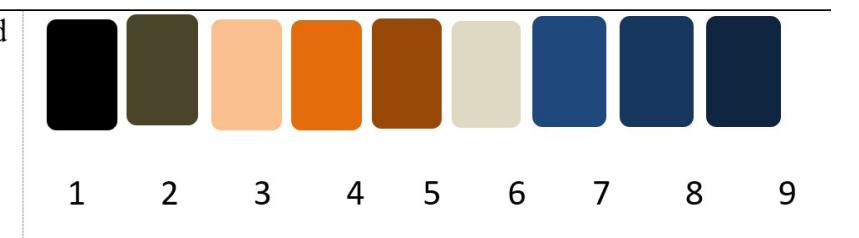
Figure 3 Colors that are found in 6 batik choices (2016) (source: Paper presend at 7th IRWNS 2016, Polban )
In Figure 3. Color analysis performed on six batik choices show nine colors, six of which often appear in Batik Trusmi Masina Cirebon. This became one of the characteristics of the identity of batik Trismi Masina Cirebon, i.e., 1. Black; 2. Greenish Chocolate; 3. Cream; . Old Chocolate; 6. White Ivory; 7. Blue. The most dominant color in batik Mega Mendung is a derivative of blue and monochrome colors.
Raincoat: Types and Shapes
Raincoat is waterproof garments worn to protect the body from rain. The main function of raincoat to minimize the entry of water, protecting the body parts and clothing. Most raincoats are made in bright colors for easy wearer look during heavy rain when visibility is reduced.
There are four (4) types of raincoats based on their shape in the market, namely:
- a). Poncho Raincoat. The shape of a poncho raincoat is simple; it is like a cloak that has an unclosed part on both sides and are available in different sizes. It is suitable and safer for use by the Army as it is relatively long and will not open by wind and rainwater. Besides, being a protective tool from rain, raincoats can also serve as a cushion as this poncho is made of waterproof material (parachute).
- b). Overcoat Raincoat. This raincoat is like a jacket or a coat. Indonesia this kind of raincoat is commonly used by miners and the police. When it rains, the raffic police usually wear a white jacket like a long jacket down.
- c). Rain Training Pad / Bottom and Up / Rain suit. This raincoat consists of two parts, the
d). Rain Skirt or Robe. It is a new raincoat model that looks like a robe. This raincoat is more suitable for women who are active or wear gamis or Long Skirt.
Raincoats that apply decorative motifs of batik on the market
The following are the examples of raincoats in the market that have been applying the Megamendung batik motifs (Figure 4 and Figure 5).
Figure 4 Raincoat with ornamental motif application (2017) (source: Paper presend at 8th IRWNS 2017, Polban )
Figure 5 Raincoat with decorative motif application (2017)
(Source: Paper presented at 8th IRWNS 2017, Polban)
In Figure 4, the model wear the top down raincoat model, with the application of decorative motif Megamendung. This does not apply any materials of glow in the dark. Figure 4 shows motifs derived from Surabaya, which is in contrast with the raincoat in Figure 5. This raincoat uses glow in the dark dyes for the raincoat with a green line, such as a raincoat in general.
Materials for Raincoats with glow in the dark Megamendung Motifs
This raincoat material consists of three types, i.e., PET (Polyethylene or polythene), PVC (Polyvinyl chloride), and Nilon. Polyethylene or polythene is the most common plastic, primarily used in packaging (plastic bags, plastic films, containers including bottles, etc.). There are many kinds of polyethylene known, mostly having the chemical formula of (C<sub>2</sub>H<sub>4</sub>)n. PE is usually a mixture of similar polymers of ethylene with various values of n. Polyethylene is of low strength, hardness and rigidity, but it has a high ductility and impact strength as well as low friction. It shows strong creep under persistent force, which can be reduced by addition of short fibers, and feels waxy when touched. The usefulness of polyethylene is limited by its melting point of 80 °C (176 °F) (HDPE, types of low crystalline softens earlier). For common commercial grades of medium- and high-density
polyethylene, the melting point is typically in the range of 120 to 180 °C (248 to 356 °F). The melting point for average, commercial, lowdensity polyethylene is typically 105 to 115 °C (221 to 239 °F). These temperatures vary strongly with the type of polyethylene. Polyethylene absorbs almost no water. The gas and water vapor permeability (only polar gases) is lower than that for most plastics; oxygen, carbon dioxide and flavorings, on the other hand, can pass it easily. PE can become brittle when exposed to sunlight; carbon black is usually used as a UV stabilizer. Polyethylene cannot be imprinted or stuck together without pretreatment. Depending on thermal history and film thickness, PE can vary between almost clear (transparent), milkyopaque (translucent) or opaque)
Glow in the Dark Dye
Phosphors are materials that exhibit the phenomenon of luminescence, i.e., they emit light when exposed to radiation such as ultraviolet light or an electron beam. Phosphorous materials are called photoluminescent, plasma and field emission displays, LCDs, cathode ray tubes (CRTs), X-ray detectors, LEDs and many more. (Birkel, Denauit, George, & R, 2012). Inorganic phosphors usually consist of a host material that could be an oxide, nitride, oxynitride, silicate, sulfide, selenide, halide or oxyhalide, doped with small amounts of activator ions like rare earth and/or transition metal ions (Yen, 2014). The activator ions act as emission or luminescence centers and possess energy levels that can be transferred. Activator ions can be broadly divided into two categories. In the first type of energy levels of the activator lattice.
A good phosphor should absorb the excitation energy and emit light afterwards as fast and efficiently as possible. The elapsed time between excitation and emission should be short to avoid afterglow. Energy absorption can occur either at the lattice ion or at a random place in the lattice, but eventually the energy should be transferred to the luminescent center for the emission to occur. The absorbed energy can also be lost through radiationless decay, thereby decreasing the quantum yield, QE and also the lumen equivalent, the emission spectrum and the emission lifetime. The color point is derived from the spectral energy distribution of the emission and is defined according to the convention of the Commission Internationale d'Eclairge (CIE) diagram (Smith, 1931). The CIE diagram is used to determine the color of the phosphor material or a mixture of phosphor materials along with the color saturation.
Polyflex or Heat Transfer Film is a material media screen printing made of vinyl material that has a strong adhesion and is easy to use. This type of screen printing is suitable for designs that only have one or two solid colors. The conventional screen printing, when we want to do it on t-shirt material, is a long process of inprint, washing, print, setting and so on. Polyflex printing requires 3 processes, known as CPP, which stands for cut, peel, press. Cut is performed using cutting machine; peel is the process of taking off the unused parts, while press is performed using hot press machine. Polyf lex is divided into Pu, PVC, Flock, Foil, Gliter, Glow in the dark and reflective. Polyflex glow in the dark is reflective and commonly used in this type of material that when exposed to light, it will reflect the light. Polyflex reflective printing t-shirts are worn by people who like to move at night.
METHOD
Research Approach
This research uses experimental quantitative methodology by applying the results of exploration of the visual elements of color and shape to bring new fashion into the design of raincoats, especially, for users who use two-wheeled vehicles. This study focuses on analyzing the visual elements of Batik Megamendung motifs. This study uses experimental analysis model as a systematic method to build relationships of cause and effect phenomena. Experimental research is a core method of research model that uses a quantitative approach. In the experimental method, the researcher performs three main requirements namely: 1. Control activities; 2. Manipulation activities; 3. Observation (Bungin, 2013).
In the experimental research, the researcher divides the object or subject into 2 groups, i.e., treatment group that is the raincoat with new variant and control group that is the students of the non-treated media.
The modeling sketches based on visual element analysis methods follows the visual element theory of Marvin Bartel's. The visual elements of Trusmi batik Masina Cirebon discussed in this research are devoted to two visual elements of shapes and colors in Batik Mega Overcast, and therefore the focus of output produced is a product of fashion raincoat using dye glow in the dark that have traditional values and can increase value-added.
Place and Time of Research
The author conducted this research on the campus of State Polytechnic Creative Media, Srengseng Sawah, Jagakarsa, South Jakarta. The study was conducted within 6 months with the following detail. Stage one (data collection and design sketches selected) was done in three months. Stage two was conducted within three months of that process of experimentation of the glow in the dark dye and the determination of the design of motif using the applications of glow in the dark dye on the basic material of the raincoat.
Research Variables
The term variable means the factor that is not fixed or immutable (Bungin, 2013). In this study the author uses two variables. The first variable is the application of the visual element of motifs ornaments of batik Mega Mendung on the sketch of the raincoat design by first identifying the design according to the needs of the respondents following the collection of the questionnaire, in this case the subject of the research. Then, the second variable is the making of a few samples of experiments on the materials of the raincoat using glow in the dark dye, and then followed by its application on the design chosen.
Subjects and Objects
In the experimental research, the researcher divided the object and the subjects under study into 2 groups of treatment groups: the raincoat as the object of research with new variant, and the control group as the subject, i.e., the students of State Polytechnic Creative Media Jakarta, aged between18-20 years, male and female, who are users and owners of raincoats.
Data Collection Technique
In obtaining accurate and reliable data and research results, the data collection techniques were done through literature methods from several journals and books and the Internet; qualitative data were obtained from the dissemination of 100 questionnaires among the students of State Polytechnic Media Creative, Jakarta, which focused on the users and owners of raincoats, and the documentation of photographs of the processes of each stage as well as the results of the design exploration.
Research Stages
The stages of the implementation of the research on the visual elements of decoration on the design of Batik Megamendung on the raincoat using glow in the dark dye areas follows.The first stage is the identification of visual element data, finding out the type of the raincoat, introduction of raincoat materials, identification of Trusmi Masina batikand of visual elements of the design. The second stage is the data collection methods: identifying visual elements that will be applied on the raincoats, finding out raincoats that are already in the market and have design batik motifs and raincoats that best suit the users of two-wheeled vehicles, selecting the glow in the dark dye. The third stage is the application of the design: designing alternative design sketches with visual elements of batik Megamendung, experimental process of basic materials of the raincoat, experimental process of basic materials using glow in the dark dye, alternative design sketches selected awakened concept. The fourth stage is the results of the design of the motifs following the applications of the glow in the dark dye on the basic materials of the raincoat.
RESULTS AND DISCUSSION
In applying visual elements of the batik Megamendung decoration, the author considered the quantitative data obtained by spreading the questionnaire accompanied by searching data through literacy. After distributing the questionnaire and getting a conclusion, the writer made the raincoat design concept with the application of the Trusmi Masina batik visual element, Megamendung, with the aim of designing the raincoat, can clearly apply the derivative elements of the raincoat. shape and color.
Material Experiments
Figure 6 shows a dye exploration with a base material of clear PET raincoat that becomes an option in the application of glow in the dark coloring with a certain amount of phosphoric dye. The basic material of PET plastic (Polyethylene or polythene) has a thickness of 0, 25 mm. Experiments have been tried, and the use of raincoat material with motif accessories that are applied on the PET clear raincoat was done separately.
Figure 7 shows an exploration of the dye with a basis of clear raincoat type of PET that are preferred in the application of the glow in the dark dye with Polyflexdye base material and the type of the glow in the dark and reflective dyes. The use of reflective polyflex is intended for users of raincoats using motorcycles, so that at night when exposed to light, it can reflect light. In contrast, when the lights are off, the color of the glow in the dark dye will appear.
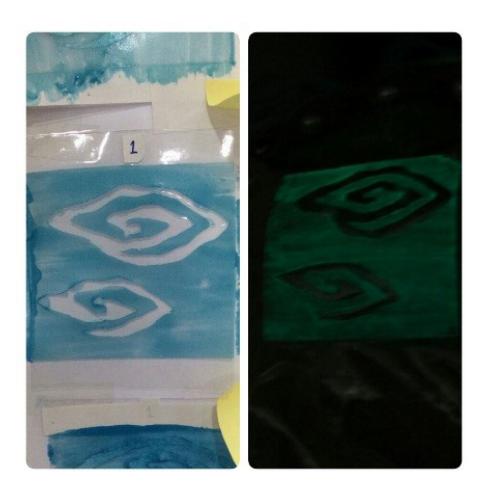
Figure 6 Exploration of Raincoat Material with Phosphoric dye (2017) (Source: author documentation)
Figure 7 Exploration of Raincoat Materials with Polyflex dyes (2017) (Source: author documentation)
Quantitative Data Analysis
The results of the questionnaire distributed among100 correspondents show the following data: in raincoat usage, 86% of users need a raincoat at night, implying the glow in the dark coloring is needed; raincoats on the market use a line sign on the back of the raincoat. The colored line that lights up at night is used to make raincoat users visible at night (72%), look better (10%), easily recognizable (18%), all of which are intended to avoid accidents. Of the many raincoats that exist in the market, only a small number with the application of Indonesian ornamental motifs is known by the students (11%). Although they never saw a raincoat with a particular batik application, the students were aware of batik motif of Megamendung, which comes from Trusmi, West Java (83). Raincoats have a variety of colors and materials. The author, however, sees raincoat with clear material as one that is well known by the public, especially polimedia students (96%). In addition, enthusiasts of raincoat with clear material also get more attention and interest (54%) when compared to that using a certain color (46%). The specialization of clear raincoat is based on the following: looking cleaner (31%), nicer (29%), unique (19%), and more elegant and stylish (6%), as well as more current (15%). From the results of the distribution of questionnaires, the author chose to apply the design of raincoats on a clear plastic material.
Application of Visual Elements of Ornamental Megamendung Batik Motifs
In the process of applying the design, the first thing to do is to create a design concept by determining the trend, style, and look so that alternative representative design sketches with visual elements batik Megamendung can be produced. Regarding trend, in the discussion of quantitative data analysis before, it was explained that the clear raincoat is a well-known raincoat, so the author has chosen a clearcolored material for the raincoats. Regarding style, casual transparent material deems to bring the personality of sporty, clean, stylish and contemporary. As for the look, oriental, glowing, and transparent materials deem to elevate the value of the Indonesian traditional batik Trusmi Masina Megamendung.
Figure 8 Three Design Sketches (A, B, C) of Glow in the Dark Raincoat (Source: author documentation)
Figure 9 Application of visual elements of Mega Mendung batik motifs on the design of glow in the dark raincoat (2017) (source: author documentation)
Alternative Design Options for Glow in the Dark Raincoat
Figure 8 provides choices to the respondents, in that the motif Megamendung in the application on the rainwear should be visible and obvious in order to show the character of the motif itself. From all three of these options, the author provides options and results based on the answer from the students who choose the sketch of design A (85%) because it is considered the simplest and easily recognizable as Megamendung Batik motif. The motif shown is representative because the size of the motif is relatively big, and the glow in the dark outline of the raincoat hoodie can be seen more clearly.
CONCLUSION
Raincoat with the accents of glow in the dark is interesting for the community, as it looks cleaner, nicer, unique, and more elegant and stylish, as well as more contemporary. The application of visual elements on the raincoat motif on the market is still limited and there is still a small number of people who lack knowledge of the raincoat with the application of the specific motif. Raincoat with translucent materials is already well known by the public, implying that specialization in raincoat using transparent material is good. The glow in the dark dye can be applied effectively on raincoats with the aim of maintaining current usage at night and when it rains. Raincoat users can be seen more clearly at night due to the lights reflected in the dark, which can make users safer. The other function is that of aesthetic element of the application of the visual elements of Batik Megamendung as an identity of the traditional Megamendung, Trusmi, Masina, Cirebon, Jawabarat, Indonesia.
Last but not least, any research regarding raincoat and traditional batik motif should be continuously done in line with previous research, so the results obtained are the result of several stages of further research.
In particular, the application of visual elements of Megamendung batik using glow in the dark dye on a raincoat types of PET with a dye phosphors is of two colors, blue and gray. In the future, the process must go through several stages in order to get a lighter color; an alternative Polyflex coloring of glow in the dark dye should be more stable, so that the color applied can appear well. So far there have been a limited choice of colors of glow in the dark Polyflex dye. Lastly, as the development of research and exploration in the glow in the dark dye on raincoat is still very limited, the author hopes that future technology development and design of the raincoat can enhance the world of fashion and design research.