

ABSTRAK
Institusi Pendidikan seringkali diindikasikan sebagai lingkungan kerja yang kurang menarik. Padahal, lingkungan kerja dapat menjadi salah satu faktor yang memengaruhi tingkat kebahagiaan karyawan. Penelitian ini bertujuan untuk mengidentifikasi secara kualitatif tingkat kebahagiaan karyawan dan faktor penentunya, serta mengaitkannya dengan teknologi digital. Teknologi digital menjadi sebuah aspek penting dalam dunia pendidikan karena dapat membantu para dosen dalam berbagi informasi, materi, dan pengaturan kelas secara efektif. Penelitian dilakukan di ITB sebagai salah satu universitas berbasis teknologi. Hasil penelitian menunjukkan bahwa adanya tingkat kebahagiaan yang tinggi diantara para dosen di ITB. Terdapat beberapa faktor penentu dalam menentukan tingkat kebahagiaan tersebut yang terkait dengan hubungan interpersonal dan intrapersonal. Para dosen melaporkan adanya dampak positif dan negatif yang dirasakan dengan penggunaan teknologi digital. Kesimpulan yang diperoleh dalam penelitian ini adalah para dosen di ITB menganggap bahwa lingkungan ITB sebagai sumber kebahagiaan mereka terutama dalam memberikan kebebasan dan kesempatan untuk berbagi ilmu dan nilai-nilai.
Kata Kunci: dosen, teknologi digital, kebahagiaan, kualitatif, faktor penentu
INTRODUCTION
One crucial goal of educational practice is to promote community wellbeing (Craig & Mayo, 1995; Merriam & Kee, 2014). This goal is even more demanding in higher education settings or universities where they need to do more than just academic education. In other words, universities are demanded to implement their programs for the community, society, country, and even the world. Such demands on higher education as an organization will eventually affect lecturers—as they are not only tasked with educating students but also, to the very least, nurture those to become agents toward the betterment of society.
However, working toward community well-being is not an easy task. One of the many requirements needed is individual wellbeing (Haworth & Hart, 2007). This means, an individual should first feel somewhat well before he/she can bring positive impacts on others. One major question that arose from that claim, is how do we become well? In this context, how do these lecturers become well? Many experts (see: Diener & Suh, 1997; Kasser & Ryan, 1999; Dockery, 2010) have proposed a lot of external factors affecting an individual's wellbeing. Consistently, this study aims to theoretically elaborate this topic in the higher education context—specifically in Bandung Institute of Technology (Institut Teknologi Bandung, ITB). As one prestigious state university in Indonesia focusing on technology and its implementation, we would also discuss this technological context along with our discussion.
According to Seligman (2011), happiness is the foundation of well-being, which is indicated by pleasure, harmony, and meaning. To be subjectively well-being, individuals should experience happiness first to some extent. In ITB, for example, it is not easy to recruit and make retention for young potential and creative lecturers. Most of them do not have the interest to be lecturers in ITB and they tend to make choices to work in other universities, even in other countries. This might be related to the facilities that encourage happiness provided by ITB because career choice is related to an individual's perception of emotional experiences and how these emotions could be facilitated by the workplace (Emmerling & Cherniss, 2003). Generally, employees will stay in their workplace if they feel happy (Maertz & Griffeth, 2004). This statement is supported by the fact that a generation gap in ITB has occurred where 74% of their population are lecturers older than 40 years old.
The development of science and technology requires individuals who are mentally and socially adaptable. As the number one technologicalbased educational institution in Indonesia, ITB focuses their research and education on digital technology, climate changes, as well as energy, to become an entrepreneurial university. For the lecturers in ITB, digital technology might be their source of happiness and even unhappiness. Using the Internet, smartphone, and multimedia might help lecturers in ITB to do their job, but those technologies might cause addictions and interrupt interpersonal relationships as well as personal well-being. Kavetsos and Koutroumpis (2011) found out that telephone, both fixed and mobile, music players, computer, and multimedia, including the Internet, were associated with higher levels of happiness. Even Penard and Poussing (2011) found that individuals who are not involved in digital technology, e.g., the internet is less satisfied in their life compared with individuals who are involved in digital technology. In contrast, research conducted at Illinois University suggested using digital technology in the long term would give negative effects on mental health, such as depression and anxiety (Panova & Lleras, 2016). Most of those above-mentioned studies used questionnaires which might be biased with social desirability. By using qualitative methods, such as interviews, Diener (2000) believed research on happiness would be more accurate.
The use of happiness as a construct of wellness is coherent with a lot of other research where happiness is seen as the subjective factor of well-being (see Headey & Wearing, 1992; Eid & Larsen, 2008; Diener et al, 2009). Of course, different theorists would define happiness differently. However, there are three components usually present in defining happiness; those are positive feelings, permanent state, as well as totality and subjectivity.
The first component of happiness is positive feelings. In this context, we emphasized the positive adjectives toward an individual's life associated with feelings such as satisfaction, loving life, enjoyment, content, and so on. This component is consistent across many theories of happiness where each of those put high regards on the positive state of mind (e.g.: Diener, 2000; Ryan & Deci, 2001; Lyubomirsky, 2005; Cohn et al, 2009). However, positive feelings alone cannot be concluded as happiness. This feeling must be rather permanent across a lot of life experiences, which leads us to the second component of happiness.
In the case of happiness, permanent does not necessarily mean constant and always (e.g.: Lyubomirsky, 2005; Seligman, 2012; Veenhoven, 2013). Permanent positive feeling means that negative feelings tend to not last forever, or that despite everything bad they might feel, individuals can still feel good about themselves and the totality of life they live in.
Lastly, the third component of happiness is totality and subjectivity (e.g: Diener, 1984, 2000; Wright, 2000; Elliott & Coker, 2008; Seligman, 2012). The concept of happiness refers to the totality of life; it talks about how positive we feel toward life as a whole instead of one-by-one experiences we encounter (Larsen et al, 2001). Given that exposition, happiness can be defined as a somewhat positive and permanent mental state subjectively felt by everyone toward life.
In the higher education context, we first need to address that lecturers' job demands are not easy. This claim is supported by many experts, Chotivanich (2017), for example, concluded five types of lecturers' workloads, which are: teaching, research, and academic, academic outreach, cultural, and others. The ITB's lecturers are required to teach classes, conduct research and other academic activities, promote community wellbeing as well as integrate cultural demands in their activities. Moreover, some lecturers even must do all of those while acting as deans, heads of the department, or any other structural positions.
In this part, we would elaborate on how their job affects their happiness. This is important to discuss because as adults, we spend a lot of time working and, in many ways, jobs or professions can be a huge part of our identity (Christiansen, 1999; Laliberte-Rudman, 2002). Given its significance in one's life, it would be safe to assume that an individual's job can also affect an individual's happiness or unhappiness. That assumption is supported by many other experts concluding that job-satisfaction can predict an individual's happiness (see: Michalos, 2003; Piccolo et al, 2005).
Digitally speaking, many experts have started to differentiate generations based on the involvement of technology in an individual's life (e.g.: Bayne, 2011, Wang et al, 2013). Prensky (2001) even went further on naming these generations as digital natives and digital immigrants. As the younger generation falls into the digital native category—as they grow up with digital technology such as the Internet; the older generation, the category our respondents fall into, had not met the Internet until they were older, hence the term digital immigrant as they were 'coming' there instead of born there. It does not necessarily mean that digital immigrants are not tech-savvy; it is just these tech natives are more fluent and have more access to learn from a young age, which often gives them more expertise (Prensky, 2009).
In an educational context, especially for lecturers, components are crucial to bringing positive impacts for their students. For example, Seligman proposed the PERMA model in which happiness is the result of positive emotion, engagement, positive relationship, meaning, and accomplishment. However, due to our qualitative approach, we have not assessed specific factors from any theories. Instead, we asked our participants to explain what contributed to their wellness. Using the PERMA model we can see that a positive relationship is something external while the others are internal factors, despite both constantly affecting each other.
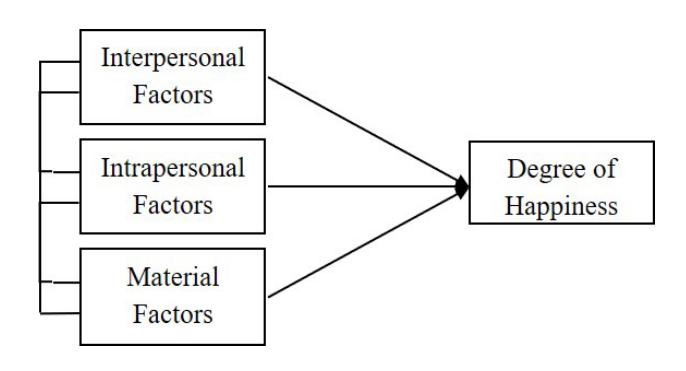
Fig.1 Determinants of Lecturers' Happiness
Material factors refer to the fulfillment of life needs or money. This is consistent with a lot of existing models stating how materials affect an individual's general life satisfaction (see: Diener & Suh, 2000: Diener & Oishi, 2000; Boyce et al, 2010). Other facets included in the intrapersonal factors are freedom and opportunity for selfdevelopment, security, and health. Freedom here refers to the degree to which an individual can express and make choices for him/herself. Coherent with some other research, we conclude that some degree of freedom is essential because it creates a wider range of choices an individual can take (Veenhoven, 2000; Verme, 2007; Inglehart et al, 2008).
Another sub-factor in intrapersonal factors is security. Security becomes significant for individuals as it includes many things, from an environmental job, to legal security. It refers to some belief that an individual is protected or that no harm will happen to him/her (Leonard, 2008). Security becomes a significant factor in happiness because it makes individuals less worrying which contributes to more opportunities for self-development. Health is another crucial facet of happiness as it will affect their freedom of conduct.
The interpersonal factor includes positive relationships with others and significance. Positive relationship refers to conditions in which individuals can build and maintain a warm and fulfilling bond with others, including friends, family, and intimate relationships (Ryff, 1989; Camfield et al, 2009). This is an important determinant of happiness because humans, as social beings, cannot live without others. Others
provide support in many ways, from emotional to physical; hence, individuals who perceive that they can always have others, on whom they are interdependent, will have more sense of security (Kitayama & Markus, 2000). Significance, on the other hand, refers to an individual's perception of how important or contributing they are for others (Uchida et al, 2004). Some sub-factors associated with significance are, contributions, prestige and recognition, and usefulness.
Research on happiness among lecturers in ITB has not been done and how happiness associated with digital technology would be important information for ITB to achieve their vision as a research-based entrepreneurial university. Using qualitative methods, this study aimed to investigate the level of happiness and its determinant factors including its association with digital technology among lecturers in ITB. The determinant factors would be focused on external (e.g., sociocultural and working environment) and internal (e.g., personality and demographic characteristics).
METHOD
As a preliminary study, we used a qualitative approach in addressing this topic because the objective of the research is to know the overview of lecturer happiness in ITB. The research process began by collecting open-ended question forms for 39 participants along with a consent form. In this stage, we asked the participants to rate their level of wellness on a scale of 1-10. Open-ended questions were also presented assessing the reason for their giving such rate as well as what their jobs meant for them and their wellbeing. The results were coded, and a set of interview questions were generated. This is used for the same 39 participants. Following that, an in-depth interview was conducted with each of those participants. These participants were ITB lecturers with at least 5 years of experience (N = 18; Mean Age = 40.94 years old, SD = 9.23; average of experience = 13.77years, SD = 10.27). Each of them represented one faculty or school in ITB. As much as 75% of participants were male, consistent with the proportion of lecturers there. Open and axial coding were conducted, and interrater reliability analysis was done toward the interview transcript.
RESULTS AND DISCUSSION
Results indicate that most of the lecturers experience a high level of happiness in terms of the feelings of enjoyment, fun, trust, and harmony. From our single question of happiness rating, we found that most respondents claimed to be good. A total of 17 out of 18-respondents rated 7 to 10, and the other one rated 5 (five). It indicated that our respondents tended to do somewhat extremely well. From the openended questions, the word happy, its derivatives (e.g., happiness, happily), and words similar in meaning to it (e.g., enjoy, satisfaction) were frequently found. Based on that finding, we consistently use the word happiness throughout this paper when we refer to the state of wellness.
From the interview result, the author found that determinant factors from ITB as a workplace were related to interpersonal and intrapersonal. Internal factors include personal characteristics (e.g., age, gender, ethnicity, personality), education, attitude toward circumstances, and trust. Additionally, participants claimed more general intrapersonal determinant factors of happiness which include being creative and innovative, optimizing another potential, working hard, being religious, flexible, and eager to cooperate, humble, and honest. These more general intrapersonal factors of happiness might explain the happiness status of the lecturers who could not gain happiness from ITB.
Our results also suggest positive and negative impacts of digital technology on happiness. The negative effect of digital technology might isolate individuals from the real world or make people more depressed and feel lonely (Kraut, et al, 1998). Current studies (e.g., Nimrod, 2013) demonstrate that people who have frequent online communication with others through the Internet may be very helpful. Such communication with others who can understand what they are going through may redeem users of the isolation that often accompanies depression, make them realize that they are not alone, and empower them.
Based on our interview, we concluded that our respondents were happy—or at least, somewhat happy. This finding is consistent with the rating they provided before the interview. Most of them reported positive feelings—other than happy—as enjoyment, fun, trust, harmony, ease. They reported that these feelings were not intense or constant, but steady and over-all. These respondents believed that these feelings help them to be grateful for life and what they have and do in life.
Some of these participants also stated that sometimes, life could be stressful and full of problems. However, despite what they felt toward one particular problem—such as anger or disappointment—those negative feelings tend to be specifically directed toward that particular problem alone. What it explicates is that these participants still felt that life was good even when things went wrong; and even when they did not feel good about something, those negative feelings were not directed toward everything else in life. For example, a lecturer might just get his funding denied and feel upset about it, but, he would not be upset toward his students or family at home.
Many admitted that being a lecturer is a life-calling; that it is not a job where they can expect to be rich or successful. What successful meant in the previous sentence is the general conception of success that is usually associated with wealth, fame, and power. From our interview, we found that these ITB lecturers defined success when they could provide for their family, help students to excel, and when students can use the knowledge they taught. When such occurrences happen, they would experience elatedness that tends to last quite some time.
Given that, we asked them to explain the meaning of both ITB and their job. Regarding ITB, all but one participant stated that they felt ITB gave them meaningful work. From the other outlier, he stated that he did not consider ITB to be meaningful, hence, he would not take his employment here as something meaningful. Personally, for that particular individual, ITB is just a place of work. It is not clear whether his perception toward ITB and job are what makes
him less happy in life or the other way around; however, it was indicated that he was both less happy and dissatisfied about his job and ITB.
From others that claimed ITB to be meaningful, they signified that their job provided more meaning for them. In this case, they experienced more happiness through teaching, as they had the opportunity to share their knowledge and values with their students while given enough freedom to explore their expertise and pursue their projects of interest. They felt that they had the opportunity to give something back to society while making a name for themselves. This suggests that workloads associated with lecturers' jobs are seen rather positively by these lecturers. In that sense, specifically for this sample, the job demands are seen as opportunities to flourish. Nevertheless, these participants also stated how some regulations felt as if threatening their happiness.
Despite most respondents declaring to be happy, there is a recurrent theme of happiness detected here. They indeed defined success as a teacher is when they can become an inspiration for their students in the sense that their students can be successful in school and life. It is also true that they acknowledged teaching as a calling. However, they also emphasized the importance of prestige and fame—such as making a name for themselves, having more time to do his/her projects, having more leisure time, and so on. It seems that these lecturers are still using a more hedonistic approach to happiness where they signified pleasure, which means, there is some incoherence with their previous claims of what their profession meant for them.
As stated earlier in this paper, as a technology-oriented school, it would be wise to put into account the role of technology on ITB's human capital. At the moment, digital technology has influenced a significant part of our life that in a way it can affect the perception toward life, including happiness. This digital technology would also affect lecturers in at least one way. These lectures are expected to be technologically capable in a way they can provide enough digital technological support for their students. At the same time, most of these lecturers are not even from the digital native generation. In another word, they are pressured to not only adapt, but also help the generation that is more digitally adapted than they are which is not an easy task.
We asked our respondents' feelings regarding digital technology and how it affects their perception of life. In general, these participants seemed to perceive digital technology as favorable in their life as they found it helpful in accessing information and eliminating or at least lowering errors crucial for their job. They also admitted that this technology helps them to be more creative, to build networking, to keep in touch with people, to be more organized, and to follow trends.
However, participants have also claimed that digital technology is to blame for individuals, unhappiness, as it makes us more individualistic, dependent, and lazy. They believe that the younger generations—the digital natives—are not as happy as them because of their dependency on digital technology. They were also expressing their concern about these digital natives' social life and productivity that were a lot affected by digital technology such as the Internet, games, and gadgets.
Despite their positive attitude toward digital technology, there is also an indication of intergenerational prejudice related to the same technology. We suspect this is the result of their mistrust of the technology. Even though they acknowledged the positive side of digital technology as they enjoyed using it, they were still experiencing dissonance due to a high degree of awareness of their insufficient understanding of the technology. As they believed that digital technology cannot be understood nor controlled, they saw it to be a risky and unstable system. Digital technology was considered to be easy to manipulate, used for negative purposes, expensive, and potentially unethical as it might be against individuals' privacy and confidentiality.
Each of our participants has different answers to this question. However, after doing categorical coding, we concluded that for our participants, happiness came from both their environment—including ITB as an organization—as well as themselves. Despite
not being explicitly stated by many experts, this result is consistent with a lot of empirical models of happiness (e.g: Lyubomirski et al, 2005; Lucas & Donnellan, 2007; Seligman, 2004, 2011). Given the context, determinant factors from ITB were related to the material, intrapersonal, and interpersonal factors (see Figure 1).
These participants stated that despite the fact that money mattered, they also felt that the reason money mattered was because of the wellbeing of their family. They also believed that to be productive for society, they would have to have their life needs fulfilled. With those statements, we argue that material factors do not affect happiness directly, but through the other two factors. Another example, material factor affects the intrapersonal factors through job security and family, in a sense that when an individual is sure that his/her job is not threatened and that he/she will always have the income to support his/her family. That way, he/ she will not worry as much and can spend more time and effort doing other things that would be positive for others.
We also postulate that freedoom is closely related to the opportunity for self-development. It might happen because freedom resulted in possibilities of choices, hence individuals would need the right condition to both flourish and eventually be happy. Condition expected here includes challenges—where the situation provides enough pressure but not crippling (Argyle et al, 1995; Nakamura & Csikszentmihalyi, 2009). This will affect happiness as it will drive individuals toward his/her goal without giving up or getting bored as they are expected to be more innovative, creative, and productive for themselves.
Our interview suggested that our older respondents were more concerned about health, consistent with their developmental task, demanding them to make peace and adjustment to the bodily changes experienced as they age (Bowling & Dieppe, 2005, Leonard, 2008). Another important finding here is that religiosity was frequently mentioned by our participants as the source of their happiness. Although a lot of research showed that religiosity can be a significant source of meaning that would eventually lead to happiness (e.g Francis et al, 2000; Lewis & Cruise, 2006), we do not quite agree with that. There are a lot of factors in religiosity itself, from social membership to a sense of security (Ysseldyk et al, 2010).
The generational gap between academics can also become a problem, especially as we begin to shift our perspective on happiness. According to Seligman (2011), to be truly happy, we should have a sense of meaning toward something bigger than ourselves, to be involved in life, and to be able to enjoy life. While these lecturers asserted teaching as meaningful, they seemed to be more concerned with pleasure where they directed their passion and effort toward that pleasurable life.
This statement needs to be taken seriously here as there are more indications that ITB is deemed not attractive enough for young talents. SWOT analysis conducted by ITB strategic management (Renstra ITB 2016 – 2020) showed significant age discrepancy between staff. As much as 74% of staff are at least 40-years old and only 3.53% are less than 30-years old. The same study also concluded that some young lecturers moved to other universities—both local and overseas. This could potentially become a significant problem for the ITB community later on when the older talents are retiring. An argument needed to discuss here is the fact that young adults tend to signify work as the source of their happiness and they would stay in an organization as long as they feel happy (see: Goffee & Jones, 2013; Maertz & Griffeth, 2004). This career choice is influenced by an individual's perception of the organization, emotional experiences, and thoughts of emotional problems potentially occurred (Emmerling & Cherniss, 2003). Hence, given that quite some young talents leave ITB despite being one of the most prestigious universities in the country, it indicates that they are not happy with the organization.
Digital Technology has a slightly beneficial impact on people's sociability, connections with others, and sense of well-being, just as O'Brien (2016) said that well-being embraces the appropriate use of the broad continuum of technology. Barman and Choudhury (2014) mention some impacts that technology brings to well-being due to technology: psychological well-being (enhanced human intelligence, positive outlook/confidence, greater life satisfaction), physical well-being (light and portable gadget, ATM's and e-payment, online shopping), social well-being (social networking, video conferencing, better life quality), and spiritual well-being (stronger relational bond, commemorating past event through a digital image, quick fulfillment of work, compliance to human welfare).
ITB facilitated happiness for its faculty staff as long as it provided freedom and opportunity to share knowledge and values. ITB should socialize regulation with a better strategy so that faculty staff would not feel that it is a threat to their freedom.
Besides ITB as a workplace, there were several determinant factors of happiness identified, including positive and negative effects of digital technology. Even though those factors were in line with previous findings, another study using quantitative methods is needed in a larger sample to confirm those factors. Nevertheless, this study might suggest an insight into the strategic management in ITB to make a better plan in maintaining happiness among faculty staff.
CONCLUSION
Most of the lecturers experience a high level of happiness in terms of feeling of enjoyment, fun, trust, and harmony. Our results show determinant factors of happiness both from ITB and individuals among participants. Determinants factors from ITB as a workplace were related with interpersonal and intrapersonal. Internal factors were including personal characteristics (e.g., age, gender, ethnicity, personality), education, attitude toward circumstances, and trust. Intrapersonal determinant factors of happiness which include being creative and innovative, optimize other potential, work hard, religion, flexible, eager to cooperate, humble, and honest. These more general intrapersonal factors of happiness might explain the happiness status of the lecturers who could not gain happiness from ITB. Nevertheless, this study might suggest an insight into strategic management in ITB to make a better plan in maintaining happiness among faculty staff.
REFERENCES
- Andrews, F. M., & Withey, S. B. (1978). Social indicators of well-being. New York: Plenum.
- Applasamy, V., et al. (2014). Measuring happiness in an academic environment: A case study of the School of Engineering at Taylor's University (Malaysia). Procedia - Social and Behavioral Sciences, 123, 106 – 112.
- Argyle, M., & Crossland, J. (1987). The dimensions of positive emotions. British Journal of Social Psychology, 26(2), 127- 137.
- Argyle, M., Martin, M., & Lu, L. (1995). Testing for stress and happiness: The role of social and cognitive factors. Stress and emotion, 15, 173-87.
- Barker, C., & Martin, B. (2011). Participation: The happiness connection. Journal of Public Deliberation, 7(1).
- Choudhury, S. R., & BARMAN, D. A. (2014). Holistic model of subjective well-being-a proposed model and exploration of contents. ZENITH International Journal of Multidisciplinary Research, 4(3), 259- 278.
- Bayne, S., & Ross, J. (2011). 'Digital Native' and 'Digital Immigrant' Discourses. In Digital difference (pp. 159-169). Sense Publishers.
- Bowling, A., & Dieppe, P. (2005). What is successful ageing and who should define it?. Bmj, 331(7531), 1548-1551.
- Boyd, D. R., Bee, H. L., & Johnson, P. A. (2014). Lifespan development. Pearson.
- Brandtstädter, J., & Rothermund, K. (2002). The life-course dynamics of goal pursuit and goal adjustment: A two-process framework. Developmental review, 22(1), 117-150.
- Camfield, L., Choudhury, K., & Devine, J. (2009). Well-being, happiness and why relationships matter: Evidence from Bangladesh. Journal of Happiness Studies, 10(1), 71-91.
- Chotivanich, P. (2017). Quality of Work Life and Organizational Commitment that Affect Happiness at Work of University Lecturer. วารสาร นัก บริหาร (Executive Journal), 37(1), 83-96.
- Choudhury, S. R., & Barman, A. (2014). Technology and well-being: an evocative essay.
- Christiansen, C. H. (1999). Defining lives: Occupation as identity: An essay on competence, coherence, and the creation of meaning. American Journal of Occupational Therapy, 53(6), 547-558.
- Cohn, M. A., Fredrickson, B. L., Brown, S. L., Mikels, J. A., & Conway, A. M. (2009). Happiness unpacked: positive emotions increase life satisfaction by building resilience. Emotion, 9(3), 361.
- Compton, W. C. (2005). Introduction to positive psychology. Belmont: Wadsworth.
- Craig, G., & Mayo, M. (Eds.). (1995). Community empowerment: A reader in participation and development. Zed Books.
- de Leon, C. F. M. (2005). Social engagement and successful aging. European Journal of Ageing, 2(1), 64-66.
- Diener, E. (2000). Subjective well-being: The science of happiness and a proposal for a national index. American psychologist, 55(1), 34.
- Diener, E. (2006). Guidelines for national indicators of subjective well-being and illbeing.
- Diener, E., & Oishi, S. (2000). Money and happiness: Income and subjective well-being across nations. Culture and subjective well-being, 185-218.
- Diener, E., & Oishi, S. (2000). Money and happiness: Income and subjective well-being across nations. Culture and subjective well-being, 185-218.
- Diener, E., & Suh, E. (1997). Measuring quality of life: Economic, social, and subjective indicators. Social indicators research, 40(1-2), 189-216.
- Diener, E., & Suh, E. M. (Eds.). (2000). Culture and subjective well-being. MIT press.
- Diener, E., Sapyta, J. J., & Suh, E. M. (1998). Subjective well-being is essential to wellbeing. Psychological Inquiry, 9(1), 33–37.
- Diener, E., Scollon, C. N., & Lucas, R. E. (2009). The evolving concept of subjective well-being: The multifaceted nature of happiness. In Assessing well-being (pp. 67-100). Springer, Dordrecht.
- Diener, Ed. (2000). Subjective well-being: the science of happiness and a proposal for a
- Dockery, A. M. (2010). Culture and wellbeing: The case of Indigenous Australians. Social Indicators Research, 99(2), 315-332.
- Dolan, P., Peasgood, T., & White, M. (2008). Do we really know what makes us happy? A review of the economic literature on the factors associated with subjective wellbeing. Journal of Economic Psychology, 29, 94-122.
- Eid, M., & Larsen, R. J. (Eds.). (2008). The science of subjective well-being. Guilford Press.
- Elliott, I., & Coker, S. (2008). Independent self‐construal, self‐reflection, and self‐ rumination: A path model for predicting happiness. Australian Journal of Psychology, 60(3), 127-134.
- Emmerling, R. J., & Cherniss, C. (2003). Emotional Intelligence and the Career Choice Process.Journal of Career Assessment, 11 (153), 153-167.
- Emmons, R. A., & Diener, E. (1985). Personality correlates of subjective wellbeing. Personality and Social Psychology Bulletin, 11(1), 89-97.
- Field, J. (2009). Well-being and Happiness. Leicester: National Institute of Adult Continuing Education.
- Francis, L. J., Jones, S. H., & Wilcox, C. (2000). Religiosity and happiness: During adolescence, young adulthood, and later life. Journal of Psychology and Christianity.
- Frey, B. S. (2008). Happiness: A revolution in economics. MIT press.
- Goffee, R. & Jones, G. (2013). Creating the best workplace on earth. Harvard Business Review. Retrieved from https://hbr. org/2013/05/creating-the-best-workplaceon-earth.
- happiness at work of university lecturer. Executive Journal, 37(1).
- Haworth, J., & Hart, G. (Eds.). (2007). Wellbeing: Individual, community and social perspectives. Springer.
- Headey, B., & Wearing, A. J. (1992). Understanding happiness: A theory of subjective well-being. Longman Cheshire.
- Heeks, R. (2012). Emerging markets information technology and gross national happiness: connecting digital technologies and happiness. Communications of the AC, 55 (4), 24-26.
- Hills, P. & Argyle, M. (2002). The Oxford Happiness Questionnaire: a compact scale for the measurement of psychological well-being. Personality and Individual Differences, 33, 1073–1082.
- Inglehart, R., Foa, R., Peterson, C., & Welzel, C. (2008). Development, freedom, and rising happiness: A global perspective (1981– 2007). Perspectives on psychological science, 3(4), 264-285.
- James Surowiecki. 2005. Technology and Happiness: Why getting more gadgets won't necessarily increase our well-being. MIT Technology Review.
- Kanfer, R., & Ackerman, P. L. (2004). Aging, adult development, and work motivation. Academy of management review, 29(3), 440-458.
- Kasser, V. G., & Ryan, R. M. (1999). The Relation of psychological needs for autonomy and relatedness to vitality, well‐being, and mortality in a nursing home. Journal of Applied Social Psychology, 29(5), 935- 954.
- Kavetsos, G. & Koutroumpis, P. (2011). Technological affluence and subjective well-being. Journal of Economics Psychology, 32, 742-753.
- Keyes, C. L. M., Shmotkin, D., & Ryff, C. D. (2002). Optimizing well-being: the empirical encounter of two traditions. Journal of Personality and Social Psychology, 82, 1007–1022.
- Kitayama, S., & Markus, H. R. (2000). The pursuit of happiness and the realization of sympathy: Cultural patterns of self, social relations, and well-being. Culture and subjective well-being, 113-161.
- Kraut, R., Patterson, M., Lundmark, V., Kiesler, S., Mukopadhyay, T., & Scherlis, W. (1998). Internet Paradox: A Social Technology That Reduces Social Involvement and Psychological Well-Being? American Psychologist, Vol. 53, No. 9, 1017-1031.
- Laliberte‐Rudman, D. (2002). Linking occupation and identity: Lessons learned through qualitative exploration. Journal of Occupational Science, 9(1), 12-19.
- Larsen, J. T., McGraw, A. P., & Cacioppo, J. T. (2001). Can people feel happy and sad at the same time?. Journal of personality and social psychology, 81(4), 684.
- Lavy, S. & Bocker, S. (2017). A path to teacher happiness? A sense of meaning affects teacher - student relationships, which affect job satisfaction. Journal of Happiness Studies.
- Leonard, T. C. (2008). Richard H. Thaler, Cass R. Sunstein, Nudge: Improving decisions about health, wealth, and happiness.
- Levinson, D. J. (1986). A conception of adult development. American psychologist, 41(1), 3.
- Lewis, C. A., & Cruise, S. M. (2006). Religion and happiness: Consensus, contradictions, comments and concerns. Mental health, religion and culture, 9(03), 213-225.
- Lu, L. (1 995). The relationship between subjective well-being and psychosocial variables in Taiwan. The Journal of Social Psychology, 135, 351-357.
- Lu, L. & Argyle, M. (1994). Leisure satisfaction and happiness as a function of leisure activity. Kaohsiung Journal of Medical Sciences, 10, 89–96.
- Lucas, R. E., & Donnellan, M. B. (2007). How stable is happiness? Using the STARTS model to estimate the stability of life satisfaction. Journal of research in personality, 41(5), 1091-1098.
- Luo L.& Jian B. S. (1997). Sources of happiness: A qualitative approach.The Journal of Social Psychology, 137 (2), 181-187.
- Lyubomirsky, S., Sheldon, K. M., & Schkade, D. (2005). Pursuing happiness: The architecture of sustainable change. Review of general psychology, 9(2), 111.
- Maertz, C.P. & Griffeth, R.W. (2004). Eight motivational forces and voluntary turnover: a theoretical synthesis with implications for research. Journal of Management, 30, 667-683.
- Medvedev, O., Siegert, R., Mohamed, A., Shepherd, D., Landhuis, E. & Krägeloh, C. (2016). The Oxford Happiness Questionnaire: Transformation from an Ordinal to an Interval Measure Using Rasch Analysis. Journal of Happiness Studies,17(4).
- Merriam, S. B., & Kee, Y. (2014). Promoting community wellbeing: The case for lifelong learning for older adults. Adult Education Quarterly, 64(2), 128-144.
- Michalos, A. C. (2003). Job satisfaction, marital satisfaction and the quality of life: A review and a preview. In Essays on the Quality of Life (pp. 123-144). Springer Netherlands.
- Myers, D.G.& Diener, E. (1995). Who is happy? Psychological Science, 6 (1), 10-17.
- Nakamura, J., & Csikszentmihalyi, M. (2009). Flow theory and research. Handbook of positive psychology, 195-206.
- National Index. American Psychologist, 55(1), 34-43.
- Nimrod, G. (2013). Challenging the internet paradox: online depression communities and well-being. International Journal of Internet Science, 8 (1), 30–48.
- O'Brien, C. (2016). Education for sustainable happiness and well-being. New York: Routledge.
- Panova, T. &Lleras, A. (2016). Avoidance or boredom: Negative mental health outcomes associated with use of Information and Communication Technologies depend on users' motivations. Computers in Human Behavior, 58, 249-258.
- Penard, T., Poussing, N., & Suire, R. (2011). Doesthe internet make people happier?. Working Papers CEPS Instead: 2011- 2041.
- Piccolo, R. F., Judge, T. A., Takahashi, K., Watanabe, N., & Locke, E. A. (2005). Core self‐evaluations in Japan: relative effects on job satisfaction, life satisfaction, and happiness. Journal of Organizational Behavior, 26(8), 965-984.
- Pishva, N., Ghalehban, M., Moradi, A, and Hoseini, L. (2011).Personality and Happiness. Social and Behavioral Sciences, 30, 429 – 432.
- Prensky, M. (2001). Digital natives, digital immigrants part 1. On the horizon, 9(5), 1-6.
- Prensky, M. (2009). H. sapiens digital: From digital immigrants and digital natives to digital wisdom. Innovate: journal of online education, 5(3), 1.
- Putnam, R.D. (2000). Bowling alone: The collapse and revival of American community. New York: Simon & Schuster Paperbacks.
- Robbins, M., Francis, L. J. & Edwards, B.(2010). Happiness as Stable Extraversion: Internal Consistency Reliability and Construct Validity of the Oxford Happiness Questionnaire Among Undergraduate Students. Current Psychology, 29, 89–94.
- Ryan, R. M., & Deci, E. L. (2001). On happiness and human potentials: A review of research on hedonic and eudaimonic well-being. Annual review of psychology, 52(1), 141- 166.
- Ryff, C. D. (1989). Happiness is everything, or is it? Explorations on the meaning of psychological well-being. Journal of Personality and Social Psychology, 57, 1069–1081.
- Seligman, M. E. (2012). Flourish: A visionary new understanding of happiness and wellbeing. Simon and Schuster.
- Seligman, M. E. P. (2011) Flourish: A Visionary New Understanding of Happiness and Well-being. New York: Free Press.
- Tabbodi, M., et al. (2015). The Relationship between Happiness and Academic Achievements. European Online Journal of Natural and Social Sciences, 4(1).
- Uchida, Y., Norasakkunkit, V., & Kitayama, S. (2004). Cultural constructions of happiness: Theory and emprical evidence. Journal of happiness studies, 5(3), 223- 239.
- Veenhoven, R. (2013). Conditions of happiness. Springer Science & Business Media.
- Verme, P. (2007, June). Happiness and freedom. In conference VPolicies for HappinessV, Certosa di Pontignano, Siena (Vol. 14).
- Wang, Q. E., Myers, M. D., & Sundaram, D. (2013). Digital natives and digital immigrants. Business & Information Systems Engineering, 5(6), 409-419.
- Waterman, A. S. (2008). Reconsidering happiness: A eudaimonist's perspective. Journal of Positive Psychology, 3, 234– 252.
- Wright, T. A., & Cropanzano, R. (2000). Psychological well-being and job satisfaction as predictors of job performance. Journal of occupational health psychology, 5(1), 84.
- Ysseldyk, R., Matheson, K., & Anisman, H. (2010). Religiosity as identity: Toward an understanding of religion from a social identity perspective. Personality and Social Psychology Review, 14(1), 60-71.