

ABSTRAK
Artikel ini membahas penelitian secara global terhadap artikel yang paling banyak dikutip tentang biochar yang digunakan untuk pengolahan air limbah dengan menggunakan analisis bibliometrik dari basis data Scopus. Berdasarkan analisis bibliometrik, artikel yang paling banyak dikutip diterbitkan antara 2009-2018. Ditemukan 33 artikel yang termasuk paling banyak dikutip dengan total 6.429 kutipan dari berbagai jurnal, negara, lembaga, dan penulis. Jurnal paling aktif yang memublikasikan biochar dalam pengolahan air limbah adalah Journal of Hazardous Materials (JHM) dari Belanda. Sebagian besar penulis aktif berasal dari Amerika dan Cina. University of Florida, USA merupakan lembaga paling aktif meneliti penggunaan biochar dalam pengolahan air limbah. Kemudian, kata kunci umum yang digunakan penulis adalah biochar dan logam berat. Ini menunjukkan bahwa biochar efektif untuk menghilangkan logam berat dari air limbah. Selain itu, optimasi biochar dalam produksi dan adsorpsi menjadi perhatian dalam penelitian masa depan. Hal ini merupakan upaya pertama untuk memahami jalannya penelitian dari waktu ke waktu mengenai pemanfaatan biochar sebagai material untuk pengolahan limbah.
Kata Kunci: analisis bibliometrik, biochar, pengolahan air limbah
INTRODUCTION
Biochar is a charcoal with a high carbon content derived from plant and animal biomass. The International Biochar Initiative (IBI) defines biochar as a solid material derived from the thermochemical conversion process of biomass under oxygen-deficient conditions (Ahmad, et al., 2014). Research on biochar begins with the discovery of black soil in Terra Preta de Indio (Amazonian Dark Earths or ADE). This black soil is often used by farmers to improve soil fertility. However, the origin of the formation of black soil in Terra Preta is still questioned (Johannes, 2009).
Since its discovery, researchers have discovered the use of biochar, such as carbon storage, increasing soil fertility, solutions for recycling agricultural waste, energy production and remediation of pollution in water and soil (Ahmad, et al., 2014; Johannes, 2009; Mohan, Sarswat, Ok, & Pittman, 2014). Its function in remediation of wastewater is the concern of this paper. At present, water crisis becomes problem for all countries both developed and developing countries. This problem with regard to the quantity of water, efficient use of water, and poor management of wastewater. The Sustainable Development Goals (SDG) recognized this problem and include it in SDG's 2030 agenda. Industry and agriculture are the main sources of wastewater and 80% of the water is discharged directly into river bodies. The industry dumps millions of tons of heavy metals, solvents, toxic sludge (Sagasta, Zadeh, & Turral, 2017). This is motivated by low awareness and expensive wastewater treatment costs. Therefore, a lowcost, yet effective waste management solution is needed.
Based on the research of Mohan, Sarswat, Ok, & Pittman (2014) and Ahmed, Zhou, Ngo & Guo (2015), biochar can be used as an adsorbant to remove pollutants in the form of antibiotics, hydrocarbons, other organics, and some inorganic metal ions. Its effectiveness is determined by pyrolysis temperature, length of time, heat transfer rate and biomass type. Before biochar was known, activated carbon was an adsorbent that was often used in wastewater
treatment. Biochar is indeed very similar to charcoal/activated carbon. They are produced through the pyrolysis process and have a surface area and pore that play a role in the adsorption process. However, unlike activated carbon, biochar generally does not go through an activation process, and biochar also contains noncarbon fractions that can interact with pollutant compounds. In addition, active charcoal made from coconut shells, coal or bamboo stems which is more expensive than biochar can be made from all kind of plant or animal biomass. Biochar can be produced from nut shells and candlenut shells, forage plant biomass, paper mill waste, wood debris, corn stalks, empty fruit bunches, rubber wood dust, rice husks, biosolid waste, poultry manure and agro-industrial biomass. The use of activated carbon is also limited only as an adsorbant, while biochar can be used to fertilize the soil, alternative energy, and remediation. The compound diversity in biochar basic material, such as cellulose, hemicellulose, lipids, sugars and proteins will turn into various functional groups. This functional group can increase the ability of biochar to adsorb contaminants (Qambrani, Rahman, Won, Shim, & Ra, 2017; Inyang, et al., 2015). Thus, biochar is different from active charcoal in raw materials, preparation techniques, physiochemical properties and functions.
Research on biochar is still relatively novel. In Scopus, the article with the keyword biochar, was first published in 2000, compared with activated carbon that has existed since 1923. Although it is still new, the literature with the keyword biochar continues to grow. Analysis is needed to see the direction of the development of research. Bibliometric analysis, primarily conducted to analyze the development of a research topic, ensure the novelty of a study and provide further research topic. Some bibliometric studies on biochar that have been carried out include biochar research in general (Ahmed, Vanga, & Raghavan, 2017), biochar for soil remediation (Zama, et al., 2018) and biochar as an alternative energy (Knapczyk, Francik, Fraczek & Slipek, 2019). However, no one has conducted studies on the use of biochar in wastewater treatment. Therefore, this study aims to to examine the literature linking biochar and wastewater treatment, thereby providing a better understanding of the literature on biochar over time.
METHOD
Bibliometrics shows the collection, handling, and analysis of quantitative bibliographic data sourced from scientific publications. The relationship between scientometrics and bibliometrics has always been a string; the basic assumption underlying this strong association is that scientific activity is reflected in the scientific literature. Consequently, science (or its quantitative aspects) can be studied through (quantitative aspects) scientific literature (Debackere, Verbeek, Luwel, & Zimmermann, 2002). The bibliometric analyzed data in this study were obtained from Scopus, one of the largest global scientific quotation and abstract database managers with 41.154 major journal sources. Published data include scientific journals, conferences, and books. The selection process is carried out rigorously and re-evaluated by editors. Thus, only scientific papers of the highest quality can be indexed by Scopus. Besides enriched metadata records of scientific articles, Scopus offers comprehensive author and institution profiles, obtained from advanced profiling algorithms and manual curation, ensuring high precision and recall. The trustworthiness of Scopus has led to its use as the bibliometric data source for largescale analyses in research assessments, research landscape studies, science policy evaluations, and university rankings (Baas, Schotten, Plume, Côté, & Karimi, 2020).
This study collected data from Scopus that was accessed on April 15, 2020. Publications relating to biochar for wastewater treatment searched with the main keywords ["biochar or biochars" and "wastewater treatment"]. In document field, our search limited to the type of publication of scientific articles in English language (documents in other languages, such as Mandarin and Polish are excluded). The screening was continued by selecting articles
related only to the field of environmental science studies and excluded outside of environmental science fields. As a result, 1,992 scientific article publications were obtained, which discussed the use of biochar in wastewater treatment. Then, 33 articles (1.6% of total publications) were selected to be analyzed and discussed in more detail. This article was chosen because it has been cited 100 times by other authors. (Barbosa & Schneck, 2015) & (Fu & Ho, 2016) use the number 100 to classify an article as a top or highly cited journal. Information in the form of the author's name, author's affiliation, subject category, journal's name, publication title, year of publication, and the number of citations from 33 articles was downloaded via the Scopus website. Further analysis was performed with Microsoft Office Excel. Then the mapping was done by using the open application VOSviewer (www.vosviewer.com). The map is based on the relationship between the authors' keywords, countries, institutions and author affiliations.
RESULT AND DISCUSSION
Most Referenced Articles and Most Active Journals
The timeframe of the publication of highly cited journals (> 100 quotation) is shown in Figure 1. Highly cited articles published from 2009 to 2018. There are 33 articles with 6,429 citations. First, highly cited journals published in 2009 discussed the removal of lead from water by biochar and were cited by 340 authors. The highest number of articles published are in 2015 and 2017, each 6 articles, whereas in 2010 there were only 1 article. Articles published in 2015 have the highest number of citations, 1,099, prior to the number of articles. However, in 2012, there were only 3 articles that had 1,042 citations. Hence, 2012 was the most influential year in the development of biochar.
The articles were published in various international journals as shown in Table 1. All journals are included in the environmental science category with diverse subcategory. Waste management and disposal are the most frequently encountered categories. The most active journal to publish biochar in wastewater treatment is
Journal of Hazardous Materials (JHM) from the Netherlands with 15 articles and 2,814 authors. This journal was first published in 1975 in the scope of prevention hazardous materials. Various types of hazardous compounds have been tested to see the effectiveness of biochar adsorption, including heavy metals lead, chromium, copper, arsenic, endocrine disruptors, phthalic acid, with a value of 2.72. SJR is an assessment of the journals influence besides impact factors (IF), CiteScore and Source Normalized Impact per Paper (SNIP). SJR does not only evaluate the influence of the journal quantitatively, through the number of citations, but also qualitatively.
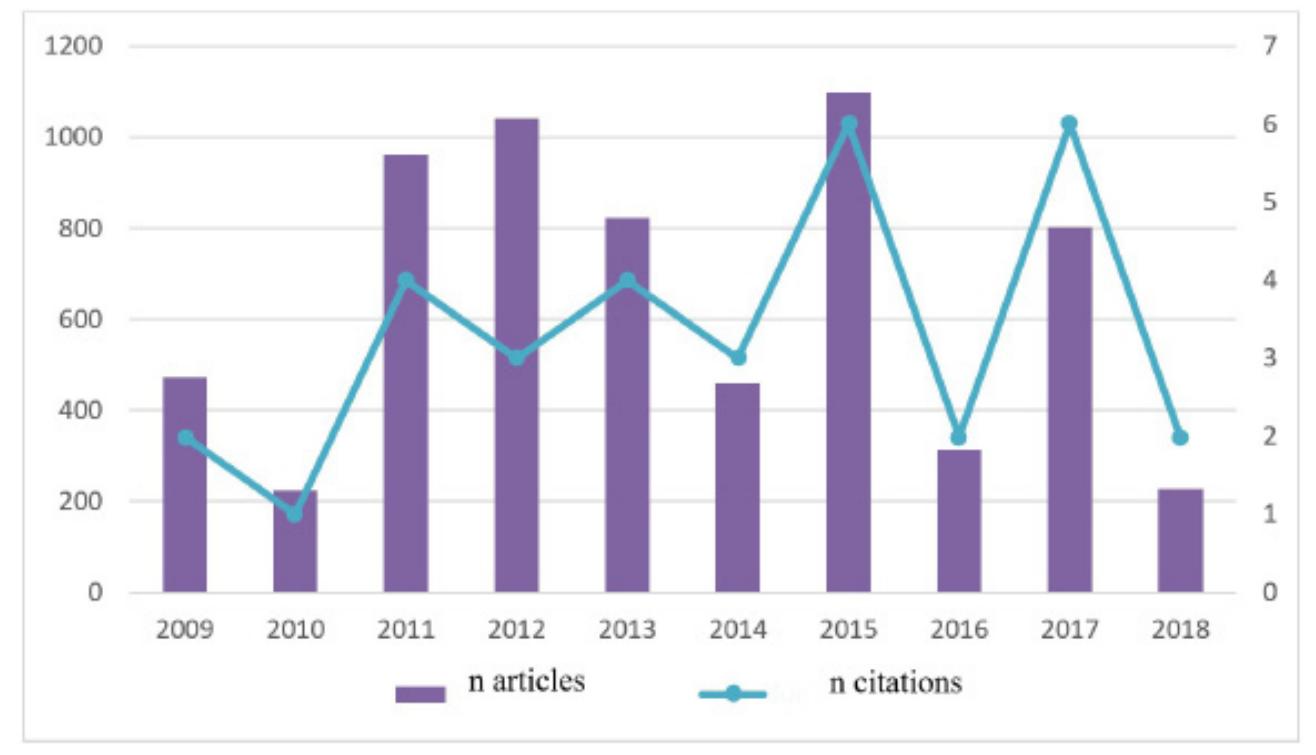
Figure 1 The Number of Highly Cited Articles and Citations of Biochar in Wastewater Treatment per Year
TABLE 1 PUBLICATION JOURNALS OF ARTICLES ON BIOCHAR IN WASTEWATER TREATMENT
| No | Journals | Country | Number of Articles | Number of Citations | Category | Journal Position |
|---|---|---|---|---|---|---|
| 1 | Journal of Hazardous Materials | Netherlands | 15 | 2814 | Environmental Chemistry; Environmental Engineering; Health, Toxicology and Mutagenesis | Q1, SJR 1.96 |
| 2 | Water Research | Netherlands | 5 | 1036 | Ecological Modeling; Pollution; Waste Management and Disposal; Water Science and Technology | Q1, SJR 2.72 |
| 3 | Journal of Environmental Management | America | 4 | 590 | Environmental Engineering; Management, Monitoring, Policy and Law; Waste Management and Disposal | Q1, SJR 1.21 |
| 4 | Journal of Environmental Quality | America | 2 | 657 | Environmental Engineering; Management, Monitoring, Policy and Law; Pollution; Waste Management and Disposal; Water Science and Technology | Q1, SJR 1.02 |
| 5 | Environmental Science and Pollution Research | German | 2 | 457 | Environmental Chemistry; Health, Toxicology and Mutagenesis; Pollution | Q1, SJR 0.83 |
| 6 | Critical Reviews in Environmental Science and Technology | England | 2 | 447 | Environmental Engineering; Pollution; Waste Management and Disposal; Water Science and Technology | Q1, SJR 1.96 |
| 7 | Science of the Total Environment | Netherlands | 2 | 217 | Environmental Chemistry; Environmental Engineering; Pollution; Waste Management and Disposal | Q1, SJR 1.54 |
| 8 | Ecological Engineering | Netherlands | 1 | 211 | Environmental Engineering; Management, Monitoring, Policy and Law; Nature and Landscape Conservation | Q1, SJR 1.1 |
The Most Active Countries, Institutions, and Authors in Biochar for Wastewater Treatment American and Chinese researchers are the most active and the most influential in biochar for wastewater treatment. It can be seen from the number of citations: America, with 13 articles, has 2,555 citations, while China with 13 articles has 2,445 citations. Then, England researchers with 2 articles have been cited by 556 other researchers. Researchers from developed countries have more attention about biochar in wastewater treatment and have a great influence in the future development. Researchers from the United States and China have a strong relationship. Researchers relations or collaborations between countries can be seen in Figure 2. American researchers tend to collaborate with China, South Korea, India, and Singapore. Besides America, researchers from China also collaborate with researchers from Saudi Arabia. In addition, there are several researchers from other countries, but they are not interconnected, such as Egypt, Pakistan, Australia, Brazil, Malaysia and Iran.
The next analysis is the institution of the researcher. Through bibliometric analysis with VOS Viewer, it is known that there are 90 institutions. Then, these 90 institutions were filtered with a minimum of 2 articles published each. These selected institutions are Department of Agricultural and Biological Engineering, University of Florida (321 cites), Department of Soil and Water Science, University of Florida (449 cites), Department of Natural Resources and the Environment, Technological Educational Institute of Crete (329 cites), and College of Environmental Science and Engineering, Hunan University (217 citations). The visualization can be seen in Figure 3.
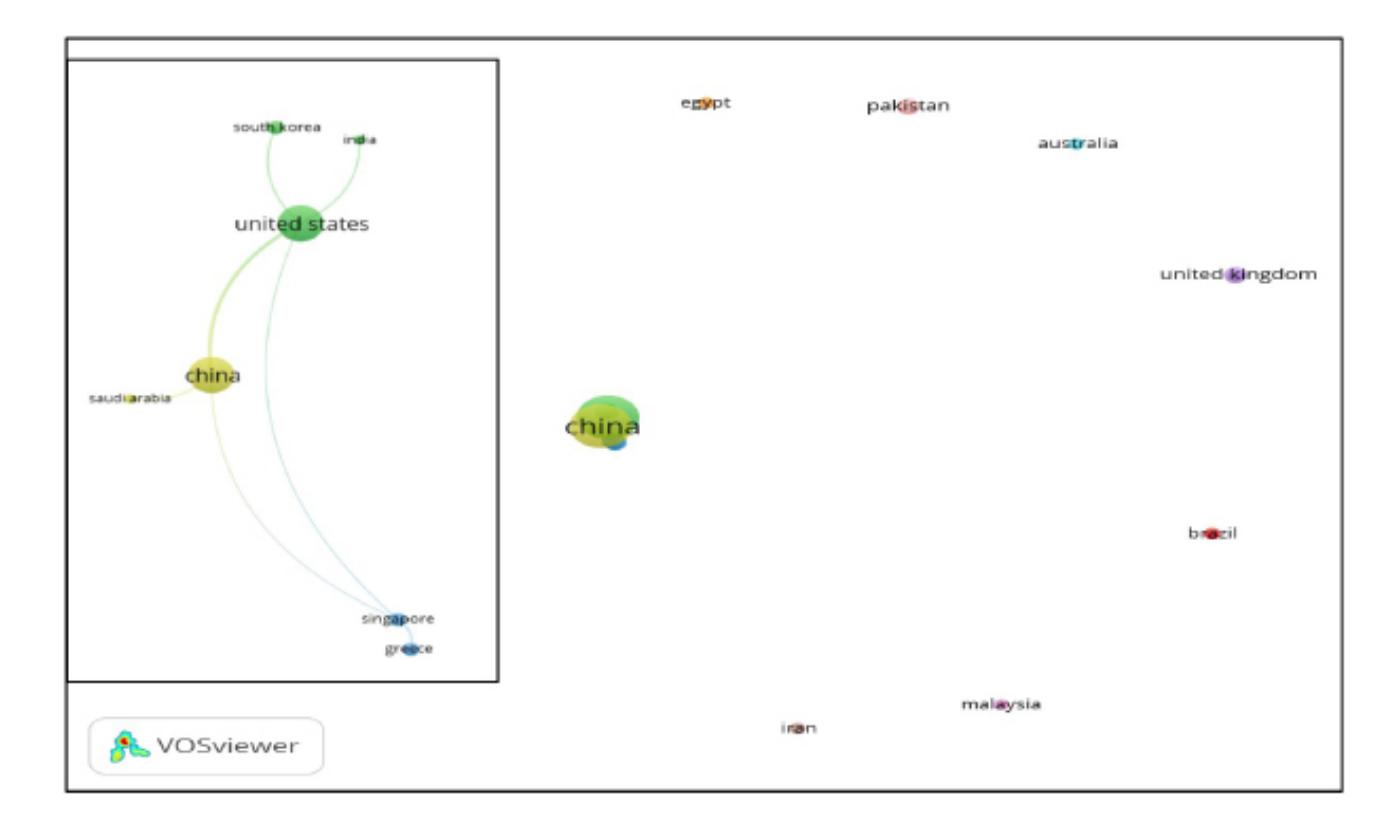
Figure 2 Co-Authorship Network of the Top Countries Based on the Total Number of Highly Cited Articles in Biochar for Wastewater Treatment.
Note: The Size of the Circle Indicates the Number of Citations, while the Thickness of the Line and Color Refers to the Strength of the Links and Group.
Bibliometric analysis shows that 33 highly cited journals come from 173 researchers from various countries. Based on the number of articles and the number of citations, the most active and influential authors are Wang S that published 3 articles (760 citations) and Gao B with 3 articles (616 citations). Both are from the University of Florida, USA, they are therefore deemed to have a strong relationship and like to do collaborations in research. Visualization of the relationship between authors can be seen in Figure 4.
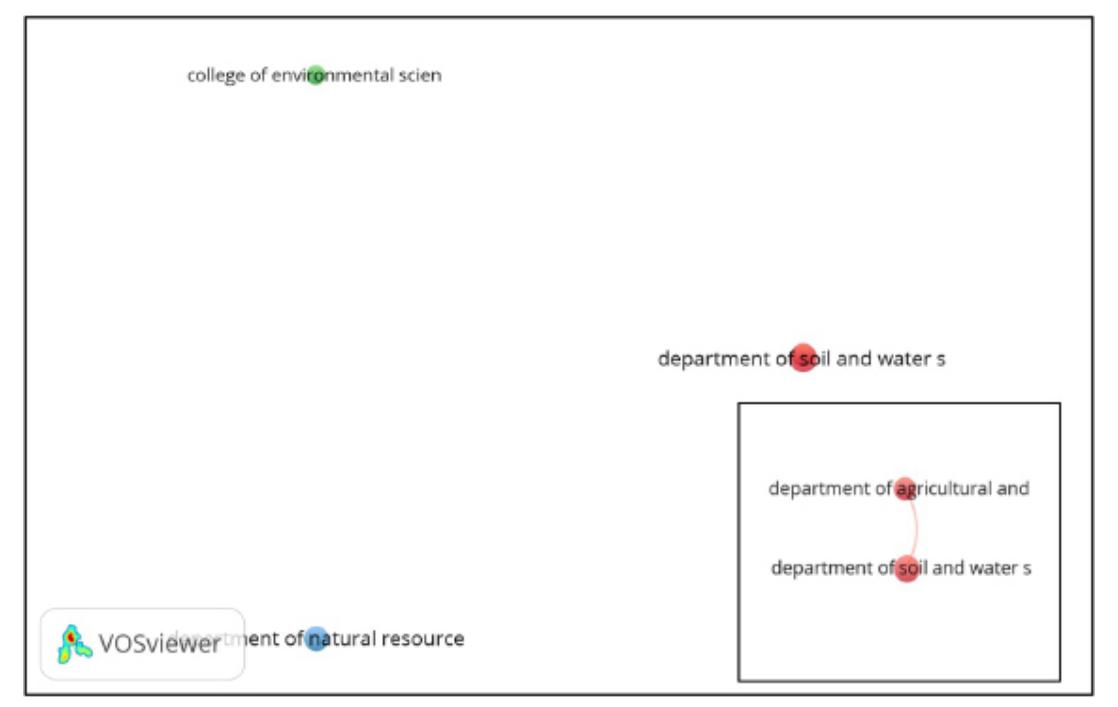
Figure 3 Co-Authorship Network of the Top Institutions Based on the Total Number of Highly Cited Articles in Biochar for Wastewater Treatment.
Note: The Size of the Circle Indicates the Number of Citations, while the Thickness of the Line and Color Refers to the Strength of the Links and Group.
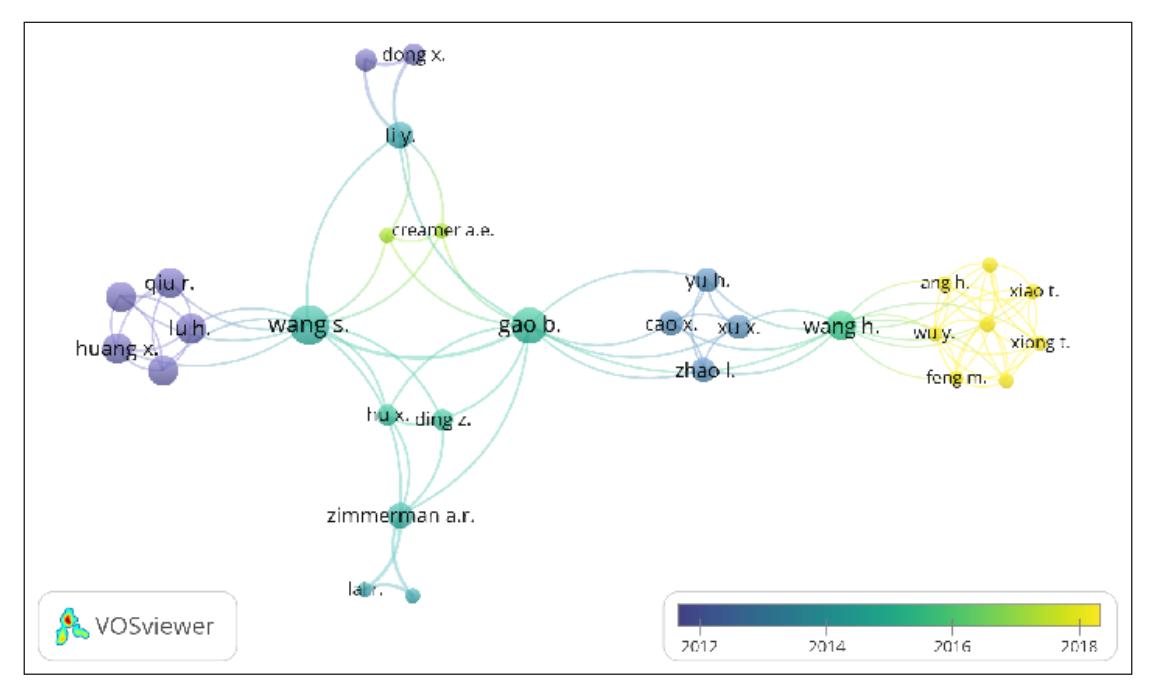
Figure 4 Co-Authorship Network of the Top Authors Based on the Total Number Publication in Biochar for Wastewater Treatment.
Note: The Size of the Circle Indicates the Number of Publications, while the Thickness of the Line and Color Refers to the Strength of the Links and Group.
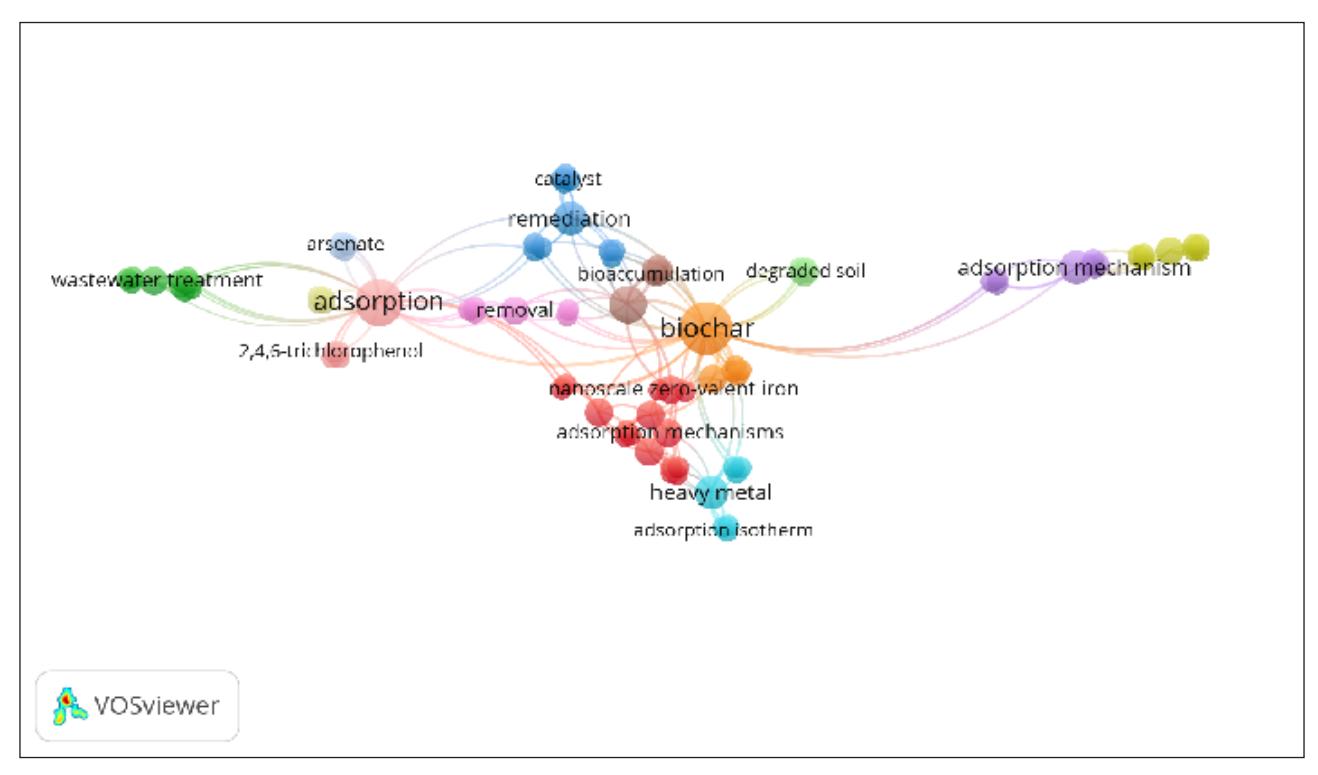
Figure 5 Co-Occurrence of Keywords from the Authors in Biochar Research for Wastewater Treatment. Note: The Size of Circle Indicates Occurrence of Words, while Line Thickness and Color Refer to the Strength of Links and Group.
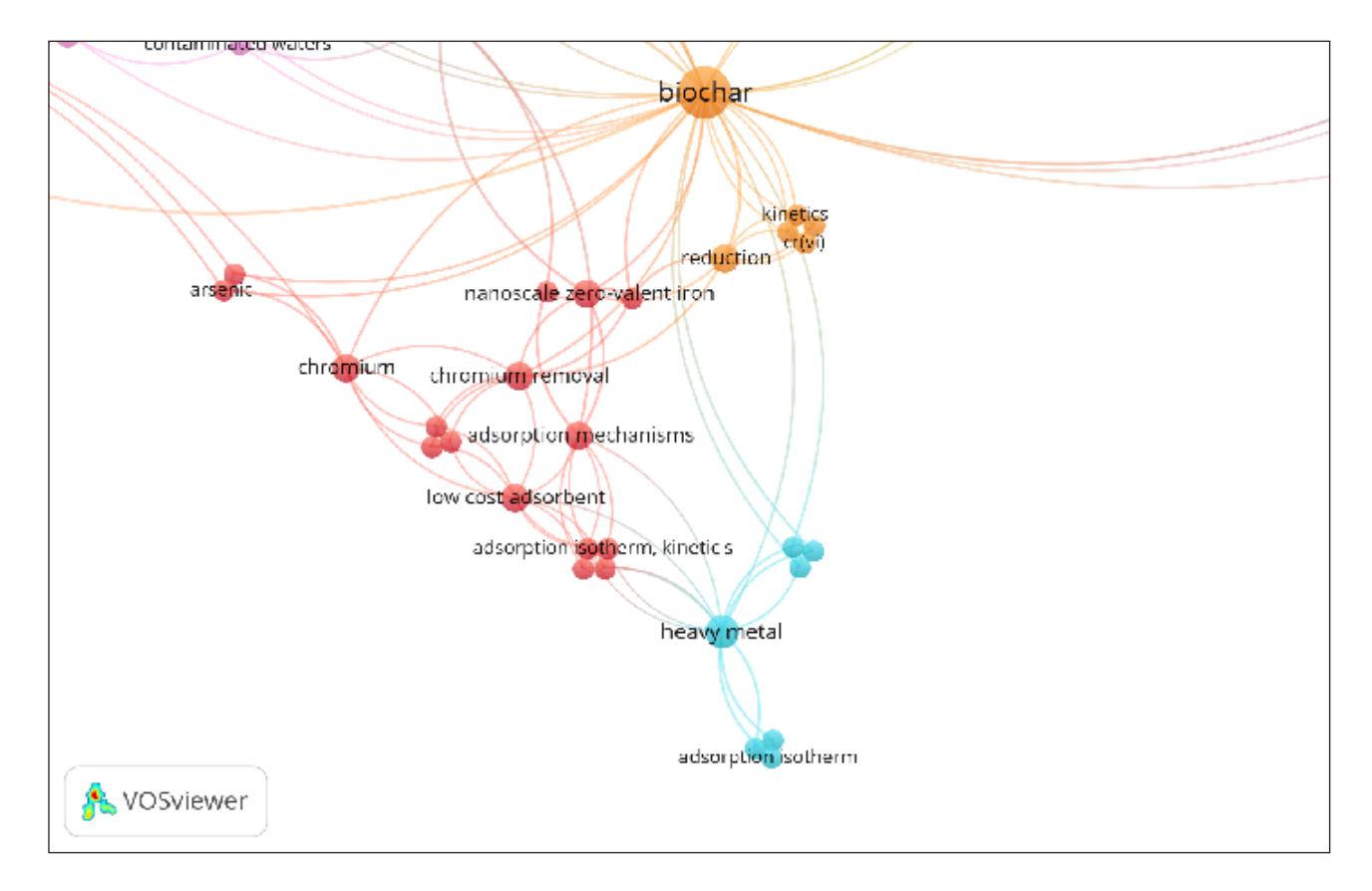
Figure 6 More Exploration of the Biochar Keywords
Research Focus and Future Trends
The keywords used by the author in the article are indicators of research in the field of using biochar in wastewater treatment. Regarding these keywords, the five most frequently found words are biochar (9), adsorption (7), heavy metal (7), adsorption mechanism (3), and remediation (3). Biochar has the highest network strength among all the author's keywords and is strongly related to heavy metals (0.5). Network strength shows a close relationship between biochar and heavy metals. Some heavy metals that have been studied are uranium (U), lead (Pb), copper (Cu), zinc (Zn), cadmium (Cd), arsenic (As), chromium (Cr). In addition, there are also several other organic compounds, such as trichlorophenol, endocrine disrupting compounds, phthalic acid and diethyl phthalate, sodium diclofenac and nimesulida.
Keywords of heavy metals are more common than organic compounds. It may be due to the fact that biochar is more effective in adsorbing heavy metals than that of organic compounds. In addition, it was also found the keywords mechanism, thermodynamics, isotherm, kinetics and pyrolysis. Accordingly, it needs to study the process of biochar adsorption and production. Therefore, researchers focus to optimize the process of adsorption and biochar production. Although still uncommon, modifications and optimizations in kinetics and pyrolysis of biochar for wastewater treatment could be a reference for future research.
CONCLUSION
This bibliometric study of biochar in wastewater treatment is limited to data from Scopus. From bibliometric analysis we can see the trends and research network on biochar for wastewater treatment. The period of analysis starts from 2009-2018 as the highly cited articles first published. We found 33 highly cited articles with 6,429 citations from various journals, countries, institutions, and authors. The most active journal to publish biochar in wastewater treatment is Journal of Hazardous Materials (JHM). Most active authors come from America and China. Then, the common keywords that authors used are biochar and heavy metals. It shows that biochar is effective to remove heavy metals from wastewater. Also, biochar optimization in production and adsorption become a concern in future research.