

ABSTRAK
Pada artikel ini dibahas tata cara penguburan pada zaman Gravettian (awal paleolitik atas) dan zaman Epi-Gravettian (akhir paleolitik atas) di Italia, dan zaman Gravettian (awal paleolitik atas) di Republik Ceko dan Rusia. Di Italia, situs penguburan di zaman Gravettian dan Epi-Gravettian umumnya terdapat di dalam gua karena situs-situs tersebut berada di wilayah sistem karst. Situs-situs penguburan di Republik Ceko dan Rusia pada umumnya terletak di dataran alluvial. Di Italia, situs penguburan tunggal lebih banyak pada zaman Epi-Gravettian dibandingkan dengan pada zaman Gravettian, dan Italia memiliki jumlah situs penguburan tunggal dan ganda terbanyak pada zaman Gravettian dibandingkan dengan di Republik Ceko dan di Rusia. Melihat kepada arah kompas penempatan jenazah, posisi hadap dan posisi letak kepala jenazah, diduga hal ini berkaitan dengan asal-mula leluhur atau nenek moyang manusia-manusia Gravettian di Italia, Republik Ceko dan Rusia yang diduga datang dari arah Timur atau Tenggara. Di Italia, perbedaan fenomena budaya antara zaman Gravettian dan Epi-Gravettian mungkin dapat dikenal dengan melihat jumlah situs penguburan tunggal dan kepada fenomena lingkungan tempat budaya Gravettian berlangsung selama zaman es terakhir, sedangkan budaya Epi-Gravettian berkembang dalam lingkungan yang lebih hangat.
Kata Kunci: tata cara penguburan, Gravettian dan Epi-Gravettian, Italia, Republik Ceko, Rusia
INTRODUCTION
The Upper Paleolithic (UP) burial practices in Europe have excited the imagination of scientists due to the uniqueness of their practices. The Upper Paleolithic burials were deliberately done. They were also accompanied by sophisticated material and culturally important remains (Riel-Salvatore & Gravel-Miguel, 2013). It apparently rose in Early and Late Upper Paleolithic (EUP & LUP) represented by the Gravettian and the Epi-Gravettian periods, respectively. In the context of environmental conditions, the Gravettian period took place during the ice age between 25,000- 18,000 years ago, and the Epi-Gravettian period during the time afterwards (Fig 1) (Wade ,2006; Klein, 1989; Riel-Salvatore & Gravel-Miguel, 2012; Holt & Formicola, 2008; Bertolini et.al, 2015.
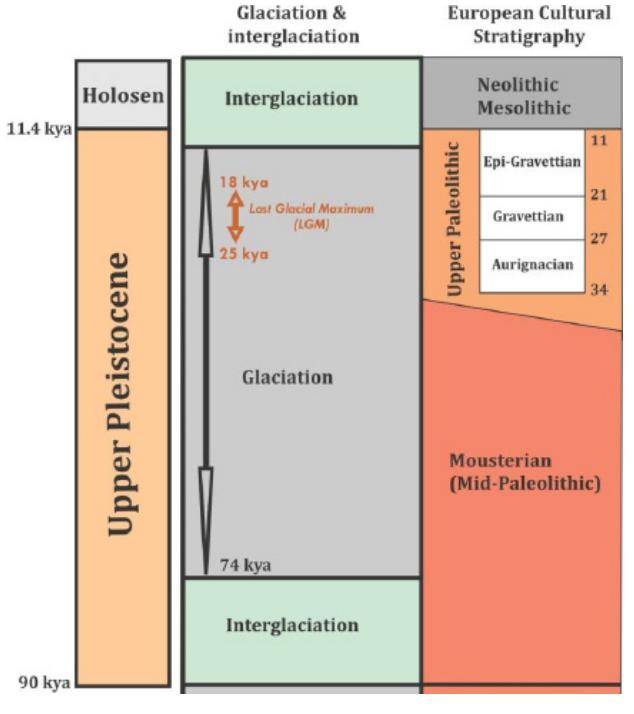
Figure 1 The Timeline Of The Upper Paleolithic Homo Sapiens In Europe And The Gravettian Relation With The Ice Age (Last Glacial Maximum Lgm). The Epi-Gravettian Consists Of Solutrean And Magdalenian Cultures.
Homo Sapiens in Europe and Their Cultures
Homo sapiens began to appear about 40,000 years ago in Europe (DeCorse, 2000; Klein, 1989). Furthermore, the archaeologist in Europe divided the Upper Paleolithic (UP) of Homo
sapiens into several cultures (see Fig 1), as follows: Aurignacian (34,000-27,000 years ago), Gravettian (27,000-21,000 years ago), Solutrean (21,000-16,500 years ago), and Magdalenian (16,500-11,000 years ago) (Klein, 1989; Klein & Edgar, 2002; Riel-Salvatore & Gravel-Miguel ,2012; Svoboda, 2007).
Burial Practice in The Gravettian and The Epi-Gravettian Periods
The Upper Paleolithic (UP) period in Europe is generally associated with the hunter-gatherers Homo sapiens and their patterns of behavior (Holt & Formicola, 2008). In this period, the burial practices began to be performed, especially in the Gravettian (early UP) and Epi-Gravettian (late UP) periods (Klein, 1989; Riel-Salvatore & Gravel-Miguel, 2012).
Burial practice is an important source of information of the structure of ancient societies and an indicator of a religious awareness (Lapteff ,2013; Giacobini, 2007). The elaborate burial practices in the Upper Paleolithic (UP) period might indicate a change in the cultural patterns of societies throughout Europe, especially in Western and Eastern Europe, compared to the previous era.
The Gravettian and Epi-Gravettian peoples often buried their dead, in a single or multiple pits in the ground. The single burial contains one corpse, and the multiple burials contain number of corpses. Those pits can be in a closed site such as in limestone hills (caves and rock-shelters) or at an open site such as alluvial plains. In addition, they often put a variety of grave goods surrounding the dead such as beads, bone tools, stone tools and anthropomorphic or zoomorphic figurines (Fig 2), which were sprinkled with red-ochre by which it was more common in the Gravettian than in the Epi-Gravettian periods (Riel-Salvatore & Gravel-Miguel, 2013; Soffer et al, 2000). Red ochre is an iron oxide (hematite) that readily imparts its color to anything that encounters it. Ethnographically, sources of this coloring agent were used universally in the hunter-gatherer communities as having some kind of relationship with ritual behavior (Hayden, 2003).
Figure 2 The Early Upper Paleolithic (Gravettian) Anthropomorphic (Venus) Figurine from Russia (Dolni Vestonika I) and Austria (Willendorf) (Soffer Et Al., 2000)
This paper will describe the burial practice in the early and late Upper Paleolithic (UP) periods in Italy, Czech, and Russia, which are represented by the Gravettian and the Epi-Gravettian periods by studying four issues : the location of burial site, the presence of single versus multiple burials, the compass position of the corpse in the ground, and the corpse placement (prosthesis) in the ground.
Several locations of single and multiple burial pits in Western and Central Europe (Italy & Czech), and Eastern Europe (Russia) are studied (Table 1 - 4). All the data were taken from Riel-Salvatore & Gravel-Miguel (2013).
TABLE 1 SAMPLES FROM THE GRAVETTIAN SINGLE BURIAL
| No. | Single Burial (Gravettian) | Location | Site |
|---|---|---|---|
| 1. | Barma Grande 5 | Italy | Cave |
| 2. | Cavillon 1 | Italy | Cave |
| 3. | Grotta delle Arene candite II principe | Italy | Cave |
| 4. | Grotta di Baousso da Certain Torre 1 | Italy | Cave |
| 5. | Grotta di Baousso da Certain Torre 2 | Italy | Cave |
| 6. | Grotta di Baousso da Certain Torre 3 | Italy | Cave |
| 7. | Grotta Paglicci 15 | Italy | Cave |
| 8. | Grotta Paglicci 25 | Italy | Cave |
| 9. | Grotte des Enfants 4 | Italy | Cave |
| 10. | Ostuni 1 | Italy | Cave |
| 11. | Ostuni 2 | Italy | Cave |
| 12. | Pavlov 1 | Czech | Open |
| 13. | Dolni Vestonica 3 | Czech | Open |
| 14. | Kostenki 14 | Russia | Open |
| 15. | Kostenki 18 | Russia | Open |
| 16. | Sungir 1 | Russia | Open |
TABLE 2 SAMPLES FROM THE GRAVETTIAN MULTIPLE BURIALS
| No. | Multiple Burial (Gravettian) | Location | Site |
|---|---|---|---|
| 1. | Barma Grande 2 | Italy | Cave |
| 2. | Barma Grande 3 | Italy | Cave |
| 3. | Barma Grande 4 | Italy | Cave |
| 4. | Grotte des Enfants 5 | Italy | Cave |
| 5. | Grotte des Enfants 6 | Italy | Cave |
| 6. | Dolni Vestonica 13 | Czech | Open |
| 7. | Dolni Vestonica 14 | Czech | Open |
| 8. | Dolni Vestonica 15 | Czech | Open |
| 9. | Dolni Vestonica 16 | Czech | Open |
| 10. | Mal'ta 1 | Russia | Open |
| 11. | Mal'ta 2 | Russia | Open |
| 12. | Sungir 2 | Russia | Open |
| 13. | Sungir 3 | Russia | Open |
TABLE 3 SAMPLES FROM THE EPI-GRAVETTIAN SINGLE BURIAL
| No. | Single Burial (Epi-Gravettian) | Location | Site |
|---|---|---|---|
| 1. | Grotta Continenza? uncertain | Italy | Rockshelter |
| 2. | Grotta Continenza 7 certain | Italy | Rockshelter |
| 3. | Grotta de Romita 3 | Italy | Cave |
| 4. | Grotta del Romita 4 | Italy | Cave |
| 5. | Grotta del Romita 7 | Italy | Cave |
| 6. | Grotta del Romita 8 | Italy | Cave |
| 7. | Grotta della Mura 1 | Italy | Cave |
| 8. | Grotta delle Arene candide 2 | Italy | Cave |
| 9. | Grotta delle Arene candide 8 | Italy | Cave |
| 10. | Grotta delle Arene candide 10 | Italy | Cave |
| 11. | Grotta delle Arene candide 11 | Italy | Cave |
| 12. | Grotta delle Arene candide 15 | Italy | Cave |
| 13. | Grotta di San Teodoro 1 | Italy | Cave |
| 14. | Grotta di San Teodoro 2 | Italy | Cave |
| 15. | Grotta di San Teodoro 4 | Italy | Cave |
| 16. | Grotta d'Oriente C | Italy | Cave |
| 17. | Grotta Maritza 1 | Italy | Cave |
| 18. | Grotta des Enfants 3 | Italy | Cave |
| 19. | Riparo Tagliente 1 | Italy | Rockshelter |
| 20. | Riparo Villabruna 1 | Italy | Rockshelter |
| 21. | Vado all'Arancio 1 | Italy | Cave |
| 22. | Vado all'Arancio 2 | Italy | Cave |
| No. | Multiple Burial (Epi-Gravettian) | Location | Site |
|---|---|---|---|
| 1. | Grotta del Romita 1 | Italy | Rockshelter |
| 2. | Grotta del Romita 2 | Italy | Rockshelter |
| 3. | Grotta del Romita 5 | Italy | Rockshelter |
| 4. | Grotta del Romita 6 | Italy | Rockshelter |
| 5. | Grotta delle Arene candide 5A | Italy | Cave |
| 6. | Grotta delle Arene candide 5B | Italy | Cave |
| 7. | Grotta des Enfants 1 | Italy | Cave |
| 8. | Grotta des Enfants 1 | Italy | Cave |
TABLE 4 SAMPLES FROM THE EPI-GRAVETTIAN MULTIPLE BURIALS
DISCUSSION
(1) The Location of Burial Site
In terms of geographical location, the sites of single and multiple burials of the Gravettian and the Epi-Gravettian periods in Italy are mostly situated in limestone's cave or rock shelter. Meanwhile, those of the Gravettian period in Czech and Russia are mostly situated in an open site (see Fig 3). For example, Dolni Vestonice as an open-air site in Czech, is situated along a stream (see Fig 4), and the Gravettian sites from Kostenki (Russia) were found in a loess-like deposit [2].
The Gravettian and the Epi-Gravettian burial practices, particularly in Italy, are generally associated with the ancient Homo sapiens hunter-gatherers. It was mostly carried out in caves and rock shelters because geologically Italy has extensive karstic systems throughout Alpine mountains.
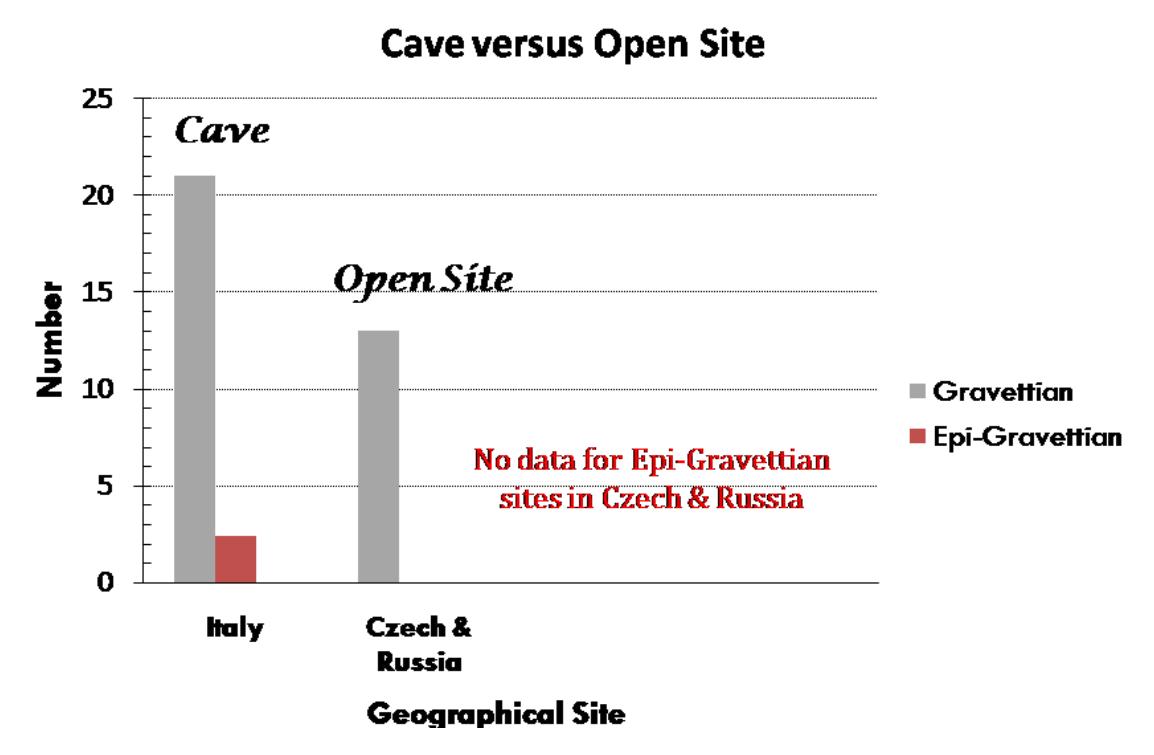
Figure 3 Cave Versus Open Site of Single and Multiple Burials
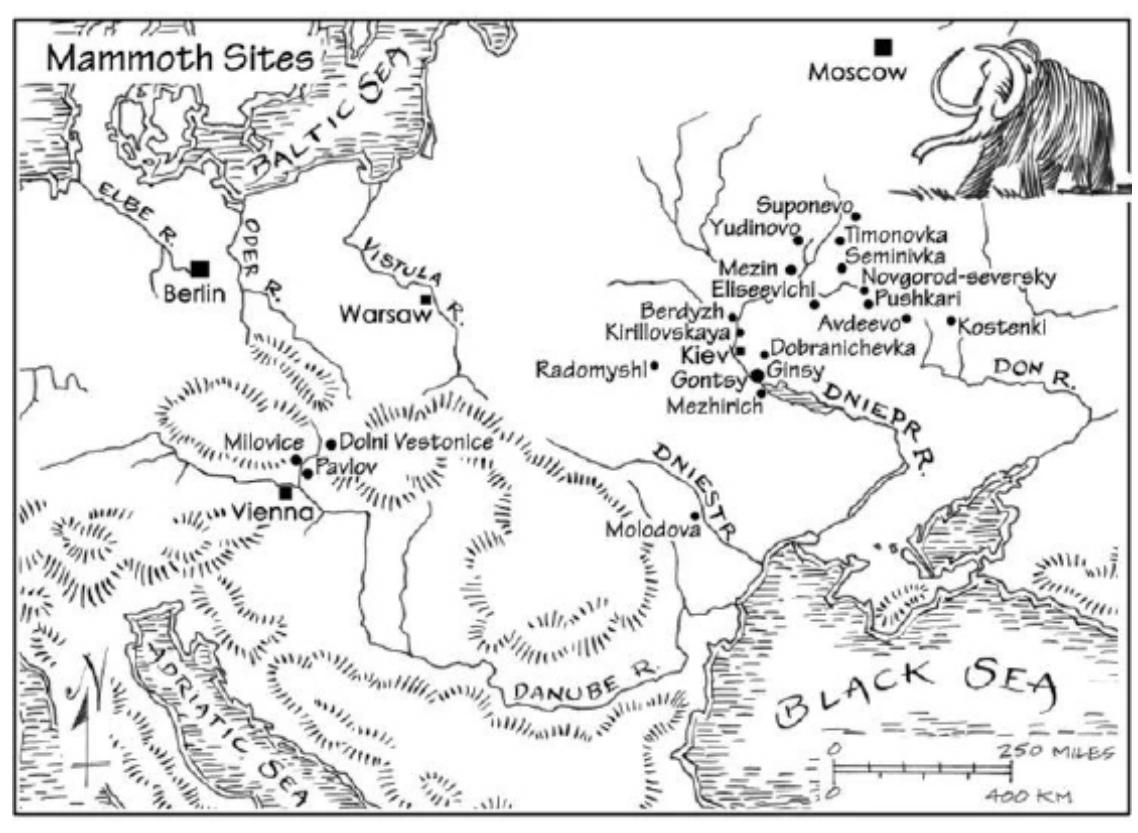
Figure 4 Dolni Vestonica Site in Czech
Cave has a special meaning for huntergatherer communities, and it is almost never used for the living; instead it is used for ritual purpose such as sanctuaries. This notion is supported by several items such as the occurrences of cave
paintings and burials (Fig 5). The person who was buried in the single burial in the cave might be of a high social status, such as a shaman (Hayden, 2003).
Figure 5 The Gravittian Single Human Burial (Woman) from Cavillon (Caviglione) Cave, Liguria (Italy). The Skull Was Adorned by a Number of Pendants: Shells and Teeth, with a few Lithic Tools and Bone Points and the Engraving of Horse on the Wall of the Cave (Modified from Otte, 2016)
(2) The Presence of Single Versus Multiple Burials
Overall, the single burial is more numerous than the multiple burials both in the Gravettian and the Epi-Gravettian periods, and the single burial is more dominant in the Epi-Gravettian than the Gravettian periods. Meanwhile, the multiple burial pits are more dominant in the Gravettian than in the Epi-Gravettian periods (Fig 6a). However, the reasons behind the idea of multiple burials in the Gravettian period is unknown.
Furthermore, if the geographical sites are considered, the single burial is more numerous in the Epi-Gravettian in Italy, and Italy has the largest number of single and multiple Gravettian burials compared to Czech and Russia (see Fig 6b, 6c & 6d).
The disparity of cultural behavior between the Gravettian and the Epi-Gravettian periods in Italy can be deduced by the number of single burial and the environmental condition at the Gravettian period developed during the last glacial maximum (LGM) while the Epi-Gravettian happened in warmer condition (Bertolini et al., 2015).
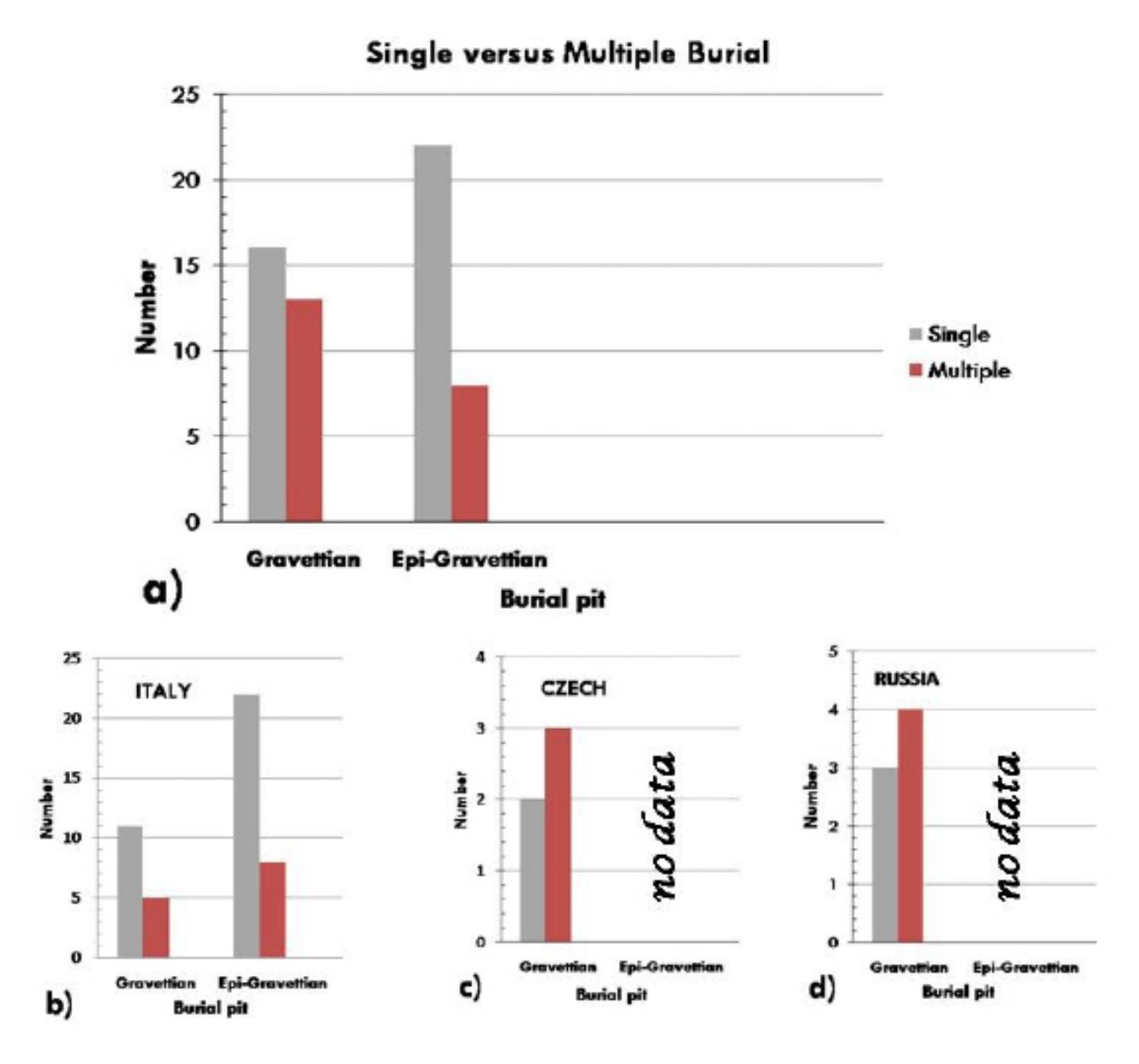
Figure 6 Single Burial Versus Multiple Burials in Italy, Czech and Russia.
(3) The Compass Position of The Corpse in The Ground
In Italy, the compass direction of the corpse of the Gravettian and Epi-Gravettian single burials are North-South (N-S) or Northwest-Southeast (NW-SE) and Northwest-Southeast (NW-SE), respectively (Fig 7a). Meanwhile, those of the corpse of Gravettian and Epi-Gravettian multiple burials are East-West (E-W) and Northwest-Southeast (NW-SE), respectively (Fig 7b). The compass direction of the corpse of the Gravettian single burials are North-South (N-S) or Northwest-Southeast (NW-SE) directions in Czech (Fig 7c), and those of the Gravettian single burials in Russia are Northeast-Southwest (NE-SW) or Northwest-Southeast (NW-SE) (Fig 7d).
It can therefore be said in general that in Italy that the compass position of the dead in the ground, both in the Gravettian and the Epi-Gravettian single and multiple burials, is North-South (N-S) or Northwest-Southeast (NW-SE).
(4) The Corpse Placement (Prosthesis) in The Ground
In Italy, the corpse placement of the Gravettian single and multiple burials was commonly placed tilted to the left or prone (Fig 8a), and those of Epi-Gravettian single and multiple burials were commonly placed prone (Fig 8b).
If the compass direction and the corpse placement (prosthesis) in the ground and the position of the head are considered, they might be linked to the origin of the Gravettian and Epi-Gravettian peoples (e.g., Holt & Formicola, 2008, p. 73; Svoboda, 2007). If so, the ancestor of the Gravettian peoples in Italy (and the Gravettian peoples in Czech and Russia) apparently came from the East or the Southeast.
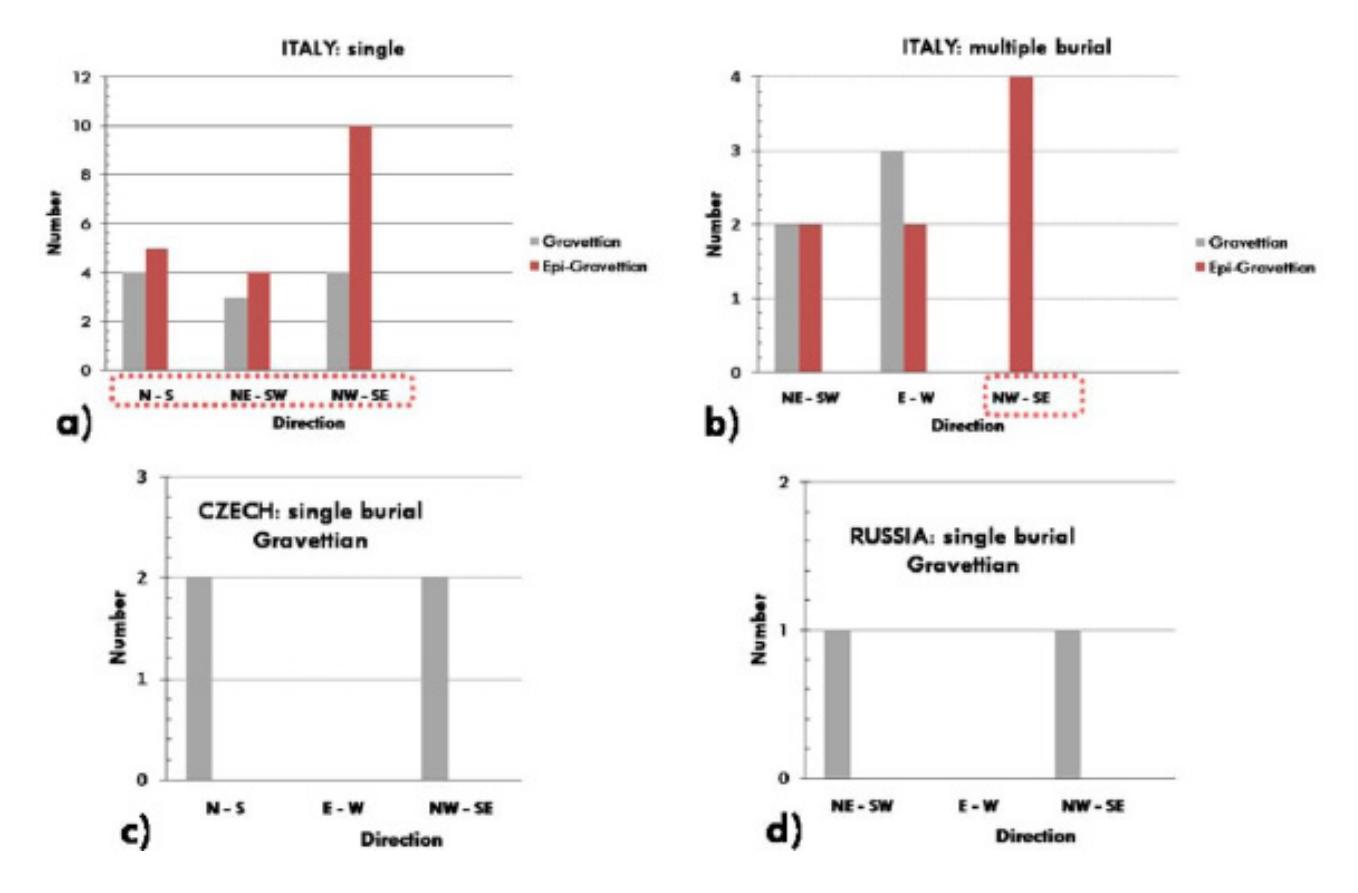
Figure 7 Compass Direction of the Gravettian and the Epi-Gravettian Burial in Italy, Czech, and Russia. Note: Unavailable Data for Epi-Gravettian Sites in Czech & Russia both for Single and Multiple Burials.
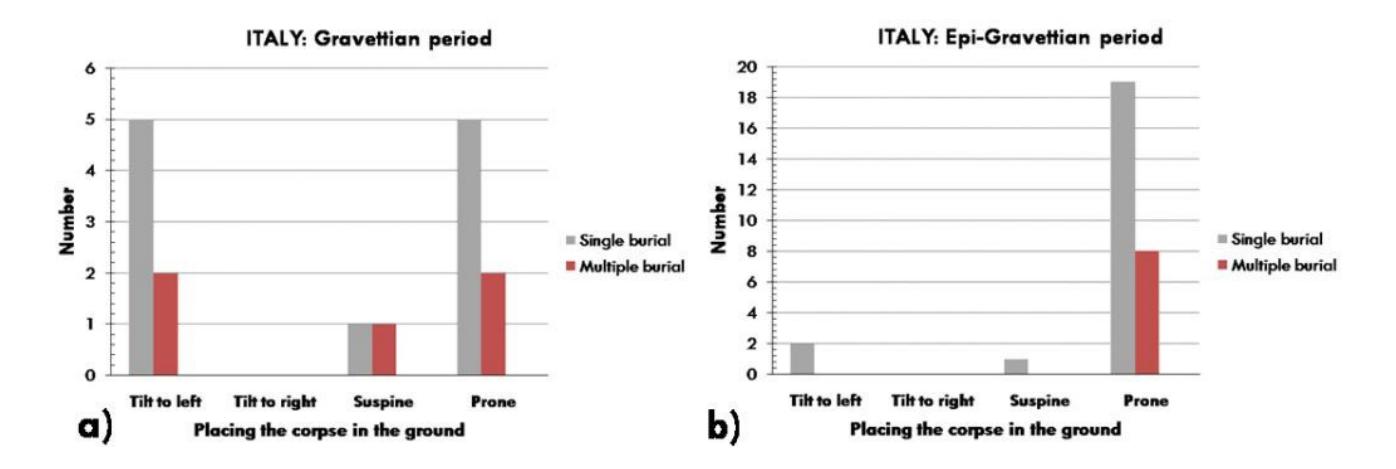
Figure 8 The Gravettian and the Epi-Gravettian Corpse Placement in Italy.
CONCLUSION
Since there are no data for the single and the multiple burials in the Epi-Gravettian period in Czech and Russia, it can be concluded that the burial practices in Italy are as follows.
The Gravettian and the Epi-Gravettian burial practices, particularly in Italy, are generally associated with the ancient Homo sapiens hunter-gatherers. It was mostly carried out in caves and rock shelters because, geologically, Italy has extensive karstic systems throughout Alpine mountains. Meanwhile, the Gravettian burial sites in Czech, and Russia were located in alluvial plains.
The single burials are more numerous in the Epi-Gravettian in Italy, and Italy has the largest number of the Gravettian single and multiple burials when compared to Czech and Russia.
In Italy, the compass position of the dead in the ground, both in the Gravettian and the Epi-Gravettian single and multiple burials, are North-South (N-S) or Northwest-Southeast (NW-SE).
In Italy, the compass position of the dead in the ground, both in the Gravettian and the Epi-Gravettian single and multiple burials, are North-South (N-S) or Northwest-Southeast (NW-SE).
If the compass direction and the corpse placement (prosthesis) in the ground and the position of the head are considered, they might be linked to the origin of the Gravettian and Epi-Gravettian peoples. The ancestors of the Gravettian peoples in Italy (and the Gravettian peoples in Czech and Russia) are deemed to have come from the East or the Southeast.
The disparity of cultural behavior between the Gravettian and the Epi-Gravettian periods in Italy can be deduced by the number of single burial and the environmental condition where, at the Gravettian period, developed during the last glacial maximum (LGM) while the Epi-Gravettian happened in warmer condition.
ACKNOWLEDGMENT
The authors would like to express sincere thanks to Mr. Graham Paterson from Australia for his review of the English draft, and for his comments and non-technical suggestions.