

ABSTRAK
Pada saat ini sosial media tak hanya digunakan untuk membangun jejaring pertemanan semata, melainkan untuk bisnis. Banyak perusahaan bisnis dan institusi media memanfaatkan media sosial untuk menyebarkan informasi. Salah satu media sosial paling populer yang banyak digunakan para perusahaan dan institusi adalah Instagram, termasuk Netflix Indonesia yang membangun sebuah media massa berbasis media sosial bernama "Zinetflix". Zines dianggap sebagai sebuah media alternatif yang banyak memberikan informasi di luar jalur media massa mainstream. Karakteristik zines adalah sebuah media berbasis komunitas, anti-mainstream, dan menawarkan lebih banyak format eksperimen dibandingkan dengan media konvensional. Zinetflix menjadi salah satu bentuk inovasi media di ranah media siber karena memanfaatkan berbagai fitur dan teknologi menjadi sebuah media informasi. Penelitian ini menggunakan metode penelitian kualitatif dengan pendekatan studi kasus. Studi kasus yang diangkat yaitu "Zinetflix" yang dirancang oleh penyedia konten film Netflix. Proses pengambilan data melalui observasi, wawancara, dan studi literatur. Hasil penelitian menunjukkan bagaimana fitur media sosial Instagram dimanfaatkan sebagai sebuah ruang media informasi di era media siber seperti yang dilakukan Zinetflix dalam merayakan Hari Film Nasional setiap tahunnya.
Kata kunci: Netflix, Zines, Zines Digital, media siber
INTRODUCTION
In March 2020, Netflix Indonesia published a digital zine on Instagram called "Zinetflix". The publication of Zinetflix was related to the National Movie Day in Indonesia (Hari Film Nasional) celebrated every 30th of March. The presence of Zinetflix, which contains information about Indonesian movies, is expected to be a funnel of information about local movies created by Indonesian moviemakers. Uniquely, Zinetflix was not published in printed media such as printed zines or magazines in general, but through Instagram.
In the beginning, zine or fanzine is a term for communities-based publications by the science fiction fan communities in United States of America. Zines are then considered to be a medium for sharing information in a community (Ramdarshan Bold, 2017). Zines are media that managed non-commercially, non-professionally, usually with very limited circulation, and only circulating in a community. Zines usually develop through print formats, in the form of black and white prints and photocopies. The sizes of zines are also very diverse, without any standard and definite format. The zine-makers are also accustomed to producing and publishing independently (Duncombe, 1997).
Zines are usually unique, experimental, and community-based media. Furthermore, the most interesting thing about zines are the personal "touch" of the zines-maker, such as the use of illustrations, photography, or various handicrafts. The distribution of zines is carried out between one community and another, in the form of direct selling at music booths or bartering between zines-makers. In general, the purpose of publishing zines is not for profit, but for accommodating the creator's idealism. The characteristics of zines cannot be separated from the personal touch and sense of intimacy that makes this format so authentic (Piepmeier, 2008).
Nowadays, zines cannot be separated from the influence of digital technology. The development of digital media technology can make it easier to retrieve, collect, process, store, and present information (Arifianto S., 2019). Not only does it offer convenience in terms of presenting information, but the presence of digital media technology also shows a significant relationship with the economic value and the emergence of media innovations of new media business models. Media transformations are seen through economic or business motives (Arifianto, 2019). The presence of zines in the digital era are usually in the form of e-zines or webzines. Zines are rarely created on social media.
In this section, we will discuss some specific literature reviews related to digital zines. Several studies said that the development of digital zines is closely related to participatory culture, the decline of print media, and the rise of social media. The presence of digital zines can facilitate the exchange of information, review each other, and share information between communities themselves (Bryant, 2017). The process of digitizing zines is closely related to affective issues, especially how to transform the effect from print media to digital media. Media changes are related to an aspect called "trans(affection) media" which means the changes of media not only in their format but also changes in consuming the media taste and experiences (Brouwer & Licona, 2016). There is a significant difference between consuming printed zines and digital zines in the aspect of intimacy or taste in consuming zines physically.
From several studies on digital zines, none has specifically discussed a form of zines that uses social media such as Instagram. Especially, from cyber/digital media elements. Most literature studies mentioned above mostly talked about digital zines in the aspects of social and psychological effects. Currently, with the trend of the increasingly rapid development of information, we have entered a new era in which the function of information is more important than in previous eras. The acceleration of this information function is undeniably driven by the rapid development of technology and communication.
Currently, all information activities cannot be separated from searching, processing, and sending information on the internet or digital media. It was mentioned that the presence of the the internet has become a new medium (Arifianto, 2019). It is therefore undeniable that in the future the interdependence between information and internet technology will continue to grow rapidly. Everyone will send, process, and receive information from the internet. At this stage, every media must converge into digital media. Nowadays, print media such as newspapers, magazines, books, or tabloids have converged into various forms of digital media platforms. This includes how technological changes have transformed print media zines into a new form of convergence on digital media platforms. Several factors are very influential in this convergence process, including the business model and cultural factors (Quinn, Stephen & Filak, 2005).
Zines did not separate the inevitability of these changes in digital technology. Zines have been known as alternative media in the form of print media or photocopies that grow in the music, politics, and art subcultures/communities. Zines could be a medium in conveying and disseminating information outside the mainstream mass media. However, at the current practice of commodifying information, zines are no longer seen as a product of a specific subculture, but they have also become part of the development of global information. Then, the development of zines began to develop into digital forms such as e-zines or webzines. However, the design of innovative digital zines on Instagram is still very rare, especially in Indonesia.
Through the medium of Instagram, Netflix presents innovative zines that are very relevant and related to today's digital technology. Based on these phenomena, the Zinetflix case study is interesting to discuss in the context of the convergence of subcultural media with the changes and necessity of digital technology. This study discusses Zinetflix using a cyber/digital media approach based on social media such as Instagram. The media choices and the form of the message are related to changes in digital technology that have become more specific. The media transformation related to the target consumer or the trend of technological change that is currently emerging.
This case study wants to provide an overview of a communication process and model related to the current digital technology convergence. This study uses the approach of new media characteristics or cyber/digital media according to Martin Lister (2009) namely network, data collection technology (storage), interface (interface), archive (archive), interactive (interactivity), and simulation (simulation) (Nasrullah, 2014).
The presence of Zinetflix cannot be separated from the presence of social media technology that encourages anyone to become an information producer. Digitalization encourages the democratization of information that drives everyone to produce and consume information. Along with the collapse of information media institutions, especially the collapse of conventional mass media, and then followed by the growth rate of information technology, nowadays everyone in the digital era can become a producer of the information (Prisgunanto, 2018). Moreover, the presence of social media encourages anyone not only to become an information producer but also to show how information is related to various meanings of information.
The choices of media affect the form of information that will be conveyed. According to Martin Lister, cyber/digital media have many aspects such as the network, information, interface, archive, interactivity, and simulation (Nasrullah, 2014). Cybermedia analysis emphasizes how cyberculture is produced, meanings that emerge, and how they function in cyberspace. However, the cultural reality that exists in the cyber media not only highlights the media contents but also the importance of media form (Nasrullah, 2016). So, in this case, the media discussion is not only about the contents but also the importance of the aspects of technological media transformation.
A further question is how the transformation of media forms affects the creation of media content. For example, podcasts as a cyber media influence the formation of cultural and communication patterns in a community (Adnan & Iskandar, 2021). Then research on the use of Facebook as a medium of political communication in the digital era happens because it can build a dialogue with the public directly (Wazis, 2017).
The presence of Zinetflix is a relation between the participation of information democracy, business model, and media technology. Through this research, it is expected that this study contributes to the use of social media technology such as Instagram, creating many innovative media based on cyber media. The communication process carried out by Zinetflix makes it more interactive, interesting, and efficient. From the results of this research, Netflix makes innovation in "media" because its format is more concise, interactive, and efficient. The efforts and communication processes carried out by Netflix can be an example of how an effort to media transformation is used as an alternative media in this digital era.
METHOD
This study uses qualitative research, which usually explores data through an empirical approach in the form of case studies, personal experiences, introspective, life history, interviews, observations, history, interactions, and visual texts. (Creswell, 2019). Data collection techniques in this study were done through visual observation, interviews, and literature studies. The case study that was adopted in this research is Zinetflix which is published by the wellknown film content provider Netflix.
This research also discusses how Netflix designed Zinetflix to disseminate information related to local movies and media transformation and innovation on social media. In the early stages, direct observations are made by viewing the contents of the official Netflix Indonesia Instagram @netflixid. In qualitative research, visual objects or images can be used as data to be interpreted. Researcher had a direct experience in consuming Zinetflix through its various features on Instagram Stories @netflixid. Then, the researcher conducted the direct interview via Zoom online with Teguh Wicaksono, a representative from Netflix Indonesia on December 17, 2020, to get information about the creative process and motives behind Zinetflix. The last data collection technique was literature studies conducted through online searches, magazines, books, and journals.
This research used cyber media analysis that includes: (1) media space, namely the structure of media devices and appearances; (2) media archives, namely the content and aspects of the meaning of text/graphics; (3) media objects, namely interactions that occurred in cyber media; and (4) experiential Instagram Stories, namely motives, effects, benefits, and connected reality offline and online (Nasrullah, 2016). Each result of observation and interview data was analyzed based on the four cyber media elements. The following is a chart/scheme of research methods:

Figure 1 Research methods
RESULTS AND DISCUSSION
On March 30, 2020, which coincided with National Movie Day, Netflix published the first edition of Zinetflix which can be read through their official Instagram @netflixid. There are names of film industry stakeholders from moviemakers, actresses, actors, movie critics, and journalists who are contributors to Zinetflix, including Paul Agusta (director), Hikmat Darmawan (film critic), Ivan Makhsara (journalist), Canti (Foxglove Soulwork/Astrologer), Anindito Wisnu (illustrator), Ayang Cempaka (illustrator), Ryan Adriandhy (illustrator), Hannah Al Rashid (actress), Dennis Adhiswara (actor and director), Adinia Wirasti (actress), Adipati Dolken (actor), Lukman Sardi (actor), Salman Aristo (scriptwriter), and Sheila Timothy (actress). The design of Zinetflix cannot be separated from the use of various Instagram features to maximize its content. The analysis carried out in this paper focuses on the cyber media aspects contained in Zinetflix as follows.
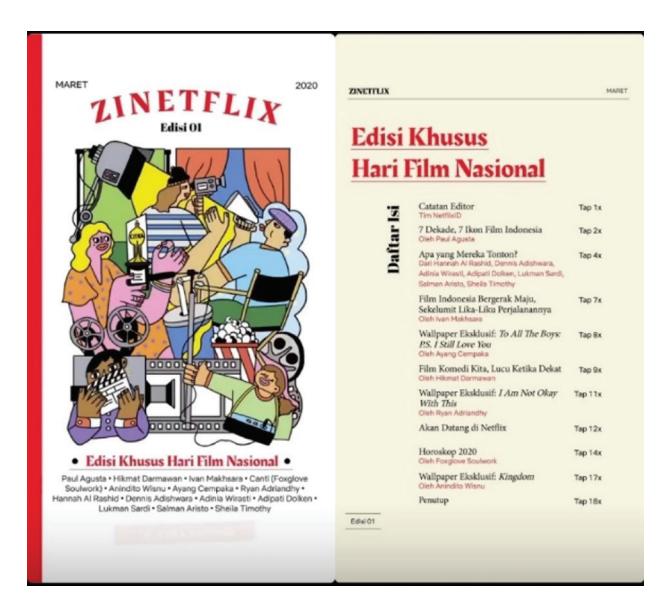
Figure 2 Zinetflix cover image on Instagram @netflixid (Source: Instagram Zinetflix/@netflixid)
Media Space
In terms of media space, Zinetflix is designed to be used on the Instagram platform and is distributed through the official Netflix Indonesia Instagram account (@netflixid) which has around 655 thousand followers (accessed on March 25, 2021). Instagram is known as one of the most popular social media in the world. Instagram users can upload photos, share information, and then connect through the comments. Many businesspeople and mass media institutions have started to use Instagram to disseminate various informations.
One of the features of Instagram is the Instagram Stories feature, as well as the post feed feature in general. The difference is that in the Instagram Stories feature, the shared content can be seen for 15 seconds by followers. Because the time is short, the information in Instagram Stories should be short and precise, so that followers can easily remember them. Besides that, followers can easily interact through Instagram Stories because they can just swipe up to access other links.
Teguh Wicaksono (Netflix Indonesia) said that the selection of Instagram was based on behavioral changes in consuming information. The attention of the readers has become increasingly limited when accessing information. Readers tend to stop on social media, rather than tracing it on the landing page of the website. Thus, through social media, creators can convey their information more effectively. The choice of Instagram, according to Teguh Wicaksono cannot be separated from its feature innovation. Through the Instagram Stories feature, readers can interact directly. In addition, the delivery of information through the Instagram Stories feature is important to capture the attention of readers because it is easy, fast, and visually appealing. This is in line with Marshall McLuhan's thinking which highlights the development and types of technology consumed by society. According to McLuhan, media technology is very influential in determining how individuals in society think, feel, and perform a certain action opinion and acting in a society (Febriana, 2018). Online media and social media are required to continuously present the speed of information and make the audience able to easily interact with anyone and anywhere.
Zines are very close to formatting experimentation and a small community-based media (Duncombe, 1997). Choosing the digital
zines format allowed Zinetflix to be more experimentation on their format. This is different from Instagram, which uses feeds more to spread varieties of content. In the Instagram Stories format, Zinetflix can experiment more with its various features. Through the spirit of experimentation, therefore, the Instagram Stories features represent the spirit of zines. The design innovation of Zinetflix using Instagram was influenced by several factors, including the technological capability and the user's information consumption pattern.
Figure 3 Various Zinetflix interactive content where readers can interact with a swipe up and tap & screenshot (Source: Instagram Zinetflix/@netflixid)
Media Archive
According to Teguh Wicaksono from Netflix Indonesia, the motive for designing Zinetflix is to become an alternative media for movie lovers in Indonesia. All the contributors come from the movies industry like moviemakers, actors and actresses, journalists, and film critics. Zinetflix is a media designed for movie industry stakeholders to disseminate information through Instagram as there has been a limited amount of news and information about movies were written by the movies industry stakeholders themselves. Most information about films are dominated by gossip and entertainment news. Through Zinetflix,
Netflix tries to provide readers with alternative information about local movies.
In the first edition, the contributors wrote their opinion about Indonesian movies. For example, director Paul Agusta wrote about "7 Dekade, 7 Ikon Film Indonesia" (7 Decades, 7 Icons of Indonesian Films), journalist Ivan Makhsara wrote about "Film Indonesia Maju Ke Depan, Sekelumit Lika-Liku Perjalanannya" (Indonesian Films Move Forward, A Little Twist of Its Journey), film critic Hikmat Darmawan wrote about "Film Komedi Kita, Lucu Ketika Dekat" (Our Comedy Films, Funny When Close). The content from Zinetflix is not only about opinion, but there is also information content such as movie recommendations from actors and actresses entitled "Apa yang Mereka Tonton?" (What Are They Watching?). Zinetflix wants to be a funnel of information that comes from movies industry stakeholders so that the discourse about local movies is still thriving.
Zines are a media that is attached to the community. Zinetflix targeted movie industry stakeholders and local movie communities which are mostly used to summarize communitybased information. But, when using Instagram, everyone can access information that is not only limited to movies industry stakeholders.
Apart from the contents, the use of illustrations on the first-page cover, infographic content, and exclusive wallpaper proves that Zinetflix is visually attractive. Zinetflix not only collaborates with movies industry stakeholders but also designers/illustrators who make the packaging of these digital zines more visually appealing. This cannot be separated from the influence of Instagram Stories, which emphasizes the visual aspect and fast information, so that creators need to adapt various information and content to suit Instagram Stories. Usually, the information that is displayed is only the highlight, because to get deeper information the reader should swipe up the Instagram Stories to get the article's link.
The use of archives in Zinetflix cannot be separated from Instagram because all Zinetflix content can be accessed at official Netflix Instagram (@netflixid) anytime. Through storage on Instagram, especially in Instagram Stories, Zinetflix information is more timeless, and then this affects the content of the information which is more feature articles and opinions than hardnews information.
Media Object
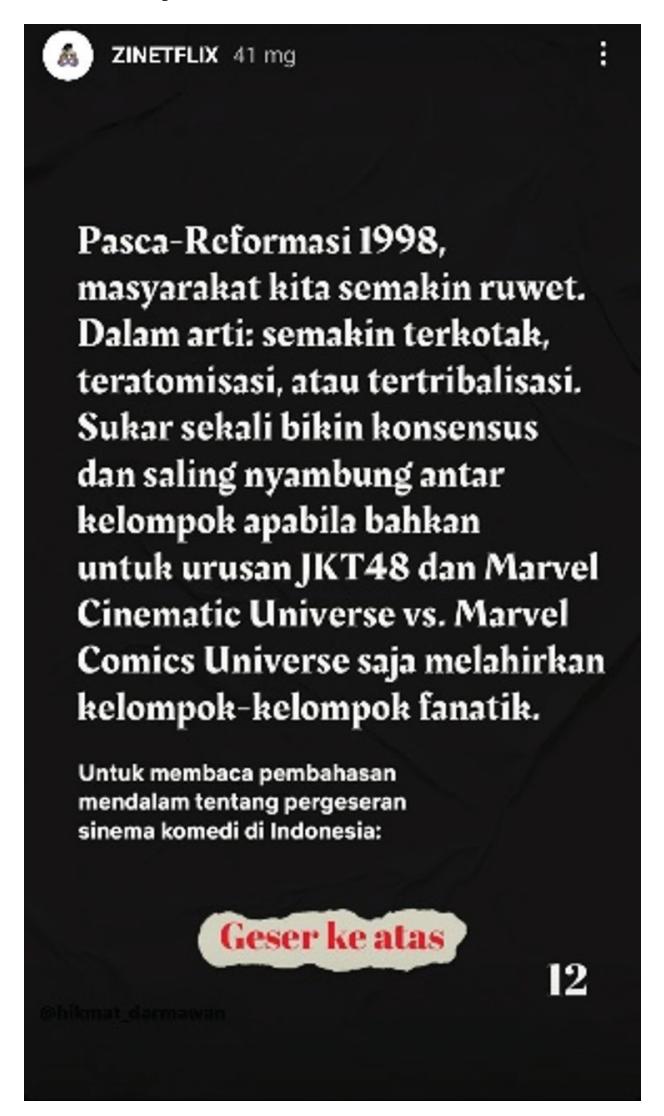
Figure 4 Long Feature Content on Zinetflix (Source: Instagram Zinetflix/@netflixid)
In the aspect of media objects, Zinetflix emphasizes the interaction patterns that occur in the cyber media. Zinetflix spoils its users, especially through the interactive and easyto-use Instagram Stories feature. Meanwhile, Zinetflix is closely attached to the forms of illustrations, photography, and images that are easy for followers to absorb. The use of these various design elements makes Zinetflix an interactive medium on social media that is rich in visuals, from the cover page to the various contents. Through these various visual elements, the relationship process between users or visitors with Zinetflix is mediated through various visual interfaces available on Instagram.
According to Teguh Wicaksono (Netflix Indonesia), Zinetflix is a media that refers to the existing structure in an Instagram device, especially the Instagram Stories feature. When compared to Instagram feeds, the advantage of the Instagram Stories feature is that readers can view the information in just 15 seconds, then also shift the content. Therefore, this feature makes visitors more active. Through the Instagram Stories format, Zinetflix can interact with readers or users through content that can be swiped up (Swipe-Up), reading news sliding left according to format, multimedia news, and motion graphics. Zinetflix design brings a new experience in interactions with its users. Furthermore, Gane and Beer (cited in Nasrullah, 2016) said that there are four types to approach the word "interactivity" in cyber media, including: (1) a structure built from hardware and software from various media systems, (2) human agency, involving humans, and the existence of designs and devices as independent variables used, (3) concepts to explain the communication that occurs between users mediated by new media and provide new possibilities that have existed in the interpersonal communication process, and (4) can be interpreted as a concept that eliminates barriers. Based on the human agency aspect, the interaction in Zinetflix encourages the active participation of visitors. To read the content, they need to swipe the content up, or swipe the content to the left, and enjoy the animation and multimedia menu. In this case, Zinetflix has succeeded in mediating the interaction between visitors and Instagram so that it seems that the concept of interpersonal communication occurs through their various interactions.
However, the drawback of Zinetflix is that it is not practical when it comes to displaying long text. To access long articles, readers must first open them through the PDF or Google
Drive application which is shared via a link in Instagram Stories. However, problems that arise from this aspect include the problem of technological capabilities that make the user's browser incompatible. This was confirmed by the @netflixid account at the launch of Zinetflix on March 30, 2020:
"@netflixid: Teman-teman yang mengalami kesulitan untuk buka PDF-nya, bisa jadi karena browser incompatibility. Coba buka dengan aplikasi Chrome atau aplikasi Google Drive untuk membaca. Terima kasih dan selamat membaca!"
Readers also complained about this access issue with the @inpusar account in the @netflixid comment column during the first launch of Zinetflix:
"@inpusar: Min link pdf full articlenya gak ada yang bisa diakses semua"
The problems faced by Zinetflix are technology compatibility issues and the problem of storing articles and data in the archive that sometimes cannot be accessed.
Experiential Stories
The emphasis of the experiential story aspect lies on motives, effects, benefits, or realities that are connected offline and online. The name Netflix is already a well-known brand for providing movies content and is very popular with young people in Indonesia. The presence of Zinetflix was unforeseen as a well-known company as Netflix was deemed unlikely to invest in the establishment of information media channels through social media. This approach to media and journalism is interesting and is a novelty for a technology company that rarely invests in creating mass media.
The results of the interview with Teguh Wicaksono from Netflix Indonesia emphasized that the presence of Zinetflix cannot be separated from the market penetration of Netflix in Indonesia. His approach is not to create a general campaign or product promotion, but through a media and journalism approach as an effort to build good relations between Netflix and the Indonesian market.
According to Teguh Wicaksono, Zinetflix aims at two targets, new experiences for the Indonesia market in consuming information and building a relationship with movie industry
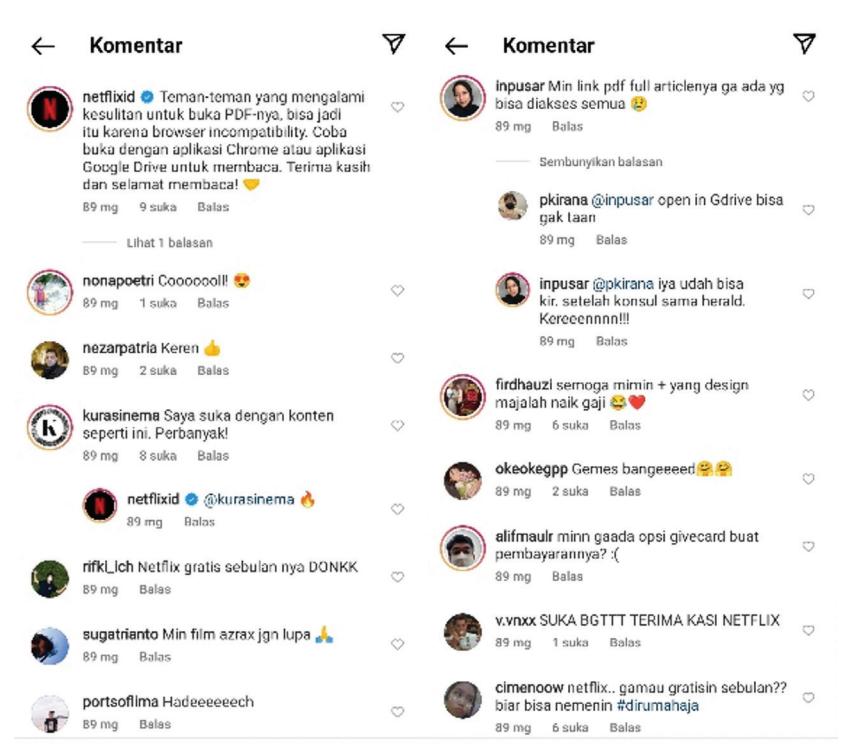
Figure 5 Feedbacks and comments about Zinetflix (Source: Instagram Zinetflix/@netflixid)
stakeholders in Indonesia. As a content provider, Netflix also needs local content by Indonesian moviemakers. Thus, Zinetflix is a marketing strategy in embracing Indonesian moviemakers.
The presence of Zinetflix was designed for the yearly period on the commemoration of National Movie Day. Zinetflix can be an alternative media originating directly from the opinions and information gained from local movie industry stakeholders. Apart from trying to spread information, Zinetflix's establishment is based on the importance of building good relationships with movies industry stakeholders. In the long term, Zinetflix's is expected to have built trust between movie industry stakeholders and Netflix as a brand itself.
CONCLUSION
This research concludes that Zinetflix is designed as an alternative media with a cyber media communication approach. There are several important aspects related to cyber media space, media archives, media objects, and experiential stories. In this case, Netflix's decision to make digital media has considered the important aspects of an ideal transformation of cyber media. The use of Instagram as a "media" cannot be separated from the element of technological capability that allows interactions with their readers. Readers can have a "media experience" through Zinetflix. Zinetflix has also become a community-based alternative media, especially for the local movie communities.
This study has yet to discuss aspects of audience interaction, such as the level of satisfaction and audience participation in receiving Zinetflix information. This research has not discussed in detail the elements of visual communication, which is the most important element in the design of Zinetflix and elementally affluent in visual forms. The reason is that this research is more focused on the form of media transformation and the characteristics of the cyber media as media innovation in the digital era.
ACKNOWLEDGEMENT
We would like to thank Teguh Wicaksono from Netflix Indonesia as the main resource of this research. We also would like to thank PPM Telkom University through the Penelitian Dana Terapan which has funded this research.
REFERENCES
- Adnan, I., & Iskandar, D. (2021). Analisis Media Siber Pola Komunikasi Dan Budaya Komunikasi Pada Komunitas the Podcasters Di Media Sosial Discord. 678– 686.
- Arifianto S. (2019). Fenomena Media Digital dan Perubahan Perilaku Masyarakat Penggunanya. In C. J. Arifianto S. (Ed.), Media Digital dan Perubahan Budaya Komunikasi (1st ed., p. 194). Aswaja Pressindo.
- Brouwer, D. C., & Licona, A. C. (2016). Trans(affective)mediation: feeling our way from paper to digitized zines and back again. Critical Studies in Media Communication, 33(1), 70–83. https://doi. org/10.1080/15295036.2015.1129062
- Bryant, P. (2017). Choosing zines: defining the constructs that influence the decision to participate in the practice of zine-making in the digital age. 53(9), 1689–1699.
- Creswell, J. (2019). Research Design: Pendekatan Metode Kualitatif, Kuantitatif, dan Campuran (4th ed.). Penerbit Pustaka Pelajar.
- Duncombe, S. (1997). Notes From Underground: Zines and Politics of Alternative Culture. Verso.
- Febriana, A. I. D. (2018). Determinasi Teknologi Komunikasi Dan Tutupnya Media Sosial Path. LONTAR: Jurnal Ilmu Komunikasi, 6(2), 86. https://doi.org/10.30656/lontar. v6i2.948
- Nasrullah, R. (2014). Komunikasi Antarbudaya di Era Budaya Siber (2nd ed.). Prenadamedia Group.
- Nasrullah, R. (2016). Teori dan Riset Media Siber (Cyber Media) (2nd ed.). Prenadamedia Group.
- Piepmeier, A. (2008). Why Zines Matter: Materiality and the Creation of Embodied Community. American Periodicals: A Journal of History, Criticism, and Bibliography, 18(2), 213–238. https://doi. org/10.1353/amp.0.0004
- Prisgunanto, I. (2018). Pemaknaan Arti Informasi Di Era Digital. WACANA, Jurnal Ilmiah Ilmu Komunikasi, 17(2), 143. https://doi. org/10.32509/wacana.v17i2.619
- Quinn, Stephen & Filak, V. F. (2005). Convergent Journalism: An Introduction (1st ed.). Focal Press.
- Ramdarshan Bold, M. (2017). Why Diverse Zines Matter: A Case Study of the People of Color Zines Project. Publishing Research Quarterly, 33(3), 215–228. https://doi. org/10.1007/s12109-017-9533-4
- Wazis, K. (2017). Facebook sebagai Media Komunikasi Politik: Analisis Media Siber Facebook Dr. Faida, MMR. Jurnal Ilmu Komunikasi Volume, 8(1), 38–46.