
Keywords:
Digital Feminist Activism, Textual Network Analysis, Jakarta Feminist
The internet and social media have influenced how feminist activists work today. In Indonesia, digital feminist activism was found to have been initiated by young women to deconstruct the general view related to women's empowerment, gender equality, networking, and mobilizing the protest constituents to the street. The opening of networks between countries by the internet has the potential to be the "bridge" for global feminism's vision to the local agenda of feminist activists. Hence, this study aims to provide a discourse on the textual network of digital activism in the case of Jakarta Feminist. As a result, although the Jakarta Feminists have adopted a form of movement and entered the global network, the existing discourse shows the dominance of local issues and agendas such as gender-based violence, women's representation, and human rights. Thus, they adapt the feminism concept to the local context.
INFO ARTIKEL
Kata kunci:
Aktivisme Feminis Digital, Analisis Jaringan Textual, Jakarta Feminist
ABSTRAK
Internet dan media sosial telah memengaruhi cara kerja aktivis feminis saat ini. Di Indonesia, aktivisme feminis digital diinisiasi oleh perempuan muda yang mendekonstruksi pandangan umum terkait pemberdayaan perempuan, kesetaraan gender, berjejaring, dan memobilisasi konstituen protes ke jalan. Internet membuka akses berjejaring antarnegara berpotensi menjadi "jembatan" visi feminisme global ke agenda lokal para aktivis feminis. Oleh karena itu, penelitian ini bertujuan untuk memberikan pemetaan wacana pada jaringan tekstual aktivisme digital dalam kasus Jakarta. Feminist. hasilnya, meski Feminis Jakarta telah mengadopsi suatu bentuk gerakan dan memasuki jaringan global, wacana yang ada menunjukkan dominasi isu dan agenda lokal, seperti kekerasan berbasis gender, keterwakilan perempuan, dan hak asasi manusia. Dengan demikian mereka menyesuaikan konsep feminisme dengan konteks lokal.
https://doi.org/10.5614/sostek.itbj.2022.21.2.1
Introduction
The phenomena of #metoo, #sayhername, and women's marches emerged in 2014 in America, China, India, and several other countries (Felmlee et al., 2020; Travers & Risman, 2021; Zeng, 2020) indicate the presence of global digital feminist activism was exposed to the public and existed in the dynamics of online life.
In Indonesia, the existence of digital feminist activism tends to work on specific social media accounts such as @jakartafeminist, @indonesiafeminis, @lawanpartriarki (against patriarchy), @ muslimahfeminis, and @womensmarchjkt (Annisa, 2021; Parahita, 2019). However, a global reverberation was heard when young women's groups initiated the Women's March Jakarta for the first time in 2017, which coincided with the Women's March phenomenon that already existed in America.
Previously, Fiona Flew et al. (1999), in their research entitled "Introduction: Local feminism, Global Futures" have emphasized the impact of globalization on technological networks that disguise geographical boundaries between countries and local and international cultures. In addition, globalization can also be identified as a new possibility for transnational communication links and cultural exchange (Flew et al., 1999). However, considering the globalization of technology and all its capabilities to change and shorten social, political, and geographic distances (ibid.), can the phenomenon of digital feminist activism substantiate this concept? And what if the phenomenon of digital activism feminism is aligned with the development of the previous Indonesian women's movement?
Chronologically, if the explanation of how digital feminist activism is related to and develops in the Indonesian women's movement, the beginning can be ascertained during the reformation period in 1998 and the simultaneous entry of internet dominance. In that period, the internet is used to benefit Indonesian democratic practices (Suwana, 2020). The socio-political changes due to reformation and the dominance of the internet have also changed the way of Indonesian women's activism and movements work today. The New Order crisis gave rise to many independent women's organizations (Hapsari et al., 2020).
Then, the advantages of the internet, which are considered to provide freedom and operationalized outside the dominant power structure intervention, can facilitate and bring the interests of women, young women, and other minority communities from the exclusion of mainstream citizenship and political discourse to the digital public sphere (Keller, 2012). In that situation, the role of individuals or groups of feminist accounts on social media can be easily noticeable.
Today, some Indonesian women or feminist activists have developed their own characteristics to adapt to communication technology and work with the assistance of the internet (social media or blogging) (Parahita, 2019).
Forms of women organizations that tend to start from associations or communities are more opened to group identity, as many of them identify as feminists (through naming accounts on social media). Work for the rights of women and sexual minorities (LGBTQ). Moreover, they are involved in global feminist and women's activist networks, such as the Women's March Global or regional Southeast Asia (Annisa, 2021).
Social media has enabled iconography and lexicon such as symbols, slogans, or hashtags to regulate the information dissemination and the formation of collective identities that significantly contribute to the emergence of collective actors, and embark their sound (Annisa, 2021; Gerbaudo & Treré, 2015). While the Internet facilitates digital feminist activism by providing outreach features that allow activists to build and connect in larger networks that cross political and geographic boundaries (Desai, 2007).
The discussions on the issue of Indonesian digital feminist activism and women's activism are found in several studies, such as Parahita (2019), Annisa (2021), and Purwaningtyas (2021). Similar findings from the three studies above explain the role of young women in digital activism. They were started by a group of young women in Jakarta (Annisa, 2021; Parahita, 2019), using social media to deconstruct the general view related to women's empowerment and gender equality (Purwaningtyas, 2004), forming a collective identity, networking, and mobilization (Annisa, 2021). These findings provide a basis for the study of operationalizing digital feminist activism in Indonesia but are not adequate to explain how this phenomenon is interrelated with the discourse on local-global issues.
Like before on the internet, feminist identity among Indonesian women's activists and movements has a long history of debate and complexity. Non-western Indonesian women are well known and have rejected western feminism adapting their own feminism concept to the local context or adopting its aspects and forming their own feminism (Flew et al., 1999).
Nevertheless, considering the findings of the study by Annisa (2021) that have shown the openness of some groups of feminist identity through social media ID, it comes up very interesting.
This study aims to provide a discourse mapping on the textual network of digital activism on the Twitter account @jakartafeminist and the Women's March Jakarta hashtag # PuandanKawanMelawan which can reflect the discourse on the concept of local-global feminism by Flew et al. (1999).
Hence, this study is important in answering questions regarding whether the Jakarta Feminist digital feminist activism, the initiator of the Women's March Jakarta (joined the Women's March Global network) (Annisa, 2021), shows indications of unequal or even equal discourse on local to global issues, or vice versa.
Global-Local Feminism Concept
Global feminism can be constructed from the perspective of a power struggle. As if it is reduced to power struggles between hegemonic and subordinate countries, similar to a gender relationship that is unavoidable in power struggles (Sedghi, 2005).
Thickner (2001) states the relationship of sexism similarly to national-international political relations, in which the issue of domestic violence is equivalent to militarism or terror abroad (Sedghi, 2005; True, 2005).
Although global feminism has a sophisticated framework, it embedded the issue of generalizing women by carrying a universal message to abolish patriarchy and inequality in the unequal world of global capitalism. Flew et al. (1999) found contradictory priorities, where women around the world have their own experiences (local), while others have a vision of commonalities (global) (Flew et al., 1999). Global feminism, as it is known has instilled commonalities. Global feminists pursue local agendas and act differently, focusing on their issues and concerns (Sedghi, 2005). Mani (1992) emphasized the need to avoid reading local as global (Mani, 1990; Sedghi, 2005). However, Flew et al. (1999) see the contradiction in both common intersections. This concept is a "bridge" that can be applied in seeing how the discourses in the operationalization of digital feminist activism, not only as known, have the possibility of global information exchange but also have the prioritization of their local issues.
Jakarta Feminist: Through Inspired to Adopted on Women's March Jakarta Initiation
Jakarta Feminist is an organization that started as a Facebook discussion group called the Jakarta Feminist Discussion Group (JFDG) (Annisa, 2021; Parahita, 2019). Jakarta Feminist is the initiator of the Women's March Jakarta (WMJ) and held it for the first time in 2017. In Annisa (2021), Walton (Jakarta Feminist) explains that the reason for initiating WMJ was inspired by what happened in America and the decision to adopt it in Indonesia. Jakarta Feminist is a leading digital feminist activist that uses social media to disseminate information exchanges; (campaigns, recruitment, education, and petitions).
Concerning the global-local network, Jakarta Feminist has a vision as a "catalyst" for the women's movement in Indonesia while being a member of the Women's March Global network (Annisa, 2021). Social media helps this organization to connect with local audiences as their service and target population. Jakarta Feminists reacted by working more on local issues and refusing to have links with international
women's organizations. Jakarta Feminists took the global agenda as a time marker, such as initiating WMJ for celebrating International Women's Day.
Thus, this study can map out their discuses through Twitter textual networks belonging to @jakartafeminist and #PuandanKawanMelawan, which has the potential as a local-global bridge.
Method
Textual network analysis is a cross-analysis method between social network analysis and content analysis; the network can be seen from the relationship between the quality of the word structure of the body of the text and word groups to identify the central word (Annisa, 2021). Words are constructed as actors/nodes, and ties/networks are links or edges calculated from how often they occur together as co-occurrences or co-appearances with other words (Annisa, 2021; Segev, 2020).
This study used a qualitative approach combined with digital data collection. The use of digital methods is correlated to the type of data: Twitter social media data. The author considers the opportunity to study digital feminist activism by sampling and data collection from social networking sites, as it was done in several previous studies such as Parahita, 2019) and Annisa (2021). The secondary data was used and taken with data scraping techniques using Netlytic, a site text analysis and a community-based social network for social media researchers and educators to study public discourse on social media (Gruzd & Mai, 2020).
Results and Discussions
Textual Network Analysis of @jakartafeminist and #PuandanKawanMelawan
The discourse on the @jakartafeminist textual network covers several issues, including sexual violence (in the largest cluster), human rights, and gender-based violence. We also found other discourses on campaigns, discussions, and film screenings.
The first cluster discourse showed the demand for the ratification law on eliminating sexual violence (Rancangan Undang-undang Penghapusan Kekerasan Seksual or RUU PKS) to the Speaker of the People's Representative Council, Puan Maharani. The second cluster shows the campaign to join the Southeast Asian Feminist Action Network (SEAFAM).
Campaigns, discussions, and film screenings discourses related to human rights in the case of the victims of Uruguay's past political dictatorship are found in the third, fifth, and eighth clusters with the slogans "Time Without Book".
Social media functions for disseminating Jakarta feminists' information, such as recruitment and collaboration, are found in the fourth and sixth clusters. Furthermore, the discourses related to gender-based violence issues and advocacy information were found in the seventh cluster, with discourses involving several organizations and communities, namely LBH APIK (legal aid for women), Pulih Foundation (mental health service), and Samahita Bandung (anti-violence and sexual harassment community).
A complete analysis can be read in the table below:
Table I The @jakartafeminist Textual Network Analysis
| No | Modularity Percentage | Keyword | Discourse |
|---|---|---|---|
| 1 | 26.01% | jakartafeminist, kontras, amnestyindo, koalisiseni, magdaleneid, wanitabaca, mahadrikakita, heradiani, alissawahid, mardiasih, perempuan, Hollaback_jkt, diskusi, tiketnya, ketemu, kalynamitra, besok, siang mbak, hafyzsa, topik, desak, dpr, puan, ketua, maharani, komnasperempuan, frejalegardd, lini_zq, vickyfachriza, hak, widyakart, sahkanruupks, menulis, jouhamida, catwomanizer, ikuti, pesan, institutungu. | The urge to ratify the Draft Law on the Elimination of Sexual Violence (RUU PKS), it was directed to Puan Maharani and the invitation to the "Do The Write Thin" campaign, discuss and write with the hashtag #SahkanRUUPKS. |
| 2 | 11.36% | Seafam,ndonn, there, findmymethod, see, join, register, you,ndonest, now, there, happen, what, countries, to, amazing, project, organization, fund, partner, like, to, proud. | Joint the southeastndonn feminist action movement (SEAFAM) |
| 3 | 10.99% | We, us, and, society, level, is, left, many, even, risk, face, puts, freedom, higher, discuss, year, wellbeing, girl, sexual, reproductive, challenges, such, human, right, women, similar, one, individuals, when, on, another, history, silence, during. | "Time Without Books" about the stories and memories of the victims of Urugua''s past political dictatorship, (human rights campaign). |
| 4 | 7.69% | Gentala,ndonesias, why, the, thats,ndonesiaa, do write, thing, two, past, are, remember, press, why, who, are, condemned, months. | Collaboration of @jakartafeminist (Indonesia) and Gantala Press (Philippines) |
| 5 | 5.49% | Repeat, penyintas, violence,ndonesiat, media, uruguai, genderbase, takes, memory, that, end, youtube, buku, kanal, ungu, more, end, kediktatoran, desember. | about the time without book (human right campaign) |
| 6 | 4.4% | For, in, applying, interest, data, analyst, collaboration, we are, looking, at, anyone, if, a. | Recruitment add to work with Jakarta Feminist |
| 7 | 4.03% | Violence, friend, based, experience, gender, opponent, want, report, thank, love | Information on how to report cases of gender-based violence, directed to LBH APIK (legal aid for Woman), Yayasan Pulih, and Samahita Bdg |
| 8 | 4.03% | Email, film, chat,ndonesir, wednesday, sent, hour, presenter, link, saturday | invitation to participate in a film screening event "time without book" organized by Jakarta Feminist. |
Source: data analysis
The @jakartafeminist discourse mapping shows the intersection between issues of sexual violence, gender-based violence, and human rights. Those issues can be indicated from the many mentions of related accounts to the issues, such as Amnesty International Indonesia (Human Rights), Kontras (The Commission for Missing Persons and Victims of Violence), LBH APIK, and women (part of the coalition of public spaces safe from sexual harassment).
Other discourses related to campaigns, discussions, and film screenings mentioned several accounts, including SEAFAM, Magdalene.id (an online media with a gender perspective), and Hollaback Jakarta (a global movement against sexual harassment). More details can be seen in the Figure 1.
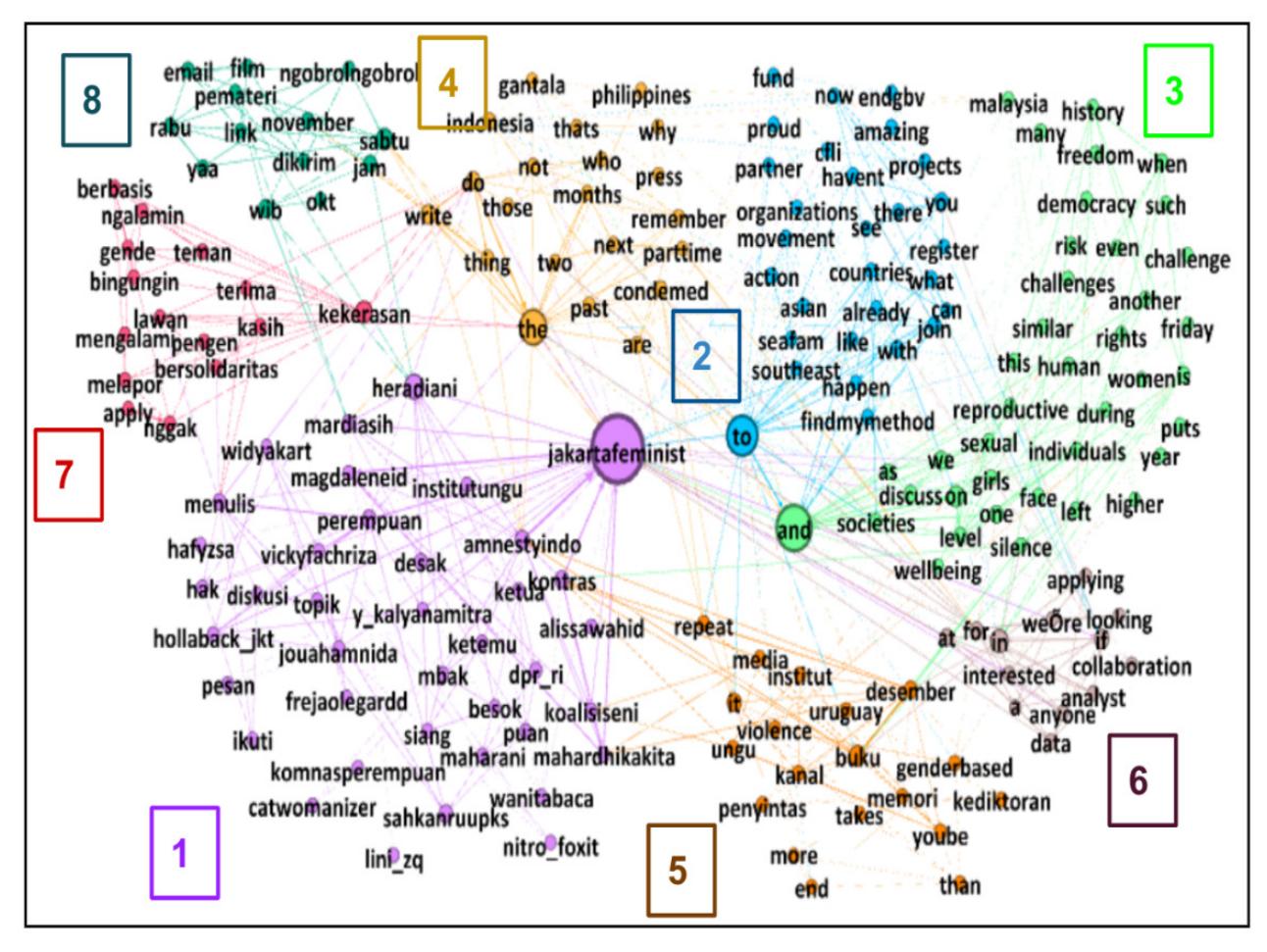
Figure 1 the @jakartafeminist Textual Network Analysis Graph Source: data analysis
Table II The #PuandanKawanMelawan Textual Network Analysis
| No | Modularity Percentage | Keyword | Discourse |
|---|---|---|---|
| 1 | 24.29% | Puankawanmelawan, womensmarchjkt, btsarmy, bts_ahc_idn, join, merapat, online, borahe, aksi, bertepatan, kartini, orasi, very, soon,ndonk, tonton, pembawa, puspapra, pertunjukan, tagar, fandom, mekanisme, yuk, lets, hadir, aktivisme, gustika, negara, peserta, march, suara,ndonesa,ndonesl, konferensi, pers, agenda, womens, petunjuk, utama, ajakan, simak, kesetaraan, teman, sesuai, sendiridendiri, kanal, manapun, tahuntahun. offline | The collaboration of online activism Wome''s March Jakarta and the Kpop Idol fan base BTS_AHC_IDN named the ARMY group. Discourse related to the experience of wome''s fandom often accepting gender injustice and gender-based violence, fight with local activism, providing safe spaces, education, campaigns, donations in the online action of Wome''s March Jakarta 2021. |
| 2 | 16.43% | Apakabarpemajuankebudayaan, perempuan, lupa, gabung, koalisiseni, seni, tahukahkamu, puluh, puan, enam, lelaki, semangat, ekosistem, suarakan, dewan, surut, harikartini, tuntutan, kegiatan, hukum, rentan,ndonesian, btsarmycasa, berhasil armythegrace, keadilan, irckjham, kesenian,ndonesii, penampil, tdk, kelompok. | wome''s representation on the Regional Arts Council in Indonesia. It was stated that there were only four women from sixty one Regional Arts Councils in Indonesia, indicating that women are not equal with men in many sectors, including the art ecosystem. The discourse also carried hashtags such as #koalisiseni, #advocationofseni, #harikartini, #puandkankawanmelawan, #apakabarpejuangbudaya |
Indonesian Digital Feminist Activism... | Rifka Annisa
| 3 | 13.57% | Workshop, poster, armyselcaday, womensmarchjakarta, post, hashtag, dicetak, selfie, tandai, daftar, posting, foto, pakai, coba, live, gabungkan, panitia, nih, see, terimakasih, bareng, gambar, lanjutkan, karya. | the workshop activity campaign "posters making" for the participants of the online Wome''s March Jakarta 2021 action which will be combined as digital posters to voice the demands of #PuandanKawanMelawan #WMJ2021. |
|---|---|---|---|
| 4 | 8.57% | Pengalaman, donasi, dikaji, peachyfraise, berdasarkan, pembahasan, kekerasan, ui, kerap, berbasis, gender, edukasi, kampanye, perlawanan, ketidakadilan, kerap, aman, ajak, fan, menerima. | Discussion of gender-based violence based on the experience of BTS ARMY #WMJ2021 #PuandanKawanMelawan #BTSARMY, Fan Activism #BTSARMY |
| 5 | 7.86% | April, killed, death, mira, burned, wrong, I, diambil, alive, trans, woman, lirik, mourn, the, of, lagu, being, fellow, by. | The case of Mir''s death, a transgender victim of burning on April 4, 2020 in Cilincing, North Jakarta (Gender-based Violence) |
| 6 | 7.14% | Transpower, womensmarchjakarta, us, diminish, tried, sparkle, fireworks, even, we, are, that, when, know, paid, tribute, to everyone, her. | Discourse related to the case of the death of a transwoman Mira (Gender-based Violence) |
| 7 | 5% | Army,ndonesiaa, itswidis, performance, ketemu, bts, selamat, terima, kasih, mewakili, pagi. | Contribution of one of the accounts as a representative of the BTS_AHC_IDN fanbase group on the online Wome''s March Jakarta 2021. |
| 8 | 4.64% | Wib, ya, posternya, malam, siang, dibuka, jam, donasi, temanteman, done, wmj, submit | Information to upload the demand posters online for ARMY Fandom group |
| 9 | 3.57% | Antusiasme, present, kekurangan, acara, maaf, oration, bermanfaat, semoga, mohon. | A statement of gratitude for the 2021 WMJ committee for mass participation in the online action |
Source: data analysis
The #PuandanKawanMelawan textual network at the Wome''s March Jakarta 2021 comprises nine discourse clusters, and the two most common issues found include gender-based violence and women's representation. Several other discourses on the provision of safe places, education, campaigns, and donations.
Evidence that the Women's March Jakarta is a collaboration of many communities that can be seen from clusters 1, 3, 4, 7, 8, and 9 with discourses dominated by the fan group ARMY. Gender-based violence issues were found in clusters 1, 4, 5, and 6 with cases surrounding the experience of the ARMY fan group and the case of Transwoman Mira. A complete analysis can be read in Table II.
The dominations of accounts indicated as ARMY fan groups, with these intersectional collaborations compared to the previous data this mapping shows a new pattern.
The issue of gender-based violence is still found, but with the type of case that raises sexual minorities such as Trans women. The new issue found is the representation of women in the arts, which can be represented by hashtags such as # koalisiseni (art coalition), # advocationofseni (advocation for art), and # apakabarpejuanbudaya (what's up warrior culture). More details can be seen in Figure 2.
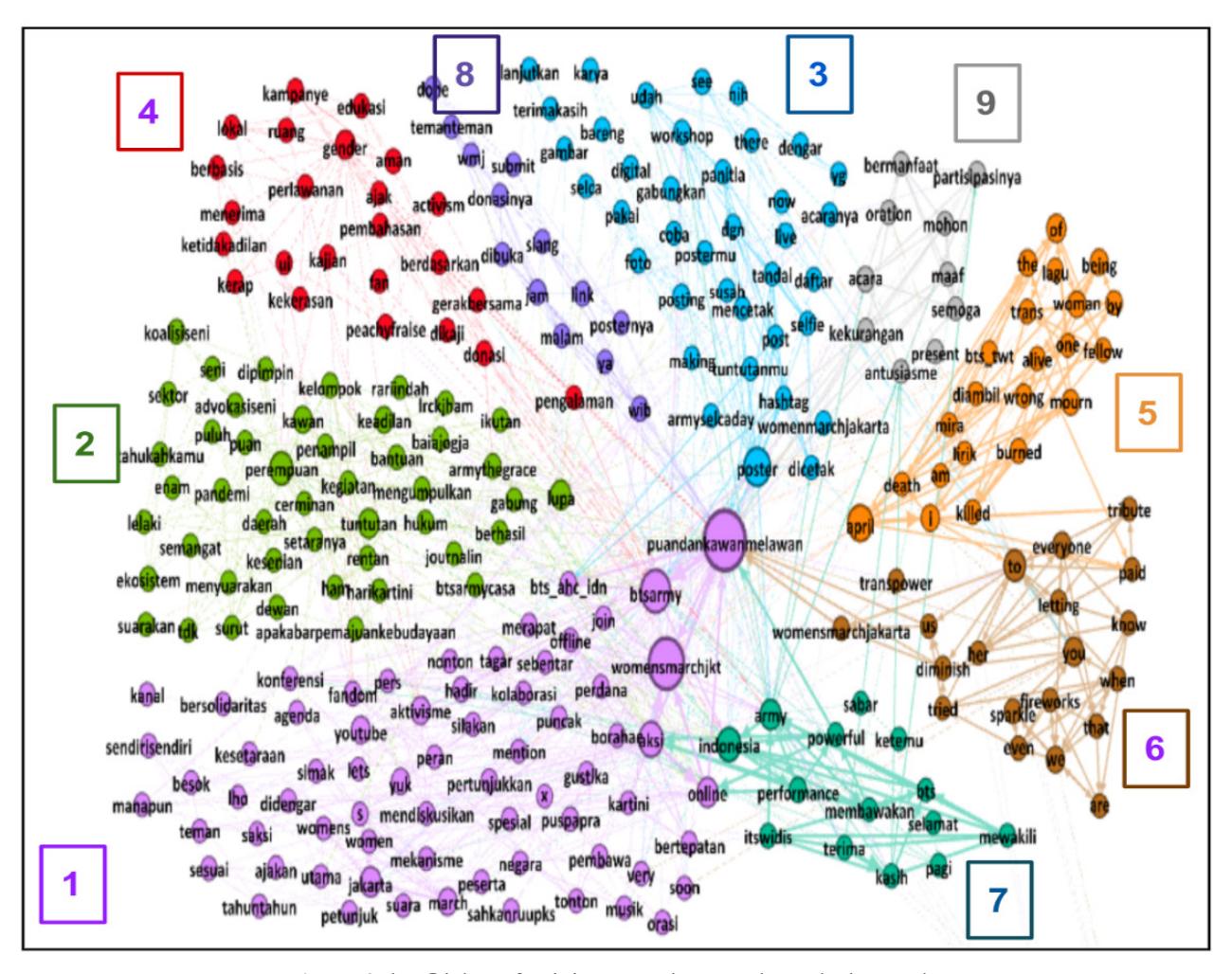
Figure 2 the @jakartafeminist Textual Network Analysis Graph Source: data analysis
Conclusion
The Jakarta Feminist discourse mapping results show the intersection of several issues such as genderbased violence, sexual violence, human rights, and women's representations. Other discourses indicate how social media help Jakarta Feminists to disseminate information related on campaigns, education, advocacy, discussions, and donations. Their discourse also shows that they adapt their feminism concept to the context of locality because issues and cases in Indonesia dominate the existing discourse.
The discourses are directed at women's interests and other sexual minorities, such as Transwomen. Moreover, the discourses also showed the collaboration of the various organizations and communities in the same interest or even an egalitarian one, as in ARMY on Women's March Jakarta 2021.
Whether adopting or joining the Women's March in America, its global network and as a member of the Southeast Asian Feminist network, can be seen because the internet or social media, has brought the possibility of cultural exchange and opened networks across geographic or political boundaries of countries. The internet and social media bring a lot of advantages in network outreach, cultural exchange, and information dissemination, but it doesn't mean it can't influence what feminist activists are fighting for in their community.
The commonalities vision of global feminism is translated and adopted, thus adapted to contextual circumstances based on local needs and problems.
References
- Annisa, R. (2021). Digital feminist activism: Analyzing Jakarta Feminist as a collective identity, resources, network, information dissemination, and mobilization. Jurnal Sosiologi Dialektika, 16(2), 175. https://doi.org/10.20473/jsd.v16i2.2021.175-186
- Arnaboldi, M., Busco, C., & Cuganesan, S. (2017). Accounting, accountability, social media, and big data: revolution or hype? Accounting, Auditing & Accountability Journal, 30, 762–776.
- Desai, M. (2007). The Perils and Possibilities of Transnational Feminism. Women's Studies Quarterly, 35(3/4), 333–337. http://www.jstor.org/stable/27649726
- Felmlee, D. H., Blanford, J. I., Matthews, S. A., & MacEachren, A. M. (2020). The geography of sentiment towards the Women's March of 2017. PLOS ONE, 15(6), e0233994. https://doi.org/10.1371/ journal.pone.0233994
- Flew, F., Bagilhole, B., Carabine, J., Fenton, N., Kitzinger, C., Lister, R., & Wilkinson, S. (1999). Introduction: Local feminism, global futures. Women's Studies International Forum, 22(4), 393– 403. https://doi.org/10.1016/S0277-5395(99)00042-4
- Gerbaudo, P., & Treré, E. (2015). In search of the 'we' of social media activism: introduction to the special issue on social media and protest identities. Information, Communication & Society, 18(8), 865–871. https://doi.org/10.1080/1369118X.2015.1043319
- Gruzd, A., & Mai, P. (2020). Going viral: How a single tweet spawned a COVID-19 conspiracy theory on Twitter. Big Data & Society, 7(2), 205395172093840. https://doi.org/10.1177/2053951720938405
- Hapsari, Y. D., Utami, T., Wijaya, M., & Rahmawati, T. (2020). Pattern and Orientation of Indonesian Women's Movement: Comparison of Women Movement in the Era Before and After the Reform. Proceedings of the 6th International Conference on Social and Political Sciences (ICOSAPS 2020). https://doi.org/10.2991/assehr.k.201219.073
- Keller, J. M. (2012). VIRTUAL FEMINISMS. Information, Communication & Society, 15(3), 429–447. https://doi.org/10.1080/1369118X.2011.642890
- Mani, L. (1990). Multiple Mediations: Feminist Scholarship in the Age of Multinational Reception. Feminist Review, 35, 24–41. https://doi.org/10.2307/1395398
- Parahita, G. D. (2019). The Rise of Indonesian Feminist Activism on social media. Jurnal Komunikasi Ikatan Sarjana Komunikasi Indonesia, 4(2), 104–115. https://doi.org/10.25008/jkiski.v4i2.331
- Purwaningtyas M.P.F. (2004). INDONESIAN WOMEN'S ACTIVISM IN SOCIAL MEDIA: A VIRTUAL ETHNOGRAPHY STUDY IN THE INSTAGRAM. Jurnal ILMU KOMUNIKASI, 18(2), 141–162. https://doi.org/10.24002/jik.v18i2.3343
- Sedghi, H. (2005). Global Feminism, Local Agendas and Actions. Socialism and Democracy, 19(2), 157–159. https://doi.org/10.1080/08854300500122381
- Segev, E. (2020). Textual network analysis: Detecting prevailing themes and biases in international news and social media. Sociology Compass, 14(4). https://doi.org/10.1111/soc4.12779
- Suwana, F. (2020). What motivates digital activism? The case of the Save KPK movement in Indonesia. Information, Communication & Society, 23(9), 1295–1310. https://doi.org/10.1080/136911 8X.2018.1563205
- Travers, & Risman, B. J. (2021). #Sayhername: So Much More Than a Hashtag: Introduction to the Symposium. Gender & Society, 35(4), 521–526. https://doi.org/10.1177/08912432211029414
- True, J. (2005). Book Reviews Gendering World Politics. By J. Ann Tickner. New York: Columbia University Press, 2001. Feminist International Relations: An Unfinished Journey. By Christine Sylvester. Cambridge: Cambridge University Press, 2002. Signs: Journal of Women in Culture and Society, 30(4), 2237–2240. https://doi.org/10.1086/428414
- Zeng, J. (2020). #MeToo as Connective Action: A Study of the Anti-Sexual Violence and Anti-Sexual Harassment Campaign on Chinese social media in 2018. Journalism Practice, 14(2), 171–190. https://doi.org/10.1080/17512786.2019.1706622