

Keywords:
design activity, product design, industrial design, new normal, sustainability
The coronavirus disease 2019 (COVID-19) pandemic has changed the people's lifestyles all over the world. This crisis has influenced the packaging design activity as well. Thus, companies should define the new normal packaging that responds to the pandemic situation and new normal living. This study aims to explore the new normal in packaging design by using blog text analysis. Thematic analysis with an inductive approach was done using NVivo12 software and an Excel sheet was used to discover patterns of common ideas or themes of the new normal packaging design. This study has identified 13 key trends in new normal packaging design, including sustainability, e-commerce, and hygienic-centric design. The findings provide insights for packaging designers, brand owners, and marketers to create and develop new standard packaging.
INFO ARTIKEL
ABSTRAK
Kata kunci:
aktivitas desain, desain produk, desain industri, new normal, sustainability
Pandemi penyakit coronavirus 2019 (COVID-19) telah mengubah gaya hidup masyarakat di seluruh dunia. Krisis ini juga mempengaruhi aktivitas desain kemasan. Oleh karena itu, perusahaan harus mendefinisikan kemasan normal baru yang merespon situasi pandemi dan kehidupan new normal. Penelitian ini bertujuan untuk mengeksplorasi desain kemasan new normal dengan analisis teks blog. Analisis tematik dengan pendekatan induktif dilakukan dengan software NVivo12 dan lembar Excel digunakan untuk menemukan pola ide atau tema umum dari desain kemasan new normal. Studi ini telah mengidentifikasi 13 tren utama dalam desain kemasan normal baru, termasuk keberlanjutan, e-commerce, dan desain higienis-sentris. Temuan ini memberikan wawasan bagi desainer kemasan, pemilik merek, dan pemasar untuk membuat dan mengembangkan kemasan normal baru.
https://doi.org/10.5614/sostek.itbj.2022.21.2.4
Introduction
The coronavirus disease of 2019 (COVID-19) has impacted all aspects of life and business globally since the early 2020. The COVID-19 pandemic will have immediate, medium-term, and long-term economic consequences, mainly in developing countries with weak and poor health systems (Ataguba & Ataguba, 2020). Its impact on consumers as well as business confidence indicators has been investigated by Teresiene et al. (2021). The results indicated that COVID-19 had a fast and substantial effect in the short term, but that longer-term effects varied by area. The consumer-confidence index (CCI) was not affected by the COVID-19 outbreak in the Eurozone case. However, the COVID-19 has negatively affected the index in the United States and China. The COVID-19 pandemic situation in Southeast Asia, specifically in Thailand, Malaysia, the Philippines, and Indonesia, has been studied by Weiss et al. (2021). According to them, managing pandemics is decentralized and localized in most Southeast Asian countries, with regional impacts varying widely within countries.
As of mid-2020, whereas many countries are tightening policies to avoid the second wave of coronavirus disease of the 2019 (COVID-19) pandemic, Indonesia is still struggling to flatten the curve of active cases and minimize the mortality rate. The Government has been relaxing some of the mobility restrictions since June 2020 because the situation of the national economic situation getting is worse. With the prohibition on opening stores and malls, several companies are rethinking their strategies for reaching buyers.
The COVID-19 pandemic has underscored the critical nature of adaptability and technological literacy. Soon, digital technology will serve as the primary platform for conducting business and daily living, regardless of the epidemic. Digital technology will become a critical component of the recovery strategy (Nava+ Group, 2020).
Manufacturing, the economy's largest sector at 20% of GDP, contributes roughly equally to total economic loss. Household consumption fell by 5.5 %, equating to a 3.0% dropped in overall GDP, accounting for more than half of the contraction. This decrease was concentrated in clothing, transportation, communication, leisure, and travel in 2020. In the second quarter of 2020, exports and imports were down 12% and 17% year on year, respectively (Sparrow et al., 2020).
Six consumer behavior shifts due to COVID-19 concern are as follows: proactive health-minded buying; reactive health management; pantry preparation; quarantined living preparation; restricted living; and living a new normal (Nielsen, 2020). Living a new normal means hygiene practices, the use of e-commerce, and permanent shifts in the supply chain. In this case, there is an increase in online shopping and a decline in store visits. As the COVID-19 issue worsened in 2020, the World Health Organization (WHO) announced that people should prepare for a new normal. Practices in the new normal include social distancing; wearing masks in crowded public areas; and lowering occupancy on public transportation (Khan et al., 2021). People have begun to adapt their behaviors in order to sustain their lives into new normal practices, particularly when it comes to interacting, communicating, working, learning, and even purchasing (Baharom et al., 2020).
As COVID-19 is infecting people globally, consumers are being forced to change their purchase behaviors significantly. This situation impacts people's activities such as outdoor entertainment, traveling, and visiting malls. COVID-19 has affected 22% more in food deliveries, 19% more in takeaways, and 30% more in online shopping (Nielsen, 2020). Food, beverages, home care, and pharmaceuticals were purchased by the Upper SES (Social Economic Status). For individuals who would rather shop less and avoid crowds, online shopping has started to become an option.
As a result of this outbreak, consumers are increasingly concerned about product hygiene. People consider hygiene to be the most important factor in choosing food, and this will be the new normal (Yuswohady et al., 2020). They also highlight four consumer mega shifts in the time of the COVID-19 crisis: the stay-at-home lifestyle; back to the bottom of the pyramid; going virtual; and emphatic society. In this term, there are three things: the fall of mobility the rise of logistics and delivery, and e-commerce.
The presence of a "stay-at-home" economy has caused the biggest disruption in human history. The COVID-19 outbreak has left many people at home, so that online shops become an option for shopping. Along with the widespread application of physical distancing, online shopping has become an alternative for many people. With the long-term implementation of large-scale physical distancing, this shift will not only be temporary but also will permanently form a new normal.
The COVID-19 pandemic has changed people's lifestyles all over the world. The crisis had several impacts on the growth of the national economy. Business owners must innovate in their businesses to survive. Innovation is not limited to products, but also services and processes. COVID-19 has reshaped industrial supply chains, including threatening the pulp and paper sector globally. The impacts of COVID-19 on the pulp and paper industry have been studied by Liu et al. (2020). They suggest the potential to boost demand for a wide variety of paper goods, including personal hygiene paper, food packaging, medical specialty sheets, and corrugated packaging materials.
Many restaurants are entering survival mode by changing their operations from dine-in to selling and delivering frozen food to consumers or selling food and beverages in family size, despite the takeaway and delivery service. This crisis has influenced the packaging industry as well. Thus, companies and manufacturers should define the new normal in packaging that responds to the pandemic situation and new normal living. Ankiel & Grzybowska-Brzezińska (2020) summarize the essentials of packaging. In addition to the essential tasks of protecting, transporting, and informing, packaging has numerous other purposes. They are distinguishing components of product/brand value, a tool to develop a competitive advantage, and a brand image builder. From a consumer's perspective, individual packaging is a valuable source of product information and a major purchase factor. From the above-mentioned problems, the research question is as follow: what the new normal of packaging design looks like?
Willskytt & Brambila-Macias (2020) offer design guidelines and solutions for product resource efficiency, including packaging design. The recent trends in smart packaging have been discussed by Singh and Singh (2017). In addition, the trends in sales of varying food package sizes for carbonates and confectionery have been examined by Jensen et al. (2021). However, those recent studies do not consider the new normal in living. To the best of the authors' knowledge, this is the first scholarly article that addresses the new normal packaging design. This study aims to explore the new normal packaging design from the experts' opinion. This paper aims to investigate the key trends in the new normal in packaging design. The study's Nobel approaches contribute to a more complete understanding of new normal packaging design and enhance the feasibility and effectiveness of forecasting techniques, allowing us to reveal past trends and forecast future ones (An & Park, 2020). By identifying the key trends, it can offer an effective forecasting technique and predict the packaging in the future that will be considered new normal living.
Packaging Design
Packaging can be defined as the designing and producing process of the wrapper or container that holds and protects a product as well as performs sales tasks (Kotler & Armstrong, 2017). Another source defines packaging as any material which is used for the container, protection, transport, and display of items, from raw materials to finished goods, and from the manufacturer to the consumer, including disposables used (Gopinathar et al., 2016). The packaging itself may include a primary package, secondary package, tertiary/shipping package (Kotler & Keller, 2016), and an industrial package (Gopinathar et al., 2016).
Findings by Rundh (2016) reveal how firms operate to develop a competitive advantage by packaging. He reveals the importance of packaging's influence on function, design, and adding value to customers. It shows that packaging design has become an important tool for creating a product concept that offers functionality, attracting customers to buy the product to reach customer value. Packaging is a key factor in the consumer decision-making process as it conveys in-store communication to consumers (Silayoi & Speece, 2007). Finally, packaging design meets the marketing objectives by communicating the personality or function of products (Abidin et al., 2014).
Packaging Design Trend
The emerging trends in food packaging are intelligent packaging, active packaging, smart packaging, biodegradable packaging, and sustainable packaging (Sharma & Ghoshal, 2018). Sustainable and protective packaging has become a high priority for majority consumers in recent years (Mattia et al., 2021). Sustainable packaging should be safe and healthy for consumers, use recycled materials, and be reusable and renewable (Özgen, 2018). Sustainability criteria include the use of safe materials, recyclability, safe chemistry, and waste elimination (Ruckstuhl et al., 2020).
Han et al. (2018) have reviewed the annual trend of the total number of publications on intelligent or smart packaging (IOSP), active packaging (AP), and sustainable or green packaging (SOGP) from 1997-2017. They found that the number of peer-reviewed articles on innovations in food packaging has continuously increased.
Good Design in New Normal Era
A designer, Eliot Noyes, points out that "good design (1) fulfils its function, (2) respects its materials, (3) suits to the method of production, (4) combines these in the imaginative expression" (MoMA, N.D., cited in Rallo & Garcia, 2020). Moreover, they have categorized the Good Design concept into three fundamental principles: honest, ethical, easy to use and understand. A good design helps to drive a dialogue about how to think about what we do, and what our decisions might mean for the future. And we can be certain that pandemics such as the current COVID-19 have not been overcome yet and will recur soon. Design can and should contribute to protect our lives, but we also require a collective and responsible response to these threats (Neto et al., 2021). The shift in people's behavior is real as a result of the COVID-19 pandemic. It requires an effective design thinking to address the issues that arise because people's behavior have changed. As long as people are still in the mode of survival or sustenance, an effective design thinking is critical and undoubtedly assists artists and designers in determining and exploring appropriate design solutions (Baharom et al., 2020). In their paper, they discuss the four big ideas of design thinking, i.e., (1) Social environment, (2) Psychology, (3) Information and (4) Digital technology. Active, intelligent, and green packaging technologies can be combined collaboratively to provide a versatile food-packing system. This objective can be considered the most important goal of food packaging technology in the future (Han et al., 2018).
Method
This study used a qualitative approach (i.e., blog text analysis) to explore insights from the experts (individual or institutional). For data gathering, the experts' opinions or thoughts were collected from blogs using the keywords "new normal" and "packaging design". Of 173,000 results (in 0.40 seconds) were taken from the Google search engine, only the first three pages were taken as samples. The articles were captured as Pdf using NCapture, the chrome extension from NVivo 12, retrieved in March 2021.
The Blog Quality Assessment (BQA) used criteria from a prior study (Zain & Abd Ghani, 2015). The qualities assessed were accuracy, completeness, currency, engaging, reputation, info representation, navigation, visual design, readability, accessibility, and blog technical features. The assessment based on a 5-point Likert scale (1: Not satisfied to 5: Very satisfied) was done on an Excel sheet.
The blogs that scored less than 4, as well as those promoting companies or webinar events, were excluded from the study. After conducting a Blog Quality Assessment, only 15 blogs were included in the study, as a prior study suggests 12-16 samples are enough to reach study-wise saturation just like in interviews (Hagaman & Wutich, 2017). Figure 1 illustrates the screening flow diagram of the included study in searching process as it was adopted by Young et al. (2020).
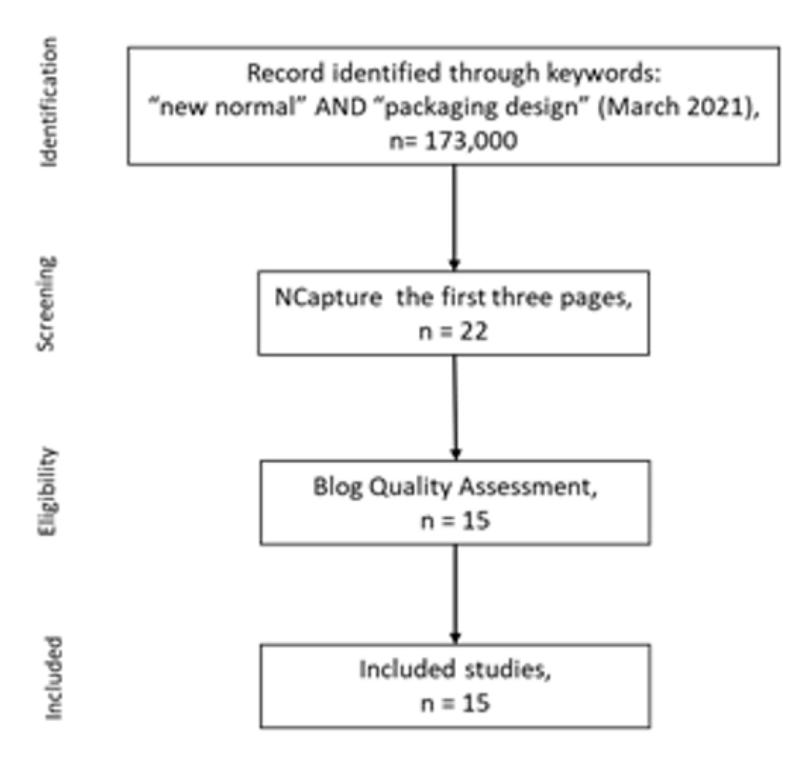
Figure 1 Screening flow diagram
Thematic analysis with an inductive approach (data-driven) using NVivo12 software and an Excel sheet were conducted to discover, analyze, and understand patterns of common ideas or themes of the new normal packaging design systematically as suggested by Ramírez et al. (2019). Furthermore, a thematic matrix (Kuckartz, 2019) was developed including text coded to the relevant category. The matrix was generated using NVivo 12 and then analyzed in an Excel sheet.
Results and Discussion
Table I shows the included study and the Blog Quality Assessment (BQA) result.
Table I The Included Study and Blog Quality Assessment Result
| Case | Topic/ Title | Author's profile | URL | BQA |
|---|---|---|---|---|
| 01 | Packaging trends shaping the new normal | Head of Trends at Insider Trends, London | https://www.epda-design.com/ packaging-trends-shaping-the-new normal/ | 5 |
| 02 | What is the new normal for packaging design? | Packaging expert | https://eastpac.co.uk/new-normal/ | 4.9 |
| 03 | What Does the New Normal Look Like for Packaging Design in a Post-COVID World? | SmashBrand package design and branding agency founder | https://www.smashbrand.com/articles/ what-does-the-new-normal-look-like for-packaging-design-in-a-post-covid world/ | 4.7 |
| 04 | A look into the future of packaging design | Qualified Marketing Executive | https://www.phdmarketing.co.uk/the future-of-packaging-design/ | 4.6 |
| 05 | Shaping the next normal of packaging beyond COVID-19 | Packaging consultants | https://www.mckinsey.com/industries/ paper-forest-products-and-packaging/ our-insights/shaping-the-next-normal of-packaging-beyond-covid-19 | 4.9 |
|---|---|---|---|---|
| 06 | 3 Ways COVID-19 will change packaging design | Marketing and Branding Specialist (same person as in case 10) | https://www.packagingdigest.com/ packaging-design/3-ways-covid-19-will change-packaging-design | 4.2 |
| 07 | The new normal of food packaging: sustainability and COVID-19 how to continue to meet sustainable food packaging demands during, and after, the coronavirus pandemic | Marketing Specialist | https://newpointmarketing.com/ the-new-normal-of-food-packaging sustainability-and-covid-19/ | 4.2 |
| 08 | The 'New Normal' for packaging design strategies | Business Development Manager, Master of Arts | https://www.p-and-w.com/post/the-new normal-for-packaging-design-strategies | 4.6 |
| 09 | 07 packaging trends for the new normal | Design-led Innovation organisation, create brands, and develop products | https://www.creativegaga.com/07- packaging-trends-for-the-new-normal/ | 4 |
| 10 | 3 Essential Ways Packaging Design Will Change Because of Covid-19 | Marketing and Branding Specialist (same person as in case 06) | https://www.crowdspring.com/blog/ packaging-design-covid/ | 4.6 |
| 11 | The Top Packaging Trends for 2021 Predicted by The Packhelp Team | Search engine optimization (SEO) specialist | https://packhelp.com/packaging-trends/ | 4.5 |
| 12 | Packaging Changes Expected After Covid-19 | Australian Packaging and Processing Machinery Association (APPMA) | https://www.auspack.com.au/packaging changes-expected-after-covid-19/ | 4.2 |
| 13 | EXPO PACK 2020 Webinar Series: Opportunities for Packaging Innovation in the "New Normal" | PMMI (The Association for Packaging and Processing Technologies) Media Director for Latin America | https://www.packworld.com/covid-19/ article/21132805/mundo-pmmi-new normal-for-postpandemic-packaging operations | 4.6 |
| 14 | How is COVID-19 shaping the future of packaging design | Head of Packaging in a branding agency | https://www.shoot-the-moon.co.uk/blog/ covid-19-packaging-design/ | 4.3 |
| 15 | [Webinar] Rethinking product packaging to address the new normal | Content Marketer | https://blog.beaconstac.com/2021/03/ redefining-product-packaging/ | 4.7 |
The auto coded themes identified using Nvivo12 software are packaging, design, and product. Text analysis from blogs revealed the 13 key trends in new normal packaging design, packaging material, the pandemic's effect on consumer behavior, and its effect on packaging design. Figure 2 shows the numbers of key trends revealed.
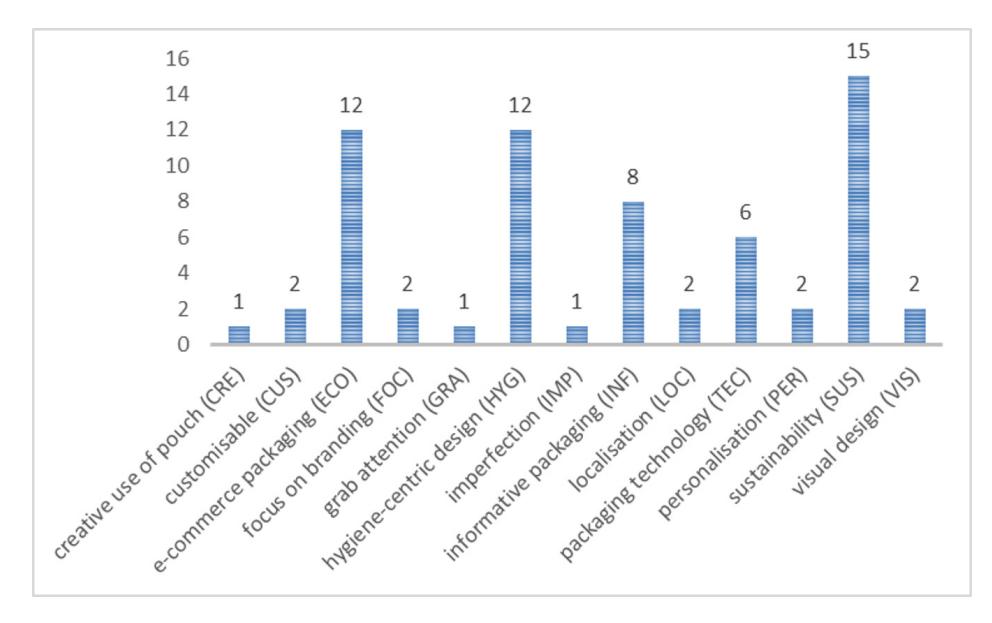
Figure 2 Key trends revealed from this study
From Figure 2 above as well as Table II below, all experts are concerned about sustainability. Other themes that are mostly addressed by the experts are e-commerce packaging, hygiene-centric design of packaging, informative packaging, and technology in packaging. From statistical data, the average number of key trends revealed is 4.4. The most key trends are 10, which are obtained from Case 11, who is an SEO specialist. The key trends which are emphasized by each case are highlighted in yellow in Table II. From the thematic matrix in Table II, the summary from each code and the summary from each case can be revealed using thematic analysis.
Table II Thematic Matrix
| KEY TREND | Total | |||||||||||||
|---|---|---|---|---|---|---|---|---|---|---|---|---|---|---|
| CASE | CRE | CUS | ECO | FOC | GRA | HYG | IMP | INF | LOC | TEC | PER | SUS | VIS | Key Trends |
| 01 | 6 | |||||||||||||
| 02 | 3 | |||||||||||||
| 03 | 3 | |||||||||||||
| 04 | 4 | |||||||||||||
| 05 | 4 | |||||||||||||
| 06 | 3 | |||||||||||||
| 07 | 3 | |||||||||||||
| 08 | 3 | |||||||||||||
| 09 | 6 | |||||||||||||
| 10 | 4 | |||||||||||||
| 11 | 10 | |||||||||||||
| 12 | 5 | |||||||||||||
| 13 | 2 | |||||||||||||
| 14 | 4 | |||||||||||||
| 15 | 6 | |||||||||||||
| Total Cases | 1 | 2 | 12 | 2 | 1 | 12 | 1 | 8 | 2 | 6 | 2 | 15 | 2 | |
Summary from Each Experts' Insight
Case 01 (Head of Trends) emphasizes on hygienic-centric design, including developing packaging technology that concerns about hygienic issues such as touch-tracking packaging. Emphasizing, in this case, indicates the key trend which is the most addressed in each case. Case 01 is still concerned about hygienic packaging when it comes to single-use condiments and sachets when it comes to sustainability.
Thus, finding sustainable single-use packaging options is a major industry focus. Case 01 suggests that sharing important, useful messages and information increases the value of packaging on products.
Case 02 (a packaging expert) addresses key trends in e-commerce, hygienic concerns, and sustainability (the same with Cases 03, 07, and 08). Case 02 focuses on sustainability; however, the environmental packaging should be reconsidered alongside a focus on hygiene and safety concerns. Case 02 suggests meeting both sustainability and hygiene problems, as well as performance and cost issues, as the most important aspects.
Case 03 (a package design and branding agency founder) addresses key trends in e-commerce, hygienic concerns, and sustainability (same with Case 02, Case 07, and Case 08). Case 03 suggests developing innovative solutions that balance consumer hygiene with sustainability.
Case 04 (a qualified marketing executive) focuses on e-commerce packaging instead of sustainability, informative, and personalization packaging. Case 04 suggests balancing between sustainable, yet efficient and innovative. Case 04 provides examples from some companies that have innovations regarding e-commerce packaging (Rockpocket™, flexible laminated bag from Parkside) and personalization (preprinted patch from DataLase Company).
Case 05 (a packaging consultant) focuses both on sustainability and hygiene and suggests for balancing them. During the COVID-19 pandemic, hygiene and food-safety issues have become higher priorities. Therefore, sustainability should be redefined alongside hygiene and consumer safety concerns. Case 05 points out that the packaging industry must consider sustainability and hygiene issues in addition to performance, cost, and convenience needs. Case 05 also argues that the adoption of e-commerce as the new normal will have a significant impact on the packaging sector, notably on primary and secondary packaging. Taking advantage of technology (artificial intelligence or AI, and automation), primary and secondary packaging are more and more likely to merge.
The key trends revealed from Case 06 are hygiene, information, and sustainability. Case 06 (a marketing and branding specialist) emphasizes hygiene, which satisfies both the physical and psychological need for safer packaging.
The key trends revealed from Case 07 are e-commerce packaging, hygiene, and sustainability (the same as Case 02, Case 03, and Case 08). Case 07 (a marketing specialist) emphasizes sustainability and suggests two options for designing sustainable food packaging. First, by removing unnecessary packaging and switching to recycled materials. Second, by looking into novel forms and shapes that are ideal for recycling.
Case 08 (a business development manager, Master of Arts) conveys e-commerce packaging, including unboxing experience, hygiene concerns, and sustainability as key trends in new normal packaging. Case 08 emphasizes sustainability, supported by survey from HarrisInteractive & The Grocer. It reveals that 30% of consumers, environmentally friendly packaging remains "very important". Regarding to sustainability-focused rethink of material usage and physical packaging design requirements. Case 08 suggests removing unnecessary packaging, increasing the recycled content in the packaging material, and communicating a sustainability narrative via packaging graphics more efficiently.
There are six key trends conveyed by Case 09, which are grabbing attention: informative packaging, localization, packaging technology, personalization, and sustainability. However, Case 09 (a designled innovation organization that creates brands and develops products), does not mention e-commerce packaging and hygiene concerns like others. Case 09 emphasizes packaging technology and suggests leveraging two essential packaging design characteristics: scale and speed.
Case 10 (a marketing and branding specialist, the same person as the Case 06 who writes two different blog articles) points out e-commerce, hygiene, information, and sustainability as key trends, which are the top four key trends according to all cases. Case 10 emphasizes hygiene and reveals that viruses can survive for up to 2-3 days on plastic and up to 24 hours on cardboard. In addition, hygiene should be communicated with the informative packaging by educating consumers about the safety of the product and its packaging.
Case 11, (a SEO specialist) conveys the most key trends, among others, and emphasizes sustainability and visual design. In terms of sustainability, Case 11 suggests optimizing the energy efficiency and sustainability of products, as well as reducing reliance on unsustainable materials. For visual design, Case 11 provides a guideline to choose fonts and text and shows badges that are most popular for packaging design. According to Case 11, numerous brands have shifted to pattern-based design. Case 11 argues patterns are an excellent design element because, when they are used correctly, they may create the illusion of a material other than cardboard. Case 11 only addresses two key trends: creative use of pouch and imperfection.
Case 12 (Australian Packaging and Processing Machinery Association/APPMA) addresses the key trends in e-commerce, hygiene, localization, sustainability, and visual design. Case 12 emphasizes sustainability. Visual design, according to Case 12, includes informative packaging and packaging technology (QR codes).
Case 13 (PMMI (The Association for Packaging and Processing Technologies) Media Director for Latin America) points out the key trends in e-commerce and sustainability in a balanced weight. Packaging for e-commerce should consider the gadget screens that display product images. In this case, recycling remains a concern.
Key trends revealed from Case 14 are hygiene, informative, packaging technology, and sustainability. Case 14 (Head of Packaging in a branding agency) emphasizes hygiene and suggests a single-use packaging and antibacterial materials.
Key trends revealed from Case 15 are customizable, e-commerce, informative, hygiene, packaging technology, and sustainability. Case 15 (a content marketer) focuses on three key trends: hygiene, packaging technology, and sustainability. However, Case 15 argues for incorporating packaging technology and informative packaging. This can be done by using Near Field Communication (NFC) or Quick Response (QR) codes to digitalize the product experience, including sharing relevant product information, usage directions, the brand's story, and sustainability practices.
Summary from Each Code
Sustainability
To date, the importance of sustainability has been recognized even before the COVID-19 pandemic. To qualify for sustainable packaging, products must meet the following criteria: (1) efficient: achieve social and economic goals; (2) effective: use materials, energy, and water as efficiently as possible; (3) cyclical: recyclable in the environmental and industrial systems; and (4) safe: pollutant-free and toxicfree (Őzgen, 2018).
Sustainability is addressed by all cases. This key trend is linked to the environmental issue by all experts from the included studies. There are three basic practices regarding packaging sustainability which are discussed in many cases, i.e., reduce, reuse, and recycle. Reducing, in this case, means using the least amount of packaging material as possible, minimizing waste of packaging material, and eliminating unnecessary packaging. However, this should be considered in its initial design. The second is embracing the reuse principle. Reusable packaging results in reduced waste. Brands will have to bear responsibility for their disposal and reuse (Case 09, Design-led Innovation Organization). Sustainable design and packaging reuse can benefit consumers' preference for sustainable products (Case 12, APPMA). Brands should also communicate their sustainability narrative to consumers and share how to reuse the package
(Case 15, content marketer). Afterwards, the recycling in this case is about the recycled material used in the packaging substrate. It is highlighted by Case 09 that the biggest worry of consumers is unnecessary and unrecyclable packaging.
Consumers have become more mindful of the waste of food and e-commerce packaging because of the increased packaging used during the COVID-19 pandemic. Brands need to consider the shelf life of their packaging and the responsible disposal and reuse of materials. This includes educating consumers on waste management (disposal and reuse).
As people prioritize hygiene and safety during the COVID-19 pandemic, single-use packaging has increased. Thus, a sustainability-focused rethink of material usage became one key trend of the new normal packaging. This may include biodegradable materials and printer inks, using certified recyclable packaging, limiting the use of certain materials, and new developments in sustainable alternatives and environmentally friendly plastic. Recyclable mono-material packaging will be a trend in embracing the new normal. Brands can communicate this sustainability narrative via packaging graphics.
E-Commerce Packaging
Another key trend of new normal packaging is e-commerce packaging, as the implication of reorientation of consumer shopping habits during the COVID-19 pandemic. There was increasing demand for e-commerce packaging, whilst luxury and industrial packaging were badly affected (Case 12, APPMA). When it comes to e-commerce packaging, the first thing to consider is robustness. The packaging needs to be robust enough and suitable for shipping. It must also be easy to open and unpack once it is delivered to the consumer. It is becoming more probable that primary and secondary packaging will be merged. Compared to conventional off-the-shelf packaging, e-commerce packaging is currently required to be three to four times more robust (Case 05, a packaging consultant). This might include preventing damage and being ship-ready, tamper-proof packaging to secure products, reaching the buyer well preserved, providing suitable mechanical protection, changing materials, shifting to refill packaging, or reimagining the packaging entirely.
One of the innovative solutions for e-commerce packaging is Rockpocket™. A lightweight and compact protective package solution for shipping. Moreover, packaging must be designed in such a way that products are optimized for e-commerce. Developing tracking and tracing technology, for example, to secure products during shipping. Another thing to consider in e-commerce packaging is the unpacking/ unboxing experience. Branding details such as stickers or ribbons can boost unpacking experience. Brands must ensure that the unboxing experience is enjoyable and meets consumers' expectations.
Other themes revealed are small package sizes and lightweight design. Manufacturers should consider this in e-commerce, the products will be shipped and there is a shipping cost to consider. Indeed, a large and heavyweight packaging will cost more in production and delivery than a small and lightweight packaging, mainly in the e-commerce industry. The e-commerce shopping experience has become increasingly personalized, allowing firms to respond to their target demographically through packaging.
Hygiene-Centric Design of Packaging
Consumers' hygiene and safety awareness has skyrocketed, and this concern is likely to last for a long time, even after the pandemic has faded. Single-use packaging and smaller individual packs have increased in popularity as a means of addressing hygienic issues during pandemic crisis, whereas reusable packaging has sustained.
When it comes to hygiene concerns, a lot of people sterilize or quarantine packages before taking them into their houses. Thus, material choices become more essential. Cardboard, paper, and fabric are safer packaging materials than plastic, according to the National Institutes of Health study mentioned by Case 10 (Marketing and Branding Specialist), as viruses often live longer on nonporous surfaces (e.g., plastic).
The COVID-19 pandemic may lead to the development of new antibacterial packaging. Manufacturers are encouraged to develop innovative packaging with antibacterial material or coating to become the health and safety standards in the packaging industry. This may include peel-off film technology, multiple or extra layers of protection, and tamper-evident seals. Brands can innovate in contactless packaging for product testers, like the automatic soap dispenser technology. Finally, Case 06, Case 10, and Case 11 agree that packaging design must be able to accommodate both physical and psychological requirements.
Informative Packaging
Brands should have a fascinating response to deal with the COVID-19 pandemic by utilizing their packaging. It can be done by using Near Field Communication (NFC) or Quick Response (QR) codes to share relevant information (reliable data, recipes, product ideas, or how to reuse packaging), build trust, and emotionally connect with the message. This key trend in new normal packaging is very linked to another key trend, which is packaging technology. This is supported by Case 15 (a content marketer) that brands can utilize smart packaging technologies such as QR Codes and NFC to educate customers and build brand credibility.
Technology in Packaging
As mentioned earlier, brands can use smart packaging technologies to deliver product information, recipes, and recommendations. Connecting packaging using technology enables the product experience to be digitalized. For brands, smart packaging can be utilized to track and evaluate advertising campaigns and calculate their ROI. This may include integrating technology activated by a device. Manufacturers can create a package that can visually display the number of times the product has been touched. This may be accomplished by packaging that can change its color in response to prolonged touch or when fingerprints are detected.
Moreover, brands can find a method of communicating with consumers that does not require them to touch the product. During the pandemic, with social distancing practices, QR code usage has been rapidly adopted, and human-to-human contact has been reduced. The embedding of this technology in packaging certainly acts as a substitute for salespersons in conveying product information. Besides smart packaging, another theme in this key trend is packaging material. This may entail reducing the use of physical materials, discovering cutting-edge material technology (such as IKEA's mushroombased packaging), and developing tamper-evident seals and traceable tracking options. Furthermore, other things to consider are accelerating value chain digitization, and optimizing the production cycle to be more efficient by decreasing the number of steps/ technical procedures to the core needs. Finally, when it comes to technology in packaging, brands can develop revolutionary innovations such as contact-free packaging.
Other Key Trends
Besides the earlier mentioned, there are other key trends in the new normal packaging design conveyed by the experts. Creative use of pouch packaging and imperfection are key trends addressed by Case 11 (an SEO Specialist). In 2020, various industries will utilize a stand-up pouch design as an innovative form for their packaging. Clothing packaging (mostly socks) uses doypacks. While imperfection, such as asymmetrical, rough, and imperfect branding, can evoke feelings of simplicity, purity, and emotion - all of which are popular in 2020.
Customizable, as addressed by Case 11 and Case 15, can be part of a product experience, that needs to provide safety and convenience for consumers. These involve easy opening and closing and on-the-go packaging. Key trends focus on branding (Case 01 and 15) by maintaining a clear brand identity, paying attention to branding details (e.g., stickers), and customising packaging. Grab attention is mentioned by
Case 09 (a design-led innovation organization). Catchphrases, innovations in the structure of the design, as well as semiotic elements will grab and retain consumer attention at some touchpoints.
Localisation (conveyed by Case 09 and Case 12) is about locally produced products which do not need hi-tech materials. Due to limited logistics and movement, there is a shifting in operations from a global/multi-region model towards a more local network. This reduces reliance on raw material imports and long-distance transport. Personalisation (mentioned by Case 04 and Case 09) means personalised variable data such as promotions, messages, graphics, and unique codes. This can be achieved by integrating personalised brand elements to make the product uniquely yours. Another key trend is visual design (conveyed by Case 11 and Case 12), which suggests pattern-based design and minimalist designs with clear labelling.
The COVID-19 pandemic has required brands and retailers to rethink how consumer goods are packaged. The top key trends revealed from this blog content analysis are sustainability, e-commerce, and hygienic-centric. Sustainability was a concern before the COVID-19 outbreak. When the COVID-19 pandemic crisis occurred, hygiene was prioritized. Single-use plastic has become an option in hygieniccentric packaging design. This is also emphasized by Ebner & Iacovidou (2021)and exacerbated, by the outbreak of the coronavirus (SARS-CoV2, who state that the increased demand for and production of plastics, mainly in the health care sector, is a direct result of the COVID-19 pandemic. However, the packaging industry must shift away from plastic packaging dependence due to these environmental concerns.
Brands can utilize the packaging to convey relevant information or give a digital experience to consumers by incorporating technologies using NFC or QR codes, for example. When it comes to sustainability, technology in packaging relates to developing revolutionary, innovative materials.
The top key trends, namely sustainability, e-commerce, and hygienic-centric, are discussed by Case 02, Case 03, Case 07, and Case 08 from different profiles (packaging expert, package design and branding agency founder, marketing specialist, and business development manager). Thus, those top three key trends become a concern in the cross areas.
The most key trends are 10 and 11 which are obtained from Case 11, who is an SEO specialist. Case 11 discusses key trends as much as he knows how to optimize the search engine ranking page (SERP). This finding can be explained by the fact that the objective of search engine optimization is to increase the frequency of incoming traffic to the website. That is why Case 10 conveys so many key trends.
As mentioned before, COVID-19 has affected consumers by changing their purchase behaviors significantly. The data shows 19% more often in take-away; and 30% more often in online shopping (Nielsen, 2020). The changes and reorientation of consumers' behavior inevitably affect the packaging industry.
It is remarkable to note that in all 15 cases in this study, the sustainability theme remains a concern. It may focus on using the least number of packaging and eliminating unnecessary packaging. Moreover, it is becoming more probable that primary and secondary packaging will be merged. The findings are consistent with a recent study. When it comes to design for sustainable behavior, redundant functionalities have an unnecessary impact (Willskytt & Brambila-Macias, 2020).
They also point out that the design should promote hygiene if the product is reusable. They also provide guidelines for design for reuse and recycle. These findings are also in line with Rundh (2016), who says that the reuse of packaging and recycling of its materials have become an agenda.
As mentioned earlier, people considered hygiene as the most important factor in choosing food and this will be the new normal (Yuswohady et al., 2020). Consistent with the literature, this study also finds that hygiene has become a priority and a key trend in new normal packaging design.
A study before the pandemic discusses a recent trend toward using national iconography on food packaging to convey the product's nationality (Jarossová & Gordanová, 2019), Product freshness and quality evaluations as well as willingness to buy can be improved by using transparent windows in packaging design (Simmonds et al., 2018)relatively little is known about the impact of seeing the food/ drink within (as compared to more traditional opaque packaging designs.
Previous research discussed the pattern of transparent windows as a key trend before the pandemic. E-commerce and hygiene packaging are not priority key trends or packaging needs in the pre-pandemic period. This study reveals that e-commerce and hygiene packaging are trends during the pandemic in addition to sustainability. Hence, there was a shift in the packaging design mindset before and during the pandemic.
A study discusses the emerging trends in food packaging, which are intelligent packaging, active packaging, smart packaging, biodegradable packaging, and sustainable packaging (Sharma & Ghoshal, 2018). Future developments in food packaging should focus on the combination of intelligent packaging, active packaging, and sustainable packaging. In addition, future trends should consider safety and economic issues as well as packaging innovation (Han et al., 2018).
The point is that the most notable key trend is e-commerce, as changing shopping habits force consumers to stay at home and shop online. Even prior to the pandemic, e-commerce had begun to grow. However, as a result of the pandemic and the restrictions on people's movements, e-commerce has increased significantly. This also requires the use of e-commerce packaging, which is becoming a trend. In a sense, brands must consider e-commerce packaging that integrates with product packaging in the future, considering sustainability and the consumer unpacking experience.
Conclusion
As a result of the COVID-19 pandemic, the world and many sectors of industries, including the packaging industry, are changing. This present study is designed to explore the new normal packaging design from the experts' opinion. This study has identified 13 key trends in new normal packaging design. The top three key trends are sustainability, e-commerce, and hygienic-centric design. However, designing packaging for a new normal should balance consumer hygiene with sustainability, as pointed out by Cases 03 and 05.
The findings of this study provide insights for packaging designers, brand owners, and marketers to create and develop new normal packaging that concerns sustainability, e-commerce, and hygienecentric design. By identifying the key trends, it can offer an effective forecasting technique and predict the packaging in the future that is considered new normal living. The present study appears to be the first scholarly paper that addresses how the new normal packaging design looks.
This study is limited to 15 blog articles which are available online. Despite its limitations, this study offers some insight into some key trends in new normal packaging design. As the study was limited to blog articles from the experts globally, it would be interesting to explore the experts' opinions through in-depth interviews or focus group discussions that discuss the local issues to gain more insight about the issue. Another question raised by this study is what consumers demand for new normal packaging. Related to this issue, future research is expected to explore the new normal packaging from a consumer's point of view.
References
Abidin, S. Z., Effendi, R. A. A. R. A., Ibrahim, R., & Idris, M. Z. (2014). A Semantic Approach in Perception for Packaging in the SME's Food Industries in Malaysia: A Case Study of Malaysia Food Product Branding in United Kingdom. Procedia - Social and Behavioral Sciences, 115(Iicies 2013), 115–130. https://doi.org/10.1016/j.sbspro.2014.02.420
An, H., & Park, M. (2020). Approaching fashion design trend applications using text mining and semantic network analysis. Fashion and Textiles, 7(1), 1–15. https://doi.org/10.1186/s40691-020-00221-w
- Ankiel, M., & Grzybowska-Brzezińska, M. (2020). Informative Value of Packaging as a Determinant of Food Purchase. Marketing of Scientific and Research Organizations, 36(2), 31–44. https://doi. org/10.2478/minib-2020-0015
- Ataguba, O. A., & Ataguba, J. E. (2020). Social determinants of health: the role of effective communication in the COVID-19 pandemic in developing countries. Global Health Action, 13(1), 1–5. https://doi. org/10.1080/16549716.2020.1788263
- Baharom, S. N., Anuar, S. B. M., Zolkifly, N. H., & Tahir, H. M. (2020). The People's Behavior Change During Pandemic of Covid-19; The Four Aspects of Design Thinking. In J. Selamet, L. T. Pinasthika, & N. H. Ibrahim (Eds.), Advances in Social Science, Education and Humanities Research (Vol. 502, Issue Imdes, pp. 180–186). Atlantis Press. https://doi.org/10.2991/assehr.k.201202.073
- Ebner, N., & Iacovidou, E. (2021). The challenges of Covid-19 pandemic on improving plastic waste recycling rates. Sustainable Production and Consumption, 28, 726–735. https://doi.org/10.1016/j. spc.2021.07.001
- Gopinathar, P., Prabha, G., & Ravichandran, K. (2016). " The Role of Packaging in Manufacturing – A Brief Understanding ." Business and Managemnet Journal, 18(12), 1–7. https://doi. org/10.9790/487X-1812010107
- Hagaman, A. K., & Wutich, A. (2017). How Many Interviews Are Enough to Identify Metathemes in Multisited and Cross-cultural Research? Another Perspective on Guest, Bunce, and Johnson's (2006) Landmark Study. Field Methods, 29(1), 23–41. https://doi.org/10.1177/1525822X16640447
- Han, J. W., Ruiz-Garcia, L., Qian, J. P., & Yang, X. T. (2018). Food Packaging: A Comprehensive Review and Future Trends. Comprehensive Reviews in Food Science and Food Safety, 17(4), 860–877. https://doi.org/10.1111/1541-4337.12343
- Jarossová, M. A., & Gordanová, J. (2019). Folk Motifs as a New trend in Foods and Beverages. Studia Commercialia Bratislavensia, 12(41), 34–47. https://doi.org/10.2478/stcb-2019-0004
- Jensen, C., Fang, K., Grech, A., & Rangan, A. (2021). Trends in Sales and Industry Perspectives of Package Sizes of Carbonates and Confectionery Products. Foods, 10, 1–16. https://doi.org/10.3390/ foods10051071
- Khan, I., Iftikhar, M. N., Ali, S. H., & Khalid, S. (2021). Cities and COVID-19 : navigating the new normal. Global Sustainability, 4(12), 1–6. https://doi.org/10.1017/sus.2021.10
- Kotler, P., & Keller, K. L. (2016). Marketing Management (15th Ed.). Pearson Education.
- Kotler, Philip, & Armstrong, G. (2017). Principles of Marketing (16th Edition). Pearson Prentice hall. https://doi.org/10.1017/CBO9781107415324.004
- Kuckartz, U. (2019). Qualitative Text Analysis : A Systematic Approach. In G. Kaiser & N. Presmeg (Eds.), Compendium for Early Career Researchers in Mathematics Education, ICME-13 Monographs (pp. 181–197). Springer International Publishing. https://doi.org/10.1007/978-3-030-15636-7_8
- Liu, K., Wang, H., Liu, H., Nie, S., Du, H., & Si, C. (2020). COVID-19: Challenges and Perspectives for the Pulp and Paper Industry Worldwide. BioResources, 15(3), 4638–4641. https://doi.org/10.15376/ biores.15.3.4638-4641
- Mattia, G., Di Leo, A., & Pratesi, C. A. (2021). Recognizing the Key Drivers and Industry Implications of Sustainable Packaging Design: A Mixed-Method Approach. Sustainability, 13, 1–18. https://doi. org/10.3390/ su13095299
- Nava+ Group. (2020). Technology in the New Normal (Issue May).
- Neto, M. J. P., Maddalluno, R., & Nunes, J. (2021). Surviving in Pandemic Times Can Good Design Help Us to Change Our Lives ? In J. Kalra (Ed.), International Conference on Applied Human Factors and Ergonomics (pp. 651–658). Springer International Publishing. https://doi.org/10.1007/978-3- 030-80744-3
- Nielsen. (2020). Race Against the Virus: Indonesian Consumer's Response towards COVID-19.
- Özgen, C. (2018). Sustainable Design Approaches on Packaging Design. In S. Firat (Ed.), International Sustainable Buildings Symposium (ISBS 2017) (Issue March 2018, pp. 1–15). Springer International Publishing. https://doi.org/10.1007/978-3-319-64349-6_16
- Rallo, A. R., & Garcia, N. R. (2020). Principles of Good Design and Social Design. AIS/ Design Journal/ Storia E Ricerche, 7(12–13), 31–50.
- Ramírez, S. A. O., Veloutsou, C., & Morgan-thomas, A. (2019). I hate what you love: brand polarization and negativity towards brands as an opportunity for brand management. Journal of Product & Brand Management, 28(5), 614–632. https://doi.org/10.1108/JPBM-03-2018-1811
- Ruckstuhl, K., Costa Camoes Rabello, R., & Davenport, S. (2020). Design and responsible research innovation in the additive manufacturing industry. Design Studies, 71, 100966. https://doi. org/10.1016/j.destud.2020.100966
- Rundh, B. (2016). The role of packaging within marketing and value creation. British Food Journal, 118(10), 2491–2511. https://doi.org/10.1108/BFJ-10-2015-0390
- Sharma, R., & Ghoshal, G. (2018). Emerging trends in food packaging. Nutrition and Food Science, 48(5), 764–779. https://doi.org/10.1108/NFS-02-2018-0051
- Silayoi, P., & Speece, M. (2007). The importance of packaging attributes: A conjoint analysis approach. European Journal of Marketing, 41(11–12), 1495–1517. https://doi. org/10.1108/03090560710821279
- Simmonds, G., Woods, A. T., & Spence, C. (2018). 'Show me the goods': Assessing the effectiveness of transparent packaging vs. product imagery on product evaluation. Food Quality and Preference, 63(January 2017), 18–27. https://doi.org/10.1016/j.foodqual.2017.07.015
- Singh, A., & Singh, T. (2017). The Recent Trends in Smart Packaging. International Journal of Science, Engineering & Computer Technology, 7(2), 83–85.
- Sparrow, R., Dartanto, T., Hartwig, R., Sparrow, R., & Hartwig, R. (2020). Indonesia Under the New Normal : Challenges and the Way Ahead. Bulletin of Indonesian Economic Studies, 56(3), 269– 299. https://doi.org/10.1080/00074918.2020.1854079
- Teresiene, D., Keliuotyte-Staniuleniene, G., Liao, Y., Kanapickiene, R., Pu, R., Hu, S., & Yue, X.-G. (2021). The Impact of the COVID-19 Pandemic on Consumer and Business Confidence Indicators. Journal of Risk and Financial Management, 14(4), 159. https://doi.org/10.3390/jrfm14040159
- Weiss, M. L., Hutchcroft, P. D., Hicken, A., & Aspinall, E. (2021). One War, Many Battles: COVID-19 in Urban Southeast Asia. Contemporary Southeast Asia, 43(1), 1–7. https://doi.org/10.1355/cs43-1a
- Willskytt, S., & Brambila-Macias, S. A. (2020). Design guidelines developed from environmental assessments: A design tool for resource-efficient products. Sustainability (Switzerland), 12(12). https://doi.org/10.3390/SU12124953
- Young, E., Mirosa, M., & Bremer, P. (2020). A systematic review of consumer perceptions of smart packaging technologies for food. In Frontiers in Sustainable Food Systems (Vol. 4). Frontiers Media S.A. https://doi.org/10.3389/fsufs.2020.00063
- Yuswohady, Fatahillah, F., Rachmaniar, A., & Hanifiah, I. (2020). THE 30 Predictions of Consumer Behavior New Normal After Covid-19.
- Zain, Z. M., & Abd Ghani, A. A. (2015). Blog Quality Assessment Tool (BQAT). International Journal of Computer Applications Technology and Research, 4(11), 846–859. https://doi.org/10.7753/ IJCATR0411.1011