

INFO ARTIKEL
Kata kunci:
sikap bahasa, bahasa Kerinci, sosiolinguistik, model kepunahan bahasa, model persamaan diferensial
ABSTRAK
Badan Bahasa mengklasifikasikan bahasa Kerinci sebagai bahasa yang stabil, tetapi terancam punah. Kepunahan suatu bahasa daerah disebabkan oleh penutur generasi muda yang mulai meninggalkan bahasa daerahnya sehingga tidak ada lagi yang mewarisi kemampuan berbahasa daerah. Penelitian ini bertujuan untuk mencari sikap bahasa penutur bahasa Kerinci, penyebab dari sikap bahasa tersebut, dan memprediksi kepunahan bahasa Kerinci dengan menggunakan sistem model persamaan diferensial. Metode yang digunakan adalah metode gabungan. Hasil penelitian ini menunjukkan remaja di Kabupaten Kerinci dan Sungai Penuh menunjukkan sikap bahasa netral yang cenderung positif dengan rata-rata nilai 0,599 dari seluruh ranah. Terdapat dua faktor yang memengaruhi sikap bahasa para remaja tersebut, yaitu pengajaran bahasa Kerinci secara informal dan faktor lingkungan yang mendukung pemilihan bahasa Kerinci. Simulasi numerik mengenai kepunahan bahasa Kerinci dilakukan menggunakan model matematika dinamik dengan tiga kompartemen (penutur monolingual bahasa Kerinci, monolingual bahasa Indonesia, dan penutur bilingual) dan menambahkan faktor sikap bahasa. Nilai tiap parameter diperoleh dari hasil kuesioner, seperti proporsi jumlah penutur, tingkat kontak antarpenutur dan sikap bahasa. Simulasi numerik dilakukan dengan metode Runge-Kutta-Fehlberg dan software Maple. Simulasi numerik menunjukkan sikap bahasa berpengaruh dalam mempertahankan populasi bilingual bahkan dapat meningkatkan populasi bilingual pada angka tertentu.
https://doi.org/10.5614/sostek.itbj.2022.21.3.6
Introduction
Mother tongue is one of the many cultural differences that exist in Indonesia.To quote from petabahasa. kemdikbud.go.id, the Ministry of Education and Culture (2019) stated that there are 718 mother tongues in Indonesia. A mother tongue is a language that is first used by an individual to interact with others. In Indonesia, mother tongue and local language are nearly identical.Nowadays, the local languages' condition needs to be paid attention to. Speakers from the younger generation no longer master their local language well, which leads to a decreased number of speakers of local languages. The Ministry of Education and Culture (2020) mentioned that according to the study of language vitality up until 2019, there were 11 languages considered extinct, five considered critical, 24 considered endangered, three considered declining, 19 considered stable yet endangered, and only 36 considered safe. This result shows that it is necessary to undertake the protection of local languages to prevent their extinction.
Bahasa Kerinci is one of the seven local languages spoken in Jambi.Bahasa Kerinci is considered stable but endangered. Harimansyah (2017) stated that a stable yet endangered language is one that has a low number of speakers, both children and older ones. However, the local language can still be preserved if the speaker continues to use the local language, such as by teaching it. Unfortunately, the teaching of Bahasa Kerinci is yet to be evenly distributed in schools located in Kerinci regency and Sungai Penuh city, whereas the teaching process may prevent the extinction of Bahasa Kerinci. This is because as long as Bahasa Kerinci is taught in schools, there will be several percent of the population from every period that learns about the language, and Bahasa Kerinci will not be considered endangered. Therefore, research on the speaker's language attitude is necessary since the result can be used as a reference to find the solution to maintaining the local language.
In Indonesia, previous research on language attitudes toward local languages has been conducted numerous times.Syahriyani (2017) explained that although the language attitude of Javanese with the Banten dialect is leaning towards positive, a shift has happened in that community caused by age, economic development interaction, and education development factors. Ernanda (2018) showed that the language attitude in Pondok Tinggi society cannot be considered positive. Wagiati et al. (2017) revealed that the teenagers' language attitudes in Bandung Regency towards the Sundanese language are positive in the kinship, closeness, neighborhood, and transactional domains but negative in the educational and governmental domains. Three previous studies only looked at language attitudes toward local languages from a linguistic standpoint and used qualitative methods.
Mathematical models regarding the extinction of a language have also been discussed by several researchers. Abrams and Strogatz (2003) made a language extinction model, but with only two compartments: dominant and non-dominant languages. Mira and Paredes (2005) added a bilingual compartment to the language extinction model and fitted it to the Galician language. In this model, the population can directly move between monolinguals without changing into bilinguals when language similarities are present, even though the sudden overlooking of the native language is an illogical case.
Yunita and Syafwan (2016) applied Mira and Paredes' model to Malay. Diaz and Switkes (2021) made a language extinction model with three compartments and gradual shifting but only used contact parameters and assumption data. These four studies only discussed the mathematical models from the mathematical side without considering the language aspect or using quantitative methods.
Based on the aforementioned explanation, the research about language attitudes to date has been done in the linguistic field with qualitative methods, while the research about the language extinction model has been done using quantitative methods. Not much of the language attitude research uses combined methods, even when it can be done to make the result more valid. Language attitude research can be collaborative with mathematical fields. Differential equation models can measure the growth of the Bahasa Kerinci, bilingual, and Bahasa Indonesia speaker populations, hence predicting the extinction time of a language. As a result, the novelty of this research is combining the linguistic and mathematical fields in studying language attitude and its relationship with language extinction.
Accordingly, the purpose of this research is to map the language attitudes of Bahasa Kerinci's young speakers in Kerinci regency and Sungai Penuh city, identify the causes of those attitudes, and predict Bahasa Kerinci's extinction in Kerinci regency and Sungai Penuh city according to the speakers' language attitudes using differential equation models. Through this research, it is hoped that both the authorized institution and society will be able to predict the death of a language caused by a negative language attitude and possibly change the language attitude to be more positive.
Method
A combination of qualitative and quantitative methods is used for this research. The collection of primary data was done by using open-ended and closed-ended questions. The research instrument used in this survey is an online questionnaire that is distributed to the young speakers of Bahasa Kerinci, namely, 12- to 22-year-old teenagers who live in Sungai Penuh City and Kerinci Regency. Kerinci's emergency respondents consist of 46 young speakers from the Kerinci ethnic group and 4 young speakers who are not from the Kerinci ethnic group. Sungai Penuh City's respondents consist of 45 young speakers from the Kerinci ethnic group and 24 young speakers who are not from the Kerinci ethnic group. The analysis of language attitudes only used the answers from respondents who are in the Kerinci ethnic group, while the analysis of mathematical models used the answers from both categories.
The data collection technique for the closed-ended questions is cluster random sampling for the interpretation of quantitative data. The data collection method for the open-ended questions is purposive sampling, with junior high, high school, and college students as the criteria. This open-ended question is about the interpretation of qualitative data.
The questionnaire was distributed in every sub-district where Bahasa Kerinci speakers live.As a result, the obtained samples can represent a proportion or comparison of the total population.The distribution in every sub-district was done to prevent the possibility of achieving the same application characteristic if the sample is collected only from a certain area. Although the inspected samples were teenagers, the language used in their family was also questioned. This is to collect data on Bahasa Kerinci monolinguals and add the number of population samples.
The data from the closed-ended questions will be processed using descriptive and inferential statistical methods. The result of descriptive statistics may strengthen the qualitative analysis resulting from the open-ended questions, while the result of inferential statistics will be inserted into the differential equation models to predict the future population.
In the descriptive statistics process, the data from the Likert scale is processed using Microsoft Excel into a language attitude index from 0 to 1 in order to make it generally easier to comprehend. And then, the data is visualized in a bar graph. If the value of the data's language attitude index is getting closer to 1, the more positive the language attitude is. The following is the converted data from the Likert scale to determine the language attitude.
1: 0 – 0.200 = Very negative
2: 0.201 – 0.400 = Negative
3: 0.401 – 0.500 = Neutral leaning to negative
3: 0.501 – 0.600 = Neutral leaning to positive
4: 0.601 – 0.800 = Positive
5: 0.801 - 1 = Very Positive
The data is applied to differential equation models in an inferential statistical stage. The appropriate mathematical model was built by developing the previously developed model by Maria and Jennifer in 2021. This differential model or dynamic system was chosen because not much past data, such as in stochastic or regression models, is needed, although if the past data is available, the model's result will be better. This model is considered applicable for Bahasa Kerinci because it is able to generate some possibilities that happen according to Bahasa Kerinci's situation. The model and variables need to be adjusted to the present factors in the location. With that, to represent the dynamic population of Bahasa Indonesia and Bahasa Kerinci's speakers, some assumptions are necessary, such as:
- • The population of Bahasa Indonesia, Bahasa Kerinci, and both languages' speakers are represented by and..
- • The population that only speaks Bahasa Indonesia can become speakers of both languages if they socialize with Bahasa Kerinci's speakers, and vice versa.
- • The socialization level between Bahasa Indonesia and Bahasa Kerinci's monolingual speakers is assumed to be the same.
- • The shift of monolingual speakers into bilingualism and vice versa is affected by the value of each language's social status and the degree of contact between individuals.
- • Bilingual individuals who rarely use Bahasa Kerinci may forget their language skills. This is represented in the model as Bahasa Kerinci's negativity.
This research develops the newest language extinction model by considering the factors that affect the shift of speakers in Bahasa Kerinci other than the contact between populations that have been explained in the assumption model. The model is completed by using a dynamic system and Maple software to simulate the change in the amount of future population in a graph and equilibrium point.
Language Attitude
Garvin and Mathiot (cited in Rahayu, 2014) explained the three characteristics of language attitude, which are language loyalty, language pride, and awareness of the norm. The society that has loyalty to their language will make an effort to always maintain their language and prevent other languages from influencing it when necessary. The society that takes pride in its language will keep using it as a symbol of its identity and unity. The society that is aware of the language norm will always use it according to this valid principle.
Differential Equation
An equation involving one or more functions (bound variables) and their derivatives towards one or more free variables is called a differential equation (Pamuntjak & Santoso, 1990). A dynamic equation model of Bahasa Minang and Bahasa Indonesia's speakers' population used as a reference for this research model was developed because that model had yet to include the bilingual population.
\[\left\{ \frac{dn_x}{dt} = n_x P_{YX}(n_x, S_X) - n_y P_{XY}(n_{y'} s_Y) \frac{dn_y}{dt} = n_y P_{XY}(n_y, S_Y) - n_x P_{YX}(n_{x'} s_X) \dots (1) \right\}\]
An ordinary differential equation is autonomous if there is no explicit dependence on the variable. This can be seen from equation (1). Equation (1) is an autonomous differential equation since, implicitly, it is not affected by the t-time variable t.
Dynamic System
A dynamic system is a discipline initiated by Jay W. Forester. A "dynamic system" is a method used to describe, model, and simulate a system that changes over time. A dynamic system has four basic components, which are feedback information theory, an experimental approach to system analysis, a digital computer, and the process of making decisions. The purpose of this research is to analyze the population's competition between Bahasa Indonesia and Bahasa Kerinci and how the form of the population will change for the next few years. Consequently, the research about Bahasa Kerinci's continuity and existence used a dynamic competition model between two languages. This research analyzes the competition that happens between Bahasa Indonesia and Bahasa Kerinci and those changes over time by considering parameters such as population growth rate, mortality rate, and transmission contract ratio between languages.
Discussion
Familiarity Domain
The familiarity domain covers the choice of language and the application of language norms that the respondents use for their daily interactions in the closest environment. They use Bahasa Kerinci when they converse with their parents, siblings, and friends. However, they are yet to completely understand the application of Bahasa Kerinci's norms in their conversation. The following is an explanation of the family domain according to the available result in Figure 1.
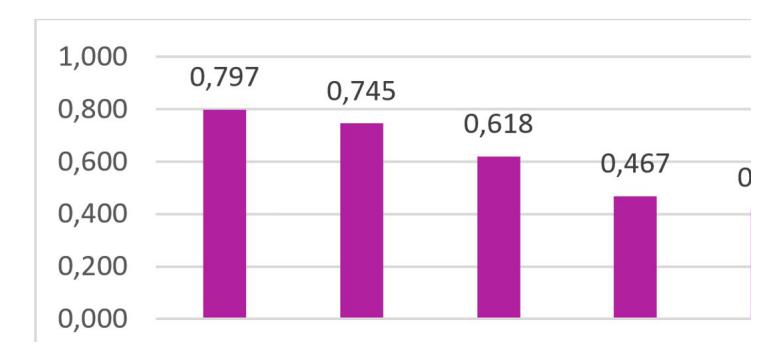
Figure 1 Familiarity Domain's Bar Graph Graph's information:
(1) Talking to parents, (2) talking to siblings, (3) talking to friends, (4) the use of norms between parents and children, (5) the use of norms between younger siblings and friends.
Teenagers in Kerinci regency and Sungai Penuh city maintain their local language, Bahasa Kerinci, by using it daily. On the other hand, awareness of language norms in the familiarity domain is not fully applied. There is a difference in the way the younger ones talk to the older ones, the ones of the same age, and the older ones talk to the younger ones. This distinction is made to demonstrate respect or familiarity with the other person.This difference is regulated by that language's norms. Not using the norms is an action that contradicts the principle of language norms.
The average teenager has a 0.720 attitude toward language loyalty and a 0.441 awareness of the norm.As a result, the respondents' language attitude toward language loyalty is positive, while their awareness of the norm is neutral to negative.Even so, the overall average of the teenagers' language attitude is 0.608, which makes it considered positive.
Social Domain
Teenagers in Kerinci regency and Sungai Penuh city displayed a positive attitude in the social domain. However, the teenagers use Bahasa Kerinci according to who they talk to; therefore, they do not use it when they talk to someone who does not speak Bahasa Kerinci and is not a part of the Kerinci ethnic group. The detailed average score of language attitude in a social domain can be seen in Figure 2.
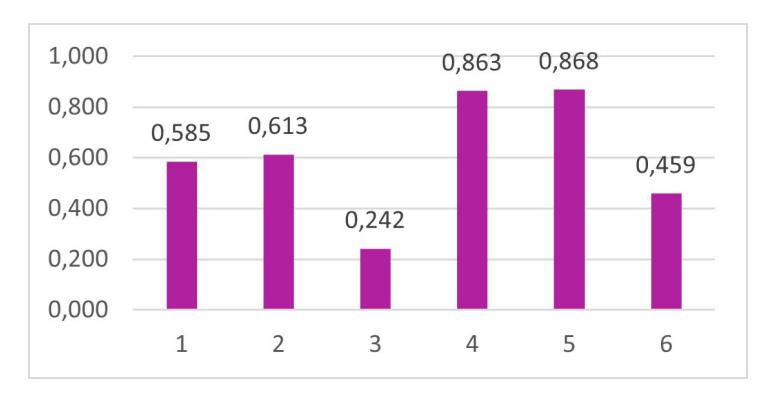
Figure 2 Social Domain's Graph. Graph's information:
(1) The use of language when joking, (2) the use of language when angry, (3) the use of language when talking to Bahasa Kerinci's non-speaker, (4) feelings when using Bahasa Kerinci, (5) Bahasa Kerinci as identity, (6) the use of Bahasa Kerinci to the people from other ethnic group.
The data shown in situations (1), (2), and (3) are forms of language loyalty. Joking and being angry in situations (1) and (2) are two spontaneous and unplanned conditions. The use of Bahasa Kerinci has become so attached to the teenagers' daily lives that they continue to use it when they joke or get angry. In situation (3), teenagers do not use Bahasa Kerinci when they know that the other person does not speak Bahasa Kerinci. This is because the teenager adjusts themselves to the other person's condition to make the communication smooth.
The information displayed in situations 4), 5), and 6) is part of the language pride.Teenagers in Kerinci regency and Sungai Penuh city do not feel unproud to use their local language and consider it part of their identity as members of the Kerinci ethnic group. This attitude is in accordance with the language pride principle, which is to make the language thrive and make it a symbol of the society's identity (Garvin & Mathiot, cited in Kasmawati et al., 2021). However, the teenagers do not use Bahasa Kerinci when they talk to people from different ethnic groups, regardless of whether they can speak Bahasa Kerinci or not. In other words, the teenagers switch their language when talking to people from different ethnic groups. This is contrary to the principle of "language pride," which states that the language, in this case Bahasa Kerinci, should be used as part of the Kerinci ethnic group's identity.
The average language attitude of teenagers in terms of language loyalty in the social domain is 0.480, while in terms of language pride it is 0.730. According to those averages, the teenagers' language attitudes in terms of language loyalty for the social domain are neutral to negative, while their language pride for the social domain is positive. Overall, the average language attitude of teenagers in the social domain is 0.605, which is considered neutral to positive.
Conversation Outside of the Closeness Domain
Negative language attitudes are shown by teenagers in Kerinci regency and Sungai Penuh city in the conversation outside of the closeness domain. Teenagers use other languages, like Bahasa Indonesia, more often than Bahasa Kerinci when they converse with other people outside of their close circle. Language attitude in this domain is divided into nine situations by considering the interlocutor's side and also the situation when that conversation happens. This is shown in depth through Figure 3.
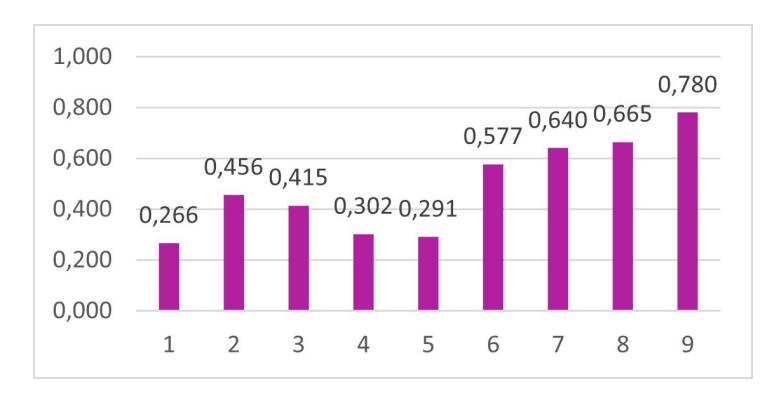
Figure 3 Conversation Outside of Closeness Domain Graph's information:
Conversation situation: (1) conversing with teachers in school, (2) conversing with friends in school, (3) conversing in a transaction, (4) conversing in a formal setting, (5) conversing with new people, (6) convenience in pronunciation, (7) conveying opinion, (8) comfort in using Bahasa Kerinci to converse with people from different ethnic group, (9) showing identity as someone who speaks Bahasa Kerinci when in a different place.
Teenagers tend to use other languages (such as Bahasa Indonesia) compared to Bahasa Kerinci when they communicate with teachers (with an average of 0.266) and friends (with an average of 0.456) at school. This is because Bahasa Indonesia functions as the auxiliary language in Indonesia's education system (Wagiati et al. 2017). Furthermore, negative attitudes are also shown during a transaction (with an average of 0.415). Teenagers tend to use other languages compared to Bahasa Kerinci when they talk to the shopkeeper. Teenagers have a negative attitude when they are in a formal setting (with an average of 0.302) and when they converse with new people (with an average of 0.291).
In Figure 3, the teenagers in Kerinci regency and Sungai Penuh city have an average score of 0.488 for their language attitude. This demonstrates that the speaker's language attitude toward Bahasa Kerinci in conversations with people outside of the closeness domain is neutral to negative.In this domain, other languages are used more often than Bahasa Kerinci. This is because Bahasa Kerinci is local. To prevent the interlocutors from not understanding the conversation, teenagers use other languages more, such as Bahasa Indonesia.
Situations 1-5 belong to the language attitude, which is language loyalty, whereas situations 6-9 belong to the language pride.According to those scores, the average score of teenagers' loyalty towards Bahasa Kerinci in the conversation outside of the closeness domain is 0.346, which makes the language attitude considered negative, while their language pride in this domain is 0.666, making their language attitude considered positive.
Domain Relationship Between Bahasa Kerinci and Other Languages
Teenagers in Kerinci regency and Sungai Penuh city show neutral to positive language attitudes towards Bahasa Kerinci and its relation to other languages. In certain situations, some teenagers mix Bahasa Kerinci with other languages when communicating. When conveying something difficult, the speaker tends to change the language to something that is easier for the other person to understand. However, when they are in a different place, some teenagers would rather decrease the use of Bahasa Kerinci and prefer to use the more familiar language in that area, which could be the local language or Bahasa Indonesia. Bahasa Indonesia is chosen because people use it more often than the local language, since it is uncertain whether the interlocutors can speak the same local language or not. The detailed average language attitude in this domain can be seen in Figure 4.
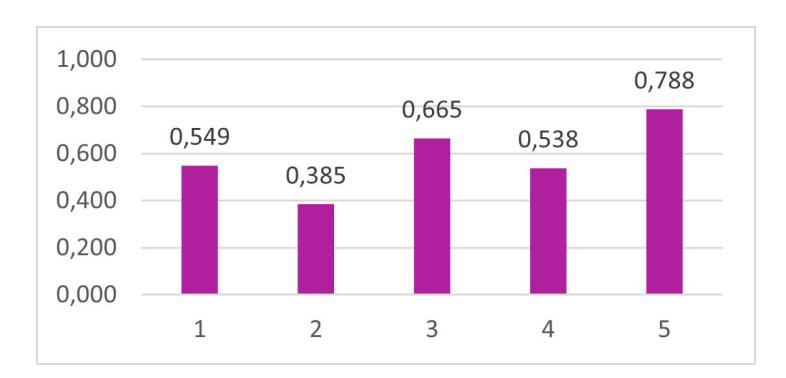
Figure 4 Relation between Bahasa Kerinci and Other Languages Domain Graph's information:
Situation: (1) Mixing other language during a conversation, (2) The frequency of using Bahasa Kerinci while in other place, (3) Bahasa Kerinci's competition during globalization, (4) The frequency of using Bahasa Kerinci compared to Bahasa Indonesia, (5) The convenience in learning Bahasa Kerinci.
Situations (1) and (2) are included in the language loyalty aspect, while (3), (4), and (5) are included in the language pride aspect. According to the aforementioned description, teenagers' language attitudes, especially in the language loyalty aspect for this domain, are neutral to negative, with an average score of 0.467. However, this is different from their language pride because their attitude toward language in this aspect is positive, with an average score of 0.664. Overall, the language attitude when it comes to Bahasa Kerinci and its relationship with other languages is neutral to positive. This is shown through the average score of teenagers' language attitudes, which is 0.585 in every situation.
Bahasa Kerinci's Preservation Domain
Teenagers in Kerinci regency and Sungai Penuh city show a positive attitude in the preservation domain. The language attitude in this domain covers seven situations when the young speakers have the chance to preserve the language, such as teaching it to other people or being taught by the old speakers. The following is the description of this domain according to the available result in Figure 5.
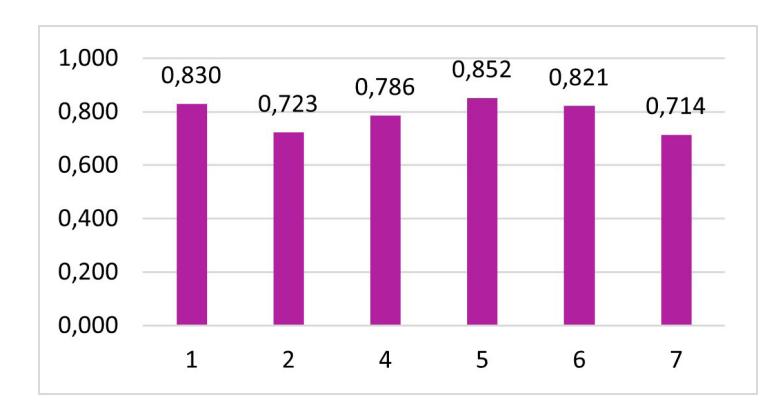
Figure 5 Bahasa Kerinci's Preservation Domain Graph's information:
(1) Aware of Bahasa Kerinci's daily use as a way to preserve the language, (2) voluntarily teaching Bahasa Kerinci to a newly moved in friend or neighbor, (4) considering it easy to learn Bahasa Kerinci, (5) having the interest to master Bahasa Kerinci, (6) being taught Bahasa Kerinci in accordance with the applied principle,
(7) teaching Bahasa Kerinci according to the applied principle
The data in situations (1) and (2) is part of language loyalty. This is shown through the teenagers' awareness to use their local language, Bahasa Kerinci, daily as a way to preserve it. Other than that, they voluntarily teach Bahasa Kerinci to new people who do not speak Bahasa Kerinci yet. The data in situations (4) and (5) is part of language pride. This is shown through their awareness as a part of the Kerinci ethnic group; they have the interest to master Bahasa Kerinci and consider it easy to learn it. The data in situations (6) and (7) is part of awareness of the norm. This is shown through the teaching of Bahasa Kerinci in accordance with the applied principles, both from the parents and from themselves to younger people.
The average of teenagers' language attitudes in the loyalty aspect is 0.776 and is considered a positive attitude. In the language pride aspect, the average is 0.819, which is considered very positive. In the awareness of the norm aspect, the average is 0.768 and is considered positive. Overall, the average of teenagers' language attitudes in the preservation domain is 0.788, making it considered a positive attitude. Therefore, the teenagers' language attitude in this domain has the highest positive score among the other domains.
Skill domain in Bahasa Kerinci
According to the applied principle, the language attitude in this domain covers writing and reading local script, called Incung, and also the skill to use Bahasa Kerinci. The language attitude shown by the teenagers in Kerinci regency and Sungai Penuh city in this domain is a positive attitude. The following is the explanation of the Bahasa Kerinci skill according to the available result in Figure 6.
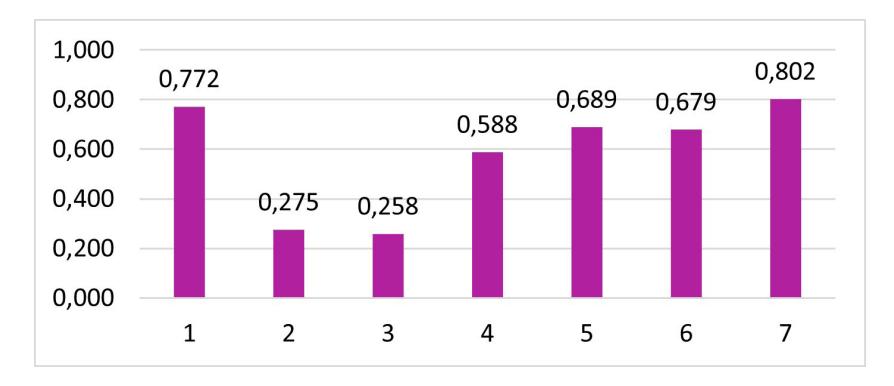
Figure 6 Bahasa Kerinci Skill Domain Graph's information:
- (1) A good Bahasa Kerinci skill, (2) ability to read Incung, (3) ability to write Incung, (4) communicating with Bahasa Kerinci while considering the level in it, (5) the different way of communicating with older and younger people,
- (6) understanding the rules when speaking in Bahasa Kerinci, (7) always talk in Bahasa Kerinci accurately, orderly, and in accordance with the principles.
The data shown in the Bahasa Kerinci skill domain is part of awareness of the language norm. They have a good Bahasa Kerinci skill, understanding the rules when speaking in Bahasa Kerinci, and always using Bahasa Kerinci accurately, orderly, and in accordance with the principles. This can be seen from how the teenagers in Kerinci regency and Sungai Penuh city always think about the level of Bahasa Kerinci when they are speaking in that language and how it is different when they communicate with older and younger people. They are, however, not fluent in writing and reading Incung.Overall, the average score for the Bahasa Kerinci skill domain is 0.580, considered neutral to positive.
Domain-based Classification
According to the preceding explanation, teenagers in Kerinci regency and Sungai Penuh city have either a neutral to positive or a positive attitude in almost every domain, with the exception of conversations outside of the closeness domain. This is shown through the displayed score of language attitude in Figure 7.
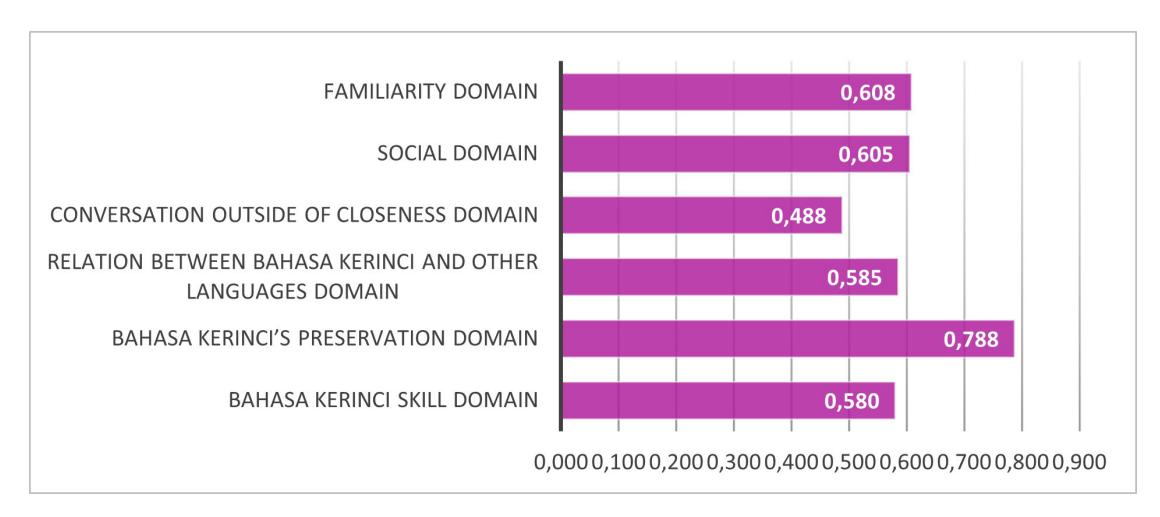
Figure 7 Domain Classification graph
The most positive of the teenagers' language attitudes is in the Bahasa Kerinci skill domain. This demonstrates that teenagers care about Bahasa Kerinci.On the other hand, the conversation domain becomes the one with the most negative language attitude among the other domains. This is because the teenagers are still adapting to their surrounding environment, such as when they talk to teachers or friends at school in a transactional setting, in formal settings, or when they meet new people.
Residence-based Language Attitude
Teenagers who live in Kerinci regency have different language attitudes than teenagers in Sungai Penuh city, as seen from the principle of language attitudes. The following is an explanation for the language attitudes of teenagers from Kerinci regency and Sungai Penuh city.
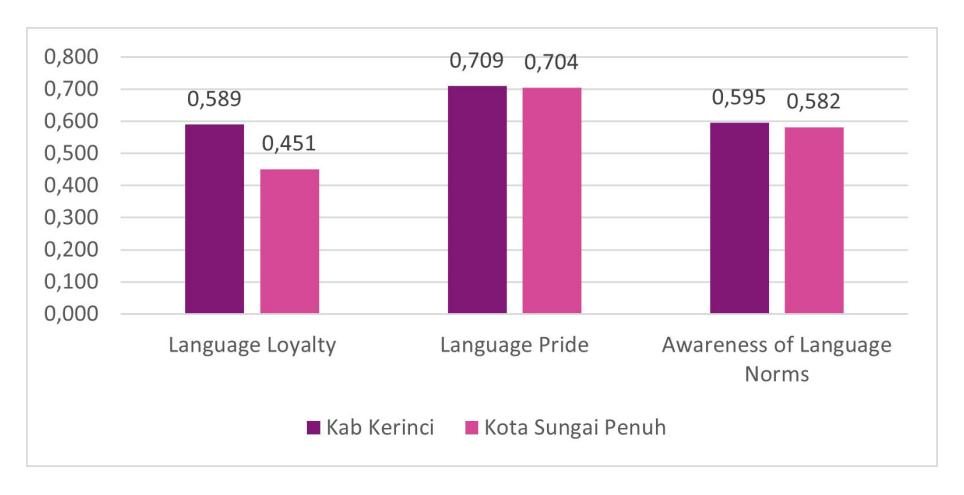
Figure 8 Regency-based Language Attitude Graph
According to several principles of language attitude, teenagers who live in Sungai Penuh City have a lower language attitude than teenagers who live in Kerinci Regency. Especially in language loyalty, teenagers in Kerinci Regency have a positive attitude, while it is negative for teenagers in Sungai Penuh city.
This difference between teenagers in Sungai Penuh city and Kerinci regency is indivisible from social factors. The city's society, including Sungai Penuh city, is more heterogeneous than in Kerinci regency. Moreover, as a part of the city society, teenagers in Sungai Penuh city are more individualistic compared to the teenagers in Kerinci regency. This is in accordance with Syukir's statement (cited in Jamaludin, 2017) that the city's society has population density that leads to social heterogeneity. Other than the many competitions in the city environment, this heterogeneity evokes an individualistic character (Syukir, cited in Jamaludin, 2017). The difference in that social factor caused the language attitudes of teenagers in Sungai Penuh city to fade more than those in Kerinci regency.
The Roots of Young Bahasa Kerinci Speakers› Language Attitude
The neutral to positive language attitude shown by the teenagers in Kerinci regency and Sungai Penuh city is caused by several factors, including the teaching of Bahasa Kerinci, government policy, and the language selection in the speaker's environment.
Most teenagers in Kerinci regency and Sungai Penuh city have learned Bahasa Kelinci since they were little. This is supported by the 89% of the respondents who answered that they were taught by their parents, while the formal learning of Bahasa Kerinci in a school environment is yet to be maximized to support the positive attitude towards the language, especially for conversations in formal settings. The data shows that only 10.9% of respondents answered that their school offers Bahasa Kerinci as a subject. Baker (in Wardani et al., 2013) said that language attitudes are obtained and nurtured through the learning process and can also be modified with language experience. In this case, education also has a certain role to play in shaping the speakers' language attitudes to be more positive.
Governments, through their policies, also play a role in shaping society's language attitudes. The data shows that 31.8% of the respondents stated that there is government policy regarding Bahasa Kerinci training. This shows that the local government has supported the establishment of a positive language attitude and made an effort to protect the local language. However, this is not enough to increase a more positive attitude toward the language.
An environment that supports the selection of Bahasa Kerinci also supports that language attitude. 86.8% of the respondents stated that they chose Bahasa Kerinci because it is used in their environment. Pated (2021) stated that, according to the principle, the daily use of local languages is a way to informally participate in language development. On the other hand, teenagers who rarely use Bahasa Kerinci use Bahasa Indonesia and local languages (Malay and Minangkabau) in their daily lives.
Language attitude is closely related to language selection. Fishman (cited in Ernanda, 2018) stated that someone's choice of the language that they use to communicate depends on who the interlocutors are and when that communication happens. Teenagers' language selection in Kerinci regency and Sungai Penuh city is influenced by how their environment chooses the language to communicate. In this case, around 95.60% of adults use Bahasa Kerinci for various reasons, such as passing it down from generation to generation, making it easier to understand when communicating, and because Bahasa Kerinci is the language of the Kerinci people. On the other hand, other respondents answered that the adults in their environment do not use Bahasa Kerinci because there are a lot of people from other places who do not understand Bahasa Kerinci. Teenagers in Kerinci regency and Sungai Penuh city use Bahasa Kerinci more because their environment uses it more as well, compared to other languages.
The selection of Bahasa Kerinci for teenagers in Kerinci regency and Sungai Penuh city is connected with the language teaching done by the older speakers to their children. 92.30% of respondents mentioned that the adults around them teach their children Bahasa Kerinci. This is due to the fact that Bahasa Kerinci is a communication device that preserves the local language and is the most proficient in Bahasa Kerinci. Meanwhile, other respondents answered that the adults do not teach Bahasa Kerinci because they are not from Kerinci and therefore prefer to teach Bahasa Indonesia and English.
The impact of the older speakers teaching Bahasa Kerinci to their children is that the language is still used by the young speakers in their environment. This is according to the 93.40% of respondents who answered that the teenagers around them use Bahasa Kerinci. 6.6% of other respondents stated that teenagers use Bahasa Indonesia or Bahasa Minang more frequently, as well as other languages such as slang.
The Modeling of Bahasa Indonesia's Dynamics with Bahasa Kerinci
In building the mathematical model to represent the dynamics of Bahasa Indonesia and Bahasa Kerinci's speaker populations, several assumptions were needed. The population is represented by and the population that only uses Bahasa Indonesia can become speakers of both languages if they socialize with Bahasa Kerinci speakers, and vice versa. The degree of socialization between monolingual speakers of Bahasa Indonesia and Bahasa Kerinci is assumed to be the same. Monolingual individuals can become bilingual speakers if there is social contact happening between both individuals, and vice versa. The shifting of a monolingual population into a bilingual population and the other way around is affected by each language's social status values. Bilingual individuals who rarely speak Bahasa Kerinci may forget their language ability, represented in the model as Bahasa Kerinci's positivity. The social status of a language is a percentage of the use of that language in society, represented in the model as and parameters for Bahasa Indonesia and Bahasa Kerinci. A schematic graph of the shifting population of a language's speakers will then be represented in three compartments, as displayed in Figure 9.
Figure 9 The Shift of Speakers' Population model schematic graph. Graph's information:
: Population of Bahasa Indonesia speakers, : Population of Bahasa Kerinci speakers, : Population of bilingual speakers : the degree of socialization between monolingual speakers, : Bahasa Kerinci's negativity, : The degree of contact between Bahasa Indonesia and bilingual speakers, : the degree of contact between Bahasa Kerinci and bilingual speakers, : The degree of Bahasa Indonesia's social status, : The degree of Bahasa Kerinci's social status.
The total population at any given time is denoted as follows. The degree of socialization between monolingual speakers is represented by the parameter; if both can socialize, then they will become bilingual. Language attitude is represented by a parameter on the model, and since the result of the questionnaire shows that Bahasa Kerinci's language attitude is more positive, it will therefore maintain the bilingual condition, where the bilingual population prefers to speak and preserve Bahasa Kerinci. parameter is the degree of contact between bilingual and monolingual speakers. parameter is each language's social status, not only through shifting contact but also through social factors of language, similar to the previous models (Mira and Paredes' models). The shifting happens because it is important to use other languages in certain places, such as the workplace or a market.
Equilibrium Point
Fixed points analysis in the model's differential equation can be determined using the following formula.
\[\frac{dX}{dt} = 0, \frac{dY}{dt} = 0, \frac{dB}{dt} = 0\]
Since the size of a population at one time is , then . Substitute into the model to reduce the system into two equations like the following.
\[\frac{dX}{dt} = -m_1 s_1 X^2 - m_1 s_1 XY + m_1 s_2 X^2 + m_1 s_2 XY - gXY + \gamma X^2 + \gamma XY + m_1 s_1 X - m_1 s_2 X - \gamma X\] \[\frac{dY}{dt} = m_2 s_1 XY + m_2 s_1 Y^2 - m_2 s_2 XY - m_2 s_2 Y^2 - gXY - m_2 s_1 Y + m_2 s_2 Y\]
With the help of Maple, four equilibrium points are achieved, which are:
\[T_1 = [X = 0, Y = 0], T_2 = [X = 1, Y = 0], T_3 = [X = 0, Y = 1],\] \[T_4 = \left[X = \frac{m_2(s_1 - s_2)}{m_1s_1 - m_1s_2 - m_2s_1 + m_2s_2 + g - \gamma}, Y = -\frac{m_1s_1 + m_1s_2 + \gamma}{m_1s_1 - m_1s_2m_2s_1 + m_2s_2 + g - \gamma}\right]\]
Equilibrium point depicts the whole population's condition is bilingual speakers. and points are the conditions where only one language is used. point is the condition of both speaker's population of monolingual and bilingual, coexisting.
Table I Parameter Value Achieved from Questionnare's Data Calculation
| Variabel | Definisi | Nilai |
|---|---|---|
| Population of Bahasa Indonesia speakers | 0.287 | |
| Population of Bahasa Kerinci speakers | 0.139 | |
| Population of bilingual speakers | 0.574 | |
| Parameter | Definisi | Nilai |
| Socialization between monolingual speakers | 0.519 | |
| The degree of Bahasa Indonesia's social status | 0.692 | |
| The degree of Bahasa Kerinci's social status | 0.308 | |
| Contact Between Bahasa Indonesia and Bilingual speakers | 0.623 | |
| Contact between Bahasa Kerinci and Bilingual speakers | 0.780 | |
| Bahasa Kerinci's Negativity | 0.099 |
Model simulation is done on Maple with Runge-Kuta-Fehlberg method, using real data of the questionnaire and assumption data to see the impact of used parameters to the language speaker's dynamic population. Figure 10 shows the change results against time as the following:
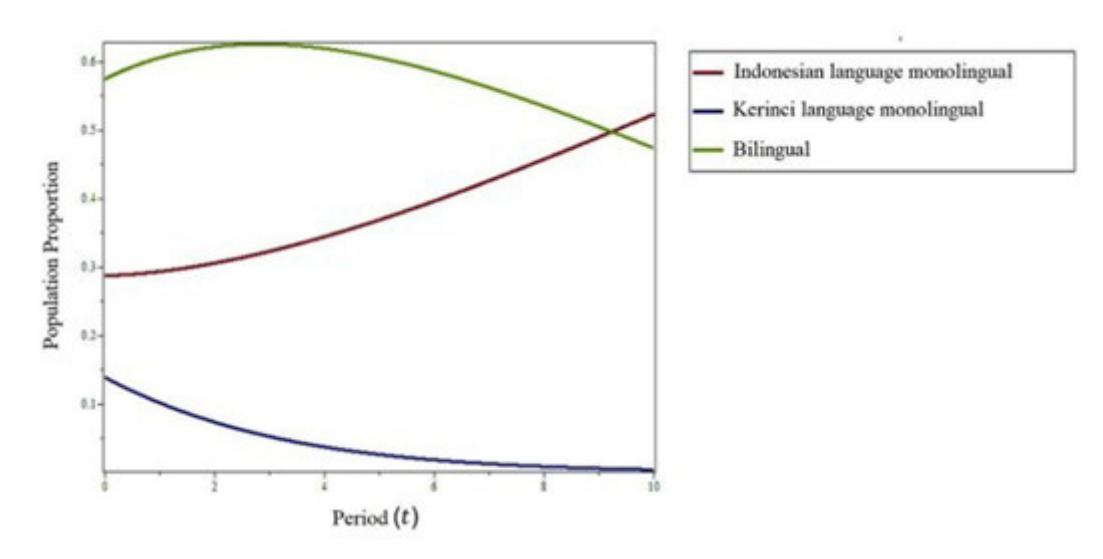
Figure 10 Result of Long-term Numeric Simulation Graph
In the graph above, the horizontal axis is the time period, and the vertical axis is the population's comparison value. Bahasa Kerinci's monolingual population will decrease and finally become extinct around the 10th century. This population will become extinct as only the older speakers are left, and with the importance of using Bahasa Indonesia being high, the speakers from remote areas, with the majority of them being Bahasa Kerinci's monolingual speakers, will have to learn Bahasa Indonesia and become bilingual speakers. Moreover, the population of Bahasa Indonesia's monolingual speakers will continue to increase because of its higher social status. Bilingual speakers' population will increase because of the shift from Bahasa Kerinci's monolingual to bilingual speakers, then decrease due to the very small Bahasa Kerinci's monolingual population, and the importance of using this language will also decrease. Also, a simulation will be run with the graph in Figure 11a for a neutral language attitude score and the graph in Figure 11b for a negative language attitude score.
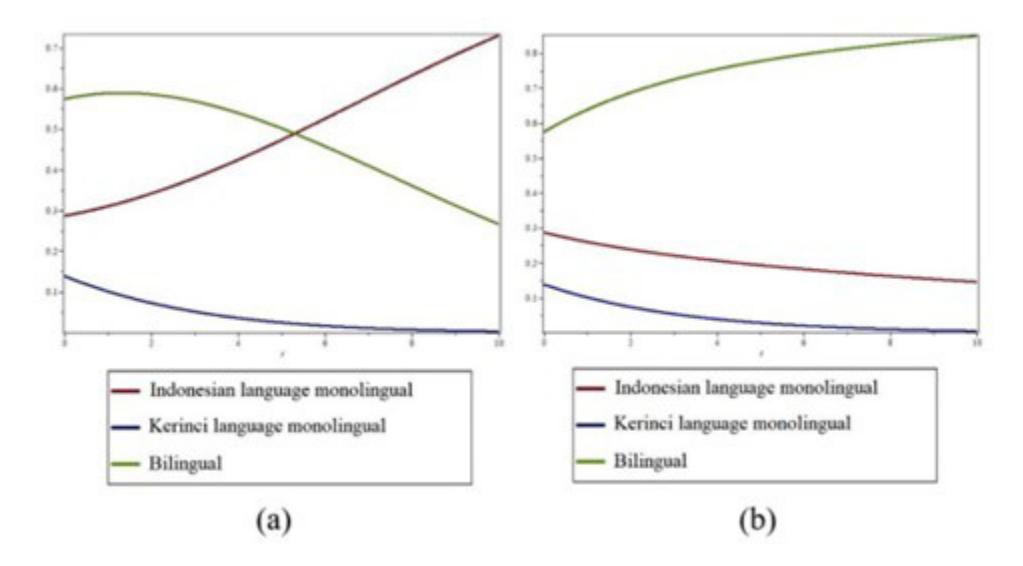
Figure 11a dan Figure 11b Numeric Simulation using Assumption Data of Different Language Attitude
Figure 11a displays the parameter assumption, whose value depicts the neutral language attitude condition. The bilingual population experienced a more significant decrease compared to when the language attitude is leaning towards positivity. Because the value of this parameter, which depicts the language attitude condition in society, is higher than the real data in Figure 11b, the bilingual population
will continue to grow while the monolingual population of both languages will decrease until it is nearly zero. The difference between bilingual population growth and the different language attitude value is shown in Figure 12.
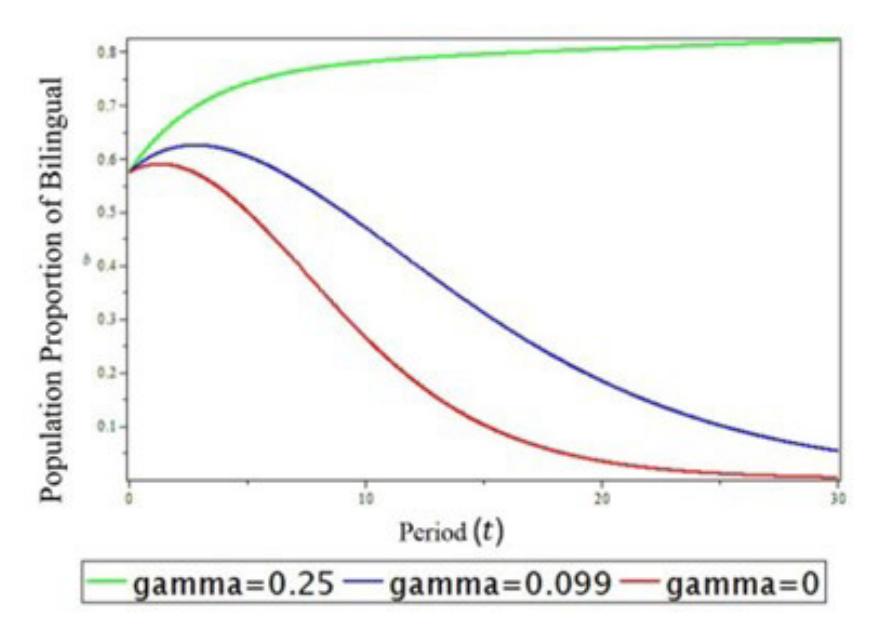
Figure 12 Comparison of Bilingual Population's Growth Graph
Conclusion
According to the intensity of Bahasa Kerinci's application in every domain, it can be concluded that the language attitude of the teenagers from Kerinci regency and Sungai Penuh city is neutral leaning to positive, with an average of 0.599. In the familiarity, social, Bahasa Kerinci and its relationship to other languages, and Bahasa Kerinci skill domains, respondents showed a neutral leaning to a positive language attitude. In the conversation outside of the closeness domain, teenagers in Kerinci regency and Sungai Penuh city showed neutral leanings to negative language attitudes with an average score of 0.488 for their language attitudes. Based on their residence, teenagers in Kerinci regency showed a more positive attitude compared to teenagers in Sungai Penuh city. This can be seen from the average score of 0.631 for teenagers in Kerinci regency, while the teenagers in Sungai Penuh city have an average score of 0.579, which shows a neutral leaning to a positive attitude.
There are two factors that determine whether the language attitude is positive or negative, which are the teaching of Bahasa Kerinci and the environment factor that supports the selection of Bahasa Kerinci. Moreover, the difference in language attitudes between both places is caused by the more heterogeneous society of Sungai Penuh city compared to Kerinci Regency's society. This heterogeneity resulted in the society's individualistic nature.
The numerical simulation results show that Bahasa Kerinci's monolingual population will become extinct around the 10th period, while bilinguals will survive but decline and eventually become extinct over a longer period. Positive language attitudes are influential in the preservation of Bahasa Kerinci by maintaining a bilingual population; even at 0.75, the bilingual population will keep on increasing and become the dominant population. Other than language attitude, the model is also affected by the importance of using a language and the degree of contact in society.
This research needs to be continued with more informants and a wider range of research locations, reaching through every layer of society. This research in language and mathematical fields will hopefully be able to evolve further, especially the extension towards the problem discussed in this research. The following study is expected to be able to predict the extinction time of Bahasa Kerinci by using this study as a starting point and then looking for data on the number of Bahasa Kerinci speakers, which may lead to a more precise fitting. Subsequently, by adding the immigration factor of people from outside of Kerinci to the model, perhaps the newcomers will influence the use of Bahasa Kerinci.
Acknowledgement
The research team expresses gratitude towards everyone who participated in helping the research and writing process of this article, especially Dikti (Indonesia's Directorate General of Higher Education) for holding the PKM and funding this research, Universitas Padjadjaran who facilitated the research, Ms. Nani Darmayanti, M.Hum, Ph.D. as the supervisor who has given many advices throughout the research and writing process of this article, Dr. Nursanti Anggriani, S.Si., M.Si. who has directed the research team in making the mathematical models, and the respondents who have filled in the questionnaires for this research.
References
- Abrams, D. M., & Strogatz, S. . (2003). Modelling The Dynamics of Language Death. Nature, 424(6951), 900–900. https://www.nature.com/articles/424900a
- Díaz, M., & Switkes, J. (2021). Speaking Out: A Mathematical Model of Language Preservation. Heliyon, 7(5), 1–9. https://www.sciencedirect.com/science/article/pii/S2405844021010781
- Ernanda. (2018). Pemilihan Bahasa dan Sikap Bahasa pada Masyarakat Pondok Tinggi Kerinci. Titian: Jurnal Ilmu Humaniora, 02(02), 193–211. https://online-journal.unja.ac.id/titian/article/view/6087
- Harimansyah, G. (2017). Pedoman Konservasi dan Revitalisasi. Badan Pengembangan dan Pembinaan Bahasa.
- Jamaludin, A. N. (2017). Sosiologi Perkotaan Memahami Masyarakat Kota dan Problematikanya. Bandung: Pustaka Setia.
- Kasmawati, Fitrawahyudi, & Saputri, D. S. (2021). Sikap Bahasa Masyarakat Dusun Mangento Desa Pattontongan terhadap Penggunaan Bahasa Indonesia. Jurnal Onoma:Pendidikan, Bahasa Dan Sastra, 7(1), 223–232. https://doi.org/10.30605/onoma.v7i1.623
- Kementerian Pendidikan dan Kebudayaan. (2019). Bahasa dan Peta Bahasa. https://petabahasa. kemdikbud.go.id. Diakses tanggal 23 Februari 2021.
- Kementerian Pendidikan dan Kebudayaan. (2020). Gambaran Kondisi Vitalitas Bahasa Daerah di Indonesia: Berdasarkan Data Tahun 2018-2019. Pusat Data dan Teknologi Informasi Kementerian Pendidikan dan Kebudayaan.
- Mira, J., & Paredes, Á. (2005). Interlinguistic Similarity and Language Death Dynamics. Europhysics Letters, 69(6), 1031. https://iopscience.iop.org/article/10.1209/epl/i2004-10438-4
- Pamuntjak, R. J., & Santoso, W. (1990). Persamaan Diferensial Biasa. Bandung: ITB Press.
- Pateda, M. (2021). Sosiolinguistik. Bandung: Angkasa.
- Rahayu, R. (2014). Sikap Berbahasa Indonesia Siswa Kelas X SMA Negeri 1 Kota Metro Provinsi Lampung. Jurnal Madah, 5(2), 219–230. https://madah.kemdikbud.go.id/index.php/madah/article/ view/122
- Rahma, N. (2016). Model Matematika Dinamika Bahasa Minang dan Bahasa Indonesia. Universitas Negeri Padang.
- Syahriyani, A. (2017). Pemertahanan Bahasa Jawa Dialek Banten pada Guyub Tutur di Kelurahan Sumur Pecung Serang. Buletin Al-Turas, XXIII(2), 251–266. https://journal.uinjkt.ac.id/index.php/alturats/article/view/5342
- Wagiati, Riyanto, S., & Wahya. (2017). Sikap Berbahasa Para Remaja Berbahasa Sunda di Kabupaten Bandung: Suatu Kajian Sosiolinguistik. Metalingua: Jurnal Penelitian Bahasa, 15(2), 213–221. http://dx.doi.org/10.26499/metalingua.v15i2.62
- Walpole, R. E., Mayers, R. H., & Myers, S. L. (1993). Probability and Statistics for Engineers and Scientists (Vol. 5). New York: Macmillan.
- Wardani, K. D. K. A., Gosong, M., & Artawan, G. (2013). Sikap Bahasa Siswa terhadap Bahasa Indonesia: Studi Kasus di SMA Negeri 1 Singaraja. Jurnal Pendidikan Dan Pembelajaran Bahasa Indonesia, 2. https://ejournal-pasca.undiksha.ac.id/index.php/jurnal_bahasa/article/view/706
- Yunita, T. P., & Syafwan, M. (2016). Pemodelan Kompetisi antar Bahasa pada Komunitas Monolingual dan Bilingual. Jurnal Matematika UNAND, 5(1), 108–115. https://doi.org/10.25077/jmu.5.1.108- 115.2016