

INFO ARTIKEL
Kata kunci:
jaringan kolaborasi digital, pemasaran kopi, LMDH, ekonomi hijau
ABSTRAK
Transformasi digital merupakan perubahan cara menangani suatu perkerjaan dengan menggunakan teknologi informasi untuk mendapatkan efisiensi dan efektifitas. Hal ini mencakup adopsi dan integrasi berbagai teknologi informasi dan komunikasi baru untuk penyelesaian solusi berkelanjutan. Proses ini melibatkan organisasi serta model bisnis baru. Transformasi digital memerlukan jaringan kolaboratif secara digital (Digital Collaborative Network/DCN) di antara para pemangku kepentingan dalam dimensi revolusi industri ke-4. Tujuan pembentukan jaringan kolaboratif ini untuk menyeimbangkan persaingan dan sharing yang akan membawa banyak manfaat bagi pihak yang berkolaborasi. Tujuan utama program ini adalah pembuatan DCN untuk pemasaran kopi berdasarkan data eksisting di LMDH (Lembaga Masyarakat Desa Hutan) Tenjolaya. Lembaga tersebut akan membentuk komunitas digital dengan tiga jaringan utama, yaitu jaringan ICT, jaringan pengetahuan, dan jaringan sosial. Tujuan
lain dalam penelitian ini melatih anggota LMDH untuk menggunakan inovasi ICT dan pendampingan LMDH agar siap menjadi komunitas digital. Target kegiatan meliputi tiga hal, yakni (1) pemetaan dan sosialisasi konsep DCN, (2) aktivitas pengembangan produk atau proses dan peningkatan kemampuan kelompok petani menjadi komunitas digital (pelatihan dan pendampingan), dan (3) aktivitas komersial.
https://doi.org/10.5614/sostek.itbj.2023.22.1.11
Introduction
The definition of digital transformation includes the adoption and integration of new information and communication technologies for the development of more efficient, flexible, and sustainable solutions for industrial systems (Camarinha-Matos et al., 2019). Another opinion regarding digital transformation was put forward by (Putri et al., 2021; Widnyani et al., 2021; Hadiono dan Noor Santi, 2020) which say that "Digital business transformation" is organizational change through the use of digital technology in order to improve organizational performance. Digital transformation has forced many organizations to be able to keep up with very fast technological developments in order to survive the competition that is happening (Ananda, 2021); this also affects the economic environment as well as business and the country (Sulaiman et al., 2021). Furthermore, this process also has led to new organizational forms and new business models.
This digital transformation requires a digital collaborative network (DCN) among stakeholders in the 4th industrial revolution and aims to balance the competition. It also aims to share information, which will bring many benefits and create a profit strategy between collaborating parties. (Fachrunnisa et al., 2013). Even though previous computer technology was present, the concept of digital transformation was categorized as something new (Hikmah, 2021). The advantages of the rapid growth of the internet have resulted in the implementation of collaboration through the WWW (World Wide Web) platform, and it has transcended the boundaries of time and place and broadened the spectrum of collaboration (Danuri, 2019).
One commodity that requires DCN is coffee. Coffee is one of the commodities from the plantation sub-sector that plays an important role for the national economy as a source of foreign exchange, a provider of employment, and an income for farmers and other economic actors involved in the plantation (Zakaria et al., 2017; Wahyudi et al., 2018). Even though Indonesia is the largest coffee bean exporting country in the world, the fact is that coffee production in Indonesia from 2002–2017 was fluctuating and it could not be predicted properly, which affected the demand for coffee bean exports on the global market (Alexander & Nadapdap, 2019).
West Java is one of the people's coffee-producing areas. For example, some coffee farmers in Bandung Regency are members of farmer groups and the Forest Village Community, or LMDH (Hakim et al., 2022). They cultivate coffee in forest trees standing in an agroforestry system that is ecologically and economically beneficial (Supriadi & Pranowo, 2016). However, there are problems in the coffee farmer groups. For example, in LMDH Tenjolaya alone, which has 313 members, The members have language barriers between their fellow members and the administrators (Noerhatini & Setiawati, 2021). Apart from that, administrators don't know the real conditions of coffee planting in the field, such as how to harvest coffee cherries, how to choose the quality of coffee cherries, how to stock coffee cherries in the form of green beans, and how to roast the coffee. When it comes to coffee marketing, the management has not been able to determine a strong position in the existing coffee supply chain in the area. Coffee farmers' income was reduced during the Pandemic COVID-19 due to limited communication, knowledge, and marketing.
So far, the green economy at LMDH Tenjolaya has been implemented. This green economy is applied to help them produce organic coffee, involving the use of bioconversion technology in order to turn coffee husk waste into organic fertilizer, manure fermentation, and vegetable pesticides (Noerhatini
et al., 2021). The green economy is also used for planting coffee plants under forest tree stands (owned by PT Perhutani) through the social forestry system. This system is also called agroforestry, which is ecologically beneficial (to prevent landslides and floods), economically beneficial (to increase the income of coffee farmers), and socially beneficial (to create opportunities for coffee farmers to collaborate with other coffee farmers and PT Perhutani field staff).
The purpose of this research is to create a digital collaboration network model for marketing coffee based on coffee farmers who are members of LMDH and the green economy. Another goal is to increase farmers' skills and knowledge to communicate online in digital communities so that communication barriers can be overcome at a cheaper cost and with a faster result.
Method
This study used a qualitative and quantitative approach (mixed method), and the research period was from June 2021 to March 2022. The research used a framework that modifies the theory from Pond and Pothumus (Pound & Posthumus, 2016) Conservation Agriculture (CA, which is described in Figure 1).
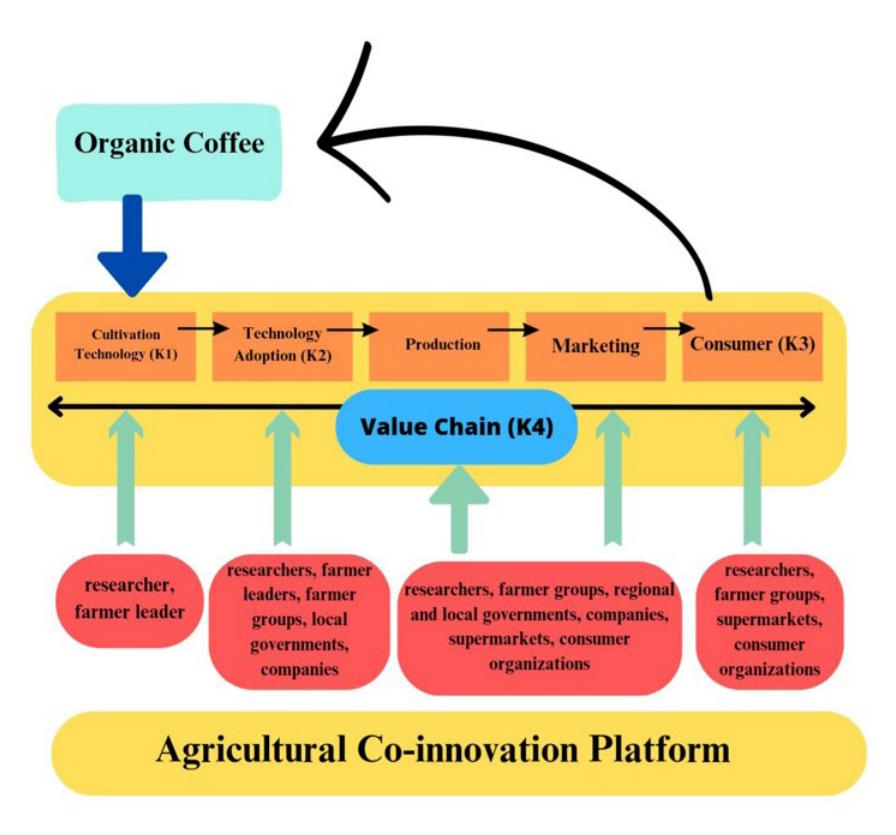
Figure 1 Organic Coffee Commodity Value Chain Based on Green Economy (Agroforestry System)
Based on this framework, our research is part of the agricultural co-innovation platform (PKA) on the sustainability of coffee supply in the second stage (K2), where the PKA consists of four stages, namely: (1) new technology for organic coffee cultivation (K1), (2) adoption of technology in organic coffee marketing systems and the establishment of digital collaboration networks (K2), (3) consumer willingness to buy organic coffee (K3), and (4) supply chain models based on economics, society, and the environment (K4).
The problem-solving approach uses a development roadmap towards digital platforms (Febrianty et al., 2020). The following were stages to create a network structure (social, technological, and managerial) and a digital platform. The initiation stage began with mapping out the parties involved. Then, by increasing the participation of the community (partners) who are involved and contribute to the program, we identified the main needs for the formation of a digital community. This was done by increasing partners' technical and digital capabilities so that the application of this technology could add value for them. Furthermore, technology learning were carried out by the community on an ongoing basis. The next step was to create a digital platform that contains several features. In addition, a network structure (LMDH administrators, marketing partners, agricultural extension partners, partners providing production facilities, and administrators) and risk mapping were made. And the final stage was a collaborative network simulation based on a digital platform.
The forest village community that became the research subject was LMDH Tenjolaya, Pasirjambu District, Bandung Regency. The selection of LMDH Tenjolaya was based on the number of members. They have hundreds of people with hundreds of hectares of land that have not used digital post-harvest technology. Furthermore, their collaboration with PT Perhutani is legal. The number of members of LMDH Tenjolaya is 313 people, and the respondents for this study are 50 people. The selection of respondents was intentional, with 10 people representing the subgroups at LMDH Tenjolaya. Data collection used questionnaires, direct mapping of the area, and observing the existing conditions of coffee farmers and also their planting conditions. Furthermore, an FGD (focus group discussion) was held by inviting community leaders, LMDH Tenjolaya management, LMDH members, providers of production facilities, and coffee marketers. The FGD was aimed at obtaining data on the structure of the existing coffee supply chain network and the structure of the Tenjolaya LMDH internal network. The next stage is the creation of features for the digital platform by members and administrators of LMDH Tenjolaya. We then carry out simulations to improve their capabilities in digital collaboration networks and digital technology. At this stage, 10 respondents (members and management) of LMDH Tenjolaya were involved. The data were collected using interview methods and the practical use of digital platforms in the form of a simulated WWW (World Wide Web) platform.
Discussion
In the early stages, mapping of LMDH members, surveying local markets and exports in Bandung Raya, and surveying the existing coffee supply chains were carried out. The mapping of the parties involved are as follow.
- 1. Target groups: (a) Coffee farmers as members of LMDH; (b) Lyco farms as coffee marketing partners
- 2. Community leaders and core actors who are trusted by the coffee farming community.
- 3. UPTD Agriculture in Pasirjambu District.
- 4. Provider of agricultural production facilities.
LMDH Mapping
- • The name of the forest village community is LMDH Tenjolaya, the number of members is 313 people, and the area of coffee land is 355.9 hectares.
- • LMDH Tenjolaya has six foster groups, namely the Tarabas Group, Independent Farmers, Tarsan, Celak, Pasirluhur, and Arhasan.
- • Limitations: (1) the technology in the coffee processing process is still simple, so the quality of the processed coffee is not good; (2) information and market access are lack; (3) SOP GAP (standard operational procedures for good agriculture practices) for coffee cultivation has not been implemented; (4) capital for coffee and butterfly pea cultivation are not yet available; (5) land for coffee processing is limited; (5) coffee processing equipment is not yet available; (6) counseling from the government is not optimal; and (7) access for promotion is still lacking.
- • Needs: guidance in the form of SOP GAP, guidance in the form of SOP GHP (good handling practices), post-harvest equipment, market access (coffee), capital, and assistance.
- • The majority of members are male or female (5–6%).
• Age of LMDH members: >18 years (based on age of members, 18–30 years old by 20%, > 30 years by 80%)
The Potential and Limitations of Coffee Farming at LMDH Tenjolaya
- a. The COVID-19 pandemic delayed several activities in this study as well as a decrease in the income of LMDH members because the price they received for coffee fell by 30 to 50 percent from the price they usually got before the pandemic.
- b. The coffee variety used is Sigarar Utang, which is a superior variety of Arabica coffee that has been designated as a superior variety through the Decree of the Minister of Agriculture, Number: 205/ Kpts/SR.120/4/2005. According to the source, there was no counseling from the local government, which caused the post-harvest handling of coffee to not be uniform. What the government did was only provide seeds and fertilizer within a certain time frame.
- c. The collectors who usually buy people's coffee only provide general information about how to harvest coffee so that the quality of the harvest varies, but they have not yet reached the point of providing provisions to farmers regarding post-harvest coffee according to SOP and GHP, which will improve the quality of the coffee produced.
- d. Marketing so far still depends on orders from coffee cherry collectors. Coffee processing is still simple, so most LMDH members sell coffee cherries to collectors (not in processed form).
- e. LMDH and farmer groups have a control role to maintain the post-harvest quality of coffee plants according to the minimum standards on the market.
- f. Management of coffee products in the form of cherries, most of which are handed over by farmers to LMDH management to be processed into green beans to be ready-to-consume coffee (although the amount is still small). The rest is used for self-consumption.
- g. The government's role is not optimal yet, so it is expected to provide access to information to farmers about exhibitions or competitions that can increase product value.
- h. There has been no assistance from the regional and provincial governments in the form of counseling, training, or giving processing equipment.
Digital Collaborative Network
Through a participatory approach, stakeholders representing various organizations and community groups have developed an action plan that describes their roles and responsibilities at the location (e.g., governance, capacity building, facilitation, and digital collaborative network simulation) at the LMDH level. This is in accordance with Wijaya's suggestion (2019) that there must be coordination at the level of social and environmental organizations, which must be considered using value chain analysis. This analysis will increase the activity and maximize the product value in the supply chain (Khonsa, 2020).
A coffee marketing digitization network in the form of a digital platform contains several features, namely a dashboard, a group data feature, a coffee condition feature, and an info feature. Based on this scheme, the dashboard consists of today's information and graphs. The group data consists of information about member data, such as personal data, location and land area, and management status. The next feature is the coffee condition feature, which consists of harvest conditions (existing harvest potential), harvest predictions, green bean stocks in members and groups, and coffee roasting stocks. The last feature is the information feature, which consists of market information, training, international meetings, external (regional) meetings, international exhibitions, and regional exhibitions. Members and administrators have a special password to login to the ICT system. Administrators have access to the market, while members will receive limited information to prevent internal competition. A digital community will be formed if community members always provide and seek the latest information on the digital platform, communicate regularly, and maintain mutual cohesiveness and transparency. This platform will inform users of the contact number that can be used to reach the management, which is entrusted to them. A special digital coffee marketing platform is also created with creative, informative, and communicative features (Figure 2).
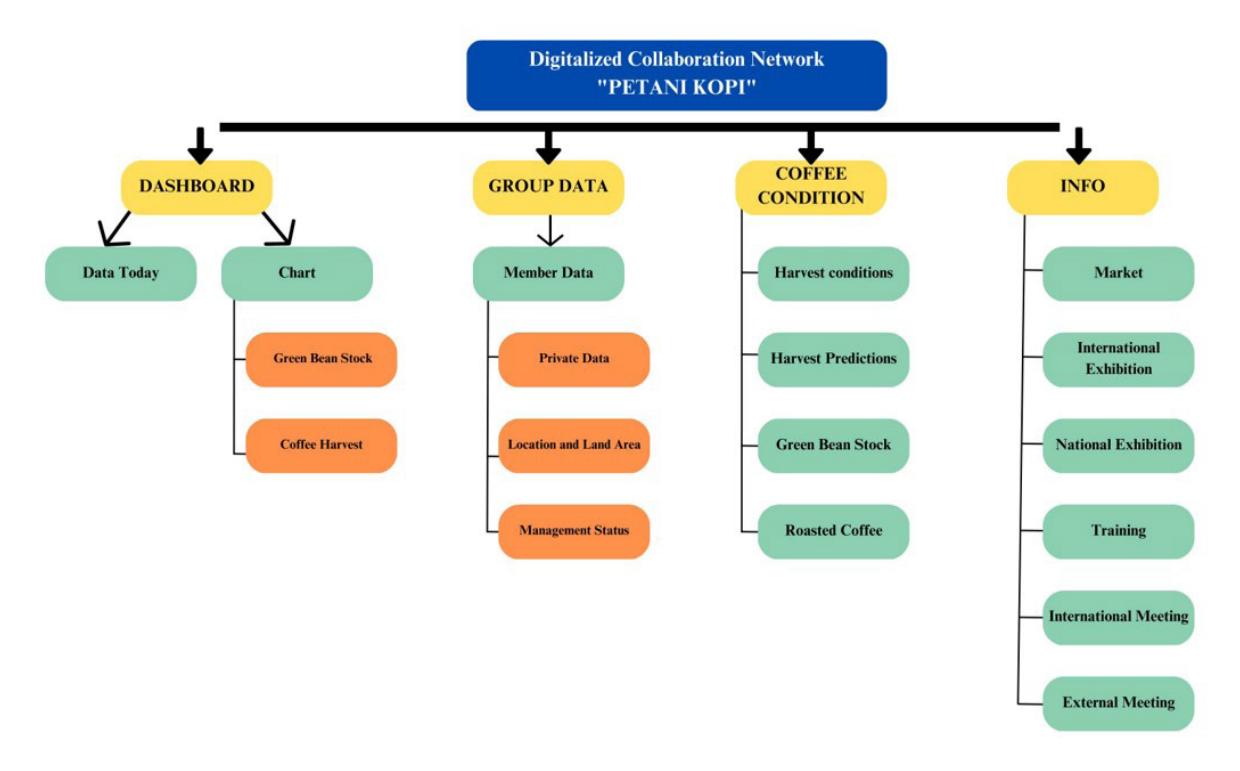
Figure 2 Coffee Marketing Digital Network
Based on the results of interviews and simulations, the following data were obtained (Table 1). The questions asked were, "Have you mastered the www web platform technology and are you interested in using digital technology for communication between members and marketing coffee?"
Table I Respondents' Answers to Using the World Wide Web Platform
| Mastering World Wide Web technology | After the simulation, do you master the World Wide Web technology? | Do you use this World Wide Web technology for coffee communication and marketing? | |
|---|---|---|---|
| Respondent 1 | Not yet | Not entirely able | Yes |
| Respondent 2 | Not yet | Already mastered | Yes |
| Respondent 3 | Not yet | Not yet, but will learn | Yes |
| Respondent 4 | Not yet | Already mastered | Yes |
| Respondent 5 | Not yet | Already mastered | Yes |
| Respondent 6 | Not yet | Already mastered | Yes |
| Respondent 8 | Not yet | Already mastered | Yes |
| Respondent 9 | Not yet | Not yet | Not yet |
| Respondent 10 | Not yet | Not yet, but will learn | Yes |
Based on the results of these interviews (Table 1), we created a digital collaborative network model for coffee marketing. Supporting data are data regarding (1) constraints in setting quality standards, (2) barriers in coffee marketing, (3) communication within groups, (4) the role of leaders in managing the community, the desire to improve communication in the community, and the use of digital marketing
(Figure 3). This model was developed with the assumption that coffee farmers have used the website (WWW) to market their coffee. The digital collaborative network at LMDH Tenjolaya describes a virtual organization based on internal communication. The concept of "co-management" (collaborative management) in coffee plantations and processing shows increased communication, both virtually and through regular meetings. The formation of a digital community aims to increase marketing and sales to the market, both virtually and directly using social media.
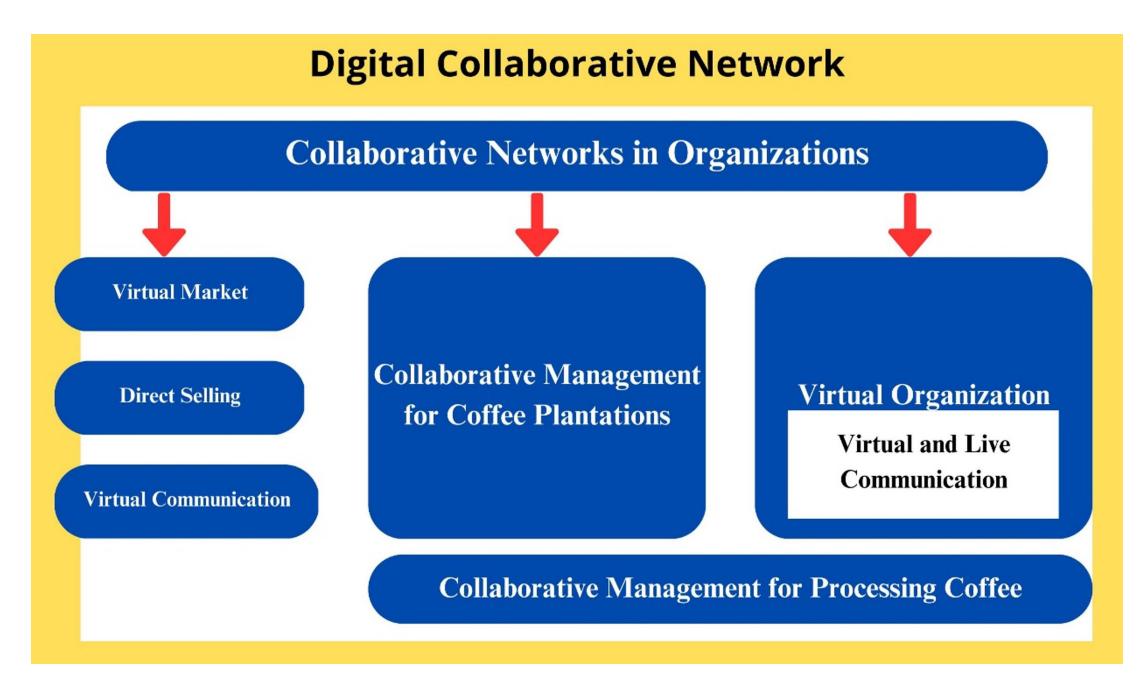
Figure 3 Digital Collaborative Network Model at LMDH Tenjolaya
Based on this model, the strength of the leadership of the chairperson of LMDH must be increased, both in mastery of digital technology and in direct and virtual communication. The head of the LMDH must also receive data and moral support from officials at the collaborative management level for coffee plantations and coffee processing.
Conclusion
The digital collaboration network model describes digital collaboration for organizations both internally and externally. An explanation of the roles and responsibilities of administrators and members must be determined from the beginning and carried it out responsibly. The strength of this model is that it boosts the capacity of the chairperson of LMDH to master Web 2.0 technology and must gain the trust of LMDH members in terms of transparency regarding to finances and outside assistance. Also, its strength is that virtual communication will increase efficiency in plantation management and coffee processing, online marketing, and reduce communication barriers during the COVID-19 pandemic. However, the weakness of this model is the uneven level of mastery of Web technology among LMDH management and members. The supporting factor is that digital access in the Bandung Regency area is quite good, so marketing through digital access is expected to be more developed.
Acknowledgment
The author would like to thank the Ministry of Education, Culture, Research, and Technology for funding this research through Simlitabmas 2022 with the Beginner Lecturer Research (PDP) scheme.
References
- Alexander, I., & Nadapdap, H. J. (2019). Analisis daya saing ekspor biji kopi indonesia di pasar global tahun 2002-2017. JSEP (Journal of Social and Agricultural Economics), 12(2). https://doi. org/10.19184/jsep.v12i2.11271
- Ananda, I. (2021). Literatur review: implementasi strategi transformasi digital pada organisasi internasional. Computer Based Information System Journal, 9(1). https://doi.org/10.33884/cbis. v9i1.2473
- Camarinha-Matos, L. M., Fornasiero, R., Ramezani, J., & Ferrada, F. (2019). Collaborative networks: A pillar of digital transformation. Applied Sciences (Switzerland), 9(24). https://doi.org/10.3390/ app9245431
- Danuri, M. (2019). Perkembangan dan transformasi teknologi digital | Danuri | Jurnal Ilmiah Infokam. Manajemen Informatika, AMIK Jakarta Teknologi Cipta Semarang, 15(No 2).
- Fachrunnisa, O., Mutamimah, & Gunawan. (2013). A Framework of Digital Collaboration Networks for SME's Sustainability. International Proceedings of Economics Development and Research, 63(15).
- Febrianty, Sudirman, A., Rahman, M. R. R., Jusuf, D. I., Merung, Y. A., Satriawan, D. G., Ramaditya, M., Mulyono, S., Hartini, H., Irwansyah, R., Satmoko, N. D., & Rijal, K. (2020). Pengantar Bisnis (Sebuah Tinjauan Konseptual dan Praktis). In Widina Bhakti Persada Bandung.
- Hadiono, K., & Noor Santi, R. C. (2020). Menyongsong Transformasi Digital. Proceeding Sendiu, July. Hakim, Amanna D. L. L. Al, Maris, S. F., Purnama, M. R., & Agustinar, A. (n.d.). Branding Strategy to Increase Sales of Products from Palm Trees in the Bojong Hamlet , Sukabumi Regency. 01(02), 35–40.
- Hakim, Amanna. D. L. L. Al , Noerhatini, P., Siahaan, A. K., Raka, M., Azhari, S. K., & Munaf, D. R. (2022). Start-Up Raising : Web Development Company Based on Coffee Industry. 207(Icemac 2021), 268–274.
- Hikmah, N. N. (2021). Mengelola transformasi digital. Jurnal Manajemen Dan Bisnis, 1(1).
- Khonsa Shofwatun Najah, G. W. M. (2020). Analisis Rantai Nilai Industri Mangga Offgrade Olahan Berbasis Pemberdayaan Masyarakat Lokal. In Protocolo de prevención y organización del regreso a la actividad lectiva en los centros educativos de Castilla y León para el curso escolar 2020/2021.
- Noerhatini, P., Y. Setiawati, Amanna D. L.L. Al Hakim & Raka M. Azka. (2021). Sistem Agrosilvopastura Berbasis Biokonversi Limbah Kulit Buah Kopi dan Sayuran oleh Black Soldier Fly (Hermetia Illucens) sebagai Upaya Pencegahan Longsor. Pameran Poster di Lembaga Penelitian dan Pengabdian Masyarakat LPPM ITB bulan Desember 2021.
- Pound, B., & Posthumus, H. (2016). The merits and limitations of innovation platforms for promoting Conservation Agriculture in sub-Saharan Africa. IFSA 2016.
- Putri, N. I., Herdiana, Y., Suharya, Y., & Munawar, Z. (2021). Kajian Empiris Pada Transformasi Bisnis Digital. ATRABIS: Jurnal Administrasi Bisnis, 7(1).
- Sulaiman, E., Handayani, C., & Widyastuti, S. (2021). Transformasi digital technology-organizationenvironment (toe) dan inovasi difusi e-business untuk umkm yang berkelanjutan: model konseptual. Jurnal Manajemen & Bisnis Kreatif, 7(1). https://doi.org/10.36805/manajemen.v7i1.1947
- Supriadi, H. & Pranowo, D. (2016). Prospek Pengembangan Agroforestri Berbasis Kopi di Indonesia. Perspektif, 14(2). https://doi.org/10.21082/p.v14n2.2015.135-150
- Wahyudi, E., Martini, R. & Suswatiningsih, T. E. (2018). Perkembangan Perkebunan Kopi di Indonesia. JURNAL MASEPI, 3(1).
- Widnyani, N. M., Astitiani, N. L. P. S., & Putri, B. C. L. (2021). Penerapan Transformasi Digital pada UKM Selama Pandemi COVID-19 di Kota Denpasar. Jurnal Ilmiah Manajemen dan Bisnis, 6(1). https://doi.org/10.38043/jimb.v6i1.3093
- Wijaya, M. (2019). Analisis Rantai Nilai dalam Meningkatkan Kinerja dan Keunggulan Kompetitif Perusahaan. Media Informatika, 18(3). https://doi.org/10.37595/mediainfo.v18i3.31
- Zakaria, A., Aditiawati, P., & Rosmiati, M. (2017). Strategi Pengembangan Usahatani Kopi Arabika (Kasus pada Petani Kopi di Desa Suntenjaya Kecamatan Lembang Kabupaten Bandung Barat, Provinsi Jawa Barat). Jurnal Sosioteknologi, 16(3). https://doi.org/10.5614/sostek.itbj.2017.16.3.7