

INFO ARTIKEL
Kata kunci:
APBD, parkir elektronik, ANT, ruang kalkulasi, implementasi kebijakan
ABSTRAK
Retribusi parkir tepi jalan umum di Kota Bandung menyumbang pendapatan yang signifikan terhadap APBD. Di tingkat implementasi, agen pemerintah (birokrat) yang bersentuhan langsung dengan masyarakat (street level-bureaucrats) menghasilkan perilaku yang bertolak belakang dengan tujuan kebijakan yang dibuat. Dalam mengembangkan perilaku tersebut, agen melakukan kalkulasi-kalkulasi yang melibatkan material nonmanusia. Penelitian ini mencoba untuk menguraikan bagaimana ruang kalkulasi yang dilakukan oleh agen menghadapi dilema-dilema di lapangan terkait kebijakan parkir elektronik di tepi jalan umum. Dalam ruang perspektif kalkulasi, metode kualitatif digunakan dalam penelitian ini. Kerangka analisis ANT diimplementasikan untuk mendeskripsikan peran aktor dari unsur manusia ataupun unsur nonmanusia. Dengan menggunakan perspektif ruang kalkulasi dapat ditelusuri berbagai hal yang menjadi penilaian dan pertimbangan, translasi-translasi, dan implementasi kebijakan parkir elektronik di tepi jalan umum. Tidak hanya agen yang bersentuhan langsung dengan masyarakat, tetapi juga perilaku yang bertolak belakang dengan tujuan pun terjadi pada tingkat agen yang lain. Selanjutnya, rekomendasi kebijakan perlu diperbaiki dengan memperhatikan asosiasi-asosiasi heterogen antara aktor-aktor manusia dan nonmanusia serta kalkulasi dan serangkaian translasi yang terjadi melalui asosiasi heterogen tersebut.
Introduction
In executing the development of a municipality, financial resources are an essential aspect of achieving its goals. Therefore, managing Regional Original Income (PAD) is crucial to supporting government activities. One of the sources of regional income is retribution revenue. In Bandung, retribution revenue from on-street parking contributes significantly to other fees; around 10% of regional retribution revenue comes from parking retribution (Pemerintah Kota Bandung, 2019).
On-street parking in Bandung is associated with numerous problems in the implementation phase. In Bandung, problems arise because of many illegal parking attendants, the manipulation of tickets by parking attendants, and the collection of parking retribution that is not optimal (Farisa, 2018; Nurmawan et al., 2019). To follow up on these problems, the Bandung city government, starting in 2013–2017, installed 445 e-parking machines, or Electronic Parking Terminals (EPT), on 57 roads with an investment of Rp 80 billion. With the presence of EPT, it is hoped to reduce the number of illegal parking attendants and increase local revenue from parking retribution.
The presence of the EPT does not function optimally; several studies in recent years have stated that this system is not ideal due to a lack of human resources, a low level of awareness, the lack of persuasiveness of parking attendants, and the performance of the parking machines themselves (Hidayat et al., 2018; Qohar, 2018; Suherman, 2020; Pratama & Wahyuni, 2020). As the implementer of the parking policy at the forefront, parking attendants face various dilemmas in executing it in the field (Anggraini et al., 2020). Research by Humairah (2021) found that, despite realization in the field, many people still pay using "emotional prices" that do not follow existing rate provisions. This event is detrimental to the government and parking attendants.
Lipsky (2010) argues that in implementing public policies, officials who deal directly with the public or are called street-level bureaucrats face various dilemmas due to pressure from the public and policymakers. As a result of this dilemma, field agents developed various simplification and improvisational mechanisms. The mechanism is based on qualification calculations and actions by field agents as human actors (Callon & Law, 2005).
This paper attempts to describe how field agents carry out the calculation space in dealing with the dilemmas faced in the field as street-level bureaucrats in on-street electronic parking policies, as one of the consequences of not achieving the goal of parking retribution.
Although the three essential elements of transportation (vehicles, networks, and storage capacity) have a significant influence on society and urban development, the study of parking needs to be addressed (Manville & Shoup, 2005; Shoup, 2011). Compared to off-street parking, on-street parking is a complex issue in many cities worldwide. As one of the public goods, on-street parking is managed through a series of public policies issued by the government. The on-street parking policy is related to the convenience of motorists parking their vehicles near their destination. On-street parking can also mitigate the impact of inadequate off-street parking facilities. Motorists also prefer on-street parking, which costs less or is even illegal than paying for off-street parking (Shoup, 2006; Marshall et al., 2008; Spiliopoulou & Antoniou, 2012). Therefore, an increase in the supply of off-street parking spaces often cannot absorb the demand for on-street parking (Biswas et al., 2017).
Technology for overcoming parking problems raises other phenomena outside the expected scenario. In Barcelona, apparkB (an application to pay for and find a parking location) is criticized because it contradicts policies to attract people to use mass transportation (Ilhan et al., 2017). In Los Angeles, Expresspark is used to reduce parking congestion levels by using parking lot sensors to determine parking prices. However, even at the highest price, parking lots remain full and need help breaking down the congestion. The main problem is law enforcement against violators (Manville, 2020). Technology has also begun to be utilized in the Bandung Public Service, along with the development of the smart city concept. One is using an electronic parking terminal machine to collect parking fees. Through this machine, retribution payments will no longer be manually collected.
The existence of various technologies and social phenomena in parking policies is often seen in studies that are based on the principle of determinization, and there are two forms of approach, namely, social determination and technological determination. Technological determination emphasizes the social impact of the presence of technology. In this model, technology is assumed to be a non-social, non-political, and non-cultural entity. Technology develops according to its internal logic, which is free from the social norms that govern society. When technology meets society in certain situations, an effect will occur and stimulate social change.
Meanwhile, in social determination, society's will and decisions determine the effects of technological presence. In this model, technology is seen as a tool or medium that obeys social will. The will and decisions of society itself determine social change brought about by technology, whether good or bad. According to Yuliar (2009), the view of determinism in various forms needs to be revised for a study of technology governance. Studying the linkages between technology and society requires a theory that assumes the heterogeneity of the subject matter and involves concepts that can be applied symmetrically to social and technical elements. The theory that can provide the assumptions mentioned above is the tor-network theory or ANT.
Zsaga in Yuliar (2009) emphasized that governance cannot take place only by emphasizing adherence to instructive rules. For Zsaga, governance requires that decisions consider the right things in specific situations or events. In practice, choosing specific rules involves understanding a concrete situation, which is impossible to determine. As a result, government agents (bureaucrats) who deal directly with the public Lipsky (2010) calls them street-level bureaucrats due to their high level of discretion and autonomy in carrying out policies, resulting in the implementation of policies that are often contrary to the objectives of the policies made. The main contribution of Lipsky's concept of street-level bureaucrats comes from his observation of the paradox inherent in their work: on the one hand, the work is often highly planned to achieve policy goals that stem from the political process. On the other hand, work requires improvisation and responsiveness to individual cases (Gale et al., 2017).
According to Lipsky (1971), various conditions can affect the level of policy implementation at the agency level:
- Inadequate resources. Agents at the field level are perceived to need more organizational resources to complete their jobs. Inadequate organizational resources increase the pressure on agents to make quick decisions about clients and process cases with insufficient information and too little time to resolve issues to the best of their ability.
- Threats and challenges for the authority. The conditions in which field agents work often include different physical and psychological threats. The police are always alert to danger, as are other street bureaucrats who work in environments that are foreign to them, are generally considered dangerous, or are characterized by high crime rates. Even if the physical harm is remote, street-level bureaucrats are threatened by their inability to control work-related encounters. Teachers especially fear the consequences of losing classroom discipline or their ability to manage a classroom.
- Contradictory or ambiguous job expectations. Faced with resource shortages and threats that increase the salience of work-related outcomes, field agents often find their predicament exacerbated by uncertainty about performance expectations. In brief, role expectations can be framed by peers, bureaucratic reference groups, or the general public's expectations.
These pressures develop psychological and behavioral reactions that appear to widen the differences between field agents and the people served. Reactions that appear are, first, that it is a common feature of organizational behavior that individuals in organizations need to develop simplifications, or a kind of "shortcut," where they can make decisions quickly and precisely. A teacher develops a simplification to allow them to determine which students are "good" students and who are "troublemakers" in the class. Teachers may select students for special attention because of their way of speaking, dressing, behavior in class, parental background, and other characteristics unrelated to their abilities.
The second development that exacerbated the current crisis was the tendency of field agents to develop defense mechanisms to achieve accommodation and resolve stressful tendencies, which led to distortions of perceived reality. One such reaction is a tendency to psychologically or conceptually divide the population that field agents perceive as clients. Teachers reduce stress by defining some students as uneducable or poorly educated. The early selection of some students for higher education, based on characteristics such as English-speaking ability and class background, allows educators to fulfill the expected role according to the definition of the population to be served.
The third development in agent crises is how the types of behavior described here can work to create realities that people fear or want to overcome. For example, by categorizing students as low or high achievers in the sense of predicting their capacity to achieve, teachers can create validity for oversimplifications about the potential of the students with whom they are involved. Research by Rosenthal and Jacobson Lipsky (1971) shows that, overall, students will perform better in school if teachers think they are smart, regardless of whether they are competent.
These various simplifications are Qualification-Calculation actions carried out by the teacher as a field agent. According to Law and Callon in Yuliar (2009), calculation is an essential characteristic of agent action. In a broad sense, calculations can be understood as a process involving three stages. First, relevant entities are selected to be released and demonstrated in space. These spaces can take various forms (sheets of paper, shelves in a supermarket, student data in a classroom, and many other possibilities). Second, entities are manipulated and transformed; their relationships are established in various forms. Third, the results are extracted or totalized. The resulting new entity is a ranked arrangement, totalization, or decision. This new entity is the result of the relationships and manipulations carried out throughout the process.
Both calculation and qualification require various transformation efforts, mechanisms, and materials. Calculations are only possible with an arrangement of materials: paper, a workbench, and a registration system. The calculation process always involves materials; it involves compatibility networks of similarity and networks of difference. The difference between the various forms of calculations lies in the composition of the materials, which either make the calculations possible or make them impossible.
Method
This study uses a qualitative method with the theoretical framework of Actor-Network Theory (ANT) as an analytical tool to describe actors' roles from human and non-human elements, such as devices used in managing on-street parking. Data collection includes primary and secondary data. Primary data collection is done through direct observation and interviews. The research location is limited to Jalan Braga, considering that Jalan Braga is a storefront for Bandung, located in the city center zone with a high level of activity. In addition, the implementation of this electronic parking terminal is the first time it has been implemented, so it is hoped that the relations between actors have been established and are sufficient for observation. The object of this research includes the actors managing on-street parking and the objects of the supporting devices used by the actors. Secondary data collection comes from articles, news, and video clips from the internet and social media interviews.
The ANT framework developed by Latour (2005), Callon & Law (2005) is used as a guide in collecting data by tracing the tracks left by actors when they take action in building, developing, and expanding network-related actors in running electronic on-street parking policies.
Result and Discussion
In creating the Public Expenditure and Revenue (APBN) in a fiscal year, revenue targets and expenditure
plans are calculated and totalized by local organizational units to then be discussed with the representative council and determined with the result in the form of regional regulations concerning Regional Budget, revenue, and Expenditure. For the revenue target from parking retribution, the responsible organizational unit is the Bandung City Transportation Service, based on processed data from the Parking Technical Management Unit (PTMU).
Various calculation actions were carried out to obtain revenue target data from on-street parking retribution. Revenue Optimization and Sampling are conducted to obtain the target data needed to calculate the average daily parking retribution income. In these activities, various human and non-human actors are involved. Field officers from the PTMU were deployed at several points, supplemented by a form containing two parts of information. The first part is in the form of identity information on the report itself, namely the day of the picking test, street name and parking terminal number, hours of duty, names of parking attendants in charge, and daily targets. At the same time, the second part contains data from field observations in the form of vehicle number data, vehicle type, parking duration, payment methods, and other information. Officers in the field make observations during the parking shift period to input data on the form. At this stage, the revenue optimization form and the sample test become a calculation space, and various materials, such as vehicle numbers, time indicators to calculate duration, and money as payment, are constructed into a new entity that can be analyzed and calculated.
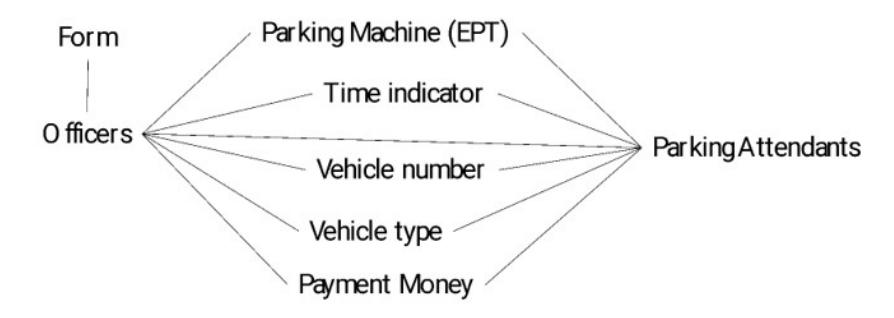
Figure 1 The Socio-technical Network in the Process of Optimizing Revenue and Sampling
In addition to being a data reference in determining revenue targets, the calculation results from the optimization and sampling activities are the basis for the PTMU to be used as a reference for payment of wages to parking attendants whose work area has EPT installed. This wage is a form of replacement income for parking attendants because parking attendants earn income from the excess of the target set in locations with no EPT.
"We have two versions; if it is manual, he will get payment from the exceeds of the target, and for EPT, we will have paid him. We pay for this EPT (parking attendant); we optimize it, test its potential, and later we will target it according to the existing potential" Aceng Mumu (aged 58)-Head of the Internal Audit.
The PTMU, represented by the Revenue Bookkeeper, negotiated the target set for each location with each parking attendant. Various considerations were put into the calculation space in the negotiation. Weather, location of parking areas, types of vehicles parked, parking users, and money to "bring home" (informal revenue). Various materials are present in the considerations that are included in the calculation space. The parking area's location: primarily shops, offices, or only residential areas influences how parking retribution revenue is collected. For shopping areas, the parking users are visitors and shop employees whose parking duration is time-consuming or online motorcycle taxis whose parking duration is rapid. This material is present in the agent's calculation pattern as their mechanism for solving populations that field agents consider clients.
"When other people pay three thousand; online courier a thousand maximum, the consideration is we all the same in this issue." Iin Solihin (aged 52)-Parking Attendants
"Indeed, if you view the income, it's too bad, the employee is paid hourly, sometimes if he follows the rules, he's already ruined his salary, so the policy is not given according to the rate, but discretion in the field" Aceng Mumu (aged 58)-Head of the Internal Audit
Figure 2 The Socio-technical Network Negotiation Process for Setting Targets and Parking Attendant Wages
The sorting of the client population between employees, visitors, and online motorcycle taxis is also based on calculations by field agents looking at the material attributes worn by parking users. The jacket worn by online motorcycle taxis is the basis for differentiating between parking users who come from online motorcycle taxis or not. The duration of time, the face of the parking user, and the location where the parking user keeps his or her vehicle are the basis for differentiating parking attendants when sorting clients. Store employees tend to park their vehicles longer (duration of working hours) and are very close to the shop where they work; besides that, facial visualization is material in recognizing store employees by frequently parking their vehicles in that area. Pressures are not only experienced by parking attendants as street-level bureaucrats but also by revenue bookkeepers in the form of contradictory job expectations in dealing with clients (parking attendants) in the target-setting negotiation process. On the one hand, the Revenue Treasurer is required to determine the maximum target for regional income. On the other hand, feelings of conscience become a barrier, so interpreters get more to take home. The term to take home is the next consideration in determining the levy target that must be achieved.
"No is not, for example, if the optimization is 350 thousand, I only targeted 300 thousand, you can take the exceeds money for household needs, the important thing is you are not empty...there is another policy here, sir, well I also use my conscience, do not spend it all, it is a pity..." Teddy-Revenue Bookkeepers
"You get 600 divided by 300 for each. Fellows said it is better if we do not get paid as long as we can take money home." Saptari (aged 72)- Parking Attendants
In calculating how much the parking attendant should 'bring home', various materials are present as the basis for the calculation. House rent, food, cigarettes, various daily needs, and suggestions from colleagues.
"Yeah, 270 (thousand), but it is rare to get (reached)..., it is rare if it is 270 (thousand) we cannot afford to pay for the rent, right? We get 50 thousand a day more than sometimes that too, 25 for meals a day and 30 for cigarettes you can try to count it." Wisno (aged 38)- Parking Attendants
After the target has been agreed upon and outlined in the contract, the next calculation action occurs in the field when the parking attendant performs calculations to achieve this target. With EPT, the parking attendant calculates how many vehicles have paid direct fees through EPT and how many vehicles have paid fees manually. This is so that it does not become an excess target, and the excess from the levy that has been obtained can be taken home.
".. for example, my target is 40 thousand, I will write it down first, if it's already 40 thousand, the excess is not recorded; it's taken home…" Saptari (aged 72)- Parking Attendants
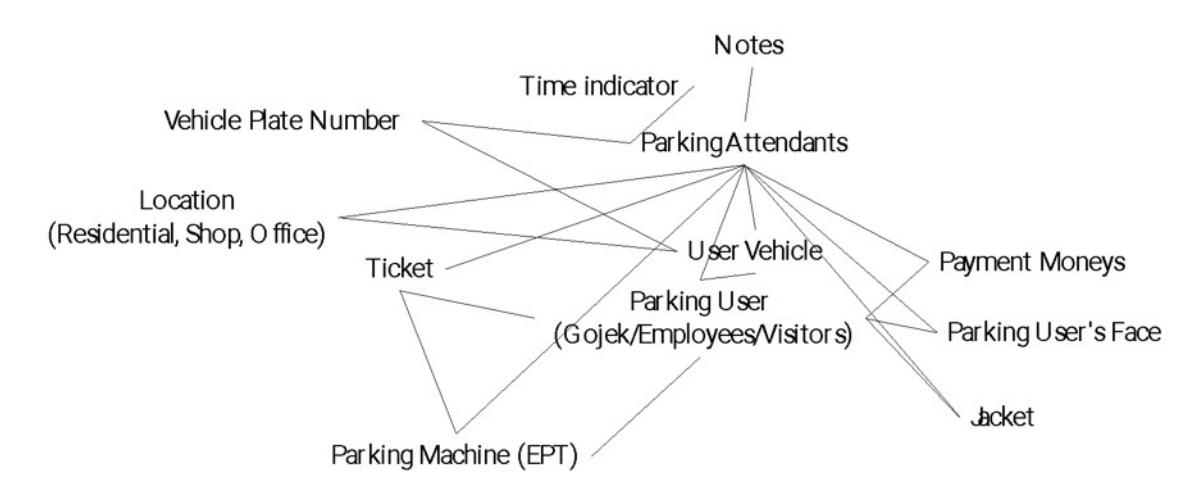
Figure 3 Socio-technical Network for the Process of Withdrawing Parking Fees by Parking Attendants
Various materials are present in the calculation of the levy deposit. The parking ticket, which the vehicle owner should hold as proof of retribution payment, is requested by the parking attendant to be the material used in the calculation space. Vehicle, duration of time, and money from manually withdrawing user fees are also included in the calculation room during the implementation of public roadside parking on Jalan Braga. In the field, supervisors in the organizational structure called Sector Superv face the pressures experienced by street-level bureaucrats. The Sector Supervisors are expected to be able to assess losses with a target, feeling pity for the condition of parking attendants.
"I'm checking the clerk for the fees recap; what I prevented was, for example, Mr. Saptari 130 thousand, he collected less, I checked with him…. well, to get bring to the home, he already met the target...for sure" Gege (aged 29)-Sector Supervisor
Conclusion
As Lipsky indicated, the pressure agents produce behavior that often conflicts with the policy objectives and the implementation that occurs. However, it is not only agents who come into direct contact with the public in the field; this behavior also occurs at other agent levels. In developing this behavior, the agent performs calculations that, in the process, involve non-human material. Through the perspective of space calculation, various things that become assessments and considerations, or translations, can be traced in implementing on-street parking policies. It is recommended that policy be improved by considering the heterogeneous associations between human and non-human actors and the calculations and series of translations that occur through these heterogeneous associations.
References
Anggraini, A. O., Sulistyaningsih, T., & Hijri, Y. S. (2020). Pelayanan Birokrat Garis Depan (Street Level
- Bureucrat) dalam Layanan Parkir Berlangganan di Kabupaten Jombang. Jurnal Ilmu Pemerintahan, 13, 11.
- Biswas, S., Chandra, S., & Ghosh, I. (2017): Effects of on-Street Parking in Urban Context: A Critical Review, Transportation in Developing Economies, 3(1), 10. https://doi.org/10.1007/s40890-017- 0040-2
- Callon, M., & Law, J. (2005). On Qualculation, Agency, and Otherness. Environment and Planning D: Society and Space, 23(5), 717–733. https://doi.org/10.1068/d343t
- Farisa, D. (2018). Pengaruh Pengawasan terhadap Efektivitas Penerimaan Retribusi Parkir pada Dinas Perhubungan Kota Bandung. UIN Sunan Gunung Djati.
- Gale, N., Dowswell, G., Greenfield, S., & Marshall, T. (2017). Street-level diplomacy? Communicative and adaptive work at the front line of implementing public health policies in primary care. Social Science & Medicine, 177, 9–18. https://doi.org/10.1016/j.socscimed.2017.01.046
- Hidayat, A., Munandar, A., & Armidiana, A. (2018). Implementasi Kebijakan Pengelolaan Parkir Kota Bandung. Publica: Jurnal Pemikiran Administrasi Negara, 10(2), 73–86. https://doi.org/10.15575/ jpan.v10i2.7627
- Humairah, U. L., Kusumastuti, E. D., & Supriatna, I. (2021). Analisis Pengelolaan Retribusi Parkir Sebagai Strategi Peningkatan Pendapatan Asli Daerah (Studi Kasus Pada Pemerintah Daerah Kota Bandung). 14.
- Ilhan, A., Fietkiewicz, K. J., & Stock, W. G. (2017): Do Car Drivers Need Mobile Parking Payment?: A Critical Evaluation of the Smart Service apparkB in Barcelona (Lecture Notes in Computer Science), 241–254 dalam A. Marcus dan W. Wang, ed., Design, User Experience, and Usability: Designing Pleasurable Experiences, Springer International Publishing, Cham. https://doi.org/10.1007/978-3- 319-58637-3_19
- Latour, B. (2005): Reassembling the social: an introduction to actor-network-theory (Clarendon lectures in management studies), Oxford University Press, Oxford ; New York, 301.
- Lipsky, M. (1971). Street-Level Bureaucracy and the Analysis of Urban Reform. Urban Affairs Quarterly, 6(4), 391–409. https://doi.org/10.1177/107808747100600401
- Lipsky, M. (2010). Street-level bureaucracy: Dilemmas of the individual in public services (30th anniversary expanded ed). Russell Sage Foundation.
- Manville, M. (2020): Los Angeles, United States, 229–243, Parking: an international perspective, Elsevier. https://doi.org/10.1016/B978-0-12-815265-2.00013-3
- Manville, M., & Shoup, D. (2005): Parking, People, and Cities, Journal of Urban Planning and Development, 131(4), 233–245. https://doi.org/10.1061/(ASCE)0733-9488(2005)131:4(233)
- Marshall, W. E., Garrick, N. W., & Hansen, G. (2008): Reassessing On-Street Parking, Transportation Research Record: Journal of the Transportation Research Board, 2046(1), 45–52. https://doi. org/10.3141/2046-06
- Nurmawan, A. R., Saadah, K., & Suwondo, S. (2019). Analisis Efektivitas Program Terminal Parkir Elektronik Sebagai Perwujudan Smart City Kota Bandung. 10 (1), 11. https://doi.org/10.35313/ irwns.v10i1.1436
- Pemerintah Kota Bandung. (2019). Rencana Pembangunan Jangka Menengah Daerah Tahun 2018- 2013. Pemerintah Kota Bandung.
- Pratama, M. R. S., & Wahyuni, I. I. (2020). Komunikasi Persuasif Juru Parkir Sebagai Fasilitator Dalam Penggunaan Mesin Terminal Parkir Elektronik (TPE) Di Kota Bandung. 9.
- Qohar, M. T. (2018). Analisis Implementasi Kebijakan Terminal Parkir Elektronik Di Kota Bandung. Jurnal Wacana Kinerja: Kajian Praktis-Akademis Kinerja dan Administrasi Pelayanan Publik, 21(2), 37. https://doi.org/10.31845/jwk.v21i2.108
- Shoup, D. C. (2006): Cruising for parking, Transport Policy, 13(6), 479–486.
- Shoup, D. C. (2011): The high cost of free parking (Updated), Planners Press, American Planning Association, Chicago, 765.
Jurnal Sosioteknologi | Volume 22, No. 2, July 2023
Spiliopoulou, C., & Antoniou, C. (2012): Analysis of Illegal Parking Behavior in Greece, Procedia - Social and Behavioral Sciences, 48, 1622–1631. https://doi.org/10.1016/j.sbspro.2012.06.1137 Suherman, D. (2020). Evaluasi Dampak Kebijakan Mesin Parkir Elektronik di Kota Bandung. Politicon : Jurnal Ilmu Politik, 2(1), 86–97. https://doi.org/10.15575/politicon.v2i1.7919 Yuliar, S. (2009). Tata Kelola Teknologi: Perpektif Teori Jaringan Aktor (Vol. 2). ITB Press.