

Keywords:
digital lifestyle, human behavior, Society 5.0
This research departs from scientific studies on urban communities that experienced changes in behavior during the COVID-19 pandemic. The purpose of this research is to find a new portrait discourse of post-pandemic community behavior on the island of Bali. The method in this study uses a qualitative method with data collection techniques such as in-depth interviews, observation, and literature studies, which are and analyzed using an interactive analysis model. The locations chosen in this study were four cities or districts in Bali Province, namely Denpasar, Badung, Gianyar, and Tabanan. A total of 30 informants were selected based on gender classification and categorization of productive age who often use information technology (productive adolescents, productive adults, and productive parents). Based on field studies, the results found that there is a new lifestyle in the post-COVID-19 pandemic community. Starting with the behavioral adjustments that occurred during the pandemic, where all activities began to use technology, and finally, the behavior created from technology-use activities became a digital lifestyle portrait. In this finding, this digital lifestyle is categorized into 5 categories, including new habits to meet lifestyles in the e-commerce space, implementing a cashless society, communicating, and socializing digitally, utilizing online food delivery, and using video conferencing platforms in every activity, both in the family environment, relationships, and work. The results of this study can be a recommendation for knowledge, model, or policy for stakeholders or other related parties related to the behavior of Society 5.0 in the future.
INFO ARTIKEL
ABSTRAK
Kata kunci:
gaya hidup digital, perilaku manusia, Society 5.0
Penelitian ini berawal dari kajian ilmiah tentang masyarakat perkotaan yang mengalami perubahan perilaku selama pandemi COVID-19. Tujuan penelitian ini menemukan potret baru perilaku masyarakat pascapandemi di Pulau Bali. Metode penelitian ini menggunakan metode kualitatif dengan teknik pengumpulan data wawancara mendalam, observasi, dan studi literatur, kemudian dianalisis menggunakan model analisis interaktif. Lokasi yang dipilih dalam penelitian ini adalah empat kota/ kabupaten di Provinsi Bali, yaitu Denpasar, Badung, Gianyar, dan Tabanan dengan mengambil 30 informan berdasarkan klasifikasi usia produktif yang aktif menggunakan teknologi informasi (remaja produktif, dewasa produktif dan orang tua produktif). Berdasarkan studi lapangan, hasil penelitian menemukan adanya gaya hidup baru pada masyarakat pascapandemi COVID-19. Hal ini dimulai dari penyesuaian perilaku yang terjadi pada masa pandemi, saat segala aktivitas mulai menggunakan teknologi hingga akhirnya perilaku yang tercipta dari aktivitas penggunaan teknologi tersebut menjadi sebuah potret gaya hidup digital. Penelitian ini menghasilkan adanya gaya hidup digital yang dikategorikan menjadi lima, yakni ruang digital e-commerce, penerapan cashless society, penggunaan komunikasi dan sosialisasi secara digital, pemanfaatan pemenuhan kebutuhan pangan melalui online food delivery, dan penggunaan platform. Video conference dilakukan setiap aktivitas baik di lingkungan keluarga, relasi sosial, maupun pekerjaan. Hasil penelitian ini dapat menjadi rekomendasi bagi pemangku kepentingan dari sisi pengetahuan maupun merancang model/arah kebijakan dengan melihat perkembangan perilaku Society 5.0 di masa depan.
https://doi.org/10.5614/sostek.itbj.2023.22.3.6
Introduction
The development of information and communication technology is currently in the realm of life and it cannot be avoided. Over the years, this development has shown remarkable progress. The benefits of technology targeting all lines, starting from the world of education, the economy, agriculture, tourism, livestock, and even health, have benefited from the presence of technology around us. Futurologist Alfin Toffler also emphasized that today is the information age. Beginning at the end of the 20th century AD, humans-controlled information, and mass communication in a modern way; in other words, mastery of media and information could identify agents as having the power to control the world (Susanto, 2018). The pace of the information society from year to year will grow rapidly to become a more participatory and democratic society. Over the past 10 years, people's acceptance of technology, both young and old, has received little attention (Amar, 2012). This contrasts with the conditions of the information age, which began with the industrial revolution 4.0, where the world has transformed from the industrialization era to the information age and gave birth to a digital society. The concept of a digital society can be interpreted simply as a society that is "literate" in technology and information. Rogers said that society in the 4.0 era is an information society and is included in the category of digital society, where the majority of the workforce are information workers, and information becomes an important element in the order of life (Rogers, 1991).
According to the report by the Center for Innovation and Academic Studies (2020), Indonesia is currently on a journey towards Society 5.0, and has gone through several stages of social life. Entering Society 5.0, the affordability of information becomes more open and easily accessible in accordance with the wishes of users, so that the stage of social life will easily adapt to automation and intelligence from technology to solve problems in human life. This technology integration is in line with the global goals of the Sustainable Development Goals (SDGs) so that, in the future, Society 5.0 can create a sustainable life.
The emergence of Society 5.0 is inseparable from the complicated case of the COVID-19 pandemic virus, which has attacked the whole world, one of which is the province of Bali. However, on the one hand, the crisis due to the COVID-19 pandemic has forced all elements of society to think of a way out and make the policy decision maker to deal with the pandemic quickly. So that all elements affected by the pandemic can utilize digital space as a way out of adversity. The activity of utilizing digital space has become social capital for the community towards a post-pandemic revival. According to kompas. com, the province of Bali occupies the 6th position out of 10 provinces with the highest internet usage in Indonesia. This proves that the presence of information technology is a crucial support for accelerating the post-pandemic development in Bali Province. This is also supported based on data on the use of merchants and digital payment instruments from Bank Indonesia, which shows that the province of Bali is classified as innovative and responsive. The Province of Bali also has the largest number of users, namely 609,343 people using digital payment instruments. This proves that the people of the island of Bali are ready for Society 5.0. (Badan Pusat Statistik, 2020).
Sociologically, the current readiness of society to use technology is causing turmoil; in fact, from a negative side, we must be ready to face people's behavior to become more consumptive. But on the positive side, people are becoming more innovative and open to information. Adrian, et al (2022) conducted research on Post Pandemic COVID-19 Economic Recovery. Unfortunately, this study is still dealing with the broad impact without capturing behavior, including what transpired after the COVID-19 pandemic; therefore, more research is needed to determine the deeper components of human behavior.
Digital transformation will create new values, which will later become the basis for making policies for industry and stakeholders. Fukuyama outlined the global trend that will take place in the direction of change from Society 4.0 to Society 5.0. The era of Society 5.0 offers a society that is centered on balance, where the internet is not only giving information but also side by side living with life. Technology is part of the human being itself. Society 5.0 is a society in which differentiated needs are met by providing adequate quantities of necessary products and services to people who need them when they need them, and where everyone can receive high-quality services and live a comfortable and full life spirit. Looking back at human history, we can define the various stages of society.
Baudrillard's theory of consumerism focuses on human consumptive behavior, where desires are greater than needs. Consumption is the most basic human activity. Piliang (cited in Adlin, 2006, p. 391) put forward the broad meaning of consumption, namely the fact that people do not only consume material things; they also consume something non-material, such as thoughts and ideas. When people think and come up with ideas repeatedly, it means that a person is consuming non-material things. Consumptive behavior usually explains a person's desire to consume goods and services repeatedly and excessively, which are less or not even necessary and are not a basic need, so that consumptive behavior tends to lead to wasteful behavior (wasting money), which prioritizes desires over basic needs. Jean Baudrillard's theory of consumption behavior is used to refine this research so that the hypothesis developed at the end of the study has a strong theoretical basis.
This research departs from the previous research roadmap that was conducted in 2022, which found that the condition of urban communities during the COVID-19 pandemic led to changes in behavior and communication patterns that began to align with rural communities, namely mechanical solidarity. Based on previous research findings, which indicated that there were new patterns of behavior during the COVID-19 pandemic, it is important to carry out further research with broader objects and deeper contexts on people's behavior with new faces in the post-pandemic era. The relevant research used as a reference for research development is as follows:
Research by Melissa Leach, Hayley MacGregor, Ian Scoones, & Annie Wilkinson on post-pandemic transformations: how and why COVID-19 requires us to rethink its impact on the development. This research shows that the emergence, development, and impact of a pandemic require an analysis related to structural political and economic conditions. There are three main things to consider in designing postpandemic regional development: the need for scientific advice and evidence to be used to decide policies in a humane manner. Second, the embodiment of the economic function as a conventional economic growth model. Third, strengthening relations between citizens based on the concept of solidarity and concern that was developed during the COVID-19 pandemic (Leach, MacGregor, & Scoones, 2021).
- 1. Research in 2021 by Sakti, Sulistyaningsih, and Sulistyowati with the title Post-COVID-19 Pandemic Social Change in Malang City shows that there has been a change in the behavior of the people of Malang City, namely the habits of people who previously did not use masks, implementing health protocols, and also crowding. Unfortunately, this study only discusses behavior related to health (Sakti, Sulistyaningsih, & Sulistyowati, 2021).
- 2. Research in 2022 Widyawati, with the title Socio-Cultural Transformation of Society after the COVID-19 Pandemic explains that the implementation of a policy of limiting social activities in the community during the COVID-19 pandemic caused many changes in people's patterns and behavior. The COVID-19 pandemic has not only had an impact on students and university students but has also had a significant impact on social interaction in society. The application of restrictions
Regarding the previous research, which were conducted in 2021-2022, there are indications of changes in behavior after the COVID-19 pandemic. But unfortunately, the results obtained only show results regarding any changes that have occurred, such as the use of masks, health protocols, and new orders of interaction. Identifying the new behavior that emerges following the COVID-19 pandemic is critical, given that the current trend is moving away from the industrial revolution 4.0 and toward a digital Society 5.0. This new pattern of conduct will serve as the foundation for establishing the future policy direction of my stakeholders, particularly on Bali Island. Furthermore, the shock of the COVID-19 pandemic caused society to cease economic movements in the tourism sector, causing a significant trauma. As a result, this research will be a reference to the growth of science in Bali Island from the academic side (special science), society (control or self-control), and the policy of the industrial world strategy (development of industrial sustainability) in Bali Island.
Method
This research is a qualitative study, a type of research that describes a problem in detail. This type of research uses a case study approach with the people of Bali Island by targeting four districts or cities, namely Denpasar, Badung, Tabanan, and Gianyar. The choice of this type of qualitative research is felt to be most appropriate for producing descriptive, narrative, and explorative data in a sharp and deep manner. The presentation of the results catches from various events and conditions where the research was carried out. The goal of qualitative research is to understand what is being studied from the perspective of the event itself. In this case, therefore, qualitative research is the right choice to explain everything in depth and comprehensively. A qualitative approach is also felt to be able to produce in-depth descriptions of speech, writing, or behavior that can be observed from an individual, group, community, or certain organizations in a certain context setting, which is studied from a complete, comprehensive point of view because every aspect of the object has a unity that cannot be separated (Ibrahim, 2015). In an effort to obtain valid and accurate research results, this research requires stages or steps when conducted properly.
Lofland revealed that the main data sources are words and actions, while additional data sources can be in the form of written documents, photographs, and other records. This study has two data sources, primary data, and secondary data. Primary data is information obtained first-hand related to an interest for specific study purposes. Examples of primary data sources are individual informants, focus groups, and specially appointed panels of researchers where opinions can be sought on a particular issue from time to time (Tungga, Kurniawan, & Saputra, 2014). Meanwhile, secondary data sources, according to Moloeng (cited in Silalahi 2012), are all forms of documents, both in written and photographic form. Even though it is referred to as secondary or additional data, documents and photos cannot be ignored in a study, especially written documents such as books, scientific magazines, archives of personal documents, and official documents. The data collection technique used in this research is qualitative data, with an emphasis on data collection in the form of observation, in-depth interviews, and documentation studies. According to Bungin (2011) in Social Research Methods, it is said that the selection of informants in qualitative research focuses on the characteristics and accuracy of the classification of informants, not on quantity (number of informants).
The informant selection technique was based on snowball or chain sampling, used to find key informants who have a lot of information. Using this technique, several potential informants were contacted and asked if they knew anyone else with the characteristics in question for research purposes. The initial contact would help find other informants through recommendations. This research is deemed appropriate in using data collection in the form of observations and in-depth interviews with the determination of an accurate classification based on the category of productive age (youth, adult, and elderly) and the need to use information technology. In addition, the BPS data for Bali Province 2022 and also data from the Bank of Indonesia found that the with the highest users of information and communications technology are Badung, Denpasar, Gianyar, and Tabanan, so this becomes the basis of the selection of informants and produces unbiased research.
Data analysis in qualitative research methods is carried out if the empirical data obtained is qualitative data in the form of a collection of words, not a series of numbers, and cannot be arranged in a classification structure category. The data collected can be used in various ways, such as observation, interviews, and video recording, and this is usually processed first before it is ready for use (recording, typing, editing, or transcribing). Data analysis in qualitative one still uses words that are usually arranged into clarified text and does not use mathematical or statistical calculations as analytical tools. In this study, interactive data analysis is used, namely through data collection, data reduction, data presentation, and verification of conclusions.
Result and Discussion
Portrait of New Habits of Society in the Post-COVID-19 Pandemic
The following sub-section discusses the field findings about the portrait or picture of new habits of the post-Pandemic COVID-19 society. This field finding is based on the clause of previous research results that showed the conditions of the COVID-19 pandemic and it gives an overview of the changes in society in Indonesia and even around the world. This situation affects the new habits of emerging societies as well as mechanical solidarity (Wulandari, 2021). There has been a change in public behavior since the COVID-19 pandemic, as shown in Table I:
Table I Changes in Society Behavior during the COVID-19 Pandemic
| No | Before COVID-19 Pandemic | COVID-19 Pandemic |
|---|---|---|
| 1. | Individualistic (can take care of his own life without depending on others | Sharing Food (the "send hampers" culture appears) |
| 2. | Defensive differences in professions | Sharing information about healing COVID-19 regardless of profession |
| 3. | Functional division is clearer and firmer | Team Work to eradicate COVID-19 |
| 4. | Relations over personal interests | Altruism (not concerned with personal interests, and more sensitive to others even without any tendencies) |
| 5. | Sensitivity to social issues is lacking | Control of hoax issues about COVID-19 |
(Source: Wulandari,2021)
According to the results of previous research in 2021 (Table I), there has been a change in the behavior of urban communities before COVID-19 and during the COVID-19 pandemic. This change that occurs is called altruism. Altruism is considered a positive attitude because of the impact of the COVID-19 pandemic on urban communities, which tend to be individualistic. New ways have emerged for carrying out life during the COVID-19 pandemic. In addition to adopting a good and healthy lifestyle, people are currently faced with a new lifestyle that was formed during the COVID-19 pandemic to date. Sociologically, the condition of the COVID-19 pandemic has brought an impact of change without a plan. In line with the concept of Gilin and Gilin (cited in Sakti, Sulistyaningsih, & Sulistyowati, 2021) it is said that social change is a variation of accepted ways and lifestyles, whether due to an ideology, material culture, changes in geographical conditions, or population composition caused by new discoveries in people's lives.
Being in the current era of Society 5.0 is a journey that started with the Industrial Revolution 4.0 and it is referred to as the digital era. All human beings who use technology are given the title of digital society. The portrait of digital society is implied using technology networks as a pattern of interaction that is carried out continuously in everyday life. In general, new adaptations emerged during the COVID-19 pandemic, such as changes in interaction between humans, staying away from crowds, the habit of washing hands, maintaining distance, and using masks when sick or healthy. This condition occurred until the end of 2022, when the policy regarding PPKM (Implementation of Restrictions on Community Activities) was announced and revoked (Imendagri 2022).
The existence of PKKM Regulation No. 53 of 2022, which has been repealed, has brought fresh air to the Indonesian people, especially on the island of Bali. This is the starting point for the revival of the people affected by the shock during the COVID-19 pandemic. Community activities are slowly starting to return to normal, like before the COVID-19 pandemic. Economic life, health, tourism, education, and socio-culture gradually recovered. Interestingly, the conditions after the COVID-19 pandemic gave a new color to the current era of Society 5.0. In addition to changes in behavior from before COVID-19 to during the COVID-19 pandemic, based on current field findings, we found a new digital lifestyle in post COVID-19 society. The following are field findings regarding digital lifestyle behavior portraits in four cities on the island of Bali, namely Denpasar, Badung, Gianyar, and Tabanan. Reporting from the Central Statistics Agency for 2022, said that based on the results of a survey the four cities are ranked as having the most users of cell phones, computers, and internet access. Therefore, referring to this data, a picture of digital lifestyle behavior has been found, which is divided into five categories including the following:
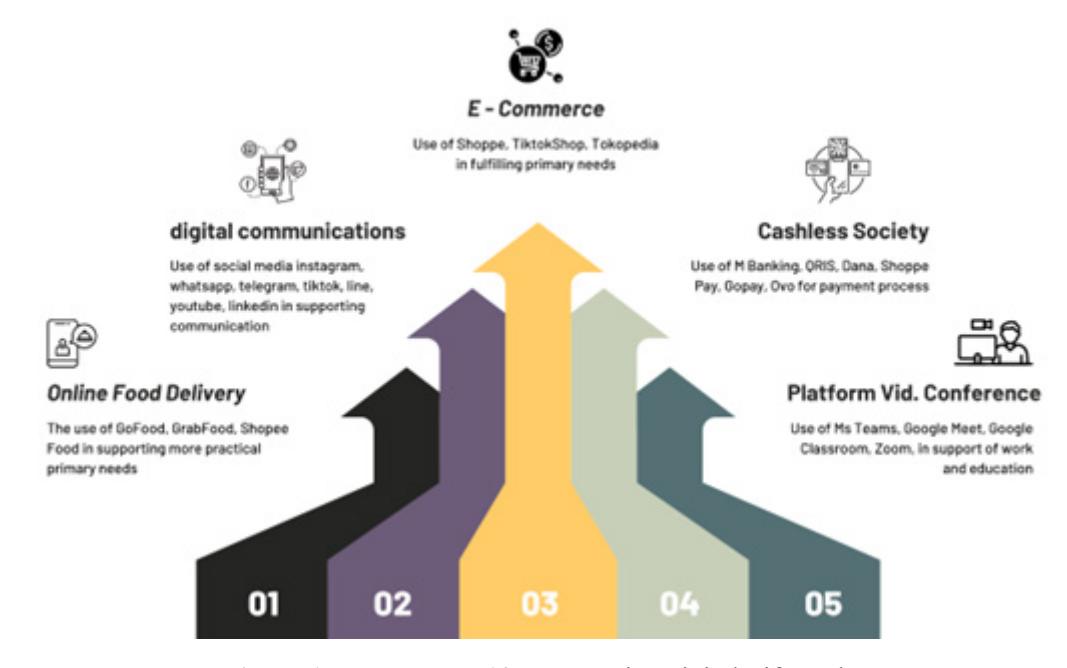
Figure 1 Post-COVID-19 Community Digital Life Style
Dealing with the picture above, it was found that in the province of Bali, with the determination of the sample of informants taken from the data from the Central Statistics Agency for 2020, there were four cities or regencies with the most internet users, namely the city or district of Badung, Denpasar, Gianyar, and Tabanan. The results found that people in four cities, with a total of 30 informants, used e-commerce the most as a digital lifestyle. The use of e-commerce is not only to fulfill needs but also to fulfill lifestyle. Informants mentioned that the use of e-commerce that has the highest intensity of time access most often is Shopee. The media offered by Shopee through brand ambassadors and a tagline free ongkir (free delivery cost) became one of the preferences for e-commerce. Besides, Shopee also offers not only the needs but also the wishes of the customers.
In addition to the use of e-commerce, self-actualization is created through digital spaces such as Instagram, WhatsApp, TikTok, and other digital communications. This digital communication is used as an immovable space capable of creating public perceptions of one's consumption behavior. One's prestige values can be seen from this digital communication activity. Thus, it is considered capable of capturing digital lifestyle portraits. Apart from using e-commerce and digital communication, people are now starting to transform into a cashless society. Currently, developing countries such as Europe and America have implemented a cashless society. Cashless payments are considered more efficient and have developed in the 21st century. Cashless payment products in 1995 were analyzed using the pay now, pay earlier, and pay later technique, which is now often called 'Paylater' (Worthington, 1995). The speed of transactions using cashless is now starting to develop in Indonesia, especially in big cities. For service providers (sellers) who provide a cashless payment system, this is considered more profitable in terms of mitigating the risk of loss or corruption. Meanwhile, for buyers (customers), cashless payments are more efficient and practical because they no longer must bother carrying physical money. The lifestyle of a cashless society in the province of Bali occupies the second position with the highest number of QRIS users, according to the Bank Indonesia version, with 609,343 users. This indicates that the Bali Province is ready for a digital economy. The next digital lifestyle is that people nowadays are fond of online food delivery. Based on the results found in the field, the selection of online food delivery targets all productive generations. The average result in the field is that productive adolescents like online food delivery by spending on drinks and food, both light and heavy meals. This online food shopping is even outside of their primary needs. One of the online food delivery providers preferred by the people of Bali is GoFood.
In fact, in addition to the availability of a complete food type, Gofood, under the shadow of Gojek Bali, also provides an offer called "Super Gojek," in which there are 20 services, one of which is the food needs service and FMCG (GoFood, GoodFood Festival, GoShop, GoMed, and GoMart). Food needs service, and FMCG can be tailored to the wishes of customers. In fact, in addition to the 20 services, Gojek also provides payment services (GoPay, GoBills, Paylater, and GoPulsa) and attractively there is the fulfillment of daily needs (GoMassage, GoClean, GoAuto, GoGlam, GoLaundry, and GoDaily). Field findings with informants also mentioned that only in Bali can the drivers of GoFood provide a subscription service of periodic delivery, so for productive workers, this can be an alternative to food needs. The process of ordering food will be basically the same as in other cities, the distinction being that the social interaction created in the service leads to a lasting relationship that is a symbiosis of mutual food needs. In fact, another informant mentioned that when the COVID-19 pandemic was taking place in Bali, where all movements were restricted, online food delivery drivers remained operating in compliance with health protocols. The new way of life in the digital space was further demonstrated by the use of video conferences from the period of the COVID-19 pandemic to the post-COVID-19 epidemic, which are still used in both learning and educational activities as well as work related to interdivisions, stakeholders, and industries with wider coverage.
Discussion
The development of information and communication technology has brought progress to life in an alldigital era. Activities in all mass lines have shifted from the era of industrialization to the information age, which then gave birth to an information society and a digital society. Every aspect of life seems to be encompassed by immovable digital spaces, be it educational, economic, cultural, political, or social. Roger said that the information society and the digital society are those where most of their life activities use information technology. Like opium, technology seems difficult to escape from the grip of the world in today's era. Information is considered a commodity that can be traded, duplicated, created, or misinterpreted until it is distorted according to the wishes of the user. There is a development that started with the Industrial Revolution 4.0, which then requires humans to be "all-rounders" in the use of the technology created. The emergence of this industrial evolution is also considered asa form of change in the order of human life that works both conventionally and fundamentally. Advances in information
technology thatare integrated into all digital aspects. This becomes a phase of technological progress and becomes the new face of civilization, which is unknowingly formed by habit.
In the era of the Industrial Revolution 4.0, technology is entering the trend of automation and data exchange, namely the internet of things, artificial intelligence, big data, and others. The rapid movement of the Industrial Revolution 4.0 was then presented by a new condition, namely Society 5.0. In a social order, this condition is centered on humans because of the technological sophistication that has been created. Humans must be able to coexist with what is called technological sophistication, artificial intelligence, and other conveniences that will be offered later. Japan as one of the countries that, in 2015, has implemented the concept of Society 5.0, where this is used as a strategy for national political initiatives, namely creating a new culture in collaboration with the standardization of data formats, models, systems, and the development of human resources needed. The main objectives are increasing intellectual development, international standardization, and manufacturing internet of things technology that can drive competitiveness. Actually, when implemented in Indonesia, the development attained in industrialized countries must be taken seriously. It is a mature preparation for the misconception of the sophistication of technology that will eventually "substitute" humans, not just a rejection of progress. In today's world, society has begun to establish a new culture by eradicating reality. This kind of environment is employed as a daily activity and a way of life. The phrase "lifestyle" refers to a way of life that includes a set of habits, a perspective on patterns of responding to life, and the satisfaction of life supplies (Novita, Tamim, & Nabila, 2021). This context confirms that the discovery of the usage of digital technology at all ages for the purpose of meeting life's demands can be referred to as a new digital lifestyle. Interests, activities, and opinions are all expressed digitally. On the other hand, the benefits of technology, such as the search for information are now also used in the fulfillment of everyday life's needs.
In the theory of consumption behavior, Jean Baudrillard said that the portrait of this condition is the opening gate for modernity. In our understanding of the traditional world, the human condition, which fulfills the necessities of life in terms of clothing (clothing or fashion), is more satisfying when visiting a store or shopping center by seeing and holding the desired item directly. However, it is different from the current condition of the digital lifestyle in that efficiency and beautifully packaged objects are the reasons people prefer lifestyle in digital spaces, such as TikTok Shop, Shopee, Lazada, and Zalora. This is what Jean Baudrillard considers the meaning of value in a sign. The conditions that occur are no longer about the reality of production and industrialization but are an imitation of the reality of an immovable digital space (Djalal & Adam, 2022).
Further evidence is described in the fulfillment of food, where for the younger generation or productive workers, they like to shop for food or drinks using online services such as Gofood, Grabfood, and Shopeefood. The fulfillment of this need for hunger is not in comparison with their desire for the aesthetic appearance of the sign created in that sedentary lifestyle space. The tempting packaging and display of food have led this digital society to prefer signs over meaning. In this case, meaning is understood as the taste of food obtained from the cooking activity. Whereas the sign is the aesthetics of the picture of the finished food that is displayed on that digital space. It also happens to meet the needs of the warehouse in conditions where all age groups are using the daily needs service providers Shopee, TikTok Shop and others. One side of convenience can be obtained in an easy way without having to come to visit physically. On the other hand, convenience is taken away when the ordered goods are not received in accordance with what is displayed on the digital service provider.
This is considered Baudrillard's stage, leading to a cultural transformation in which there are differences of application in the social relations of primitive society, implying symbolic exchange as a non-productive or primordial act in contrast to a capitalist economy dominated by the productive exchange of commodities as a means of marking. In fact, in the country of Singapore, digital lifestyle might influence customer behavior when it comes to purchasing decisions (Rangaswamy, Nawaz, & Changzhuang, 2022). It has a favorable impact on greater attempts toward customization of design and service. So, with the digital lifestyle that the community owns and the assistance of service providers on both the online and offline sides, the company's revenues are predicted to be maximized. Seeing these advances can serve as the foundation for the opening of a gateway to progress and the long-term viability of forecasts generated in the digital domain from economic, social, cultural, and other perspectives. (Wang, F.-Y., Yuan, Y., Wang, X., & Qin, 2018).
Conclusion
The research entitled "Digital Style: A New Portrait of Community Behavior After the COVID-19 Pandemic" is divided into two stages: the first is regarding the results of digital lifestyle behaviors found in the field, and the second is about discussing digital lifestyle behaviors compared to sociologist theories. From the first stage that was carried out, it was found that there were four categories found regarding the digital lifestyle of the post-pandemic community, namely e-commerce, digital communication, video conferencing platforms, cashless society, and online food delivery. These four categories are described not only based on needs but also desires for self-actualization satisfaction. In the discussion, a comparison of the field findings with Jean Baudrillard's theory of consumption behavior is validated by stating that the application of post-COVID-19 information technology has changed the behavior of people before and after this pandemic called cultural transformation. The recommendation for further research is to use a quantitative calculation method to strengthen any digital lifestyle behavior that is currently a trend in society. This measurement still targets people who are familiar with technology, as well as a larger number of respondents.
References
- Ahmad, A. (2012). "Perkembangan Teknologi Dan Komunikasi." Jurnal Dakwah Tabligh 13(1).
- Bungin, B. (2011). Komunikasi : Teori, Paradigma, Dan Diskursus Teknologi Komunikasi Di Masyarakat. Jakarta: Kencana.
- Daryanto, S. 2018. "Dampak Perkembangan Teknologi Informasi dan Komunikasi Terhadap Budaya." Simbolika 4(1).
- Djalal, T., Adam.A., Kamaruddin.S.A., (2022). "Masyarakat Konsumen Dalam Perspektif Teori Kritis Jean Baudrillard." Indonesian Journal of Social and Educational Studies 3(2).
- Imendagri. 2022. "Pencegahan dan Pengendalian Corona Virus Disease 2019 Pada Masa Transisi Menuju Endemi (Imendagri No 53 Tahun 2022)."
- Leach, E., MacGregor, H., Scoones, I., Wilkinson, A (2021). "Post-Pandemic Transformations: How and Why COVID-19 Requires Us to Rethink Development." World Development 138.
- Novita, I, Tamim, & Nabila, T. (2021). "Literasi Keuangan, Perilaku Keuangan dan Gaya Hidup Mahasiswa Ekonomi Pascasarjana Universitas Jambi." Al Hakim 1(1).
- Rangaswamy, E., Nawaz, N. & Changzhuang, Z. 2022. "The Impact of Digital Technology on Changing Consumer Behaviours with Special Reference to the Home Furnishing Sector in Singapore." Humanities and Social Sciences Communications 9(22). doi: https://doi.org/10.1057/s41599-022- 01102-x.
- Rogers. 1991. Communication Technology: The New Media in Society, Diterjemahkan Oleh Zulkarnaina Mohd. Mess Dengan Judul "Teknologi Komunikasi: Media Baru Dalam Masyarakat." Kuala Lumpur Malaysia: Dewan Bahasa dan Pustaka.
- Sakti, L.P.,Sulistyaningsih, T., Sulistyowati, T., 2021. "Perubahan Sosial Masyarakat Pasca Pandemi COVID-19 Di Kota Malang." Jurnal Administrasi Dan Kebijakan Publik 6(2).
- Silalahi, U. (2012). Metode Penelitian Sosial. Bandung: PT. Refika Aditama.
- Statistik, Badan Pusat. (2020). Bali Dalam Angka Tahun 2020. Denpasar: Badan Pusat Statistik.
- Tungga, A.W., Saputra, K.A.K., Vijaya, D.P. (2014). Metodologi Penelitian Bisnis. Yogyakarta: Graha Ilmu.
- Wang, F.-Y., Yuan, Y., Wang, X., & Qin, R. 2018. "Societies 5.0: A New Paradigm for Computational Social Systems Research." IEEE Transactions on Computational Social Systems 5(1).
- Widyawati, Ken. 2022. "Transformasi Sosial Budaya Masyarakat Pasca Pandemi Covid19." Jurnal Sebatik 26(1).
- Worthington, S. (1995). "The Cashless Society." International Journal of Retail & Distribution Management 23(7):31–40. doi: https://doi.org/10.1108/09590559510095260.
- Wulandari, R. (2021). "Altruism: A Study of the Form of Mechanical Solidarity of Urban Communities in Denpasar City." P. 1 in ICHELSS: International Conference on Humanities, Education, Law, and Social Sciences.